C h a z z W r i t e s . c o m

See all my books at AllThatChazz.com.

Are ebook contests worth the entry fee?

Usually I’m here spouting my opinion about publishing or sharing what I find that’s useful for indie authors.

English: Ribbon for contests

English: Ribbon for contests (Photo credit: Wikipedia)

Today, I’m asking for your opinion of ebook awards. Help me with this, please.

I just ran across PIA (Publishing Innovation Awards), for instance. It’s $199 to submit a book in a single category. Wow. (That qualifies as a “wow” because it’s the most expensive contest I’ve seen.) Huge companies are behind it, which is reassuring, though one wonders how much their corporate sponsorship has put a dent in that entry fee? Most entry fees for awards available to indie authors seem to be in the $50 to $69 range. The one I’ve spotted that’s free to enter is also no doubt the best known: Amazon’s Breakthrough Novel Award. Other awards ask for a more hefty fee for one book but you can enter a second book at a much reduced fee.

I googled for reviews of some of these contests, but that got me pages and pages of the winners trumpeting their books (not reviews of the contest experience itself.) Maybe that means these awards are totally worth the expense of entry and the winners gained readers, provided social proof of excellence and improved sales. A seal of approval on any book is no doubt somewhat reassuring to potential readers, even if they’ve never heard of the award.

FYI: The Book Designer has a handy list of contests here. It’s a little out of date but most of the information still applies. Note that it’s just a list, not an endorsement of any particular contest.

I’ll start you off with this observation: My first thought about the QED award was that it looks good and has a happy track record according to their website. There was an awful lot of reading and pitching before I found the cost of entry. (It’s on the FAQ page, though I’m not sure what the alternative $125 for QED consideration might include. Is $125 for getting evaluated on their 13-point form? Hm.) The search for the contest fee was annoying. If the QED is an awesome opportunity and I’m a fool for hesitating, jump on it. Their deadline is November 15.

What’s your experience? Do contests for authors excite you or are you suspicious some may be merely moneymakers for those who conceive them? Would you enter your books into a contest or is your promotional budget best spent elsewhere? I welcome your thoughts and comments. Thanks for helping me with this.

Filed under: publishing, , , , , , , , , , , ,

Jackie Barbosa: “Devaluation” & Other Pricing Myths

You think your book is too good to go for such a low price? I think so, too…or rather, that’s what I feel. However, author Jackie Barbosa makes a great case for why we shouldn’t listen to those diehards who believe a low price must indicate that we’re trying to fob off a crappy book.

For instance: “…unfortunately, writers can’t make their living by depending solely on the readers who see a higher price point as a sign of quality. We have to appeal to the readers whose impulse buy point is free or 99 cents or “look, it’s under $2 and on a bestseller list so it must be a good book.”

I love this post. It’s tastes vinegary, but it’s good for us to keep in mind when we set prices for our books.  

Read the entire argument by Jackie Barbosa here.

Filed under: publishing, , , , , , , , , , ,

Top 5 reasons to join the Ultimate Blog Challenge

Last month I completed the Author Blog Challenge. I blog anyway, so why another blog challenge? 

1. Daily writing prompts help me keep posting. I don’t always follow them, but when you’re stuck, it makes blogging easy, or at least easier.

2. A commitment to blogging every day helps Search Engine Optimization so the blog readership grows.

3. Community. I look forward to discovering new bloggers and I’m hoping more new bloggers (and readers) will discover me.

4. Networking. The Ultimate Blog Challenge encourages tweeting links so profiles are raised.

5. Momentum. I just completed a blog a day for all of June written by The Magic That is Me. Why not take a break? Some people take being tired as a reason to ease off. But it’s precisely because I am tired that I should do this challenge. It’s energizing (and commitment is so sexy.) When you blog every day, you get on a streak and it makes you want to continue. As long as the quality stays high, I’m okay with the quantity of the output. I write all the time. Deadlines are my friend.

Most important, I have a writing career and a readership to build.
Now is not the time to rest.

This is just the beginning. This is number 1.

Filed under: publishing, , , , , , , , , , ,

Author Blog Challenge 23: Free sex and the value of an ebook

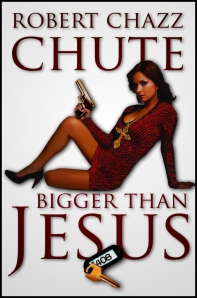
GET BIGGER THAN JESUS

Why should he pay for the cow when he can get the milk for free? If you’re unfamiliar with this distasteful euphemism, it’s meant to control and shame women so they defy their biological needs and get married too young to the first doofus* who comes along so they won’t risk being called sluts by a repressed and repressive patriarchy and said patriarchy’s agents. It’s the same misogyny behind, “For birth control, hold an aspirin between your knees,” and “Good cowgirls keep their calves together!” It’s kind of funny the first time you hear it. Then you realize it’s a power grab meant to squelch the joys of life and your humanness. (I do love a breakdown of social constructs so the deviant subtext in revealed.) What, you ask, does that have to do with ebooks? Everything.

Yesterday began a little after 5 a.m. It continued until 3 a.m. I hasten to add there were distractions. I did stop to shower and eat. There’s a shower hose over my desk chair by the IV pole. The IV bags are full of double espresso. The desk chair is a toilet. It’s like the helpful chairs in WALL-e, before that evil little robot screwed everything up for everybody and made them get up and move around outside. Mostly, I formatted my new book. For all the work, I wonder if people will buy it when they can have it for free?

Crack the Indie Author Code: Aspire to Inspire (by Robert Chazz Chute, coming in early July!) is a book based on the best of this blog. I’m creeping up on 1,000 posts and I thought it was time I made something more concrete of it. It’ll be my favorite posts in one convenient, pithy, humorous, inspirational package. I’m editing again and updating as I go, of course. At over 90,000 words, it will be my comprehensive take on what the newbie needs to know and what the self-publishing veterans’ choir likes to sing. I wrote a note in the front matter about who the book is for. I made sure to say: Hey, if you want the milk for free, feel free to sift through the blog. ChazzWrites is free. All the podcasts at AllThatChazz are free, too. Everything I sell is so close to free in price, you’d tip the pizza guy what you’d pay for my books. Enjoy! I give freely, without remorse or hesitation or hard feelings. Surprising, because, as a cheap writer who can pinch a Canadian quarter until the moose screams (that’s “eagle screams” if you’re in the United States), I’m actually a terrible tipper.

There is a lot of information that’s free on the Internet so I try to keep ChazzWrites.com fresh and a little different — even contrarian. I think I convey that information with a certain flair, but my hairdresser thinks he’s funny, too. Meanwhile, I just wish he’d never learned to speak english. I’m not going deep  into ever-changing information, either. Crack the Indie Author Code isn’t about the latest marketing theory for self-publishing. It’s evergreen stuff — old-fashioned from a new angle —  about writing craft as seen through my lens and as told to any writer who is more eager for cozy inspiration than ebook marketing advice. (With the changes at Amazon, a lot of marketing theory is still up in the air, but if you want a solid marketing book that’s user-friendly, buy my friend Jeff Bennington’s book, The Indie Author’s Guide to the Universe and check his site for updates.)

Since my new book is hidden right here within nigh 1,000 posts, why buy it to put it on your e-reader? What’s the unique selling point? What’s the value to the customer? I’d say: ease of use; improved readability; improved searchability; updates; new content; improved content; my moral support and your grasping consumerism. I make better jokes as I make another pass at the content, too.

As I go through Crack the Indie Author Code, I can see how some of my ideas have changed over time. When I started this blog, I talked a lot more about craft and writing mechanics. Self-publishing needed more cheerleaders then.  Now we need more leaders. Early on there was more, “Rah! Rah! Rah! Those guys in trad pub don’t get it and don’t see what’s coming!” I omitted some of those posts even though I was right. They were appropriate at the time, but it’s time to mature (the jokes are still less than mature.) Self-publishing’s next step is simply to call it publishing. We need to get past hang-ups about trad versus indie. Yes, of course, there’s still value in traditional publishing. It’s not going away. It’s just changing radically. The new paradigm is not necessarily either/or. Depending on business cases, multiple variables and your temperament, you may choose to do both and only the terminally crank y will fault you. Meanwhile, successful revolutions establish regimes.

But, will anyone bother to buy another writing book? Don’t we have enough?  The broad answer is, can you get enough of whatever your passion is? More particular to my writing book, those who like my flavor will buy it. Those who won’t, won’t.  That’s all beside the point, anyway. I know it’s a business, but I don’t write for you because I can’t anticipate all your  variables and idiosyncrasies. I can only write to my taste. I write for your adulation, sure, but first, I write to entertain myself. I’m hoping you’ll say, “Oh, Chazz, how clever you are! I’ll buy umpteen copies for all my friends!” But before you ever get a chance to evaluate, that’s me sitting at my keyboard enjoying the dopamine trickling and tickling my neo-cortex. That’s me saying, “Oh, Chazz, how clever you are!” We write for ourselves first, not the reader. The act of writing is primary, sometimes even primal. The point is to form the thoughts, think through your typing fingers and transcend the blank page until you’re high on the creative rush.

Will Free beat out $3.99 in the cost-benefit analysis? No. You’ll buy my cow for convenience or for other variables, not least of which is, to have and to hold. And, to answer the ugly metaphor that began this piece? Most  people enjoy free premarital sex and yet most people still marry (some to dark and very costly ends.) At $3.99, the risk is microscopic compared to marrying someone.

To win your $3.99, I just have to create something I’ll love.

If you’re of the same mind, I have a sale.

Back to the espresso drip. I’m off to make that dopamine gush!

* Generalizations aren’t fair. Sometimes the first doofus is the right doofus, but most people these days test out several to many doofuses before selecting the one doofus they can love (and be most angry at without opting for murder) for the length of their marriage and possibly the rest of their lives.

Filed under: publishing, , , , , , , , , , , , , , , , , , , , , ,

Author Blog Challenge 20: What writers owe (and an insider secret is revealed)

Garley the Persian cat

Garley the Persian cat (Photo credit: arash_rk)

I used to dream that when I finally became an author, I’d write a short acknowledgements section to myself. “Screw you all!” I’d scream. “In your face! I did this myself and I don’t owe anyone anything! Ha!” Then I’d retreat to my hermetically sealed office under a volcano within my island fortress guarded my my loyal ninja monkey assassin clones. I’d have a monocle and a white Persian cat to stroke while I ordered Hellfire missile strikes to rain down upon my enemies. As you can only imagine, that’s almost exactly what my life is like except for the thing about acknowledging people who have helped me on my publishing journey. Unexpectedly, I have the attitude of gratitude. I’m happy to have a deep stock of Hellfire missiles to protect my tropic realm and I’m grateful for all those people who have assisted me in putting out my books.

Yesterday, after my big free promo day, I sat down and wrote a little letter to a bunch of people who have been helpful along the way. Somebody slipped me some dough so I could keep going. Someone else helped me with formatting the first time I attacked the beast. Others were consultants about suitable explosives…”Um, for my crime novel’s plot!” he added hastily.

A lot of people have the wrong idea about self-publishing.

They focus on the self part.

Hitchcock said that a painter only needs a brush and a writer, a pen, but a film director needs an army. These days, indie writers need small armies, too, and many of them are volunteers. 

The key thing is: self-publishing is still publishing. You either need a graphic artist or you need to be one. You need to learn a lot about tech and promotion as well as craft. You can write a good book, but if it has a lousy cover, no one will read it. (The converse is also true, of course.) That’s why I prefer the term “indie” to “self-published”, though to the consternation of a few angry people, I do use those terms interchangeably as a concession to common parlance.

My Beta readers are volunteers. I’ll pay them in lollipops, acknowledgements in the book, a copy of the paperback and, when they’re ready to go indie, I’ll be a resource for them, too. I’m confident each of those readers could write a book if they decided to do so. I’ve thanked them all, for what that’s worth. So far all they’ve received is a book they enjoyed for free but I’ll be sure to get those lollipops to them.

I did find an unusual way to make one person’s day though. If you’re writing a book, you may wish to consider doing this (with their permission.) A great buddy of mine is undergoing treatment for cancer. It’s been a scary time that he has handled with a calm and class that I am sure I could never muster. This guy is one brave SOB. As I was writing the first draft of Bigger Than Jesus, I used his name for one of my characters.

Funny story: I called him up on Skype to ask him if I could keep his name in the book. His microphone wasn’t working. He could hear and see me but I could only see him. However, that worked out for the best because he pantomimed his approval. When somebody is that sick and you can make them laugh and smile as much as he did by putting him in your book? Why wouldn’t you? He loved the idea and showed lots of energy in giving me a thumbs up that made me laugh (and, truth to be told, a little weepy, too.)

I talked to him on the phone the other day. Things are looking up and we’re optimistic that one way or the other, he’s beaten it. Not only will he live a long life, but in a way that is tiny and totally useless except for good feelings and a funny exchange on Skype, he’s  immortalized in literature, too. I’m very grateful my buddy will be around to enjoy all the novels in The Hit Man Series and everything else I write. I’m most happy about that.

If you’re reading the Bigger Than Jesus,

my buddy is the guy wielding the SPAS-12.

Sh. Keep it to yourself.

Filed under: publishing, , , , , , , , , , , , , , ,

Author Blog Challenge 9: The key to a great critique group is… (plus a funny bonus)

English: Smith & Wesson 686 6" .357 Magnum

English: Smith & Wesson 686 6″ .357 Magnum (Photo credit: Wikipedia)

*If you’ve just popped in for the funny (and insightful!) bonus, you’ll find the link to the Writing Critique Group Decoder at the bottom of this post. Thanks for visiting ChazzWrites.com and please do subscribe.

Today’s Author Blog Challenge writing prompt is: Have you participated in a critique groups? If so, how did it work out for you? If not, why have you avoided them to this point?

True story:

I visited a writing group and much of the discussion was dominated by an imperious woman who was keen to get a critiquing group started. Only she pronounced it: “Kr-eye-teaking.” Then she said, “Kudos to you!” But she pronounced it “KA-doos“.

I didn’t want to be part of her critique group.

Then another writing group invited new members and I checked it out.

Nice folks, but they were light on writing experience and didn’t read the genres in which I write. Worse, one guy (who would have been 25% of the group) spoke at great length about the book he would someday write. It was sci-fi, which was fine, but he was too invested in theory and he didn’t have a story. He had a wacky setting which took half an hour to explain. It would be hard to get invested in a story where the characters were inert alien rods…unless we’re talking about the aliens behind Third Rock from the Sun. (That’s kind of funny if you remember the details of that sit com.)

I didn’t join that group, either. We didn’t have enough in common in what we liked to read and write and if I had to hear another word about this amazing civilization living in the rings of Saturn, I would have had to shoot myself in the face.

But I do have a critique group and that’s working out great. Well, not exactly. They’re my beta team.

For my crime novel, Bigger Than Jesus, I needed a beta team to proof my manuscript and find bugs. It was the betas that reminded me that Dirty Harry didn’t carry a .357 Magnum. It was a .44. The beta team caught that the Coen brothers of movie fame don’t spell their name with an h. (I guess I was thinking of the Cohen brothers of legal fame.)

The key to finding your critique group, or beta team, is: Choose wisely. Say no. Don’t settle.

I found a great team in a SWAT trainer, an ex-military buddy, a teacher, a psychologist, two fellow writers and the funniest woman I know who also happens to be a voracious reader. They’re all getting signed copies of the paperback with a spot in the Acknowledgements section and help with their books when they decide to write them. And lollipops.

*BONUS:

A while back I wrote The Critique Group Decoder as a service to writers uninitiated in the dance. Click for the laughs. Stay for the reality.

 Related articles

Filed under: publishing, , , , , , , , , ,

Author Blog Challenge (plus a sneak peek podcast*): Outlining, pantsing, spilling & sprinting

If you just popped in for the suspenseful sneak peek podcast, click here to hear The First Fiction Friday Edition of my podcast.

The Author Blog Challenge prompt asked how I stay organized as I write. My methods have changed over time. I used to come up with plots on the fly early on. Then I got scared off from that strategy when I got deep into a dreadfully long novel and found I had to backtrack fifty pages. Hitting a dead end is, well, death. It’s a waste of time and energy and I hate it.

I started outlining because I was writing big books and I didn’t want to lose whole sections of my book in which I was already invested. When you write 80 – 100,000 words or (ye gods!) more, an outline helps. I didn’t write an outline with Roman numerals and all that formal, high school nonsense. Instead, I planned the book one cogent sentence at a time. I described the actions in each chapter to plot the arcs of A and B stories. I looked for where those paths would logically cross, discover the beats and suss out the high and low points. Index cards got to be too much to keep track of, so in the end my outline was just three pages with a numbered list. I read and reread the outline and then I didn’t look at it again. That got me through the big books pretty well.

Recently I read Run by Blake Crouch, and as Blair Warner used to say on The Facts of Life,

“I just had another one of my brilliant ideas!”

It’s about speed. I resolved to write a crime novel with the same furious pace as Run — a book I couldn’t put down. Yeah. I know it’s a cliché, but this cliché is both apt and true in the case of Run. (Great book. Buy it.)

I resolved to do the thing I love with stories. The chapters would be relatively short. They would skip along. There would be lots of twists and turns to my racetrack. I wrote Bigger Than Jesus in about a month, one chapter a day, roughly 2,000 words each. There was no outline. Instead, I wrote with the expectation that I’d get my hero into a troubling cliffhanger at the end of each chapter. If I wrote myself into a corner in the process, too bad. I’d be clever and write my way out of it and keep moving forward. Writing like this is as fresh and as exciting as walking a tightrope naked in a high wind over a crowd of angry TSA agents with a new shipment of polar mint rubber gloves.

Many nights I went to bed thinking that I had no idea what I would write in the morning, but I trusted that I could figure it out. I believed in lightning strikes. The juice kept flowing and with it came a high level of complexity. It’s a crime novel so people lie a lot. If I’d taken longer to write it, it would have necessarily been less complex because I’d be afraid of losing track of the threads. There’s shocking emotional depth, too. Nobody, including me, foresaw the strange and sad angle on my main character’s childhood. It sneaks up.

Why did this work?

1. I knew the opening chapter and the last line so I had a target at which to aim. I’m also a more confident writer than I was with those early attempts, I suppose.

2. If I didn’t know what was going to happen next, the reader wouldn’t be able to guess, either.

3. Speed. The book is not especially long and I wrote it all in a short space of time so I could keep it all in my head at once without getting lost.

How else do I keep organized? 

In the Point File, I note things like street names I’ll use twice and aspects like eye colour so they don’t change from the beginning of the book to the end. I did mess up in having twin brothers as bad guys with names that were awfully similar. I had to go back to make sure I was talking about the right brother at the correct stage of the book.

I always have a Spill File handy so if I do write something that I end up dumping, I save it for later. I might change my mind about how useless it is or I might use it another time in another story. In Bigger Than Jesus, the writing went so quickly and breezily that I never had anything to pour much into the Spill File. I wrote fast and then went back to the stage of writing where I’m always sure I’m a deluded idiot: revisions. I cut, prune and delve. More of the jokes come clear on the second pass, too. Typically, by the third pass, I begin to feel good about the book again. Bigger Than Jesus was just about as easy as writing a blog post a day, actually. Maybe easier sometimes because what dictated the action was logic and surprise. When in doubt, surprise!

Some writers labor under a notion that I once shared: To be good, you must write slowly, perhaps even at a glacial pace, and the serifs are where your heart and soul get squeezed in and choked for blood. There are books I have tinkered with for years. One short story went through many incarnations over a year before I felt I nailed the landing and deserved 10s from all the judges. However, Self-help for Stoners came together quickly and everything worked out well with that.

Bigger Than Jesus will be released in the next week or so and all the feedback I’m getting from the editorial team tells me I’m glad I didn’t buy into the idea that it had to come slowly to be worthy. I think that’s true sometimes, but not always — not for every book and not for every writer. That’s good news because I’m using the same strategy with the next book in the series. It’s coming fast and well and I do enjoy the danger of not knowing what happens in the next chapter. Those angry TSA agents are actually spurring me to succeed.

*BONUS:

Please take a few minutes to enjoy my latest podcast on the author site. It’s The First Fiction Friday Edition! 

It’s a sneak peek at Chapter 8 from my first novel in the Poeticule Bay Series:

An old woman is lost with her tiny dog in the Maine woods and snow is on the way.

Related articles

Filed under: publishing, , , , , , , , , , , , , , , , , , , ,

Author Blog Challenge: The Writing Mistake You Might be Making

English: The main character in the comic serie...

English: The main character in the comic series “Lame Strips” (Photo credit: Wikipedia)

I sat at the front of the writing class, giving a reading from Self-help for Stoners. The story, “Another Day at the Office” is  about a guy with a skunk talking his way out of search, seizure, jail and worse at the hands of a policeman in Texas during a traffic stop.

When I finished, I looked up and asked, “How old is the main character?”

I pointed around the classroom. “22! 28! 35! 40!” they answered.

“What colour was his hair?”

“Red! Blonde! Bald! Black! Brown! Wispy Comb over!” (Good for you. I never would have thought of wispy combover for that character.)

There you go. Too much description limits your readers’ imaginations and puts their visions in little boxes that belong only to you. Be more generous and don’t assume your reader is an idiot. They’ve seen people in their lives. They’ll fill in the blanks. The readers want some ownership of the story in the theatre of their minds, too. Don’t describe too much. Was it Dashiell Hammet who said his hero was “knuckly” and left it at that? Too much description has  become a cliche that often opens a lot of books: the main character inspects himself in the mirror before heading off for work. They preen and describes themselves to the reader. Don’t. Instead, please let the action and dialogue carry me along. Let me insert my own vision of your characters. I’ll have a picture in my mind before long and I might even be annoyed if the author’s description differs with my own.

Even then, be sparing. My hit man in Bigger Than Jesus has a thing for expensive suits. It comes up as it pertains to the action and as it pertains to character. It is not there just to make up an arbitrary word count. In fact, it’s crucial to the character. No campfire story starts with a long description of what everyone is wearing unless there’s a point or a clue to character. Be just as judicious, whether you’re telling ghost stories to a bunch of kids around a campfire on their first trip into the woods or writing books for the masses.

BONUS:

Tuesdays and Fridays, I do a little podcast from my author site at AllThatChazz.com. A fresh episode (#29!) is up now in which I tackle letters from Republicans, creep out my twelve-year-old and worry, too late, about my blood pressure.

Filed under: publishing, , , , , , , , , , ,

Traditional vs. self publishing. Which would you choose?

See on Scoop.itWriting and reading fiction

You know what I love about this post? Mr. Ing doesn’t have an agenda. He’s asking an honest question and I love the cost-benefit analysis he’s offering us here. Given the variables, which would you choose? More at the Scoopit! link. ~ Chazz

See on www.graemeing.com

Filed under: publishing, , , , , , , , ,

Author Blog Challenge: Writing to Love

Wikipedia

Wikipedia (Photo credit: Octavio Rojas)

The latest prompt for the Author Blog Challenge asks what we love to read and how does that feed our writing? Good question. I read voraciously, and the resource that feeds my writing most these days is…wait for it…Wikipedia. How did writers write before Wikipedia? I think they actually had to go out the front door and into the  world and, let’s face it, no one wants that. At least I don’t and I don’t understand those who do. I’m cozy in my fortified writing bunker, thank you very much.

I’m one of those weirdos who gets lost in dictionaries and encyclopedias. (If you read this blog, you probably are, too.) I look up one thing and get distracted by all the other delicious stuff in there. As I was researching my crime novel, Bigger Than Jesus, I consulted The Mob Dictionary, documentaries, a friend who trains SWAT, an ex-military friend and various books on the mob. It was Wikipedia that yielded my main character’s background and contributed to the verisimilitude the story demanded.

I wanted Jesus to be an enforcer who wants out of  the mob.  I had to give him a back story that made the reader understand why he is the way he is. I needed him to be an outsider, so he’s a Cuban among native hispanic New Yorkers. His journey to Florida is sad and, once he arrives, his story becomes more tragic. The key to the character was his childhood and it was Wikipedia where I happened upon more information about the Cuban migration to the United States. Truth gave rise to more believable lies as Fate (um, I am Fate) dumped Jesus from the roaster into the (mostly) proverbial fire. He’s a smart ass, but not as smart as he thinks. He’s more funny, clever and desperate than he is tough. Wikipedia was the seed that led me to understand why the character worships the love of his life the way he does. Like dominoes, one idea leads to another idea which leads to another idea which reveals a pattern which gives rise to a plot. Powered by curiosity, simply traipsing through Wikipedia gave me a book that will be a series I’m really excited about. The last edits are arriving and the graphic designer is working on the cover as I write this. Hoo-bloody-ha!

If you’re stuck, blocked or just noodling, use non-fiction to amp up your fiction and go wander Wikipedia.

Filed under: publishing, , , , , , , , , , ,

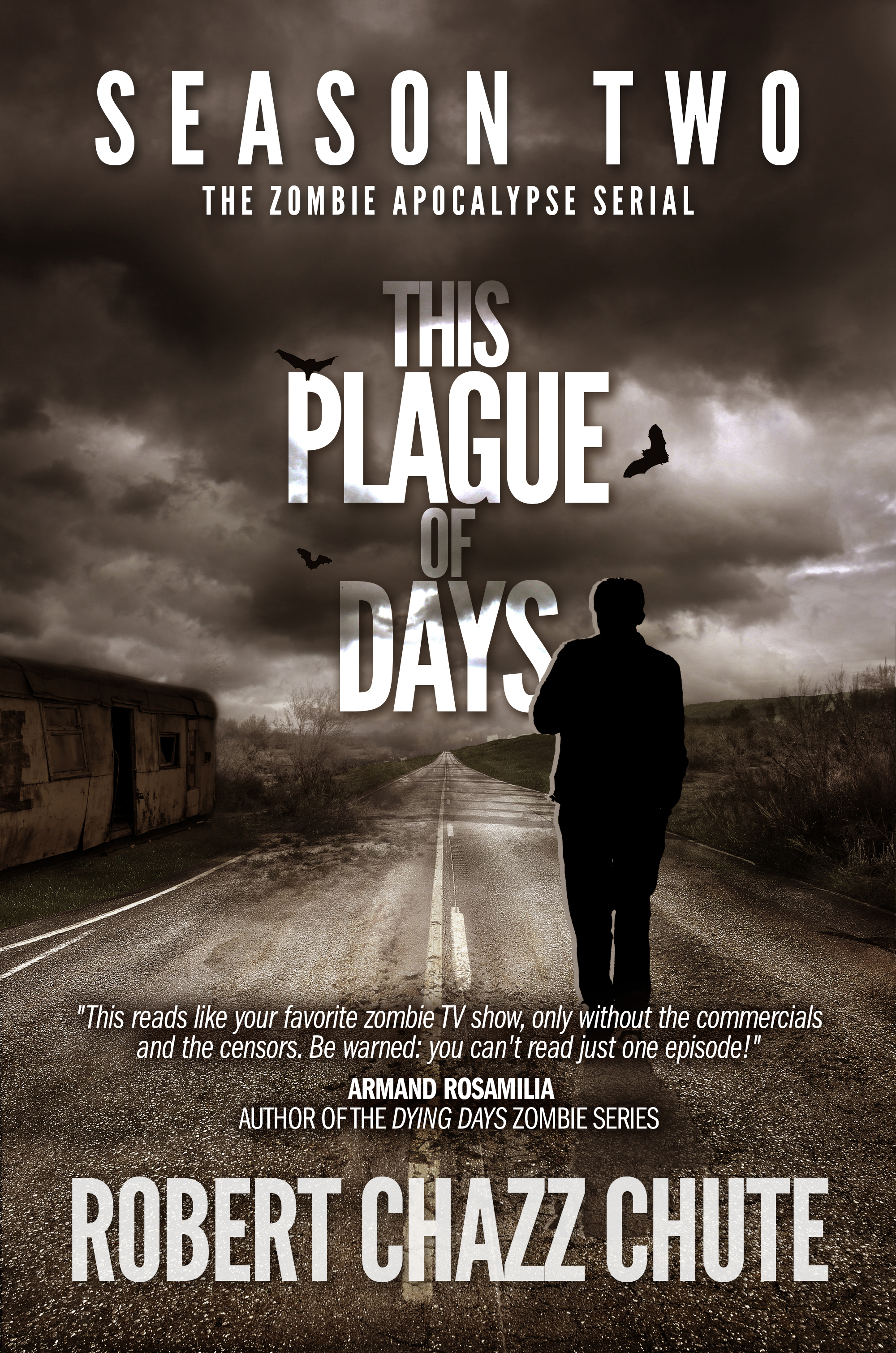
Bestseller with over 1,000 reviews!
Winner of the North Street Book Prize, Reader's Favorite, the
Literary Titan Award, the Hollywood Book Festival, and the
New York Book Festival.

http://mybook.to/OurZombieHours
A NEW ZOMBIE ANTHOLOGY

Winner of Writer's Digest's 2014 Honorable Mention in Self-published Ebook Awards in Genre

The first 81 lessons to get your Buffy on

More lessons to help you survive Armageddon

"You will laugh your ass off!" ~ Maxwell Cynn, author of Cybergrrl

Available now!

Fast-paced terror, new threats, more twists.

An autistic boy versus our world in free fall

Suspense to melt your face and play with your brain.

Action like a Guy Ritchie film. Funny like Woody Allen when he was funny.

Jesus: Sexier and even more addicted to love.

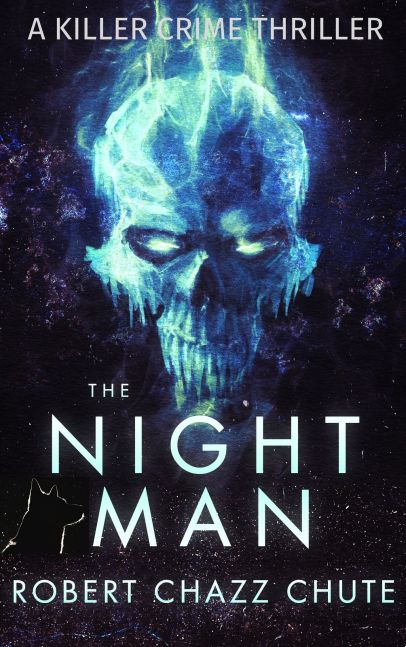
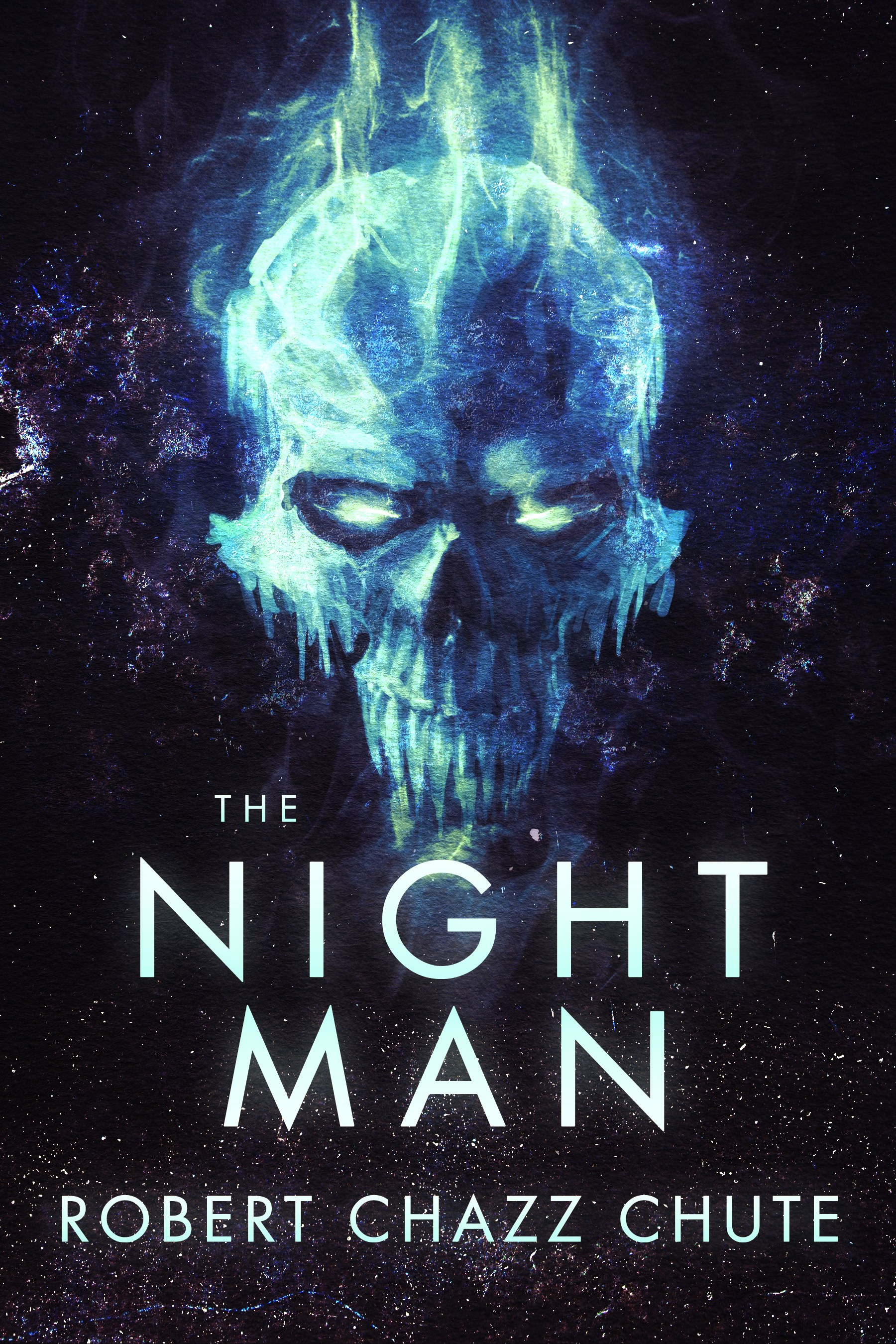
You can pick this ebook up for free today at this link: http://bit.ly/TheNightMan

Join my inner circle at AllThatChazz.com

See my books, blogs, links and podcasts.

Enter your email address to follow this blog and receive notifications of new posts by email.

Join 2,061 other subscribers