C h a z z W r i t e s . c o m

See all my books at AllThatChazz.com.

How to reach readers in a way most writers don’t

When you think of using video to promote your book, you probably think of a book trailer, like this:

I made the trailer above and it turned out pretty slick, I think. But there’s a better way. A book trailer broadcasts out. I want to motivate readers to find me, not just talk at them. Sure, book trailers can be cool, but there’s little to no evidence they motivate people to purchase more books. (Click on my old post here for thirteen options for using video. I especially like the Scott Sigler strategy.)

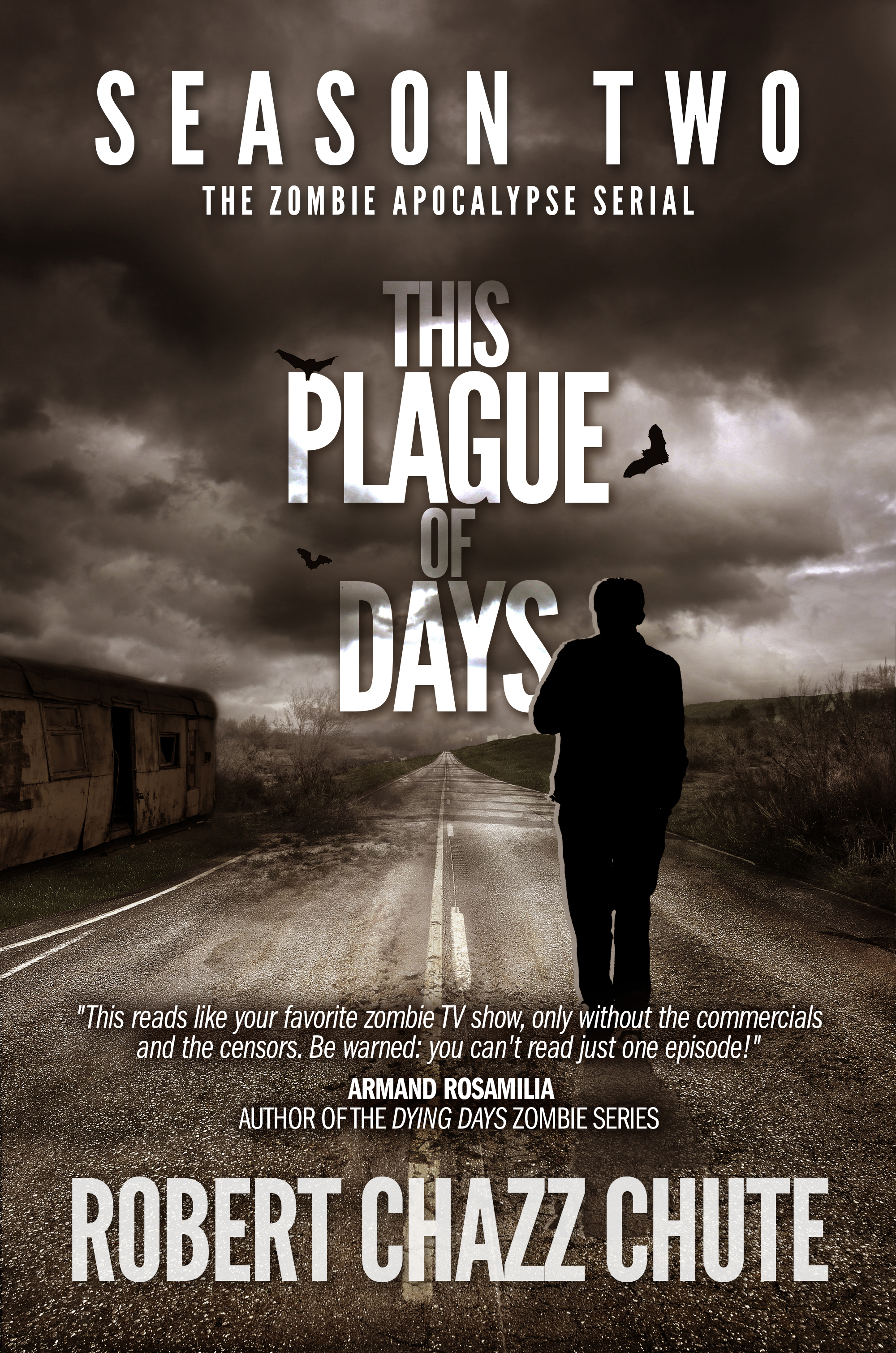
Here’s how I added value to This Plague of Days, Omnibus Edition.

The better way is to use video is to thank readers and engage them with a question or a reward. I opted to do both with a link to a secret video at the back of the TPOD Omnibus Edition. It’s three books in one, so, for those who care to, they can make one purchase and save a couple of bucks.

Here are the specifics of my latest launch strategy:

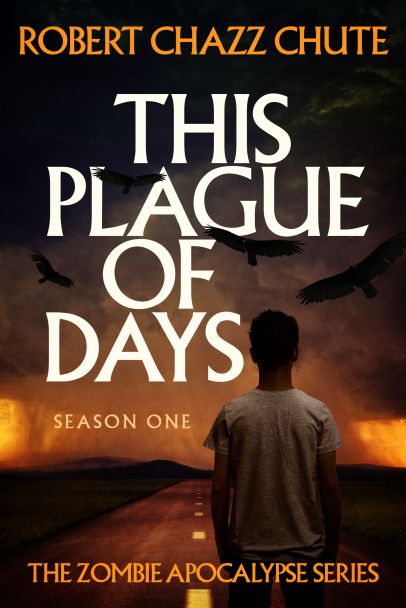
1. I’ve just launched two books, This Plague of Days, Season 3 and This Plague of Days, Omnibus Edition.

2. I dropped the price on the first novel to 99 cents and marked the second book down to $2.99. I’m selling the Omnibus (three big books in one) for $6. 

3. At the back of the Omnibus, exclusive to those readers, is a link to a private video. In it, I talk about the saga. It’s been years in the making. This is my Star Wars. Putting it to bed is a big deal to me and I give some behind-the-scenes origin information.

4. I ask a sincere question. A secret has been buried in this series from Season One and it pays off late in Season 3. It’s a huge surprise that a lot of people tried to figure out but they only saw it in retrospect. (My beta readers all said the same thing. “Oh! Of course! You dog!”)

5. As long as Omnibus readers answer the question in the comment thread at the private video link this year, I’ll send each of them my next thriller ebook as a gift. Free. No strings or demands for a newsletter sign-up. The new thriller comes out later this summer and it even ties other books together. It’ll be a fun ride and also a solid bridge to my other books even though it’s not in TPOD‘s genre.

6. Video is a more personal way to thank readers. By adding another book to the six-dollar Omnibus, readers won’t just save some bucks. They’ll get four books (three huge ones and one decent-sized novel.) Readers will benefit and I hope to gain readers who are already enthusiastic about my particular brand of crazy. 

7. I know this approach trips some fear alarms for some authors. Please don’t tell me I’m devaluing literature by pricing it too low and giving too much away. I’ve lowered the price, not the value. The literature that is devalued most is that which is read least. Times are tough for a lot of people, me included. But I still believe that generosity and helping others wins over greed. Give more and you’ll attract the people you want to be your readers. When they find you, they’ll buy all your books. Don’t chase anyone. Count the giveaway as the cost of advertising, something any business does. Let readers come to you willingly and they’ll bring you joy instead of heartache. 

How did I do it?

I used iMovie, but you could use a cell phone. It doesn’t matter as long as it uploads to Youtube and designate the link “unlisted” so only those who have the link can access it. It doesn’t have to be slick and fancy or have a kickass soundtrack that sounds like it’s calculated to accompany an invasion of Libya.

Your video might even be better if it’s not slick. I love my energetic little book trailer, but heartfelt and speaking into the camera? Heartfelt is more important than slick.

But how did I sell the TPOD Big Deal Book Launch to readers?

Here’s exactly how I did it.

~ I’m Robert Chazz Chute and no one can begin to fathom the depths of my exhaustion at this moment. I am puddin’. But I’m also happy. Anxious and happy. Mostly anxious. Go make a video. Of love. (No, I don’t mean like that!…okay…maybe like that.) 

Filed under: author platform, book marketing, , , , , , , , , , , , , , , , , , ,

Another way your cover can promote your book (and who to hire)

We are all struggling to find new ways to get readers interested and invested in our books. How do you promote reader engagement and launch your book higher? By engaging them in your process, I suppose. Here’s one way I’m doing that for the launch of two books this weekend.

Short story:

I’m giving away an ebook of the Plague of Days compendium to one random commenter on the Plague of Days website.

To enter the draw for three free ebooks in one, all you need is an opinion, so click here to see the cover choices. 

Okay, now here’s what you need to know and who you really need to hire for your next book cover:

To be clear, the covers you’ll see at the link are my designs, not those of my graphic artist. Anybody who reads this blog knows my graphic artist is the great Kit Foster of KitFosterDesign.com. He’s the sweet, book art genius. I came up with this idea because I already have Kit working on other designs. 

If you don’t already love his work, when I unveil This Plague of Days, Season 3, you’re going to want to check out the rest of his professional portfolio, for sure. He’s a joy to work with at very reasonable prices. Kit’s done almost all my covers. If the cover’s crappy, it’s not Kit’s work, it’s my design for The Little Book of Braingasms. Now, compare that to this cover of gorgeousness in Murders Among Dead Trees. Look at those flames! POW!

Kit also does the web banners for my websites. Those spruce up any blog and really give readers the idea (illusion?) you know what you’re doing.

Kit has even done Quote Art for me to promote my books. Don’t know Quote Art? See it here and on my Amazon author profile. It’s another way to stand out from the crowd. Quote Art would make a great poster for your next convention, too.

Kit is working on my TPOD print covers in addition to keeping all his many clients happy. When does this man sleep? He doesn’t. While he’s helping me with other stuff, I’m pitching in with the draw. It’s a new way of getting readers involved in feedback on covers for This Plague of Days, The Complete Three Seasons.

My books about the autistic zombie apocalypse that will soon kill us all launches on Father’s Day and, because of the draw, I’m sure I’ll have a few more eyeballs for the release. Because of Kit’s TPOD3 cover, they’ll keep looking and check it out.

Eventually I’ll call in Kit for a much better cover for the compendium (because he’s the sweet, book art genius, that’s why, and, yes, you’ll find my efforts sad by comparison.) In the meantime, help me move more books through your input at ThisPlagueOfDays.com. You might be the one chosen to win a free book. So there’s that.

Reader engagement is often fun but it doesn’t have to be a one-to-one thing all the time. It feels great when people are curious enough to come find you. A for a nice prize and asking for an opinion is a solid way to do that.

Filed under: author platform, Publicity & Promotion, publishing, , , , , , , , , , , , , , , ,

The book marketing tool! (That’s a five dressed up as a nine?)

Every marketing guru will tell you to build your mailing list because that’s where the money is. They’re not wrong and I’m no marketing guru, but here are some deeper considerations, past the hype:

1. It’s gotten much harder to build that mailing list. The tools are there. I use Mailchimp on my author site (AllThatChazz.com.) Aweber is another good mailing list management tool. It’s lovely to be able to announce your latest book launch to a huge mailing list of eager fans. It’s also much more rare than the marketing gurus pretend. Everybody’s got a mailing list and they aren’t all equally special.

2. You need a really great giveaway to entice someone to subscribe to a mailing list: free fiction, a useful white paper or some other shiny thing. I offer free mentions on the All That Chazz podcasts, but through Facebook, Twitter, my blogs, Triberr, enthusiastic readers and my rebel writer allies, I’ve got a much wider reach.

3. If people are subscribing to the mailing list just for free stuff, will they keep that subscription after they’ve scooped up said free stuff? Periodically prune your mailing list by asking if your subscribers are still into you. Wise list owners seem to ask if you wish to continue receiving mailings annually.

You can check open rates and find out when interest has waned. A huge mailing list boosts the ego. However, if they’re mostly disinterested and cruising on momentum, that big list can cost you money and, worse, it won’t help. Better to have a smaller list of people who can’t wait for your next mailing.

4. Are your blog readers more interested in your latest blog post than your pestering through the mailing list? I’d rather be a destination blog than an obligation blog. By that I mean, it’s great when people make a point to come here or follow my posts.

Mailing list subscriptions are often ignored or deleted. Test your mailings and ask your subscribers what sort of material they want. It may be that all they really want is to know what your next book is and when and where they can buy it.

5. Subscriptions get deleted or ignored, especially when they come too fast and too furiously. Sure, you’ll mark it to read for later, but when the email is rolling in too often, it’s easier to delete it.

6. I’m currently following many blogs officially. Unofficially, with as many as 200 emails a day or more, I tend to stick with reading destination blogs. In other words, there are certain blogs I feel I have to check out and I don’t need a subscription service to remind me to go look.

7. If you’re producing material for a mailing list and for your blog, too, you’re doubling your effort. True, we all hope email subscribers are more invested in what we do. However, the folks who come to ChazzWrites just because they’re into what I do (which is to generally inform in a more entertaining fashion than I’m doing today)? They might be much more invested than those on the mailing list. Mailing lists aren’t quite as hot as advertised.

So my suggestions are:

Keep in touch with mailing list subscribers, but don’t overwhelm them.

I’m far behind on Seth Godin’s blog, but at least his posts are pithy and short. I’ll never get to some I’m subscribed to. If that describes you, save time and unsubscribe. Deleting posts each day as they come in is a time suck.

Content is king. Yeah, yeah, sure.

Lots of bloggers repeat that mantra, but they all think their content is great so it’s kind of an empty slogan. All I can add is, don’t post unless you have something to say. If you’re straining for a topic, you’re working too hard. Rest it. You’ll get more hits the more you post, until it feels to the reader like too much good content too often or too much drivel. Blogging is a high wire act, isn’t it? (And if all your content is that good every day, sell it as a book, instead.)

Take the opportunity to promote someone else’s excellent content instead banging your own drum.

Not feeling inspired for a blog post? No problem. Write your books instead or reblog. Point to other great content. You don’t have to be brilliant every day if you’re an excellent curator. Scoopit is another tool you can use to curate content and build a following.

Ease back on the throttle sometimes.

We talk a ton about getting out there and marketing books like mad and spreading the literary word. However, lots of readers appreciate us more if we know when to shut up.

I’m shutting up.

~ Chazz is preparing to release This Plague of Days, Season 3, on Father’s Day. The full TPOD compendium will launch then, too. Find out more about the zombie apocalypse with the young, autistic hero at ThisPlagueOfDays.com. It’s much more than a single zombie apocalypse. It’s your future.


Filed under: author platform, book marketing, Publicity & Promotion, publishing, , , , , , , , , , , , , , , , ,

How to write more, faster, now

After I publish a book, I tend to fall into a mild bout of postpartum depression. To head that off, I’m writing a new crime novel as I prepare to launch the finale to This Plague of Days. This new one has a very fast pace and I’m also writing it fast. This isn’t going to fall into a plotting versus pantsing discussion because, Thor knows, we’ve all hit that gong plenty hard already. Today, let’s talk about how to discover your story.

Here’s four writers to pay attention to, in case you don’t care what I think:

1. Anthony Burgess had a cool trick I’ve used. Pick three words at random. Those words will appear in your next chapter.

Go! You’ll find gooey, fudge brownie richness with that one tool alone.

2. E.L. Doctorow said writing a book is, “like driving a car at night. You never see further than your headlights, but you can make the whole trip that way.”

When I wrote my first crime novel, Bigger Than Jesus, I knew the last line of the book, but I had no idea from one night to the next what tomorrow’s chapter might bring. It worked out in a really peachy way.

3. Stephen King talks about excavating the story, discovering and unearthing dinosaur bones.

Some people start with character. I often find my brush and trowel to dig the dirt away is conflict. Everybody wants something. It’s more interesting if everyone’s competing for the same thing but use different methods to get what they want. (Game of Thrones, anyone?) Through conflict, character and snappy dialogue often emerge. Direction and velocity will reveal themselves as you discover how the story evolves. It may divert from your outline. That’s okay. Follow the drama. It might lead you off the map to a beautiful place.

4. Chuck Palahniuk suggests writing each chapter as a short story.

As each story connects to the next until the end, this process cuts down on a lot of intimidation. It also lessens the danger of a saggy middle because you’re demanding more of each story element instead of relying on the reader’s patience. Each chapter is a pillar. Don’t build a weak one and depend on it to hold up the structure.

I’m going to suggest the writing process as an exercise in free association.

Free association emerged as a counselling approach in Freudian analysis. The core of the therapy was to let the mind wander and for the patient to tell his or her own story rather than take on the worldview of the therapist. This was resolution by exploration.

The key is to let ideas bubble up and connect unhampered by the choke valve of self-criticism. Criticism is for later. In the creative process, let it go and flow. You’ll go faster and arrive in places that aren’t mundane and expected. Using these methods, you’re going to cut down on procrastination, too. You’ll write more because you’re having more fun. Stop agonizing. This is entertaining fiction you’re writing, not a eulogy.

In This Plague of Days, the autistic hero of my zompoc epic (Season 3 coming June 15!) is Jaimie Spencer. He’s obsessed with the dictionary. That’s me. I collect odd factoids. I let one Wikipedia entry lead me to another and to another until I free associate my way to new plot developments. The world is made of details and small components build bigger things. That’s also true if your world is fictional. The dictionary and Wikipedia are full of the atoms of your next story.

For instance, take a swig of Doctorow.

In my current WIP, I know the destination and I have a hastily drawn outline of how to get there. It’s not deep in details. I came up with most of it while watching my son’s soccer game. The first atom was a small conceit. The idea exploded when I had my hook. More on this later this summer.

Enjoy a tall, cold glass of Burgess.

Take a random fact from Wikipedia and see where that leads you. Your foundation is already getting poured.

In the crime story I’m working on, I needed to show the love interest’s character. She’s an underdog determined to win. That led me to a story from Wikipedia she could identify with. By showing the tragic, yet heroic story that guided her life, we understand her better and we like her immediately. (Me? I’m big on pathology. Give a character a medical problem and I can use that, for them and against them. Desmoid tumors saved the life of one character in This Plague of Days, for instance. Read the books. You’ll get that reference.)

Free association comes faster from good questions.

Quick! What are the hits playing on the radio in 1974? Which manager was first to get kicked out of a baseball game twice in the same day? What was happening to your protagonist that day in 1974 when he was thinking about baseball and listening to the radio? What song titles spoke to his state of mind? These are the connections I made to write a chapter (a pillar, if you will) that could stand on its own as a short story. Hello, Mr. Palahniuk!

As the factoids build and scenes connect into a river of stories that collect and flow into one ocean of words, new connections are made. New developments float to the surface. You’ll discover new intersections in the network of your story you didn’t suspect were there when you began to write.

That’s Stephen King’s story archeology.

Good stories aren’t written. They are discovered. It is the nuance we find in the depths of free association that contribute to verisimilitude and character interplay. It’s nuance that builds, not just a book, but a believable world.

Those details you’ll use through free association? It’s not the only key to Creativity’s lock, but it’s a good one. Try it.

~ I wrote Crack the Indie Author Code and Write Your Book, Aspire to inspire. Check out AllThatChazz.com for affiliate links to all my fiction. That would be double plus cool. Thanks.

Filed under: Writers, Writing exercise, writing tips, , , , , , , , , , , , , , , , , , , , , , , ,

Publishing: Rules are Rules (except when they aren’t)

I didn’t make up any of the following. I’ve observed it.

1. When Margaret Atwood writes dystopian sci-fi, it’s not dystopian sci-fi. If you wrote The Year of the Flood, you can be darn sure professional reviewers would call it dystopian sci-fi. Some special subgroup would think less of you for writing SFF, even if your work is as brilliant as Atwood’s work.

2. If you write an about-to-be-divorced, mid-life crisis novel from a man’s perspective, I know of at least one agent who would reject it without reading a word. Apparently, those authors are “wrong” to write that story. Roth had the last word and no more need be attempted. Ev-er! (Thank Thor for choices.)

3. If you’re young and writing an autobiographical, coming-of-age novel, many skeptics will sneer at your offered manuscript and declare that it is undoubtedly, “Too autobiographical.” Rewrite it to make that less transparent and, in round two, they’ll say it “lacks verisimilitude.”

4. If you’re a teen quoting your peers, a much older agent or editor may declare that “teens don’t talk that way.” (Yes. That happened.)

“B-but — “

“No. No one speaks that way. Anywhere, ever, in any world real or imagined.”

5. If a well-known author writes an homage to hardboiled fiction, it’s an homage to hardboiled fiction. If you do it, you’re plagiarizing Mickey Spillane.

6. If you attempt something different and innovative, it’s experimental and stupid. If it’s attempted in mainstream publishing (rarely), it’s different, innovative and brave. (Forget that. Always be brave. That’s often where the fun is.)

7. You may have lived in Dublin all your life, but some reviewer will tell you your characters, “don’t sound Irish enough.” That’s because they think the cartoon presentation of Irish dialect in a cereal commercial is a documentary. Not all Irish people sound like leprechauns.

Don’t worry about it. If you wrote it their way, you’d turn off too many readers with awkward depictions and hard to read dialect. And earn the wrath of all of Ireland. I like Amy Adams, but the movie Leap Year was an affront. Not a single Irish person had even a passing interest in particle physics, but the old men were all afraid of black cats. Nice.

8. You have a clever plot twist in your manuscript. That black sheep beta reader will rush to tell you he’s read that same twist in two books, so it’s a cliché. Back to square one for another rewrite. Never mind that the execution is different, all stories are similar in some regard and those two books he’s talking about were published before 1975.

9. Win a writing contest and somebody will spend a blog post on how undeserved the win was. They will claim they did not submit a losing entry into the same contest. However, the heat of their condemnation (a sun-surface temperature usually reserved for Nazis and pedophiles and Nazi-pedophiles) will reveal their jealous motives and their cowardly lies.

10. Someone will assume that, since you wrote a zombie novel, you’re a hack chasing money and trends. (And by “you”, I mean, “me.”) Never mind that I started writing This Plague of Days before there was a Walking Dead. I don’t chase trends and, while zombie readers tend to be rabid readers, it’s really a small sub-genre. I know few rich zombie writers, though I know several who deserve riches.

Sadly necessary addendum:

Someone called my serial “clichéd.” I won’t say whom and no hard feelings, really. It actually struck me as funny. Say what you will (and I know some will.) But really? “clichéd?” I guess it’s virtually indistinguishable from all the other zombie books where the zombies aren’t really zombies, the vampires aren’t really vampires, the humans might be the supernatural players, bio-terrorists attack in very weird ways, three worldwide plagues evolve as the virus spreads across continents and, oh, yeah, the hero of my zombie apocalypse is an autistic boy with an obsession for Latin proverbs who sees auras and is a selective mute.

Just like all the others.

The crux

I guess what I’m saying is, no matter how many manuscripts you read professionally or personally, for consideration or for review or for whatever, don’t fall into cynicism. Come to each manuscript or book innocent and free of preconceptions. Give us a day in court before you condemn. You might fall in love. That happens, too.

~ Robert Chazz Chute writes a lot of books. Check them out and click those affiliate links at AllThatChazz.com. Season 3 of This Plague of Days and This Plague of Days, The Complete Series, launches June 15, 2014. Find out more about This Plague of Days at ThisPlagueofDays.com.

Filed under: publishing, , , , , , , , , , , ,

Publishing Advice: Don’t Believe a Word

The writing and publishing business is full of, “On the one hand, this. Oh, yeah, but on the other foot, what about this BS?” Here’s the conflicting advice on my mind this week, to and fro, pro and con:

1. People complain about marketing on Twitter, “What can I say of value in 140 characters?”

It gets worse. It’s better if you say it in 100 characters. Say more with less and it’s more likely to be read and retweeted. Leaving more room allows for additions, links and commentary from enthusiastic retweeters. So be pithier. You’re a writer. You can handle that. 

2. More blog posts, daily, equals more traffic to your blog.

Unless you’re blogging a book, you’re losing time you could be using to write your next book. There are still many writers who struggle with time management and discipline. The writing — the book writing — has to come first. Promotion is secondary because you aren’t in the promotion business. You’re in the writing business. Promotion is for the stolen time that would otherwise be unproductive.

Hint: If you’re still flogging the same book, and you only have one book, and that was published over a year ago? You aren’t in the writing business. Finish something new.

3. Some people say we should begin promoting the book as soon we conceptualize what it will be….someday.

However, you’re going to change the title before you publish it at the very least and if you take too long, someone will steal that great title. Promoting too soon is an exercise in chicken counting that could just as easily wear out potential readers if you talk about the potential book, too much, forever. 

Corollary: Don’t write your blog or push your book until you have something solid to say.

And don’t repeat yourself too often, please. If I see one more blog post with the title proclaiming “Content is king!” I might have to shoot somebody with a water pistol full of skunk juice. And then kill them. (Note: Don’t swing sledgehammers in small rooms. Ice picks to brain stems are efficient. A disposable raincoat and a friend who gives alibis without asking questions is essential. Ask a mystery writer for best strategies…though you might have to wipe them out, too, just to cover your tracks.)

4. We all look forward to being discovered by a huge audience.

That’s where the negative reviews come from, too. Brace yourself.

My quest isn’t for a huge audience. It’s for 50,000 true fans. Yes, I know people usually say 1,000 true fans, but I’m ambitious and we all need to stretch and reach. (Plus 50,000 true fans fits my budget better. Daddy’s got bills!)

5. We aren’t supposed to respond to reviews.

It is a bad idea, generally….which means the false and misleading reviews stay up, uncorrected. This one isn’t about the conflict in the advice. It’s about the conflict that arises in you. You crave justice for your innocent book babies.

This one? Live with it. It’s not worth it. It’s annoying, but the Authors Behaving Badly meme is much stronger than the Reviewers Behaving Badly meme. We’re outnumbered.

Unless they’re threatening you physically, forget it. If they are threatening you physically, revisit #3 for helpful, murderous suggestions if you’re not into dialling 911. And click the Report Abuse button with gusto.

6. Everybody wants to write the great American novel.

It’s been written and it’s probably The Great Gatsby. The problem here is some writers get caught up in what they think they should write and how that ideal should look and sound. Don’t be the serious guy who takes himself too seriously. He is tiring to be around and his shoulds are misplaced.

Originate, do not emulate. If someone else did it better, we’ll go read the original. Of the hundred Harry Potter clones, how many do you really want to read? Do not chase trends. A trend is so fast, it runs you over and leaves you far behind at the same time.

7. Everyone says social media marketing is about having Internet “presence.”

Presence is weak. It says, “I’m here. I hope you find me.” Hunters don’t wait for deer to come to their house, knock on the door, peel some potatoes and conveniently slip into the oven. Hunters go hunting.

We’ll find more readers if we’re active and proactive. Go find book bloggers. Go where readers are. Make a list and follow people on Twitter as a planned approach. There are people out there who already proclaim their love of Steampunk in their Twitter profiles. If you write Steampunk, why haven’t you introduced yourself already? Stop waiting for them to come to you.

8. Gurus say, “Be everywhere.”

Maybe “everywhere” isn’t for you. Is LinkedIn really helping you as an author or is that medium best built for job searches? Unless there are forums there you love, maybe that’s wasted energy. What about Tumblr? It might be an excellent spot for you, but Tumblr’s users tend to be young, hip and artistic. Is pushing historical fiction about railway trains of the Klondike really the best use of your time there? Choose a platform or two or three you love. Focus.

Almost everyone says we should dump the exclusivity of KDP Select and be on all sales platforms. Maybe not or maybe not yet. I’ve written extensively on this issue in the past so I won’t beat that zebra into a coma again. However, when you do make that decision, don’t jump (or not jump) because someone told you to do so. Have a plan how you’re going to move those books on those other platforms (because, with few exceptions, those platforms don’t have tools you can use to raise that crop of readers.)

Don’t believe a word. Test suggestions instead.

9. When publishing gurus have nothing else to offer, they say, “Work harder.”

I don’t know a single author who isn’t working hard. Writing despite kids, day jobs, lost sleep, and long hours? Check, check, check, check. “Work harder,” for most of us, does not add value. It’s a bad math teacher telling a student staring, clueless, at an algebraic equation on the blackboard: “Stare harder and you’ll solve for X.”

Excuse me, sir, but your pants are on fire. With napalm.

“I will work harder,” is the horse that gets carted off for meat and glue in Animal Farm. What we need is to test strategies, first on a small scale. If Slideshare works for you and gets more clicks to your author site and conversions to your newsletter, do more of that. If one lure to your mailing list doesn’t work, add value and try again. Always focus on what works instead of trying everything at once. Eighty percent of results come from twenty percent of your efforts. Find your twenty percent.

Also, please, please, don’t work harder. We’re already sitting too much and worrying ourselves into an early grave while some consultants are actually making money off poor writers by yelling, “Work harder!” That damn whip arm never seems to tire. Screw those guys. We’re already putting in the time. We need smarter tools, not louder barking from the water boys.

Instead of working harder, when you’re writing, please write more joyously. Take chances. Have more fun. You can even enjoy the creative aspects of marketing, believe it or not. Joy translates to all your work. Readers won’t necessarily know why they love the joyous writer more, but they’ll feel it and respond.

10. We’re told to market to readers only.

Don’t bother writing a writing blog. There’s too much of that already and writers don’t buy books. They’re too busy writing them. Forget writers!

Hm. If true, that’s worrisome. Writers should read a lot. I think, generally, we do read plenty. I’m a voracious reader. I wrote two books about writing that emerged from this blog, so there’s that. But more important, the friends I’ve made through blogging to writers and podcasting with writers? They’ve been an immense help to me. I’ve connected with allies who’ve blurbed my books and been my beta readers and helped me expand my reach in many ways. The indie writing community is a very supportive group.

Through this blog and my podcasts, there are literally dozens of people who have helped me publish and publicize. I started to write a list of helpful fellow authors and fans, but the list got too long and I worried I’d forget somebody. Connecting with allies here, not aiming exclusively at readers, has delivered great opportunities. 

I hope I’ve helped my allies plenty, too.

Thank you all. Much love.

~ Robert Chazz Chute isn’t as mean as he sometimes sounds. His next books are This Plague of Days, Season 3 and This Plague of Days, The Complete Series. They’ll launch June 15th. For more on This Plague of Days, the international zombie thriller with an autistic hero, go to ThisPlagueOfDays.com.

Filed under: author platform, Publicity & Promotion, publishing, Writers, writing tips, , , , , , , , , , , , , , ,

Helpful Mother’s Day Advice plus what’s tiring me out in publishing this week

At the end of this post, we’re going to find the happy. You’ll feel the height and breadth of the contrast to the rest of the article when we bring this post in for a landing. Also, at the bottom, you’ll get some excellent Mother’s Day advice. Now, here’s ten things that suck:

1. Relentless Facebook group “marketing.”

How can I miss you if you don’t go away? Spread that stuff out! Give me some space instead of pummeling me with spam. I am begging you.

2. Publishing gurus saying (smugly) that ebook sales are slowing down.

Slowing down from a rocket launch still gets us to high orbit. Nobody said we’d grow 800% every year. Slow down from that a bit and the growth curve still exceeds any reasonable expectations. E-publishing is a young industry and it’s doing great.

3. Certain players in traditional publishing complaining about Amazon’s “monopoly.”

It is not, by any definition, a monopoly. Amazon dominates the market because in most areas of marketing and innovation, they’re ahead of their competitors. I want Amazon to have healthy competition. If other platforms happen to suck, that’s not Amazon’s fault. Attention other platforms: up your game. Complaining about Amazon is not solving your problems. Consider emulating best practices instead of bitching about them.

4. Bagging on box sets.

I’m in on a box set with seven other awesome horror authors. Together, we’re amping up our discoverability and finding new readers with what Joanna Penn calls “coopetition.” It doesn’t devalue my books to charge 99 cents. It’s a valuable investment in new readers. It’s one strategy that says, “I value readers.” Generosity is one worthwhile strategy for any author who isn’t out to make a quick buck. We’re in this for the long game and we stand proud.

5. Libel in book reviews.

A friend of mine, whom I shall not name so she draws no further ire, has been insulted personally, maligned and called a fraud on Amazon. Her bio has been questioned. Go ahead and hit the “Report abuse” button. Many people have done so and pointed out to Amazon that this is libel. The review remains. Still! That sucks.

6. Spoilers in reviews.

Please don’t tell the whole story in a review. That’s what reading the book is for. I was further outraged recently to find that a review of a new author’s book (which is great) contained a spoiler. Worse, that three-star spoiler was ranked “most helpful.”

7. The fun police.

Popularity, and pendulums, swing back and forth. Today’s fans can have a strange propensity to turn into tomorrow’s haters if an artist dares to change. It’s not selling out, dude. It’s growing. If you now hate a superstar author you used to love, please examine why you’d venture into “hate” territory over a piece of entertainment. Maybe this book isn’t you. That doesn’t mean it’s bad. It means it’s not to your taste. Everybody’s had food poisoning a few times but we all keep eating. Chill.

8. All or nothing.

Don’t quit after one book because that book didn’t win the sales lottery. We focus too much on rare outliers and not enough on the people who are merely doing well. As if good isn’t good enough. This life is about the journey, not the dead stop at the end. It’s about the writing and the joy of creation. If someone else finds joy in your creation, fantastic! (Be assured, no matter how bad your early attempts are, someone will love it.) Relax.

People ask why billionaires keep trying to make money after so many millions or billions are already in the bank. How many homes do you need? But I think it’s more than just smelly greed. There’s a clue in the mentality of the writer: this is simply what we do. That’s where the fun is. We would do this for free. Many of us already write for free or are in debt because of our obsession for the written word. Enjoy the process and stop thinking in terms of winning and losing.

Think in terms of doing.

9. Fake outrage.

Despite the tone of this post, I’m a nice guy. But when one writer calls another a “hack” on the Internet, I have to ask a question or two: You do realize the object of your casual derision is a human being doing the best they can, right? Do you think you’d walk away unbloodied if you treated people in person the way you do when you’re safe behind a keyboard? Right.

So don’t be a troll. And if you’re trying to sabotage another author to make yourself look or feel good, you know that won’t work, right? We know the truth and you know trashing other authors with fake reviews doesn’t advance your books, right? You want fan love? Earn it. You aren’t climbing over anybody’s body any other way. And what if those nasty tactics actually did work? You’d always know you earned nothing. That angry, fake review from a fake account just makes you look angry and dumb and we all know it’s not real. Be real.

10. “It’s been done.”

Everything has been done. However, not everything has been explored in quite the unique way only you, Mr./Ms./Mrs./Dr./Whatever Author, can write it.

“It’s been done,” is a lazy agent’s way of saying no. “It’s been done,” is the dismissive wave of a critic who doesn’t bother to look deeper. “It’s been done,” is the casual cruelty of a dream crusher. These people aren’t your readers. They’re incurious, boring people. Don’t believe them. You can make anything fresh. Some will say there are only twelve plots, or ten, or five. I say there are two: Good versus Evil (and variations thereof) and Boy gets Girl (and variations thereof.)

Maybe the next trend will be westerns. These things go in cycles and westerns haven’t been hot for a while. Maybe you will be the pioneer to break new ground in the genre and spawn a thousand vacuous imitators who will spur critics to, once again, proclaim the genre dead. All genres are proclaimed dead at some point and every critic who says so is (almost) always proven wrong. Genres get resurrected and everything runs how and cold. Don’t chase these trends. Heat them up again in new ways.

You be you. Have a blast. We’ve stepped through the darkness with this post. Now let’s go be lights. Blow them away with what you can do. Let’s flounce out on to the field, put ourselves out there, karma-positive and ready to write amazing fiction so hot we melt fans’ faces.

I already love you. Know why? Because you aren’t done. You’re a writer. You’ll always be a writer and nobody’s pulling down your flag.

~ To find out more about my books, go to AllThatChazz.com. To see Spiderman 2, go to a theater. For a nice, cool drink, squeeze some limes into some cold water from the fridge. To hear cool interviews with cool people, try CoolPeoplePodcast.com. To stay in the will, call you Mom on Sunday. It’s Mother’s Day. Forgive her for what she said about your boobs in front of your friends that time in grade 9.


Filed under: Amazon, Writers, , , , , , ,

Since I can’t rock a pencil skirt: My Writing Process

I don’t look good in a pencil skirt, even the neon pink one (dammit!) However, my friend, awesome author Mohanalakshmi Rajakumar (who does look sharp in a pencil skirt), asked me about my writing process. Since my fashion sense sucks, we stuck to talking about writing.

What are you working on, Chazz?

I’m putting the finishing touches to my apocalyptic series, This Plague of Days. It’s about a boy on the autistic spectrum facing the end of the world with his family. He’s our very unlikely champion. This is the third and last book in the series, but I’m putting all three seasons into one big ebook, too. At the moment, I’ve got five other books in the editorial pipeline at various stages of production.

How does your work differ from others of its genre?

I wrote it kind of like a television series. Three seasons (books) with five episodes per season. It’s not your typical shoot ’em up of a zombie story. There are three plagues and a large cast of characters so you see the crisis develop across continents. Lots of seeds and secrets were dropped along the way so the big payoffs and reveals all culminate in a story that builds and builds. It’s ambitious and really takes the reader on unexpected journeys. All the questions are answered in the end. This is my Star Wars.

Why do you write what you do?

I’m not attached to any one genre, but I do love suspense. My obsession is to take the reader on a roller coaster ride with lots of fun twists and turns, hanging off cliffs and chased by dragons and whatnot. You know…imagine the roller coaster at Hell’s amusement park. And just when you’re sure you’re safe, you aren’t.

How does your writing process work?

Typically, I write one chapter a day. That’s usually 1200 to 2500 words. I used to be more nocturnal, but now I find I’m more productive when I work earlier in the day. Since writing This Plague of Days as a serial, I’m really enjoying interacting with readers on Facebook as I write. I’ll finish a chapter and pick out a tidbit I like as a teaser or a taster and post it for some insta-reaction. That’s fun and buoys me through the parts of writing and publishing I enjoy less.

The writing process, for me, is to write myself lost. There I am in a corner. How will I find my way out? At the end of my crime novel, Higher Than Jesus, for instance, I figured a way for Jesus Diaz to kill an armed bad guy, credibly, while Diaz is bound to a chair eight feet away. That was quite a trick and one I’m proud of.

I don’t write by-the-numbers fiction. That bores me. Frequently, the only firm thing I know as I write is what the last line of the book will be. I write to discover what I think and for the joy of creativity and to surprise myself. If I can surprise myself, I’ll definitely surprise the reader.

This Plague of Days will launch in early June. Find out more about This Plague of Days at ThisPlagueOfDays.com. My author site is AllThatChazz.com.

~ Mohanalakshmi Rajakumar included me in her blog hop so a string of writers could share how they approach their writing process. She is a South Asian American who has lived in Qatar since 2005. Moving to the Arabian Desert was fortuitous in many ways since this is where she met her husband, had two sons, and became a writer.

To learn about her writing process and to check out her books, go to www.mohadoha. Follow her on Twitter @moha_doha. Click here for her Amazon author page.

You can also hear my interview with Mohana on the Cool People Podcast. She speaks of her experience in Qatar as a writer whose book has been banned. Why listen? Because she’s cool, of course.

Filed under: What about Chazz?, Writers, , , , , , , , , , , , , , , , , ,

Writing: The Pregnant Pause and Slacking to Win

One thing about being an indie author that nobody ever seems to say is, relax and stop running from time to time.

Sometimes, the Internet seems like it’s all about motion. We push books and try to pull people in. We follow endlessly and sometimes joylessly. It should be fun to meet new people and find out about what’s new and cool. But everybody needs a break, if it’s at the right time.

I’ve found the right time.

You haven’t seen me lately, unless you checked out my review of Transcendence at AllThatChazz.com or my article on food and emotion at DecisionToChange.com. After doing a major promotion for my crime novel, Bigger Than Jesus, I felt it was time to step back. I’m still busy, but sometimes it makes a lot of sense to get out of your followers faces for a bit. Give your tribe some time off from The Magic That is You.

Spend more time reading and writing.

(I’m reading LT Vargus’ Casting Shadows Everywhere at the moment. Go get it. It’s the kind of demented joy I love.)

I’m working on new books and revising old books, too. This Plague of Days Season 3 launches in June along with The Complete This Plague of Days. I had to get my taxes done (blech!). A collaboration with another author is on the horizon and, between promotions and events and blog tours, I’ll be boosting my marketing and visibility plenty this summer. I don’t want to wear out my welcome by peaking too soon.

The problem is overwork and overexposure. 

There’s a podcast I loved to listen to that I’m now a little sick of. I might love it again, but if I have to hear the same stuff from the same guys too often…well, maybe it’s me. I needed to take a break from them. The relentless self-promotion machines of the Internet? Geez, guys, shut up and take a breath.

I mean, really, don’t you get sick of me banging on and on about writing and publishing sometimes? I would, and I love me (except when I hate me.) 

It’s not just about giving readers and listeners a break, either.

You need a break sometimes. I know you’re all out there crushing it a la Gary Vaynerchuk and perfecting your marketing simplicity through Seth Godin’s genius and…well, slamming your head against the wall. Marketing should be a creative and joyful thing. It certainly can be fun if you are doing the right things and going into it with the right attitude.

The right attitude is excitement.

(Here’s a guy who knows how to enjoy the marketing process and make it fun for others. Help Armand Rosamilia name his new podcast here.) BONUS hint: Many authors complain about marketing. They’d have more fun if they weren’t so whiny about the necessities of business and, instead, look for opportunities to help others and make publicity and marketing into an interactive game with and for readers. But that’s a post for another time. Tonight, we dance.

Take it easy on yourself and others.

If you push the accelerator through the floor all the time, your car’s engine will blow up. Don’t burn out your engine.

Push too hard too often and you’ll end up pushing people away. Instead, try discovering and promoting others, or be still and listen. Let your mind be that cabin in the woods, free of distractions so you can hear the peaceful hum of the Om of the world and the anguished screams of your tormented enemies burning out, flailing and failing.

How do I know when it’s time to take a break?

When my patience wears thin.

When I catch myself getting cynical.

When every interaction with a kid I made feels like an interruption.

When I’m too tired to do anything else.

When I’m too tired to do anything. 

The rewards of slacking to win are:

Rejuvenation, physical and mental. 

New excitement upon your return.

Fresh ideas.

Balance and peace.

Excitement for the tasks ahead instead of weariness.

Writing is my retreat and my solace.

I write every day. But it’s a great relief to you and to me not to talk about it at recess ad nauseum. This week (if it suits you and the timing’s right and if you’re feeling cranky at the world anyway) let’s talk less about writing and, instead, write more.

~ Full disclosure: Between writing sessions I do post excerpts of upcoming books on Facebook or just share goofy news and interesting memes. I love interacting with readers there and I find it relaxing. Hit me up with a friend request there. We’ll be cool together. Bring margaritas.


Filed under: author platform, blogs & blogging, book marketing, getting it done, Publicity & Promotion, publishing, Rant, , , , , , , , , , , , ,

How Amazon’s new sales dashboard got me moving (plus Art that sells books)

Lily BG-1

Click here to get Bigger Than Jesus

Click here to get Bigger Than Jesus

I wasn’t going to blog about the new Amazon sales dashboard.

Then I gave it a second look. The quick, detailed analysis is interesting and sometimes disheartening. Seeing all the outcomes across various countries at one glance is great. (Thanks, Australia. This Plague of Days is gaining ground Down Under.) I suspect the new dashboard will be an obsession to which we can lose a lot of time. The clarity delivered is better than what other retailers offer and absolutely crushes mainstream publishers for their lack of transparency. 

More information (or at least data that informs more easily) can change behavior. It just did that for me. Knowledge of weaknesses is more useful than knowing strengths. I checked through which books were moving and which weren’t. I asked myself which books could move better than they do. 

The ebook is also available in paperback for $9.99.

I settled on my funny crime novel, Bigger Than Jesus.

I’d just received three more fantastic reviews recently, so the book is sitting, highly rated, with 17 reviews. But it’s not selling. Several people have told me Bigger Than Jesus is my best book. It’s a fast read with a careening plot and there’s a follow-up with Higher Than Jesus

So why no love for Jesus?

There’s an issue with the title (you can guess) which I plan to remedy with the third installment in the Hit Man Series. Meanwhile,Bigger_Than_Jesus_Cover_for_Kindle I’ve failed to market it well enough. I think of myself as a suspense novelist, but most of my sales are coming from the horror side of the equation with This Plague of Days. Because I was letting Bigger Than Jesus sell “organically” (translation: not doing anything) I wasn’t paying attention to promoting my luckless Cuban hit man.

Bigger Than Jesus is not getting the visibility it deserves, so I must make it visible.

There are many complicated and expensive ways to do that. I’m opting for the easiest vector. This morning, through the Author Marketing Club website, I set up various free ebook sites to give the book away next week. I’ve applied to BookBub and paid a visit to The Fussy Librarian. More visibility and reviews will translate into more love, and more buyers, down the line. 

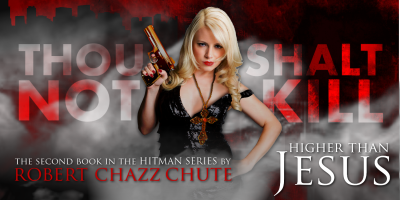
Dark Higher Than Jesus banner ad

I wouldn’t have changed my strategy if not for the change in the sales dashboard.

The changes make it easier to identify where the ball is not bouncing. Since my crime novel is well placed to fly higher, I’m attaching a booster rocket to it. 

~ Now you’re wondering about the art, right? That’s awesome work done by my buddy, Kit Foster of Kit Foster Design. More than just awesome covers, he can do ads and web banners, too. Spruce up your author sites and campaigns to sell books. He’s a very nice guy and his rates are very reasonable. You’ll be glad you did. Tell Kit that Chazz sent you.

Filed under: Amazon, book marketing, , , , , , , , , , , , , , , , ,

Bestseller with over 1,000 reviews!
Winner of the North Street Book Prize, Reader's Favorite, the
Literary Titan Award, the Hollywood Book Festival, and the
New York Book Festival.

http://mybook.to/OurZombieHours
A NEW ZOMBIE ANTHOLOGY

Winner of Writer's Digest's 2014 Honorable Mention in Self-published Ebook Awards in Genre

The first 81 lessons to get your Buffy on

More lessons to help you survive Armageddon

"You will laugh your ass off!" ~ Maxwell Cynn, author of Cybergrrl

Available now!

Fast-paced terror, new threats, more twists.

An autistic boy versus our world in free fall

Suspense to melt your face and play with your brain.

Action like a Guy Ritchie film. Funny like Woody Allen when he was funny.

Jesus: Sexier and even more addicted to love.

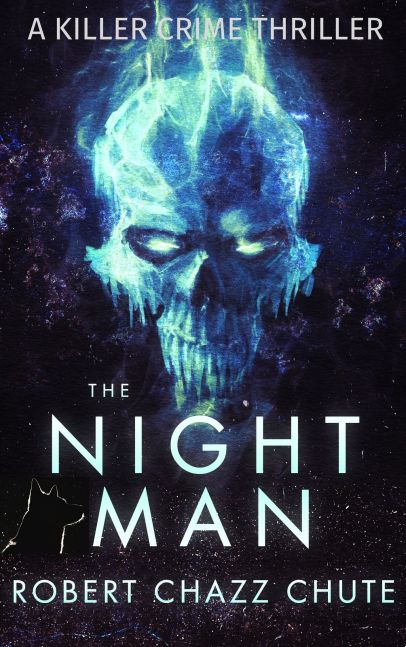
You can pick this ebook up for free today at this link: http://bit.ly/TheNightMan

Join my inner circle at AllThatChazz.com

See my books, blogs, links and podcasts.

Enter your email address to follow this blog and receive notifications of new posts by email.

Join 2,063 other subscribers