C h a z z W r i t e s . c o m

See all my books at AllThatChazz.com.

Writers: Two links on promoting your work the right way

business,accounts,accountant,office,boss,manag...

Image via Wikipedia

Sometimes the toughest part of marketing is not annoying your target audience.

Try to market in smart and happy ways to avoid overkill.

I know when you’re talking about your babies, it’s hard to hold back.

An Author’s Plan for Social Media Efforts by Bestselling Author and Social Media Expert, Chris Brogan

Book Marketing Floozy

Filed under: Publicity & Promotion, publishing, , , , , , , , ,

Writers: Why your worst ideas ever might be your best

Andy Warhol: Campbell's Soup Cans (MoMA - New ...

Image via Wikipedia

Three words: Andy Warhol. Soup.

Warhol made his name by making art out of the everyday. Campbell’s soup cans became transcendent when we saw them again through Warhol’s eyes. But don’t you think he encountered a lot of resistance along the way? Lots of people have.

When you look at creative endeavours, it can be very difficult to tell a good idea from a terrible one. In fact, some of the best ideas, appear to be the worst ideas ever at first glance. 

Ghandi said, “First they ignore you, then they laugh at you, then they fight you, then you win.”

Publishing. Film. Art. It can all be like that.

Books have been written about rejection (and a lot of them were probably rejected quite a bit before finally getting published.) They are pretty funny when you look back on them now. Keats was told he couldn’t use language. The first guy who looked at Everybody Comes to Rick’s wrote that he gave the writer ten pages to grab him and he didn’t. Everybody Comes to Rick’s became Casablanca. Neil Gaiman‘s The Graveyard Book is a more recent example. It’s a great book about a baby whose family is murdered. The baby wanders down to the local boneyard to be raised by the ghosties there.

Yeah, I know! And yet. And yet.

Feel bad about getting rejected? Remember this: “Norton, this idea of yours is so crazy, it might just work!”

Great ideas often come in disguise. From the outside, they look just terrible. when you finally succeed (or go indie and make it happen on your own sans gatekeepers) you can wipe your tears away with a fifty.  (Okay, a five-spot. You’re a writer, after all.)

Filed under: publishing, Rant, Rejection, Writers, writing tips, , , , , , , , ,

Book Information Centre Blues

The blue copyright symbol drawn in SVG. Svg ve...

Image via Wikipedia

Occasionally, you will run into someone who either expects you to know the unknowable or dismisses what you do know. When I worked at The Canadian Book Information Centre, it happened all the time.

Case #1: One fellow, so very arch and British one might think he was sent over from Central Casting, asked what Canada’s top cookbooks were.

You might be able to google such information now, but back then we were expected to somehow pull the numbers and titles from the ether. Or from our asses.

I told him I didn’t have those numbers.

“I would have thought that would be general industry knowledge,” he replied.

“No,” I said. “The publishers don’t supply us with those numbers. Only their accountants know the truth. You could go back through old Globe & Mail newspapers and find the top cookbooks by going through top ten lists, I suppose.”

“You can’t do that for me?”

“Uh, no. Head to your local library.” Where people are actually paid to help you find the data for your book proposal, I thought.

He hung up in a huff before I could explain that I worked for publishers as an editor and publicist. My title was Project Manager, not Phone Monkey for Anyone Who Owns a Telephone. (Did you know they’ll give just about anyone a phone? I know! Exactly!)

Case #2: Another aspiring author asked me about copyright. He was desperately worried some evil editor would steal his idea.

This is a common concern, but it’s a nearly invalid one since it happens so rarely. As it happens, I knew a lot about copyright. And so:

No, you can’t copyright an idea alone. If you could, the guy who got to Good versus Evil and Boy Gets Girl first would be rich, rich, rich.

No, you don’t have to send your manuscript to some office in Ottawa or Washington. You wrote it. Your name is on it. It’s yours worldwide (except for parts of Asia.)

No, putting the copyright symbol on a manuscript is considered unnecessary, amateurish and insulting to the editor or agent who receives it.

No, you don’t have to mail your manuscript to yourself. The idea is to get the post office’s official stamp on the sealed envelope containing your treasure (as if that couldn’t be faked.) You can if you want to, but the trick is having something worth stealing. Besides, to my knowledge, any plagiarism case that’s ever made it to court doesn’t hinge on whether you’ve got a stamp on a sealed envelope.

“Well, I assure you my manuscript is worth stealing and I will mail it to myself!” Click!

Me to fellow harried Project Manager: “If he had already made up his mind what he was going to do anyway, why call us?”

The misunderstanding of our role wasn’t the callers’ fault. We were named The Canadian Book Information Centre. However, we worked for publishers to promote their books to media.

We cut the wayward calls in half the following year by getting our listing out of the Yellow Pages.

Filed under: Books, Editors, getting it done, publishing, Rant, Rejection, Unintentionally hilarious, writing tips, , , , , , , , ,

Writers: What is your genre? What do you read?

St. Augustine writing, revising, and re-writin...

Image via Wikipedia

Most of you are writers.

Please let me know the genre in which you write.

Also, what do you read?

Some writers avoid reading fiction from their own genre because they worry it will influence their own writing. I think there’s a difference between a good influence, a bad influence and plagiarism, so I read a lot within my genre (literary fiction and horror.) I also read widely outside my genre.

I usually have ten or so books going at one time. I either have an undiagnosed case of Attention Deficit Disorder or I’m easily bored. Oh, or maybe those two things are de facto the same thing. (I know I’ve hit a really good book when I don’t switch it out with another book. and slow down to savour it.)

I also have an extensive collection of reference books and how-to books on writing, social media and most aspects of publishing. Do you have a favourite book on writing or perhaps you reject the premise? What writing books do you love? Which could you (and the universe) do without?

I’d like to hear from you.

Please leave a comment and let me know your thoughts.

Thanks!

Filed under: book reviews, Writers, , , , , , , , , , , ,

Author Profile: Nate Hendley

Nate Hendley is a Toronto-based author who was born in Connecticut in 1966. He is a full-time journalist and writer and has published

nate hendley

Nate Hendley

over a dozen books, primarily on true-crime topics. He lives with a demanding cat and has a website at www.natehendley.com. You can check out his latest works on the Five Rivers website at http://www.5rivers.org/index1.html

His books: Motivate to Create: A Guide for Writers (Practical tips on how to start up or step up a freelance writing career) & Al Capone: Chicago’s King of Crime (An intimate portrait of America’s most famous gangster)

Previous works by Nate Hendley:

Edwin Alonzo Boyd: The Life and Crimes of Canada’s Master Bank Robber, The Black Donnelly’s: The Outrageous Tale of Canada’s Deadliest Feud, Dutch Schultz: The Beer Baron of the Bronx, John Lennon: Music, Myth and Madness, Crystal Meth, American Gangsters Then and Now: An Encyclopedia, Bonnie and Clyde: A Biography, Jean Chretien: The Scrapper Who Climbed His Way to the Top, William Lyon Mackenzie King: The Loner Who Kept Canada Together

 CW: When did you first know you wanted to be an author?

NH: I was around 10 or so, living in England (where my dad took a year-long sabbatical in 1975-76). I recall I started writing—by hand—a long war story that I ended up calling “Tank Tracks in North Africa”. As might be surmised by the title, it was all about a bunch of guys in a tank fighting Rommel in the desert in World War Two. That’s the first long-form book I recall putting together. I think it ran to something like 50 pages.

CW: Tell us about your book. How did you get the idea?Al_Capone_book[1]

NH: Two books actually. One of them is on Al Capone, the other is about motivation for writers. The Capone book was originally part of a series of gangster tomes I penned for Altitude Publishing, an Alberta-based company that ,alas, is no longer around. When Altitude went belly up, Five Rivers Chapmanry kindly bought some of my Altitude books for republishing.

The second book, Motivate to Create: A Guide for Writers, is a rather drastic revision of a book I initially self-published. Lorina Stephens, publisher at Five Rivers, liked the concept of my book but wasn’t totally excited by the contents. I ended up rewriting quite a bit of the book, making it more professional and taking out a lot of the personal anecdotes that filled my self-published tome. The newly revised book is considerably better than the original, which demonstrates the power of having a good editor crack down on your material.

 The idea for Motivate to Create came from the fact that there is a dearth of info out there on motivation for non-fiction writers. Almost every writers’ motivation book is aimed at creative writing, which is fine, but not what I do. A lot of the existing books seemed very sappy, too—all this crap about “finding and unleashing your inner muse.” I was more concerned with concrete, practical advice that had already been field-tested by other, established writers.

CW: What research was involved in your book’s development?

NH: Researching Al Capone involved reading all the available literature on the man (which is quite considerable) and tracking down newspaper and magazine articles from the period in which he lived. I was pleased to be able to correct certain falsehoods about Capone that have been perpetuated throughout the years. He was never a national crime boss, for example. He controlled the Chicago underworld but certainly didn’t control organized crime across America.

For Motivate, I queried various writer friends and acquaintances and used some of their quotes throughout. The rest of the material was thought up by me.

 CW: Do you have any formal training in writing?

 NH: I went to journalism school after finishing university. I never actually completed J-school, having failed desk-top publishing three times in a row. Anyway, journalism school taught me the nuts and bolts of news and feature writing and was an invaluable experience.

 CW: What is your writing process?

I don’t really have a writing process. One of the tips I offer in Motivate to Create is not to get too precious about your writing time (i.e. “I only write when the golden sun rises from the horizon and the muse dances upon my forehead”). When I have a writing project to do, I just sit down and do it.

CW: How long did it take you to write the book and find an agent and publisher?

NH: Capone took about a year to put together (research, writing, editing.) Motivate was spread over a longer period because I essentially rewrote the book when Five Rivers purchased it. Self-publishing is a pain in the butt so I am glad that a real publisher took the book over. I still have about 30 copies of the original book sitting around my apartment. Unless you’re really interested in marketing and promotion, I would not recommend self-publication.

 CW: What’s the most surprising thing you discovered in writing this book?

motivate_to_create[1]NH: Can’t really think of any. I was pleasantly surprised at the number of freelance writers willing to respond to a general questionnaire I sent around for Motivate to Create.

CW: What was the biggest disappointment you experienced through this book? 

NH: The biggest disappointment was that I didn’t get fabulously wealthy through self-publishing. I thought orders would come flowing like a river. More like a trickle from a tiny pond.

CW: What was the hardest part of the publishing process? What did you most enjoy?

NH: Research and editing are by far the hardest part of the publishing process. Writing is the most enjoyable. When you self-publish, doing all the promotion and marketing is the hardest part.

CW: What advice would you give unpublished writers?

 As Creedence Clearwater Revival once expressed it so well, “keep on chooglin’.” In other words, just keep at it. Practise doesn’t necessarily make perfect but it does make you more professional.

CW: Have changes in the book industry forced you to change how you published or marketed your work?

NH: Yes. Thanks to websites like Facebook, Twitter and LinkedIn I can do more to promote my wares online.

CW: What’s your next book project and what can you tell us about it?

NH: I’m revising a book about the drug methamphetamine for Five Rivers. It is a revamped version of a book I initially did for Altitude that came out in 2005. The new version has new interviews and updated statistics.

CW: Thanks for doing this, Nate! You can follow Nate on twitter at http://twitter.com/natehendley or email me at nhendley@sympatico.ca . The Five Rivers site is located at http://www.5rivers.org/. Best to check the Five Rivers site for any info on upcoming book signings.

Filed under: Author profiles, author Q&A, authors, Books, publishing, writing tips, , , , , ,

When did you know you wanted to be a writer?

Aquarelliste - MCL

Image via Wikipedia

It’s a question I ask as part of the regular author profile feature (appearing in this space Thursdays.) 

It’s one of those questions that I find endlessly fascinating, like:

1. How did you and your love first meet?

2. What do the voices in your head tell you?

3. Would you rather be right or happy?

Almost every writer, it seems, can remember the moment they felt the pull.

Maybe it happened when they read a great book. (Which book was it for you?) Or they like the lifestyle because they are unsuited for anything else (read: you are otherwise unemployable.) Maybe they had an amazing experience they had to share or teach. (What was yours?) Even a lousy book spurs some people to say, “I could do better than this crap!” (If that’s you, which book was it?)

For me, it began with reading, I’m sure, though there wasn’t a particular book that got me thinking writing was for me. I first announced my writerly intentions to strangers. I was maybe eight, though it’s hard to say. I ascribe any vague memory from childhood to that year and, in truth, it can’t possibly have been that eventful. That would leave all the other years empty of anything. But that is how it feels.

The strangers to whom I made my announcement were the printers at a local shop. I wandered in (ignorance is a strange propellant) and asked for paper. “For a book” I added, because I thought I needed to get it from them, for some reason now unfathomable.

I remember the inky and oily smell of the place and the noise of the machines. I loved that smell. I still love stationery stores. All those empty pages call to me. Due to this compulsion, which stops just short of a sexual fetish, I own many more journals than I’ll ever fill and many more pens than I could ever use. The smell in that shop (and the look and smell of sunlight on turquoise water colour paint) are the only solid sense memories I carry from early childhood.

The printers smiled, indulged me, and I walked out with some brownish scrap paper. I walked taller and with real purpose, probably for the first time. I should have been holed up in a library at that stage, though I did that, too. I always preferred books to people. Childhood was rough.

Imagination, stories and the waiting world were my escape.

They still are.

When did you first know?


Filed under: Author profiles, author Q&A, Books, publishing, What about Chazz?, Writers, , , , , ,

#Authors : I want to eat your brains (and profile you)

The left frontal lobe (red), the forward porti...

Image via Wikipedia

This morning I mentioned I have some authors lined up for profiles for publication in this hallowed space. For instance, author of My Camino and friend of the blog, Sue Kenney, will share her journey across Spain and to publication in the near future. Not only is she an author, she’s a filmmaker, too.

Why can’t you spread the glory of your achievement, too? Answer: You can! I want to pick your brain.

I love books and love to hear from authors about their struggles and successes. If you’re an author with a book you want the world to know about (and if you have a book, why wouldn’t you?), shoot me an e-mail at chazz@chazzwrites.vpweb.ca.

I’d like to make author interviews a regular weekly feature if I get enough interest. If your fiction or non-fiction looks like a good fit, I’ll send you a questionnaire to answer et voilà! Instant book promotion as we delve into your climb to the literary pinnacle.

Brains! Brains! So hungry! I want to pick at your brain!

Related Articles

Filed under: blogs & blogging, Publicity & Promotion, publishing, self-publishing, Useful writing links, web reviews, Writers, , , , , , , ,

What books are you buying this Christmas?

Victorian Style III | The Library

The New York Times has some suggestions:

100 Notable Books of 2010 – Holiday Gift Guide

Do you have any recommendations? Must-haves? I’m especially interested to hear if you have a little-known book that hasn’t received the attention it deserves. Also, since they can be the most difficult to shop for, what gift ideas do you have for young adult and children’s books?

Filed under: book reviews, Books, links, web reviews, , , , , , , , , ,

Work with an agent or go directly to the publisher?

Books Exhibition from the Publisher Global Pub...

Image via Wikipedia

Jennifer Represents… asks Do You Even NEED an Agent?

She lays out the conditions for when you should deal directly with a publisher.

My take is, if you’re going to deal with a publisher, you usually need an agent on your side.

If they’re good, agents pay for themselves. They get authors more money (and preferably the right editor, too.)

Do you need an agent? Maybe. Only you can answer and the Jennifer Represents… post can help. 

Next question: do you even need a publisher?

Filed under: agents, publishing, , ,

#Publishing Links: Bad News for Publishers

harry potter quote

I attended a writers’ conference where a keynote speaker criticized a former publisher. The publisher was small, and Canadian, and there had been a dispute over the author’s electronic rights (though the publisher wasn’t selling any digital versions of the author’s work anyway.) That’s when things got ugly. “Small publishers aren’t interested in selling books. They make their money with government grants.” He walked back from that statement and mentioned several small presses he revered, but he had reason for his venom. He bought the rights back at great expense so he could use them properly.

It is true that if you’re a small Canadian publisher, you’re eligible for grants. The big publishers have some margin for error in their budgets. The mid-sized publishers are walking a financial tightrope. That’s the general point of a recent Globe & Mail article on the dangers waters publishers sail. It’s worth reading when you’re trying to choose whom you should send your precious manuscript.

In other news, if you check yesterday’s comments, you’ll see Sue Kenney, author of My Camino, stopped by for a comment about how she wrote fast to fit her publisher’s schedule. (Thanks for commenting , Sue! Check out her site and her wonderful story at www.suekenney.ca.) I mentioned in my reply how many traditional publishers are losing book sales because they don’t have the electronic version available and people are looking for those titles. When you don’t find the titles you want, you buy a book that is available for your iPad.

How do I know this? Because I’ve visited this link: Lost Book Sales | Every day an author and a publisher lose a sale. These are the stories why.‏ Publishers? If you haven’t embarked on your e-book program yet, you don’t have much time left to make the switch before you are irrelevant. (Yes, JK Rowling is the exception. She’s refusing to allow Harry Potter to go digital. Good for her. However, her amazing success is atypical in the industry and shouldn’t be the basis for sales decisions about the rest of the market.)

As if that weren’t enough to make a publisher knock out a window and crawl out on a ledge, I ran across this post on the wave of piracy that’s coming to my favorite industry: Your time is up, publishers. Book piracy is about to arrive on a massive scale – Telegraph Blogs – The BFF‏.

Don’t worry though, friends!

This isn’t a wake.

It’s just a call to make the choice to adapt.

It’s a hope the industry is willing to change.

Happy Tuesday! I’m off to NanoWriMo.

Filed under: links, Media, publishing, self-publishing, , , , ,

Bestseller with over 1,000 reviews!
Winner of the North Street Book Prize, Reader's Favorite, the
Literary Titan Award, the Hollywood Book Festival, and the
New York Book Festival.

http://mybook.to/OurZombieHours
A NEW ZOMBIE ANTHOLOGY

Winner of Writer's Digest's 2014 Honorable Mention in Self-published Ebook Awards in Genre

The first 81 lessons to get your Buffy on

More lessons to help you survive Armageddon

"You will laugh your ass off!" ~ Maxwell Cynn, author of Cybergrrl

Available now!

Fast-paced terror, new threats, more twists.

An autistic boy versus our world in free fall

Suspense to melt your face and play with your brain.

Action like a Guy Ritchie film. Funny like Woody Allen when he was funny.

Jesus: Sexier and even more addicted to love.

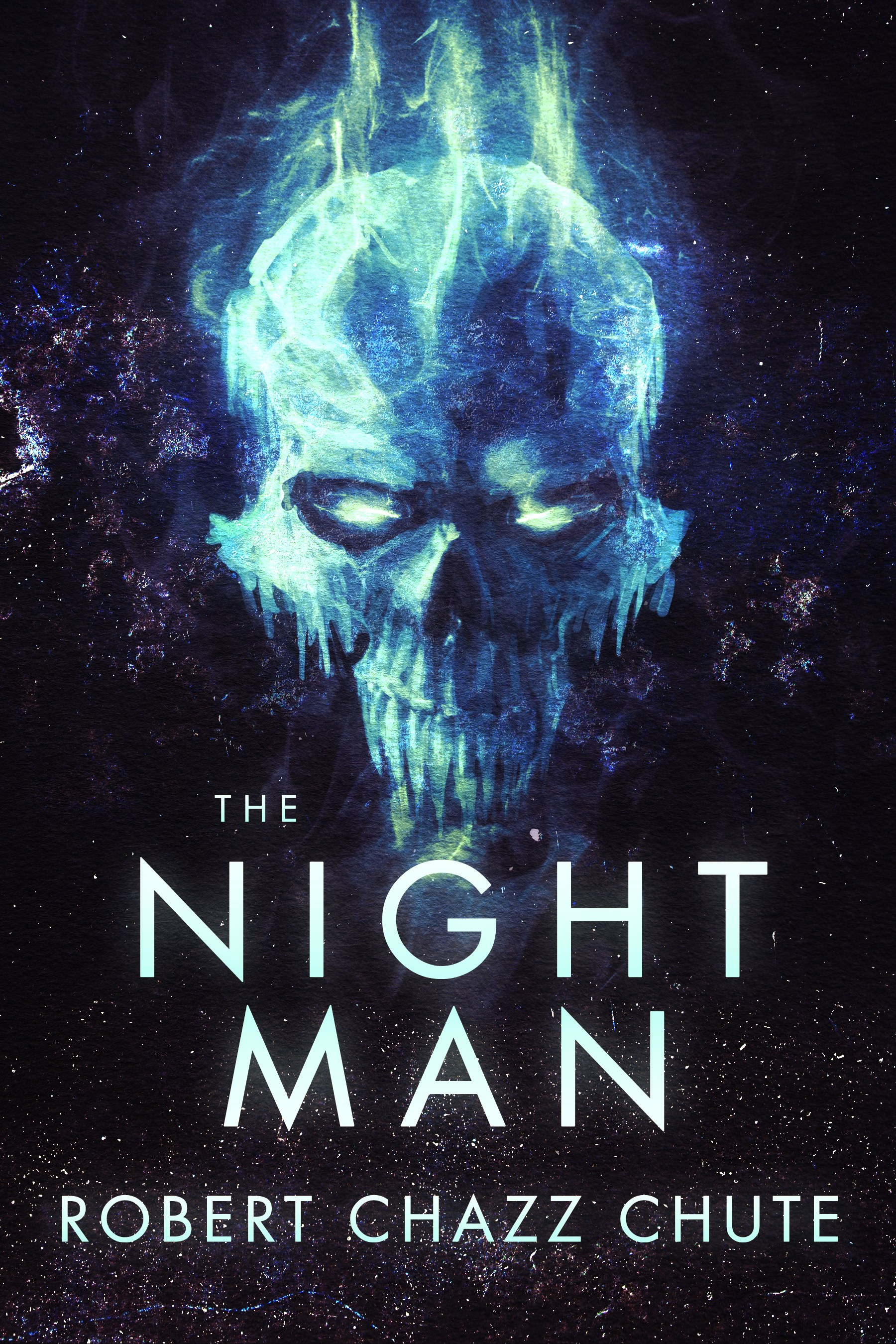
You can pick this ebook up for free today at this link: http://bit.ly/TheNightMan

Join my inner circle at AllThatChazz.com

See my books, blogs, links and podcasts.

Enter your email address to follow this blog and receive notifications of new posts by email.

Join 2,063 other subscribers