C h a z z W r i t e s . c o m

See all my books at AllThatChazz.com.

Author Blog Challenge 19: Choose how to grow your author platform

The Author Blog Challenge writing prompt was: What are the three most important things you are doing to grow your platform? This is such a good question and everyone has so many different answers. I don’t have an answer. I have a survey of what I do. How to grow your author platform? Eh…I have a menu of stuff from which to choose. Choose to do what you’ll enjoy so you can be effective and sustain it.

Just today I read a fellow indie author opine that one day a week of concentrated social media, pumping and pimping, hadn’t helped him a bit. Mind you, his sample was a bit too small. He was only talking about a month, which translated to four workdays. However, he’s not alone in the complaint. You can do a lot of work and still not move the needle in a measurable way, and measurable is really what counts. I suspect what was missing was connection. You have to be interested in people and what they’re doing. Interacting is better than spouting (he spouted.) Failing earnest interaction, when you just can’t bear to rip your heart out of your chest again for another blog post or comment thread, do what I do and make more jokes about strangling mimes.

I’m really very consistent in establishing my web presence. I do something every day and here’s what I’m active in: three Twitter accounts (though the main one is @rchazzchute); Facebook pages; a podcast broadcast two times a week; the author site (AllThatChazz.com) and, of course, this site. I even do a little bit of Google Plus. I always think of G+ last, but I know I picked up a new reader (who promised to review my book!) through G+ today. I know that’s a lot. This is part of my full-time job, no whining. The rest of the time, I’m writing, and no, there’s not time for much of anything else. Most people can’t devote the amount of time I do to marketing and promotion, and yes, I realize I’m very lucky to have such a supportive spouse in She Who Must Be Obeyed.

When you do a lot of social media, you do risk annoying people. I certainly risked that today. My Amazon free promo day was plastered across my podcast, my Twitter and retweeted across at least 50 other Twitter accounts. I emailed some people and reached out a bit through Facebook. Somebody must have thought, “Yeah, yeah, we get it. You’re excited about your book but I got a sammich here!” Even as I was promoting, I noticed a fellow author got cussed out severely on Facebook for his pleas. In my defence, everyone who tweeted me got my support, too. I share. They share. Some would say that adds up to a lot of noise and signal degradation. On the other hand, my novel rose from a dark place in my skull a couple of days ago to #545 on the general Amazon list last I checked (UPDATE: and #73 in Mysteries & Thrilers! Yay!) Self-help for Stoners shot up 140,000 places as a collateral benefit so something’s selling in addition to all those free books.
I curate a lot of helpful information for indie authors. On the one hand, this blog brings me a lot of traffic, but they (well…you) aren’t necessarily interested in reading suspense, funny and weird self-help in the form of fiction, strange humour and crime novels. Some people say writing about writing is a complete waste of time. I say write what you’re passionate about and you’ll never run out of blog posts. I don’t want to blog about animal husbandry. It’s icky hanging out with naked animals.

When I joined Klout, I had assumed most of my influence came through this blog or Twitter. Klout says it’s Facebook where I make the most impact (though my Ex Parte Press page only has 37 likes and my personal page only 177 friends. That’s lousy, though it’s almost 177 more friends that I ever had elsewhere.) I doubt Klout, but it’s hard to say. Besides, maybe that’s too reductionist. In layered marketing, you do a lot of things in order to appear to be just about everywhere at once, like The Flash or herpes.

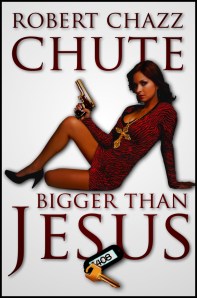
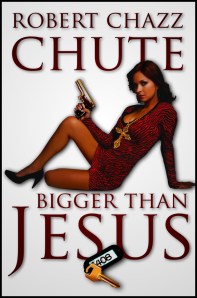
So what are the three things I do that are most effective? I’m sorry. No easy answers. I couldn’t narrow it down that much. I think my podcast, though small, helps me reach out to new people around the world and when the podcast went up at 6 pm this evening, listeners snapped up the free promo. Triberr is effective. World Literary Cafe Tweet Teams help. I’m exploring new ways to advertise on a tiny (to zero budget) like Masquerade Crew, Kindle Nation Daily, and Kindle Book Review. I have to reach out to book reviewers to get noticed. I have to find crime novelists or suspense writers willing to give up a blurb for Bigger Than Jesus.

There’s only one thing I am sure will help me sell more books: I have to get the next book up. And the next, and the next and so on until I am discovered, die or you decide you want you r kids back with all their thumbs attached.

What to do?

Do what you can. Do what you love. Get the writing done first. Nothing should cut into your writing time.

How do I do it? I don’t sleep much. It’s like cramming for finals every day and night.

It would be hell, except I’m having fun.

Filed under: publishing, , , , , , , , , , , , , , , , , , ,

Author Blog Challenge 18: The Top Ten Reasons You (yes! You!) Crave This Book

Please click here to get Bigger Than Jesus

To whom will Bigger Than Jesus appeal? I have serious and much less than serious answers to this Author Blog Challenge writing prompt:

1. People who like a fast beach read of a crime thriller that’s hard to put down. I got the idea for my pacing from Blake Crouch’s Run. There’s a cliffhanger or an aha moment, or several, in every chapter. The tension only cranks up.

2. People who like old caper movies, like To Catch a Thief, Sneakers or The Italian Job. My fondest childhood memories are getting lost in movies to shut out everything else.

3. People who like Coen brothers‘ movies where simple solutions lead to more and more complex problems and the hero is thwarted again and again. Rock? Meet hard place. And now a badger is chewing your jugular as you try to do your taxes.

4. People who like funny, punchy dialogue, including a debate between two hoods: Who shot first, Han Solo or Greedo? (Yes, that’s one of the serious answers and the question does bear on the action at the time.)

5. People who like a lot of twists and surprises. I modelled my plot after screenwriter and author William Goldman‘s penchant for sucker punches where, just when you think you know what happens next, it goes a different way.

6. People who value clever more than gory. For a book about a hit man trying to escape the mob, there’s a lot of word play and when the violence does occur, it’s realistic yet somehow funny in the same way Pulp Fiction could be. The chapters skip along with logical complexity offset by humour.

7. People who like genre fiction that reaches up. Much of the novel has a lighthearted slant, but underneath, when you discover some of the main character’s history, it’s unexpectedly disturbing and heartbreaking. Are you worried I’ve just spoiled  something? Don’t be. I like magic tricks in all of my fiction. I’m telling you up front that I’m going to deceive you and you’re going to watch to catch me at my sleight of hand. The game is, I’m still going to fool you anyway. “Consider the gauntlet thrown,” he said smiling. I know this will work because I often surprised myself while writing Bigger Than Jesus.

8. Movie buffs with an Elmore Leonard sensibility in their reading tastes. Jesus Diaz, the anti-hero of the novel, is a movie buff and, since movies were a large part of his education, he sees the world through a Hollywood lens. The action is definitely influenced by Elmore Leonard’s take on shady characters having strange dialogue.

9. Readers who like a book that plays with them. The entire book is written in present tense, second-person. I loved Bright Lights, Big City for that and I decided that, after twenty-seven years, somebody should try that again. But it’s not just my personal preference or a gimmick at work. There’s a reason. Late in the novel, you get a strong hint as to why the narrative is told as it is.

10. Readers who enjoy a story that ends up in some unexpected places, like a discussion of Salvador Dali’s life, for instance. Bigger Than Jesus is a fun game and a puzzle box of a crime thriller that packs serious emotions behind it.

Some of the less serious answers to this Author Blog Challenge writing prompt include: Everyone with a Kindle or anyone who gets the free Kindle Reading app for any device, NMD (Not my dad), people who enjoy breathing, gorgeous and empowered Latinas, New York pizza joint owners who bought it thinking it was about Jesus Christ but will get sucked in anyway, criminals plotting to go straight, intelligent people (so if you don’t get it…eh, you figure it out), Beatles fans who also love the SIG Sauer, and the authorities who put me on a watch list for my Google searches because of the research for this book.

The second part of the writing prompt asked: How do I connect with them to market to them?

Um. I’m not sure. Have I convinced you yet?

Click the book cover if yes.

GET BIGGER THAN JESUS

If not, send me your email address at expartepress@gmail.com.

Maybe I’ll come to your house.

Maybe I’ll send you something in the mail.

Maybe you’ll wake up hanging upside down.

We’ll work it out.

Filed under: publishing, , , , , , , , , , , , , , , , , , ,

Author Blog Challenge: In 12 hours, Bigger Than Jesus

A lot can happen in twelve hours. Twelve hours ago I began work on formatting my debut crime novel, Bigger Than Jesus. I used Scrivener and I was feeling pretty optimistic that I could knock it out pretty quickly. I’ve formatted plenty before, but not with Scrivener. I’ve been writing with Scrivener, but today was the test to see if I could get the book over to Amazon in one day. Foolish pressure.

I couldn’t put the front matter in for the longest time. At one point I had two tables of contents and neither of them was quite right. I started with the Scrivener video tutorials — fell into a spiral of anguish and frustration — and then got hopelessly lost in the Scrivener manual. I found my way back to sanity by searching for people who had the same frustrations I did. Google. It’s the thing you need when you’re stuck.

That didn’t get me quite all the way to done. Some alchemy and experimentation was involved but, just a few minutes ago I yelled, “It’s alive! IT’S ALIIIIVE!” Twelve hours ago I began formatting. Twelve hours from now, it’ll be up on Amazon (fingers crossed!) I won’t believe it until I see it up there with my other precious babies.

What a day. What a night. I’ll have much more to say about Bigger Than Jesus, of course. I want to tell you about how I worked with my amazing graphic designer, Kit Foster, to come up with the cover. I want to talk about the book and the factors that brought it to fruition. I want to hint at what’s next for the series and all my other books. The important thing for me was to give it a rigorous editorial scrubbing and then send it out in the world. I’ll play catch up with all the other things I have to do to make this baby grow, but sunlight took priority over having everything in place.

And there’s so much yet to do! I have to ask people to review the book, buy the book, get blurbs. It’s going to be an audiobook and a paperback (and soon!). I have big plans for my funny, clever, hit man Jesus Salvador Diaz. People will like and pity him despite themselves because Murphy’s Law will take him down long before the NYPD, if the lovely Lily doesn’t break his heart irreparably first. His stories are a Coen brothers’ movie: bad things happen on the wide and easy road out of town.

For tonight, though, I’m going to toast my milestone, sit back and watch Real Time with Bill Maher and maybe Bridesmaids and know that I’ve put in my full day at Ex Parte Press and I don’t have to feel guilty for sitting back and watching TV tonight.

If you don’t know this feeling yet, I hope you experience it soon.

Filed under: publishing, , , , , , , , , ,

Author Blog Challenge 14: Eleven ways writers get surprised

Gremlins will push you 'round^ Look where you'...

Gremlins will push you ’round^ Look where you’re going^ Back up our battleskies^ – NARA – 535380 (Photo credit: Wikipedia)

Some surprises you’re in for when you publish your book

Please note: This list of surprises for writers is not meant to be comprehensive. The worst surprises, like dying by flaming harpoon attack to the forehead (before you finish your novel) or a hard drive exploding and taking out two floors of your house are not included. Those circumstances just aren’t lighthearted enough for my intent here. Oops. Well, I guess you’re worried about that stuff now, too.

1. You thought your manuscript was clean and it was, it was! Gremlins went in and put those ugly typos in there! That’s the only reasonable explanation.

2. Publishing your book is a huge event in your life. Remember when you had a baby and you expected the world to pause to acknowledge your contribution to, and sacrifice for, the human race? Wars should stop and the earth’s rotation should cease for a moment, if only so we can all bow. Sadly, it’s not a huge event in everyone’s else’s life. Many people are indifferent and it’s just not efficient to go out and kill all of them with a rusty axe.

3. The people you thought would love your book? They don’t. My dad still hasn’t read anything I’ve written. He’s waiting for me to write about him. (What he doesn’t know is that he really doesn’t want that!)

4. Lots of people are readers but they do not write reviews. You’ll expect reviews. Eventually you probably beg for reviews. Worse? You still won’t get them, even from friends and family! I thought about it, but there is no joke I can tag on this item that will soothe the sting. It’s more tragic than a flaming harpoon to the crotch.

5. Someone will object to something you wrote. What will surprise you is what they object to. For example, some people get riled up about which font you chose for your cover. You’ll assume that joke your main character made about religion was, at most, funny. At worst? Somewhat innocuous. Some blogger, somewhere, will call you the Anti-Christ and call on Jesus to smite you because, apparently, Jesus loved capital punishment. Oh, wait… (At least outrage and threats of censorship increase sales, so there’s that.)

6. Some people will treat you better, briefly, because you’re an author. Then they’ll treat you worse when they find out you’re a self-published author. For some reason, you have to answer for every grammatical mistake and every (so-called) undeserved success of your breed. Corollary: If you become a very successful traditionally published author, some people will hate you because lots of people read your books. Or the haters will hate because they aren’t you. Suggestion: A dog is reliably faithful. Definitely buy a dog. They can’t read so they’re blameless.

7. Formatting will be tough the first time. The first time, you’re a dim-witted chimpanzee with a keyboard. The second time you do it, you’ll be surprised how easy it is. You will have evolved to a very intelligent Rhesus monkey.

8. By the time you’re through revisions and formatting, you and your editorial team will have gone through the manuscript so many times you’ll be sick of it. This is the story you loved so much. Now your cute baby has grown into an angry, gangly, acne-scarred teenager and you just want them out of the house they can go make money and so you can make room for a sweet new baby who loves to cuddle.

9. Actual publication won’t be quite as momentous as you anticipated. How could it equal all those dreams you’ve had since childhood? You pictured a limo and an elegant cocktail party. Instead, it’s you in sweats, late at night and a little drunk on weighty potential and rum and Coke, debating if you’ve done everything you can before pushing a button. It will feel more like pulling a trigger. You may be filled with more dread of bloody failure than anticipation of success. I’m about to push that button and I’ve had stress headaches all week. I just want to sleep instead of poking around Scrivener‘s bowels to prep the manuscript for Amazon and CreateSpace. You’re not alone in the struggle, but that’s of little solace because you are alone in the room.

10. Getting someone to read your book is harder than writing your book. You’ll spend more time marketing than you ever dreamed necessary, even if you figured it would take a lot of time. Triple your marketing expectations and get a treadmill desk so your ass won’t get as big and wide as your hopes and dreams for your writing career.

11. But here’s the biggest surprise: Though you will get luckier the harder you work, it’s still a lot about luck and timing and some happenstance. Nobody admits this variable. When you win, it’s all attributable your meteoric wisdom. When you succeed, you’ll figure it’s because you made all the right moves and you knew what you were doing with every step. Revising history and shining up the truth is natural. Everybody does that. It keeps us from running away screaming from that “Click to Publish” button.

Filed under: publishing, , , , , , , , , , , , , ,

The Truth About The Price Of Books

See on Scoop.itWriting and reading fiction

Over at Moody Writing, mooderino has posted an interesting take on ebook pricing, the competitive market and the value of art. Some stark realities here. Click the Scoopit! link and have a read. See on moodywriting.blogspot.co.uk

Meanwhile, on a related note, Russell Blake has another thought-provoking blog post about Amazon’s changes in how rankings are calculated. Going from tracking unit sales to tracking dollars makes a huge difference to indies. Mr. Blake also predicts the end of free withing the next 30 days! The future is uncertain. On the other hand, same as it ever was. Read that excellent post here.


Filed under: publishing, , , , ,

The Myth of the Writer’s Thick Skin

I wrote about rating the dreaded one-star review last week (Scan down the page for that). Now let’s delve into the thin-skinned versus the thick-skinned as we deal with genuinely nasty and undeserved critiques. When you put yourself out there, it’s going to happen. People disagree about what’s good and some of them think that if they don’t like it, you should stop what you’re doing and stop breathing, too. (Read some of the uglier one-star reviews on Amazon or the plethora of terrible, even racist, comments on popular YouTube videos and you’ll see what I mean. I’m not talking about the thoughtful critiques you should take seriously to improve. I’m talking boneheads, here.)

Writers are often told that rejection itself is good for them. Somehow, all the bad news from agents and editors is supposed to toughen you for when you earn your right to stand among the pros and get bad reviews. What a buttload that is. Seasoned pros feel anguish over their detractors, too. You’ve heard it gets better? It doesn’t. It gets worse. Unless you have the self-possession of a serial killer, almost all of us are thin-skinned when it comes to nasty reviews. Not that it will necessarily matter to them, but one-star reviewers should know that their unkind words are burned into our brains forever. The Pulitzer and the Nobel prizes? We’ll have to dig out the letters to remember the positive stuff but our memories for nasty is eidetic and forever.

Comedian Jimmy Pardo related a great story on a podcast called The Myoclonic Jerk this week. (Download it from iTunes or Stitcher. There are some great segments on writers dealing with rejection, dejection and writer’s block.) Pardo opens up about his first and last disastrous appearance on The Tonight Show. For reasons that aren’t on him, the set did not go well and it took him years to get over it. “And this,” he points out, ” was before the Internet!” It’s a great point. The same experience today would have been vivisected across the Internet by thousands of snarky, anonymous nasties, critiqued barbarically on YouTube and would live on even now. As it was? It still took him years before he got over the trauma.

Director Kevin Smith has a cult for a fan club. He also has people waiting for him to do anything just so they can pull it apart, sometimes sight unseen. They criticize his weight and his appearance. Some people wouldn’t give him credit for making a smart artistic choice even by accident. Surprise! Surprise! Growing up fat and criticized doesn’t make you any less sensitive to the nasty comments when you grow to adulthood, especially when you get kicked off a plane for being a person of size. Hurtful comments remain hurtful because words matter, even when the losers and wannabes making said comments don’t.

Performer Penn Jillette has some really interesting things to say about criticism. His show, Penn & Teller, actually gets very few criticisms in the run of a year, but he remembers every single ugly one. The unfair critiques still bother him, but he did come to the realization that they shouldn’t. Jillette points out that every snarky criticism he takes too seriously is an insult to all the thousands of fans who take the time to send him praise. He’s right! We should focus on the reviews that can help us. Those won’t all be the five-star kind, but a healthy ego and confidence serves any writer in moving forward. Again, I’m not campaigning for worship, here. Respect will do.

Now if only we could figure out how to not let the bad reviews bother us. As I pointed out in last week’s posts about reviews, the higher you climb in Amazon’s rankings, the more likely you are to attract people who wouldn’t like your work no matter what. As author Russell Blake suggested on his blog, that could be because the one-star reviewers are grabbing up free copies to fill their Kindles indiscriminately and getting books that are outside their preferred genre. Those reviews that say, “This is crap because it isn’t at all what I expected,” are annoying. (As I suggested to all reviewers, both naughty and nice, please check the  sample before clicking the buy button.)

We can try to accentuate the positive and focus on the good. I don’t know how to do that, do you? Really? Do tell! (Seriously, we all want to know. Leave a comment on how you deal with particularly nasty reviews. One idea from last week was simply to look at the nasty reviews for the books you love and recognize you share a commonality with your most favorite writers: doofuses.)

We can grin and bear it, but not many of us can do that without a lot of pretending while we simmer inside, plot our enemies destruction and, in the end, allow a nasty review to ruin an entire morning of what would otherwise be productive time. (Hell, I got into a scuffle over politics on Facebook which slowed me down for an hour and that was with a great friend!)

We can tell ourselves to consider the source and dismiss it. It might be a good idea. It’s never actually been tried in recorded history. That’s just something people tell victims of bullies. We get hung up on that mysterious “dismissing” part of the plan.

We could meditate, which someone once said is better than sitting and doing nothing. I meditated for a long time. I learned something powerful about meditation: It’s boring and not for me.

We could tell ourselves that any critic is only talking about your book, not you. That’s might be right. Maybe it’s more like when a stranger insults your child. We all take that well.

We can theoretically just avoid reading reviews, but no one will do that and even if you did, your mom would call to read the bad review to you over the phone.

We could exercise out stress away. That’s really good advice I’m keep telling myself I should take.

There is one thing that seasoned pros do that’s different from overly delicate dilettantes: Writers keep writing. A nasty review can put a speed bump in your day, but the only remedy I know to assuage the pain of adversity is to pull my WIP up on the screen, put my head a few inches above the keyboard and write. Furiously. Move on to the next. “Next” is a powerful word. “Begin again” are two powerful words. Your people are out there. Your readers will appreciate you. And the ugly one-star reviewers writing undeserved vituperation? Nasty reviews are probably the extent of all the writing they’ll ever do.

Swear under your breath and keep writing, just like the seasoned pros! 

Continuing to write despite it all, not thick skin, is the mark of a professional writer.

If you’ve got thick skin, try a loofah.

Thin skin? That’s okay. If you look closely, writers are almost human, too.

Filed under: publishing, , , , , , , , ,

Who reviews the reviewers? You could.

The second generation Amazon Kindle, showing t...

The second generation Amazon Kindle, showing the book Alice's Adventures in Wonderland (Photo credit: Wikipedia)

Maybe we need to make a concerted effort to review some reviewers so they’ll either change, cheer up or shut up. Allow me to explain before you give this blog post a one-star review.

I’m in the home stretch in completing my crime novel and after a hard day sweating over a hot keyboard, I dip into my Kindle to unwind. As I search for new books to load up on, I find myself drawn to scan Amazon reviews. The sad truth is, I haven’t been reading the five-star or four-star reviews much. I’ve been clicking on the one-star reviews and reading with horror.

There are several reasons for my self-abusive behavior: 

1. I’m looking for mistakes to avoid. Not all one-star reviews are wrong and I’m trying to glean the honest from the brutally honest. Some books are plain bad.

2. Cranky people can be funny sometimes. Sometimes on purpose. Just as villains can be more interesting to write than heroes, a bad review is often more interesting than a positive one…at least to write, possibly to read and, as far as achieving the purpose reviews are meant for? We’ll get to that in a moment. Hang in for the punch.

3. Five-star reviews tend to sound alike while the one-stars should be more interesting. This is the Anna Karenina/book review version of “Happy families are all alike; every unhappy family is unhappy in its own way.”

Generally, reading one-star reviews has proved a mistake because either it’s depressing or annoying. I should probably quit reading them. Or, we could review the reviewers in the hope they might improve just as they supposedly do for our betterment. That is the purpose, isn’t it? Or is it?

Hm. We’re writers. We should be able to do a better job than many reviewers at reviewing. Shouldn’t we?

With regard to point 1: The one-star reviewers often haven’t finished much of the book they’re reading and their criticisms are often inarticulate, too harsh or too vague. “Yuck” doesn’t inform anyone of anything except the reviewer might be a dim seven-year-old with a limited vocabulary and access to their parents’ Amazon account.

As far as point 2 goes, the hate comes through, but there’s not often a lot of creativity in the funny department. The problem is that too brutal a review isn’t a message conveyance system. It’s just a knife slashing from out of the darkness wielded by a bitter, blind assailant. Some reviewers offer such consistent patterns of hatred, I suspect they don’t enjoy reading but reviews are an outlet for problems that are traditionally worked out on a couch with the aid of powerful psychopharmaceuticals.

As for point 3: I was wrong and Anna Karenina was wrong. The hate sounds more alike than the all-out loving reviews. People love different aspects of a book but they repeat the same stuff that bothers them, often within the same one-paragraph review.

The Internet is mean because it’s anonymous. Some people mistake mean for being intelligent or funny. Nah, it’s often just mean and dumb. We keep hearing the rule “Don’t say anything on the Internet you wouldn’t say within bitch slapping distance.” It’s good advice crazy people don’t take.

Recently one of my books, Self-help for Stoners, got its first three-star review. (The others were four and five stars and wow did those make me happy!) The reviewer who gave that book three stars wasn’t in love with the drug use aspect of the book. Instead, he winced and I don’t think he meant metaphorically. I’m always intrigued how people react to that book because some have told me it’s anti-drug (Get off your ass, stoner!) and most assume it’s pro (What a wonderful world it could be. [insert trill of violins rising here] ) When people ask me straight out, I say it’s anti-censorship and pro-freedom but mostly it’s stories of suspense that challenge readers to draw their own conclusions.

Though it was a three-star review, the reviewer found a lot to love and respected the work enough to give it very thoughtful consideration that I appreciated. It was largely complimentary despite the aspects he disapproved of. That’s pretty decent and open-minded of him, don’t you think? Lots of people have three settings: love, hate and apathy. The mark of a good book review is an appreciation for nuance. Would I prefer unmitigated bouquets and cyber kisses? Of course, but it was still a good review from him and a good review for me. (In retrospect, I wish I’d sent him Sex, Death & Mind Control. He probably would have enjoyed that book more. The style has similarities and the subject matter is still suspenseful fun but there’s nothing there that could be considered advice.)

Which brings us back to those hateful one-star reviews. You know those little boxes that say: x number of y customers found this review helpful? Yes? No? I’ve been clicking “No” a lot lately. Too many of them are just too mean or uninformative or uninformed. If you think a review breaks the bitch-slapping guideline, click No. (Or click Yes if it was disapproving but helpful, funny, clever, civil or anything non-hateful and crazy.)

Suggestions:

If you only gave the book five minutes or a few pages, you aren’t qualified to review it. Move on. (I don’t know how much of a book you have to read before you’re qualified to review it. 50%? 75% 100% including the ISBN? Hence the Question of the Day at the bottom of this post.)

If you couldn’t wait to delete it because it’s somehow digitally sullying your Kindle, okay, but very often these folks are really mad at a book that was free. I’m not suggesting a free book should be bad. I’m saying, let’s keep our rage in check and our world in perspective. You tried something and it cost you nothing but time and you didn’t really give it much of that, did you? I don’t waste time finishing a book that I don’t like. There are too many good books out there and life is too short to get all OCD with, “But I got it so I’m committed to this living hell now!” C’mon. Let it go.

Please read a sample before you buy: “I thought by the title that it would be a summer romance and it turned out to be borderline porn about a war between foot-fetishistic elves and fairy vampires! I’m pissed!” We are all the star of our own movie, but just because you hated it doesn’t mean the extras milling around at the back of your set wouldn’t enjoy it. Leave it for those foot-loving peons and weirdos. Stars should be gracious with the supporting cast.

Nastiness is forever, so please check yourself before you wreck somebody else. An ill-intentioned review could  have real-world consequences. At best, you could dissuade someone from something that they could enjoy or maybe even love though you didn’t. At worst, you’re the one taking money away from some poor sod whose only crime is using too many adverbs. Ease up on the stick and don’t overshoot the runway.

What’s your motivation behind a bad review? A friend of mine has mentioned that once his book hit high rankings on Amazon, the nasty reviewers boiled out of the woodwork as if to make a point of taking him down a peg or two for having the audacity to do something that pleased a lot of other, happier people. Another author got a nasty review on her book which she suspected was payback from a writer who had asked for an honest critique and got one she didn’t like. (Warning to the petty and petulant: You don’t get help or even civility in the future if the word gets around that you’re a nit. This is the Internet. Word will get around.)

When you make a big deal about the book being a sub-standard work from an indie press, you’re smearing all hard-working, low-resource indies and dreamers with the same acid-tipped brush who are providing some grateful people with very inexpensive information and entertainment. That’s an ad hominem argument which is Latin for “Shut the $#@! up.”

Are you counting typos as you read? I recently mentioned a reviewer who said he liked a book but started off his review with the fact that he found five typos. If you can’t handle a book with five typos over 250 pages, we have a tank lined with cotton waiting that will protect you from the world. You’re too fragile for earth’s atmosphere. Once again, ease up, man! Many of us (most?) are doing all we can to prevent typos and as much as it may annoy you to find a mistake in someone else’s work, it kills writers to find it in our own books. (You can read a traditionally published book with as many typos. Lots of people hate that argument, so let’s try this tac: You can have a traditionally published book  with (what you perceive) as no typos! Yay! You will, however, have to pay ten times more money for it. Deal? Deal.)

Authors: Please read the whole review and weigh it with due consideration. Just as we hope book reviewers will be civil, gentle and thoughtful and read enough to have a reasonably informed opinion, we should assess reviews individually before clicking that dismissive “No” button. Let’s not let our egos impair our journey to improvement. (If you figure out how to do this, please write me explaining how. I’ll do anything short of meditation, a word whose language root comes from a Latin phrase meaning “Boring as $#@!”

I do thank people for decent reviews. I don’t encourage anyone replying to a nasty review. We can legitimately use the “Was this review helpful?” buttons as they were intended without getting sucked into a black hole of bitterness. If you find yourself explaining why someone should love your book — my baby! my baby! — either you wrote something incomprehensible or they’re kind of dim. Either way, arguing is a waste of time. Use that time to instead write another (great!) book and accept that no one book is for everyone.

Try this: Take a book you love. Look up the best book you ever read! Read the reviews. See all those one-star reviews? Yeah, that’s what I mean.

Question of the Day: How much of a book do you read before you feel you can honestly review it? I welcome your (helpful) comments.

Filed under: publishing, , , , , , , ,

Indie publishing is getting better

Grammar police

Grammar police (Photo credit: the_munificent_sasquatch)

First bold statement:

The quality of indie books has improved.

We’re maturing. Ludicrously, readers expected the indie ebook revolution to produce immediate perfection, some even demanding a higher quality than they get from trad publishing. As soon as I post this, I expect a deluge of naysayers racing to come up with examples to disprove my assertion. That’s a misguided instinct, by the way. Yes, you could come up with lots of examples both tragic and comedic and I’d counter with a plethora of examples in favour of the indies. So let’s skip that and settle on this: I have over 200 books on my Kindle and my impression is that there aren’t nearly so many grammatical errors or typos as one might expect if you believe all those rabid grammarians moaning over on the Kindle boards.

Recently, I read an Amazon book review where some bonehead’s  first observation was that he’d counted five grammatical errors. Note that this was a book that he liked, but he went straight for that in his review’s first sentence. He criticized not as a book lover interested in story (which most readers are) but as a raging grammarian who couldn’t bear five errors in 250 pages. (I clicked the “non-helpful” button after I read that review.)

Second bold statement:

Most readers aren’t nearly as sensitive to typos as some would have us believe. 

As a writer, I hate errors in my books when they occur.

As a reader, I notice errors but my world doesn’t explode when I see them, either. 

In traditional publishing in the late ’80s, editorial departments were swollen with employees. Mistakes still crept in. They still do, trad or indie. We can’t afford eight levels of defence against errors. No one can hire that many editors and proofreaders. Errors will occur. But you know what?  When I get a book for $2.99 or less (or free), expecting perfection seems petty and silly, like angrily demanding lower taxes yet more services. We do need many eyes on our manuscripts. Everyone tells you to hire an editor and well you should. However, the edit and suggested corrections will also introduce errors, so comb it again. If you’ve gone through a major edit using Track Changes, for instance, you know the maddening confusion of figuring out what’s underlined and what’s not, making the changes and going cross-eyed after a few hours of peering at comma placement and comment boxes.

Most grammatical errors don’t obscure meaning so much you don’t get what the author was going for. No, this is not a call to publish your first draft, damn of consequences to readers’ understanding and comfort and ease up on yourself as a writer. This is a call for us  to celebrate the many authors who are obviously working hard to write well. Many of us are getting help to catch us when we trip.

Don’t mind the naysayers. Most of those rabid grammarians aren’t writers and I’m not even sure a bunch of them even enjoy reading that much. It’s like they take a book as a test and each typo is some kind of moral victory. That’s the Internet for you: perfectionism as a weapon to make haters feel better. But perfection is unreachable. (I just started a sentence with the word “but”! Oh, no! Yes, some people are still clinging to that.)

Perfectionism is a sign of self-loathing. Instead, go for excellence.

And lighten up. We’re getting better!

Filed under: publishing, , , , , , , , ,

VIDEO: Brace yourself for my eyes afire. Yeah, that’s just a little disturbing.

Last week I talked quote trailers. Here’s a fresh one for a different book: Sex, Death & Mind Control. If I had to do it again, I’d change the title. Why? Because I’ve run into a startling number of people who expect it to be porn or too violent for them (not that there’s necessarily anything wrong with that, but it’s not porn and it’s not even gory.) It’s twisty and weird and fun and you don’t see the groin punches coming. I ran into similar problems with another title, Self-help for Stoners. I write suspense, but my titles are obviously missing that mark.

I blame myself because I don’t have an intern around the office to accuse of incompetence and inadequate pencil sharpening. Oooh, but if I did…er…anyway, perhaps the quote trailers will change potential readers’ expectations. Download a sample from Amazon here or from Smashwords. I’m everywhere, and yet nowhere. I’m a riddle inside a paradox wrapped in a burrito. Which is a problem from a sales perspective but I’m confident my readership will find me. And if not, I’ll just have to suit up in my cape and cowl and go hunt them. By night. In a car with a jet engine that can turn into a submarine. The usual lengths authors have to go to find readers.

Now off to interview some intern candidates to see how tolerant they are to screaming fits, being called Alfred and cleaning up bat guano. The lair is looking untidy.

Filed under: book trailer, ebooks, Publicity & Promotion, publishing, What about Chazz?, , , , , , , ,

A Newbie’s Guide to Publishing: Barry, Joe, & Scott Turow

Via Scoop.itWriting and reading fiction

Scott Turow’s argument, I think, looks like it’s going to be on the wrong side of history and is on the wrong side of technological innovation. But will the Department of Justince agree? Konrath and Eisler break it down as only they can in this post from A Newbie’s Guide to Publishing. (Read the original link from Turow, too! The split amongst the commenters on the original is quite instructive in that it’s often snark vs. reason.) ~ Chazz
Via jakonrath.blogspot.com

Filed under: ebooks, publishing, self-publishing, , , , , , , , , ,

Bestseller with over 1,000 reviews!
Winner of the North Street Book Prize, Reader's Favorite, the
Literary Titan Award, the Hollywood Book Festival, and the
New York Book Festival.

http://mybook.to/OurZombieHours
A NEW ZOMBIE ANTHOLOGY

Winner of Writer's Digest's 2014 Honorable Mention in Self-published Ebook Awards in Genre

The first 81 lessons to get your Buffy on

More lessons to help you survive Armageddon

"You will laugh your ass off!" ~ Maxwell Cynn, author of Cybergrrl

Available now!

Fast-paced terror, new threats, more twists.

An autistic boy versus our world in free fall

Suspense to melt your face and play with your brain.

Action like a Guy Ritchie film. Funny like Woody Allen when he was funny.

Jesus: Sexier and even more addicted to love.

You can pick this ebook up for free today at this link: http://bit.ly/TheNightMan

Join my inner circle at AllThatChazz.com

See my books, blogs, links and podcasts.

Enter your email address to follow this blog and receive notifications of new posts by email.

Join 2,063 other subscribers