C h a z z W r i t e s . c o m

See all my books at AllThatChazz.com.

Book Information Centre Blues

The blue copyright symbol drawn in SVG. Svg ve...

Image via Wikipedia

Occasionally, you will run into someone who either expects you to know the unknowable or dismisses what you do know. When I worked at The Canadian Book Information Centre, it happened all the time.

Case #1: One fellow, so very arch and British one might think he was sent over from Central Casting, asked what Canada’s top cookbooks were.

You might be able to google such information now, but back then we were expected to somehow pull the numbers and titles from the ether. Or from our asses.

I told him I didn’t have those numbers.

“I would have thought that would be general industry knowledge,” he replied.

“No,” I said. “The publishers don’t supply us with those numbers. Only their accountants know the truth. You could go back through old Globe & Mail newspapers and find the top cookbooks by going through top ten lists, I suppose.”

“You can’t do that for me?”

“Uh, no. Head to your local library.” Where people are actually paid to help you find the data for your book proposal, I thought.

He hung up in a huff before I could explain that I worked for publishers as an editor and publicist. My title was Project Manager, not Phone Monkey for Anyone Who Owns a Telephone. (Did you know they’ll give just about anyone a phone? I know! Exactly!)

Case #2: Another aspiring author asked me about copyright. He was desperately worried some evil editor would steal his idea.

This is a common concern, but it’s a nearly invalid one since it happens so rarely. As it happens, I knew a lot about copyright. And so:

No, you can’t copyright an idea alone. If you could, the guy who got to Good versus Evil and Boy Gets Girl first would be rich, rich, rich.

No, you don’t have to send your manuscript to some office in Ottawa or Washington. You wrote it. Your name is on it. It’s yours worldwide (except for parts of Asia.)

No, putting the copyright symbol on a manuscript is considered unnecessary, amateurish and insulting to the editor or agent who receives it.

No, you don’t have to mail your manuscript to yourself. The idea is to get the post office’s official stamp on the sealed envelope containing your treasure (as if that couldn’t be faked.) You can if you want to, but the trick is having something worth stealing. Besides, to my knowledge, any plagiarism case that’s ever made it to court doesn’t hinge on whether you’ve got a stamp on a sealed envelope.

“Well, I assure you my manuscript is worth stealing and I will mail it to myself!” Click!

Me to fellow harried Project Manager: “If he had already made up his mind what he was going to do anyway, why call us?”

The misunderstanding of our role wasn’t the callers’ fault. We were named The Canadian Book Information Centre. However, we worked for publishers to promote their books to media.

We cut the wayward calls in half the following year by getting our listing out of the Yellow Pages.

Filed under: Books, Editors, getting it done, publishing, Rant, Rejection, Unintentionally hilarious, writing tips, , , , , , , , ,

Here’s a good one on editors, authors & the dance we do

This article is a long read but definitely worth the time. This gives quite an insight into the long process we must all endure (whether you’re self-published or traditionally published.) It’s especially useful to see how editors and authors relate. Check it out:

Five Writers Talk About Their Book Editors | The Awl

Racing off to help someone in need at the moment.

Alfred! My cape! My cowl!

See you back here tomorrow morning, same bat-time, same bat-channel.

Filed under: authors, Editing, Editors, publishing, self-publishing, Writers, writing tips, , ,

Writer Links: Stephen King, evil editors and plugging plot holes

Stephen King, American author best known for h...

Image via Wikipedia

You’ve already worked hard today, right? Take a break.

Here are some useful links for your Friday afternoon:

Stephen King’s Top 7 Tips for Becoming a Better Writer

Editors are evil, and other fairy stories‏

AOS: How to avoid inconsistencies and plot holes

The Must-Have Writing Routine‏


Filed under: authors, Editing, Editors, Friday Publishing Advice Links, Useful writing links, Writers, writing tips, , , , , , , , , ,

#Editors: Experience is what you get through mistakes

The Associated Press Stylebook

Image via Wikipedia

Last week a friend of mine called looking for advice about becoming an editor. She was looking for a way out of the nine to five grind wherein she could control her time, make a little money and still manage to pick her kid up from school by mid-afternoon. She was doing things she didn’t desperately want to do. She didn’t like her options, even though some of those options could be more lucrative than editing. In short, she’s in a spot many of us have been in: passion versus practicality. She has a tough choice ahead. Let’s talk about her choices, and yours.

We can’t start this discussion off without mentioning that a lot of people don’t have any choice about their employment. They’re just happy to have any kind of employment. Either by circumstance or by a lack of education or preparation, many people in a recession take what they can get. Self-fulfillment in employment is actually a pretty new idea. In the Industrial Revolution (or any time before that) the idea that you have to love your work would be considered a silly idea. However, much of the soul-crushing ennui was made acceptable by the common practice of drinking yourself near-unconscious on the job.

This woman lives in this century and has options. Should she be an editor? She already had a useful teaching background. She played it down, but as we dug into her history, she did indeed have some relevant experiences to draw upon. She also took an editing course recently and explored membership in the Editors Association of Canada (EAC.)

I told her about the meat of the work. We discussed grammar and the common mistakes people make. We talked about the various levels of engagement editors bring to text. For instance, there’s a big difference between a proofreader, a copy editor and a developmental editor. We talked about flow, judicious cutting, client consultation and the merits of the AP Stylebook, the Chicago Manual of Style and The Elements of Style.

And I learned something. In coaching someone else, it forced me to evaluate how I’ve been going at the editing business. I’ve had various projects on the go, but I’ve been awfully passive about it. I haven’t stepped outside my comfort zone to go after new book and website projects. For instance, much of my editing work has come about because of my writing. There’s nothing wrong with that, but it’s been pretty much exclusive to that.

My speech writing arose from my magazine writing. My web page editing came about through my magazine writing. The memoir I’m editing came as an assignment from a friend in need. The e-books I’ve ghostwritten and edited? Same deal. The marketing materials I’ve worked up for another client came to be because I’d interviewed the president of the company for another magazine story.

There isn’t anything intrinsically wrong with these sources of work. Work is work, no matter how it finds me. But it’s a clue that I’ve been lackadaisical. I need to solicit work more actively instead of waiting for it to come to me.

I’m busy now, but independent editing is piece work. It can come fast, all at once or not at all, at least for a time. Sometimes, work falls through or gets put on hold for a long time.

And sometimes, only greater self-awareness comes through helping someone discover their own path. I’m pleased she’d thinking of joining the ranks of editors. She loves language and believes the proper use of words matter. I warned her it can be a hard journey if she’s not prepared to be a go-getter.

And now I know I need to take my own advice.

Filed under: Editing, Editors, getting it done, manuscript evaluation, rules of writing, Useful writing links, , , , , , , , ,

#Book Marketing: The old divisions don’t apply

Social Media Landscape

Over the weekend, inspired by the social media conference I attended, I got signed up for Linked In. I had signed up a long time ago, but frankly, I really hadn’t done anything much with it. Stuff you don’t engage with doesn’t count, so Linked In didn’t count. However, the more I explored the site and played with it, the more I understood that there were some great conversations I was missing out on. So I got engaged again.

One of the great things about Linked In is that it suggests groups and associations and companies that dovetail with your interests. One of the groups—I guess I won’t name them because I don’t know if I’ve been accepted yet—sent me a list of rules as a preliminary how-to and how-do. The group moderator’s membership criteria was that I wasn’t going to join in on their forums just to get all spammy. In some detail, the moderator warned me that I shouldn’t post on their site just to introduce myself and say hello. (I’ve been a member on other forums wherein that’s their first request of noobs.) None of this was personal. The forum had a large membership and I undertand they want to keep it clean if not pure.

Basically, I was to contribute on-topic value at all times, never straying into self-promotion and blog blaring.

Well, okay. But…

Look, I don’t want to be spammy. At the conference, one social media guru referred to that as “Shout Marketing.” That’s basically being obnoxious with outdated marketing approaches where the information goes in one direction and the message is “Buy! Buy! Buy! Hire the magic that is ME, for the love of god!” and so forth.

What makes social media “social” is that it’s a conversation. Information goes back and forth. You interact with customers who (gasp) give you feedback, leave comments, contribute their own thoughts and opinions and (worse!) let you know how you’re doing.

So the forum admin had a point about avoiding the old style of marketing. However, the implication that we can all totally divorce our marketing roles from the life of the mind is also outdated. If you’re an artist of any sort, you need to market yourself. Writers comment on blogs and engage in conversations because it’s fun and interesting. They are also trying to sell their books. There’s no shame in that as long as you use the new style of marketing (engaging in conversation) and not getting all spammy over their screens.

I’ve noticed some people on Twitter get a tad irked when too many tweets from one person are too advertorial. I’ve felt this way, too. For instance, I love Chuck Pahlaniuk’s fiction, but his Twitter account seemed to be managed for him by one of Skynet‘s spambots. As vast as his cult is, Chuck doesn’t appear to be engaging with his audience as a person. As a result, I reluctantly unfollowed the author. No hard feelings. Still love most of the books and Fight Club is an all-time favorite.

So what I’m saying is, you can sell effectively without being obnoxious. By all means, let us know about your next book signing so we can show up and engage you there, too. But:

1. Be authentic.

2. Be yourself instead of your intern.

3. Have conversations. Have opinions.

4. If it’s all spam, you will be unfollowed and your blog shall go unvisited and unlamented.

Me? I retweet links that interest me. I sometimes go off on tangents that aren’t about writing and publishing. I hope you’ll like me and visit the blog often. (Updated here, Monday to Friday! Same Bat-time, same bat-channel!) When I have a service to sell (like my editing services) or when I have an e-book or tree book to sell, I hope you’ll like me enough to consider laying out some moolah for my work.

I say unto thee, I am open, honest and unashamed. I am marketing myself because that’s what creators must do now. As long as you don’t feel that’s all I do, you’ll probably stick around. I don’t need millions of followers who don’t give a shit about me. A core constituency that does care (and forgive my occasional missteps) will do fine.

The take-away truisms are:

1. First you sell yourself.

2. Then you sell your product.

3. You do so by doing what we’re all here to do. We serve each other.

Filed under: blogs & blogging, Books, ebooks, Editing, Editors, getting it done, Publicity & Promotion, publishing, self-publishing, Social Media, Useful writing links, web reviews, Writers, , , , , , , ,

Neil Gaiman and another helpful editing link

Hey everyone. I’m still in rehab for a bum shoulder but things are improving and it appears it won’t kill me through the magic of ultrasound, chiropractic, exercise and scapular manipulation. I am taking it a little easier this week since the keyboard has made the pain worse in the last week. That said, I’m still blogging through the magic of curation.

I can still read and I’ve been reading a lot, mostly with an ice pack crammed under my shoulder blade.  I finally got around to reading Neil Gaiman‘s American Gods. The work impressed me. I’ve been a Gaiman fan since the Sandman comics. What’s more, the author impressed me. His artistic vision was broad (as usual) and his plot choices were bold. (Though it did leave me wondering where the Presbyterian God and Allah were on the battlefield.) I’m getting to Anansi Boys next. It’s been waiting for me, sitting on the shelf for a long time.

Finally, when I blog about editing, the topic is a sure bet to pump up the number of visitors. Yesterday’s post (immediately below) was no different. Here’s a more positive take:

Wordplay: Helping Writers Become Authors: 7 Tips for Editing Your Way to the Best Story on the Planet

Filed under: blogs & blogging, book reviews, Books, Editing, Editors, Useful writing links, web reviews, Writers, , , , , ,

How to be a Bad Editor

The phrase that pays.

Image by pirateyjoe via Flickr

Most editors are pretty good to great. Then there are the others. Here’s how to be one of those bad editors:

1. Edit without being asked. A copy editor I knew came up with a detailed critique of small advertisement I had for one of my businesses. I hadn’t asked and his manner was that he had caught me out at something. He hadn’t, actually. He didn’t like the paragraph’s wording but everyone else was okay with it. At best, his editorial suggestion was a lateral move. Worse, when I gently brushed him off, he didn’t have the grace to shut up. Then I had to brush him off with force.

2. Treat catches like a moral victory. A newspaper editor descended on me because, on my first day, I wrote Sidney instead of Sydney, Nova Scotia. I thanked her for catching my error. “This is not a minor error!” she said. “I said thanks,” I replied. “Were you looking for? Blood? I’m fresh out.” Mistakes happen. It was her job to catch my errors. I owed her my gratitude, not an apology.

3. Be very sure, and pissy about it, even when you’re wrong. A teacher, who was presumably responsible for helping generations of students, circled a word in a business document. She used her red pen as if I were one of her unfortunate, young charges (though I was about 30 at the time.) “You got this wrong!” she said with delight. (See #2) By that time I’d already edited and/or proofread hundreds of books. I knew what I was talking about and here’s the rule: You affect the effect. This is a common mistake. She stayed sure I was wrong. It was just too delightful to think she was right, I guess. That’s another common mistake.

4. Treat your writers like crap. (And refer to them as “your” writers, as if we’re owned.) Working in a big daily’s newsroom was an intense environment, sometimes unnecessarily so. For some reason, the air was also very dry. You’d think all those tears would be humidifying. Anyway, I had a nosebleed and some assignment editor (who was all of a year or two my senior) walked up and dropped an assignment on the keyboard upon which I was trying not to bleed. He didn’t say a word about my hemorrhage and went on about his work. A year later I was working in publishing with someone who had worked at the Toronto Star and she told me she’d experienced the exact same story with a person who was just as uncaring about her welfare. Weird.

5. Be a strict grammarian. Insist on obsolete rules. Insist the legendary “to boldly go where no one has gone before” was a mistake in two Star Trek series, a crime worthy of beheading. And never allow anyone to start a sentence with “And.” Also, grow visibly nauseous when anyone dares to end a sentence with a preposition. That’s something up with which you will not put.

6. Insist that new word usage is the cause of all our economic, political and moral woes. Insist we should freeze the language at some arbitrary point that makes you comfortable. Verbing nouns particularly irks you. Exclaim your objections and try not to faint with the vapours when someone says, “I’ll google that.” Civilization began to end when we started using “impact” as a verb and texting abbreviations are not analogous to a new language. Texting is a sign of End Times.

7. Be a tyrant. Change your mind. A lot. This is particularly fun for assignment editors. Expect writers to read your mind about how you want the story to go. Don’t tell them what you want. That would ruin your fun. Instead, get angry when they guess wrong. For extra bonus douche points, decree that you loathe simultaneous submissions and take forever to answer queries (or don’t answer them at all.) Pay a pittance on publication. Better, pay in bird-cage liners and tell seasoned writers they should be grateful you’re allowing them to “pay their dues.”

8. Be cruel in your rejections. When work you’ve turned down succeeds elsewhere, never doubt your judgment. Sniff at the plebian tastes of the masses instead. Better, put up examples of queries you find execrable and hilarious on your website. Mock it mercilessly. Sure, you’re a ball breaker and a soul crusher, but if you call what you do helping, it’s okay.

9. When you edit, don’t focus on making the text better. Focus on making yourself feel better. It’s that kind of prioritizing that can make you a famous infamous editor. Be sure to crow to everyone how x,y, and z author owes everything to you because you gave them their big break. Act as if you did them a favour (instead of the business decision it really was.) When your fledgling authors come to their senses and flee to work with someone sane, declare them a bunch of ingrates and try to have them banned from ever making a living or even having lunch in your town again. (Yes, these legends aren’t just in New York. I’ve met a couple of these demons in Toronto’s publishing houses,too. They’re people who never figured out that it’s not how you treat your superiors and your supposed equals that defines you. How people see you is determined by how you treat your assistant and those lowly writers.)

10. Be a frustrated writer. I once knew an editor who worked in educational publishing. She was a nice person, or at least I thought so until I saw an example of her work. While it’s true, particularly of educational publishing, that there is a style to follow, her changes to copy were gratuitous. She wanted to write, not edit. It showed. 

Follow these ten examples and you will soon be recognized as an editor to fear, loathe and avoid. Congratulations!

Filed under: Editing, Editors, grammar, Horror, publishing, Rant, Top Ten, , , , , , ,

#Editing, Copyediting & the Writer

Writers often ask me questions about editing and what’s entailed. Here are two useful links for writers who want to explore:

Copy Editing – Why It Works‏ and a Harlequin editor explains the ins and outs of the editor-author relationship.


Filed under: Editing, Editors, , , , ,

#Editors, Readers and Critics

Painting The Writing Master by Thomas Eakins

Image via Wikipedia

Earlier this week in this space I contributed to the Internet shredding of a thieving editor (see below) so it’s time to balance things out with a happy story. 

About My EditorLast night someone asked me what my relationship with my magazine editor is like. 

The short answer is, “Terrific.” The long answer is that we joke around. A lot. We have a lot of fun and have rarely disagreed. We are reasonable people. We’ve never met in person though we plan to some day (and almost made that work this summer.) We talk about projects on the phone on occasion, but mostly we email back and forth. We’re both incredibly busy people, so emails allow me to say something funny without intruding too much on her crazy schedule.

Of course, we have disagreed. Most of the time (98 percent of the time, not 51 percent) I figure out immediately or soon after that she was right. She’s held me back from saying a few things that, on sober second thought, were kind of out there. When I’ve stuck to my guns and presented a cogent argument, she has capitulated. A good editor is always trying to make the writing better (and occasionally has to protect the writer from himself.) As with dealing with any great person, when we’re finished talking or writing back and forth, I feel valued.

About My Readers:

I have two beta readers. The first is my wife. She has graded so many students during her time in academia, she’s the one with a sharp eye for my typos (many) and my obfuscations (less of those, I hope. Maybe. I dunno…) She’ll notice a construction that seems awkward, but she’s gentle about it.

The second reader is my oldest friend. He used to work in publishing and has edited a literary journal. Best of all, he’s a writer at heart. He is invaluable for broader editorial suggestions when my idea is almost there but not quite at the destination at which it will finally arrive in the last draft. He can be my biggest fan and, depending on his mood and my subject, my harshest critic.

When I wrote a short story that included a gay protagonist in a military environment, he disagreed with my take vehemently. I ignored him on that one and I thought the story fell apart for other reasons so I never tried to publish it and it’s tucked away on a thumb drive. 

On another occasion I wrote a humour piece for a magazine. He’s funny. I’m funny. What could go wrong? He broke it down for me in detail and ended with this bon mot: “For a humour piece, it’s not all that funny.”

Thud!

I picked myself up off the floor and took another run at it, made the humour more relevant and hit the piece out of the park. I took his criticism to heart and the next draft was so very much better for it. He’s got a great perspective on publishing and I usually end up considering about 60 to 70 percent of his suggestions.

I do not send everything I write through my readers first. Most of my magazine writing is of a kind that I don’t feel I need the extra feedback and it’s all between my editor and me. (She also has a light touch on my copy and I like that she works with me and consults on every change.)

If it’s fiction—especially long fiction—it goes through my beta readers.

When I develop marketing materials or write speeches, only the principles are involved. With short pieces, it’s easier to keep a handle on what’s to be achieved, anyway. Occasionally, with proprietary information, it wouldn’t be appropriate to bring in an outside reader. Also, if you work in a variety of niches as I do, it’s not fair to your beta readers to expect them to have an opinion on something outside their interests.

About Critics:

There are the kind of critiques you ask for. You get those opinions from people you trust, the ones with whom you have a history.

There are the kind of critiques that come at you. Sometimes those criticisms are thoughtful, have substance and bring up a new angle or experience. I love it when I pose a question in a piece and people come forward with interesting ideas and possible solutions. (That’s happening now with a column I wrote. We’re getting a lot of kind letters from people anxious to share their view on a question I posed.)

Occasionally, you get somebody who seems cranky and has an axe to grind. I find this type of critic tends to have their say about what they want to say and if it seems they didn’t really read what was written…well, they didn’t. They just want to be heard and recognized. That’s okay. Everyone gets to have an opinion.

But you don’t have to take everyone’s opinion so seriously. You get to choose who matters to you most and who you’ll go back to the next time you need a fresh set of eyes on your draft.

And you as the author? You get the final say on what appears under your name.

Filed under: Editing, Editors, publishing, Writers, writing tips, , , , , , , ,

Writers: On Editing Yourself


RULE #1: Writers must have a product to sell.

RULE#2: Writers must keep submitting their work until someone recognizes their genius.

I repeat these rules to remind myself to put them into practice. I wrote a (long) short story that has bugged me. I did submit this piece to One Story because the length was suitable for them. Unfortunately, they didn’t bite (no hard feelings.) As I reviewed the story, I began to figure out why it wasn’t fully baked yet. I realized I needed to do another revision. 

In editing myself, I hadn’t been as objective as I can be with others. I found some sentence constructions awkward. I reworked the opening paragraph to amp up the mystery and intrigue. I added some here and there where characters needed fleshing out. I cut some sentences down for economy and easier reading.

Editing yourself is difficult (Yes! Even for people who are also editors!) If you aren’t going to hire someone to help you with writing issues, the second-best option is time. Put it in a drawer and give yourself time to fall in love with the next project. That way, when you pull out the manuscript again, it’s kind of like being clear on the faults that plagued your ex-girlfriend or ex-boyfriend.

I have found new places to submit the piece and this time I’m submitting with more confidence, not with the giddy frisson of a drunk at a Vegas craps table.

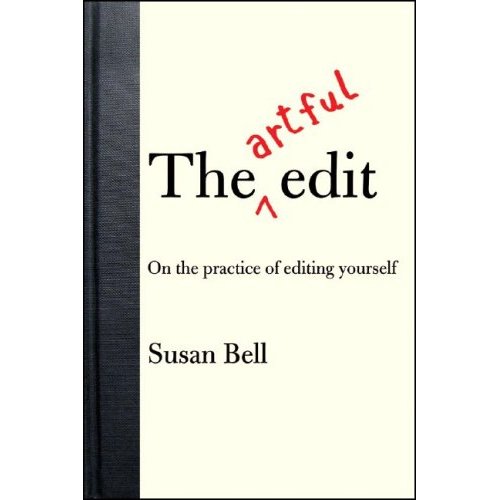
Today’s book recommendation:

The Artful Edit by Susan Bell.

Filed under: Books, Editors, My fiction, rules of writing, short stories, , , , ,

Bestseller with over 1,000 reviews!
Winner of the North Street Book Prize, Reader's Favorite, the
Literary Titan Award, the Hollywood Book Festival, and the
New York Book Festival.

http://mybook.to/OurZombieHours
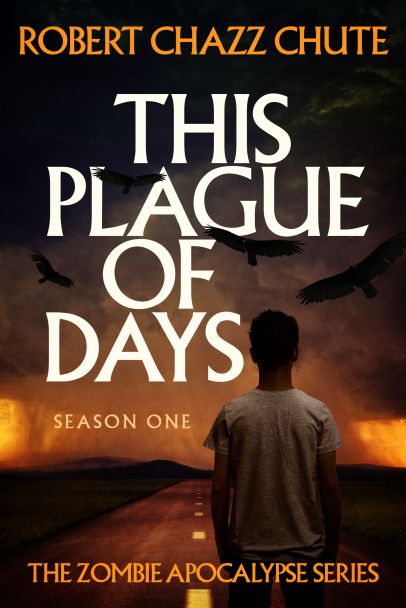
A NEW ZOMBIE ANTHOLOGY

Winner of Writer's Digest's 2014 Honorable Mention in Self-published Ebook Awards in Genre

The first 81 lessons to get your Buffy on

More lessons to help you survive Armageddon

"You will laugh your ass off!" ~ Maxwell Cynn, author of Cybergrrl

Available now!

Fast-paced terror, new threats, more twists.

An autistic boy versus our world in free fall

Suspense to melt your face and play with your brain.

Action like a Guy Ritchie film. Funny like Woody Allen when he was funny.

Jesus: Sexier and even more addicted to love.

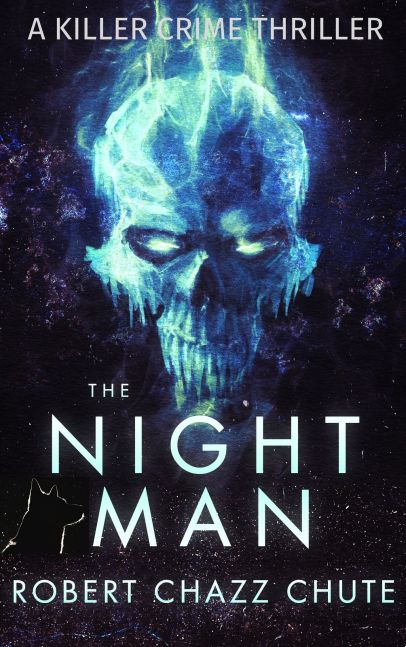
You can pick this ebook up for free today at this link: http://bit.ly/TheNightMan

Join my inner circle at AllThatChazz.com

See my books, blogs, links and podcasts.

Enter your email address to follow this blog and receive notifications of new posts by email.

Join 2,063 other subscribers