C h a z z W r i t e s . c o m

See all my books at AllThatChazz.com.

E-readers: I told you so (an indulgent post of self-congratulation)

A Picture of a eBook

Image via Wikipedia

UPDATE about the Big Picture

The trend is up. The sales of e-books outpaced the expectations of many industry experts through the fall. I have trumpeted the arrival of the e-book future here to the point of pedantry. And yes, I received an e-reader for Christmas. I’m pleased and impressed with my Sony reader. I predicted that e-readers would sweep consumers off their feet on their gift-buying sprees. I’m sure I can now predict the numbers bear me out.

Today I went out in search of a protector for my e-reader. I visited several stores. They were all sold out.

Oh, sure, now it looks obvious. It didn’t look so obvious when I was telling everyone about it last summer.

“Ha!” I say, and “Ha!” again.

Filed under: Books, ebooks, publishing, Rant, , , , , , , ,

Writers: Does the term “wannabe” irk you?

Kevin Smith

Image by wvs via Flickr

Just read an editor using the term “wannabe.” I’ve probably used it in the past, too, but no more. (I am a writer and I’m an editor who works with writers, so why wouldn’t I show them as much respect as I can and avoid an irksome term?)

Whether the editor in question meant it that way or not, it came off as dismissive. Anyone who read my blog regularly knows I have a man crush on writer-director indie legend Kevin Smith. He wrote something a while ago that really got my attention and it applies here.

He wanted to be a director. He was in Jersey and no money and no plan.

When he told his sister of his ambition, she replied,

“Then BE a director!”

Don’t want it. Be it.

If you write, you’re a writer. If you aren’t published yet, approach the work professionally and act as if you already are. (That means improve your craft, take criticism, educate yourself about the industry and comport yourself with grace and ease.)

I’m a published writer and I can tell you, after a time, seeing your name in print is not that big a deal. It’s the work that matters, and when it’s at its best, it will feel like play.

What matters is the writing:

Do it.

Enjoy it.

Get it down,

Get it done.

Write more.

Write again.

Writers write.

Don’t get caught up in status, hierarchy and aspirations. Do the work because writers write, whether they’re going to be published or not.

Filed under: authors, Books, DIY, Editing, Editors, getting it done, publishing, Writers, writing tips, , , , , , , , ,

Writers: The mire of conflicting advice & unfair criticism

The hierarchical structure of the autobiograph...

Image via Wikipedia

When I got into the business, there was a criticism meant to shut writers down.

“Too autobiographical” was the kiss of death.

That’s ironic for several reasons:

Biographies and autobiographies are moneymaking books. Sarah Palin‘s ghosts have already published more books than you and possibly more books than she’s read. Okay, that was a cheap shot, but somewhat funny and it has the added bonus of being an Irish fact—that is, something that is a lie, but should be true.

I digress.

Back to the issue of unfair criticisms and misguided advice:

 The mind boggles at Augusten Burroughs work. How much childhood trauma can one man recycle into his fiction and non-fiction? He has enough monsters, addictions and insanity in his past that he’s set for several more books at least.

“Too autobiographical” is now a stale criticism when you consider the movement of the market toward tell-alls, whistleblowing and confessionals. There’s a lot of popular fiction that’s thinly veiled life story, too. In fact, if you’ve been a lion tamer-stripper-celebrity-prostitute, you’re a much easier sale than if you’re just another writer working away at your desk making stuff up.

Diablo Cody is a talented writer, but she had a lot more heat going into the fray because of her tattooed image and history as a stripper. I’m not saying she wouldn’t have sold the brilliant Juno script anyway, but really, how many celebrity screenwriters can you name besides her, McKee and William Goldman? If you came up with a few names, it’s probably because they are famous writer-directors, not just writers.

(And notice that irksome phrase “just writers.” I use it advisedly, as a synonym for “merely,” since that’s the stature writers generally have in film, television and publishing.)

“Too autobiographical” was once a stinging barb. It marked a talent that was undeveloped. It suggested teenage angst worthy of a diary, not of publishable quality.

The worm has turned. Now your tortured history as a brawler helps; Chuck Palahniuk brawled a bit and escorted sick people to support groups long before Fight Club. Your time in seedy bars lends authenticity to your writing and manuscript evaluators may well take you more seriously because of the stuff you don’t want your mom to know. A work can still be too autobiographical, but that criticism doesn’t carry the weight it once did.

Evaluators can be off the mark in what they think qualifies as authentic, anyway. One writer, for instance, was told that her dialogue didn’t ring true for how contemporary teenagers speak. She was advised to hang out with some kids to catch the flavor of the real thing. What the manuscript reader didn’t know was the writer was 17 at the time.

We’re a culture that worships celebrity, so “too autobiographical” isn’t a criticism that comes up as much (unless your life story is deadly dull.)

The true irony is that the same editors who would say “too autobiographical” would also routinely tell aspiring writers to “Write what you know.”

That’s bad, even egregious advice. Don’t write what you know. If you only write what you knew, there wouldn’t be much fantasy, science fiction…or much literature at all, come to think of it.

Instead, write what you care about.

 Your research and the knowledge

flows from caring, anyway.

Filed under: authors, book reviews, Books, Editors, links, manuscript evaluation, Rant, scriptwriting, Useful writing links, writing tips, , , , , , , , , , , , ,

Author Profile: Sue Kenney & My Camino

CW: Most authors I speak to know they want to be a writer in childhood. That wasn’t true in your case. Tell us about that. 

SK: After being suddenly downsized from my corporate telecom career, I walked 780 kms on the Camino de Santiago de Compostela, a medieval pilgrimage route in Spain on a search to figure out what was important in life. When I came home I started telling stories about my journey. It was during this time that people asked me to write a book. I kept saying I wasn’t a writer. Over time with the encouragement of many people, mostly strangers, I felt it was something I was called to do.

CW: It sounds like your audience found you first and demanded you write about your journey.

My Camino

Sue Kenney

SK: People told me they wanted to read more about what I was thinking about and how my perceptions changed as I walked. The book is the true story of how I confronted my deepest fear. I start talking about the events that led to my decision to walk the Camino and why I went alone in the winter. Then, I tell stories about the people I met, the experiences I had, what I was thinking and how it impacted my perspective on life.

CW: How did you begin?

SK: I researched the Camino’s rich history extensively, the pilgrims (modern and pilgrims of old), miracles and the folklore. I took a course at Ryerson University in creative writing before I wrote my first book. My process was to sit down and write 1000 words a day for 2 months to complete a first draft manuscript of at least 50k words. I was disciplined about keeping to my goal and I met it.

 CW: How long did it take you to find a publisher?

SK: I went to Toronto’s Word on the Street and found three publishers who were interested in my idea. I was asked for a writing sample by one of the publishers but I hadn’t written anything. Fortunately, I had a storytelling CD called Stone by Stone I recorded. I transcribed those stories. Then I picked the longest story and gave it a chapter number and title. I sent it as my writing sample along with a strong marketing plan. White Knight Books agreed to publish My Camino the following year. The whole process took about six months because I was insistent on having the book published quickly and I delivered what was requested by the publisher on time.

CW: What surprised you the most about the writing process?

SK: If I surrendered to writing the truth then I was guided in the process. When I tried to control the process, I had more struggles. Early on, I decided to surrender to the creative process and I was completely surprised that I never experienced writer’s block.

CW: What was your biggest challenge you experienced through this book?

SK: Editing the book was a big challenge and an inspiration. Initially, I wasn’t impressed with the way the publisher edited the book because I felt as though my voice was being changed. He agreed to let me look for another editor. I found Bruce Pirrie. He hadn’t edited a book before, but he was a professional screen/stage/television writer who worked on The Red Green Show. He had also directed several Second City comedy shows. I took a chance on him and it proved to be the right decision. Bruce would give me notes, I’d make the revisions and then he would read it to me out loud.

When I asked him why he wanted to do that he said, “How do you know what it will sound like?” The inspiring part of this story is that I believe as a result of reading the book out loud, it is more visual. This was important when we pitched a screenplay adaptation to Pierre Even, (C.R.A.Z.Y.) a producer in Montreal. The book is now in development as a feature film. Bruce and I co-wrote the screenplay. In five years I went from being an Account Executive in the telecom industry to writing two books, a stage play, a screenplay and recording a storytelling CD.

CW: What was the hardest part of the publishing process for you and what did you most enjoy?

SK: The hardest part was getting the bookstores to keep copies of the books on the shelves. The big box stores want to sell volumes of books and being a first-time author, I didn’t have a well known name.

The part I most enjoyed was doing the book signings and readings. Often authors loathe doing this but I love it. In the first year, I did 54 author events. I gave free stones to people walking by and this always stirred up interesting conversations. When people find out I walked 780 kilometers across the north of Spain alone in the winter they’re intrigued. It took me over two years to become a Canadian bestseller but I never gave up. I believe my life purpose is to tell stories to inspire people on their life journeys. At book events I get to live my life purpose. It doesn’t get better than that!

CW: Any advice would you give unpublished writers?

SK: If people ask you to write your story, do it. Set a goal and write every day until it’s done. NaNoWriMo is a great event to help develop discipline. Don’t worry about getting a publisher or how you are going to sell books. Just get the story down on paper.

CW: Have changes in the book industry altered how you market your work?

SK: It’s easier to market now. I can blog, Facebook, tweet and send out my newsletter with updates. When I wrote a second book about the Camino called Confessions of a Pilgrim, I decided to use a self-publishing house because it gave me everything I needed to get a book on the market quickly and efficiently.  

CW: What’s your next project?

SK: I’m narrating an audiobook version of My Camino this month. This allows me to use my “voice” to share stories, something I’ve wanted to do since the book was published. In January, I’ll be offering a download version of the book on my website www.suekenney.ca initially for FREE co-incident with the launch of my new website. The CD audio book version will be launched on International Woman’s Day on March 8, 2011. I’ve penned the first draft of a novel about a woman who travels to India in search of pure love. I believe there is a correlation to walking and creativity so I walk every day.

CW: Thanks for doing this, Sue.For more on Sue Kenney, go here:

www.suekenney.ca

mycaminobook@gmail.com

Facebook: My Camino

Filed under: Author profiles, author Q&A, authors, Books, publishing, Writers, writing tips, , , , , , , , ,

Writers: What really happens in book marketing meetings (Plus: What sells books)

Books in the Douglasville, Georgia Borders store.

Image via Wikipedia

It’s interesting to see the profession of book sales rep disappear. I was a journalist first and that’s evaporated. Later I was a book rep and that’s on the way out, too.  Book sales was somewhat romanticized. From the inside of the industry, book marketing isn’t romantic at all. Occasionally I hung out with authors and going to book fairs and sales meeting in nice places was fun. Yes, there were a few cocktail parties. Most of the year, however, you’re hauling so many samples around in your car, the shocks go. You spend a lot of time trying to get to the next appointment on time and worry about finding a good place to park.

I met some really nice booksellers. I also met many awful book retailers. The crux of that problem was that the young booksellers were doing it as a joe job and the older booksellers got into the job for idealistic reasons. No one tells aspiring bookstore owners that, not only are the big chains going to force them out of business, they won’t spend near as much time reading as they planned. Instead, they’ll spend an inordinate amount of time calculating the GST, paying the GST and trying to assist book buyers who aren’t informed book readers. (e.g. “I want to buy a book for my daughter I heard about on the CBC last month. You know. That one…? It’s by that guy? With the thing…? Surely you know that one!”)

So I dealt with the bored and disillusioned. Not exclusively! It’s just that those negative people are the sales experiences I remember best. That miserable bookseller in Owen Sound was an impatient sort who, when I dared to use the word comedy, corrected me and told me the book was “humour.” I’m surprised she was familiar with either facet of the concept. Then there was the condescending one north of Toronto who thought I was stupid since I was still enthusiastic. She beat that out of me quick. “Okay,” I said. “For the remainder of this meeting, I’ll power through the list and act just as pissed off as you appear to be. Happy? Am I smarter now?”

It wasn’t all bad. The owner of the now-defunct Frog Hollow Books in Halifax has a special place in my heart. She was a sweetie, had a great store and she bought a lot of merchandise from me gladly, even in the press of the Christmas rush. I wish that bookstore was still around.

What I find interesting in other people’s reports of marketing meetings is they say sales rep opinions  are valued. I hear of book reps getting input into the list, commenting on the marketing challenges and the dubious appeal of certain covers and so forth. Book reps on some planet get to turn something down and require changes in order to make a book sell. I repped sixteen publishers of various sizes and I can tell you, my input didn’t carry any weight. It wasn’t asked for, either. I was their traveling salesman. If the book didn’t sell, they figured it was my fault.

At a sales conference, the editorial team is selling their enthusiasm for the list they built. In my experience, if we dared to mutter about a lousy cover, we did so among ourselves. Voicing any reservations would be met with derision. We weren’t graphic artists, so maybe the cover proved to be lousy and many booksellers would tell us so as we made our rounds. However, in the context of the sales conference,we were getting flown out to someplace nice for one reason. We were supposed to sit there, take notes, and listen. The graphic artist and the editor got to have opinions on anything creative. Our job was to sell their old ugly dogs with the same conviction as the cute puppies. If we didn’t believe the dogs with mange and pushed-in snouts would sell, obviously we were idiots or traitors to the cause.

It sure didn’t feel like the powerful position some portray. Lots of articles on the publishing process mention the input of the sales team on titles. Not so in my experience. I watched editors and their minions show covers, talk about the books and maybe pass out review copies. True, we’d worry over price points. We’d look at the page count and comment that the heft of the book was light for the expense. (“People buy books by weight,” was a common bit of wisdom. “Green covers don’t sell it’s a golf book,” was the other bit. That was true, I think.) However, the publisher and their editors had already committed their resources to the books by the time we came into the picture. By then, they would understandably be reluctant to make major changes in their plans for two reasons: expense and ego. We weren’t going to change a done deal.

In the hierarchy of the book industry, the editors and publicists put themselves above the salespeople, especially if anyone referred to books as “product.” (Only a few did that.) Sales reps weren’t creative. We just did the grotty part with the filthy lucre that allowed the creativity to continue.

Many editors idolized some authors. Privately though, many put the authors at the bottom of the hierarchy. Yes, writers are the engine of the industry who provide the art to sell and a reason for editor’s existence. Perhaps it’s envy or resentment. Maybe it’s because acquisition editors see themselves as gatekeepers so they feel they made the authors.

In a less complex analysis, everyone’s the star of his or her own movie and authors come and go like background extras.

And some, being arty and human, are a pain in the ass. For instance, I sold Matt Cohen‘s books. For some he was an icon as well as a somewhat famous Canadian author. However, there was a bookseller nearby who didn’t care for his books and refused to stock them. When the publisher took the author out for lunch, naturally they stopped in to see how his books were selling. I soon got a angry memo. “What’s going on?!”

What was going on was not every bookseller is obliged to carry every book and the publisher’s embarrassment wasn’t a factor in the decision. The bookstore owner simply didn’t like Matt Cohen’s books. The proximity of our house to the store didn’t convince the owner. I despised that bookstore owner (a notorious and cadaverous blowhard.) I agreed with his right to stock whatever he pleased, however. Personally, I found Cohen’s books neurotic, but not in a good way.

At first my territory was Toronto (and in the summer, Cottage Country, too.) Later on, I worked for a book distributor so I sold books wholesale across the country as well as in downtown Toronto, Ottawa and all points north and east. I can’t say I ever felt like more than a minion. It wasn’t that the editorial staff was particularly unkind. It was simply that we had no creative input. That’s why I wonder about these reports I’ve read about the publishing process. When in-house editors tell authors, “Marketing didn’t like this or that,” are they really hiding behind the closed doors of those marketing meetings? Is it just a ploy to bring down the author’s expectations from the sky-high hopes, dreams and promises that originated in the editorial department?

Blah, blah, blah. You’re an author. You want to know what sells books. I’ll tell you.

I sold hundreds of books at a time. Some I read, but there wasn’t enough time to read them all. Instead I recited the catalogue copy and gave my impressions for each book’s appeal. If there was any kind of marketing campaign, I’d talk about that. It’s a gift to a book’s potential (and the haggard sales rep reciting the same spiel for the 100th time) to be able to say, “We think this one has a shot at the Giller,” or, “We’re putting a lot of work into getting this one on that particular CBC show you like etc.,…”

What sells books is word of mouth for a book with good writing that tells a compelling story. It takes a lot of incompetence on the publishing team’s part to overcome that. The other thing that sells books is the human connection between the book sold and the person who wrote it. What helped me sell the most books was meeting the author. Booksellers are on the frontlines of retail, far from the cocktail party action. They want to hear a sales rep’s funny story about meeting That Author.

One of the better people on the planet? One the sweetest people you could ever meet? Amy Tan. I sold her books. I sold a ton of her books. Utterly charming and genuine. When I met with booksellers, I didn’t talk much about her book. I sold her to them instead. We push the people we like harder.

When you get invited to a sales conference (if you ever do) or go on a book signing (arrange your own if your publisher won’t), remember to treat the minions well. Be nice. Be fun and memorable. The sales reps will remember you. The booksellers will hand sell you book.

Extra tip:

That’s why it doesn’t matter so much if a lot of people don’t come to your bookstore signing.

The customers may come or not, but the bookstore staff are always there.

Make a good impression and they’ll hand sell your book.

And the next.

And the next.

What really sells your books?

You do, through the force of your creativity, the shimmer of your personality and audience you cultivate.

Filed under: Books, Editors, getting it done, links, Publicity & Promotion, publishing, Rant, Useful writing links, writing tips, , , , , , , , ,

Book Information Centre Blues

The blue copyright symbol drawn in SVG. Svg ve...

Image via Wikipedia

Occasionally, you will run into someone who either expects you to know the unknowable or dismisses what you do know. When I worked at The Canadian Book Information Centre, it happened all the time.

Case #1: One fellow, so very arch and British one might think he was sent over from Central Casting, asked what Canada’s top cookbooks were.

You might be able to google such information now, but back then we were expected to somehow pull the numbers and titles from the ether. Or from our asses.

I told him I didn’t have those numbers.

“I would have thought that would be general industry knowledge,” he replied.

“No,” I said. “The publishers don’t supply us with those numbers. Only their accountants know the truth. You could go back through old Globe & Mail newspapers and find the top cookbooks by going through top ten lists, I suppose.”

“You can’t do that for me?”

“Uh, no. Head to your local library.” Where people are actually paid to help you find the data for your book proposal, I thought.

He hung up in a huff before I could explain that I worked for publishers as an editor and publicist. My title was Project Manager, not Phone Monkey for Anyone Who Owns a Telephone. (Did you know they’ll give just about anyone a phone? I know! Exactly!)

Case #2: Another aspiring author asked me about copyright. He was desperately worried some evil editor would steal his idea.

This is a common concern, but it’s a nearly invalid one since it happens so rarely. As it happens, I knew a lot about copyright. And so:

No, you can’t copyright an idea alone. If you could, the guy who got to Good versus Evil and Boy Gets Girl first would be rich, rich, rich.

No, you don’t have to send your manuscript to some office in Ottawa or Washington. You wrote it. Your name is on it. It’s yours worldwide (except for parts of Asia.)

No, putting the copyright symbol on a manuscript is considered unnecessary, amateurish and insulting to the editor or agent who receives it.

No, you don’t have to mail your manuscript to yourself. The idea is to get the post office’s official stamp on the sealed envelope containing your treasure (as if that couldn’t be faked.) You can if you want to, but the trick is having something worth stealing. Besides, to my knowledge, any plagiarism case that’s ever made it to court doesn’t hinge on whether you’ve got a stamp on a sealed envelope.

“Well, I assure you my manuscript is worth stealing and I will mail it to myself!” Click!

Me to fellow harried Project Manager: “If he had already made up his mind what he was going to do anyway, why call us?”

The misunderstanding of our role wasn’t the callers’ fault. We were named The Canadian Book Information Centre. However, we worked for publishers to promote their books to media.

We cut the wayward calls in half the following year by getting our listing out of the Yellow Pages.

Filed under: Books, Editors, getting it done, publishing, Rant, Rejection, Unintentionally hilarious, writing tips, , , , , , , , ,

Bookstores are disappearing. Time to sell my book collection.

Malcolm Ingram, Canadian independent film dire...

Image via Wikipedia

I came to two realizations about books today:

1. We aren’t being brave enough.

and

2. It’s time to sell my book collection.

Two film directors (Kevin Smith and the guy behind Donny Darko) talked on a podcast about cross-promotion with their movies and how five years from now there will be no bookstores. Though they are both authors as well, their main focus is film so they could be dispassionate about our sick industry. Contrary to what you may have heard, that’s a reason to take their assessment of bookstore extinction more seriously, not less. People inside the publishing industry often have their judgment clouded.

When confronted with such dim prospects for bookstores, many inside the book industry answer:

1. Nonsense! Horrors! Unthinkable!

or

2. It won’t happen that fast. We still have lots of time to bleed the old paradigm dry.

But five bookstores a day are closing across the United States. E-book sales are growing faster than most publishers anticipated. It won’t be long before even your Grammy is buying her books in an electronic format. At first she’ll hold back on buying in, but when the variety of large print books diminishes—they always were a marginal asset—those electronic readers that allow her to easily bump up the text size will push her over the edge. The rise in e-book reading tells me we’re already past the time when digital book consumption is only about the early adopters. That goes double once Christmas morning hits.

Sure, there will still be specialty bookstores, or rather, premium collectibles bookstores. You’ll come for the books, but it’s the coffee they sell which will make the serious money.

I write this without glee. I love bookstores. They are my last retreat. Where else besides my office, will I go willingly? Bookstores and libraries are to me what graveyards and remote girls’ schools with lax curfews are to vampires.

I hope many bookstores find a way to survive. A bunch of them may do it, but those will be digital books on the shelves, mocked up to look like tree books. Yes, grandfather, there will still be tree books, but you’ll pay substantially more for them. Big print runs keep the unit price low by producing large volumes. Those print runs are about to be cut (further) so that paper book you’re so attached to will be a specialty item. (Have you noticed the rise in the prices of buggy whips lately? It’s crazy.)

Then I listened to another podcast. Blowhard’s Malcolm Ingram was speaking with a porn actor/director. Ingram observed that the skills are transferable to mainstream film. (Insert your own joke here.) But he was talking about technical skills. Then he mentioned that it’s never been easier to make a film. It’s true. The cameras come fancier and cheaper than ever. YouTube is a young filmmaker’s playground (search Nigahiga and you’ll see what I mean.)  Technology has democratized filmmaking. “I’ve directed two documentaries,” Ingram said, “and I’m borderline retarded.”

That, ladies and germs, is indie spirit.It’s brave. It’s what we’re lacking.

What’s true for film is also true for publishing. Becoming an independent publisher has never been easier and the technology to make a book and market it is only getting better. People have done it. A bunch of industry experts with their own agendas are holding with opinions which were once valid. They get less valid each day (and another five more bookstores go extinct.) They have their reasons to mistrust self-publishing, but if they’re still confusing self-publishing with vanity publishing…frankly, now those people are boring me.

We’ve already hit the iceberg so stop wringing your hands about whether we’ll make it to New York harbor. Honestly, your obstinacy is titanic.

Oh. That other dire conclusion? Paper books are on the way out. I have thousands of them.

It’s time for me to sell them while someone’s still interested in buying them.


Filed under: Books, DIY, ebooks, getting it done, Media, movies, publishing, Rant, self-publishing, , , , , , , , , , ,

Author Profile: Nate Hendley

Nate Hendley is a Toronto-based author who was born in Connecticut in 1966. He is a full-time journalist and writer and has published

nate hendley

Nate Hendley

over a dozen books, primarily on true-crime topics. He lives with a demanding cat and has a website at www.natehendley.com. You can check out his latest works on the Five Rivers website at http://www.5rivers.org/index1.html

His books: Motivate to Create: A Guide for Writers (Practical tips on how to start up or step up a freelance writing career) & Al Capone: Chicago’s King of Crime (An intimate portrait of America’s most famous gangster)

Previous works by Nate Hendley:

Edwin Alonzo Boyd: The Life and Crimes of Canada’s Master Bank Robber, The Black Donnelly’s: The Outrageous Tale of Canada’s Deadliest Feud, Dutch Schultz: The Beer Baron of the Bronx, John Lennon: Music, Myth and Madness, Crystal Meth, American Gangsters Then and Now: An Encyclopedia, Bonnie and Clyde: A Biography, Jean Chretien: The Scrapper Who Climbed His Way to the Top, William Lyon Mackenzie King: The Loner Who Kept Canada Together

 CW: When did you first know you wanted to be an author?

NH: I was around 10 or so, living in England (where my dad took a year-long sabbatical in 1975-76). I recall I started writing—by hand—a long war story that I ended up calling “Tank Tracks in North Africa”. As might be surmised by the title, it was all about a bunch of guys in a tank fighting Rommel in the desert in World War Two. That’s the first long-form book I recall putting together. I think it ran to something like 50 pages.

CW: Tell us about your book. How did you get the idea?Al_Capone_book[1]

NH: Two books actually. One of them is on Al Capone, the other is about motivation for writers. The Capone book was originally part of a series of gangster tomes I penned for Altitude Publishing, an Alberta-based company that ,alas, is no longer around. When Altitude went belly up, Five Rivers Chapmanry kindly bought some of my Altitude books for republishing.

The second book, Motivate to Create: A Guide for Writers, is a rather drastic revision of a book I initially self-published. Lorina Stephens, publisher at Five Rivers, liked the concept of my book but wasn’t totally excited by the contents. I ended up rewriting quite a bit of the book, making it more professional and taking out a lot of the personal anecdotes that filled my self-published tome. The newly revised book is considerably better than the original, which demonstrates the power of having a good editor crack down on your material.

 The idea for Motivate to Create came from the fact that there is a dearth of info out there on motivation for non-fiction writers. Almost every writers’ motivation book is aimed at creative writing, which is fine, but not what I do. A lot of the existing books seemed very sappy, too—all this crap about “finding and unleashing your inner muse.” I was more concerned with concrete, practical advice that had already been field-tested by other, established writers.

CW: What research was involved in your book’s development?

NH: Researching Al Capone involved reading all the available literature on the man (which is quite considerable) and tracking down newspaper and magazine articles from the period in which he lived. I was pleased to be able to correct certain falsehoods about Capone that have been perpetuated throughout the years. He was never a national crime boss, for example. He controlled the Chicago underworld but certainly didn’t control organized crime across America.

For Motivate, I queried various writer friends and acquaintances and used some of their quotes throughout. The rest of the material was thought up by me.

 CW: Do you have any formal training in writing?

 NH: I went to journalism school after finishing university. I never actually completed J-school, having failed desk-top publishing three times in a row. Anyway, journalism school taught me the nuts and bolts of news and feature writing and was an invaluable experience.

 CW: What is your writing process?

I don’t really have a writing process. One of the tips I offer in Motivate to Create is not to get too precious about your writing time (i.e. “I only write when the golden sun rises from the horizon and the muse dances upon my forehead”). When I have a writing project to do, I just sit down and do it.

CW: How long did it take you to write the book and find an agent and publisher?

NH: Capone took about a year to put together (research, writing, editing.) Motivate was spread over a longer period because I essentially rewrote the book when Five Rivers purchased it. Self-publishing is a pain in the butt so I am glad that a real publisher took the book over. I still have about 30 copies of the original book sitting around my apartment. Unless you’re really interested in marketing and promotion, I would not recommend self-publication.

 CW: What’s the most surprising thing you discovered in writing this book?

motivate_to_create[1]NH: Can’t really think of any. I was pleasantly surprised at the number of freelance writers willing to respond to a general questionnaire I sent around for Motivate to Create.

CW: What was the biggest disappointment you experienced through this book? 

NH: The biggest disappointment was that I didn’t get fabulously wealthy through self-publishing. I thought orders would come flowing like a river. More like a trickle from a tiny pond.

CW: What was the hardest part of the publishing process? What did you most enjoy?

NH: Research and editing are by far the hardest part of the publishing process. Writing is the most enjoyable. When you self-publish, doing all the promotion and marketing is the hardest part.

CW: What advice would you give unpublished writers?

 As Creedence Clearwater Revival once expressed it so well, “keep on chooglin’.” In other words, just keep at it. Practise doesn’t necessarily make perfect but it does make you more professional.

CW: Have changes in the book industry forced you to change how you published or marketed your work?

NH: Yes. Thanks to websites like Facebook, Twitter and LinkedIn I can do more to promote my wares online.

CW: What’s your next book project and what can you tell us about it?

NH: I’m revising a book about the drug methamphetamine for Five Rivers. It is a revamped version of a book I initially did for Altitude that came out in 2005. The new version has new interviews and updated statistics.

CW: Thanks for doing this, Nate! You can follow Nate on twitter at http://twitter.com/natehendley or email me at nhendley@sympatico.ca . The Five Rivers site is located at http://www.5rivers.org/. Best to check the Five Rivers site for any info on upcoming book signings.

Filed under: Author profiles, author Q&A, authors, Books, publishing, writing tips, , , , , ,

When did you know you wanted to be a writer?

Aquarelliste - MCL

Image via Wikipedia

It’s a question I ask as part of the regular author profile feature (appearing in this space Thursdays.) 

It’s one of those questions that I find endlessly fascinating, like:

1. How did you and your love first meet?

2. What do the voices in your head tell you?

3. Would you rather be right or happy?

Almost every writer, it seems, can remember the moment they felt the pull.

Maybe it happened when they read a great book. (Which book was it for you?) Or they like the lifestyle because they are unsuited for anything else (read: you are otherwise unemployable.) Maybe they had an amazing experience they had to share or teach. (What was yours?) Even a lousy book spurs some people to say, “I could do better than this crap!” (If that’s you, which book was it?)

For me, it began with reading, I’m sure, though there wasn’t a particular book that got me thinking writing was for me. I first announced my writerly intentions to strangers. I was maybe eight, though it’s hard to say. I ascribe any vague memory from childhood to that year and, in truth, it can’t possibly have been that eventful. That would leave all the other years empty of anything. But that is how it feels.

The strangers to whom I made my announcement were the printers at a local shop. I wandered in (ignorance is a strange propellant) and asked for paper. “For a book” I added, because I thought I needed to get it from them, for some reason now unfathomable.

I remember the inky and oily smell of the place and the noise of the machines. I loved that smell. I still love stationery stores. All those empty pages call to me. Due to this compulsion, which stops just short of a sexual fetish, I own many more journals than I’ll ever fill and many more pens than I could ever use. The smell in that shop (and the look and smell of sunlight on turquoise water colour paint) are the only solid sense memories I carry from early childhood.

The printers smiled, indulged me, and I walked out with some brownish scrap paper. I walked taller and with real purpose, probably for the first time. I should have been holed up in a library at that stage, though I did that, too. I always preferred books to people. Childhood was rough.

Imagination, stories and the waiting world were my escape.

They still are.

When did you first know?


Filed under: Author profiles, author Q&A, Books, publishing, What about Chazz?, Writers, , , , , ,

WordPress people: Textbook, Tips and tutorial links

Let me be clear: I do love WordPress. However, WordPress can be a bit baffling at first. Even regular users may not be familiar with all WordPress can do. I have two recommendations to use this tool to the fullest. First, check out the WordPress 24-Hour Trainer by George Plumley. I met the author at a writers’ conference. He was a nice guy, who, incidentally, got the gig to write a WordPress manual when the publisher put a call out for an author through Twitter. (Some people say that sort of thing doesn’t happen. It does.)

Then there’s this very useful link:

50 WordPress People to Follow on Twitter for News, Tips and Tutorials

Cover image for product 0470554584

Filed under: blogs & blogging, Books, , , ,

Bestseller with over 1,000 reviews!
Winner of the North Street Book Prize, Reader's Favorite, the
Literary Titan Award, the Hollywood Book Festival, and the
New York Book Festival.

http://mybook.to/OurZombieHours
A NEW ZOMBIE ANTHOLOGY

Winner of Writer's Digest's 2014 Honorable Mention in Self-published Ebook Awards in Genre

The first 81 lessons to get your Buffy on

More lessons to help you survive Armageddon

"You will laugh your ass off!" ~ Maxwell Cynn, author of Cybergrrl

Available now!

Fast-paced terror, new threats, more twists.

An autistic boy versus our world in free fall

Suspense to melt your face and play with your brain.

Action like a Guy Ritchie film. Funny like Woody Allen when he was funny.

Jesus: Sexier and even more addicted to love.

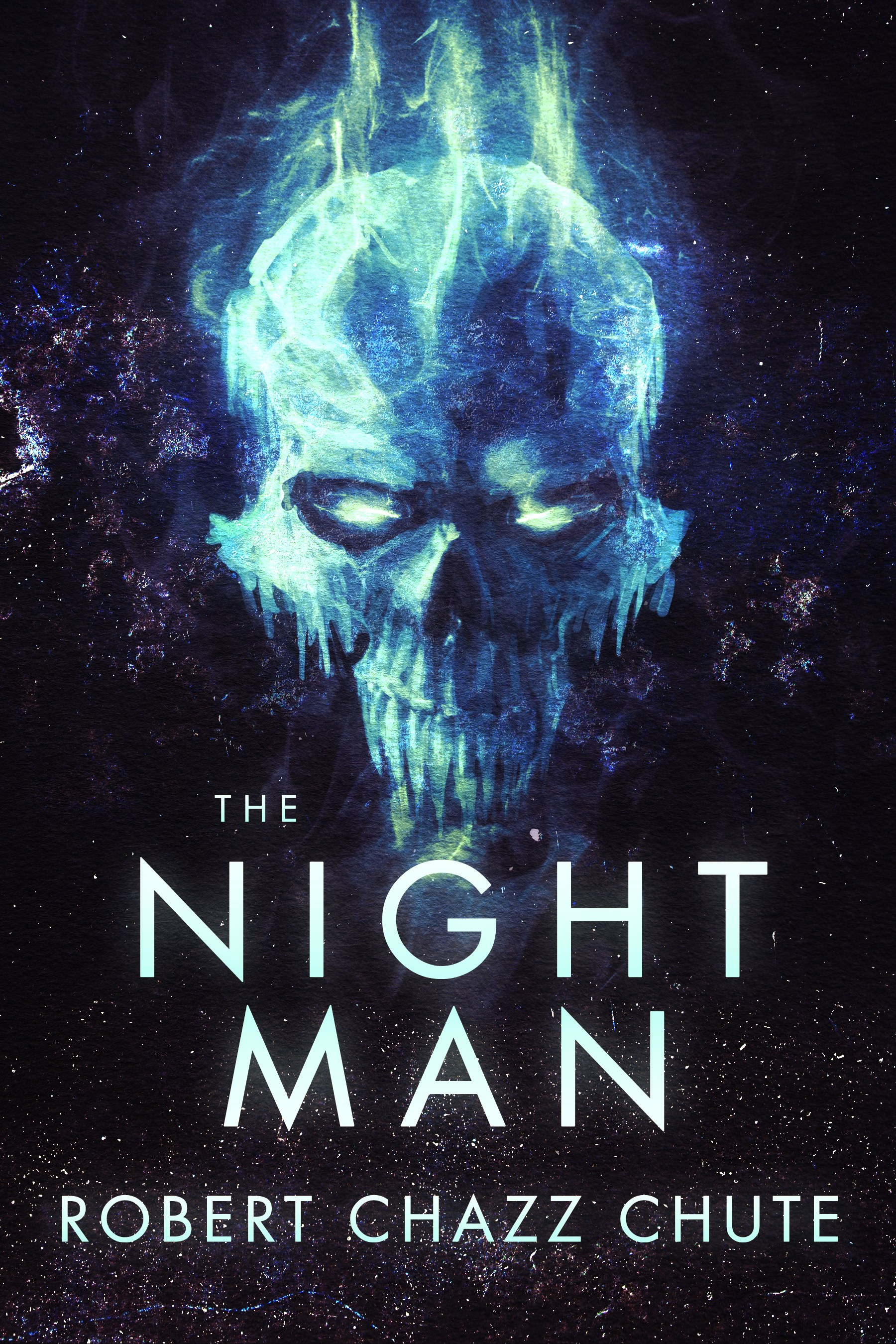
You can pick this ebook up for free today at this link: http://bit.ly/TheNightMan

Join my inner circle at AllThatChazz.com

See my books, blogs, links and podcasts.

Enter your email address to follow this blog and receive notifications of new posts by email.

Join 2,063 other subscribers