C h a z z W r i t e s . c o m

See all my books at AllThatChazz.com.

Writers: Get your book done! Hack your life and crush your enemies.

Screenshot from Linux software KTouch. An imag...

Image via Wikipedia

Zip over here as quick as you can to check your keyboarding velocity.

You can write.

Are you also a fast typist?

Next question:

Does it matter?

I’m currently sucking down a great book: Timothy Ferriss‘s 4-Hour Body.* In it, he mentions how short-term goals, tiny achievable targets, can help you get huge projects done. Don’t have time to write a weighty tome? That’s okay. How about committing to a page a day? Half a page? A few sentences?
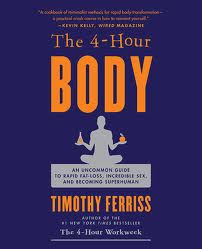
4_Hour_BodyIf you can do that much, you can get your book written this year. You know why?

Because most days you won’t just write a few sentences. Once you’re over that intimidating hump of “WRITING A WHOLE BOOK” (DUH-duh-DUUUUH!) you’ll sit down. You type a few sentences. Then you’ll already be over the worst of the procrastination speed bump. Chances are, you’ll get to writing much more most of the time.

And you’ll be on your way.

How fast you type won’t matter all that much really.

What matters is that you consistently write.

Consistency is what crushes. 
 4-Hour_Work_Week

*Once you have your body in shape with Timothy Ferriss’s health hacks, read The 4-Hour Work Week. It is doubly awesome in giving you strategies to make your work life rule (without ruling you.) Read 4-Hour Body and you’ll live longer. Do 4-Hour Work Week and you’ll live so much better.

 Related Articles

Filed under: book reviews, Books, getting it done, publishing, Writers, Writing exercise, writing tips, , , , , , , , ,

Writers: The Power of Small (and why press releases don’t work)

A picture of author Carolyn See

Image via Wikipedia

When I worked in a city newsroom, one of my jobs was to go through press releases to find gems. There weren’t many of those clichéd diamonds in the rough. Reporters see so many press releases, they begin to look upon them with suspicion and even resentment.

What’s an author to do? You want an interview. You want your book reviewed. How do you make it happen? The traditional approach was to send out lots of press releases and books. It wasn’t very effective. In fact, sending out a lot of review copies is expensive.

There’s an alternative:

Go small. Go low-tech. Write a note.

This isn’t a practical approach for in-house publicists working for major publishers (but they usually work in short bursts for particular authors, anyway.) The low-tech, patient strategy is for indie authors looking for ways into the media. Unfortunately, publishers focus on very small windows of opportunity. They are looking to move a lot of books quickly (before the book stores send them all back for credit.) Marketing in book publishing has been long periods of silence interspersed with short frenzies. As an indie author selling e-books, you’re opting out of big, expensive and short-term strategies. This isn’t so much for Wiley (publishers since 1807!) authors. This is especially for wily indie authors.

As an independent author and publisher, you can play the long game instead. You can write a note or two a day. One author/guru Carolyn See made it her practice to write a “charming note” every day to an editor or publisher or agent.* Why not to reporters, too?

But there’s a trick to making it effective. You know how I’m always saying that if you want to hit up an agent, don’t look for the big, established names? Agents fresh from the factory who are up and coming in established agencies are better bets. They are still hungry and not as jaded. They don’t hate all queries yet. They still have hope and the scales have not yet developed over their eyes.

The same is true for reporters. The book editor of a large magazine already has lots of books lined up. The independent author has lots of indie-spirit, but most book editors still look down on them. So screw them.

Work on getting into smaller newspapers. Send a charming note to a general reporter who would love to do a cushy author interview instead of chasing some city council member who doesn’t want to speak to them. I’d rather talk to an author than cover a house fire any day.

You know why it will work?

It will work because you will be charming (“Loved that piece you wrote on the local scaled railroad hobbyists so I thought…”)

It will work because general reporters think entertainment reporters have a cushier job (and they’re right.)

It will work because all journalists also want to write a book some day.

And while we’re talking small, send off a friendly email to book bloggers. That counts as a charming note, too.

Ask to guest blog. Bloggers love a break and crave hits, connection, track backs, links and love.

Ask for an author profile. I profile an author on Chazz Writes almost every week. It’s not the New York Times Review of Books, but since they aren’t calling, how about alerting like-minded people to your creations? If you can’t go huge, you can still be ubiquitous.

Instead of just showing up at a bookstore and asking to see the manager, send a charming note ahead of you to break the ice and soften her up for a reading. Better, be even more charming and offer to organize readings for your local bookstore. (Later this year I’ll profile an author who did just that. Not only did he help many other authors, his own career got a boost from building community among colleagues.) 

Your book needs attention. I’m sure you’re already working on developing and maintaining your audience. Don’t forget that etching away at it a day at a time over the long haul can reap big rewards. With patience, you can build your empire. Don’t underestimate the power of a low-tech, targeted, personal and charming note.

These days, the mail is mostly for bills. This approach is more powerful than it ever was because you hate what’s in your mail box. But when you get a letter, you’re excited. It will work because it has worked.

*Read Carolyn See’s Making a Literary Life for details. Or, don’t fool around and head straight to Amazon to buy her book.

 Related Articles

Filed under: Author profiles, authors, book reviews, Books, DIY, getting it done, links, Publicity & Promotion, publishing, self-publishing, writing tips, , , , , , , ,

Lynda Barry tells What It Is

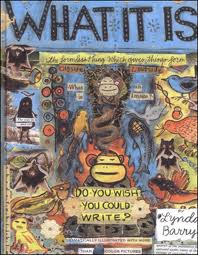
This is a book about writing like you’ve never seen:

What_It_Is

If you know Lynda Barry‘s work, you  know hers is an inimitable style. But I grok her. I had some reservations as I plucked the book from the shelf, but when somebody bares their soul in their art, you either look away embarrassed and confused or you look deeper, identify and get swallowed up, too.

Her ideas on writing prompts could get you going. Letting go to get going appeals to me. Most of all? I understand what she means by escaping into writing and getting “that floaty feeling.” If you write, you know what she means, too. If you don’t, buy What It Is, do the exercises and find your way into The Float. 

The immediate rewards of writing (slipping through “the escape hatch” as Stephen King puts it) are right now. Even as I write this, I feel a tickle in my brain. Some happy dopamine is spreading somewhere through my skull as I type this. I’m a junkie.

You may or not get published, but there’s more to it than that, isn’t there?

Some people don’t get that, so I ask them this: “Did you ever play tennis or run or swim? Did you keep doing it even though you knew you weren’t going to end up at Wimbledon, the Boston Marathon or the Olympics?”

Filed under: authors, book reviews, Books, publishing, Writers, Writing exercise, writing tips, , , , , ,

Writers: Mickey Spillane’s Rule for Selling Books

本の構造

Image via Wikipedia

Mickey Spillane sold a lot of books. Here’s how:

“The first page sells the book,” he said. “The last page sells the next book.”

I was reminded of Spillane’s axiom as I finished the last page of Mr. Monster by Dan Wells. I’m not going to spoil it for you. You’re just going to have to go read it. That book, and his first in the series, I Am Not a Serial Killer, are sometimes harrowing reads. These are books where the author takes risks. John Cleaver is a protagonist you won’t like, but you feel for him, too.

Dan Wells has turned his protagonist, a young sociopath with a dangerous mind, into somebody I’ll follow. I’ll follow the series. Dan Wells is going to sell a lot of books off a character who will make you very uncomfortable.

It was the last line that got me. The really good ones stick with you. The end of Fight Club is a great scene with a neat twist. And William Goldman? He’s the master of the last line that stick a knife between your ribs and gives the blade a half-twist. Goldman’s trick is to make readers comfortable, letting them think they know what will happen next, and then sucker punching them. At the end of Goldman’s The Color of Light I actually threw the book across the room because just when I thought I was safely in the dénouement, he hit me again. 

Lots of writing advice is about baiting the hook on the first page. On the last page, make sure you get the barbs in deep for the next one, too.

Filed under: authors, book reviews, Horror, publishing, Writers, writing tips, , , , , , , , ,

Writers: The mire of conflicting advice & unfair criticism

The hierarchical structure of the autobiograph...

Image via Wikipedia

When I got into the business, there was a criticism meant to shut writers down.

“Too autobiographical” was the kiss of death.

That’s ironic for several reasons:

Biographies and autobiographies are moneymaking books. Sarah Palin‘s ghosts have already published more books than you and possibly more books than she’s read. Okay, that was a cheap shot, but somewhat funny and it has the added bonus of being an Irish fact—that is, something that is a lie, but should be true.

I digress.

Back to the issue of unfair criticisms and misguided advice:

 The mind boggles at Augusten Burroughs work. How much childhood trauma can one man recycle into his fiction and non-fiction? He has enough monsters, addictions and insanity in his past that he’s set for several more books at least.

“Too autobiographical” is now a stale criticism when you consider the movement of the market toward tell-alls, whistleblowing and confessionals. There’s a lot of popular fiction that’s thinly veiled life story, too. In fact, if you’ve been a lion tamer-stripper-celebrity-prostitute, you’re a much easier sale than if you’re just another writer working away at your desk making stuff up.

Diablo Cody is a talented writer, but she had a lot more heat going into the fray because of her tattooed image and history as a stripper. I’m not saying she wouldn’t have sold the brilliant Juno script anyway, but really, how many celebrity screenwriters can you name besides her, McKee and William Goldman? If you came up with a few names, it’s probably because they are famous writer-directors, not just writers.

(And notice that irksome phrase “just writers.” I use it advisedly, as a synonym for “merely,” since that’s the stature writers generally have in film, television and publishing.)

“Too autobiographical” was once a stinging barb. It marked a talent that was undeveloped. It suggested teenage angst worthy of a diary, not of publishable quality.

The worm has turned. Now your tortured history as a brawler helps; Chuck Palahniuk brawled a bit and escorted sick people to support groups long before Fight Club. Your time in seedy bars lends authenticity to your writing and manuscript evaluators may well take you more seriously because of the stuff you don’t want your mom to know. A work can still be too autobiographical, but that criticism doesn’t carry the weight it once did.

Evaluators can be off the mark in what they think qualifies as authentic, anyway. One writer, for instance, was told that her dialogue didn’t ring true for how contemporary teenagers speak. She was advised to hang out with some kids to catch the flavor of the real thing. What the manuscript reader didn’t know was the writer was 17 at the time.

We’re a culture that worships celebrity, so “too autobiographical” isn’t a criticism that comes up as much (unless your life story is deadly dull.)

The true irony is that the same editors who would say “too autobiographical” would also routinely tell aspiring writers to “Write what you know.”

That’s bad, even egregious advice. Don’t write what you know. If you only write what you knew, there wouldn’t be much fantasy, science fiction…or much literature at all, come to think of it.

Instead, write what you care about.

 Your research and the knowledge

flows from caring, anyway.

Filed under: authors, book reviews, Books, Editors, links, manuscript evaluation, Rant, scriptwriting, Useful writing links, writing tips, , , , , , , , , , , , ,

Writers: What is your genre? What do you read?

St. Augustine writing, revising, and re-writin...

Image via Wikipedia

Most of you are writers.

Please let me know the genre in which you write.

Also, what do you read?

Some writers avoid reading fiction from their own genre because they worry it will influence their own writing. I think there’s a difference between a good influence, a bad influence and plagiarism, so I read a lot within my genre (literary fiction and horror.) I also read widely outside my genre.

I usually have ten or so books going at one time. I either have an undiagnosed case of Attention Deficit Disorder or I’m easily bored. Oh, or maybe those two things are de facto the same thing. (I know I’ve hit a really good book when I don’t switch it out with another book. and slow down to savour it.)

I also have an extensive collection of reference books and how-to books on writing, social media and most aspects of publishing. Do you have a favourite book on writing or perhaps you reject the premise? What writing books do you love? Which could you (and the universe) do without?

I’d like to hear from you.

Please leave a comment and let me know your thoughts.

Thanks!

Filed under: book reviews, Writers, , , , , , , , , , , ,

Let’s close our ambition gap with social media

IMG_9300

Image by burntbroccoli via Flickr

Saturday I dropped into SMarts, the London Social Media Un-Conference, a conference on social media for artists. I picked up a few ideas that could prove helpful in the long-term. No matter who you are, there’s a gap between where you are and where you want to be. Here’s what I’m considering to close that gap:

1. Using YouTube much more for this blog and making my own videos People are visual. If your tweet has the word VIDEO in it, people click through.

2. Using feedburner and hootsuite to make my social media content management more efficient. I checked into hootsuite last summer when a couple social media gurus at a writing and publishing conference recommended it. I had a major problem with the hootsuite interface back then. The bad went to worse when the application wouldn’t allow me to delete the account so I could start again and customer service was nil. Maybe now I’ve recovered enough that I can try another run at it. If I can get it to work right this time, it means saved time. Saved time equals more writing time, more editing time and more time for more clients. (Or a relaxing hot toddy by the woodstove.)

3. I’m thinking about blogging a book. I’ve got several novels written (but the revisions aren’t yet finished.)  That could really be a fun way to go with it.

4. I’ve got non-fiction content about publishing that could be very effective as an e-book. I’m going to research Book Brewer as one possibility to create the e-book. (Mignon Fogerty had a great interview with Book Brewer’s president recently on Grammar Girl.)

5. I need to reach out to more people to engage people in conversation (and so I have.) I’ve contacted four authors so far about doing a profile on this blog. I’m really excited about this for several reasons. I love books and authors. This is an opportunity to learn directly from various authors’ publishing experiences.

Watch this space. Coming soon. Stay tuned.

All that stuff.


Filed under: blogs & blogging, book reviews, Books, DIY, ebooks, Publicity & Promotion, publishing, self-publishing, Social Media, Writing Conferences, writing tips, , , , , , , , ,

#Writers: How much should you tweet?

Emergency "Twitter was down so I wrote my...

Image via Wikipedia

This article in the Globe and Mail advises you drop tweeting from your schedule. The main point is, writers waste time tweeting when they don’t have something to sell.

Well, yeah, but…

I’m not sure why anyone thinks a writer’s e-marketing time should be all or nothing. It’s probably useful to market to your audience, present or future. Your marketing time should not cut into your writing time. If it does, you either aren’t writing enough or not prioritizing. Blogging and tweeting to your market (present or future) should be a fun thing for you to do. If you don’t like it, then don’t do it.

I tweet, but always during time that would otherwise be dead time (e.g. waiting for something, while suffering insomnia or during commercials when I forgot to PVR something.) I enjoy blogging about writing and I make time for it. As a result, I watch a lot less TV than I used to do.

But writing time has to come first. The real question is, must you blog or make a book trailer or tweet to your followers? Can’t you just leave that to someone else when the time comes? (Answer: No. Selling anything means selling yourself.)

The Globe article suggests that it is often contests that curate bestsellers (especially in Canada.) Mm, yes, but what if you don’t write the sort of fiction that’s likely to even be considered by the Giller Prize panel? You can’t leave your book’s promotion to the whim of a handful of people, not when the power of the Internet is right in front of you.

It’s worth noting that publishers expect authors to shoulder most of the responsibility for promoting their books. Your publisher and agent will want you to have a blog as a home base that all your marketing efforts feed. If you’re into self-publishing, it’s all you, though that’s arguably not much different from what it ever was. (I’ve been a publicist and I’ve worked with publicists. What they’re doing is not rocket science. You can do it and if you won’t do that, at least control it.)

Do people follow you on Twitter and then buy your books based on those interactions? I bought a Scott Sigler book after he shot me a kind tweet. If Margaret Atwood alerted to her Twitter followers that she was holding a book signing at a particular bookstore, not only would they all get her message, that’s free targeted marketing to a group very likely to show up if they can.

Is social media marketing the norm for book marketing? Answers: Yes, no and not yet. Yes, because it’s the cheapest way to go. No, because the are many authors and publishers out there who haven’t embraced the full power of social media’s potential. Lots of people still think Twitter is about letting people know about that spicy burger from lunch backing up on you. They don’t get that Twitter can push information you want to you (sometimes information you didn’t even know you needed.) And finally, not yet, because I wouldn’t count on that “no” remaining stable.

Yes, there have been authors who did not promote themselves. JD Salinger became a recluse and never tweeted. However, that’s a lousy example for two reasons:

1. He was JD Salinger and we aren’t.

2. The world (and the world of publishing) has changed drastically, even among those who are reluctant to embrace new models.

For instance, the number of book sales reps has plummeted. Interactions through Twitter and Amazon Reviews and Blogs and search engines: All that technology has turned up the volume on the marketing environment so it’s hard to hear the tiny books by unknown authors who aren’t stepping up to speak for themselves.

Yes, I know you have lots of books on your shelves and most of your buying decisions were not influenced by anything you saw on Twitter. You’re right. But as e-books flood the market from self-publishers, you won’t be right about that for long.

Build your following now so when you do have something to sell, you’ll have lots of people to spread the word. If you don’t begin to market yourself until you have a book to sell, you’re already late.

First I have to buy in to you. Then I consider your product. Twas always thus, but now more than ever.

Filed under: blogs & blogging, book reviews, Books, links, Media, publishing, Rant, self-publishing, Twitter, Useful writing links, web reviews, , , , , , , , , , ,

What books are you buying this Christmas?

Victorian Style III | The Library

The New York Times has some suggestions:

100 Notable Books of 2010 – Holiday Gift Guide

Do you have any recommendations? Must-haves? I’m especially interested to hear if you have a little-known book that hasn’t received the attention it deserves. Also, since they can be the most difficult to shop for, what gift ideas do you have for young adult and children’s books?

Filed under: book reviews, Books, links, web reviews, , , , , , , , , ,

AJ Jacobs: Non-fiction to love


I’ve read The Know-It-All, The Year of Living Biblically and The Guinea Pig Diaries. I enjoyed them all (and even interviewed the author once for a story.)

This is research as performance art that manages to be both funny and educational. I suspect AJ has OCD, so diligent is he in his life experiments.

I’ll also add what everybody says after reading his books: His wife has the patience of a saint.

Filed under: book reviews, Books, Writers, , , ,

Bestseller with over 1,000 reviews!
Winner of the North Street Book Prize, Reader's Favorite, the
Literary Titan Award, the Hollywood Book Festival, and the
New York Book Festival.

http://mybook.to/OurZombieHours
A NEW ZOMBIE ANTHOLOGY

Winner of Writer's Digest's 2014 Honorable Mention in Self-published Ebook Awards in Genre

The first 81 lessons to get your Buffy on

More lessons to help you survive Armageddon

"You will laugh your ass off!" ~ Maxwell Cynn, author of Cybergrrl

Available now!

Fast-paced terror, new threats, more twists.

An autistic boy versus our world in free fall

Suspense to melt your face and play with your brain.

Action like a Guy Ritchie film. Funny like Woody Allen when he was funny.

Jesus: Sexier and even more addicted to love.

You can pick this ebook up for free today at this link: http://bit.ly/TheNightMan

Join my inner circle at AllThatChazz.com

See my books, blogs, links and podcasts.

Enter your email address to follow this blog and receive notifications of new posts by email.

Join 2,063 other subscribers