C h a z z W r i t e s . c o m

See all my books at AllThatChazz.com.

My crucial brain hack to win #NaNoWriMo

There’s a trick I use for problem-solving, plot twists, brainstorming and inspiration that really works. (I blogged about it long ago, but it’s so powerful, it bears repeating and you probably haven’t seen it.)  This writing tip will be especially useful to you if you’re a pantser, but plotters can use it, too.

I wrote Bigger Than Jesus and Higher Than Jesus (each over 60-some thousand words in about a month for the first drafts) using the hypnogogic state. I wrote these thrillers chapter by chapter, covering at least a couple of thousand words a day. Most nights I went to bed not knowing what adventures and twists my hit man, Jesus Diaz, would face in the morning.

If you’ve read the books, you know  it’s always something surprising. Things go well and things go awry (mostly awry) in clever, unexpected ways. Getting into the hypnogogic state is not hypnosis per se, but this technique does access a state of mind that’s particularly useful for writers, especially during National Novel Writing Month where you need a lot of cool ideas in a short time.

To access the hypnogogic state for greater creativity:

STEP 1: Just before I go to sleep, I plant the seed. What question do I want answered in the morning? (e.g. What will happen to my Cuban hit man in the next chapter? How will he get off that cliff he’s hanging from?)

STEP 2: Go to sleep. No light in the bedroom, no TV. Beds are for sex and sleeping and that’s all. Turn your clock face away so the big glowing red numbers don’t taunt you. Avoid stimulants, alcohol and exercise late in the day. The magnesium in mineral water can help you relax, but don’t drink so much you’re up peeing all night. Do whatever you normally do to achieve a good night’s sleep.

STEP 3: Wake up slow. It’s far preferable if you do not wake to an alarm clock. The time between sleeping and waking is a precious time and you want to prolong it. (That’s what all that great stuff in Step 2 is about, so you don’t need to wake to alarm bells.)

In that time between sleeping, dreaming and waking? That is where you will access your creative genius and, as you slowly swim up to consciousness, ask yourself: What’s the answer? The answer will come to you in that special, relaxed state.

Sounds too simple doesn’t it? It works for me every night and every morning.

~For more writing tips, inspiration and motivation for your journey from keyboard to publishing, pick up Crack the Indie Author Code and Write Your Book: Aspire to Inspire by Robert Chazz Chute. Chazz — a former newspaper journalist, magazine columnist and insider in traditional publishing — now has seven books for sale.

Filed under: publishing, , , , , , , , , , , , , , , , , , ,

Author Blog Challenge: The Writing Mistake You Might be Making

English: The main character in the comic serie...

English: The main character in the comic series “Lame Strips” (Photo credit: Wikipedia)

I sat at the front of the writing class, giving a reading from Self-help for Stoners. The story, “Another Day at the Office” is  about a guy with a skunk talking his way out of search, seizure, jail and worse at the hands of a policeman in Texas during a traffic stop.

When I finished, I looked up and asked, “How old is the main character?”

I pointed around the classroom. “22! 28! 35! 40!” they answered.

“What colour was his hair?”

“Red! Blonde! Bald! Black! Brown! Wispy Comb over!” (Good for you. I never would have thought of wispy combover for that character.)

There you go. Too much description limits your readers’ imaginations and puts their visions in little boxes that belong only to you. Be more generous and don’t assume your reader is an idiot. They’ve seen people in their lives. They’ll fill in the blanks. The readers want some ownership of the story in the theatre of their minds, too. Don’t describe too much. Was it Dashiell Hammet who said his hero was “knuckly” and left it at that? Too much description has  become a cliche that often opens a lot of books: the main character inspects himself in the mirror before heading off for work. They preen and describes themselves to the reader. Don’t. Instead, please let the action and dialogue carry me along. Let me insert my own vision of your characters. I’ll have a picture in my mind before long and I might even be annoyed if the author’s description differs with my own.

Even then, be sparing. My hit man in Bigger Than Jesus has a thing for expensive suits. It comes up as it pertains to the action and as it pertains to character. It is not there just to make up an arbitrary word count. In fact, it’s crucial to the character. No campfire story starts with a long description of what everyone is wearing unless there’s a point or a clue to character. Be just as judicious, whether you’re telling ghost stories to a bunch of kids around a campfire on their first trip into the woods or writing books for the masses.

BONUS:

Tuesdays and Fridays, I do a little podcast from my author site at AllThatChazz.com. A fresh episode (#29!) is up now in which I tackle letters from Republicans, creep out my twelve-year-old and worry, too late, about my blood pressure.

Filed under: publishing, , , , , , , , , , ,

VIDEO: Pantsing versus Plotting (plus the cutest skinny pig on earth)

How about you? Do you prefer outlining first or just diving in and trusting the Force, Luke?

(That animal at the end is Piggle, the cutest skinny pig on earth.)

Click to check Sex, Death & Mind Control here.

Check out Scrivener here.

Filed under: Books, Video, What about Chazz?, writing tips, , , , , ,

Write believable characters

I’ve been on Walkabout. After crawling through the seedy underbelly of a big city, I feel dubious about the idea that there are unbelievable characters. There are so many strange people walking around, we shouldn’t be so dubious when they turn up in fiction.

Just this morning I saw:

1. A guy dressed up like a Bollywood character in a flashy musical. Same big goofy smile, too.

2. A handsome man, dressed in a sharp black suit and sporting a $200 haircut, looked like he belonged at the airport picking up cocaine from Columbia.

3. An impossibly sexy woman walked by. It’s Stella, long before she lost her groove! With asthma.

4. A very muscled young athlete strutted by. He’s had a great summer. The pancreatic cancer has already taken root.

5. Homeless people of all ages. They all have that same haunted look around the eyes. Their postures show that boredom is terribly heavy. I did not expect the dirty, skinny Santa to pull out an iPhone 4, however.

The trick, of course, is to provide enough character detail that your fictional actors have a believable context. Strange characters need a lot of reality around them to find the sweet spot on narrative’s balance beam. Let your mob goon have a soft spot for kids. Let the sweet grandmother swear when she doesn’t think anyone can hear. Don’t allow cardboard stand-ups and clichés in lieu of character development. Characters can be weird. Really weird. You can even clump them together since freaks often do gravitate to freaks. I’ve noticed Goth kids with parrot haircuts often do travel together, for instance.

Just avoid making them one-dimensional. For instance, one of my novels has a couple of gay characters. Ever notice how gay characters are often safely relegated to the flamboyant dancer who’s good with make-up or the safe gay neighbour who’s just a stand-in exposition device? In my novel, compared to the protagonist, the gay guys are proactive in how they deal with plot obstacles. By that I mean, they have skull-cracking ability and they are not just sitting around articulating plot details with pie charts. They have their own backstory and you’ll find yourself curious to follow them out the door to see what happens to them after the novel is over. (At least I’m curious.)

I plan a series. In the first book we meet Romeo, a young New Yorker who wants to be a movie star and becomes a murderer’s target. The next in the series will follow Romeo’s estranged mother as she tries to track her son down on his journey to Hollywood. The third book will be Romeo in Hollywood and once again in mortal danger. Things will get strange but will feel real.

Verisimilitude is easy because reality is scary weird. 

Look at the news. 

Filed under: self-publishing, Useful writing links, What about Chazz?, Writers, writing tips, , , , , , , , , , , ,

Editing Part III: The joy of editing

The Chicago Manual of Style, 16th edition, 3rd...

I just received the gift of a book in the mail. I had already read this book but I was very pleased to receive it. In fact, I’d gone through this particular book in meticulous detail. The author signed the title page for me and graciously thanked me for my advice. The book in hand was a bonus for editing the work.

Editing is such picky work. I zip into and out of the on-line Chicago Manual of Style a lot. I tweak here and economize there. No matter the level of the edit, the key to good editing is asking the right questions.

Here’s a sample of the sorts of questions that run through my mind as I work:

Should that be 18th Century or Eighteenth century? Should I leave a quirky passage alone to keep the author’s voice or is the joke too much of a reach? Should I suggest new elements? Does the material make more sense if it is reorganized? Does this follow logically from that? Is that assertion a fact? Is that translation correct? What design elements could I suggest to make the book pop? What elements could I suggest that would convert a browser into a buyer? Is there an opportunity missed here? What marketing strategy could I suggest to make this a book with real long-tail potential? What’s missing? (That last one can take the work to a new level.)

In short, a good editor or proofreader will question everything.

An experienced editor will pick up on what’s on the page and what’s not there that’s hurting the book.

In the end, I let it go back to the author to decide which of my suggestions to act upon. When it’s done, the author’s name is on the front cover. I always say some variation of: “She’s still your baby. She’s healthy and you’ll recognize her. She wasn’t sick but she’s feeling even better now.” The reader will never know how much or how little I did. The job is to make the author look good. (And sell more books.)

And you know what? It’s fun. I’m not gleeful about it in the way I know some editors are. When I was in journalism school and when I worked for a daily newspaper, I ran into editors who were looking for stuff so they could catch you out. It was a game for them and they acted like it was the only way they could find to feel good about themselves. When they caught something—anything—writers got snarky remarks and not just a little passive aggressive indignation. Editors like that are sad and make me tired.

I find editing fun because it’s an intellectual challenge and the collaborative process makes the book better than it otherwise would have been. Higher quality editorial work translates to more authority to the author, more sales for the current book and more sales for the author’s next book. A helpful edit can morph an experiment that didn’t quite come together into a legacy book that will delight, distract, elevate, educate, provoke, redeem and earn for years to come.

A good edit will pay for itself.

And generally? No, an unedited book doesn’t stand a chance.

Filed under: authors, Books, ebooks, Editing, Editors, grammar, publishing, self-publishing, Writers, writing tips, , , , , , , , , , , , , ,

Writers: Does the term “wannabe” irk you?

Kevin Smith

Image by wvs via Flickr

Just read an editor using the term “wannabe.” I’ve probably used it in the past, too, but no more. (I am a writer and I’m an editor who works with writers, so why wouldn’t I show them as much respect as I can and avoid an irksome term?)

Whether the editor in question meant it that way or not, it came off as dismissive. Anyone who read my blog regularly knows I have a man crush on writer-director indie legend Kevin Smith. He wrote something a while ago that really got my attention and it applies here.

He wanted to be a director. He was in Jersey and no money and no plan.

When he told his sister of his ambition, she replied,

“Then BE a director!”

Don’t want it. Be it.

If you write, you’re a writer. If you aren’t published yet, approach the work professionally and act as if you already are. (That means improve your craft, take criticism, educate yourself about the industry and comport yourself with grace and ease.)

I’m a published writer and I can tell you, after a time, seeing your name in print is not that big a deal. It’s the work that matters, and when it’s at its best, it will feel like play.

What matters is the writing:

Do it.

Enjoy it.

Get it down,

Get it done.

Write more.

Write again.

Writers write.

Don’t get caught up in status, hierarchy and aspirations. Do the work because writers write, whether they’re going to be published or not.

Filed under: authors, Books, DIY, Editing, Editors, getting it done, publishing, Writers, writing tips, , , , , , , , ,

#NaNoWriMo: The Back-up Plan (& The Hypnogogic Writing Tip)

Visual representation of The double-aspect the...

Image via Wikipedia

I really struggled with my plot for NaNoWriMo. I laid down beats for one-and one-half books before I scrapped it all. It wasn’t that the ideas were bad exactly. The ideas were not ambitious enough. The stories were strong up front but I couldn’t see my enthusiasm carrying me through to the end. 

When I say “scrapping it all,” it sounds rather careless and casual. It wasn’t. With only a few days before the start, I didn’t have a story I wanted to tell. That was surprising (to me, least) because the bigger the story, the more I want an outline. Compounding my worry (and shame) was that I had already advised others that they needed an outline to increase their chance of NaNoWriMo success. I have written a couple of half-books before. Poor abandoned halflings they were. They’d been born strong and healthy but they went bad,  failed to thrive and died on the table in my surgery. Agony crushes your heart. Reaching for something that isn’t there caves your skull. Non-writers would call it self-doubt (but nevermind non-writers. I don’t understand them any better than I grok non-readers. Bunch’a freaks.)

Halloween night as little goblins and comically-short Vader imposters came to the door for cavity and diabetes inducers, I looked over my outlines. How would I make them work? Could I rig the stories so I’d have the energy to ride all the way home? No, I decided. Problems can be fixed, but a lack of enthusiasm for one whole plot and the utter lack of the second half of a book? I might wake up with a solution to those conundrums some day, but I was sure I couldn’t force a solution over a 30-day writing stretch. Not without breaking something.

Then I decided, screw it. <insert sigh of self-loathing here>  I’ll wing it.

Or…waitadamnminute…what did I say about waking up with a solution? Of course!

I let the hypnogogic state come to my rescue. The hypnogogic state is that special twilight of consciousness between sleep and waking that is rich territory for buried treasures and epiphanies. I’ve used it to resolve many issues. As I fall asleep I ask the question. As I wake, the answer comes. I’ve plotted solutions, found resolution and clarity and come up with intuitive and counter-intuitive ideas for many questions in my life and work. It didn’t fail me this time, either.

Yesterday morning I woke thinking about a short story I’d written recently. It’s an alternative future as many of my stories are. It occurred to me that I had left the end of that sad story on a somewhat comic and hopeful note for change.

The epiphany was, “That hopeful ending worked as a short story. If you trash the hero’s hopes for that resolution, it’s the end of an early chapter.” A-HA!

Few plot developments fail if the author is determined to torture the protagonist. I had created a rich world in that short story. Now that early preparation could be useful for the NaNoWriMo project. I’d use that world and link it up with the half-story I had plotted. The two stories are unrelated, but they could share that world of secret police, relentless surveillance and a theocracy run amok. 

I woke up smiling with a good beginning and a hero who was now a Cheech and Chong/Fugitive meets Mr. Spock in search of a Terminator (played by Summer Glau, not the governator.)  The first story was about the discovery and governmental repression of a miracle drug. The second was about robots reaching such complexity they are indistinguishable from humans. Now those stories will be in the same timeline. 

I’ve found my enthusiasm for the story. It will carry me to the end now.

Filed under: NanNoWriMo, publishing, writing tips, , , ,

10 Tips for NaNoWriMo

240/365 National Novel Writing Month begins
Image by owlbookdreams via Flickr

NaNoWriMo begins November 1. A few suggestions:

1. If you can do more than 1700+ words per day, try to do so. It takes the panic out of the equation when you miss a day. And you will miss a day. You aren’t a machine. You may miss several. Do more when you are able so there’s a cushion.

2. Stay calm. You’re not actually writing with a gun to your head. Remember this is supposed to be fun.

3. It’s probably best to have an outline. Yes, you can explore instead, but when you’re against the clock, it’s good to plan out what the major scenes are going to be ahead of time. If you find yourself pulled in another direction, there’s still no gun to your head. You can veer off as necessary and discover an entirely different ending than you had pictured. It happens all the time.

4. Remember, this is just a first draft. Don’t worry about heavy research. That’s for later. You can always fill in gaps and correct niggling details in your next draft.

5. Remember, this is just a first draft. Every year agents and editors get some submissions which are obviously the raw feed. Novels are not ready for submission just because a writer takes the time to hit spell check once.

6. Write with a buddy. Write against a buddy. Make a bet. Get some stakes in this game.

7. Know why you’re writing. Maybe this is the one way you will get a first draft done…or a good start on a first draft.

8. Try to get to the end of you story. Even if you have to stick in pages that summarize scenes, this tip will help you complete your draft later. (e.g. X happens here, write that. Y happens here, write this.) That strategy will help you harness the momentum NaNoWriMo gives and protect you from frustration and disappointment. 

9. Know why you’re doing NaNoWriMo. Some writers have acted like poo heads (not Winnie the) about National Novel Writing Month. They dislike it because they figure it’s for people who aren’t very serious about their writing. Well, d’uh! They’re right! A lot of participants aren’t very serious about it. Some people participate just so they can scratch “Write a novel” off their bucket list. If you’ve read No Plot? No Problem! you know that the spirit of this thing is fun.

10. For others, it’s deadly serious and provides the motivation they feel they need to get started. What’s wrong with that? They know it’s their first draft. Maybe they haven’t written anything and been paid for it. Yet. So what? Every professional writer started out from that same place. The hotheads must be awfully threatened and snobby. Or worse, they receive awful first draft manuscripts from naïve people who don’t know the word revision.


Filed under: NanNoWriMo, , , , , ,

What blog content do you most value?

Filed under: poll, publishing, writing tips, , ,

How to Become a Professional Writer

Filed under: publishing, writing tips, ,

Bestseller with over 1,000 reviews!
Winner of the North Street Book Prize, Reader's Favorite, the
Literary Titan Award, the Hollywood Book Festival, and the
New York Book Festival.

http://mybook.to/OurZombieHours
A NEW ZOMBIE ANTHOLOGY

Winner of Writer's Digest's 2014 Honorable Mention in Self-published Ebook Awards in Genre

The first 81 lessons to get your Buffy on

More lessons to help you survive Armageddon

"You will laugh your ass off!" ~ Maxwell Cynn, author of Cybergrrl

Available now!

Fast-paced terror, new threats, more twists.

An autistic boy versus our world in free fall

Suspense to melt your face and play with your brain.

Action like a Guy Ritchie film. Funny like Woody Allen when he was funny.

Jesus: Sexier and even more addicted to love.

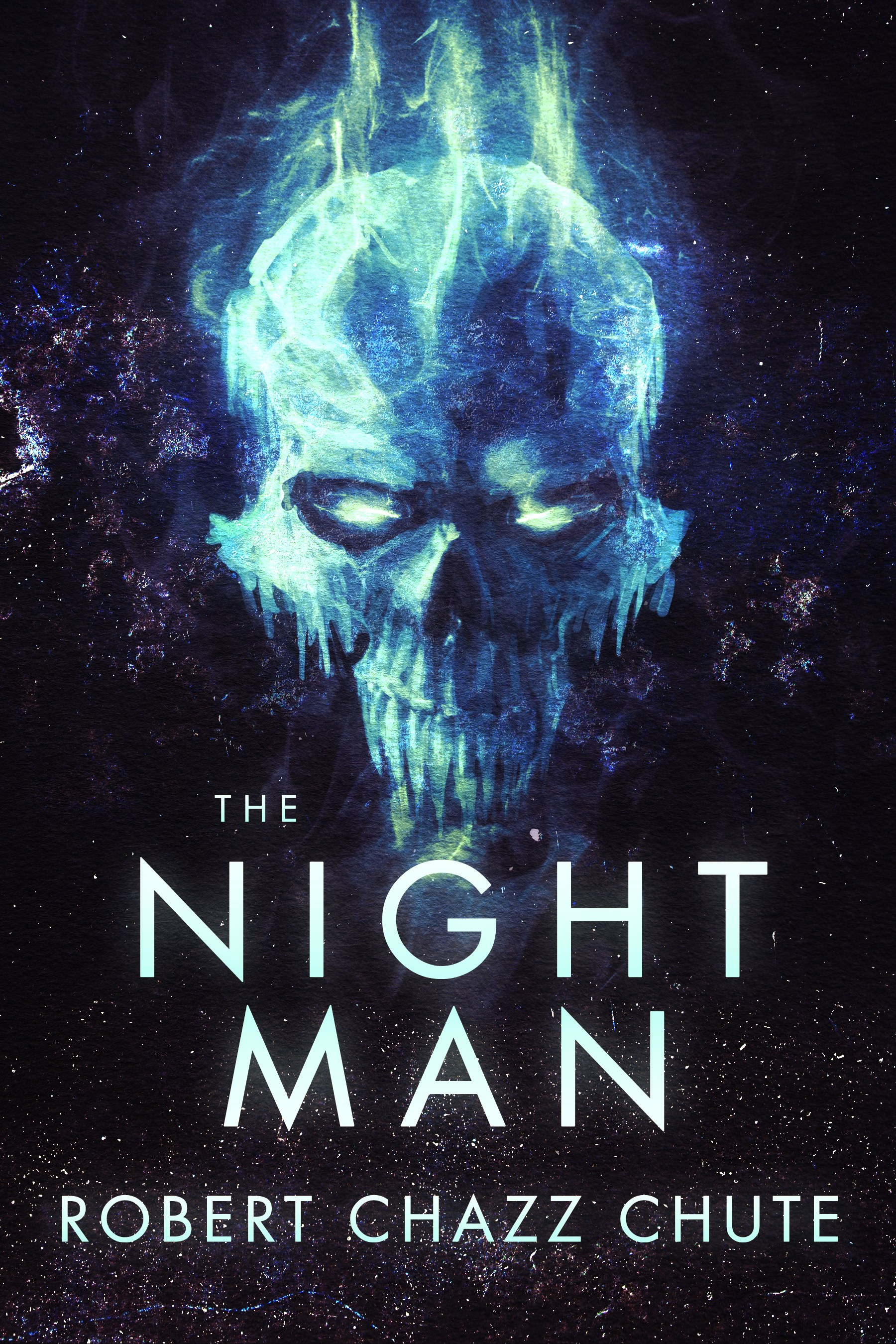
You can pick this ebook up for free today at this link: http://bit.ly/TheNightMan

Join my inner circle at AllThatChazz.com

See my books, blogs, links and podcasts.

Enter your email address to follow this blog and receive notifications of new posts by email.

Join 2,063 other subscribers