C h a z z W r i t e s . c o m

See all my books at AllThatChazz.com.

Writers: Does the term “wannabe” irk you?

Kevin Smith

Image by wvs via Flickr

Just read an editor using the term “wannabe.” I’ve probably used it in the past, too, but no more. (I am a writer and I’m an editor who works with writers, so why wouldn’t I show them as much respect as I can and avoid an irksome term?)

Whether the editor in question meant it that way or not, it came off as dismissive. Anyone who read my blog regularly knows I have a man crush on writer-director indie legend Kevin Smith. He wrote something a while ago that really got my attention and it applies here.

He wanted to be a director. He was in Jersey and no money and no plan.

When he told his sister of his ambition, she replied,

“Then BE a director!”

Don’t want it. Be it.

If you write, you’re a writer. If you aren’t published yet, approach the work professionally and act as if you already are. (That means improve your craft, take criticism, educate yourself about the industry and comport yourself with grace and ease.)

I’m a published writer and I can tell you, after a time, seeing your name in print is not that big a deal. It’s the work that matters, and when it’s at its best, it will feel like play.

What matters is the writing:

Do it.

Enjoy it.

Get it down,

Get it done.

Write more.

Write again.

Writers write.

Don’t get caught up in status, hierarchy and aspirations. Do the work because writers write, whether they’re going to be published or not.

Filed under: authors, Books, DIY, Editing, Editors, getting it done, publishing, Writers, writing tips, , , , , , , , ,

Writers: Two links on promoting your work the right way

business,accounts,accountant,office,boss,manag...

Image via Wikipedia

Sometimes the toughest part of marketing is not annoying your target audience.

Try to market in smart and happy ways to avoid overkill.

I know when you’re talking about your babies, it’s hard to hold back.

An Author’s Plan for Social Media Efforts by Bestselling Author and Social Media Expert, Chris Brogan

Book Marketing Floozy

Filed under: Publicity & Promotion, publishing, , , , , , , , ,

Writers: Beware of Pen Names

This image is a reproduction of an original pa...

Image via Wikipedia

Good Christmas Eve afternoon to you!

Since you’re all out doing battle in malls, cutting your way through the crowds with a machete,

I’d like to make a quick point with this quick post:

Watch out for pen names. There’s a use for them, but there’s been some bad advice splashed around because of some weird over thinking about branding. I use my middle name and go by Robert Chazz Chute for this blog and my fiction submissions. I do this for the same reason Michael J. Fox has a J. There is a native American poet from Maine who goes by the name Robert Chute. He came first, so to avoid confusion and out of respect, I went with my middle name. I think that’s a good reason to use a nom de plume.

About the bad uses of pen names: In the past, agents, editors and publishers often advised writers to use pen names when writing for different genres. They feared brand confusion. That was silly. Consider the biggest book brand of them all: Stephen King. I’ve read all his horror. It turns out I have no interest in his Dark Tower series or the any of those graphic novels. But I did try them out because I like Stephen King books generally. If you like an author’s book, you might like their other books.

Too few people buy and read books to play games making it more difficult to find your work!

Consider James Patterson and his 157 or so books that are now out in different genres. One name provides cross-marketing and cross-pollination for his body of work. Isaac Asimov wrote what? 500 books? Much of it was non-fiction, too. (The most readable anatomy book I own is by Isaac Asimov.)

So if you’re going to use a nom de plume, do it for considered reasons. Don’t do it because you fear your romance audience won’t follow you to your fantasy epic.

People who read books get enthusiastic about particular authors, not just particular books.


Filed under: authors, Publicity & Promotion, publishing, Rant, rules of writing, What about Chazz?, Writers, writing tips, , , , , , , , , , , , , ,

Author profile: Alicia Hendley’s Subtle Thing

Alicia Hendley’s book A Subtle Thing tells the story of Beth, a young woman who attempts to navigate through life while experiencing recurrent clinical depression. Throughout the novel, Beth copes with life’s difficulties. Beth’s trials may resonate with many readers, especially those related to education, career, parenthood, and relationships.

Alicia_Hendley

Alicia Hendley, author of A Subtle Thing


Alicia was born in Kitchener, Ontario in 1970. She completed a B.A. at Wilfrid Laurier University in psychology. Then she progressed to her Master’s degree and PhD in clinical psychology at the University of Windsor. Alicia’s a psychologist in the Counselling Centre at the University of Waterloo. She’s on maternity leave with her fourth child. She lives in Guelph with her husband (a journalist.)

CW: Alicia,when did you first know you wanted to be an author?

AH: That’s a good question, but a hard one for me to answer. I can’t remember a time in which writing and reading stories were not integral parts of my life. When I was growing up, my mother was a librarian and my father was a philosophy professor so books were fundamental to family life. When I was about ten, my parents gave me an old manual typewriter. From then on I spent much of my free time pounding out stories and poems. My writing continued and became a welcome stress reliever for me. I count on writing to ground me, no matter how busy or pressured the rest of my world. Now as a psychologist and mother of four, writing is something separate that just belongs to me. It’s vital for maintaining my sense of self.

CW: Tell us about A Subtle Thing. How did you get the idea for your book?

AH: Indirectly, the idea of writing a book about depression likely came from my job. I’m a clinical psychologist, so thinking about mental health is normal for me. I’ve always been interested in the more complex side of human experience. What probably drew me to psychology in the first place was my interest in more existential stuff: the importance of meaning, resilience, and authenticity in people’s lives.

CW: What’s your writing process?

AH: While I don’t have a formal writing process, per se, the way I start writing something new (whether a poem or a story) is often the same. Basically, I jot ideas down whenever they strike. Ideas seem come at me rather than me sitting down and consciously thinking about what I want to write. I wrote much of A Subtle Thing while on maternity leave with my third child so I had limited time to devote to it. Parts of the book were written on the back of receipts and paper bags, whatever I had handy at the time. I then used the small breaks I did have in the day to develop those ideas.

I perfected writing in spurts when trying to finish my dissertation in grad school. I was a single mother of two then, with very limited time to research or write. I was forced to learn how to immediately take advantage of free time when it became available, be it a half-hour nap period or early in the morning. Writer’s block is not a term known to single mothers, at least not to me)!

CW: How long did it take you to write the book and find an agent and publisher?

AH: I’d say that the book took about a year to write. The short stories upon which The book is based on short stories I wrote during lunch breaks in my office. I completed the rest of the book on my maternity leave.

CW: And your path to publication was…?

AH: After I completed the first version of A Subtle Thing, I sent it to a few small presses. I received positive feedback from one, but they rejected it. I then learned from my brother Nate (who is also an author) about a fairly new, independent publishing house (Five Rivers Chapmanry.) He encouraged me to send my manuscript to them. The feedback I received from Five Rivers was encouraging. They suggested I lengthen the book and resubmit it.

CW: What’s the most surprising thing you discovered writing this book?

AH: A Subtle Thing struck me as an odd little book, something I thought might be considered too dark, too out of the mainstream for most readers to embrace. Since it’s been published, however, I’ve learned that a lot of people do connect with it. For example, I know of a men’s book club that recently read my novel and gave it positive feedback. I like being surprised!

CW: What were the obstacles you faced getting the book out? 

AH: I guess the biggest challenge now that it’s published is getting exposure for the book, getting the word out. As a previously unpublished, unknown author, this can be really tough. I had assumed all books were on a level playing field with regard to getting book reviews. That’s not necessarily true, which can be frustrating. To me, negative feedback is much better than indifference or silence.

CW: Publishing can be a hard road. Did you doubt yourself along the way? 

AH: I’d say that the hardest part of the publishing process is maintaining your motivation level and belief in yourself in the face of rejection. As a psychologist, I’m used to pretty instant feedback in my work—I learn very quickly if what I’m doing with a client is helping or hindering them. What I most enjoy is hearing feedback from readers. After a lifetime of writing mainly just for me, this is exhilarating.

Sending out manuscripts to publishers is a different beast altogether. For about three years I sent out one manuscript (a memoir) to publishers. I received a number of standard rejection letters, but was able to get over the first “hump” a few times, with the manuscript being sent out to readers. I would then learn several months later that the manuscript had again been rejected. In hindsight, the memoir did need revision. I found the process equal parts discouraging, humbling, and frustrating.

CW: What advice would you give unpublished writers?

AH: My advice would be twofold: be tenacious but also be open to constructive criticism. When a professional writer or publisher has taken the time to actually give me feedback about my writing (rather than a standard rejection letter), I listen. At the same time, what one publisher might not like another could, so writers need to lick their wounds, rework what needs reworking, and then try, try again.

CW: Have changes in the book industry forced you to change how you published or marketed your work?

AH: I am still very naïve when it comes to the book industry so I haven’t changed anything I’ve done. That said, following the advice of my wise publisher, Lorina Stephens, I have done things that, as a fairly shy person, I would not have believed possible, such as blogging and tweeting.

CW: What can you tell us about your next book?

AH: I recently completed a book about childhood female bullying and the impact such aggression has years later. Tentatively called The Bystander, it’s not the story of a victim or a victimizer, but rather that of an observer who, through silence and distancing, may imply tacit approval. I attempt to raise various ethical questions for the reader, including questions related to goodness, accountability, responsibility, and tolerance of differences.

I’ve also just started writing a new story, which may become a book. The main character is an 11-year-old boy who was inadvertently the cause of his twin’s death. We’ll see where that goes.

CW: Thanks telling us about your work, Alicia!
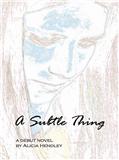
A_Subtle_ThingA Subtle Thing is Alicia’s debut novel, published by Five Rivers Chapmanry Visit their website at http:www.5rivers.org. A Subtle Thing is available at Amazon and www.chapters.indigo.ca.

Find her on Twitter (@AliciaHendley) and visit Alicia’s blog at http://aliciahendley.blogspot.com. 

Filed under: Author profiles, author Q&A, authors, publishing, writing tips, , , , , , ,

Writers: Why your worst ideas ever might be your best

Andy Warhol: Campbell's Soup Cans (MoMA - New ...

Image via Wikipedia

Three words: Andy Warhol. Soup.

Warhol made his name by making art out of the everyday. Campbell’s soup cans became transcendent when we saw them again through Warhol’s eyes. But don’t you think he encountered a lot of resistance along the way? Lots of people have.

When you look at creative endeavours, it can be very difficult to tell a good idea from a terrible one. In fact, some of the best ideas, appear to be the worst ideas ever at first glance. 

Ghandi said, “First they ignore you, then they laugh at you, then they fight you, then you win.”

Publishing. Film. Art. It can all be like that.

Books have been written about rejection (and a lot of them were probably rejected quite a bit before finally getting published.) They are pretty funny when you look back on them now. Keats was told he couldn’t use language. The first guy who looked at Everybody Comes to Rick’s wrote that he gave the writer ten pages to grab him and he didn’t. Everybody Comes to Rick’s became Casablanca. Neil Gaiman‘s The Graveyard Book is a more recent example. It’s a great book about a baby whose family is murdered. The baby wanders down to the local boneyard to be raised by the ghosties there.

Yeah, I know! And yet. And yet.

Feel bad about getting rejected? Remember this: “Norton, this idea of yours is so crazy, it might just work!”

Great ideas often come in disguise. From the outside, they look just terrible. when you finally succeed (or go indie and make it happen on your own sans gatekeepers) you can wipe your tears away with a fifty.  (Okay, a five-spot. You’re a writer, after all.)

Filed under: publishing, Rant, Rejection, Writers, writing tips, , , , , , , , ,

Old ideas about publishing, Twitter and your worldview

The M2 tidal constituent. Amplitude is indicat...

Image via Wikipedia

Sometimes it feels like we’re fighting the tide.

The world as it was is the tide.

1. There’s the tide of institution, wherein the established people put down those who aren’t established because they aren’t established…or just because they’re different. I wear a black fedora and a long black coat with a red scarf. I look like a bad immortal from Highlander. Some people look at me funny. And what fearful mortals must they be.

2. There’s generational inertia, where old ideas get enshrined and people don’t want to change.  I made the mistake of trying to have a conversation about theoretical physics with someone who thought the field of physics had stopped developing in 1964 (coincidentally the year of his graduation from university.)

3. There’s the know-it-alls who can give you lots of reasons why you’re wrong and shouldn’t attempt anything new. Just. Like. Them. Doing something creative and new and different takes are certain amount of unreasonableness. We’re nice. But we have crazy ideas that just might work. “Put away your market analysis and focus groups and look what I made!”

4. There are envious people who feel safe in their rut if you get down in that rut with them.

5. There are people who are afraid and don’t know the way out is to act brave, especially when you don’t feel brave.

6. There are people who have their opinions and those opinions were true a short time ago. Those outdated opinions were dead on, but things changed and now they are dead. I’m hearing people worry about the death of newspapers who haven’t ever given a single thought to the end of home milk delivery.

7.  Some opinions were snarky and funny for a short time, like Twitter being all about what you had for lunch. This is usually from people who haven’t tried Twitter…yet. Are these people still going around saying, “You are the weakest link!” How about, “Where’s the beef?” Move on, please. And spring for dial-up, will you? You’re Internet connection is nearly unusable.

8. There are know-it-alls, but many more know-nothings. Don’t cast your pearls before swine.

9. Then there are people who have a vested interest in keeping things as they’ve been. (Publishers holding back on e-books to squeeze a little more out of trees and authors comes to mind. Outmoded contracts are bad. Trying to retrofit old contracts to new markets is criminal conspiracy.)

10. And sometimes we’re wrong to fight. Sometimes we’re on even ground and don’t know it.

Story time: When I graduated from the Banff Publishing Workshop, one of the faculty said, “Welcome to publishing. Come to create, not to destroy us.” It hit a rather defensive note. They had put us through the wringer, so maybe they had some reason to expect us to be a little pissed.

I stood up and said, “We aren’t coming to destroy…but we value our opinions just as much as you value your own and this is a subjective business. Nobody has to feel bad about that. No one knows what’s going to be a bestseller, so let’s not pretend we know. There is no secret to selecting the right book to publish. That’s the secret.”

And yet, we were expected to feel bad, even in areas we had experience if not expertise. I often felt too young to have an opinion, year after year. With every one of my birthdays, the establishment got a year older, too. Screw that. I’m old enough to see the pattern now. Or am I too old to have these opinions?

Below is a link to an interesting article about how Twitter is changing.

It starts a bit slow and the lead is buried, but once you get to the charts, you get the real chocolate flavour.

As Dennis Miller used to say—way back when he was good and relevant “Of course, that’s just my opinion. I could be wrong.”

How Twitter is Changing: A new study reveals Twitter’s new direction


Filed under: publishing, Rant, Rejection, Unintentionally hilarious, Useful writing links, What about Chazz?, Writers, writing tips, , , , , , , , ,

Writers : How “hands-on” do you want your agent to be?

A diagram of cognitive dissonance theory

Image via Wikipedia

I ran across an interview with an agent here. She sounds very nice. But the first couple of questions got me to wondering…

The agent mentions that she’s been lucky to never have to work on a book she didn’t “love.”

Okay. That’s great. Or is this a red flag? It’s a common sentiment among agents across the board. They want to be “delighted.” They have to love it to sell it. Hm. As a former sales rep of hundreds (thousands?) of books, I can tell you I sold many books I hadn’t even read. I’m not recommending that. I am saying that’s real. I fail to understand why agents have to love books to sell them. Shouldn’t the question be, would others want to read this? Do I know an editor who would like this?

You’ve bought a lot of books. You’ve read quite a few of that number, even to the end. How many books have you read that you really and truly “love”?

Then the agent discusses being very “hands-on.” There’s kind of a cognitive dissonance here, isn’t there? I’m not picking on this one agent. Again, she’s saying stuff that a lot of agents say. But on the one hand, the agent has to love the manuscript. On the other, there’s apparently lots of work ahead before it’s presentable for submission to an editor. Uh…whut? Shouldn’t it be one or the other?

Here’s a take on this from an author who sees the agent-author relationship a different way, and by that I mean upside-down from the way it’s usually portrayed. Dean Wesley Smith sees the agent as his employee and is not interested in jumping through their hoops. He doesn’t want to be slowed down by the agent’s process (though he has used agents.) He’s not interested in any employee slowing his process, production or sales. I recommend you read all his posts on Killing the Sacred Cows of Publishing. It’s refreshing.

So here are my questions:

Do you want your agent to love your book or is liking it good enough for you?

Do you want your agent to edit your manuscript to make it better up front?

Do you prefer that your agent be more hands-off and just get it to market?

Addendum: The agent adds, “Basically, build yourself as big of a social media platform as you can before your book ever comes out.” Good advice for both the indie published and the traditionally published. But, if you can get your social media platform big enough, do you need a traditional publisher at all?

My new BFF Jason Alexander Greenwood asked himself these questions and came up with an indie answer. If you missed my link to his post on Sunday, read Shoot the Gatekeepers here.

Filed under: agents, authors, Editors, getting it done, links, manuscript evaluation, publishing, Rant, Rejection, , , , , ,

Book Information Centre Blues

The blue copyright symbol drawn in SVG. Svg ve...

Image via Wikipedia

Occasionally, you will run into someone who either expects you to know the unknowable or dismisses what you do know. When I worked at The Canadian Book Information Centre, it happened all the time.

Case #1: One fellow, so very arch and British one might think he was sent over from Central Casting, asked what Canada’s top cookbooks were.

You might be able to google such information now, but back then we were expected to somehow pull the numbers and titles from the ether. Or from our asses.

I told him I didn’t have those numbers.

“I would have thought that would be general industry knowledge,” he replied.

“No,” I said. “The publishers don’t supply us with those numbers. Only their accountants know the truth. You could go back through old Globe & Mail newspapers and find the top cookbooks by going through top ten lists, I suppose.”

“You can’t do that for me?”

“Uh, no. Head to your local library.” Where people are actually paid to help you find the data for your book proposal, I thought.

He hung up in a huff before I could explain that I worked for publishers as an editor and publicist. My title was Project Manager, not Phone Monkey for Anyone Who Owns a Telephone. (Did you know they’ll give just about anyone a phone? I know! Exactly!)

Case #2: Another aspiring author asked me about copyright. He was desperately worried some evil editor would steal his idea.

This is a common concern, but it’s a nearly invalid one since it happens so rarely. As it happens, I knew a lot about copyright. And so:

No, you can’t copyright an idea alone. If you could, the guy who got to Good versus Evil and Boy Gets Girl first would be rich, rich, rich.

No, you don’t have to send your manuscript to some office in Ottawa or Washington. You wrote it. Your name is on it. It’s yours worldwide (except for parts of Asia.)

No, putting the copyright symbol on a manuscript is considered unnecessary, amateurish and insulting to the editor or agent who receives it.

No, you don’t have to mail your manuscript to yourself. The idea is to get the post office’s official stamp on the sealed envelope containing your treasure (as if that couldn’t be faked.) You can if you want to, but the trick is having something worth stealing. Besides, to my knowledge, any plagiarism case that’s ever made it to court doesn’t hinge on whether you’ve got a stamp on a sealed envelope.

“Well, I assure you my manuscript is worth stealing and I will mail it to myself!” Click!

Me to fellow harried Project Manager: “If he had already made up his mind what he was going to do anyway, why call us?”

The misunderstanding of our role wasn’t the callers’ fault. We were named The Canadian Book Information Centre. However, we worked for publishers to promote their books to media.

We cut the wayward calls in half the following year by getting our listing out of the Yellow Pages.

Filed under: Books, Editors, getting it done, publishing, Rant, Rejection, Unintentionally hilarious, writing tips, , , , , , , , ,

Here’s a good one on editors, authors & the dance we do

This article is a long read but definitely worth the time. This gives quite an insight into the long process we must all endure (whether you’re self-published or traditionally published.) It’s especially useful to see how editors and authors relate. Check it out:

Five Writers Talk About Their Book Editors | The Awl

Racing off to help someone in need at the moment.

Alfred! My cape! My cowl!

See you back here tomorrow morning, same bat-time, same bat-channel.

Filed under: authors, Editing, Editors, publishing, self-publishing, Writers, writing tips, , ,

When did you know you wanted to be a writer?

Aquarelliste - MCL

Image via Wikipedia

It’s a question I ask as part of the regular author profile feature (appearing in this space Thursdays.) 

It’s one of those questions that I find endlessly fascinating, like:

1. How did you and your love first meet?

2. What do the voices in your head tell you?

3. Would you rather be right or happy?

Almost every writer, it seems, can remember the moment they felt the pull.

Maybe it happened when they read a great book. (Which book was it for you?) Or they like the lifestyle because they are unsuited for anything else (read: you are otherwise unemployable.) Maybe they had an amazing experience they had to share or teach. (What was yours?) Even a lousy book spurs some people to say, “I could do better than this crap!” (If that’s you, which book was it?)

For me, it began with reading, I’m sure, though there wasn’t a particular book that got me thinking writing was for me. I first announced my writerly intentions to strangers. I was maybe eight, though it’s hard to say. I ascribe any vague memory from childhood to that year and, in truth, it can’t possibly have been that eventful. That would leave all the other years empty of anything. But that is how it feels.

The strangers to whom I made my announcement were the printers at a local shop. I wandered in (ignorance is a strange propellant) and asked for paper. “For a book” I added, because I thought I needed to get it from them, for some reason now unfathomable.
I remember the inky and oily smell of the place and the noise of the machines. I loved that smell. I still love stationery stores. All those empty pages call to me. Due to this compulsion, which stops just short of a sexual fetish, I own many more journals than I’ll ever fill and many more pens than I could ever use. The smell in that shop (and the look and smell of sunlight on turquoise water colour paint) are the only solid sense memories I carry from early childhood.

The printers smiled, indulged me, and I walked out with some brownish scrap paper. I walked taller and with real purpose, probably for the first time. I should have been holed up in a library at that stage, though I did that, too. I always preferred books to people. Childhood was rough.

Imagination, stories and the waiting world were my escape.

They still are.

When did you first know?


Filed under: Author profiles, author Q&A, Books, publishing, What about Chazz?, Writers, , , , , ,

Bestseller with over 1,000 reviews!
Winner of the North Street Book Prize, Reader's Favorite, the
Literary Titan Award, the Hollywood Book Festival, and the
New York Book Festival.

http://mybook.to/OurZombieHours
A NEW ZOMBIE ANTHOLOGY

Winner of Writer's Digest's 2014 Honorable Mention in Self-published Ebook Awards in Genre

The first 81 lessons to get your Buffy on

More lessons to help you survive Armageddon

"You will laugh your ass off!" ~ Maxwell Cynn, author of Cybergrrl

Available now!

Fast-paced terror, new threats, more twists.

An autistic boy versus our world in free fall

Suspense to melt your face and play with your brain.

Action like a Guy Ritchie film. Funny like Woody Allen when he was funny.

Jesus: Sexier and even more addicted to love.

You can pick this ebook up for free today at this link: http://bit.ly/TheNightMan

Join my inner circle at AllThatChazz.com

See my books, blogs, links and podcasts.

Enter your email address to follow this blog and receive notifications of new posts by email.

Join 2,063 other subscribers