C h a z z W r i t e s . c o m

See all my books at AllThatChazz.com.

Book Reviews: A Very Decent Proposal

The magnificent Kim Nayyer sent me a very interesting idea

that the self-published among you might just love.

“Magnificent?” you say, skeptically.

Me? I don’t say anything. Instead I whap you on the nose with Kim’s rolled up bio: Peter Parker and Marian the librarian’s love child. Selects and edits creative non-fiction submissions to Victoria’s Island Writer magazine. Writes book reviews, mainly of children’s literature and adult legal texts, to the extent those genres are distinct. News and information junkie. Proved her good citizenship by writing a blog for Canada’s public broadcaster during the recent Canadian federal election. Her website is http://www.kimnayyer.com.

Here’s the email Kim sent:

What a coincidence that I spotted your video book review today (nice!). Coincidence because a couple of days ago I was going to suggest to you a book review corner on your site, a corner restricted to reviews of self-published or e-only or e-first books, something along those lines to give a platform to the non-traditional market.

Recently a twitter contact  asked me whether I was able to review his book. I checked with a couple of my outlets. One only does Canadian books (and the guy’s in Portland) and the other only does pre-release publishing house books (and he’s self-published and the book came out earlier this year).I thought of you and your forthcoming books, and I thought of a couple of local self-published authors I know and how hard one of them works to sell her book.

My idea is not that you do all the reviews yourself (unless you want to, say in videos), but that you get a roster of a handful of decent writers/vloggers, perhaps other self-published authors, to do them as guest posts or to commit to doing one or two a year each, or perhaps in exchange for reviews of their books. The authors of course would send you or the reviewer free review copies of their books.  

Think it’s workable?

I love that idea! How about it, self-published party people?

If you’re a self-published author and want:

1. Your book to be reviewed, and

2. to review a couple of books a year

then, 3. Email Chazz at expartepress@gmail.com with:

your name, book title, genre, book length and what genres interest you for writing book reviews. I shall attempt to match up the compatible submissions and we’ll take it from there. Also, if you have suggestions, let me know. I do love the idea. I just haven’t thought much about what the protocol should be.

The self-published can support each other. As it stands, The System and The Man wants to keep you down. Let’s subvert The System, kick The Man in the crotch and spread the word about our books.

Yes, Kim the Magnificent. I think it’s workable!

GO INDIE! 

Filed under: authors, reviews, self-publishing, web reviews, Writers, , , , , , , , ,

Robert Chazz Chute: Literature hater & narcissistic bastard!

I realized something about myself the other day. I’ve been writing since I was a kid. So why haven’t I published a string of books yet?

Narcissistic Bio (Feel free to skip this paragraph to get closer to the point arrived at below): I went to journalism school. I wrote for newspapers and magazines. I worked in book publishing for five years in several positions, making books, editing books, selling books and promoting books. I’ve written a column for a magazine for three years. I submitted to and won writing awards or honorable mentions. And yet…I never pushed to get a book written. I have written several books, but I never got to the point with one where I was satisfied enough. For  a long time I thought this was just laziness or perfectionism or both. Even as I edited other people’s books, I still had my own cooking in the background. But I never sent out manuscripts or pestered agents or got anything really done, except short stories and feature articles, speeches and presentations. I’ve written about writing extensively, attended publishing conferences and writing workshops, chewed through publishing issues and edited several books this year for Five Rivers Chapmanry. I’m proud of all these things and enjoy them.

But everything I’ve accomplished centered around tasks with a short deadline, stuff that paid up front, stuff that required short bursts of intensity. I wasn’t working on my personal long term writing and publishing dreams. I wasn’t digging in to do the long hail work. It’s as if I’ve been mixing dough, letting it rise, shoving it in the oven and letting it bake…and never eating any bread.

I used to think that I wanted to be a writer because I love literature. I read and read and read and still can’t get enough, it’s true. (At least some of the above headline is supposed to be ironic, folks!) Obviously I don’t hate literature, but I don’t love literature as much as I thought I did. If I loved it all that much for its own sake, I would have either settled for reading tons of books without thoughts of my own. Or I’d have finished those revisions and delivered my stuff over publishers’ transoms. I would have added to slush piles and wallowed in rejection slips until I finally started breaking through. I didn’t do that. I raised kids, did piece work, indulged another career, dabbled around the edges and did other stuff.

So why self-publish now? I was disillusioned with the failures of traditional publishing when I worked within it (another post for another time.) I loved reading, still do. I love that floaty feeling you get when you write, go deep and a story comes together.

But these loves weren’t enough on their own.

I’m self-publishing now because ebooks have finally arrived. I can finally indulge my loves as well as my need to remain independent. Clearly, I’ve got a problem with authority.

My motto is Question authority before authority questions you. I do not wear a tie and I’m the kind of dog who pulls out of his collar.

 Love of literature wasn’t enough. Love of literature plus love of self plus digital opportunity was the ticket.

Embrace independence:

Control freaks! Unite! 

(Ahem…well, do what you want. Far be it from me to tell you what to do.) 

The revolution

(I didn’t know I was waiting for)

has arrived. 

Filed under: e-reader, ebooks, Rant, self-publishing, What about Chazz?, , , , , , , ,

Book promotion: I was wrong

I used to be a book publicist and, as a book sales rep, have worked with book publicists. Gotta say: not impressed with the breed. Most have a shiny coat, bark loudly, no teeth. I expected a lot of them. I don’t think I was wrong then, but now that the tech and culture have changed, I realize I’ve expected too much from publishers and their publicists.

In the old days, publicists organized events, book tours, mailed out advanced reading copies (ARCs) and hoped for reviews. The publicists I knew were pretty smug and full of themselves, especially considering how frequently they were unsuccessful.

The other wrinkle in the mix from an author’s point of view is, if you’re with a trad publisher, the publicity department has little time to get attention to any one book or author. The other continual complaint is, besides the small media/promotion window, most of the promotion budget always goes to the author who seems to need it least. That’s the publisher trying to maximize profits (rather than pimping a mid-list author.)

The world has changed and authors need to shift expectations: Publishers don’t publicize your book much and mostly download marketing duties to the author. That annoyed me. Now I think that’s the way it should be.

My reasoning is that the author/reader relationship has changed. Readers don’t want to interact with your publisher. They want to interact with you. Who cares about publishers. With the exception of Harlequin—the one company where you always know what you’re going to get—publishers don’t have brands. Authors have brands.

Old model:

Send stuff out (press releases, ARCs, bookmarks, catalogs, book tours) hoping media will bite.

New model:

Engage readers directly with Twitter conversations, blogger reviews and blog tours and hoping they will bite.

Yes, there’s still room for old model tactics, but they are either limited, outmoded, less effective or costly.

So nevermind that your publisher’s publicists aren’t returning your calls two weeks out from your book launch. Chances are they’re busy with another book and have expended your promotional budget. You can do better for yourself over the long run, anyway. (Or you can hire your very own publicist and do it up right for a longer time.)

Publishers unloaded marketing responsibilities to authors for budgetary reasons. Authors should shoulder that responsibility for a better reason:

Your readers want to talk to you, not them. 

Filed under: authors, Publicity & Promotion, publishing, Rant, , , , , , , ,

Writers: What are you worth?

At last week’s Writer’s Union of Canada conference in Toronto, an author asked the head of ECW Press: “Why should authors should get a royalty of 25% (of net) when they could get 70%  publishing on their own digitally?”

Good question. 

The question rose from a discussion of ECW’s new ebook imprint. The replies from the panel were interesting. First there was the assertion of the value of editorial input, an advance of $500 and a promotion budget of $800. Production cost was $1600. So, the publisher’s risk up front was $2,900. The ebook price was set at $9.95 (though Amazon dropped the price to $7.96.)

The publisher emphasized his risk, saying that most of these ebooks haven’t been runaway successes and, because they are solely digital, it’s difficult (or impossible) to get them reviewed in traditional venues. The Globe & Mail refuses to review ebooks, even though ECW is a traditional publisher. (Insert your own joke about the fragility of newspapers’  relevance here.)

By now, my objections to these answers are pretty obvious: 70% is more, the publisher’s price point is too high for the competition, hire your own editor (edit and hire a graphic designer for less than $1600 and format it yourself), $800 for promotion* , $500 advance and giving up e-rights  frankly doesn’t make me swoon.

Am I missing something here? And, as a writer, what about your risk? What about all your time and energy invested as a writer? It takes much more of your finite resources to produce a book out of nothing than it does to shepherd it through to publication. Right?

What do you think? I welcome your comments.

Next post: Promoting your book. 

Filed under: DIY, ebooks, publishing, self-publishing, Writing Conferences, , , , , , , , ,

Writing Conference Cataclysm: Ebooks versus the Amish

The room was packed with authors who were traditionally published. When the bookseller was talking, they were clapping. She told them what they wanted to hear. She insulted lovers of ebooks, told them to unplug, told them they needed to “get a life.” Her world is divided between ebooks and “real” books, nostalgia for what was and contempt for what is and will be.

Her emotional appeal worked well on that crowd. No one was paying near as much attention to the other guy on the panel. Formerly of Booknet and now with Kobo, Mark Tamblyn knew the numbers. The reality he knew and could quantify didn’t get any applause there so here are some highlights from his trip on the Reality Train:

1. Ebook lovers do love books, they just love them on ereaders. They do not fetishize the package. They read for love, enjoyment, entertainment and ideas, just like traditional readers claim to do…except:

2. Ebook lovers buy more books. Twice as much as people who love so-called “real” books.

3. Ebook readers are not 20 and 30-somethings. They are typically 45-55.

4. Ebook readers are not easily distracted. They do engage in deep reading and are not flighty cyber-ADD sufferers, after all.

One author asked how many people in the room owned an ereader. Only a handful of us raised our hands and he looked quite pleased with himself for a moment. Then someone pointed out the demographic in the room: the crowd skewed old and were, after all, a bunch of traditionally published authors. (And by the way, a couple of those older authors expressed excitement at fleeing to publish their own books so they can get off the mid-list and get paid 70% instead of 25% from a legacy publisher. I’m sure there will be many more to follow.)

So here’s another break from the illusions of The Matrix: Last year Kobo had a party to celebrate their one-millionth customer. A week later they held a party for their two-millionth customer. The month was December and that, my friends, is one major and measurable difference made by Jesus’s birthday. Clearly Jesus wants you all to buy ereaders.

It’s gauche, but since I predicted the ever-increasing appetite for ereaders last year and since I’m in a foul mood I will point out: I informed you thusly! I so informed you thusly! (Inside joke for Sheldon Cooper fans.)

And by the way, since I’m so damnably cranky: Last week I noticed someone saying the indie revolution was a good thing for creators but wasn’t any good for readers. Hey! I’m indie but I was a reader first and will always be a reader. I read ten books at a time. I’m more voracious for reading material than I am fudge. I’ve got a stack of pbooks by my bed, a huge library we call a house and a whack of ebooks loaded in my ereader. I relish more choice, even the stuff that isn’t particularly close to grammatically pure. So knock off that BS, thanks very much.

And have a day. Make it real.

Filed under: e-reader, ebooks, Rant, self-publishing, Writers, Writing Conferences, , , , , , , , ,

21 Bold Predictions: The changing future of books

Sure, you need to write a good book to make it marketable. But what will be more marketable in the future? What will be different? Here are my sweeping predictions:

1. Non-fiction Shrink: Got a question? Got a problem? Ask.com or Wikipedia or any number of  quick searches will probably answer that question. What do I need you (and your book) for? In the future we still won’t have flying cars. There will also be less call for a lot of non-fiction. Instant, quick answers beat your treatise on bed bug infestations. I just want to know who to call and what to do to get rid of them.

Another instance: After faithfully reading the magazine for years, I don’t buy Writer’s Digest anymore. There is already more information than I can possibly read on writing blogs. For free. Um, like right here, three times a week, for instance.

2. Short form explosion: My horror and sci-fi writing friend Rebecca Senese articulated this for me first and it makes sense. People have less time and shorter attention spans as the web changes their brains away from the usual experience of deep reading. Cyber ADD aside, short stories are also 0.99 each, so people will download a little bouquet of short stories and take a chance on new authors that way.

Also, with ebooks, novellas and short novels are practical again from a manufacturing/pricing perspective. Think of the works of Albert Camus. 50,000 words for a novel was common. Then New York lost confidence in that formula and bigger books became the norm (so much so, in fact, that many authors now scoff at NaNoWriMo‘s 50,000-word winners.) Now, book length is less relevant. Ebooks don’t have page numbers.

3. Merchandise and books shall marry: Your platform and your content should optimally come together in a cult that wants more of your work. Witness all the Fight Club quotes, Youtube videos, tees and, well, actual fight clubs (years after the film phenomenon.) You’ll be spreading the awesome with passive income from whatever secondary sources you can manage. (I already started to plant my seeds here.)

4. Domination by Series: Having more ebooks available improves your marketability. Having more ebooks in a series improves your marketability even more. So, rather than sticking to a one off, consider how you can turn your masterpiece into the foundation for a series of books fans will clamor for. Your advantage as a self-published author is long tail merchandising. Your work shall be available until we embrace the Singularity and join ebooks in the cyberspace holodeck of our disembodied, fully-uploaded immortal minds.

5. Product integration: Slightly different from #3, here I’m talking about books as vehicles for products instead of the other way around.

You are a carpenter who specializes in bathroom renos. Order the book on how to renovate a bathroom in three days. The book pushes the advantage of your special caulking gun, available for immediate drop shipping before sledgehammering the bathtub.

6. First-person non-fiction: More authors who did something stupid and dangerous (tour Iraq for pleasure or go skiing off the approved slopes) will write their own first-person accounts. They’ll self-publish and the covers won’t say “as told to” some ghostwriter. The results will be horrific and ubiquitous.

7. Excellent journalists will find their place in analysis: The freelance market sucks for writers. However, if you’re a journalist with extensive financial expertise a la Too Big To Fail or can write like Matt Taibbi in Rolling Stone, you can provide the long tail analysis of WTF happened?

8. To be successful, freelance writers must own smaller niches: If you aren’t a genius like Matt Taibbi, there’s still hope, but you’ll have to think small. Maybe microscopic, like the asbestos beat in the tri-state area.

Generalist writing isn’t dead exactly. In fact, generalists are everywhere, but they are also free.  You may not think of it this way, but really, blogging is instant publishing. If I want a non-expert opinion, that’s the simplest thing in the world to get and the blogger probably isn’t seeing a dime from it. The writers who are making money now are either tech experts  or people who are plowing ahead to make way for the rest of us in the digital publishing revolution.

9. Cross-genre will be accepted: Cross-genre books (a la Scott Sigler, for instance) have long been a problem for publishers. Even if they loved it, if it was sci-fi and horror, they worried which bookshelf it should be placed on to sell. (For those of you who aren’t sure, go look up what a bookstore used to be. That worry used to be much more relevant.) Cross-genre’s stigma is fading. And self-publishers care not at all, though they will have to do a really good job with their promotion and publicity.

10. More humor: In order for a humor book to sell, traditionally it had to be penned by a celebrity or it had to have a Shit My Dad Says-worthy hook (in other words, a novelty book.)

Comedy writer Ken Levine has a long history of sit com hits, from Mash and Cheers to Frasier, among others. Despite his track record, he wasn’t famous in front of the camera so traditional publishing hasn’t given him a chance to screw it up. Who he was wasn’t enough for traditional publishing to invest.

However, Ken has an incredibly popular blog with a following. He could go back to trad publishing and ask them how they like him now. Or he could just publish himself and keep the profits.  He has a platform that heretofore went unrecognized. He’s a guy with a blog today. He could be the new Dave Barry tomorrow.

11. People will get better at platform: Not long ago a clueless agent told a baffled writer,”Go make a viral video.” Yeah, sure. But what makes a video go viral? As time has passed, we have a better idea of what elements make something go viral.

I’m not saying there’s a formula. However, I think we’re at the point where we recognize what won’t go viral. If your book trailer is going to catch fire on Youtube, it will have to be powerful or clever or charming or heartfelt yet funny or at least cute. If you don’t have any of those elements, you’ll know (and if you don’t know, I hope you have good friends who will warn you.) At least the tech has improved so if you’ve got GarageBand, you already have a shot at putting together a better book trailer. And if you screwed it up, you can take comfort in trying again since the costs of trying have come way down.

12. Curation will get worse, then improve: People are already learning to distrust Amazon reviews. Many reviews are by haters with nothing better to do but snark on others’ work. Other reviews are by friends of writers or even by the writers themselves. There are a lot of books coming down the pipe and you are going to need a filter. Goodreads, for instance, seems to be a place for real people to provide feedback on what they love. I’d trust that (or a friend with similar tastes) before depending on Amazon alone for a helpful review.

13. Eventually: Ebooks will boil down to one or two standard formats.

14. Eventually (after #13): Your device will get sophisticated enough to take the download and format your downloaded ebook however you like it, no matter what the Big Six decree. Proprietary defenses (DRM) will be cracked as fast or faster than they are now so prices will fall, many current publishers will be former publishers and if you want money to eat, you’ll have to make up the difference with volume.

15. And #14 won’t happen on an e-reader: I love my e-readers, but they are interim devices, like pagers and electronic planners were. When e-readers go, they’ll probably be replaced by tablets that can do everything. The screens will be expandable so you won’t be peering at books through the keyhole like on a smart phone. Also, we’ll be back to the two-page spread you’re used to with paper books.

Some say ereaders are already on the way out but they’re in a rush. Ereaders will be around for some time to come because lots of people want to read ebooks, but they can’t afford higher-end integrated devices. Ereader prices will fall so market saturation will soak much deeper and faster than previously thought.

16. Media integration: I tried to read an integrated ebook. The experience sucked.  It won’t suck forever. You’ll have that two-page spread, but you’ll be able to bop over to a cut scene of the story’s climactic event. Merch links will be embedded into the text so you can buy the t-shirt your hero is wearing and the villain’s yummy high heels. One click (only it will be a swipe and eventually, a voice command. Later, a grunt. Then, a thought.)

17. The future of reading is hearing: Audio will rise much higher in popularity. You don’t have time to read so you listen in your car, while you work out, while you walk the dog, while you do the dishes and/or have sex. Time management is more important than  money management (though they are often merely equated. that’s a different post for the glorious future.)

Audio will continue to be more expensive until voice tech improves. While we’re still paying actors to read (minimum $150 an hour and usually $300 an hour and up) audio will stay the indie authors last foray. No disrespect to actors. I know some. However, your computer’s voice inflection is improving so when that dramatic reading is up to snuff, this Jetson’s future will kick in. The voice of George Jetson will come from a computer, not a talented voice actor.

18. You’ll care less about grammar: Well, not you. But your kids probably, especially since in school they are already taught spelling (and handwriting) matter less. As an editor, I regret every grammatical and typographical error. But with the deluge of self-published books replete with typos, we’ll relax our standards. Instead of fetishizing a book’s typographic purity, we’ll freak out less when we spot a typo. Instead, high praise will be, “That one didn’t have that many typos.” Practical acceptance will ensue once today’s outrage becomes the new normal. Sure, you pride yourself on being a sharp word nerd, but anyone who can sustain the level of outrage required will be exhausted and have no friends.

On the plus side, a book that is well written and well edited will stick out more.

19. Instant will be prized more: Trad publishing works on long publication deadlines because of budgets and logistics. (Though it’s a factor for the editorial staff, contrary to what you’ve heard, quality is not actually Job One.) If they could pump books out faster than 16 to 18 months per book, they certainly would. That kind of agility would allow them to be more topical, hit trends and, most important, have more stuff for sale. Recently I read an ebook that mentioned the Japanese earthquake. Compare that to how long it took 9/11 to show up in traditionally-published novels out of New York.

There will be little to no delay in the future. An ebook on the ramifications of Bin Laden’s death was up for sale within a week of his death. You might think it was mostly prepared ahead of time, but actually it was a bunch of emails from socio-political experts contacted as soon as Seal Team Six did their job.

20. Romance will continue to dominate, but now it will be recognized: The love of the paranormal romance genre is not a new thing, but romance has never been recognized as the dominant force it really is. Amanda Hocking’s recent success is no accident, especially because she writes in a genre that dominates reader demand.

Look at bestseller lists. You’ll see “important literary works”  by big publishers. Good for them! Those are the sorts of books I like. However, those weekly bestseller lists are often based on booksellers reporting which books are sitting in front of them in the biggest cubes and stacks. Much of the math is suspicious, especially since bestseller lists don’t take into account sales from non-traditional book venues (Walmart, drugstores, the spinner rack at beach resorts or the vast call for romance books among ESL learners. Nope. Not kidding about that. If you’re learning english, simple stories of ribaldry and girl-next-door heroines are one way to do it.)

You won’t see Harlequin romances on bestseller lists. However, I used to work at Harlequin. I’ve seen the numbers. Romance sells huge. Romance sells much bigger than anything on bestseller lists. Why? Because english majors run Big Six editorial departments. They do not run the real world. Yann Martel writes great books. Nora Roberts writes fast, easy reads. Even snobby english majors read trashy, naughty novels for a break from lit that might be fresh and surprising. In the real word, the hare beats the tortoise.

21. Someday soon, everyone will make these changes in spelling: email, ereaders, ebooks. Of all these predictions, this is probably the one which will happen first.

And yes, #18 will probably happen last. As in, over your dead body.

Filed under: Books, DIY, e-reader, ebooks, Editing, publishing, Rant, self-publishing, , , , , , , , , ,

Writing Conference: 10 Bad things

When you go to a writing conference, there’s going to be information that’s good and information that doesn’t apply to you and information that’s quite bad. Here are some of the things that came up at my most recent conference which you can safely ignore as wrong or silly or misguided:

1. How will we curate all those bad books coming from self-publishers? I’m so tired of this objection, and have dealt with it so much elsewhere here, I’m not ev–zzz. (See Related articles below for that rehash if you feel the urge.)

2. Don’t mix gay narrative with straight narrative. So…ghettoize gays and keep everyone separate, as if our gayness or straightness is our single defining characteristic? Nope! I reject the premise. Screw you…in whatever way you prefer.

3. Order 1,000 books because, due to cost per unit, 1,000 won’t cost much more than 200 books. This, versus the more experienced publisher who pointed out that he only ordered what he needed because he knew it would take him two years to sell 500 books. (Plus a garage full of books is so depressing and unnecessary with the advent of POD.)

4.  Any worries about Amazon’s first novel contest. You have nothing to lose from participating in it.

5. Any worries that someone will steal your idea. There is a scientific correlation to this particular worry: The more you worry about it, the more your idea sucks anyway.

6. This is the end of publishing. Publishing’s changing, that’s all. Adapt or die.

7. I shudder at e-books. Then you’re old. Get over it or wait and that problem will resolve itself.

8. “Twitter is awful. What can I say in 140 characters?” This, from an editor. My internal monologue was: You must be a really lousy editor and you’re telling me you are committed to not being at all clever.

9. “Twitter cuts into my writing time.” This, from the same editor. If she read my blog (DEATH STARE!) she’d know (CHAZZ LAW) Twitter is for time that would be unproductive anyway. Fully functional adults manage their time. (And addicts have to want to change.)

10. “Get an editor for your self-published book!” This is not bad advice. It’s not wrong. However, it is condescending. The people who will take this advice are already on board. The people who won’t take this good advice won’t change no matter what you say.

Filed under: Books, Writers, Writing Conferences, writing tips, , , , , ,

Write. Commit. Do.

Last Saturday night I went for a long walk with She Who Must be Obeyed. We talked about the future.  I’d analyzed the finances. I’d considered my options. Now I have  a plan. I’ve been on both sides of the argument for and against self-publishing (and a lot of those arguments against were good objections when they were true not so long ago.)

It’s time for some grown-up decisions since I’ve been a kid in long pants for some time now. I have a manuscript to publish. Well, several, actually (and plans for more.) What to do with them though?

I’ve read Seth Godin, JA Konrath, Dean Wesley Smith, Barry Eisler and Cory Doctorow. I’ve read multiple defences of the status quo from legacy publishing. In the end, the latter were not convincing. I’ve spoken to Rebecca Senese about her experience with Smashwords and Jeff Bennington blogged in this space about Lightning Source. I kept an open mind as long as I could and decided I have to jump. Now.

Inspired by Kevin Smith, I see where the puck is going and I will not chase after where the puck has been. I’ve decided to pick myself, go big, go indie and publish my books myself. I’ll be using Smashwords and Lightning Source.

What are the main reasons I’m committing to indie? I’m looking forward to having the first book out by November. Traditional publishing would take much, much longer than that even if I struck a deal tomorrow (and the royalty rates are not favorable.)

I have had mainstream interest in the first book. I was concerned that self-publishing is seen by some as cheating the system, an evasion of gatekeepers who ensure quality. As I’ve explained in previous posts, I reject that premise.

JA Konrath ran the numbers. Ross Laird was very persuasive. Barry Eisler really got my attention when he said opting for self-publishing came down to a business decision versus an ego decision. That rang true for me personally.

Self-publishing is not the quick route to publication some people think it is. I won’t be skipping lightly over editing. I’ll be doing most everything a traditional publisher would do. I’m a tad intimidated by the tech side of things, but I’m a smart guy. I can generally figure most things out or ask for help. And I worked inside traditional publishing for five years so I’m not intimidated by a lot of things that would worry others. I’ve written and published a lot already so I’m not going in starry-eyed. But I am optimistic and excited. Much of the time, this is going to be fun!
I’m not saying that you shouldn’t go with a New York publisher, a Canadian press, a university press, a small press or a micro press. I am saying this is the right choice for me because it suits my temperament and it suits the material (cross-genre, late YA with humor and sex, drugs and school bullying wrapped up with some literary pretensions.) Books coming later fall into horror (a plague’s coming so buckle up) and two fantasies (one with a vampire cannibal cult, the other is angels in the End of Days). Also, there’s a sexy and occasionally horror-oriented short story collection. Down the road I can see two non-fiction books, as well. Lots to do.

This is my time (before it’s too late…I hope.) I’ve started up several businesses to  employ myself. I haven’t had a “real” job working for someone else since 1991! I’m used to living on the edge of the real world. Self-publishing is for me. It might not be for you. I need choice and independence. I need to be a control freak about some things. (Okay, a lot of things.)

So, thank you to everyone who responded to my Twitter announcement last week with such kind wishes.

And before anybody tries jumping on my head about my decision,

let’s try this:

I’ll be me. You be you.

Filed under: My fiction, self-publishing, short stories, , , , , , , , , ,

The Nerdist Scott Sigler Interview

Scott Sigler

Image by Sebastian Bergmann via Flickr

I’m an addict.

Food. Comfort. Book-buying.

And podcasts. Lots and lots of podcasts.

If you’re a self-publisher or interested in how a self-publisher used podcasts to go from freemium to premium, from ignored to in demand, from reject to popular author, check this out: The Nerdist.

Favourite story: After so many rejections, Scott Sigler was sure publishers would chase him down if he could just get a huge following for his podcasted book.

He achieved the goal he set for himself and called up the publishers again.

“Howdayalikemenow?”

And they said, “What’s the internet?”

Filed under: Author profiles, author Q&A, authors, podcasts, self-publishing, Writers, writing tips, , , , , , ,

The publisher’s temperament

Last week a baby video went viral. Two little twin boys babbled at each other. Back andSelfpublishing forth they went with a lively conversation “Da! Da! Da! Da!” Though unintelligible, they both were excited to talk to each other. I couldn’t hep but think of the conversation that goes back and forth about whether you should publish, or self-publish. There’s a lot of energy but not a lot of signal getting through.

The answer to the question of whether you should self-publish depends on the “you”.

Are you prepared to think of yourself as more than a hobbyist? Are you intimidated by new and unknown practices so much that you’re frozen? Do you prefer that others take care of things for you without you hiring them? Do you have any financial cushion? Are you prepared to take a chance? What is your real tolerance for risk? What is your tolerance for some people underestimating your work’s worth because you went your own way. Are you open to learning what you don’t yet know and ready to be a beginner?

There are a plethora of other factors to consider,  but first and foremost, it’s about you. Some people just aren’t interested in entrepreneurship. That’s not a judgment. Starting a business is not for everyone. You have to have a lot of discipline and interest in things beyond simply writing a good book (and god knows there’s nothing simple about that.)

Ask yourself, do you really want to do this?

We’ll have better self-published books when more authors ask themselves this question first. Why? Because they won’t just be self-publishers and the negative things that currently implies. We’ll have more publishers who happen to be publishing themselves.

Filed under: DIY, getting it done, publishing, self-publishing, Writers, writing tips, , , , , , , ,

Bestseller with over 1,000 reviews!
Winner of the North Street Book Prize, Reader's Favorite, the
Literary Titan Award, the Hollywood Book Festival, and the
New York Book Festival.

http://mybook.to/OurZombieHours
A NEW ZOMBIE ANTHOLOGY

Winner of Writer's Digest's 2014 Honorable Mention in Self-published Ebook Awards in Genre

The first 81 lessons to get your Buffy on

More lessons to help you survive Armageddon

"You will laugh your ass off!" ~ Maxwell Cynn, author of Cybergrrl

Available now!

Fast-paced terror, new threats, more twists.

An autistic boy versus our world in free fall

Suspense to melt your face and play with your brain.

Action like a Guy Ritchie film. Funny like Woody Allen when he was funny.

Jesus: Sexier and even more addicted to love.

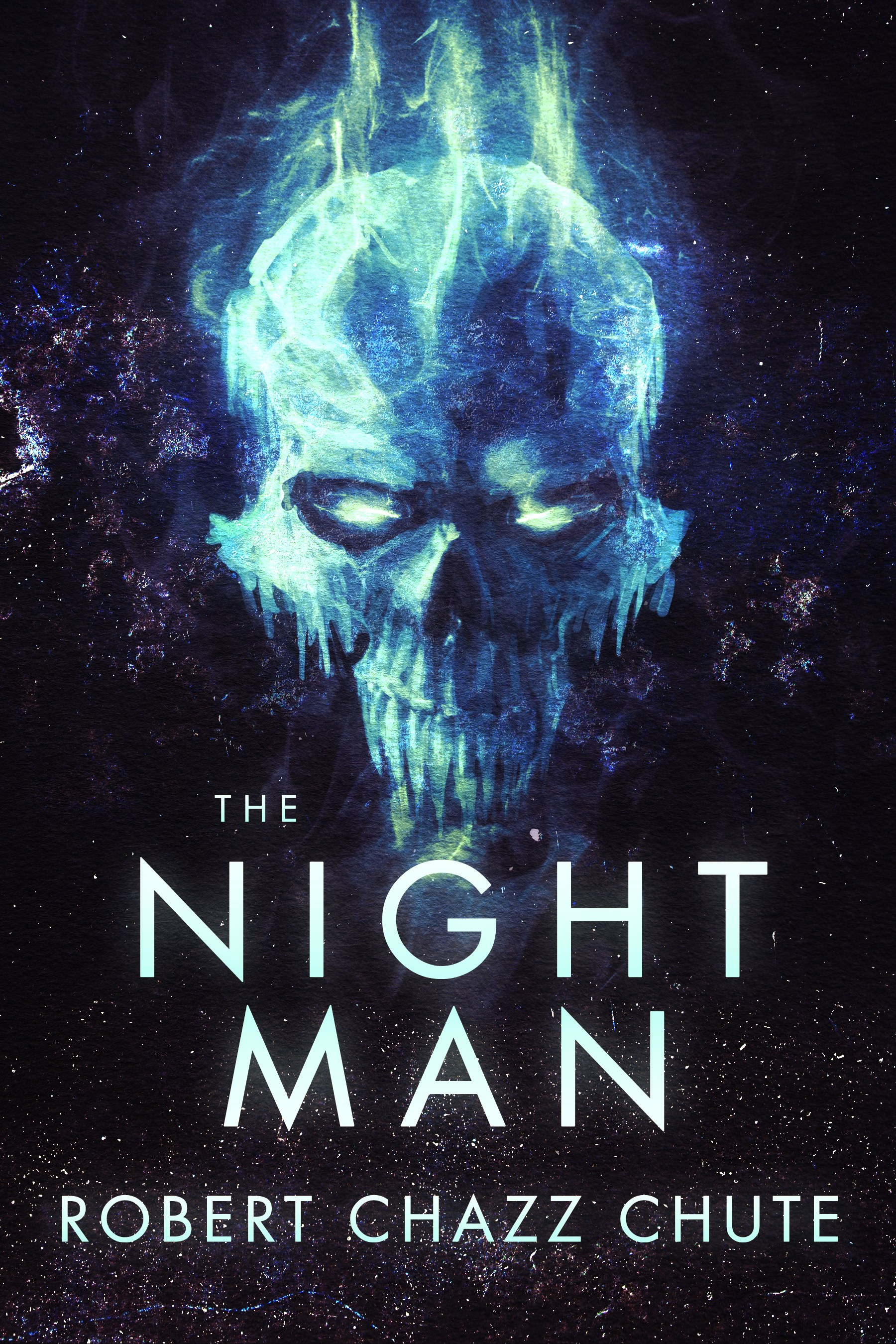
You can pick this ebook up for free today at this link: http://bit.ly/TheNightMan

Join my inner circle at AllThatChazz.com

See my books, blogs, links and podcasts.

Enter your email address to follow this blog and receive notifications of new posts by email.

Join 2,063 other subscribers