C h a z z W r i t e s . c o m

See all my books at AllThatChazz.com.

Author Blog Challenge 14: Eleven ways writers get surprised

Gremlins will push you 'round^ Look where you'...

Gremlins will push you ’round^ Look where you’re going^ Back up our battleskies^ – NARA – 535380 (Photo credit: Wikipedia)

Some surprises you’re in for when you publish your book

Please note: This list of surprises for writers is not meant to be comprehensive. The worst surprises, like dying by flaming harpoon attack to the forehead (before you finish your novel) or a hard drive exploding and taking out two floors of your house are not included. Those circumstances just aren’t lighthearted enough for my intent here. Oops. Well, I guess you’re worried about that stuff now, too.

1. You thought your manuscript was clean and it was, it was! Gremlins went in and put those ugly typos in there! That’s the only reasonable explanation.

2. Publishing your book is a huge event in your life. Remember when you had a baby and you expected the world to pause to acknowledge your contribution to, and sacrifice for, the human race? Wars should stop and the earth’s rotation should cease for a moment, if only so we can all bow. Sadly, it’s not a huge event in everyone’s else’s life. Many people are indifferent and it’s just not efficient to go out and kill all of them with a rusty axe.

3. The people you thought would love your book? They don’t. My dad still hasn’t read anything I’ve written. He’s waiting for me to write about him. (What he doesn’t know is that he really doesn’t want that!)

4. Lots of people are readers but they do not write reviews. You’ll expect reviews. Eventually you probably beg for reviews. Worse? You still won’t get them, even from friends and family! I thought about it, but there is no joke I can tag on this item that will soothe the sting. It’s more tragic than a flaming harpoon to the crotch.

5. Someone will object to something you wrote. What will surprise you is what they object to. For example, some people get riled up about which font you chose for your cover. You’ll assume that joke your main character made about religion was, at most, funny. At worst? Somewhat innocuous. Some blogger, somewhere, will call you the Anti-Christ and call on Jesus to smite you because, apparently, Jesus loved capital punishment. Oh, wait… (At least outrage and threats of censorship increase sales, so there’s that.)

6. Some people will treat you better, briefly, because you’re an author. Then they’ll treat you worse when they find out you’re a self-published author. For some reason, you have to answer for every grammatical mistake and every (so-called) undeserved success of your breed. Corollary: If you become a very successful traditionally published author, some people will hate you because lots of people read your books. Or the haters will hate because they aren’t you. Suggestion: A dog is reliably faithful. Definitely buy a dog. They can’t read so they’re blameless.

7. Formatting will be tough the first time. The first time, you’re a dim-witted chimpanzee with a keyboard. The second time you do it, you’ll be surprised how easy it is. You will have evolved to a very intelligent Rhesus monkey.

8. By the time you’re through revisions and formatting, you and your editorial team will have gone through the manuscript so many times you’ll be sick of it. This is the story you loved so much. Now your cute baby has grown into an angry, gangly, acne-scarred teenager and you just want them out of the house they can go make money and so you can make room for a sweet new baby who loves to cuddle.

9. Actual publication won’t be quite as momentous as you anticipated. How could it equal all those dreams you’ve had since childhood? You pictured a limo and an elegant cocktail party. Instead, it’s you in sweats, late at night and a little drunk on weighty potential and rum and Coke, debating if you’ve done everything you can before pushing a button. It will feel more like pulling a trigger. You may be filled with more dread of bloody failure than anticipation of success. I’m about to push that button and I’ve had stress headaches all week. I just want to sleep instead of poking around Scrivener‘s bowels to prep the manuscript for Amazon and CreateSpace. You’re not alone in the struggle, but that’s of little solace because you are alone in the room.

10. Getting someone to read your book is harder than writing your book. You’ll spend more time marketing than you ever dreamed necessary, even if you figured it would take a lot of time. Triple your marketing expectations and get a treadmill desk so your ass won’t get as big and wide as your hopes and dreams for your writing career.

11. But here’s the biggest surprise: Though you will get luckier the harder you work, it’s still a lot about luck and timing and some happenstance. Nobody admits this variable. When you win, it’s all attributable your meteoric wisdom. When you succeed, you’ll figure it’s because you made all the right moves and you knew what you were doing with every step. Revising history and shining up the truth is natural. Everybody does that. It keeps us from running away screaming from that “Click to Publish” button.

Filed under: publishing, , , , , , , , , , , , , ,

Author Blog Challenge (plus a sneak peek podcast*): Outlining, pantsing, spilling & sprinting

If you just popped in for the suspenseful sneak peek podcast, click here to hear The First Fiction Friday Edition of my podcast.

The Author Blog Challenge prompt asked how I stay organized as I write. My methods have changed over time. I used to come up with plots on the fly early on. Then I got scared off from that strategy when I got deep into a dreadfully long novel and found I had to backtrack fifty pages. Hitting a dead end is, well, death. It’s a waste of time and energy and I hate it.

I started outlining because I was writing big books and I didn’t want to lose whole sections of my book in which I was already invested. When you write 80 – 100,000 words or (ye gods!) more, an outline helps. I didn’t write an outline with Roman numerals and all that formal, high school nonsense. Instead, I planned the book one cogent sentence at a time. I described the actions in each chapter to plot the arcs of A and B stories. I looked for where those paths would logically cross, discover the beats and suss out the high and low points. Index cards got to be too much to keep track of, so in the end my outline was just three pages with a numbered list. I read and reread the outline and then I didn’t look at it again. That got me through the big books pretty well.

Recently I read Run by Blake Crouch, and as Blair Warner used to say on The Facts of Life,

“I just had another one of my brilliant ideas!”

It’s about speed. I resolved to write a crime novel with the same furious pace as Run — a book I couldn’t put down. Yeah. I know it’s a cliché, but this cliché is both apt and true in the case of Run. (Great book. Buy it.)

I resolved to do the thing I love with stories. The chapters would be relatively short. They would skip along. There would be lots of twists and turns to my racetrack. I wrote Bigger Than Jesus in about a month, one chapter a day, roughly 2,000 words each. There was no outline. Instead, I wrote with the expectation that I’d get my hero into a troubling cliffhanger at the end of each chapter. If I wrote myself into a corner in the process, too bad. I’d be clever and write my way out of it and keep moving forward. Writing like this is as fresh and as exciting as walking a tightrope naked in a high wind over a crowd of angry TSA agents with a new shipment of polar mint rubber gloves.

Many nights I went to bed thinking that I had no idea what I would write in the morning, but I trusted that I could figure it out. I believed in lightning strikes. The juice kept flowing and with it came a high level of complexity. It’s a crime novel so people lie a lot. If I’d taken longer to write it, it would have necessarily been less complex because I’d be afraid of losing track of the threads. There’s shocking emotional depth, too. Nobody, including me, foresaw the strange and sad angle on my main character’s childhood. It sneaks up.

Why did this work?

1. I knew the opening chapter and the last line so I had a target at which to aim. I’m also a more confident writer than I was with those early attempts, I suppose.

2. If I didn’t know what was going to happen next, the reader wouldn’t be able to guess, either.

3. Speed. The book is not especially long and I wrote it all in a short space of time so I could keep it all in my head at once without getting lost.

How else do I keep organized? 

In the Point File, I note things like street names I’ll use twice and aspects like eye colour so they don’t change from the beginning of the book to the end. I did mess up in having twin brothers as bad guys with names that were awfully similar. I had to go back to make sure I was talking about the right brother at the correct stage of the book.

I always have a Spill File handy so if I do write something that I end up dumping, I save it for later. I might change my mind about how useless it is or I might use it another time in another story. In Bigger Than Jesus, the writing went so quickly and breezily that I never had anything to pour much into the Spill File. I wrote fast and then went back to the stage of writing where I’m always sure I’m a deluded idiot: revisions. I cut, prune and delve. More of the jokes come clear on the second pass, too. Typically, by the third pass, I begin to feel good about the book again. Bigger Than Jesus was just about as easy as writing a blog post a day, actually. Maybe easier sometimes because what dictated the action was logic and surprise. When in doubt, surprise!

Some writers labor under a notion that I once shared: To be good, you must write slowly, perhaps even at a glacial pace, and the serifs are where your heart and soul get squeezed in and choked for blood. There are books I have tinkered with for years. One short story went through many incarnations over a year before I felt I nailed the landing and deserved 10s from all the judges. However, Self-help for Stoners came together quickly and everything worked out well with that.

Bigger Than Jesus will be released in the next week or so and all the feedback I’m getting from the editorial team tells me I’m glad I didn’t buy into the idea that it had to come slowly to be worthy. I think that’s true sometimes, but not always — not for every book and not for every writer. That’s good news because I’m using the same strategy with the next book in the series. It’s coming fast and well and I do enjoy the danger of not knowing what happens in the next chapter. Those angry TSA agents are actually spurring me to succeed.

*BONUS:

Please take a few minutes to enjoy my latest podcast on the author site. It’s The First Fiction Friday Edition! 

It’s a sneak peek at Chapter 8 from my first novel in the Poeticule Bay Series:

An old woman is lost with her tiny dog in the Maine woods and snow is on the way.

Related articles

Filed under: publishing, , , , , , , , , , , , , , , , , , , ,

Author Blog Challenge: I love the voices in my head

Michael Clarke Duncan at the Warner Brothers L...

Michael Clarke Duncan at the Warner Brothers Lot in Burbank, California. (Photo credit: Wikipedia)

One of the writing prompts for the Author Blog Challenge is to choose a favorite literary character. That’s tough. I mean, I relate to Tyler Durden from Fight Club, but the cognitive dissonance kicks me in the pills when I realize that, beside the insomnia and ennui, I am not even Tyler’s alter-ego. I have a few things in common with Portnoy from Portnoy’s Complaint, though. Ugh.

This isn’t a dodge and I don’t mean to fall into douchey pimping, but the truth is my favorite literary character is whichever one I’m writing at this moment. I have several works on the go, so let me introduce the interesting people I hang out with while strangers assume I’m staring off into space and drooling:

Legs Gabrielle is a very funny comedian whose career has fallen through the floor. She finds herself back in Poeticule Bay, Maine, in the house she ran away from as a teenager. A killer has come to town, the Sheriff disappears, the deputy is cute, her sister has cancer (and might also be crazy.) I love Legs’s sense of humour and she’s a pleasure to write for the jokes that work as  counterpoint to her emotional depth. Hollywood has rejected her, but she’s the star of her own book soon.

Chili Gillie is a Michael Clarke Duncan lookalike, Legs’ bodyguard and has Mike Tyson’s voice. He’s a sweet man who only looks mean when needed. He’s the calm rationality around which the crazy revolves. His presence is extraordinary, but he’s the most normal of my characters. Both Legs and Chili are the stars of the first story in Self-help for Stoners and Chili shows up again in Bigger Than Jesus in a larger role. I’ve got big plans for him.

Dr. Circe Papua turns up a lot in my fiction. She’s a psycho psychotherapist who is magically persuasive and can be deadly if provoked. I love her cunning, unexpected lethality. Circe’s complex relationships with her patients often demand a battle of wills and wit. She shows up in different incarnations in Self-help for Stoners, Vengeance is #1, Corrective Measures and Sex, Death & Mind Control (for fun and profit).

Jesus Diaz is a mob enforcer who doesn’t want to be what his tragic childhood and circumstance has made him. He wants, above all, to fall in love with the right woman (if he can ever find her) and go relatively straight. He’s the main character in my crime novel, Bigger Than Jesus and I like him most for three things: he’s clever and prefers to lie rather than fight; he’s not really all that tough despite his profession; and he’s funny. I like funny people and chapters that whip along, full of pops and surprises. The series reads like a Cohen brother’s movie. Bad things keep happening even though you think you have an easy way out. This book will be out very soon and I’m jonesing for it. Just nailing down the cover and then we’re just about there. Jesus Diaz originally came to me as a story for Self-help for Stoners, but in that incarnation, he’s a much older, wiser and experienced assassin.

Jack (from Corrective Measures and Sex, Death and Mind Control.) Jack is a serial killer who I find interesting because of the way he sees our world. He thinks about vengeance quite a bit, but I’m actually more interested in writing him when he’s not himself. He’s fascinating when he’s trying to fit in and working through his twisted motivations and problems. He’s a dark avenging angel who has to hide his wings (metaphorically, that is) as he punishes people he decides deserve bad ends.

What’s fun is, eventually, I’m going to have all these characters meet in one book, but they have a lot of work to do before they meet. I have a lot of books to write before that happens, too. It’s exhilarating, daunting and pretty cool. Yeah, I said so myself.

Filed under: publishing, , , , , , , , , , , , ,

Author Blog Challenge: Writing to Love

Wikipedia

Wikipedia (Photo credit: Octavio Rojas)

The latest prompt for the Author Blog Challenge asks what we love to read and how does that feed our writing? Good question. I read voraciously, and the resource that feeds my writing most these days is…wait for it…Wikipedia. How did writers write before Wikipedia? I think they actually had to go out the front door and into the  world and, let’s face it, no one wants that. At least I don’t and I don’t understand those who do. I’m cozy in my fortified writing bunker, thank you very much.

I’m one of those weirdos who gets lost in dictionaries and encyclopedias. (If you read this blog, you probably are, too.) I look up one thing and get distracted by all the other delicious stuff in there. As I was researching my crime novel, Bigger Than Jesus, I consulted The Mob Dictionary, documentaries, a friend who trains SWAT, an ex-military friend and various books on the mob. It was Wikipedia that yielded my main character’s background and contributed to the verisimilitude the story demanded.

I wanted Jesus to be an enforcer who wants out of  the mob.  I had to give him a back story that made the reader understand why he is the way he is. I needed him to be an outsider, so he’s a Cuban among native hispanic New Yorkers. His journey to Florida is sad and, once he arrives, his story becomes more tragic. The key to the character was his childhood and it was Wikipedia where I happened upon more information about the Cuban migration to the United States. Truth gave rise to more believable lies as Fate (um, I am Fate) dumped Jesus from the roaster into the (mostly) proverbial fire. He’s a smart ass, but not as smart as he thinks. He’s more funny, clever and desperate than he is tough. Wikipedia was the seed that led me to understand why the character worships the love of his life the way he does. Like dominoes, one idea leads to another idea which leads to another idea which reveals a pattern which gives rise to a plot. Powered by curiosity, simply traipsing through Wikipedia gave me a book that will be a series I’m really excited about. The last edits are arriving and the graphic designer is working on the cover as I write this. Hoo-bloody-ha!

If you’re stuck, blocked or just noodling, use non-fiction to amp up your fiction and go wander Wikipedia.

Filed under: publishing, , , , , , , , , , ,

Author Blog Challenge: Writers to adore

The Princess Bride writer William Goldman His ...

The Princess Bride writer William Goldman His Q&A closed the Expo and included the largest audience of the Expo. (Photo credit: Wikipedia)

Another writing prompt for the Author Blog Challenge is: Which writers do you most admire? In a week or so I’ll release Bigger Than Jesus, my first crime novel in a series. In part, the book is dedicated to William Goldman. You know the movies he has written: The Princess Bride, Marathon Man, Butch Cassidy and the Sundance Kid. But you probably don’t know his many novels: Edged Weapons became the movie, Heat with Burt Reynolds; Brothers (a sequel to Marathon Man); and my beloved The Color of Light. What sets Goldman apart is his plotting, his humour and his enormous capacity to surprise the reader. Just when you think you know what happens next, he sucker punches you. I’m all about surprises, too, so I love that.

Who else? Stephen King gets a nod for telling a story straight and well and for sheer output. Chuck Palahniuk is another favorite because we share an interest in the weird but true. Also, Chuck does not rest on his laurels. He takes chances with his books. He’s not trying to do Fight Club over and over and he has even jumped boldly into experimental fiction here and there (like Pygmy and Rant.) What distinguishes his style is that he does not judge his characters. Things happen. Morals are for readers to come up with (or not). There are traits from Goldman, King and Palahniuk I either came by one my own or absorbed. I don’t really believe in emulation of other writers, but I recognize similarities in process.

Recently, someone on a podcast reported that fiction is dead. They said people don’t have time for novels anymore. They want it short and then? Make it shorter than that. The death of the novel has been predicted almost as many times and with as much certitude as “Vampires are so over, man.” I’d worry about the state of fiction, but then I read Run by Blake Crouch and I don’t think we have to worry. Write a great book and tell the story in such a way that the reader can’t put it down. Make them laugh. Make them cringe. Sucker punch them with surprise. The novel will survive. I hope so, anyway, because I am otherwise unemployable.

With each opening, with each beat, with every chapter that ends with a cliffhanger:

BOOM! BOOM! BOOM!

When Bigger Than Jesus comes out, you’ll see exactly what I mean.

Filed under: publishing, , , , , , , , , ,

Can you tie your book’s title to something larger?

When I put together my collection of short stories, I knew I had a problem: traditionally, short story collections don’t sell. I think that’s changing. With e-readers, we’re turning away from ever bigger Stephen King-size  tomes. Digital brings the short form (or at least shorter forms) back because page counts don’t count. I looked at the themes of the collection and added chapters that were inspirational and thought-provoking. I thought about how it was director Kevin Smith who inspired me to write full-time. What emerged was a bathroom book of stories: Self-help for Stoners, Stuff to Read When You’re High. It’s suspenseful, yet full of parables. Yep, it’s an odd book.

Image

Today is 4/20. I’m hoping that, because of the tie-in to a niche, my book will find readers who would otherwise have passed it by. Every day I say you don’t have to be a stoner to love it and that’s true. However, I wanted to have a hook with an identifiable market because, sadly, a book that’s for everyone is for no one.

When you choose your next title, what event or group could you tie it to? For instance, if you can legitimately come up with a book that has “Christmas” in the title, it might sell much better than a title that sounds too much like a bunch of other titles.

Filed under: publishing, , , , ,

Kit Foster Fiction: Robert Chazz Chute explains how to raise an army of assassins

Via Scoop.itWriting and reading fiction

Fun author interviews come from fun questions. Kit Foster interviewed me at his blog. Swing by at the link below. (Kit’s an author and a great graphic designer, too!) Great graphic of my monkey army of ninja assassins! ~ Chazz

Via kitfosterfiction.blogspot.co.uk

Filed under: publishing, , , , , , ,

VIDEO: Brace yourself for my eyes afire. Yeah, that’s just a little disturbing.

Last week I talked quote trailers. Here’s a fresh one for a different book: Sex, Death & Mind Control. If I had to do it again, I’d change the title. Why? Because I’ve run into a startling number of people who expect it to be porn or too violent for them (not that there’s necessarily anything wrong with that, but it’s not porn and it’s not even gory.) It’s twisty and weird and fun and you don’t see the groin punches coming. I ran into similar problems with another title, Self-help for Stoners. I write suspense, but my titles are obviously missing that mark.

I blame myself because I don’t have an intern around the office to accuse of incompetence and inadequate pencil sharpening. Oooh, but if I did…er…anyway, perhaps the quote trailers will change potential readers’ expectations. Download a sample from Amazon here or from Smashwords. I’m everywhere, and yet nowhere. I’m a riddle inside a paradox wrapped in a burrito. Which is a problem from a sales perspective but I’m confident my readership will find me. And if not, I’ll just have to suit up in my cape and cowl and go hunt them. By night. In a car with a jet engine that can turn into a submarine. The usual lengths authors have to go to find readers.

Now off to interview some intern candidates to see how tolerant they are to screaming fits, being called Alfred and cleaning up bat guano. The lair is looking untidy.

Filed under: book trailer, ebooks, Publicity & Promotion, publishing, What about Chazz?, , , , , , , ,

Quote Trailers vs. Book Trailers: What’s a Quote Trailer?

Don’t feel bad if you’ve never heard the term “quote trailer”.

I just made up that term up yesterday at about the same time I created my first one.

What’s a quote trailer? See the post below this one for my example, but basically it’s a short trailer that hooks new readers with intriguing quotes from your book. You could add in a short description of what the book is about if you like. Do more of that and you push the book promotion spectrum toward a book trailer. I’m not saying you shouldn’t try making a book trailer, but book trailers are notoriously difficult to do well.

My problem with most book trailers is that they are almost always too long and underproduced. We are a cynical audience, accustomed to slick Hollywood graphics created by professionals. When we see a cheap book trailer, it’s usually a long commercial. If it were on TV, you’d change the channel or you’d hang in there just to laugh at the clunky acting and low production values. Occasionally, some book trailers rise above average. Scott Sigler made a competition out his book trailers. Amateur and student filmmakers rose to the call at no cost to Sigler. Better, all the contest submissions went up on YouTube so readers and new readers could vote for the winning book trailer. The contest became a free book promotion proliferation tool.

A quote trailer sets your Unconscious Expectations Bar (I just made that up, too) back down  to limbo level so you can easily step over it. Take a look at the post below this one and you’ll see what I mean. Nothing fancy. It was quick and fun to put together and if the words whiz by a little too quickly for anyone, they can always pause it. Better too fast than too slow. I don’t go into too much detail because this is just an invitation to go to my author site to learn more. I’m not getting sucked into a big pitch for one book on this video project. It’s designed to tickle your brain to check out all my books. Please, resist the urge to put up ten minutes of quotes. I dared to go as long as one minute in my first quote trailer. Instead of hoping someone will sit still for a long video, I’ll create a bunch of short ones for all my books over time. You may want to consider doing the same.

Filed under: book trailer, Books, Publicity & Promotion, What about Chazz?, What about you?, Writers, writing tips, , , , , , , ,

VIDEO: Some Quotes from Self-help for Stoners

More quotes from Self-help for Stoners at Quotations Diary.

Or just jump to Smashwords, Amazon.com or find Robert Chazz Chute wherever the cool ebooks hang out.

If you love paperbacks and only read in paperback and hate ebooks with the burning passion of 1,000 suns, then this is just for you, my Amish friend!

Please and thank you!

Filed under: All That Chazz, authors, DIY, ebooks, publishing, What about Chazz?, , , , ,

Bestseller with over 1,000 reviews!
Winner of the North Street Book Prize, Reader's Favorite, the
Literary Titan Award, the Hollywood Book Festival, and the
New York Book Festival.

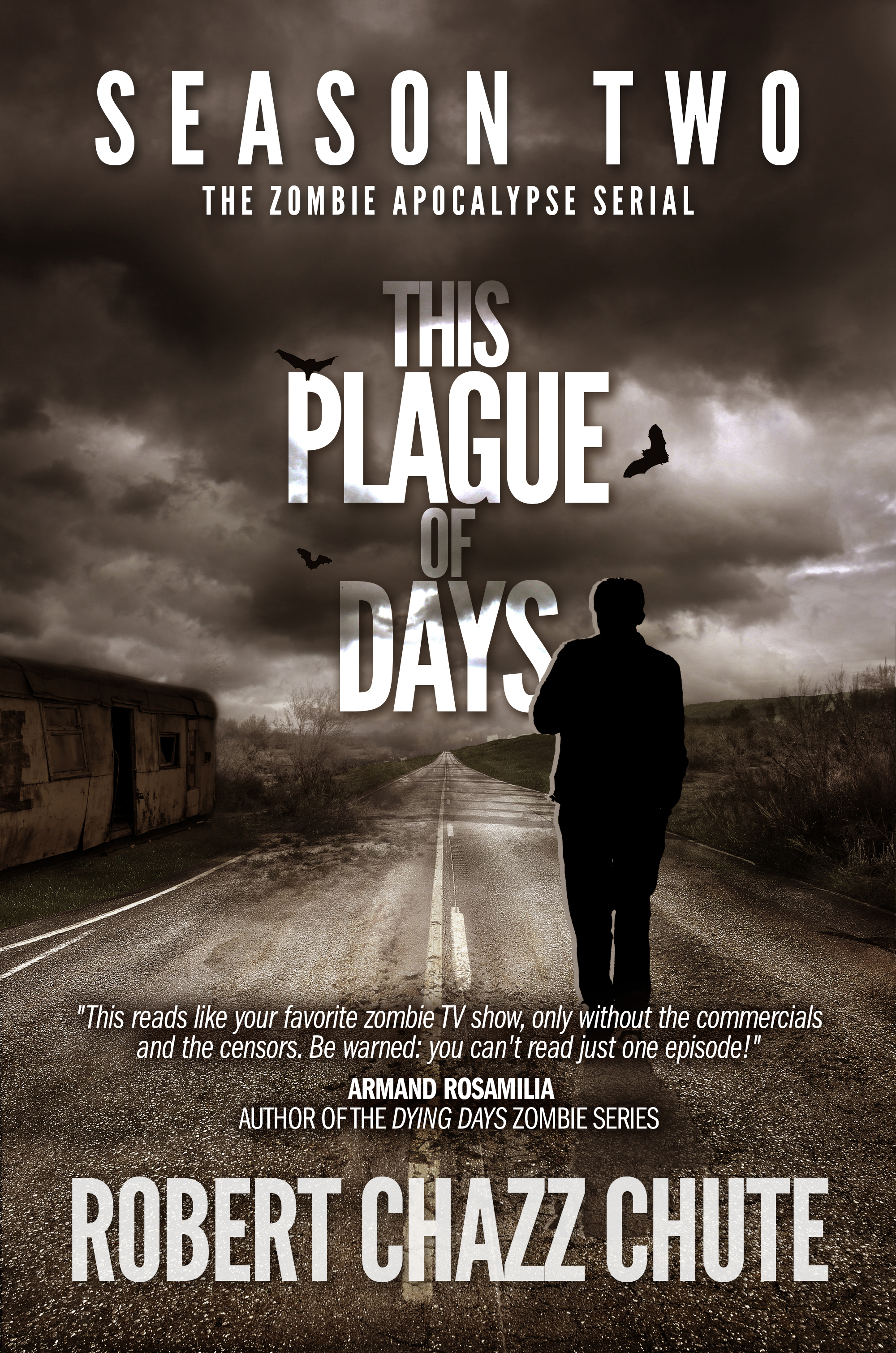
http://mybook.to/OurZombieHours
A NEW ZOMBIE ANTHOLOGY

Winner of Writer's Digest's 2014 Honorable Mention in Self-published Ebook Awards in Genre

The first 81 lessons to get your Buffy on

More lessons to help you survive Armageddon

"You will laugh your ass off!" ~ Maxwell Cynn, author of Cybergrrl

Available now!

Fast-paced terror, new threats, more twists.

An autistic boy versus our world in free fall

Suspense to melt your face and play with your brain.

Action like a Guy Ritchie film. Funny like Woody Allen when he was funny.

Jesus: Sexier and even more addicted to love.

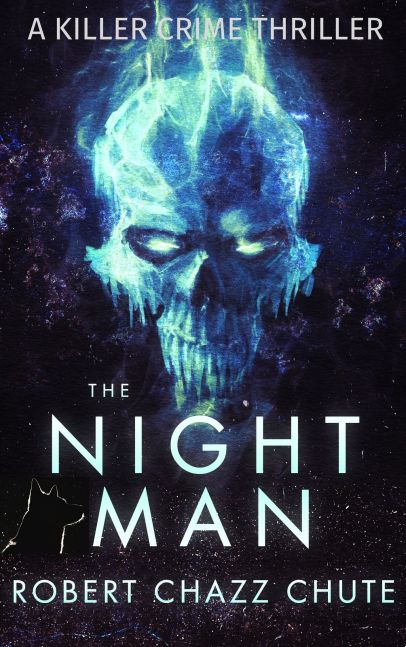
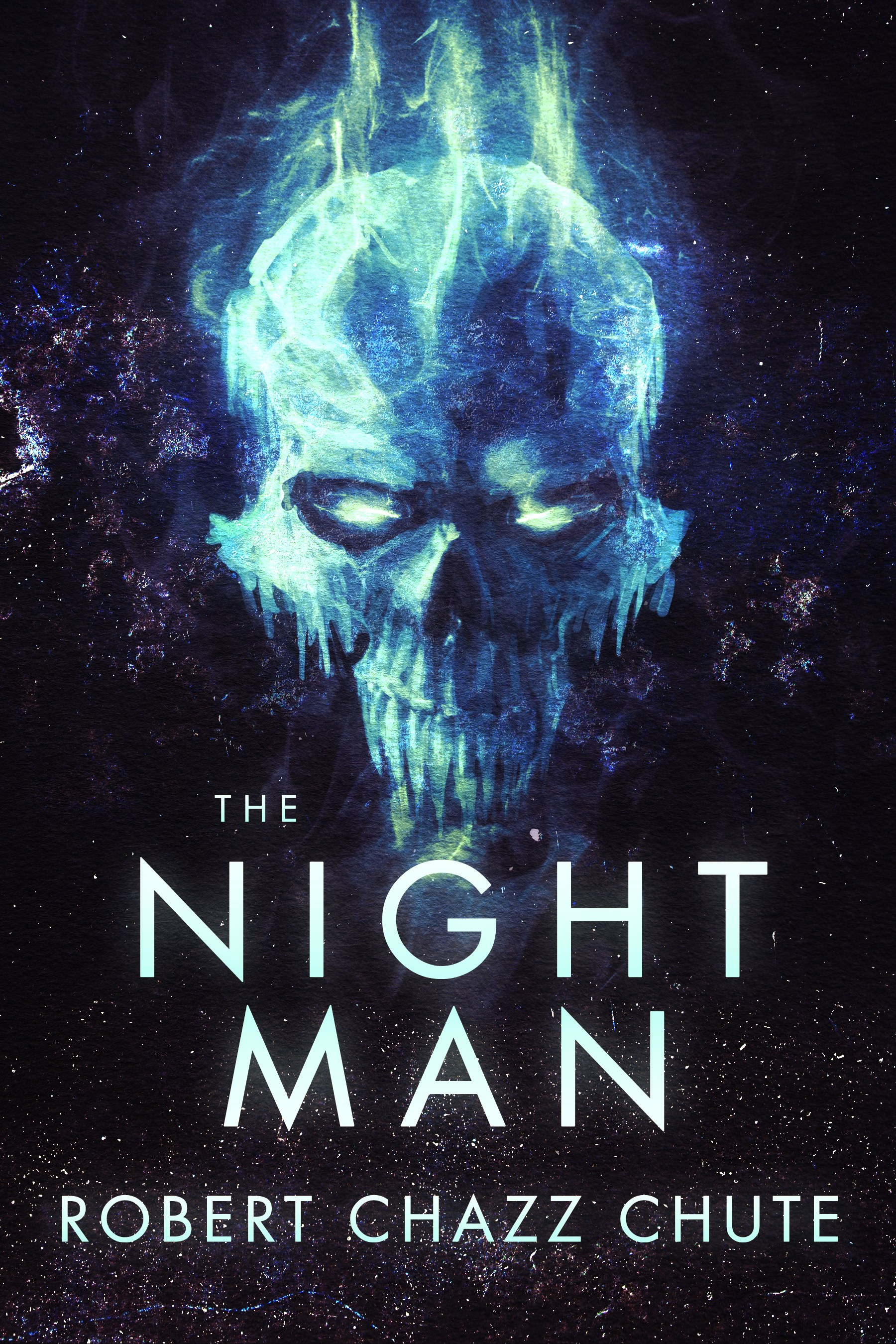
You can pick this ebook up for free today at this link: http://bit.ly/TheNightMan

Join my inner circle at AllThatChazz.com

See my books, blogs, links and podcasts.

Enter your email address to follow this blog and receive notifications of new posts by email.

Join 2,063 other subscribers