C h a z z W r i t e s . c o m

See all my books at AllThatChazz.com.

AB Challenge 24: More on Free Books. Moron Free Books.

Yesterday, we talked about free ebooks and me. Now let’s talk about you, too. Recently we said, “Free is the new 99 cents!” Now free is fraught with diminished opportunity and all that lousy freeness. Let’s delve into pricing ebooks for promotions and try to figure out for ourselves if this is a time to rest and recover or should we double down on ebook marketing?

History: Last year, selling at 99 cents still moved some books and gained new readers. The royalty wasn’t great but it was a loss leader. Now 99 cents just seems to be a loss. I had my novella, The Dangerous Kind, up for 99 cents. It’s a great story that slides the steel home at around 10,000 words. After analysing the sales (took two seconds) I’ve taken it down. Later this week it will be back on Amazon for $2.99, bundled in with some Poeticule Bay short stories. My short story collections sell, but offering a deal on a shorter work didn’t attract readers and my short stories on Smashwords (each priced at 99 cents) aren’t moving as is so they’ll all be in one collection: The Dangerous Kind and Other Stories.

Part of the problem was the old cover for my novella. I’ve blogged about this issue before so I won’t rehash it. I’ll only say: Be indie if you want, but make sure your covers don’t look indie. (My graphic designer, Kit Foster can help you with that at a very reasonable price for a very professional look.)
GET BIGGER THAN JESUS

The Loss Leader Pricing Paradox: You’re pricing your work inexpensively to attract new readers. You’re hoping new people will find you, take a chance on you, dig your flavour, buy all your books and spread your holy word. However, going cheap actually repels some browsers because they associate a cheap price with a bad book. So many times I’ve read in comment threads, “If the author values their work so little, why should I?” There’s someone who doesn’t appreciate the indie author’s bind. I’ll save your life for free. Does that make your life worth less? (Ooh, he’s cranky today!)

Which brings us to the Opportunity/Problem Paradox: The same browsers who think 99 cents cheapens the inherent value of the book often think no less of an author who offers their work for free. All ebooks have free samples, of course, but I don’t think very many potential buyers look at them. They go by genre, the author’s rep, the cover and the description (not necessarily in the that order.) Free is easy and no risk and I haven’t seen many people casting aspersions on authors offering free entertainment. Free is so ubiquitous, it’s considered the norm. It’s an opportunity for the reader and the writer. Free is so ubiquitous, it’s a problem because of the glut of free ebooks on e-readers. We’re drowning in free.

The Perceived Value Corollary: There are so many free books filling up e-readers that readers have no commitment to what they download. (Amazon says, “Click to buy”, but if it’s free, it really means “Click to download”, doesn’t it?) Many of those free books will go unread. When you can click and get, click and get, click and get, there’s no investment on the reader’s part in individual books. Instead, the hoarder mentality rises. What this means for writers is, the minute you’ve dared to slow down your narrative, the quicker the reader is to dump you for another free ebook. We’ve already seen evidence of this trend: there’s less of a market for literary fiction that demands more of the reader.

PV Corollary Case study: A buddy of mine was a sales rep for Margaret Atwood and loved her to bits. I told him I couldn’t get into The Handmaid’s Tale. I bailed out after too many slow pages examining the scratchings of previous handmaids in the rear of the bedroom closet. “Chazz,” he said,”What you’ve got to learn to do when a story slows down too much is grab a few pages and flip forward.” I’m a bit OCD about reading every word so I was a bit shocked. Skipping a page  had never occurred to me. “So…” I said, “You haven’t read it, either!”

The Hidden Unintended Consequence: On an e-reader, no one knows what you’re reading on the bus to work. Sales of erotica have risen because we don’t have to hide our actual taste or pay at a bookstore register manned by a silver-haired woman who looks exactly like Baptist Grammy. Only Homeland Security and the computers that record everything know all you really want is Fifty Shades of Grey. However, it’s not just about erotica. The market has ruled and so-called “downmarket” fiction is what people buy. The readers disagree with the historic arbiters of taste about what’s important. (Did you hear that pop? Somebody’s head exploded again. Clean up, aisle three!)

The Value Addition: When you buy a book — not just download it for free — you show commitment. You’re trusting the author to show you a good time and if you throw it aside, you aren’t just tossing the book. You’re throwing away the bucks you put into it, too.

The Cost-benefit Analysis: For readers, free books are great because choice is awesome. For the writer, providing free books is a way to gain the trust of the reader at no risk (to the reader.) It’s about exposure so you get ranked on lists. Many readers don’t trust reviews (often unfairly) so free is one  avenue into their hearts and minds. We’re making a short-term sacrifice to get our work read, to get on “also viewed and also bought lists” and to get our share of that sweet lending pot of gold from Amazon. Giving our precious away for free is an advertising cost that doesn’t show up as a debit in our bank accounts, but it’s still a cost.

The Cost-benefit Caveat: Since Amazon changed their algorithm, it’s not as happy a story as it was last December. Unless you wrote Fifty Shades of Grey, sales have slumped across the board since March and we’re now into the summer doldrums of the book buying year. The market is as cyclical as the sea. The wind will come back in our sails. The readers will return as free diminishes. Some authors are opting out of KDP Select, or opting in for one three-month cycle for the promotion and then opting out to stop the exclusivity clause and give other sales outlets a chance.

The Irrational Variable Conundrum: Does free devalue literature? Will our prices be chronically depressed because of free? As an indie writer, this isn’t a question that affects me. The higher prices traditional publishers charge for ebooks doesn’t mean that their authors are getting more dough. It’s going to the publishers for their high overheads. I only have to pay me so the 70% royalty rate on my books still looks pretty sweet to me. Like they used to say in cheesy, local car commercials on cable, “How do we do it? Volume!” I’m glad traditional publishers keep their ebook prices high. It gives a guy like me a chance at being discovered.

Will these short-term sacrifices mean long-term financial pain? No, yes and maybe. Who knows? I’m suspicious of too much certainty. Your answer may vary because the fulcrum for this heavy conundrum rests of an irrational variable: How high were your expectations to begin with? Is this side money, the size, say, of the little Swiss Chalet side salad? Did you want the comfort of the double leg dinner as an income? Or did you want the richness of the full Swiss Chalet Family pack with the coconut cream pie for desert? Input your variable and solve for X.

Conclusions: Given the free ebook glut, do you market even harder now that we’re into summer’s slow days? I think I’ll just stay the course. It feels like trying to run up the down escalator and I already flog hard enough as it is. Instead, I’m focusing my energies on putting up more of the work I’ve prepared and I’m writing new stuff. I’m giving the market more time to recover so I’ll be ready with more books to sell.

Putting up more books is the only sure way I know of selling more books.

Predictions:  New strategies will emerge, but no one seems sure what The Answer is. It might not be one answer and it might not be as dramatic and sweeping as the free ebook boom that hit the market when Amazon’s KDP Select algorithms benefited us so much back in December. I suspect we’ll be actively spending more money on advertising and promotion for our books in the near future. I’m aware of a few new and clever-sounding strategies, but they are as yet untested by the market’s searing flame. I’ll revisit said strategies in a future post, but today’s post is already too long and don’t we have some serious writing to do?

Filed under: publishing, , , , , , , , , , , , , , , , , ,

Author Blog Challenge 23: Free sex and the value of an ebook

GET BIGGER THAN JESUS

Why should he pay for the cow when he can get the milk for free? If you’re unfamiliar with this distasteful euphemism, it’s meant to control and shame women so they defy their biological needs and get married too young to the first doofus* who comes along so they won’t risk being called sluts by a repressed and repressive patriarchy and said patriarchy’s agents. It’s the same misogyny behind, “For birth control, hold an aspirin between your knees,” and “Good cowgirls keep their calves together!” It’s kind of funny the first time you hear it. Then you realize it’s a power grab meant to squelch the joys of life and your humanness. (I do love a breakdown of social constructs so the deviant subtext in revealed.) What, you ask, does that have to do with ebooks? Everything.

Yesterday began a little after 5 a.m. It continued until 3 a.m. I hasten to add there were distractions. I did stop to shower and eat. There’s a shower hose over my desk chair by the IV pole. The IV bags are full of double espresso. The desk chair is a toilet. It’s like the helpful chairs in WALL-e, before that evil little robot screwed everything up for everybody and made them get up and move around outside. Mostly, I formatted my new book. For all the work, I wonder if people will buy it when they can have it for free?

Crack the Indie Author Code: Aspire to Inspire (by Robert Chazz Chute, coming in early July!) is a book based on the best of this blog. I’m creeping up on 1,000 posts and I thought it was time I made something more concrete of it. It’ll be my favorite posts in one convenient, pithy, humorous, inspirational package. I’m editing again and updating as I go, of course. At over 90,000 words, it will be my comprehensive take on what the newbie needs to know and what the self-publishing veterans’ choir likes to sing. I wrote a note in the front matter about who the book is for. I made sure to say: Hey, if you want the milk for free, feel free to sift through the blog. ChazzWrites is free. All the podcasts at AllThatChazz are free, too. Everything I sell is so close to free in price, you’d tip the pizza guy what you’d pay for my books. Enjoy! I give freely, without remorse or hesitation or hard feelings. Surprising, because, as a cheap writer who can pinch a Canadian quarter until the moose screams (that’s “eagle screams” if you’re in the United States), I’m actually a terrible tipper.

There is a lot of information that’s free on the Internet so I try to keep ChazzWrites.com fresh and a little different — even contrarian. I think I convey that information with a certain flair, but my hairdresser thinks he’s funny, too. Meanwhile, I just wish he’d never learned to speak english. I’m not going deep  into ever-changing information, either. Crack the Indie Author Code isn’t about the latest marketing theory for self-publishing. It’s evergreen stuff — old-fashioned from a new angle —  about writing craft as seen through my lens and as told to any writer who is more eager for cozy inspiration than ebook marketing advice. (With the changes at Amazon, a lot of marketing theory is still up in the air, but if you want a solid marketing book that’s user-friendly, buy my friend Jeff Bennington’s book, The Indie Author’s Guide to the Universe and check his site for updates.)

Since my new book is hidden right here within nigh 1,000 posts, why buy it to put it on your e-reader? What’s the unique selling point? What’s the value to the customer? I’d say: ease of use; improved readability; improved searchability; updates; new content; improved content; my moral support and your grasping consumerism. I make better jokes as I make another pass at the content, too.

As I go through Crack the Indie Author Code, I can see how some of my ideas have changed over time. When I started this blog, I talked a lot more about craft and writing mechanics. Self-publishing needed more cheerleaders then.  Now we need more leaders. Early on there was more, “Rah! Rah! Rah! Those guys in trad pub don’t get it and don’t see what’s coming!” I omitted some of those posts even though I was right. They were appropriate at the time, but it’s time to mature (the jokes are still less than mature.) Self-publishing’s next step is simply to call it publishing. We need to get past hang-ups about trad versus indie. Yes, of course, there’s still value in traditional publishing. It’s not going away. It’s just changing radically. The new paradigm is not necessarily either/or. Depending on business cases, multiple variables and your temperament, you may choose to do both and only the terminally crank y will fault you. Meanwhile, successful revolutions establish regimes.

But, will anyone bother to buy another writing book? Don’t we have enough?  The broad answer is, can you get enough of whatever your passion is? More particular to my writing book, those who like my flavor will buy it. Those who won’t, won’t.  That’s all beside the point, anyway. I know it’s a business, but I don’t write for you because I can’t anticipate all your  variables and idiosyncrasies. I can only write to my taste. I write for your adulation, sure, but first, I write to entertain myself. I’m hoping you’ll say, “Oh, Chazz, how clever you are! I’ll buy umpteen copies for all my friends!” But before you ever get a chance to evaluate, that’s me sitting at my keyboard enjoying the dopamine trickling and tickling my neo-cortex. That’s me saying, “Oh, Chazz, how clever you are!” We write for ourselves first, not the reader. The act of writing is primary, sometimes even primal. The point is to form the thoughts, think through your typing fingers and transcend the blank page until you’re high on the creative rush.

Will Free beat out $3.99 in the cost-benefit analysis? No. You’ll buy my cow for convenience or for other variables, not least of which is, to have and to hold. And, to answer the ugly metaphor that began this piece? Most  people enjoy free premarital sex and yet most people still marry (some to dark and very costly ends.) At $3.99, the risk is microscopic compared to marrying someone.

To win your $3.99, I just have to create something I’ll love.

If you’re of the same mind, I have a sale.

Back to the espresso drip. I’m off to make that dopamine gush!

* Generalizations aren’t fair. Sometimes the first doofus is the right doofus, but most people these days test out several to many doofuses before selecting the one doofus they can love (and be most angry at without opting for murder) for the length of their marriage and possibly the rest of their lives.

Filed under: publishing, , , , , , , , , , , , , , , , , , , , , ,

Author Blog Challenge 20: What writers owe (and an insider secret is revealed)

Garley the Persian cat

Garley the Persian cat (Photo credit: arash_rk)

I used to dream that when I finally became an author, I’d write a short acknowledgements section to myself. “Screw you all!” I’d scream. “In your face! I did this myself and I don’t owe anyone anything! Ha!” Then I’d retreat to my hermetically sealed office under a volcano within my island fortress guarded my my loyal ninja monkey assassin clones. I’d have a monocle and a white Persian cat to stroke while I ordered Hellfire missile strikes to rain down upon my enemies. As you can only imagine, that’s almost exactly what my life is like except for the thing about acknowledging people who have helped me on my publishing journey. Unexpectedly, I have the attitude of gratitude. I’m happy to have a deep stock of Hellfire missiles to protect my tropic realm and I’m grateful for all those people who have assisted me in putting out my books.

Yesterday, after my big free promo day, I sat down and wrote a little letter to a bunch of people who have been helpful along the way. Somebody slipped me some dough so I could keep going. Someone else helped me with formatting the first time I attacked the beast. Others were consultants about suitable explosives…”Um, for my crime novel’s plot!” he added hastily.

A lot of people have the wrong idea about self-publishing.

They focus on the self part.

Hitchcock said that a painter only needs a brush and a writer, a pen, but a film director needs an army. These days, indie writers need small armies, too, and many of them are volunteers. 

The key thing is: self-publishing is still publishing. You either need a graphic artist or you need to be one. You need to learn a lot about tech and promotion as well as craft. You can write a good book, but if it has a lousy cover, no one will read it. (The converse is also true, of course.) That’s why I prefer the term “indie” to “self-published”, though to the consternation of a few angry people, I do use those terms interchangeably as a concession to common parlance.

My Beta readers are volunteers. I’ll pay them in lollipops, acknowledgements in the book, a copy of the paperback and, when they’re ready to go indie, I’ll be a resource for them, too. I’m confident each of those readers could write a book if they decided to do so. I’ve thanked them all, for what that’s worth. So far all they’ve received is a book they enjoyed for free but I’ll be sure to get those lollipops to them.

I did find an unusual way to make one person’s day though. If you’re writing a book, you may wish to consider doing this (with their permission.) A great buddy of mine is undergoing treatment for cancer. It’s been a scary time that he has handled with a calm and class that I am sure I could never muster. This guy is one brave SOB. As I was writing the first draft of Bigger Than Jesus, I used his name for one of my characters.

Funny story: I called him up on Skype to ask him if I could keep his name in the book. His microphone wasn’t working. He could hear and see me but I could only see him. However, that worked out for the best because he pantomimed his approval. When somebody is that sick and you can make them laugh and smile as much as he did by putting him in your book? Why wouldn’t you? He loved the idea and showed lots of energy in giving me a thumbs up that made me laugh (and, truth to be told, a little weepy, too.)

I talked to him on the phone the other day. Things are looking up and we’re optimistic that one way or the other, he’s beaten it. Not only will he live a long life, but in a way that is tiny and totally useless except for good feelings and a funny exchange on Skype, he’s  immortalized in literature, too. I’m very grateful my buddy will be around to enjoy all the novels in The Hit Man Series and everything else I write. I’m most happy about that.

If you’re reading the Bigger Than Jesus,

my buddy is the guy wielding the SPAS-12.

Sh. Keep it to yourself.

Filed under: publishing, , , , , , , , , , , , , , ,

Author Blog Challenge 14: Eleven ways writers get surprised

Gremlins will push you 'round^ Look where you'...

Gremlins will push you ’round^ Look where you’re going^ Back up our battleskies^ – NARA – 535380 (Photo credit: Wikipedia)

Some surprises you’re in for when you publish your book

Please note: This list of surprises for writers is not meant to be comprehensive. The worst surprises, like dying by flaming harpoon attack to the forehead (before you finish your novel) or a hard drive exploding and taking out two floors of your house are not included. Those circumstances just aren’t lighthearted enough for my intent here. Oops. Well, I guess you’re worried about that stuff now, too.

1. You thought your manuscript was clean and it was, it was! Gremlins went in and put those ugly typos in there! That’s the only reasonable explanation.

2. Publishing your book is a huge event in your life. Remember when you had a baby and you expected the world to pause to acknowledge your contribution to, and sacrifice for, the human race? Wars should stop and the earth’s rotation should cease for a moment, if only so we can all bow. Sadly, it’s not a huge event in everyone’s else’s life. Many people are indifferent and it’s just not efficient to go out and kill all of them with a rusty axe.

3. The people you thought would love your book? They don’t. My dad still hasn’t read anything I’ve written. He’s waiting for me to write about him. (What he doesn’t know is that he really doesn’t want that!)

4. Lots of people are readers but they do not write reviews. You’ll expect reviews. Eventually you probably beg for reviews. Worse? You still won’t get them, even from friends and family! I thought about it, but there is no joke I can tag on this item that will soothe the sting. It’s more tragic than a flaming harpoon to the crotch.

5. Someone will object to something you wrote. What will surprise you is what they object to. For example, some people get riled up about which font you chose for your cover. You’ll assume that joke your main character made about religion was, at most, funny. At worst? Somewhat innocuous. Some blogger, somewhere, will call you the Anti-Christ and call on Jesus to smite you because, apparently, Jesus loved capital punishment. Oh, wait… (At least outrage and threats of censorship increase sales, so there’s that.)

6. Some people will treat you better, briefly, because you’re an author. Then they’ll treat you worse when they find out you’re a self-published author. For some reason, you have to answer for every grammatical mistake and every (so-called) undeserved success of your breed. Corollary: If you become a very successful traditionally published author, some people will hate you because lots of people read your books. Or the haters will hate because they aren’t you. Suggestion: A dog is reliably faithful. Definitely buy a dog. They can’t read so they’re blameless.

7. Formatting will be tough the first time. The first time, you’re a dim-witted chimpanzee with a keyboard. The second time you do it, you’ll be surprised how easy it is. You will have evolved to a very intelligent Rhesus monkey.

8. By the time you’re through revisions and formatting, you and your editorial team will have gone through the manuscript so many times you’ll be sick of it. This is the story you loved so much. Now your cute baby has grown into an angry, gangly, acne-scarred teenager and you just want them out of the house they can go make money and so you can make room for a sweet new baby who loves to cuddle.

9. Actual publication won’t be quite as momentous as you anticipated. How could it equal all those dreams you’ve had since childhood? You pictured a limo and an elegant cocktail party. Instead, it’s you in sweats, late at night and a little drunk on weighty potential and rum and Coke, debating if you’ve done everything you can before pushing a button. It will feel more like pulling a trigger. You may be filled with more dread of bloody failure than anticipation of success. I’m about to push that button and I’ve had stress headaches all week. I just want to sleep instead of poking around Scrivener‘s bowels to prep the manuscript for Amazon and CreateSpace. You’re not alone in the struggle, but that’s of little solace because you are alone in the room.

10. Getting someone to read your book is harder than writing your book. You’ll spend more time marketing than you ever dreamed necessary, even if you figured it would take a lot of time. Triple your marketing expectations and get a treadmill desk so your ass won’t get as big and wide as your hopes and dreams for your writing career.

11. But here’s the biggest surprise: Though you will get luckier the harder you work, it’s still a lot about luck and timing and some happenstance. Nobody admits this variable. When you win, it’s all attributable your meteoric wisdom. When you succeed, you’ll figure it’s because you made all the right moves and you knew what you were doing with every step. Revising history and shining up the truth is natural. Everybody does that. It keeps us from running away screaming from that “Click to Publish” button.

Filed under: publishing, , , , , , , , , , , , , ,

Ourselves Alone: For the love of publishing

We are not simply self-publishers. We are publishers. This little poll explores why you chose publishing your work yourself.

Filed under: publishing, , , , , ,

10 Questions to Ask Before Committing to Any E-Publishing Service | Jane Friedman

Via Scoop.itWriting and reading fiction

CLICK THIS LINK TO GO TO THIS VERY HELPFUL POST: Via janefriedman.com

Filed under: DIY, ebooks, publishing, self-publishing, , , , , , , , ,

How serious is the hate for indie authors?

I’m feeling a tad depressed. I just read a bunch of posts in a forum from The People Who Fun Forgot. They were looking for ways to avoid even looking at indie authors’ work. Any indie exposure, it seems, might burn like a spicy plutonium chalupa with battery acid sauce. Some people held on to some perspective. For others, art was something to grumble at and be protected from while searching for “real” books from “real” publishers. How dare self-published authors offer something someone else might enjoy? Perhaps it’s promotion fatigue, but some people seem to think that just because they don’t like something, it’s automatically spam and valueless to anyone! Someone even suggested the establishment of a censor board to decide which indie offerings are worthy. I had to reread that several times. I’m still not sure if the intent was satirical. Gee, I hope that was a joke, but I don’t think so.

These angry posts and censorious efforts sound far more narcissistic than anything a self-publisher has ever done.

It’s a book, not  a crime. And if it be a crime, it is not a crime against literature but against personal taste. As in “individual”, one person’s taste.

As in, “Get over yourself, Butch!”

Another complainer said she was especially picky about offerings that were inexpensive. Wait! Wait! Why not be more picky about the much more expensive ebooks from traditional publishers? As John Locke says of his 99 cent ebooks, he doesn’t have to prove he’s as good as the traditionally published. Trad authors have to prove their books are ten times better than his for the prices they charge. Many of his readers certainly don’t want him censored. They’re grateful—happy, even— to receive such cheap entertainment. I eat 99 cent books like Tic Tacs. A 99 cent book isn’t a risk. It’s a Tic tac. If you like one, have more. If you can’t afford a 99 cent ebook, what the hell are you doing with an e-reader, anyway? If that’s the case, read at the library. In the job search section.

Being super picky over indie books doesn’t make you a connoisseur of literature. It makes you the sort of person whose company you wouldn’t tolerate in a stuck elevator for more than five minutes without considering how you could make strangulation look accidental. (If this is you, please consult your therapist. Next session’s topic: “Why do I feel such a need to be a petty bully over small things? And why do I feel such joy kicking the crutches out from under people?”)

I’m not for low standards, per se. It just seems absurd to insist a 99 cent book reach a higher standard. Every ebook gives readers a sample. If you don’t like the sample, you don’t have to buy it. And no, your time is not that precious. The President of the United States has time to read fiction for pleasure and you’re not working on a cancer cure, so get over yourself and read a few reviews on Goodreads if you need some help with your book shopping, for Christ’s sake!

You know what I love about the break from traditional publishing? The range of price and the freedom of choice. The “flood” of new books is not something I’ll drown in. I revel in the onslaught. The hunt for a good book is part of the joy of reading. (You even get to read while you hunt, which was frowned upon when the prey was deer.) The search is part of the fun, like wandering through a bookstore and dipping into samples to see if I can find a treasure. And, it bears repeating, just because a book is traditionally published is no guarantee it’s going to be any good. Yes, they’ve got typos, too. (And remember all those books “by” Sarah Palin?)

What of all those indie authors who were traditionally published last week but decided to abandon that enterprise for greater creative freedom and the other allures of independence?

Are they to wear the scarlet letter, too?

I was shocked that people who you’d think were book lovers could be so down on free thought, cheap books, free speech and more choice. All those good and happy things were just too damned inconvenient for them, obstacles in their search for stuffy books only semiotics enthusiasts might approve. (And by semiotics enthusiasts, I mean people from 1980s English departments who worshipped structuralism and used literary criticism as a weapon to stab writers in the parts of the brain that connect expression to entertainment. They pretended to love literature and creativity that was a mask. They may have started out as readers, but by their third year, the joy of reading and literary escape was shamed and beaten out of them. Now they only read to tear writers down to feel good about themselves through petty power plays, bad reviews and the destruction of the world, one idea at a time. You know. Like Bond villains. With herpetic lesions on their anuses.

I don’t think these curmudgeons and snobs are the norm. Are they…?

If they are…I have to go make toast in the bathtub now.

Filed under: authors, book reviews, censors, e-reader, ebooks, self-publishing, , , , , , , , , , , ,

Self-publishing: The gold rush is not over. Believe.

Logo of LIFE magazine.

Image via Wikipedia

A couple of indie publishers have expressed concerns about the whole self-publishing venture lately.“Concerns” is too weak a word. They’re talking like the self-publishing revolution is over and already lost, an infant succumbed to Crib Death. It was, they say, a gold rush and only those who got in early with paranormal romance and lame thrillers made it big (or at all.) As I embark on a new career in self-publishing, it’s pretty scary to hear people you respect talk like they might fold their cards and curl up like cute little hedgehogs poked with a stick.

Writing a great book is always the main problem. If you don’t have that, there really is no hope. Then there’s the problem of obscurity. How will people find your great book? The easiest way to be a bestseller is to already be a bestseller, so that’s no use to most of us. What to do? Nobody knows how to make anything “go viral” unless it involves a basket of kittens in danger of being crushed by an anvil. (You wince at that image, but you’d click that link on YouTube, if only to express your outrage.)

Self-publishers must believe in themselves and their work, especially when it is unreasonable to do so. To be heard, to go viral, to get any attention at all, we must engage with others, often individually. Such promotional activity eats up a lot of time, but I don’t know any other solid way to do it. (Actually, I do have some other ideas I’m acting upon, TBA soon.)

If your self-publishing strategy isn’t working, you’re going to have change your strategy. Evaluate what you’re publishing and then evaluate again. Do your covers suck? Are you publishing to your taste without regard to your audience? Do you have an identifiable audience you can reach out to? What do you have to do differently to make this crazy Scooby Gang scheme work? (Hint: It’s not what you have been doing, more and louder.)

If you don’t find that hope you once had, what will you do? Take up selling real estate and self-loathing? No. We write because we must write. It wasn’t really a choice. Giving up and doing something else is a choice, but if you’re here, the writing bug sank its fangs in early and that burning venom never leaves the body.

No whining or blaming. I’m sympathetic to problems in self-publishing, of course. I was in traditional publishing for years, sold a lot of books for others and eventually got fed up with the hierarchy. Now that I’ve switched to self-publishing, it’s all shiny and new and I’m full of foolish missionary zeal and silly hope and I haven’t been worn down by grim reality yet. I get that. But what are the alternatives to getting fatigued by the Sisyphian task of promoting your books in an environment where most people think your babies are ugly and your promotional efforts are spam?

Start with unreasonable hope. Move on from there to taking a refreshing break (possibly with peers over scotch) and some reevaluation time to figure out how you’ll change your game. Don’t put down the slush of ebooks that obscure your precious work. Rise above it by being just that damn good. If what you’re doing isn’t working, find alternative paths to indie success. Retitle your book to something catchier. Get a power endorsement from someone you might now think is inaccessible. Figure out what successful people are doing and model your strategy on theirs.

I haven’t sold a lot of my books yet. I’m maintaining the delusion that I will until I make these lies I tell myself true. Steve Jobs had a Reality Distortion Field to motivate himself and others to believe they could accomplish big things. We need to energize our own Reality Distortion Fields. That’s what gets this crappy reality bent to the reality you want.

Comfort yourself in knowing that the gold rush isn’t over. It’s barely begun. When I go out in the world with my Kindle, people still slow down and say, “What’s that?” Last Christmas, readers got a big boost. There will be another big boost this Christmas in e-reader sales. Buck up. Believe.

Remember when you started self-publishing and were innocent of the struggle? Find that person in the mirror. You’re going to need him or her to face getting that big rock up that big hill. If it be a failure, make it glorious so you’ll know you really tried. The most powerful words I know are, “Begin again.”

If you’re indie, you are not a cute little hedgehog.

You are a lion.

Click here to get your free sample of Self-help for Stoners, Stuff to Read When You’re High

Filed under: DIY, e-reader, ebooks, getting it done, self-publishing, What about Chazz?, , , , , , , , , , , , , ,

Surprising self-publishing delays and how ebooks are not so instant after all

Ebooks aren’t quite as instant as you might expect. They certainly aren’t as instant as I expected. A couple of months ago, my friend Rebecca Senese encouraged me not to announce a publication date for my ebooks. Rebecca was an early adopter in the ebook craze and has formatted a ton of her short stories using Smashwords. She knows whereof she speaks…so naturally I considered her advice seriously before stupidly ignoring it.

I thought I could get the formatting and conversion done and once the ebooks were delivered to the various digital platforms, bang! The books would be up and available for at least a couple of weeks before my official launch date of November 1. I wasn’t rushing to publish. Editorially, the books are ready for the big show. Still, self-publishing guru Joe Konrath’s words were probably lurking somewhere in the back of my mind: “A month’s lost sales is a month you’ll never make up.”

Only a couple of months ago, November 1 seemed so far off. It wasn’t an arbitrary date for me…at least it’s not psychologically. That’s when my career odometer turns over. Next Tuesday I am officially no longer a part-time massage therapist and stay-in-the-home-bunker dad. On that date I’m retired from twenty years of clinical practice in the treatment of sports injuries and broken backs and squeezed brains. I’ll be writing and publishing and podcasting full-time…oh my god! Next week! Jesus! Anyway, Rebecca was right, of course. It doesn’t pay to be inflexible because even though you can deliver the books — fully formatted and converted to specs — they still won’t be available for sale right away.

After delivery, Amazon can have your stuff up for sale within two to four business days. Great, right? However, Sony won’t have my ebooks available on their e-reader for weeks! I really wanted to hit the ground running and have all my books available across all digital platforms by the time I switched careers. I hadn’t considered how slow the word “instant” could really be. I’m not beating myself up about it. This is a learning curve and a huge milestone in my life does not translate to a publishing schedule. That’s an emotional attachment I’m putting on a business situation.

I soon decided I would use the delay as an advantage. I had wanted to say the books were available across all digital platforms, but Kobo still isn’t in my mix (and I’m still evaluating the worth of the Kobo platform to me.) I have The Dangerous Kind available most everywhere through Smashwords. All three ebooks are up on Amazon. Sony is the third most popular platform (behind smartphones and Amazon) so the wait is a bit frustrating. I don’t know why Sony takes so much longer than Amazon. I can only assume they don’t have the same resources for the task. However, the procedural delay will allow me to announce new platform availability over time so I can repeat my message and not feel so spammy about it. I also have some advertising plans to evaluate and pbook ARCs to publish so a little more time will allow me to hone them to a sharper edge. (And the paper books will take a long time, too. For sure!)

After all the work and coffee consumption involved in making an idea into a book, there’s nothing instant about the writing and editing process. It’s true for the production process, too, even when we think we’ve taken delays into account. It’s always later than you think!

CLICK HERE TO SEE A SAMPLE FROM

SELF-HELP FOR STONERS, STUFF TO READ WHEN YOU’RE HIGH

Filed under: DIY, e-reader, ebooks, Writers, , , , , , , , ,

And now for something somewhat different: allthatchazz.com

www.allthatchazz.com

Over a year and a half and 600 plus blog posts, Chazz Writes has been (and will continue to be) free content for writers about the craft and business of writing. Chazz Writes is about grammar, editing, writing advice and the latest self-publishing news. I’ve made a lot of friends and allies and promoted quite a few authors here. It’s a lot of fun. The fun will continue for readers on the companion site. Stop by, subscribe and see what’s cooking.

Someone is already offended because it looks like I’m saying writers aren’t readers. Some people arrive pre-offended, so…can you hear my shrug from there? As a writer, I’m also a power reader: vast library, ten books at a time, two e-readers…the whole smear. But not all readers are writers.  

What will be different? All that Chazz focuses on what readers want: reviews, sneak peeks and more ideas on what to read. On the new site, I write about reading.

Contributors: All That Chazz is open to submissions (just like Chazz Writes). If you’d like to write a guest post about who, what, when, why, where and how you’re reading, please submit your 300-word (max) post and a 25-word bio to me at expartepress@gmail.com.

The Book Review Circle: I haven’t forgotten about Kim Nayyer’s excellent suggestion to establish a book circle. (See the bottom segment for my personal update on what I’ve been doing instead.)

The Review Circle Recap: In the summer, I put out the call for self-published authors who were willing to review a book in exchange for a review of their own book. The reviews, to be published at All that Chazz and promoted on Chazz Writes, can be used by the author and the reviewer for their own blogs and whatever marketing purposes suit them. In the next couple of weeks (as the hither and dither allows) I’ll be contacting all the authors who contacted me to set up the circle.

If you want to participate in the review circle, email me with details of your book, genre and word count at expartepress@gmail.com.

(Don’t wait!)

This looks like a job for me: Wow, have I been busy! My business plan is coming together, though I wish I had a couple of interns and a cappuccino machine to hurry the publishing process along. So much of what I’m working on is new to me (formatting and podcasting, for instance). Some of the learning curve is so steep, I need two Sherpa guides. However, it’s coming together on schedule as long as I continue to try do everything at once. Self-publishing is not, as some claim, the “easy” road to publication. It’s just another path and the terrain is a little different.

I’m enjoying the view from this little goat path. I think I’ll climb higher and see what I can see.

Join me.

Filed under: All That Chazz, book reviews, DIY, e-reader, ebooks, getting it done, publishing, readers, reviews, self-publishing, What about Chazz?, , , , , , , , ,

Bestseller with over 1,000 reviews!
Winner of the North Street Book Prize, Reader's Favorite, the
Literary Titan Award, the Hollywood Book Festival, and the
New York Book Festival.

http://mybook.to/OurZombieHours
A NEW ZOMBIE ANTHOLOGY

Winner of Writer's Digest's 2014 Honorable Mention in Self-published Ebook Awards in Genre

The first 81 lessons to get your Buffy on

More lessons to help you survive Armageddon

"You will laugh your ass off!" ~ Maxwell Cynn, author of Cybergrrl

Available now!

Fast-paced terror, new threats, more twists.

An autistic boy versus our world in free fall

Suspense to melt your face and play with your brain.

Action like a Guy Ritchie film. Funny like Woody Allen when he was funny.

Jesus: Sexier and even more addicted to love.

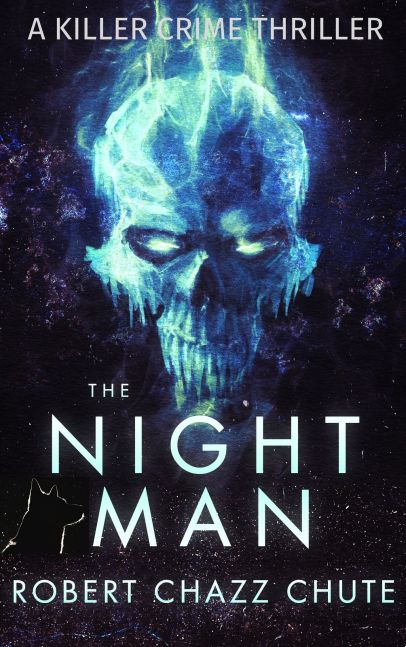
You can pick this ebook up for free today at this link: http://bit.ly/TheNightMan

Join my inner circle at AllThatChazz.com

See my books, blogs, links and podcasts.

Enter your email address to follow this blog and receive notifications of new posts by email.

Join 2,063 other subscribers