C h a z z W r i t e s . c o m

See all my books at AllThatChazz.com.

Writers: Was this post helpful to you?

I bought a book today by an author previously unknown to me. At six bucks plus, it was the most expensive ebook I’ve purchased in a long time. (Usually my ebook purchases are from indies, not trad publishers.) I bought this ebook because of one of its reviews. I did not buy because the review raved. The book caught my attention because the review’s tone was so damnably condescending, I had to make the purchase. This wasn’t a case of pitying the author. There were good reviews, too. Also, it helped that I suspected this was a book I would enjoy. It sounded smart and sure and people who liked it said it elevated and challenged its genre.

Whatever the book’s merits will be, the key component for the purchase was that the reviewer was too much of a jerk. What is it about bad reviews that so often reveal more about the reviewer than the book being reviewed? I emailed the author to tell him I bought his book. It sounded interesting and I wished him success with it. I look forward to reading it, but what can the rest of us take from this?

Take this post as a small salve to authors’ bruised egos.

People will love your work and others will hate it, but I want you to know that readers are generally intelligent people. They often see through the reviewer’s veil more than you might think. Readers divine intent when they read over-the-top malice and subtract value from a nasty review. Yea or nay, readers like thoughtful reviews. They get it when a reviewer sounds disrespectful or less than literate. Good readers (people who buy a lot of books!) aren’t easily impressed by cheap shots and snarky remarks. When a review is especially egregious, you might even get a sale out of it. 

I’m not saying bad reviews are better than happy ones, but don’t take the bad ones too much to heart. Also, when you spot a really nasty one that goes at the author personally instead of the book? Be sure to click “No” beside the question, “Was this review helpful to you?”

Filed under: reviews, , , , , , , , , , , , ,

Writers, Writing and When to Swear

TPOD 0420 2

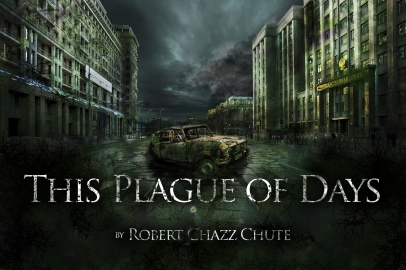
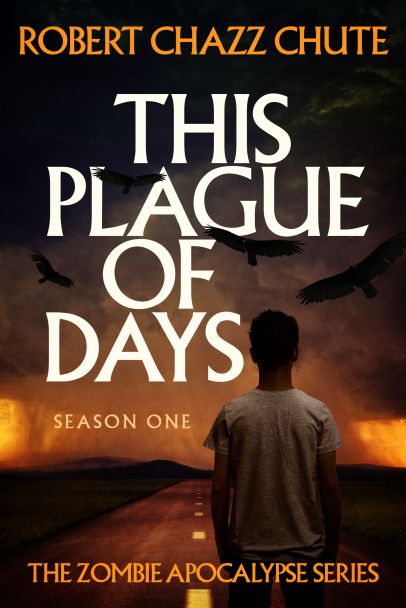
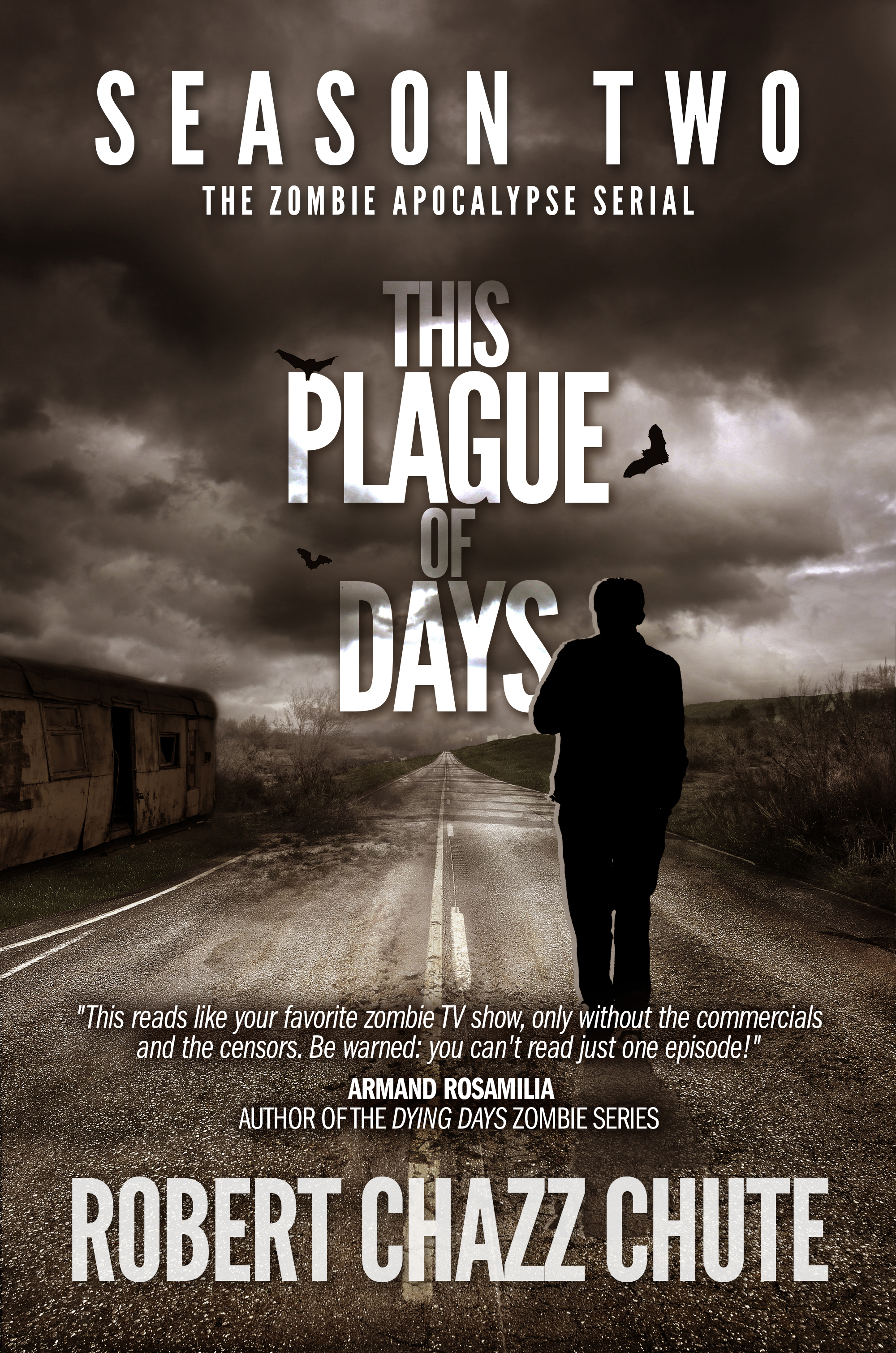
Apocalypse Art for This Plague of Days by Kit Foster of KitFosterDesign.com

As I work on This Plague of Days revisions, there’s a big difference: This is the first of my books my 13-year-old daughter is allowed to read. No one is swearing in TPOD and any sex is PG-13, at most. Sometimes I think this serial (to be released at the end of May) could be suitable for Young Adult. However, I’m also not pulling back on elements of horror that range from Hitchcockian allusion (The Birds) to classic horror (a gross-out or three). It’s a post-apocalyptic world and things aren’t pretty. 

Crass Commercial Considerations

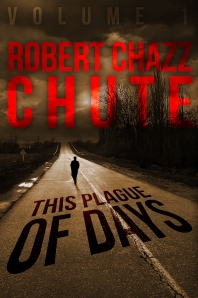
A cross-genre flurry about  society's collapse under the crush of the Sutr Virus combined with a boy's love for odd words, Latin dictionaries and his father.

A cross-genre flurry about society’s collapse under the crush of the Sutr Virus combined with a boy’s love for odd words, Latin dictionaries and his father.

I’ll admit it: I want This Plague of Days to sell to a wide audience. I want it to go huge! Multiple translations and audiobooks and mass consumption. I want this serial to be made into a movie or a franchise with TPOD lunch boxes and T-shirts at conventions. I don’t want to return to a day job and a very popular serial without cursing will help me toward that goal. I watched an interview with director Kevin Smith recently in which he breaks down the movie market. The same principles apply to us: R sells less than PG-13. Soften the blow. Make more money.

Yes, I know Fifty Shades of Gray is bondage porn that makes a ton of money off a wide audience. However, this isn’t that. This Plague of Days is about an autistic boy who is a selective mute. A plague spreads across the earth and as the mayhem goes up, society spirals down. Bad things happen. However, the story revolves around the boy and, though it’s third-person limited omniscient, much of it unfolds through the boy’s filter. His special interest is English dictionaries and Latin phrases. Nothing is lost if I don’t make TPOD a cursefest and I’ll gain more readers.

The Irony I Frankly Don’t Understand

Many people are comfortable with just about any depiction of violence but get squeamish about certain words and sex. We’re downright weird about cursing. It’s in mainstream media and on any school playground, but in print, daily newspapers put in coy asterisks like this: f***. As if our brains don’t just fill in the word automatically. Swearing is ingrained in everyday conversations, but we pretend it’s not.

Watching a show like Dexter on a non-Showtime channel, censors ensure the dialogue sounds silly. “Mothertruckers?” Really? (The practice was played to great comedic effect when, in the latest Spider-Man movie incarnation, our beloved hero blurts, “Mother Hubbard!“)

Meanwhile, I get queasy about certain entertainment that is considered mainstream even though it’s extremely violent. I’ll never see Jodi Foster in The Accused and I refuse to watch A Time to Kill. Frank depictions of sexual assault and child rape are not something I want to

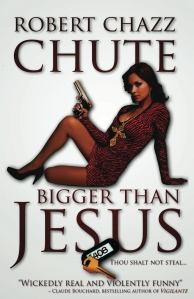
My luckless hit man is a funny guy in big trouble.

My luckless hit man is a funny guy in big trouble.

see. I can’t watch CSI or its many iterations. That whole Special Victims Unit thing feels way too voyeuristic and definitely not for me. (I’m not campaigning for a cleansing, by the way. I don’t want art censored. What I don’t like, I don’t watch, read or listen to and that solves my problem nicely.)

Ever since I had kids, I’m generally more queasy about violence that’s too realistic. I’d rather keep my violence diet to thrillers like Bigger Than Jesus. Though there’s plenty of death and even allusions to Jesus’s abuse as a young teen, it’s treated carefully, not graphic, and balanced by the hero’s sense of humor. The funny makes the horrible feel safe, somehow. 

This Plague of Days’ post-apocayptic genre puts the story into a realm that isn’t ours…at least not quite yet. 

Sex and Curses Have Their Place: Serving the story

Jesus is resurrected in Chicago. Sex with the Queen of Giants. Violence with Very Bad Men.

Jesus is resurrected in Chicago. Sex with the Queen of Giants. Violence with Very Bad Men.

My crime novels are funny but still gritty and hardboiled. The swearing in the Hit Man Series is a need. It would have been unnatural to write workarounds for simple, salty language. Acting too coy would have drained too much realism away. 

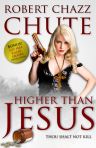
As for sex, in Bigger Than Jesus, Jesus Diaz is constantly running for his life. The book plays out like a long chase scene. Beatings and murder don’t put the hero and heroine in the mood, even for a quickie. There is a great romantic love interest in Lily Vasquez, but her intimacy issues with the hit man aren’t about sex. Lily and Jesus’s drama deepens character and shows the impact of his awful history on his life. Through their interaction, the reader understands Jesus more and sees why he’s so screwed up (particularly about women). The reader ends up empathizing with a guy who kills for money. As for Higher Than Jesus, the sex scene with Willow Clemont and Jesus is both integral to the plot and erotic. Sex raises the stakes.

The Balance:

Despite any commercial considerations and the joy I feel at being able to show my daughter what I really do,

story has to come first.

Gee, I hope she likes it.

~ Chazz has new websites: CoolPeoplePodcast.com, onlysixseconds.wordpress.com, DecisionToChange.com. In the latest podcast at the author site, AllThatChazz.com, there’s some swearing (in a funny rant) and a fresh reading from Higher Than Jesus.

Filed under: book marketing, Genre, Horror, rules of writing, This Plague of Days, writing tips, , , , , , , , , , , , , , , , , , , ,

How to End a Chapter: Shorter chapters, better books?

"You will laugh your ass off!" ~ Author of Cybrgrrl, Maxwell Cynn

“You will laugh your ass off!” ~ Author of Cybrgrrl, Maxwell Cynn

I wrote at length recently about how smart it is to write short. (Wow, that got meta-ironic fast.) I was talking about the length of books, the allure of serialization and the benefits to both writers and readers. Today, I’m talking about chapters.

I’m currently revising the book I wrote while wearing my big-boy underpants. This Plague of Days took a little under a year to write back when I wrote part-time. Every day, I’d go to a coffee shop to get away from distractions. I got sucked into the point of view of a boy with Aspergers Syndrome during the coming plague apocalypse. His family hides out in suburbia while much of the world dies. The longer the book goes on, day by day, things get worse around his Christlike figure. When I wrote it, I wasn’t concerned about chapter length. I’d sketched an outline packed with beats and I put my head down and plunged into the story.

As I revise This Plague of Days now, I see how I was writing to the beats and each file folder was a chapter. Each writing session often yielded more than 5,000 words, all in one file/chapter! I’m breaking that up, obviously. As I look for logical places to split the file into more chapters, the logical spots are easy to find. I go out on a beat.

It’s a principle of podcasting, stand-up comedy and entertainment generally that you go out on a high note. Cliffhangers, twists, teasers and aha moments belong at the end of the chapter to seduce readers to turn the page and go for the next chapter. The more of those special moments, peaks or beats you have, the faster the pace of the book. Make the chapters short and those peaks are closer together. More beats close together equals momentum.

Don’t overdo.

If you don’t slow down to develop character, a hundred awful, exciting things may happen but no one will care. Here’s an ugly example of a pace that’s too fast:

Emma’s fiance, Rollo, dies in a skywriting accident when he tries to put the dot under the question mark as he pens “Emma! Will you marry me?” in the sky and ends up flying too low into the meat grinder of nearby chicken factory. Grief-stricken, Emma attends the funeral where Rollo’s mother tries to kill her in a rage. Terrified, Emma escapes to Italy where she falls in love with sculpture and decides to rebuild her life around art. Then, Phillipe, a very handsome and wealthy art connoisseur takes her under his wing, but how does he know Rollo’s mother and is he, in fact, an assassin assigned to murder her after their first night of passion? THEN, ON THE SECOND PAGE…

More spikes aren’t better if the characters are undeveloped. Readers don’t care for whiplash. However, you could take a page from Mary Higgins Clark. Her short chapters skip along. The closer the reader gets to the climax, the shorter the chapters become. This heightens the sense of forward momentum and keeps my wife, She Who Must Be Obeyed, awake much past her optimal bedtime as she powers toward the end of those thrillers.

We have a strange attachment to symmetry, don’t we though? Maybe that’s why more authors do not vary the length of their chapters. I’ve even heard of one author taking perverse pride in hitting an arbitrary word count so each chapter was the same length. That sort of peculiarity may serve someone’s OCD, but your OCD is supposed to serve the story above all else. (He must have been crushed when it came back from the editor with varying word counts.)


Don’t under do

If all the chapters are too short, it can feel to the reader that the author was skimping. For instance, while I generally admire James Sallis’s neo-noir novel Driven, some later chapters are so short and light on detail that I felt like I was missing something. He was painting a great picture overall, but here and there he didn’t have enough paint on his brush. I had to check to make sure I hadn’t skipped pages. Don’t make readers dizzy and fill them with self-doubt.

In a book of short stories, you can get away with stories so brief they could be non-rhyming poems. I have a few short chapters in Self-help for Stoners but I don’t worry about it because I’m not fragmenting a larger narrative with a short jolt. Or you can ape Faulkner and write, “My mother is a fish” and leave it at that, I suppose, but I wouldn’t recommend it.

Find the right length

You can delight readers with shorter books and shorter chapters as long as they aren’t confused. For instance, a lot of short chapters with multiple points of view can confuse the casual reader. They might accuse you of head-hopping. It wouldn’t technically be true, but that’s how your narrative might feel to them. Stephen King’s It and The Stand manage large casts, but the chapters are longer. Just about the time you’re thinking, Enough of him, what’s happening with so-and-so, you’re switching to another character’s plight.

A warning and a hope

You’ll find the break points for chapters easily and intuitively if you have enough beats. If you don’t have enough beats, you may be writing something of great literary value but it’s probably too slow to be of commercial value. And by slow, yes, I mean boring. Not every story has to drive forward with breakneck speed or maintain an even pace throughout. However, if the way stations of chapter breaks are too far apart, you aren’t giving your readers confidence that they are moving toward a destination. That’s the death of a lot of books. Give us action, engagement, obstacles, reversals, rising action, higher stakes and make us care.

If a comedy like The Big Bang Theory can make me cry over a single line uttered about a letter from Howard Wolowitz’s absent father (it did), you can make us care about your characters. Do it at a good speed.

~ I mentioned how I’d write about marketing in my next post. This is the next post so it turns out I lied. However, I’ll try to get back to that in my next post. I’m experimenting with building buzz about upcoming books with inexpensive strategies. I’ll tell you more about that in my next post. Or I’ll write about unreliable narrators. There’s that pesky meta-irony again. 

Here’s a marketing hint to tide you over:

I’m promoting two books by reading one on Vine. I’m doing it with a contest. Check out the details on that contest at AllThatChazz.com.

Have a peek at ThisPlagueofDays.com for some flavor of what’s to come.

Filed under: Writers, writing tips, , , , , , , , , , , , ,

On Writing Well: Openings, Distractions and the next Million Dollar Idea

The Challenge of the Slow Open

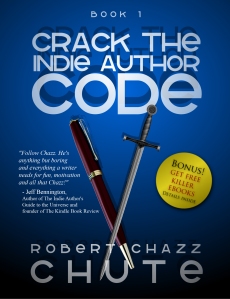
Crack the Indie Author CodeAs I work on revising my coming-of-age, love story cleverly disguised as an apocalyptic plague thriller, I worry about the beginning most. (I’ll give you a minute to digest that first sentence.)

This is a long book I will serialize (soon). The story unfolds largely through the eyes of a boy with Aspergers Syndrome, sixteen-year-old Jaimie Spencer. He’s a selective mute. I wanted to impress upon the reader how different he is from the first page. The story starts with the boy observing the plague as it infects his next-door neighbor. The neighbor is a pilot who happens to be having sex with a flight attendant at the time, but Jaimie is detached about such things. He’s asexual. His point of view is an interesting hook, but it’s not really an action hook. It reads like a character hook.

I’m going for intrigue and showing this book is more serious than much of my other work. I’m satisfied it’s a good start, but it’s a risk because of that slow start. I’m starting the novel with a long lit fuse instead of an explosion. That could be a problem and I will have to revisit this issue several more times before I commit to the slow burn open. There are plenty of explosions, strained family dynamics, obstacles, reversals, betrayals, realizations, death and a long journey  ahead. Amid the chaos, Jaimie is a detached, almost Christlike figure. The world is falling apart and he’s fascinated with dictionaries. (Expect Latin phrases, weird words and an amusing annoyance over homonyms.) The boy perceives the world as an alien might. His peculiar point of view questions how everyone else sees the world.

My luckless hit man is a funny guy in big trouble.

My luckless hit man is a funny guy in big trouble.

Big openings hook more readers faster. For instance, is it a cheap ploy to kill somebody off in the first paragraph? Many critics, both amateur and professional, seem to think so. However, I suspect the average reader doesn’t think that way at all. Some lit snobs say they shouldn’t think that way. Irrelevant. Many readers do think that way.

Every story should jump right in without throat-clearing, of course. (Don’t start your book with a weather report, as a baffling number of novels still do.) But how late should you enter the action? Bigger Than Jesus starts in media res with my loveable hit man out on a slippery ledge high over Tribeca with the bad guy hiding behind a gargoyle. Higher Than Jesus starts with a slower open in a dive bar, but right from the start, you know Jesus Diaz is there to kill someone on Christmas Day. Crime fiction should start with action. But can Jaimie Spencer do it?

Distractions

I’m confident in the writing for those who stick around for the show. However, we, as writers, are not competing with other books in our genre. We’re competing with Call of Duty, Game of Thrones (on TV), people working second and third jobs to earn enough to live, laughing babies on YouTube, the gym, the laundry, and all the other paperwork of life. Readers have so many distractions, it almost makes me yearn for a time when books were much more central to our culture. The good news is, if you survive the coming world flu pandemic that will wipe out billions, there will be fewer distractions and a bit more reading time.

Solutions and Opportunities

Jesus is resurrected in Chicago. Sex with the Queen of Giants. Violence with Very Bad Men.

Jesus is resurrected in Chicago. Sex with the Queen of Giants. Violence with Very Bad Men.

I have a suggestion to help combat The Distraction Problem. It’s not really open to me at the moment* but you might be able to use this suggestion: If you’re American, make audiobooks on ACX part of your publishing platform so people will be able to consume your goodness while they do the laundry, commute to their second job, run on a treadmill or play Call of Duty. Publish an audiobook on ACX and it goes to Amazon, iTunes and Audible. Audio is the future. That, and the massive killer virus thingy.

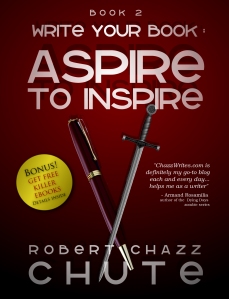
*I encouraged writers to go for ACX in Crack the Indie Author Code and Write Your Book: Aspire to Inspire. Since I’m a Canuck, they aren’t set up to deal with me yet. That creates a huge hole in the market for audiobooks worldwide. If I had the money, I’d start a company to compete with ACX and deal with all them foreigners immediately.

Click it to grab it. Just 99 cents!

Click it to grab it. Just 99 cents!

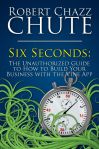
~ Earlier today I published an article on ChazzWrites.com that was meant for my website about Six Seconds, The Unauthorized Guide to How to Build Your Business with the Vine App. Apologies for the mix-up and a suggestion: If you’re on WordPress, don’t ever use the Quick post feature. Any problems I’ve ever had posting to WordPress started there. I decided to leave it up since it automatically shot out to subscribers and I never did announce a page dedicated to that book, so…yeah, I’ve got a web page just about Vine and the useful glory that is Six Seconds. If you’re interested in checking out Vine and promoting your books with it, here’s the link to onlysixseconds.

If you’re on Vine and would like to hear a reading from Self-help for Stoners, find “Robert Chazz Chute” on Vine. I’m doing the first author reading on the Vine app. Interested in winning a signed copy of Bigger Than Jesus? I’m running a contest with that reading. Get the details on how you could win from this link to AllThatChazz.

Filed under: audiobooks, blogs & blogging, book marketing, Editing, My fiction, publishing, Vine, Writers, writing tips, , , , , , , , , , , , , , , , , , , , ,

Writing and Production Schedules: What it looks like

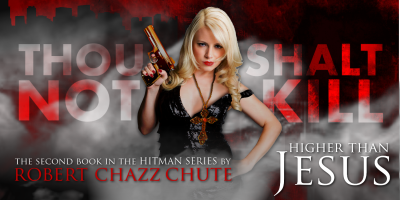
Dark Higher Than Jesus banner adThis week…

1. I’m writing a non-fiction, instant ebook. It won’t be more than 10,000 words. I had 5,500 the first day and I’m finalizing it now. The turnaround time in total will be one week. Why? Because I found a topic I’m excited about. People will benefit from knowing more about the subject and use it to expand their businesses. One more day of research and writing and another bit of interviewing should do it. More on this soon. It’s also fun, and how rare is that?

2. I still have two books of fiction in production. One is the next Hit Man novel and the other is a massive post-apocalyptic tome. Two to three thousand words a day on these has to happen to make my plans move forward according to schedule.

3. With the help of my friend, Dave Jackson from the School of Podcasting, a new website for a new podcast is born. Details to follow once the website is prettier and filled out and curvy in the right places. This is just the beginning, though I think we’ll have a few podcasts up soon.

This will be an interview show, unedited and bouncy. I’ll talk to cool people for about half an hour about their businesses, their books and their lives. Think of the coolest person you know. Email me their contact information at expartepress@gmail.com. They could be a future guest.

4. Coordinate with my graphic designer, Kit Foster of KitFosterDesign.com for podcast and cover art. Don’t have to budget much time for this. Kit knows what he’s doing without me sticking my big nose in.

5. I’ll also have to get a new blog theme going and generate content for the new website. I’ve explored different options for a recorder for Skype interviews. Fortunately, Dave saved me some money by suggesting Call Recorder for that job. I recommend Hover for your website registration needs. They’re easy to deal with and there is no hard up sell of services you don’t need.

6. Record the original podcast, All That Chazz in a few days. Yes, All That Chazz will continue. These next nine months in particular are going to be a little more furious than usual. We’ll see what’s born at the end of that gestation period, literature-wise. 

This week it’s another reading from Higher Than Jesus and I really don’t know what else yet. When I put my mind to it, something will come. Something always does come along. I hope it’s funny in the right spots for the right reasons when it arrives.

7. I’m going to resist an exhaustive listing of the rest of my to-do list because it’s mostly the mundane stuff everybody has to do. Sometimes I do actually write “floss” (so I will floss) and “brush teeth” because it feels great to cross an item of that damned list so easily.

When I get tired, I dip into Cormac McCarthy’s No Country for Old Men and remember what really great writing feels like. It spurs me forward. 

I’ll get it all done. C’mon. Write your way to happiness with me.


Filed under: author platform, blogs & blogging, getting it done, , , , , , , , , , , , ,

Writers, Readers and the Blame We Get

Dark Higher Than Jesus banner adI know a couple of erotica authors well enough to tell you that their private lives are not a full schedule of whips, naked gymnastics and ropes with elaborate knots. They’ve never had sex at the top of the Eiffel Tower with multiple hunky Norwegians. They’re ordinary moms who share your concerns about life. They have vivid imaginations that stay busy while they’re stuck in traffic as they chauffeur their children to play dates. Some readers draw conclusions about the character of the writer from the books they write. Unless it’s an autobiography, that’s an annoying habit.

When I wrote Self-help for Stoners, some readers assumed I was a drug addict. Never mind my liberal stance on unwinnable drug wars and the hypocrisy and sadism of sanctions against marijuana users. My addictions are sovereignty, choice and chocolate croissants. The drug I toss back most? Caffeine, just like you. When I wrote Sex, Death & Mind Control, some people thought I dabbled in the occult. Not so. I am not in a cult, either, (though I wouldn’t be averse to leading one for those awesome tax perks.) My work is fiction and my brain makes odd neural connections. Ideas get put together in new and exciting ways. That’s writing and that’s all.

When I gave my dad Higher Than Jesus for Christmas, he felt self-conscious about reading a crime novel written by his son that included sex. I know that because he tried to make me feel self-conscious about it. Yes, there’s a particularly blushworthy chapter, but I told him when I gave it to him that he never complained about the violence in my books, so he didn’t get to object to the sex. Here’s that fun phone conversation:

Me: Merry Christmas, Dad!

Him: I’m almost finished reading Higher Than Jesus. It’s quite the book.

Me (catching the tone): Uh-huh.

Him: I think you have fantasies about long legs —

Me: Stop! It’s fiction, Dad. I’m a writer. You’re an adult. I’m treating you like one.

Him (apparently unconvinced of points one through four): Mm, yeah. Well, I did enjoy it.

Me (deadpan): Imagine my relief.

Worse? Now I’m a bit worried. Since the gut-wrenching horror of the tragedy and loss in Newtown, Connecticut, even I’m becoming concerned that my fiction might intersect with real life. Part of the plot of Higher Than Jesus turns on a gun control issue and the actions of a fanatical group. Real life events have turned since I wrote that novel. Congruence make me think that my fiction and conjecture could actually line up with plots in reality. If something in particular (a very bad thing) happens in January, will some reader try to make that connection to my funny, sexy crime novel? They won’t call me prescient. They’ll wonder if a nut read my book!  

I hope law enforcement officers will foil any real life plots. Jesus Diaz is an interesting character, but I don’t think issues of national security and international peace should be left to my goofy, conflicted, love-obsessed, Vicodin-addicted hit man. He foils plots, too, but never in an easy, linear way. Our world has lots of tough problems, but fiction isn’t the problem. If anything, it’s a solution. Fiction is a safe outlet for revenge fantasies. Art yields entertainment, not sorrow. (Yes, I believe this is true about video games, too. Penn & Teller did an episode about the safety of video games. Here’s a link to that vulgar, NSFW video on my author site. This video is not for the easily offended or anyone who refuses to even consider that video games might not cause horrible school shootings.)

To readers: Please don’t ascribe words on the page to the character of the author. We’re just tap dancing to entertain you and most of us prefer to keep our violence where it can be safely managed: In fiction. Yes, my revenge fantasies are rooted in a deep dark place, but I learned to sublimate my rage with humour. If you’re going to make assumptions about me from my books, please assume I’m better than I am, not worse.

"Worthy of Elmore Leonard with shades of Thomas Harris..."

“Worthy of Elmore Leonard with shades of Thomas Harris…”

~ Robert Chazz Chute writes suspense and crime novels. He’s not Cuban. He’s not a hit man. He’s close to the same height as his Cuban hit man, though, so clearly he’s exactly like his fictional killer. Hear the All That Chazz podcast and check out his books at the links at AllThatChazz.com.

Filed under: publishing, , , , , , , , , , , , , , , , ,

Setting writing and exercise goals that work

Grab Crack the Indie Author Code here.

Grab Crack the Indie Author Code here.

Years ago I read a book by an exercise guru who encouraged people to change everything about their lives all at once. The energy of a radical overhaul, he said, would lead to an unstoppable momentum. Recently I read The Nerdist’s Way by Chris Hardwick and I think a softer, less demanding approach has a better chance at making long-term change. I think the same slow but steady approach to writing can help us, too. Don’t get overwhelmed in your race to publication.

There are many radical exercise programs out there. On The Biggest Loser, fat people go from sedentary to athletic, working out six hours a day and often getting ground down in the process. (I used to watch the show, but the subtext of “You aren’t a worthy human until you’re the right weight,” got to be too much.) Or take P90X. If you’re already in good shape, you might try it. It has its fans. However, as someone who has treated a lot of sports injuries, I can tell you that trying to go from zero to hero too fast is a recipe for injury that really kills progress. I took a slower approach after burning out on trying to do too much too quickly. I started with drinking a kale shake a day and began building back up from there. I think there’s a lesson for writers here. I tried to do too much at once, too. I lost too much sleep and feeling awful became the new normal. We need balance.

More tips and tricks to steer your authorship. This book is free to you until Saturday, Dec. 15! Please click to get it now.

More tips and tricks to steer your authorship. This book is free to you until Saturday, Dec. 15! Please click to get it now.

When you try to write too much at once, you’re going to have to do a lot more rewrites later. You probably know when your writing sucks. You go from “I’m a genius!” to “That was somewhat competent.” You aren’t happy while you’re writing badly. You look at the clock too much and think about anything besides what happens next. Writing doesn’t get better if you bear down and grit your teeth. Bearing down and gritting your teeth is sometimes what you have to do to start writing, but you shouldn’t end that way. When you begin to write, get into it and, if it’s going well, carry on. But when you’ve been writing for a while and you stop feeling the flow, take a break. Do something else. Refresh. Go to the gym even.

I begin a writing session by reading a bit of what I’ve already written, to get into the flow.  I might have a few minutes to write or a couple of hours. That doesn’t matter. What works is to begin writing and to be consistent, just like exercise. Starting is the major hump to get over and whether you promised yourself just a few hundred words or twenty minutes on the treadmill, you’ll probably end up doing more than what you promised yourself. If not, not, but at least you will have accomplished the minimum you asked of yourself for the day.

There are plenty of useful things to do, so there’s no need for anyone to get upset at themselves if they don’t achieve the superhuman every day. Expectations that are too high leads to disappointment, failure, burnout, self-loathing, self-medication with sugar and fat and eventually stalking the neighbourhood with an AK. Ease up on yourself because you can go hard or you can go long. You can’t do both for very long. Just begin. If you screwed up, begin again. That’s the magic.

I used to write short stories and still do occasionally. As a journalist, I’d write several stories a day. That was excellent training to build up to the 2,000 to 3,000 words a day I now write. For my process, I tend to think in blocks, so I don’t stop mid-chapter. Sometimes I’ll write two chapters a day, but I’m wary because that second chapter might not be as hot if I don’t get in some down time to cogitate and refresh. 

Whether you use a word count or a time limit as your daily goal, pay attention to how you feel as you write. If you lose yourself to it and you don’t notice the time passing at all, that’s a good sign. Similarly, you may feel tired or a little sore afterward, but if you generally feel better after exercise, great. That was the right amount. (For more on setting goals exercise goals that work, listen to guest Tom J Deters on The Duncan Trussel Family Hour Podcast. It’s NSFW.)

Find more tips and inspiration here.

Find more tips and inspiration here.

~ Robert Chazz Chute writes suspense, a little quirky self-help and Write Your Book: Aspire to Inspire. Check out all the links to his books or hear the latest All That Chazz podcast at AllThatChazz.com
Filed under: publishing, , , , , , , , , , , , , , , , , , , , , ,

#NaNoWriMo: How to make reading like cardio

A quick-moving plot with lots of surprises and a clear-eyed examination of addiction.

 Get all the details of the Seven Words or Less Contest and enter here.

Last night I wrote two more chapters for my next crime novel, Hollywood Jesus, starring my Cuban hit man, Jesus Diaz. The first chapter worked very well, but the second needs tinkering right away. Here’s what happened and my rationale for how I’m dealing with it.

The first chapter of the day was a fast-paced and clever chase (even if I say so myself). Good guy* chases bad guy/reversal/good guy’s now at a disadvantage and, as they say, the hunter becomes the hunted. The tension cranked higher when I put the good guy in a seemingly impossible situation. He’s either dead or going to federal prison or maybe even Gitmo if he’s caught. The latest police tools, tactics and technology are used against him and Diaz has to figure out a solution.

Actually, it would be awesome if my hit man figured out the solution himself, but I wrote him into a corner and I had to find a plausible way to write him out of that trap. Whenever I stick him in a bad situation, he’s looking at me going, “Get me out of here, you sadist!” I did get him off the meat hook again and it was both funny and sweat-inducing. Yay, me. Now what about the next, problem chapter?

The tension has to be cranked down from that high a little bit so there’s some kind of emotional range for the reader. However, I messed up. I cranked the tension down too far with a transitional chapter. I hate that. In the transitional chapter, I had too much exposition with not enough events occurring. After a daring escape, my hero gets picked up by his Sancho Panza with fresh clothes and a new mission to add to his growing pile of trouble. The chapter is devoted to explaining to Diaz what happened in his absence.

There’s a lot to fill in for Diaz and for the reader: A friend and an enemy are in hospital, the ultra-bad guy is on the loose and the cops are investigating the violent and creepy events of the night before. The hit man has to find these things out, but changing clothes while going for a ride in the back of a van slows the pace too much. I want the reader to have a breather for a moment, but I don’t want the reader to actually recover. For cardio and thrillers to work, you have to keep the heart rate up.

The Fix: After the perilous escape, Jesus Diaz will be picked up by his aide. However, the chapter must start at the next beat where, aside from being a fugitive from the LAPD and the FBI, he’s got a new client thrust upon him by the old client. Both are beautiful, intelligent women in danger and at the moment, both hate the hit man’s guts. I’m sticking with the conflict instead of allowing the congenial conversation with the buddy who gives him a safe, friendly ride.

But why not plunge forward, blow up the word count for the day and “fix it in post”? I see the problem now so I’m fixing it now. Dealing with the problem immediately saves me revision time later. When I go into full revision mode, I want little puzzle pieces that have to fit, not big chunks that throw off the trajectory of the story, kill the fast pacing and make me go all the way back in order to move forward.

Besides, I was already well past the word count for the day with the previous chapter. On those days I’m productive, I sleep well. The sleepless nights after a non-productive day are torture. There are only so many days.

Speaking of the next book, have you entered for a chance to get your name in Hollywood Jesus yet? Get all the details of the Seven Words or Less Contest and enter here.

* I use “good” guy here loosely. Jesus Diaz is a killer, but funny and ultimately, a sympathetic vigilante. I think of my books as Bad versus Evil.

~ The sweetest  fig Chazz ever loved was the one he stole from a tree in the former Yugoslavia. Robert Chazz Chute is the author of Bigger Than Jesus, Higher Than Jesus, The Dangerous Kind & Other Stories, Self-help for Stoners and Sex, Death & Mind Control as well as the guides for writers and self-publishers, Crack the Indie Author Code (free until Friday) and Write Your Book: Aspire to Inspire. For links to all the books and to hear the latest All That Chazz podcast, slip over to AllThatChazz.com.

Free until Nov. 30, 2012. Click it to grab it now!

Filed under: publishing, , , , , , , , , , , , , , , , , , , , , , , , ,

The New Seven Words or Less Contest

A quick-moving plot with lots of surprises and a clear-eyed examination of addiction.

As I wrote Higher Than Jesus, the second in my crime novel series, I held the Six Words or Less Contest. It was so much fun, I’m doing it again, but with an extra word to give you the flexibility you need for a great entry.

Here’s the deal:

You can have a character running around in a crime novel with your name on him or her. All you have to do to win is come up with the funniest slogan for the side of a bakery delivery truck you can imagine. The catch? It has to be seven words or less and it has to be original, funny, memorable and somewhat plausible (so swearing is out for this one.) The contest ends December 7. Enter as many times as you like in the comments section below. 

The winning entry will be used in my next crime novel, Hollywood Jesus. (You guessed it. It takes place in California.) The winner will be chosen by a vote held from Dec. 7 to Dec. 10, 2012. The top three entries get a digital copy. The grand prize winner will get a free copy of the book in digital and paperback. Have fun with it! 

~ Robert Chazz Chute’s favorite bakery product is chocolate croissants with rich coffee. He’s also written two guides to writing, publishing and promotion. Crack the Indie Author Code is currently #1 in publishing and #4 in writing, and FREE this week on Amazon. Get your copy of Crack the Indie Author Code before Friday at midnight or before the sun explodes, whichever comes first. For more publishing and promotion tips, get Write Your Book: Aspire to Inspire. For more on books by Chazz and to hear the All That Chazz podcast, go to AllThatChazz.com.

Free to you Nov. 26 – 30, 2012. Click it to grab it now, please, or I shoot this puppy.

Filed under: publishing, , , , , , , , , , , , , , , , , , , , ,

#NaNoWriMo: And what if you don’t?

Free to you Nov. 26 – 30, 2012. If you love it, please review it. Thanks!

What happens if you aren’t a “winner” at National Novel Writing Month? The Mayan Apocalypse was set aside for you. The end is near and it’s going to be like that John Cusack movie, 2012, only longer, with burnt popcorn and more uncomfortable seats. 

Well, no, actually. NaNoWriMo isn’t another of those insipid chain letters that will kill you with a falling baby grand piano if you don’t complete it within the specified time. Fifty-thousand words and one month is an arbitrary deadline. It’s a fun and, I think, worthwhile challenge, but just because you didn’t make the quota — and there’s still time left, by the way — doesn’t mean you aren’t a writer. Mom still loves you, though she still prefers your brother Ted. Dad doesn’t think you’re any less unemployable (or more employable) than you were last month at about this time. You dog does not judge you…harshly. You still don’t take him out for enough walks, though. The status quo is preserved.

You’re certainly no farther behind than all those people who did make it to 50,000 words but will never look at their manuscript again. Their art is stillborn. Sadly, plenty of people who enter NaNoWriMo   have something worthy of publishing but will never know. The challenge, to them, was just a challenge, like how long can you go just eating pineapple and refried beans? Years from now they will sit in a dingy bar packed to the rafters with Rue and say, “Yeah, I wrote a novel once.” Before taking another long pull on a long neck, they’ll finish with a whisper, “…sort of.”

So what are you feeling so bad about? If you’re not going to make it to 50,000 words but you’re still reading this post, I bet you’re more serious than Mr. Sort Of. You’ve made it this far, looking for commiseration and a shoulder to cry on and all that. You don’t need a shoulder to cry on (and cleavage is better for that activity.) What you need is more time.

Many people don’t finish NaNoWriMo for great reasons. Stuff happens. Cats sit on your keyboard. Your sister called too many times at midnight to complain about her husband and how his new boyfriend leaves the toilet seat up. People get sick. Maybe you got tied up with work that actually pays. That’s important. Maybe you got sucked into a marathon of Hillybilly Hand Fish— okay, even my cheerleading efforts have limits. Shoot yourself.

I’m a cheerleader for anyone who writes to a daily word count, whether they are in NaNoWriMo or slogging through and constantly sweating a book out. Today I wrote a mere 1,900 words. I usually write close to three thousand a day. What’s galactically unjust is an author friend of mine reported that she just wrote over 4,000 words yesterday. (Pavarti! Dang it! That should have been me!) You see, my NaNoWriMo challenge is 365/24/7. You know books aren’t written in a month and you know this challenge is just a start. If you wrote enough so you have a good start on a novel, good for you. It can still be brilliant. Arbitrary is just so damned arbitrary, don’t you find?

Maybe you’re simply one of those tortured artists who take a little longer to write a masterpiece. If you’re a Canadian author, for instance, the government’s Royal Department of Vaunted Canlit requires that each book must take several years to write, with extra points awarded if you write about hard Arctic winters, houses made of sod and relentless, howling blizzards. To qualify, each revision must be completed in a birch bark canoe. If CBC Television scrapes any conflict out of your book and makes it into a movie (entirely in sepia tones with lots of bonnets or at least Labrador outports), you’re a serious Canlit contender. Congrats, you poor bastard. When Jian Ghomeshi interviews you on CBC Radio, answer in murmured Zen koans and only allow a small, smug smile, like you’re holding in a fart worthy of Margaret Atwood. There’s no money in being part of the Canadian literary establishment, so instead you get a trace of mystique among U of T English majors — wear a big hat and a long coat to readings — and the vague recognition that occasionally accompanies that ghostly, elusive thing that is “Canadian celebrity”.

Even if you aren’t Canadian, there are still great hurdles to overcome before you write your book and earn the respect of the literary establishment. First, you must never mention any connection between your Great American Novel and NaNoWriMo. Next, leather elbow patches are a must and always refer to the story as “the Text”. (Make sure they hear the capital T.) To really rock the foundations of letters and get Mark Twain and Kurt Vonnegut to step aside for a new, greater entry into The Great Works of Literature Hall of Fame (and Gas Bar), give that manuscript of yours another couple of weeks.

BONUS TIP: If you’re going to take a day off from writing anyway, avoid misery and decide that at the beginning of the day. If it flogs you all day and at bedtime you decide today’s not a day to write, you’ve paid a needless stress debt. There’s enough stress in the world without adding to it.

A quick-moving plot with lots of surprises and a clear-eyed examination of addiction.

~ In addition to writing about publishing in Crack the Indie Author Code and Write Your book: Aspire to Inspire, Robert Chazz Chute plots murder constantly, often in relation to fiction. His latest is a delightfully violent and occasionally sexy romp called Higher Than Jesus. He begs that you buy it and read it and review it because he has no shame anymore. Pride is a luxury bought with money. Sure, that last bit sounds like Jane Eyre, but those are his words! (This is also a  good time to admit that I, Chazz, am currently writing these words about myself in the third person. I’ve rarely loathed myself more deeply.) For more on books of suspense and nonsense by Chazz or to hear the free All That Chazz podcast, slum in his grimy little author site just off the Jersey turnpike in back of a dark bar with lipstick on the glasses, AllThatChazz.com. The glasses are all dirty mason jars and the bartender is a study in jailhouse tattoos.

Filed under: publishing, , , , , , , , , , , , , , , , , , ,

Bestseller with over 1,000 reviews!
Winner of the North Street Book Prize, Reader's Favorite, the
Literary Titan Award, the Hollywood Book Festival, and the
New York Book Festival.

http://mybook.to/OurZombieHours
A NEW ZOMBIE ANTHOLOGY

Winner of Writer's Digest's 2014 Honorable Mention in Self-published Ebook Awards in Genre

The first 81 lessons to get your Buffy on

More lessons to help you survive Armageddon

"You will laugh your ass off!" ~ Maxwell Cynn, author of Cybergrrl

Available now!

Fast-paced terror, new threats, more twists.

An autistic boy versus our world in free fall

Suspense to melt your face and play with your brain.

Action like a Guy Ritchie film. Funny like Woody Allen when he was funny.

Jesus: Sexier and even more addicted to love.

You can pick this ebook up for free today at this link: http://bit.ly/TheNightMan

Join my inner circle at AllThatChazz.com

See my books, blogs, links and podcasts.

Enter your email address to follow this blog and receive notifications of new posts by email.

Join 2,061 other subscribers