C h a z z W r i t e s . c o m

See all my books at AllThatChazz.com.

Writing Conference Cataclysm: Ebooks versus the Amish

The room was packed with authors who were traditionally published. When the bookseller was talking, they were clapping. She told them what they wanted to hear. She insulted lovers of ebooks, told them to unplug, told them they needed to “get a life.” Her world is divided between ebooks and “real” books, nostalgia for what was and contempt for what is and will be.

Her emotional appeal worked well on that crowd. No one was paying near as much attention to the other guy on the panel. Formerly of Booknet and now with Kobo, Mark Tamblyn knew the numbers. The reality he knew and could quantify didn’t get any applause there so here are some highlights from his trip on the Reality Train:

1. Ebook lovers do love books, they just love them on ereaders. They do not fetishize the package. They read for love, enjoyment, entertainment and ideas, just like traditional readers claim to do…except:

2. Ebook lovers buy more books. Twice as much as people who love so-called “real” books.

3. Ebook readers are not 20 and 30-somethings. They are typically 45-55.

4. Ebook readers are not easily distracted. They do engage in deep reading and are not flighty cyber-ADD sufferers, after all.

One author asked how many people in the room owned an ereader. Only a handful of us raised our hands and he looked quite pleased with himself for a moment. Then someone pointed out the demographic in the room: the crowd skewed old and were, after all, a bunch of traditionally published authors. (And by the way, a couple of those older authors expressed excitement at fleeing to publish their own books so they can get off the mid-list and get paid 70% instead of 25% from a legacy publisher. I’m sure there will be many more to follow.)

So here’s another break from the illusions of The Matrix: Last year Kobo had a party to celebrate their one-millionth customer. A week later they held a party for their two-millionth customer. The month was December and that, my friends, is one major and measurable difference made by Jesus’s birthday. Clearly Jesus wants you all to buy ereaders.

It’s gauche, but since I predicted the ever-increasing appetite for ereaders last year and since I’m in a foul mood I will point out: I informed you thusly! I so informed you thusly! (Inside joke for Sheldon Cooper fans.)

And by the way, since I’m so damnably cranky: Last week I noticed someone saying the indie revolution was a good thing for creators but wasn’t any good for readers. Hey! I’m indie but I was a reader first and will always be a reader. I read ten books at a time. I’m more voracious for reading material than I am fudge. I’ve got a stack of pbooks by my bed, a huge library we call a house and a whack of ebooks loaded in my ereader. I relish more choice, even the stuff that isn’t particularly close to grammatically pure. So knock off that BS, thanks very much.

And have a day. Make it real.

Filed under: e-reader, ebooks, Rant, self-publishing, Writers, Writing Conferences, , , , , , , , ,

Pandigital Novel: The e-reader review

Do not buy this e-reader. I own a Sony e-reader (which I’m very happy with) but I was looking for another device for my wife. The Pandigital looked good, but I was soon disappointed.

Out of the box, it’s impressive. Not only is it an e-reader, it’s a tablet. That, and the price at $189, is what got my attention in the first place. The e-reader function was primary, but to pick up a cheap tablet with which She Who Must Be Obeyed could access Facebook, e-mail and the internet sounded great. And it has a color display! Hurray, I’d give it a go.

I learned a lesson I seem to have to learn over and over:

You get what you pay for.

The Pandigital Novel seemed to work fine as an e-reader and I liked the option of night reading (black field/white text) in addition to daytime reading (though I understand that’s an energy suck. We charged it up (using a wall outlet adapter.) It was already at 97% charge so it was soon ready to play with and we were anxious to experiment with our first Android tablet.

We were pretty chipper at first since it was so easy to set preferences. Then  things soon went south. The first and worst thing was that the touch screen was so bloody unresponsive. I’m used to the ease of working with my iPod Touch. I foolishly thought all touch screens were made equally. Uh-uh. I swiped with one finger, then two, then three. The response was hit and miss and always slow and frustrating.

We switched to the stylus and that didn’t make much difference. In fact, the stylus had to be precisely perpendicular to the screen and pressed just so to be at all effective. Even then the Pandigital Novel’s screen was often uncooperative.

Then things got worse. The e-mail wouldn’t configure. It wouldn’t play YouTube videos. Then it froze when we played the sample movie that came with it! And it stayed frozen until its battery ran down.

No, it wouldn’t turn off and reboot. No, there wasn’t even a reset button I could stab with a wire paper clip. There might have been a way to solve the problem, but tech support wasn’t answering at that time of day. (I’ve since learned from other reviews that the help center is often unresponsive anyway, perhaps overloaded with calls for help from disappointed customers.) The user manual was, of course, filed on the tablet, which as I mentioned, was already frozen. It would not thaw.

In a word, G-G-G-GAAAAAaaaaaaaaaagh!

Best Buy cheerfully refunded me for the tablet, its protective case and the warranty I got for it (about $220.) For the same amount of money, I’ve got the gold standard e-reader: A Kindle with extra adapter and case is on its way. 

Lesson learned.

 Related Articles

Filed under: e-reader, ebooks, Rant, reviews, ,

How much should fiction cost?

There’s quite a gap between what publishers charge for ebooks and how self-publishers are pricing their work. Many authors (and readers) have a visceral reaction to price. Of course people are sensitive to a price they perceive too high, but many believe that if it’s too cheap, it must be crap. (JA Konrath suggests self-publishers play with price, and experiment to find the right price point.)

However pricing affects you intuitively, there’s no direct correlation between price and quality. Many fine ebooks are often priced low because the author is not well-known. Lower prices encourage timid readers to take a chance on new fiction. When the price is lower, readers buy more. It is freeing to click, click, click and still pay less for fiction than you might for a latte and a croissant.  Self-publishers hope to make it up on volume.

If you are trying to figure out how to price your ebooks, or what a fair price might be, Dean Wesley Smith has a great and useful  summary.

His suggestions have influenced my thinking greatly. As a result, my first book (that will be available digitally) will be a short story collection. I still plan to roll out my big novel in November, but the collection, including some award winners, will come this summer!

It’s all happening very quickly. It has to. And most glorious of all, now it can happen.

Time and me?

We wait for no one.

Not anymore. 

Filed under: Books, DIY, ebooks, grammar, links, My fiction, publishing, self-publishing, Writers, writing tips, , , , , ,

Support authors. Buy books.

FYI: I promised the big announcement today.

That post drops here

at 12:01 pm EST.

Now, to business:

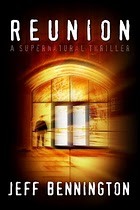
Author Jeff Bennington from The Writing Bomb wrote a very helpful post for Chazz Writes comparing his publishing experience with Lightning Source vs CreateSpace. 

Besides helping self-publishers out with some great information, Jeff’s written a great book. The early reviews are very exciting, so I’m not just asking that you help out an author. I’m asking that you enjoy a good book.

http://www.amazon.ca/Reunion-Jeff-P-Bennington/dp/0615450865/ref=sr_1_1?ie=UTF8&qid=1302828982&sr=1-1Jeff is trying to climb high in Amazon‘s rankings today so readers can find his novel. Get in on the ground floor and help kickstart Jeff’s career. He’s encouraging fans and future fans to buy Reunion today. The novel has received great reviews, so why not? It’s not expensive.

Check out the awesome reviews and blurbs here.

Why not buy two? I will.

For this strategy to work best, it would be great if you bought the book today, April 15, if you please. It’s tax day in the States, so console yourself and forget about that horror by reading Jeff’s cool horror story.

Please support the arts and chill with a good book. Thank you.

UPDATE: Just bought two copies of Reunion.

Can’t wait!

Filed under: authors, book reviews, Books, publishing, Writers, , , , , , , , , , , , , , ,

Createspace or Lightning Source: Pros & cons breakdown

Jeff_Bennington

Jeff Bennington

I’m trying to decide what company to go with to get my novel out. Smashwords grinds manuscripts into all e-book formats, of course, but what about the paper book issue? Createspace or Lightning Source? I recently asked some authors about their experience with companies that facilitate self-publishers. Some were satisfied with Createspace and others were fine with Lightning Source. Jeff Bennington, author of a paranormal thriller, Reunion as well as the blog The Writing Bomb,  hit me with a great, detailed reply. He has experience with both Createspace and Lightning Source. Rather than pushing me one way or another, he laid out the pros and cons as he sees it from his experience.

“Dude!” I said (because in my mind I’m still seventeen and it’s the ’80s.)  “This isn’t a mere reply to my question. This, sir, is a blog post. How about it?” He graciously said yes.  Here’s his breakdown:

Cons


At Lightning Source, starting an account is a bit cumbersome (much more paperwork than Createspace.) Once the paperwork was complete I had to get my cover just right, but Joleene Naylor, an independent cover artist, helped me do that with ease.
However, I’m not as happy with Lightning Source’s ink/cover quality as I am with Createspace. Lightning Source’s paper is much thinner than Createspace. (Same number of pages and Lightning Source is at least 1/4″ thinner. Very strange.)
The initial work to get a proof copy is somewhat exhausting and cost $39 (overnight, mandatory) for a proof every time!
I can get five proofs for $50 (overnight, not mandatory with Createspace).
I’ll use Createspace the next time if I discover that print copies just aren’t the thing for my books. I used them this time to get advanced reading copies (ARCs) out early. Createspace was fast and easy to work with but I was very limited on the back cover and spine art.
Expect 1 to 2 days for email return. But if you call..they answer.

Pros


The number one reason to use Lightning Source is the distribution: return availability and full industry discount (45-55%). That was enough for me because very few publishers for indies do that and if they say, as Createspace does, that they have full distribution, you better make doubly sure that the wholesale discount is 45+ and that you can have a return policy. Createspace  never told me that. I asked and they said, “We don’t make that decision.” I say “Bull^%$#!” Of course they do. They are the publisher.
With Lightning Source, you are definitely the publisher. I like that.
If you have a newer mac formatting is easy. Lightning Source will upload your sized PDF with no worries.
Once the book was uploaded and passed the tests, things moved rather quickly. Give yourself 2 months to get your account in process and book uploadedReunion
The best thing is you are assigned a customer rep—a real and a very nice and helpful person. My rep at Lightning Source is Carol Egan. She is wonderful!

Overall, I’m happy so far. I mostly want my print version to be available to local stores for signings (if I have one) and a lot of my friends and family want to buy it at a store. I can’t do that with most other self-pub outlets. Lightning Source is the real thing. Great for a small press…like me!


Right about now you’re bubbling over with gratitude for Jeff”s insights. Act on it and check out his book. Reunion just launched and the reviews on Amazon are very good. Plus, you need to own it for research purposes. (See what you think of the binding etc.,…) Buy Reunion.


Filed under: author Q&A, authors, Books, DIY, ebooks, publishing, Writers, writing tips, , , , , , , , , , ,

The Amanda Hocking Effect: She didn’t sell out. Trad publishing bought in.

Amazon Kindle e-book reader being held by my g...

Image via Wikipedia

Successful e-book author Amanda Hocking has signed a six-figure deal with a traditional publisher, St. Martin’s Press. No sooner was it announced,  some haters emerged in website comments sections. I’m pleased to say that most people were happy for Ms. Hocking—as they should be—but of course there were some trolls, one of whom said she was a sell-out and a traitor to the digital revolution’s cause.

The haters are wrong about that and here’s why: Ms. Hocking got to be a big-time author because of e-books, but she never signed up to lead a revolution. She just signed up to get readers for her books. Good for her! The traditional publishing model is useful to big-time authors and due to her solitary efforts, she is a big-time author. The larger issue is that publishing often falls down when the author’s success does not qualify as stellar.

I don’t see that this deal speaks to the limits of self-publishing at all. The deal must have been sweet because, as I pointed out not more than a week or so ago, with her 70% cut through Amazon, publishers would have to back up a truck full of money and provide an army of logistical support to justify any deal with that author. St. Martin’s is one of the few publishers big enough to provide that scale of mucho macho mojo. Hocking tried to get published the traditional way first and mainstream publishing turned her down. She proved herself worthy doing it her way. Now she can focus more on writing and less on the business side of publishing. Writers love to write first, and most of us only become entrepreneurs by necessity and circumstance.

Look deeper into the implications of this deal. Amanda Hocking didn’t sell out. Traditional publishing did. Hemorrhaging money fuel due to Wall Street’s global economic destruction spree, publishers cut back on editors and squeezed the mid-list authors. They failed to adapt to the changing digital environment to preserve the old media model as long as possible.  Many of those mid-list authors got squeezed right into self-publishing. For those with some experience and an entrepreneurial bent, the water over in digital publishing can be nice and warm.

Another author, Barry Eisler, recently walked away from a $500,000 deal because he decided he could make more on his own. Also, good for him. One of the joys of self-publishing is maintaining control and choice. Whether you choose to stay outside trad publishing or sign a contract, you’re making the best choices for you.

Amanda Hocking didn’t sell out. She made traditional publishing buy in.

(And she’s consistently more gracious about it than I would be. )


Filed under: authors, Books, DIY, ebooks, publishing, Rejection, Useful writing links, Writers, , , , , , , , , , ,

Sell your books. For a long time.

Light and shadow on an Irex iLiad ebook reader...

Image via Wikipedia

Movies focus on the opening weekend. Books have a month to hit big or get returned. At least, that’s the way it was for all books. That’s changing in a big way.

Recently I read an agent talking about how digital books extend the life of sales of paper books. Essentially, the message was very much “the status quo is still the status quo” and “E-books are an add-on. Publishing hasn’t substantially changed.”

I don’t agree. First, the extent to which traditional publishing isn’t changing is part of its problem, not its solution. True, many people prefer paper books to e-books, but that’s changing, especially since there are far fewer places to shelve paper books. Bookstores are closing up. It’s not happening overnight. It won’t happen to all bookstores. But e-books are where to place your bets for the future and the future’s coming faster than any of the experts predicted. (Of course, it’s all so new, I’m not sure if anyone really is an “expert.” Maybe that’s a title for someone to claim years later, not in the middle of a history change.)

The agent asserted that most people by far don’t even own e-readers. Yes, and a lot of people still don’t own telephones. That doesn’t mean utility stocks, like Ma Bell, are a bad bet. A lot of people will never own e-readers, but that won’t matter to the book industry because most of those people aren’t big readers anyway. Power users (power readers) are responsible for buying a lot of books—power users, like me. For instance, I bought The 4 Hour Body electronically. Then I decided I wanted to own it in paper as well because it’s a reference book. Then I kept downloading.

The agent’s point about e-books extending sales really stuck with me. The game has changed with e-books. Distribution is cheap and easy. It’s so easy, authors can sell their books themselves through distributors and their own websites. Authors know that their books are not stale to new readers. Every book is new to anyone who hasn’t yet read it.

This is the “long tail” of sales. And now it’s for everybody. The game has changed. What’s weird is that not everybody sees it yet.

Filed under: publishing, Writers, writing tips, , , , , , , ,

Writers: TOP 10 Objections to Self-Publishing

Amazon Kindle e-book reader being held by my g...

Image via Wikipedia

As I read the growing number of success stories about self-published authors, I’ve seen some of the same worries and objections pop up again and again. Let’s deal with some.

Objection 1: As self-publishing grows, who will be the gatekeepers to keep out all the self-published books that are gonna suck?

My answer: Who keeps all the awful books off your bookshelf now? You do. The people you trust help you curate your book collection. This is really a question of taste and quantity. Your taste is still yours. The variable is going to be quantity as we’re crushed under the weight of so much bad prose. Sure, as an indie author, it will be hard to be heard above the promotional din. It’s hard to stand out anyway. However, through social media, word about good books spreads faster. Readers curate. Sounds more democratic than a small faceless editorial and sales cabal determining your destiny from an office you’ll never see, doesn’t it?

Objection 2: Without traditional publishers, authors will have to promote their own books.

My answer: Most of them do that themselves now. In fact, Margaret Atwood recently suggested that, since authors are their own publicity department, they should get a cut. For instance, one solution would be: If you, the author, spends $10,000 on promotion, you don’t have to earn that $10,000 again before you start getting royalties. (Many savvy authors—if they can afford it—plow their advance right back into promotion.)

Objection 3: E-readers are selling much faster in the United States than they are in Canada. Can Canadian authors make any money from e-books?

My answer: When you upload to Amazon, or any other platform, there aren’t any flags on your book that say “This one’s from Canada and this one’s from Tunisia so ignore this shit.” The web makes us citizens of the world so you can sell to the vast US market. The British and Australian markets are pretty big, too. We live in an Age of Wonders. Borders? We don’t need no stinkin’ borders!

There’s a deeper and much more serious answer to Objection 3, but I’ll save that for tomorrow’s post because it will sound unpatriotic.

Objection 4: But self-publishing is expensive.
My answer: It used to be but that’s old data. You can start selling e-books for just about nothing down. And many e-publishers are now looking at the paper version of their product as a nice add-on, not a necessity. Also, beware of companies that call themselves indie, but they’re really working on the vanity press business model and are out to bleed you dry.

Objection 5: Self-publishing sucks because it’s not professionally edited.

My answer: That one’s mostly true (though you could argue a lot of traditionally published books also suffer this malady as agents edit more and big houses edit less.)

I’ll take the middle road: Unedited work gets savaged in the marketplace. Few people will buy, word will get around and even fewer will buy the next book. It’s such a losing strategy that it won’t survive. A lack of editing is really the main complaint I hear about self-publishing. I think people who are serious about it will get it. I’m optimistic that as we hammer away at that complaint, writers will see they need some professional objective input.

(And yes, I’m an editor, too, so take that into consideration as you weigh the validity of my uncharacteristic optimism on this point.)

Objection 6: You can only be a financial success with the Big  Six behind you.

My answer: Anyone, even if they have a steady-paying job, dreams of winning the lottery. (Me, too!) But getting recognized by an editor or agent and getting the full JK Rowling billion-dollar deal is like winning the lottery, but with lousier odds.

If you’re good at math, you see through this objection quickly. Most books—indie or trad—don’t sell. Most authors don’t live off their writing income. There are people who are making good passive income from selling books, short stories and novellas. They aren’t in the billionaire’s club though Amanda Hocking’s now a millionaire.

As a self-published author, you’re selling your books for prices which are the equivalent of couch cushion change, but you do get a much larger percentage of each sale. JA Konrath has done the math and proved you can hold on to your rights, work for yourself and make much more money than a traditionally published author. With time, the fallacy of this objection will sink into the consciousness.

Just like my daddy said, “You don’t get rich working for somebody else.” Just like my ma said, “The Man is out to get you. The only way to control your life is to seize the means of production.” Good old Black Panther Marxist Ma.

Objection 7: Self-publishing is for losers who wouldn’t get published traditionally.

My answer: Has been true. Less true as time passes. As more traditionally published authors jump to e-books (already happening) this impression will fade. (This ties into the curation worry in #1.) It also has to do with ego. As someone with a huge ego, I’ve struggled with this, too.

Objection 8: If I self-publish and wear all the hats, when will I have time to write?

My answer: When you find or make time, I guess. My rule is, I don’t indulge in social media when it interferes with writing time. Twitter is for winding down, breaks and commercials and when I feel like it. It’s not an obligation that cuts into otherwise productive time. I’m not unsympathetic to the problem, but it’s not a new one. As I said, most traditionally published authors are hustling their books on their own anyway, without assistance or input from their publishing house.

At least we have more leisure time than we’ve ever had in all of human history. You probably don’t have to chop wood, skin your own cow and make your own clothes and rope in addition to feeding yourself.

Maybe you need to stop making excuses and sit down to write. If you missed Tuesday’s kick-ass,  light-your-hair-on-fire, no-excuses, take-no-prisoners, no-apologies self-evaluation rant, you better read it here. You don’t like me now? Ha! You are going to hate me when you read that!

Objection 9: If  I go out into the world without an agent, who will plan my career?

My answer: Okay, I’ve phrased that objection facetiously and unfairly. A lot of agents do talk about planning their authors’ careers, though. Aside from encouraging you to write more books faster and write the best books you can, I’m dubious about advice that comes after those no-surprise generalities. (For more on that lunacy, read Dean Wesley Smith’s take on agents here.)

So what will you do when you’re looking for support? You’ll talk with your friends. You’ll reach out to your network of mentors and followers. You’ll get feedback from your beta readers. You’ll learn many of the things you need to know from fellow travelers, Google and YouTube.

Objection 10: But I hate reading on an e-reader!

My answer: You aren’t alone. Not everything is for everyone. But young consumers will take it for granted. That’s one of the reasons Young Adult e-reading is exploding. YA is also extremely popular because it’s the one genre where traditional publishing is open to cross-genre books; lots of adults read YA, too. Older people were the surprise e-reader buyers early on. As the price drops, more kids getting e-readers and the age ratio is shifting.

There is resistance to change. It’s not all bad and it’s not all good. Consider that, if you’re older, you remember someone who hated mandatory seat belts. Not an objection you hear much anymore. The New Normal is a dangerous concept, though I don’t think all the paranoia applies in this case.

Also, let’s get real: Many people who hate e-readers haven’t actually tried them yet. As I was reading mine, my 11-year-old stopped and touched the screen. “Oh!” she said. “I thought that was paper at first. I thought you had a piece of paper on top of your e-reader screen! Wow, that looks so real!”

Yup. I smiled.

These are my answers to objections to self-publishing.

Do you have some, too?

Filed under: authors, Books, DIY, Editing, publishing, Top Ten, Useful writing links, Writers, writing tips, , ,

Writers and Readers: Heads up! Exciting changes ahead!

I have some really cool changes coming in the near future. I really don’t want to lose anybody as the changes take effect so, against my nature and all that’s holy, brace yourself for a brief commercial:

I’m putting it out there.

Please subscribe to my blog

and please ask your friends and followers to do the same.

What changed? I’ve been making lots of moves in the last year or so, but there’s a lot more to do.

(Here’s what gave me the big push this week. If you need a push, you’ll get one. Hard.)

Since last May, I’ve been posting to Chazz Writes five times a week.

That will soon change to three rocking posts each week:

Monday, Wednesday and Friday.

When is “soon” with the new schedule? Probably after next week.

Nothing but the schedule will change immediately.

  • I’m still putting great information and links out there.
  • I’m still looking for authors to profile.
  • I’m still available for guest blogging opportunities and giving guest blogging opportunities.
  • I’m still editing just as much as ever.
  • Also still looking for (affordable) web developers to help me migrate to a new hosted platform that will become more interactive.

What exactly is coming, Chazz?

Aside from my regular editing duties, I’m editing my novel and its companion e-book.The details are top secret until I’m ready to launch. Subscribers will be in on the ground floor for extras when the books drop like valkyries from the sky attacking to a Wagner soundtrack.

Stay tuned. And seriously, please subscribe so you’ll be in the know.


Filed under: publishing, What about Chazz?, , , , , , , , , , , ,

Bookstores: How sick are they?

Cover of "Glass Houses"

Cover of Glass Houses

Recently I’ve seen what I call “backlash” articles* about the health of bookstores. You’ve probably seen them, too. In the wake of the Borders chain closings, some media are hitting back with counter-programming (either out of nostalgia or as a way to stand out.)

Their message is simple:

“We love bookstores and they aren’t all dying. Look at this tiny independent where the defiant owners are making a brave stand.”

I love brave stands. I’m also fond of truth and this is an obvious case where the part is not the whole. It reminds me of all the people who object to the digital revolution with, “Look at all those e-books with all their different platforms. It’s a mess so it won’t survive.” I dislike stupid stands.

Perhaps the problem is confirmation bias. They’re looking for reasons why what will happen, is happening, won’t happen. Whatever bump in the road they find they take gleefully to be an insurmountable obstacle. Actually, multiple platforms for e-books are a sign of health (assuming competition is good in that it keeps prices down and choices up) and of growth (as in growing pains due to rapid, unexpected expansion.) The technology to make us all publishers is developing.

“Developing” implies transition from stupid to primitive to flawed to workable to better to a higher state (and eventually to a new tech.) Instant/indie publishing is not going to be perfect all at once. Nothing is, though not long ago I heard a Luddite say he wasn’t going to buy a computer until the tech wasn’t “perfected.” Hahahaha! He was calling from the corner of Unreasonable Expectations Boulevard and Are You High? Avenue.)
There is  a reductionist view with a subtext that categorizes anyone who predicts the demise of bookstores as a gloating goblin. I’m not gloating. I love bookstores. As (I’ve often pointed out, having milk delivered to the house was convenient, too.)

But I’m not saying bookstores will disappear completely. You’ll just pay more if you want the premium paper product. Heck, you already do that, but the price of old media will rise more. You can still buy turntables, for instance, but if you want to hear the scratches on Billy Joel‘s Glass Houses, you’re paying a very high price for a new needle to make that old pig spin.

Paper books are going to co-exist with e-books for some time…at least until consumers really get kicked in the teeth by manufacturing costs. Books get cheaper when produced in volume, but as digital sourcing rises, e-books don’t have to replace all paper books to make paper book production go from unattractive to cost-prohibitive.

There are too many variables and my brain is too small to say precisely when it will happen. I’m simply confident it will occur and one day, maybe even you will say, “Oh, look, darling! A bookstore! There isn’t a bookstore within 2 days’ drive of our house! Let’s go in and buy coffee and look at their tiny collection. How quaint!”

Yes, Virginia, 100 years from now there will still be paper books.

But you’ll be sewing and gluing the binding yourself.

*Chazz definition: A backlash article is an article written to assure the reader that the writer is the sane voice of wisdom when in fact they’re really just knee-jerk contrarians railing against all evidence. Like how the writers at Slate work from the premise, “We’ll hate on what everyone loves and make snide remarks at what everyone thought unassailable because we’re the sophisticated cool kids! Anything goes as long as it doesn’t agree with Salon.”

Filed under: Books, DIY, ebooks, Media, publishing, Rant, self-publishing, , , , , , , , , , ,

Bestseller with over 1,000 reviews!
Winner of the North Street Book Prize, Reader's Favorite, the
Literary Titan Award, the Hollywood Book Festival, and the
New York Book Festival.

http://mybook.to/OurZombieHours
A NEW ZOMBIE ANTHOLOGY

Winner of Writer's Digest's 2014 Honorable Mention in Self-published Ebook Awards in Genre

The first 81 lessons to get your Buffy on

More lessons to help you survive Armageddon

"You will laugh your ass off!" ~ Maxwell Cynn, author of Cybergrrl

Available now!

Fast-paced terror, new threats, more twists.

An autistic boy versus our world in free fall

Suspense to melt your face and play with your brain.

Action like a Guy Ritchie film. Funny like Woody Allen when he was funny.

Jesus: Sexier and even more addicted to love.

You can pick this ebook up for free today at this link: http://bit.ly/TheNightMan

Join my inner circle at AllThatChazz.com

See my books, blogs, links and podcasts.

Enter your email address to follow this blog and receive notifications of new posts by email.

Join 2,063 other subscribers