C h a z z W r i t e s . c o m

See all my books at AllThatChazz.com.

E-readers: I told you so (an indulgent post of self-congratulation)

A Picture of a eBook

Image via Wikipedia

UPDATE about the Big Picture

The trend is up. The sales of e-books outpaced the expectations of many industry experts through the fall. I have trumpeted the arrival of the e-book future here to the point of pedantry. And yes, I received an e-reader for Christmas. I’m pleased and impressed with my Sony reader. I predicted that e-readers would sweep consumers off their feet on their gift-buying sprees. I’m sure I can now predict the numbers bear me out.

Today I went out in search of a protector for my e-reader. I visited several stores. They were all sold out.

Oh, sure, now it looks obvious. It didn’t look so obvious when I was telling everyone about it last summer.

“Ha!” I say, and “Ha!” again.

Filed under: Books, ebooks, publishing, Rant, , , , , , , ,

Writers: The mire of conflicting advice & unfair criticism

The hierarchical structure of the autobiograph...

Image via Wikipedia

When I got into the business, there was a criticism meant to shut writers down.

“Too autobiographical” was the kiss of death.

That’s ironic for several reasons:

Biographies and autobiographies are moneymaking books. Sarah Palin‘s ghosts have already published more books than you and possibly more books than she’s read. Okay, that was a cheap shot, but somewhat funny and it has the added bonus of being an Irish fact—that is, something that is a lie, but should be true.

I digress.

Back to the issue of unfair criticisms and misguided advice:

 The mind boggles at Augusten Burroughs work. How much childhood trauma can one man recycle into his fiction and non-fiction? He has enough monsters, addictions and insanity in his past that he’s set for several more books at least.

“Too autobiographical” is now a stale criticism when you consider the movement of the market toward tell-alls, whistleblowing and confessionals. There’s a lot of popular fiction that’s thinly veiled life story, too. In fact, if you’ve been a lion tamer-stripper-celebrity-prostitute, you’re a much easier sale than if you’re just another writer working away at your desk making stuff up.

Diablo Cody is a talented writer, but she had a lot more heat going into the fray because of her tattooed image and history as a stripper. I’m not saying she wouldn’t have sold the brilliant Juno script anyway, but really, how many celebrity screenwriters can you name besides her, McKee and William Goldman? If you came up with a few names, it’s probably because they are famous writer-directors, not just writers.

(And notice that irksome phrase “just writers.” I use it advisedly, as a synonym for “merely,” since that’s the stature writers generally have in film, television and publishing.)

“Too autobiographical” was once a stinging barb. It marked a talent that was undeveloped. It suggested teenage angst worthy of a diary, not of publishable quality.

The worm has turned. Now your tortured history as a brawler helps; Chuck Palahniuk brawled a bit and escorted sick people to support groups long before Fight Club. Your time in seedy bars lends authenticity to your writing and manuscript evaluators may well take you more seriously because of the stuff you don’t want your mom to know. A work can still be too autobiographical, but that criticism doesn’t carry the weight it once did.

Evaluators can be off the mark in what they think qualifies as authentic, anyway. One writer, for instance, was told that her dialogue didn’t ring true for how contemporary teenagers speak. She was advised to hang out with some kids to catch the flavor of the real thing. What the manuscript reader didn’t know was the writer was 17 at the time.

We’re a culture that worships celebrity, so “too autobiographical” isn’t a criticism that comes up as much (unless your life story is deadly dull.)
The true irony is that the same editors who would say “too autobiographical” would also routinely tell aspiring writers to “Write what you know.”

That’s bad, even egregious advice. Don’t write what you know. If you only write what you knew, there wouldn’t be much fantasy, science fiction…or much literature at all, come to think of it.

Instead, write what you care about.

 Your research and the knowledge

flows from caring, anyway.

Filed under: authors, book reviews, Books, Editors, links, manuscript evaluation, Rant, scriptwriting, Useful writing links, writing tips, , , , , , , , , , , , ,

Writers : How “hands-on” do you want your agent to be?

A diagram of cognitive dissonance theory

Image via Wikipedia

I ran across an interview with an agent here. She sounds very nice. But the first couple of questions got me to wondering…

The agent mentions that she’s been lucky to never have to work on a book she didn’t “love.”

Okay. That’s great. Or is this a red flag? It’s a common sentiment among agents across the board. They want to be “delighted.” They have to love it to sell it. Hm. As a former sales rep of hundreds (thousands?) of books, I can tell you I sold many books I hadn’t even read. I’m not recommending that. I am saying that’s real. I fail to understand why agents have to love books to sell them. Shouldn’t the question be, would others want to read this? Do I know an editor who would like this?

You’ve bought a lot of books. You’ve read quite a few of that number, even to the end. How many books have you read that you really and truly “love”?

Then the agent discusses being very “hands-on.” There’s kind of a cognitive dissonance here, isn’t there? I’m not picking on this one agent. Again, she’s saying stuff that a lot of agents say. But on the one hand, the agent has to love the manuscript. On the other, there’s apparently lots of work ahead before it’s presentable for submission to an editor. Uh…whut? Shouldn’t it be one or the other?

Here’s a take on this from an author who sees the agent-author relationship a different way, and by that I mean upside-down from the way it’s usually portrayed. Dean Wesley Smith sees the agent as his employee and is not interested in jumping through their hoops. He doesn’t want to be slowed down by the agent’s process (though he has used agents.) He’s not interested in any employee slowing his process, production or sales. I recommend you read all his posts on Killing the Sacred Cows of Publishing. It’s refreshing.

So here are my questions:

Do you want your agent to love your book or is liking it good enough for you?

Do you want your agent to edit your manuscript to make it better up front?

Do you prefer that your agent be more hands-off and just get it to market?

Addendum: The agent adds, “Basically, build yourself as big of a social media platform as you can before your book ever comes out.” Good advice for both the indie published and the traditionally published. But, if you can get your social media platform big enough, do you need a traditional publisher at all?

My new BFF Jason Alexander Greenwood asked himself these questions and came up with an indie answer. If you missed my link to his post on Sunday, read Shoot the Gatekeepers here.

Filed under: agents, authors, Editors, getting it done, links, manuscript evaluation, publishing, Rant, Rejection, , , , , ,

Writers Top Ten: Why blogging about publishing is important

Publishing

Image via Wikipedia


My father does not understand me.

This was a given when I was a teenager.

Time passed.

Nothing changed.

When the subject of my online work came up, my father said, in a tone that could only be termed condescending, “Why would you bother with that?” He means well, which is never soothing though for some reason it’s supposed to ease the pain of casual negation. Think of that. Have you ever not taken offense when anyone starts out with, “No offence, but…”

But to the question, why do I bother with Chazz Writes? Well, lots of reasons (beyond the simple enjoyment of bagging on my 84-year-old father.)

1. I write because I can do naught else. He really should get that by now.

2. I write to learn what I think about things.  Don’t you find your thoughts are better articulated and organized when they go through your keyboard first?

3. I write to educate and, in so doing, I become better educated about writing and the publishing industry. I research a hippo’links before I shoot them your way. Curation is a large part of what I do on the blog.

4. I write for recognition. As detailed in my previous post (immediately below), I’ve decided it’s important to become a fame whore and not just the regular sort we all are (i.e. for money.)

5. I write so clients can find me. That happy pic up there? It takes you to my business site where there’s a free trial for editing manuscripts. I also edit websites for a flat rate. I write and I edit and this, all of this, is an ad. And yet, I am unashamed.

6. I write to build a following. When I kick my fiction out into the world, I want an audience to be ready. Eager even!

7. I write for myself. It’s not just for business. Without the business side, I’d do it anyway. (I wrote a couple of blogs before this one.) In short, it’s fun.

8. I write as a distraction from my “real” writing. When one of my book chapters fails to get written or edited as quickly as I’d like, my blog post can succeed where other ambitions may (temporarily) fall short.

9. I write the blog for the energy and feedback my readers give me through their comments, their attention and the chakra vortex I have hooked up which funnels your etheric power through your tilde key, through the interwebs and into my root chakra. So, thanks readers!

10. I write for the pure enjoyment of gentle vengeance upon family members who don’t get what I do. That’s right. I said it. Vengeance. Chazz does not take condescension well! Condescension makes Chazz write of himself in the third person! It’s that serious.

Here’s a spot-on and more serious link about why you should familiarize yourself

with what’s going on in the publishing industry:

Ten Reasons to Get to Know and Get Involved in the Publishing Industry

from Pens with Cojones.

(I love that name, don’t you? Just don’t think through to the disturbing visual… D’oh!)

Filed under: links, My fiction, publishing, Rant, Top Ten, Useful writing links, What about Chazz?, Writers, , , , , , , , , , , , , ,

The High Concept Book Becomes the High Concept Movie

The zombie rage rages on and Pride and Prejudice and Zombies caught the vampire-backlash-zombie-wave at just the right time.

It’s interesting to me how, when first introduced, a terrible idea and a brilliant one are often indistinguishable. Finding just the right editor or agent to recognize an opportunity wrapped in an unsolicited manuscript at just the right time? It can be an amazingly long and difficult process.

As I think back on many of the publishers I’ve worked for, I can guarantee that many of them would have looked at the manuscript for Pride and Prejudice and Zombies and cringed. I can hear them say, “You’re not going to believe this! Look at the kind of tripe we get in the slush pile!”

Of course, it’s a subjective business, but it is a business. Someone spotted opportunity in this book and now they’re making a boatload of money off of it. If you’ve a bit snooty, you may still look askance at books like this, but reading is a wide spectrum. There’s lots to read and fortunately, you get to choose.

Slush Pile Short Story

I once knew a publisher who, on our first meeting, wanted to impress upon me that his publishing house only printed “important” books. And he did. There were some literary gems on the list.

But the publisher had a narrow spectrum of books he was interested in. I asked several times if it would kill him to publish a popular cookbook and make some real money. I learned instead that he wanted to publish one kind of book. It had to be Canadian literature (and all that reputation entails) so he would have a list that wouldn’t make him blush at his next cocktail party in Rosedale. 

High standards are laudable, but decreeing what the market should read while remaining deaf to what people do read is a formula for failure.

The moral of the story is this:

Gov. Sarah Palin has breakfast and visits with...

That hockey book that bores you, the vapid Sarah Palin book you loathe and that gardening book that’s a staple for three generations? Those sell. Slush pile submissions that publisher sneered at would have financed all those “important” books he’s not publishing anymore. He’s long since out of the business and many important books have gone unpublished for that sad loss.

I love important books. But, like most people, I like varied tastes to entertain my palate. 

Filed under: Books, publishing, Useful writing links, , , , , , ,

Are you closer to publishing your own books yet?

A section of the Egyptian Book of the Dead, wh...

Image via Wikipedia

Ex-agent Nathan Bransford wrote a nice piece on his blog entitled Why I’m Still Optimistic about the Future of Books. That headline caught my attention because, viscerally, my reaction was, “Still?!” His post goes deeper than that, but what I noticed first was my own urge to chuckle.

No, I’m not predicting the death of books. My view is more nuanced than that. I think paper books will be published 100 years from now (assuming we aren’t all killed by nukes, bioweapons, supergerms, climate catastrophe or armies of the undead) but in small numbers and as a premium item. 

Early this summer I attended a writers’ conference in which I saw the e-book future laid out. Many of the publishers and writers I met at the Canadian Authors Association conference in Victoria were already on board the train to the future. I met my first person there who doesn’t buy paper books anymore, for instance. Her bookshelves grow no heavier because her reading is now exclusively electronic. 

When I came back, I shared that worldview with everyone I knew. I encountered resistance, incredulity and resignation. Personally, I’m excited about the DIY opportunities ahead of us. We still need writers and those writers still need editors. Publishers and agents are becoming optional. For some authors—especially if they already have an audience—publishers are in their rearview mirrors.

Where are you on this issue now? Has your opinion changed in the last year? Do you see e-books as another expression of rage and frustration by the talentless hacks rightly trapped in the slush pile? Or are e-books a way for independent authors to steer their own course to larger percentages and greater control of their books?

If you’re an independent writer, here’s a link to a comparison of self-publishing services you definitely need to consider:

Self-Publishing Company Comparison: Amazon CreateSpace, Lulu or Lightning Source? : Blogthority‏

If you’re a traditional publisher or are monogamous about the Gutenberg press, here’s an article about how e-books might be integrated tree book marketing:

E-books need print books, IPG hears | theBookseller.com‏

 Please let me know your thoughts.

I’m staring at my comment box,

quivering in anticipation.

Filed under: Books, publishing, self-publishing, Useful writing links, web reviews, , , , , , , ,

Agents and (Non)Acquiring Editors: A Word on Gatekeeper’s Remorse (Some don’t have any!)

J. K. Rowling, after receiving an honorary deg...

Image via Wikipedia


When a book is a great success, the rumors eventually emerge. JK Rowling was rejected six times. Meyer of Twilight fame? Fifteen times. All authors have stories of deals that almost went through. Many tell stories of cruel writing groups, insensitive english professors or critics that were hypercritical. When one writer triumphs and rises above these obstacles, all us of share a little of that. In German, it’s called Schadenfreude. In English it’s called “Nyaa-nyaa, nya-nya-naaaaaah!”       

Editors who reject books that go on to great success interest me. First question: Do they still have their jobs? Answer: Yes, of course they do.       

In Hollywood, you fail up. (Getting any movie made is such an accomplishment, you can have a string of failures and be a working director like M. Night Shyamalan.) If the rumoured stats are trues (85%-95% of books not earning their advances) publishing surely has the  highest tolerance for failure of any industry. There is no product research. “Product research is the first print run,” as they say. (Due to technology and Seth Godin forces, that’s changing. That’s another post.)       

Agents who pass up gold and editors who turn their noses up at diamonds answer predictably: “It’s a subjective business.” Yes. It is.    

Second Question: “But if these people are the experts who are supposed to know better, why do so many of their books tank?” Should we put so much stock in the opinion of people who are so often wrong? Dick Cheney doesn’t get to make credible predictions on foreign policy anymore. Why are we held in such thrall by agents and editors who have similar track records?      

The other common reply is, “I can’t represent it if I don’t love it.”       

I call bullshit. I’ve slogged through the slush pile. I worked as a sales rep for several publishing companies. I represented, and sold,  many books I never even got to read. (There were too many–especially when I worked at Cannon Books which listed hundreds and hundreds of books each year.) I even sold some books I actively loathed.       

The key question is not, “Do I love it?”        

The key questions are, “Can I sell it? Will lots of other people love it?”       

The idea that you can’t represent something unless you “love” it can set a ridiculously high bar for manuscript acceptance. You’ve read lots of books you liked and were glad to have read. How many were so good you really “loved” them? No wonder it’s so hard to get an agent if love is the accepted standard. (Love is not a standard criterion in business practice. You may think art is exempt from standard business practice. That’s one of the reasons this industry is in so much trouble. Artists worry their art is compromised, but without the business side? No art.)      

CORE ISSUE:       

Writers, particularly those yet-to-be published, are expected to have a thick skin.      

That is useful, though any really successful author will tell you the harsh critics hurt just as much as ever. They feel the pain, but aren’t supposed to complain.     

Some editors and agents     

 (PLEASE NOTE: NOT ALL EDITORS AND AGENTS!)     

act as if their mistakes aren’t mistakes.      

Therefore, their mistakes will be repeated.     

When ego gets in a writer’s way, he or she can’t learn and improve. That same principle should apply to gatekeepers. However, when gatekeepers make mistakes, some seem to say, “Not my fault. That’s just the way it is. I didn’t love it enough.” I say, “The new economy is making million-dollar companies, often out of billion-dollar companies. The coffee’s brewing and it’s a quarter past Massive Industry Fail. Wake up! And open up!”      

When you see an agent blog wherein the agent rips new queries, keep in mind that of all the many queries they analyse, they may accept only a handful (some perhaps two a year…or less.) Also, don’t work with snarky people because mean people suck and eventually they’ll be mean to you.     

This post was critical, not snarky. If I were snarky, I would have named names.      

Filed under: agents, Editors, manuscript evaluation, publishing, Rant, Rejection, Writers, , , , , , , , , , ,

Publishing Marketability Conundrum

It just occurred to me that I’d be much more successful as a writer if I was more likeable, more stress-resistant, less angry, less paranoid and 26% sexier. Publishers want marketability. From now on, I’m not wearing a slip.

Alternative: forget all of the above and just be less lazy. However, without brain transplant technology, what’s a slacker to do? 

KHAAAAAAAAAAAAAAAN!

Sorry. Lost it in a Shatnerian way.

Go be prolific.

Filed under: Publicity & Promotion, publishing, writing tips, , , ,

Bestseller with over 1,000 reviews!
Winner of the North Street Book Prize, Reader's Favorite, the
Literary Titan Award, the Hollywood Book Festival, and the
New York Book Festival.

http://mybook.to/OurZombieHours
A NEW ZOMBIE ANTHOLOGY

Winner of Writer's Digest's 2014 Honorable Mention in Self-published Ebook Awards in Genre

The first 81 lessons to get your Buffy on

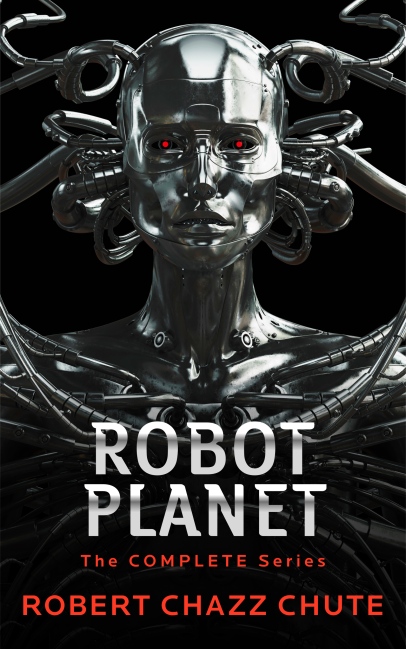
More lessons to help you survive Armageddon

"You will laugh your ass off!" ~ Maxwell Cynn, author of Cybergrrl

Available now!

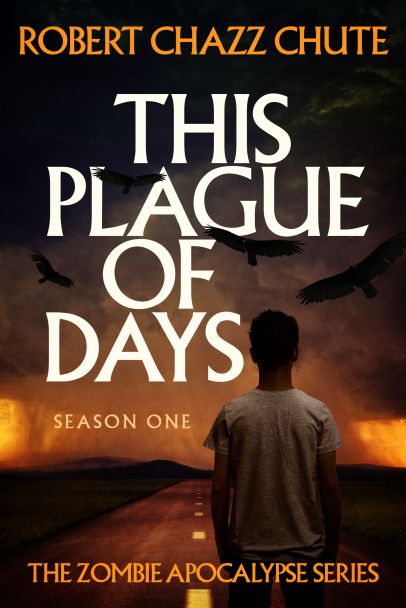
Fast-paced terror, new threats, more twists.

An autistic boy versus our world in free fall

Suspense to melt your face and play with your brain.

Action like a Guy Ritchie film. Funny like Woody Allen when he was funny.

Jesus: Sexier and even more addicted to love.

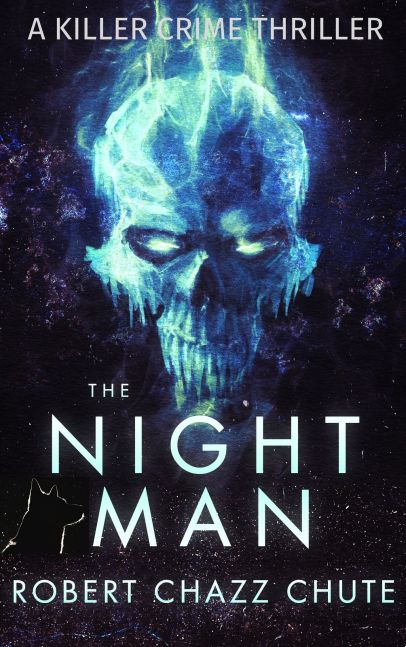
You can pick this ebook up for free today at this link: http://bit.ly/TheNightMan

Join my inner circle at AllThatChazz.com

See my books, blogs, links and podcasts.

Enter your email address to follow this blog and receive notifications of new posts by email.

Join 2,063 other subscribers