C h a z z W r i t e s . c o m

See all my books at AllThatChazz.com.

Video book reviews, secrets and policies


LMB stars

LMB stars (Photo credit: Wikipedia)


Recently I posted a video review on Amazon. If you can do it to help a book, I recommend it. Novelty gets attention (even with my ugly mug.) Since posting the video review, more authors have contacted me to read and review their books. My TBR pile is taller than I am and my kindle is just about full, so it’s not easy to get to it all (nor even physically possible.) That’s not a complaint. I’m excited at the possibility of discovering a book that pulls me in and makes me think or laugh. I prefer both. I love books. Of course I want to read everything. Since I can’t and now that I’m getting more of these requests, herein lie the secrets that make me want to review your book favorably:


1. I have writing deadlines for my own books and I have a lot to read, so please be patient. I don’t guarantee when I’ll get to it. As you’ll see, I might never get to it, but you’ll prefer my reasoning for not reviewing your book.


2. I don’t give one, two or even three-star reviews. Somebody reading this just threw up their hands or their lunch, but bear with me. This goes beyond the fact that I find most one-star reviews mean-spirited, often nonsensical, sometimes borderline illiterate and they usually treat writers of bad books like their crime is genocide. Even though they probably got it free or for less change than sits under their couch cushions, you won’t find much forgiveness, wit or transcendence in most one-stars.


But it’s not just that I couldn’t bring myself to do that to another writer unless the title actually is Mein Kampf. It’s simpler than all that. If a book is not to my taste, I don’t finish it and I don’t review what I haven’t read. Life is too short and reading something that’s not for me takes too much time. Pointing out good books is more of a service to readers, and a better use of our time, than warning people away from books we don’t care for.


Reviews that are dire warnings are kind of like taking the time to tell me what’s awful on the menu when I’m hungry and anxious to order. I want to hear about your few extra-delicious recommendations and get on with the dining experience, not a litany of what the cook screws up. Or have you ever tried to schedule an appointment with somebody who only tells you when they can’t make it? I want to kill those people. (Okay, I admit it. I have killed those people.)


On a related note: Books that aren’t to my liking will be the best book someone else has ever read. Really. Go check on reviews of books you love on any popular site. See those books that whisked you off to magic realms and changed your life? Now see all those reviews warning you off them? Corollary: Try clicking on a book you despise. See all that five-star, hyperbolic love? Nope, they can’t all be friends and family. Families aren’t that big and writers don’t have friends. We have ex-friends we betrayed and cannibalized to put into our books. All those reviews you disagree with are simply people who are different from you. Weird, isn’t it? I mean, you’re awesome. Why doesn’t everyone want to be exactly like you? Inexplicable! I’ll ponder the problem. In the interim, let’s not take reviews too seriously then, shall we? 


3. If you gift me the copy on kindle to review, you get credit for the sale and it’s also easier for me to wirelessly download it. Easier is better. (Yes, I have Calibre but frankly, not a big fan.)


4. I’m primarily a suspense writer, so mostly I read non-fiction that feeds my other obsessions, mystery, thrillers and some horror. I’ve read a good sampling of many genres, but not everything is for everybody. I don’t and can’t read everything (at least until I get the time machine fixed or become immortal) so please don’t be upset that I must refuse to read your steampunk novel. Even though it’s great, but I haven’t read enough steampunk to create an informed review.


I enjoy William Goldman, Chuck Palahniuk, Thomas Harris, Mickey Spillane, Rex Stout, Lawrence Block, Cormac McCarthy and (swoon!) Elmore Leonard. I’m not into Wodehouse. I’ve probably read more romance than you (my first jobs in publishing were at Harlequin in the Canadian Gigolo Department) but that was for pay and I’ve had my fill of impossibly handsome, rich and capable heroes named Rollo seducing women who are, despite their age, curiously sexually innocent.


5. A four-star review is a compliment, too, and, with all the distrust of five-star reviews, a happy four-star review may be even more useful to you than a five-star. However, I also believe that all that distrust is now way overhyped. If I’m that high on your fiction, you’ll get a five-star review. Ratings should reflect the tone of the review. It’s weird and confusing when the review is full of superlatives but the rating doesn’t show that same enthusiasm, isn’t it? Also, to hold back on a five-star rating for credibility’s sake alone cheats the author and that would be gaming the system, too, wouldn’t it? No one’s talking about that. Some readers within the echo chamber are afraid they’ll get fooled by fraudulent reviews when they could be reading a sample to alleviate those unbearable terrors.


6. I’m nice. I’m acting as a reviewer, not an editor. The review is not about me and this is not a teaching opportunity. I do not scold or lecture authors.

Some bad review habits are egregious. I don’t do things like this: “I wish the story had gone in a different direction,”; “I would have done it differently,” (of course everyone would do it differently!); “Too much swearing!” (that’s usually the realism leaking out); “The level of sex bothered me” (unless it’s BDSM in a children’s book, someone else enjoyed it); tiny grammar niggles; minor factual quibbles; and, finally, rest assured that my world doesn’t collapse when I spot a few typos. I don’t count them in a review. I find that petty and off the mark.


Also fitting under this category, let’s walk through what I think is on the mark: Some readers worry that writers are too nice to other writers. Sometimes the opposite is true simply because writers read as writers. We’re not enjoying the flight and looking at the clouds. We’re thinking about the workings of the engines that bear us aloft and how that knocking we hear is going to make the plane crash into the ocean. That attitude can suck a lot of joy from the reading experience, as any enlightened first-year English Lit students will tell you. Most readers don’t read like that! They aren’t as stringent nor are they strident. Most people really just want a good story and that’s what I’m looking for when I read a book to review it.


7. What does bother me: Fiction that requires the characters act like idiots for the story to work (e.g. incompetent henchmen and goals too easily achieved); stories that don’t work within their worlds unless I’m an idiot; deus ex machina; not enough conflict and tension; fiction without non-fiction ideas (your grade eight teacher called them themes); and clichés that aren’t twisted. (A twisted cliché makes something new and unexpected out of something worn out and expected.) 


8. What I like: I enjoy snappy dialogue and a sense of humor if it suits what you’re trying to achieve. Often at least some levity is exactly what even the most sinister stuff needs to switch up the mood and avoid the drone of a monotone. Try to induce a range of emotion. Ups and downs make roller coasters.

For example, one of my WIPs is a dystopian novel about an autistic child in the middle of a plague that kills most people on earth. That doesn’t mean I don’t make some jokes. For a slightly better known example (ha!), The Dark Knight Rises, as good as it was at times, needed a little more of Joss Whedon’s lighter touch from The Avengers. DKR had elements of opera at its high points and long funeral lows. I prefer stories with more range.


I enjoy fiction that achieves what it set out to achieve. For instance, you won’t hear something silly from me, like a complaint that Abraham Lincoln, Vampire Hunter is “not historically accurate.” Yes, even a professional reviewer did that and, oh my Thor, if I have to explain why that’s upside down, please stop reading now and go watch Honey Boo Boo. Please!


9. I do not include spoilers. A good review doesn’t recount the plot and suck the joy of surprise and discovery out of the work for potential readers. I say what I liked and how I reacted to the characters and setting. I say how the story affected me emotionally or intellectually. I react to the experience of reading the book and what makes it interesting to me and unique. (Unique often doesn’t work, but when it works, swoon!)


10. Most reviews will be pretty short. A video review longer than a minute is not watched. If I review a book, I’m sharing my enthusiasm and yes, I’m unabashedly trying to sell your book to potential readers. I made it through the reading and reviewed it, so naturally I’m sharing and spreading the joy of your work with readers who enjoy your genre.


For me, reviews are about finding the like-minded. There are plenty of good and even great books out there. Let’s go find the good ones and focus our energies on spreading that good news. 


Filed under: publishing, , , , , , , , , , , , , , , , ,

Ultimate Blog Challenge: The Dumb Reviewer’s False Standard Failure

There’s a certain sort of critic who really bugs me. As much as I enjoy the Slate Culture Gabfestpodcast, there’s an issue

English: Salvador Dali with ocelot and cane.

English: Salvador Dali with ocelot and cane. (Photo credit: Wikipedia)

that crops up from time to time which itches like pink insulation on a sweaty naked body in a summer attic. It’s a response that tries to intellectualize the visceral and make a good thing into a bad thing. Here’s the quote that gives me headaches:

“We liked it, but should we like it?”

So much waste of tuition money is revealed in that reaction. It’s a response to art that tries to detour around the heart and isolate the brain. It’s a dishonest afterthought. It’s snooty and, in trying to sound intelligent, is stupid.

I enjoy the movie Roadhouse, for instance. By some people’s standards, I suppose I shouldn’t. However, turn it on and try not to get sucked in. It’s not in the “So bad, it’s good” category, though some movies overshoot the runway and actually manage that. Roadhouse is fun and ridiculous and has a lot of funny lines, mostly intended. It’s just so watchable. It’s a visceral reaction. Can’t I enjoy it without the self-appointed cultural elite’s disapproval?

Art that achieves what it set out to do and entertains its audience is good art.

So says me, anyway. I could list dozens of silly movies and books that demanded little of me that I still enjoyed. The latest victim of this critical chaos appears to be Abe Lincoln, Vampire Hunter.  I just read fellow blogger Jordanna East’s takedown of a bad review here. She’s not the only one to point out misguided reviewers complaining about historical inaccuracy in the movie. Good critics go to action movies with the expectation that it’s not meant to be a historical document. If it’s not a French movie in an art cinema, do not review it as if all movies are French movies in art cinemas!

That said, I’m all for elevating material. It’s a treat to run across sparkling dialogue that mocks expectations. (See the movie The Guard with Don Cheadle, for the best of that phenomenon in movies.) In my book, Bigger Than Jesus, I set out to challenge expectations, too, and not just in terms of plotting and surprises and reversals. I’m talking about getting at real emotion. There are consequences spread amongst all those jokes. The heroine’s fascination with the life of Salvador Dali means something to her, to the story and ultimately to the reader. I set out to make my roller coaster travel through unexpected places without slowing the pace. Elevating material can be done. It doesn’t have to happen all the time for everything, though.

Dalton’s reply to the big bad bouncer in Roadhouse serves equally well for bad reviewers. The bad guy turns up his nose and says, “I thought you’d be taller. You don’t look like much t’me.”

Patrick Swayze, as Dalton, smiles wide and says, “Opinions vary!”

Then bop ’em in the nose if you want to.

~ Like my flavor? Listen to the first chapter of my crime thriller, Bigger Than Jesus. I’m podcasting the book through the summer. Enjoy! (Or be a hero and just click the cover to grab it. Thanks for reading!)

Get Bigger Than Jesus

Filed under: publishing, , , , , , , , , , , , , , , , ,

Why Authors Should ALWAYS Respond To Negative Reviews | Digital Book World

See on Scoop.itWriting and reading fiction

At Digital Book World, Elle Lothlorien lays the foundation for her argument that authors should respond to bad reviews as other businesses do, in an attempt to rectify a bad customer experience. This is a very interesting blog post for a number of reasons, and you may find the comment thread even more compelling. You may even find it disturbing. The post appeals to my affinity for the contrarian viewpoint, but it was the comment thread that had me thinking, “Whoa! Whoa! Whoa! Slow down! Save this level of vitriol and nuclear response for really serious problems, like family reunions!”

This is just Part 1 of her argument and that’s where the disturbing subtext emerges in the comment thread. Some commenters rise up, prematurely, I think, to condemn Lothlorien’s advice before she’s given a chance to lay out her strategy. They attribute motivations and actions to the author and reviewers before she’s had a chance to show what steps she takes and recommends. Condemnation before full presentation sounds like a trait you don’t want in a book reviewer.

Since the reaction in some cases (in the comment thread) is very defensive so far, I’ll be very interested to see how Lothlorien defuses her critics, one of whom goes so far as to threaten her with a bad review now that the author has dared to express an opinion. Wow. It’s ironic that Lothlorien is accused of intimidating reviewers to bump up the stars in her reviews in the same thread. Are we so cynical we can’t imagine that a listening ear and being nice might actually change a reviewer’s perspective? Are all opinions set in granite? Some objectors to the article assume their initial reaction is the best and purest one. Maybe not.

I don’t respond to negative reviews because I have accepted dogma (yes, I’m saying I haven’t really thought about it past “Don’t do it!”) and I’ve seen where it goes awry. As soon as I read the headline, I thought of The Greek Seaman debacle, which Lothlorien even mentions as an example of how not to do what she’s recommending. I have to concede that Lothlorien makes some good points.

“Anecdotal evidence!” someone cried. Well, what other evidence might there be? No one is studying this problem wearing a lab coat and clicking on a calculator. That said, I’m not (yet?) convinced responding to bad reviews is ever a good idea. I am willing to hear her out and in the meantime, I’ll reserve judgment until the follow-up installments.

Even if by some miracle of business pschology she manages to convince me otherwise, I’m sure it’s something I’ll never want to do. No one wants to be on the wrong end of the 1-800 line dealing with complaints, though as Lothlorien would point out, that is what businesses do.

There’s a fundamental question about ourselves that bubbles up through the cracks in the subtext: Do we have to get so angry about this stuff? We can change, can’t we? Flexibility in mind doesn’t necessarily equate to flip flopping. Mental agility means intelligence. I’m scared Lothlorien might be right and I hope she’s not. If I end up thinking she’s right, though, I won’t be mad at her. Click the link below for the article and read on.

See on www.digitalbookworld.com

UPDATE:

Today’s podcast, The Unintended Consequences Edition, covers this issue, as well, in case your prefer your commentary in audio.

Filed under: publishing, , , , , , ,

Who reviews the reviewers? You could.

The second generation Amazon Kindle, showing t...

The second generation Amazon Kindle, showing the book Alice's Adventures in Wonderland (Photo credit: Wikipedia)

Maybe we need to make a concerted effort to review some reviewers so they’ll either change, cheer up or shut up. Allow me to explain before you give this blog post a one-star review.

I’m in the home stretch in completing my crime novel and after a hard day sweating over a hot keyboard, I dip into my Kindle to unwind. As I search for new books to load up on, I find myself drawn to scan Amazon reviews. The sad truth is, I haven’t been reading the five-star or four-star reviews much. I’ve been clicking on the one-star reviews and reading with horror.

There are several reasons for my self-abusive behavior: 

1. I’m looking for mistakes to avoid. Not all one-star reviews are wrong and I’m trying to glean the honest from the brutally honest. Some books are plain bad.

2. Cranky people can be funny sometimes. Sometimes on purpose. Just as villains can be more interesting to write than heroes, a bad review is often more interesting than a positive one…at least to write, possibly to read and, as far as achieving the purpose reviews are meant for? We’ll get to that in a moment. Hang in for the punch.

3. Five-star reviews tend to sound alike while the one-stars should be more interesting. This is the Anna Karenina/book review version of “Happy families are all alike; every unhappy family is unhappy in its own way.”

Generally, reading one-star reviews has proved a mistake because either it’s depressing or annoying. I should probably quit reading them. Or, we could review the reviewers in the hope they might improve just as they supposedly do for our betterment. That is the purpose, isn’t it? Or is it?

Hm. We’re writers. We should be able to do a better job than many reviewers at reviewing. Shouldn’t we?

With regard to point 1: The one-star reviewers often haven’t finished much of the book they’re reading and their criticisms are often inarticulate, too harsh or too vague. “Yuck” doesn’t inform anyone of anything except the reviewer might be a dim seven-year-old with a limited vocabulary and access to their parents’ Amazon account.

As far as point 2 goes, the hate comes through, but there’s not often a lot of creativity in the funny department. The problem is that too brutal a review isn’t a message conveyance system. It’s just a knife slashing from out of the darkness wielded by a bitter, blind assailant. Some reviewers offer such consistent patterns of hatred, I suspect they don’t enjoy reading but reviews are an outlet for problems that are traditionally worked out on a couch with the aid of powerful psychopharmaceuticals.

As for point 3: I was wrong and Anna Karenina was wrong. The hate sounds more alike than the all-out loving reviews. People love different aspects of a book but they repeat the same stuff that bothers them, often within the same one-paragraph review.

The Internet is mean because it’s anonymous. Some people mistake mean for being intelligent or funny. Nah, it’s often just mean and dumb. We keep hearing the rule “Don’t say anything on the Internet you wouldn’t say within bitch slapping distance.” It’s good advice crazy people don’t take.

Recently one of my books, Self-help for Stoners, got its first three-star review. (The others were four and five stars and wow did those make me happy!) The reviewer who gave that book three stars wasn’t in love with the drug use aspect of the book. Instead, he winced and I don’t think he meant metaphorically. I’m always intrigued how people react to that book because some have told me it’s anti-drug (Get off your ass, stoner!) and most assume it’s pro (What a wonderful world it could be. [insert trill of violins rising here] ) When people ask me straight out, I say it’s anti-censorship and pro-freedom but mostly it’s stories of suspense that challenge readers to draw their own conclusions.

Though it was a three-star review, the reviewer found a lot to love and respected the work enough to give it very thoughtful consideration that I appreciated. It was largely complimentary despite the aspects he disapproved of. That’s pretty decent and open-minded of him, don’t you think? Lots of people have three settings: love, hate and apathy. The mark of a good book review is an appreciation for nuance. Would I prefer unmitigated bouquets and cyber kisses? Of course, but it was still a good review from him and a good review for me. (In retrospect, I wish I’d sent him Sex, Death & Mind Control. He probably would have enjoyed that book more. The style has similarities and the subject matter is still suspenseful fun but there’s nothing there that could be considered advice.)

Which brings us back to those hateful one-star reviews. You know those little boxes that say: x number of y customers found this review helpful? Yes? No? I’ve been clicking “No” a lot lately. Too many of them are just too mean or uninformative or uninformed. If you think a review breaks the bitch-slapping guideline, click No. (Or click Yes if it was disapproving but helpful, funny, clever, civil or anything non-hateful and crazy.)

Suggestions:

If you only gave the book five minutes or a few pages, you aren’t qualified to review it. Move on. (I don’t know how much of a book you have to read before you’re qualified to review it. 50%? 75% 100% including the ISBN? Hence the Question of the Day at the bottom of this post.)

If you couldn’t wait to delete it because it’s somehow digitally sullying your Kindle, okay, but very often these folks are really mad at a book that was free. I’m not suggesting a free book should be bad. I’m saying, let’s keep our rage in check and our world in perspective. You tried something and it cost you nothing but time and you didn’t really give it much of that, did you? I don’t waste time finishing a book that I don’t like. There are too many good books out there and life is too short to get all OCD with, “But I got it so I’m committed to this living hell now!” C’mon. Let it go.

Please read a sample before you buy: “I thought by the title that it would be a summer romance and it turned out to be borderline porn about a war between foot-fetishistic elves and fairy vampires! I’m pissed!” We are all the star of our own movie, but just because you hated it doesn’t mean the extras milling around at the back of your set wouldn’t enjoy it. Leave it for those foot-loving peons and weirdos. Stars should be gracious with the supporting cast.

Nastiness is forever, so please check yourself before you wreck somebody else. An ill-intentioned review could  have real-world consequences. At best, you could dissuade someone from something that they could enjoy or maybe even love though you didn’t. At worst, you’re the one taking money away from some poor sod whose only crime is using too many adverbs. Ease up on the stick and don’t overshoot the runway.

What’s your motivation behind a bad review? A friend of mine has mentioned that once his book hit high rankings on Amazon, the nasty reviewers boiled out of the woodwork as if to make a point of taking him down a peg or two for having the audacity to do something that pleased a lot of other, happier people. Another author got a nasty review on her book which she suspected was payback from a writer who had asked for an honest critique and got one she didn’t like. (Warning to the petty and petulant: You don’t get help or even civility in the future if the word gets around that you’re a nit. This is the Internet. Word will get around.)

When you make a big deal about the book being a sub-standard work from an indie press, you’re smearing all hard-working, low-resource indies and dreamers with the same acid-tipped brush who are providing some grateful people with very inexpensive information and entertainment. That’s an ad hominem argument which is Latin for “Shut the $#@! up.”

Are you counting typos as you read? I recently mentioned a reviewer who said he liked a book but started off his review with the fact that he found five typos. If you can’t handle a book with five typos over 250 pages, we have a tank lined with cotton waiting that will protect you from the world. You’re too fragile for earth’s atmosphere. Once again, ease up, man! Many of us (most?) are doing all we can to prevent typos and as much as it may annoy you to find a mistake in someone else’s work, it kills writers to find it in our own books. (You can read a traditionally published book with as many typos. Lots of people hate that argument, so let’s try this tac: You can have a traditionally published book  with (what you perceive) as no typos! Yay! You will, however, have to pay ten times more money for it. Deal? Deal.)

Authors: Please read the whole review and weigh it with due consideration. Just as we hope book reviewers will be civil, gentle and thoughtful and read enough to have a reasonably informed opinion, we should assess reviews individually before clicking that dismissive “No” button. Let’s not let our egos impair our journey to improvement. (If you figure out how to do this, please write me explaining how. I’ll do anything short of meditation, a word whose language root comes from a Latin phrase meaning “Boring as $#@!”

I do thank people for decent reviews. I don’t encourage anyone replying to a nasty review. We can legitimately use the “Was this review helpful?” buttons as they were intended without getting sucked into a black hole of bitterness. If you find yourself explaining why someone should love your book — my baby! my baby! — either you wrote something incomprehensible or they’re kind of dim. Either way, arguing is a waste of time. Use that time to instead write another (great!) book and accept that no one book is for everyone.

Try this: Take a book you love. Look up the best book you ever read! Read the reviews. See all those one-star reviews? Yeah, that’s what I mean.

Question of the Day: How much of a book do you read before you feel you can honestly review it? I welcome your (helpful) comments.

Filed under: publishing, , , , , , , ,

Top 20 Facebook Apps for Book Lovers – GalleyCat

Top 20 Facebook Apps for Book Lovers – GalleyCat.

Got a book you want to review, find, sell or promote? Your publicity list starts with this link. Supremely useful collection of apps for the author, publicist and book lover.

Filed under: authors, blogs & blogging, book reviews, Books, Publicity & Promotion, self-publishing, , , , , , , , ,

Writers: What is your genre? What do you read?

St. Augustine writing, revising, and re-writin...

Image via Wikipedia

Most of you are writers.

Please let me know the genre in which you write.

Also, what do you read?

Some writers avoid reading fiction from their own genre because they worry it will influence their own writing. I think there’s a difference between a good influence, a bad influence and plagiarism, so I read a lot within my genre (literary fiction and horror.) I also read widely outside my genre.

I usually have ten or so books going at one time. I either have an undiagnosed case of Attention Deficit Disorder or I’m easily bored. Oh, or maybe those two things are de facto the same thing. (I know I’ve hit a really good book when I don’t switch it out with another book. and slow down to savour it.)

I also have an extensive collection of reference books and how-to books on writing, social media and most aspects of publishing. Do you have a favourite book on writing or perhaps you reject the premise? What writing books do you love? Which could you (and the universe) do without?

I’d like to hear from you.

Please leave a comment and let me know your thoughts.

Thanks!

Filed under: book reviews, Writers, , , , , , , , , , , ,

Chosen Ones: Three Blog Contests

SCROLL DOWN FOR FRESH CONTENT OR CLICK MORE↓

TWO CONTESTS LEFT! DETAILS HERE TO WIN!

Read the rest of this entry »

Filed under: blogs & blogging, book reviews, publishing, writing contests, writing tips, , , , ,

Conflicting Writing Advice

I’m reading Thanks But This Isn’t for Us, a development editor’s (AKA The Angel of Death*) take on why your manuscript sucks. Her suggestions on openings to avoid are very useful.

When I was evaluating the slush pile, there were an inordinate number of manuscripts–all rejected–that began with somebody getting up in the morning, describing themselves in the mirror and making coffee. Second most common thing? Boarding an airplane for The Big Trip. It could work but I never saw it play well in those submissions.

Wrinkle: Now the fiction market is so tight, publishers aren’t just rejecting bad manuscripts. Now they’re turning down a lot of good stuff. There’s only so much money to publish so many books in any one budget year.

Back to Thanks…she advocates “beautiful language.” I wonder if she’s focussing on so-called literary fiction there. I just read two translations from European authors that were definitely literary, but the language was very plain and cut down, even minimalist. I don’t think there were more than two adjectives in either book. Meanwhile, I’ve read about two MFA programs, one eschewing “beautiful language” and the other praising only fiction that employs poetic language. (Maya Angelou thinks it’s not good writing unless it’s hard to read. I disagree.)

This is why you must write for yourself and find someone who appreciates it after the deed is done.

*Angel of Death…you know…maybe we need to ease back on the throttle on hyperbolic language around writing. Sure, you want it to be good, but it’s also just writing. Too often people talk about it like it’s a secret language that only a few geniuses can learn. Successful authors are very very persistent and very very lucky. Nobody talks about the luck involved in getting through the razor wire and fine mesh of some underpaid, otherwise unemployable editorial assistant’s capricious sensibilities. I think I can say that because I was that otherwise unemployable douche who turned your masterpiece down.

Filed under: book reviews, writing tips, ,

Make Your Life Literary

Books on writing abound and at a certain point, there’s a lot of overlap. I’ve bought so many that I’m beginning to recognize the reflex for what it is: procrastination disguised as education. My shelves are groaning for me to stop, but that’s just crazy talk. (As with all addicts, I say I can quit any time I want…just not now.)

However, Making a Literary Life by Carolyn See is different. This isn’t a day in the life of somebody camping out at the top of the New York Times bestseller list. This is somebody who teaches writing, applies for grants and has faced literary difficulty.She’s in the trenches. You’ll like her. You don’t have staff and neither does she.

There’s a lot of advice here you won’t see elsewhere. She’s a great advocate of building relationships with people in the business. You can protest and lament that it’s about who you know, or you can get out there with a campaign of “charming notes” to get to know people.

My favorite book on writing is Stephen King’s On Writing (if you haven’t got that already, you now have two books to go out and buy.) However, King’s a bit removed from the struggles of the mid-list from his perch up there in the stratosphere. See has a wry wit. She’s naked and vivisected on the buffet table so writers and would-be writers can learn from the exposed anatomy of her striving. She talks about mechanics and this insane and improbable business in an accessible way you’ll love. No wonder her charming notes worked.

The author makes an interesting argument for a non-query approach to editors. She’s also against authors buying their own books from their publisher at a discount to sell them. (That’s a pretty radical assertion in the current publishing climate where many authors are turning to their own resources to sell outside the box.)

Instead See suggests you buy your own books in bookstores, write off the expense and use the purchase to boost your tracked sales numbers while making the book a gift to bookstore staff. (I think she has a great point there. Authors doing a signing often make the mistake of thinking it’s about how many people show up to the event. It’s actually your chance to suck up to form an alliance with the bookstore staff so they’ll make an extra effort to sell for you into the future. Be nice to bookstore staff! Also, be nice generally.)

Sometimes I wasn’t sure if I agreed with her because it was brilliant advice or simply because she’s a bit of a contrarian and so am I. She lays out her publishing strategy and cheerfully acknowledges it hasn’t all been cherries and bouquets. It’s a realistic take on the literary life–several romantic moments and toasts with champagne flutes spread out amidst a lot of hard slogging.

And in what other writers’ guide are you going to find advice–and detailed advice at that–on the hows and whys of making the trip to New York to sell your work? Nowhere. Carolyn See balances the wry and practical in a book on writing unlike all the others.

I finished it the other night and I’m going to do something I never do. I’m going to read it again. The rest of the books on writing can wait.

Filed under: book reviews, Books, Writers,

Bestseller with over 1,000 reviews!
Winner of the North Street Book Prize, Reader's Favorite, the
Literary Titan Award, the Hollywood Book Festival, and the
New York Book Festival.

http://mybook.to/OurZombieHours
A NEW ZOMBIE ANTHOLOGY

Winner of Writer's Digest's 2014 Honorable Mention in Self-published Ebook Awards in Genre

The first 81 lessons to get your Buffy on

More lessons to help you survive Armageddon

"You will laugh your ass off!" ~ Maxwell Cynn, author of Cybergrrl

Available now!

Fast-paced terror, new threats, more twists.

An autistic boy versus our world in free fall

Suspense to melt your face and play with your brain.

Action like a Guy Ritchie film. Funny like Woody Allen when he was funny.

Jesus: Sexier and even more addicted to love.

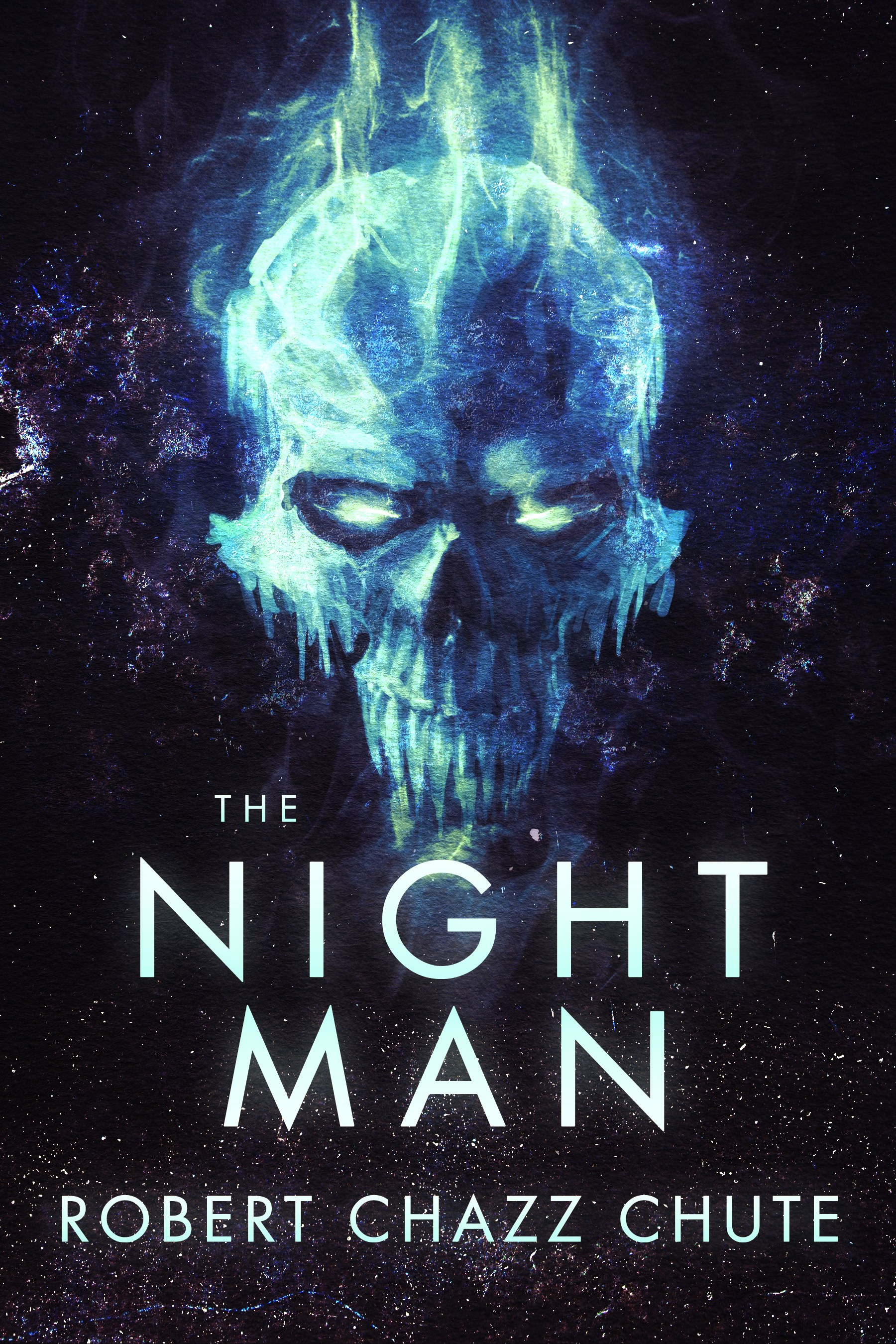
You can pick this ebook up for free today at this link: http://bit.ly/TheNightMan

Join my inner circle at AllThatChazz.com

See my books, blogs, links and podcasts.

Enter your email address to follow this blog and receive notifications of new posts by email.

Join 2,061 other subscribers