C h a z z W r i t e s . c o m

See all my books at AllThatChazz.com.

Support authors. Buy books.

FYI: I promised the big announcement today.

That post drops here

at 12:01 pm EST.

Now, to business:

Author Jeff Bennington from The Writing Bomb wrote a very helpful post for Chazz Writes comparing his publishing experience with Lightning Source vs CreateSpace. 

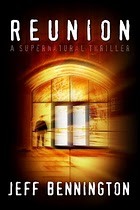
Besides helping self-publishers out with some great information, Jeff’s written a great book. The early reviews are very exciting, so I’m not just asking that you help out an author. I’m asking that you enjoy a good book.

http://www.amazon.ca/Reunion-Jeff-P-Bennington/dp/0615450865/ref=sr_1_1?ie=UTF8&qid=1302828982&sr=1-1Jeff is trying to climb high in Amazon‘s rankings today so readers can find his novel. Get in on the ground floor and help kickstart Jeff’s career. He’s encouraging fans and future fans to buy Reunion today. The novel has received great reviews, so why not? It’s not expensive.

Check out the awesome reviews and blurbs here.

Why not buy two? I will.

For this strategy to work best, it would be great if you bought the book today, April 15, if you please. It’s tax day in the States, so console yourself and forget about that horror by reading Jeff’s cool horror story.

Please support the arts and chill with a good book. Thank you.

UPDATE: Just bought two copies of Reunion.

Can’t wait!

Filed under: authors, book reviews, Books, publishing, Writers, , , , , , , , , , , , , , ,

Announcements and changes 1, 2, 3

First, author India (The Great) Drummond will be profiled right here in a few hours. She’s really nice, which I value immensely. And her book sounds interesting, so check her out and order some copies.

(Also, if you’re an author, you know I do author q&a profiles, right? Shoot me an email by clicking my happy pic above and we’ll chat about publicizing your book, too.)

Second, I have a big announcement coming this Friday. If you follow me on Twitter, you already know the broad strokes. If not, follow me on Twitter! Also, here’s a hint: I found a publisher for my novel. More to come on that but it’s all very exciting. Well, especially to me. Lots of new news unfolding over the coming year on the publishing front. You’re used to lots of links, opinion and non-fiction in this space. My fiction will be coming to the forefront in a big way soon(ish).

Third,  I’m changing the schedule of the blog starting next week. You’ll recall I switched to three posts a week (unless I saw something that caught my fancy and couldn’t wait.)

I’m still in the publishing/information/curation business here

and will continue to be.

However, I notice that my Friday post stats take a dip so next week I’ll be posting Mondays, Wednesdays and Thursdays. Apparently on Friday afternoons, y’all just want to get the hell away from your desks and out into the sunshine! I don’t blame you. Might add or switch in a Sunday post in the future depending on how the stats work. I’m watching how I hit you for optimum impact with minimum annoyance on your part.

The blog is growing faster now that I only post three times a week! What does that say about me? Either a little of me goes a long way or girls just hate it when you look desperate.

Have a great night! Or make it one.

Filed under: blogs & blogging, publishing, Useful writing links, Writers, , , , , , , ,

The publisher’s temperament

Last week a baby video went viral. Two little twin boys babbled at each other. Back andSelfpublishing forth they went with a lively conversation “Da! Da! Da! Da!” Though unintelligible, they both were excited to talk to each other. I couldn’t hep but think of the conversation that goes back and forth about whether you should publish, or self-publish. There’s a lot of energy but not a lot of signal getting through.

The answer to the question of whether you should self-publish depends on the “you”.

Are you prepared to think of yourself as more than a hobbyist? Are you intimidated by new and unknown practices so much that you’re frozen? Do you prefer that others take care of things for you without you hiring them? Do you have any financial cushion? Are you prepared to take a chance? What is your real tolerance for risk? What is your tolerance for some people underestimating your work’s worth because you went your own way. Are you open to learning what you don’t yet know and ready to be a beginner?

There are a plethora of other factors to consider,  but first and foremost, it’s about you. Some people just aren’t interested in entrepreneurship. That’s not a judgment. Starting a business is not for everyone. You have to have a lot of discipline and interest in things beyond simply writing a good book (and god knows there’s nothing simple about that.)

Ask yourself, do you really want to do this?

We’ll have better self-published books when more authors ask themselves this question first. Why? Because they won’t just be self-publishers and the negative things that currently implies. We’ll have more publishers who happen to be publishing themselves.

Filed under: DIY, getting it done, publishing, self-publishing, Writers, writing tips, , , , , , , ,

Createspace or Lightning Source: Pros & cons breakdown

Jeff_Bennington

Jeff Bennington

I’m trying to decide what company to go with to get my novel out. Smashwords grinds manuscripts into all e-book formats, of course, but what about the paper book issue? Createspace or Lightning Source? I recently asked some authors about their experience with companies that facilitate self-publishers. Some were satisfied with Createspace and others were fine with Lightning Source. Jeff Bennington, author of a paranormal thriller, Reunion as well as the blog The Writing Bomb,  hit me with a great, detailed reply. He has experience with both Createspace and Lightning Source. Rather than pushing me one way or another, he laid out the pros and cons as he sees it from his experience.

“Dude!” I said (because in my mind I’m still seventeen and it’s the ’80s.)  “This isn’t a mere reply to my question. This, sir, is a blog post. How about it?” He graciously said yes.  Here’s his breakdown:

Cons


At Lightning Source, starting an account is a bit cumbersome (much more paperwork than Createspace.) Once the paperwork was complete I had to get my cover just right, but Joleene Naylor, an independent cover artist, helped me do that with ease.
However, I’m not as happy with Lightning Source’s ink/cover quality as I am with Createspace. Lightning Source’s paper is much thinner than Createspace. (Same number of pages and Lightning Source is at least 1/4″ thinner. Very strange.)
The initial work to get a proof copy is somewhat exhausting and cost $39 (overnight, mandatory) for a proof every time!
I can get five proofs for $50 (overnight, not mandatory with Createspace).
I’ll use Createspace the next time if I discover that print copies just aren’t the thing for my books. I used them this time to get advanced reading copies (ARCs) out early. Createspace was fast and easy to work with but I was very limited on the back cover and spine art.
Expect 1 to 2 days for email return. But if you call..they answer.

Pros


The number one reason to use Lightning Source is the distribution: return availability and full industry discount (45-55%). That was enough for me because very few publishers for indies do that and if they say, as Createspace does, that they have full distribution, you better make doubly sure that the wholesale discount is 45+ and that you can have a return policy. Createspace  never told me that. I asked and they said, “We don’t make that decision.” I say “Bull^%$#!” Of course they do. They are the publisher.
With Lightning Source, you are definitely the publisher. I like that.
If you have a newer mac formatting is easy. Lightning Source will upload your sized PDF with no worries.
Once the book was uploaded and passed the tests, things moved rather quickly. Give yourself 2 months to get your account in process and book uploadedReunion
The best thing is you are assigned a customer rep—a real and a very nice and helpful person. My rep at Lightning Source is Carol Egan. She is wonderful!

Overall, I’m happy so far. I mostly want my print version to be available to local stores for signings (if I have one) and a lot of my friends and family want to buy it at a store. I can’t do that with most other self-pub outlets. Lightning Source is the real thing. Great for a small press…like me!


Right about now you’re bubbling over with gratitude for Jeff”s insights. Act on it and check out his book. Reunion just launched and the reviews on Amazon are very good. Plus, you need to own it for research purposes. (See what you think of the binding etc.,…) Buy Reunion.


Filed under: author Q&A, authors, Books, DIY, ebooks, publishing, Writers, writing tips, , , , , , , , , , ,

Writers: Chazz Law versus Masnick’s Law

A cropped photograph depicts singer Elvis Pres...

Image via Wikipedia

Thanks for all the nice feedback and e-mails about Monday’s blog post on Amanda Hocking. There was so much, in fact, that I need to do a follow-up about the mistakes we make when we compare our potential for success with another’s. Some people see another author’s success as a door slamming shut on their own noses. These are people who believe Masnick’s Law (which comes from the music industry.) The idea is that only a certain band at a certain time had certain advantages that can’t be replicated. They came along at the right time or had just the right choice of sound, or the moon was in alignment with the stars etc.,….

In other words, if they make it, you won’t.

Wussies.

You might make it in a different way (Elvis ≠The Beatles) but if you have a great book, success can be yours. Amanda Hocking isn’t stopping you from succeeding. Not writing your book is keeping you from succeeding. (Not revising or hiring an editor, too.) Hocking took a machete and cut a path into the jungle. JA Konrath, Barry Eisler and many other authors who went the self-published way are forging ahead. When you see others succeed, take it as inspiration. Masnick’s Law isn’t a law. It’s a self-defeating fallacy.

CHAZZ LAW:

Art inspires more art.

Read it.

Rock it.

Roll it out.

(And don’t be a wuss.)

Filed under: authors, Books, DIY, ebooks, Editing, Editors, getting it done, links, publishing, Rant, Rejection, self-publishing, Writers, writing tips, , , , , , , , , , , ,

The Amanda Hocking Effect: She didn’t sell out. Trad publishing bought in.

Amazon Kindle e-book reader being held by my g...

Image via Wikipedia

Successful e-book author Amanda Hocking has signed a six-figure deal with a traditional publisher, St. Martin’s Press. No sooner was it announced,  some haters emerged in website comments sections. I’m pleased to say that most people were happy for Ms. Hocking—as they should be—but of course there were some trolls, one of whom said she was a sell-out and a traitor to the digital revolution’s cause.

The haters are wrong about that and here’s why: Ms. Hocking got to be a big-time author because of e-books, but she never signed up to lead a revolution. She just signed up to get readers for her books. Good for her! The traditional publishing model is useful to big-time authors and due to her solitary efforts, she is a big-time author. The larger issue is that publishing often falls down when the author’s success does not qualify as stellar.

I don’t see that this deal speaks to the limits of self-publishing at all. The deal must have been sweet because, as I pointed out not more than a week or so ago, with her 70% cut through Amazon, publishers would have to back up a truck full of money and provide an army of logistical support to justify any deal with that author. St. Martin’s is one of the few publishers big enough to provide that scale of mucho macho mojo. Hocking tried to get published the traditional way first and mainstream publishing turned her down. She proved herself worthy doing it her way. Now she can focus more on writing and less on the business side of publishing. Writers love to write first, and most of us only become entrepreneurs by necessity and circumstance.

Look deeper into the implications of this deal. Amanda Hocking didn’t sell out. Traditional publishing did. Hemorrhaging money fuel due to Wall Street’s global economic destruction spree, publishers cut back on editors and squeezed the mid-list authors. They failed to adapt to the changing digital environment to preserve the old media model as long as possible.  Many of those mid-list authors got squeezed right into self-publishing. For those with some experience and an entrepreneurial bent, the water over in digital publishing can be nice and warm.

Another author, Barry Eisler, recently walked away from a $500,000 deal because he decided he could make more on his own. Also, good for him. One of the joys of self-publishing is maintaining control and choice. Whether you choose to stay outside trad publishing or sign a contract, you’re making the best choices for you.

Amanda Hocking didn’t sell out. She made traditional publishing buy in.

(And she’s consistently more gracious about it than I would be. )


Filed under: authors, Books, DIY, ebooks, publishing, Rejection, Useful writing links, Writers, , , , , , , , , , ,

Editing Part III: The joy of editing

The Chicago Manual of Style, 16th edition, 3rd...

I just received the gift of a book in the mail. I had already read this book but I was very pleased to receive it. In fact, I’d gone through this particular book in meticulous detail. The author signed the title page for me and graciously thanked me for my advice. The book in hand was a bonus for editing the work.

Editing is such picky work. I zip into and out of the on-line Chicago Manual of Style a lot. I tweak here and economize there. No matter the level of the edit, the key to good editing is asking the right questions.

Here’s a sample of the sorts of questions that run through my mind as I work:

Should that be 18th Century or Eighteenth century? Should I leave a quirky passage alone to keep the author’s voice or is the joke too much of a reach? Should I suggest new elements? Does the material make more sense if it is reorganized? Does this follow logically from that? Is that assertion a fact? Is that translation correct? What design elements could I suggest to make the book pop? What elements could I suggest that would convert a browser into a buyer? Is there an opportunity missed here? What marketing strategy could I suggest to make this a book with real long-tail potential? What’s missing? (That last one can take the work to a new level.)

In short, a good editor or proofreader will question everything.

An experienced editor will pick up on what’s on the page and what’s not there that’s hurting the book.

In the end, I let it go back to the author to decide which of my suggestions to act upon. When it’s done, the author’s name is on the front cover. I always say some variation of: “She’s still your baby. She’s healthy and you’ll recognize her. She wasn’t sick but she’s feeling even better now.” The reader will never know how much or how little I did. The job is to make the author look good. (And sell more books.)

And you know what? It’s fun. I’m not gleeful about it in the way I know some editors are. When I was in journalism school and when I worked for a daily newspaper, I ran into editors who were looking for stuff so they could catch you out. It was a game for them and they acted like it was the only way they could find to feel good about themselves. When they caught something—anything—writers got snarky remarks and not just a little passive aggressive indignation. Editors like that are sad and make me tired.

I find editing fun because it’s an intellectual challenge and the collaborative process makes the book better than it otherwise would have been. Higher quality editorial work translates to more authority to the author, more sales for the current book and more sales for the author’s next book. A helpful edit can morph an experiment that didn’t quite come together into a legacy book that will delight, distract, elevate, educate, provoke, redeem and earn for years to come.

A good edit will pay for itself.

And generally? No, an unedited book doesn’t stand a chance.

Filed under: authors, Books, ebooks, Editing, Editors, grammar, publishing, self-publishing, Writers, writing tips, , , , , , , , , , , , , ,

Publishing numbers & Atwood on us

Author Margaret Atwood attends a reading at Ed...

Image via Wikipedia

Want a freak out? Here are some US publishing numbers on top distribution channels, most important factors in book purchases, top five book formats etc.,….

And Margaret Atwood on the changes in publishing. (I don’t agree with everything she says here, but much of it’s on track.)

What don’t I agree with? I’m not an anchovy. I’m Dr. David Banner (geek test!)

Filed under: authors, Books, publishing, , , , ,

Writers: How I edit

Visualization of the various routes through a ...

Image via Wikipedia

When I get a manuscript, I go through it carefully, of course, but there are many practicalities to keep in mind.


Most important commandment:

Make the author look good.

You want it to be correct and you want to preserve the writer’s voice and enhance the readability of the text. The author (if self-published) may wish to keep some idiosyncratic format (which is fine as long as it’s easily understood by the reader and consistent.) A publisher may have some requirements peculiar to that house. Some have preferred style guides, like the AP Style Guide or the Chicago Manual of Style or may prefer Canadian spelling to American spelling.

In the manuscript window I use the Track Changes feature in Word so the author sees every change I make, including my comments. The author then accepts or rejects each edit during the revision process.

I have some preferences, too. I avoid passive voice and too many adverbs where it’s reasonable to do so since those often indicate a weak verb choice. I strip out excess use of the comma. Commas used to be used more in text but now it’s generally accepted commas slow the reader. Semi-colons are used too much and are often used incorrectly (and almost always slow the reader.)  Gratuitous exclamation points indicate drama where there is none. Excess dialogue tags (i.e. said, replied, said, replied) can also be stripped out. Run-on sentences must be broken up. Sentence length, paragraph length and order are more evaluations to make and may conflict with formatting considerations.

(There are numerous other considerations: factual issues, narrative arc, missed opportunities, missing scenes, orphaned characters etc.,… which I’m not going to delve into in this post.)

I also have a bunch of other pages ready in the background. They are typically these:

Google, Wikipedia, Canadian and American spelling dictionaries, Chicago Manual of Style (I have the hard copy, too), Ask.com, and my email window so I can quickly jump to query the author or publisher as necessary. I’ve also used a legal dictionary and a Spanish-English dictionary. Looks like I’ve attained my childhood dream of working on the bridge of the Enterprise.

I keep a legal pad beside me to make notes (and track my time so I know I’m staying on schedule for the day.)

Editing has changed a lot. Before the Internet, there was a lot more getting up and down to run to check a reference source. Now it’s all on my pixellated desktop. I take a break every hour to do air squats (it’s a 4 Hour Body exercise I like) and the rest of the exercise comes from running back and forth from the coffee maker to the bathroom. Ah, the glamor of being a book editor.

The take away is:

Your word processing program’s spell check isn’t enough.


NEXT POST:

MY REACTIONS TO AND REVIEWS OF THE WRITER’S UNION SYMPOSIUM ON THE STATE OF PUBLISHING.

Related Articles

Filed under: Books, Editing, Editors, publishing, self-publishing, Writers, writing tips, , , , , , , , , , ,

Writers: Self-publishing resources

Yesterday I wrote about a scenario that appealed to many people. After an encounter with her agent that doesn’t go well, a writer achieves the critical mass necessary for her to go indie.

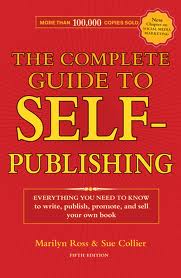
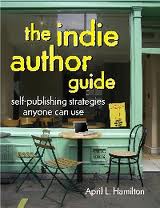
Whether that route is for you depends on many variables. Self-publishing is definitely not for everyone. If you’re wondering if self-publishing is for you, here are a few books to get you started so you know what you’re getting into:

self-publishing_manual

the_complete_guide_to_self-publishing

 the_indie_author_guide

Filed under: authors, Books, self-publishing, Writers, writing tips, , , , , , , , , , , , ,

Bestseller with over 1,000 reviews!
Winner of the North Street Book Prize, Reader's Favorite, the
Literary Titan Award, the Hollywood Book Festival, and the
New York Book Festival.

http://mybook.to/OurZombieHours
A NEW ZOMBIE ANTHOLOGY

Winner of Writer's Digest's 2014 Honorable Mention in Self-published Ebook Awards in Genre

The first 81 lessons to get your Buffy on

More lessons to help you survive Armageddon

"You will laugh your ass off!" ~ Maxwell Cynn, author of Cybergrrl

Available now!

Fast-paced terror, new threats, more twists.

An autistic boy versus our world in free fall

Suspense to melt your face and play with your brain.

Action like a Guy Ritchie film. Funny like Woody Allen when he was funny.

Jesus: Sexier and even more addicted to love.

You can pick this ebook up for free today at this link: http://bit.ly/TheNightMan

Join my inner circle at AllThatChazz.com

See my books, blogs, links and podcasts.

Enter your email address to follow this blog and receive notifications of new posts by email.

Join 2,063 other subscribers