C h a z z W r i t e s . c o m

See all my books at AllThatChazz.com.

Ultimate Blog Challenge: Considering free ebooks

July 16, 17, 18

The Dangerous Kind & Other Stories is FREE 

FREE FOR 3 DAYS.
Small-town terrors and psychological mayhem in Maine.

Last week I read a couple of debates about whether free is good or bad. JA Konrath is all for it. Blake Crouch isn’t so sure. There are good points on both sides of the debate. You’ll notice I’m offering one of my short story collections for free for three days this week in the hope that I will gain some readers who wouldn’t otherwise find me. I do so wholeheartedly and hope you’ll go grab it. It helps to get on lists like “Customers Also Viewed…” and so on. This post is about book promotion. I think Free is still a useful tool, though its edge has dulled considerably.

The root of the back and forth on the issue of using free as a promotional tool seems to break down along two main lines:

1. Argument against free from principle (i.e. Art shouldn’t be devalued and lowering readers’ expectations of price is a stupid strategy in the long term.) Argument 1 might be right in the long-term, but if I don’t get into your consciousness now, there may be no long-term for me as a writer. Also, the exclusivity that KDP Select requires — three months at a time — rubs many authors raw. Amazon has certainly lost some of its shine and if you lose too many sales because you aren’t up on Kobo etc.,… as well, free days on Amazon probably don’t make sense past your first three months of offering the book. It’s also argued, often effectively, that free feeds the trolls of the one-star review brigade who review harshly because they didn’t pay attention to what they were “buying.” Or they’re just it in to be mean trolls, I guess. So you can argue that free hurts not only the cause of enlightened literacy generally, but it hurts author’s feelings and review ratings individually.

2. Argument for free because it works (i.e. If you can write, you can sell books, but not if no one knows who you are. Give away to get new readers.) Argument 2 is weakened because, since Amazon changed its algorithms, free doesn’t work nearly as well as it did a few months ago. People are loading up their kindles, but are they ever getting around to reading all that hoarded goodness so they could, theoretically, become a fan and buy the rest of my books? (If you don’t have multiple books for sale, free surely won’t help you now. Have multiple books going before you dive into KDP Select’s free days.)

So here’s my strategy:

A. I try not to confuse an Ought with an Is. The Dangerous Kind & Other Stories is a collection of fun suspense and small-town mayhem in Poeticule Bay, Maine. In the future, I plan a series of suspenseful novels set in Poeticule Bay. Many of my stories have characters who cross-pollinate other stories. (For instance, Jesus Diaz, my luckless Cuban hit man, shows up first in a story in Self-help for Stoners.) There is worthy cross-promotion in this.

B. I added value to this collection. The novella, The Dangerous Kind and several of the stories were previously published individually and sold for 99 cents each. I added two more stories to the collection, including the award winner The Sum of Me (which brought down the house when I gave a reading at a writers conference a few years ago.) The Sum of Me appeals to writers or anyone who has struggled with credit card debt. The usual price of the collection is only $2.99 and for three days, it’s free. Good deal.

C. What I put up on Amazon for free will only be available for a limited time. After my three-month exclusivity contract with KDP Select is over, I’ll put the books up on the other platforms. (As mentioned last week on this blog, Kobo, as one instance, is changing things up and coming on stronger. Keep an eye on them.)

Questions remain: When I read a guru with a big name say we should do this or that to sell our books, I wonder, does the same strategy work for a big name as a small one? Is every bit of advice fungible? Things change. If we were still on Amazon’s old Free List to Paid List formula (and maybe if we weren’t in the middle of a glut of free) I’d already be sitting pretty.

Good strategies are realistic, doable, measurable, timely (and are always declared “good” after the fact and without factoring in luck.) I’ll let you know if this strategy moves the needle.

Free might not be as good as it once was,

but now I don’t know what else to do to get off the bench besides write another book.

I’m already doing that.

PLEASE GRAB THE DANGEROUS KIND & OTHER STORIES HERE

Filed under: publishing, , , , , , , , , , , , , , , , , ,

UBC #15: What’s missing from this thriller’s back matter?

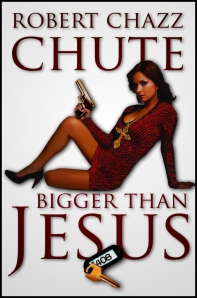
Something is missing from the following back matter from Bigger Than Jesus.

Pop quiz, hotshot! What’s missing?

About the Author

After several years working in the publishing industry, I took a long hiatus and then founded Ex Parte Press. I was a journalist and magazine columnist and now write in a lead-lined bunker full-time. I’m happily chained to my writing desk by an intravenous line feeding me espresso. My desk chair is a toilet and I’m writing as fast and as well as I can.
Thank you so much for reading Bigger Than Jesus. If you liked it, it will help Jesus Diaz and me immensely if you could please leave a happy review on Goodreads or Amazon or wherever you bought this book. Watch for the next instalment in this series: Higher Than Jesus, coming soon. Five books are planned for this series so far. If you’d like to get a glimpse of Jesus as a mature, more professional, hit man, you can find the story that started his character in my collection of short stories, Self-help for Stoners. You’ll find he’s more polished, but things still go awry. All the latest updates about my books can be found at AllThatChazz.com.

After this note I have a list of my other titles and notes on how to contact me through my websites, email, media inquiries and a note about my podcast and Twitter.

Steady…ready…go!

Here’s my answer about what’s missing:

In its current incarnation, I haven’t loaded up the first chapter of the follow-up book in The Hit Man Series.

Click to get Bigger Than Jesus

It’s written and I should include it. People like a sneak peek and, after spending so much time with my clever, funny and scarred protagonist, they will probably want to get a hint at where Jesus Diaz goes next. I think I really need to include a chapter from Higher Than Jesus. His story continues in unexpected ways, means and places in a plot that includes Neo-nazis, a street gang, drugs, arms, a very tall blonde and a plot to assassinate the President of the United States.

Fortunately, since I can upload at any time, it’s never too late for an afterthought, an improvement or a tweak.

Next question:

What else do you want to see in the back matter of a book you’ve enjoyed?

Related articles

Filed under: publishing, , , , , , , , , , , , , , , , , , , ,

Ultimate Blog Challenge: Top 10 Things I know I don’t know (yet)

THINGS I DON’T KNOW INCLUDE:

1. How to push my stats for my author site (AllThatChazz.com) as high as this writing blog (though spillover should be inevitable.

English: John Leguizamo at the 2007 Toronto In...

English: John Leguizamo at the 2007 Toronto International Film Festival. (Photo credit: Wikipedia)

Or should it? Not so far.)

2. How to get more attention to my podcast (though numbers have gone up since I started reading Bigger Than Jesus a chapter at a time.)

3. Have I put off more readers than I’ve gained with my strange titles?

4. Should I have pushed the title of Self-help for Stoners harder when I met Kevin Smith in a video simulcast, or would that have made me look like a douche?

5. If I’d started writing books seriously twenty years ago, would I be happier now, or trapped in contracts I’d hate?

6. Did John Leguizamo ever read the blog post about casting him in the movie of Bigger Than Jesus? Probably not, but we all go ego surfing from time to time, don’t we?

7. Will I ever get Scrivener to work the way it says it works when I format my books? So far I just play with it until I get incrementally better but so far it’s more like stabbing a keyboard in the dark than arriving at solutions logically.

8. Will Amazon look at the numbers and switch their algorithm back to the way it was in December so giving away a ton of books means something useful in selling books on the paid side? (When an Amazon fan like Joe Konrath says, okay, I’m out of KDP Select until they change terms, we should all take notice.)

9. Will my books take off before I run out of money completely? I am in a race. (I just got some help with this and things might be looking up if a strategy I’m working on takes off. More on that later.)

Get Bigger Than Jesus

10. I don’t know if my gamble/mid-life crisis will pay off. I do know I’m glad I pulled the trigger. I’ll find out. It’s better than not ever knowing and looking back in regret at what might have been.

(UBC #14)

Filed under: publishing, , , , , , , , , , ,

Ultimate Blog Challenge: I am an artist, not a beggar

A forum post out of the cyber-ether really irritated me,

and not just because the person who posted was biased against self-publishing.

She was horribly misinformed and self-centered.

Her complaint is about “all these self-published authors begging for likes on their Facebook pages” and that apparently angered her by…okay, I’m not sure how that could bother her so much. Cluttering up her world, I guess. The strength  of venom I detected is usually found in a rattler’s fangs. Anyway, let’s flesh out the ugly misconception in her deluded subtext:

1. It’s not just indie authors. All authors with a Facebook page ask for “likes”. The more important likes are the like and buy buttons of our Amazon pages, but we all want to be liked. Most traditionally published authors understand that their publisher’s publicists are already stretched too thin, are often less effective than publicity that comes directly from authors and what resources that are channelled toward their books tend to be minuscule and fleeting.

2. It’s not begging. It’s asking politely and you often get something in exchange, like free entertainment, free education (like this post) and books that are much cheaper than what you’d pay a traditional publisher. All my books are currently priced at $2.99. That’s couch change — an impulse buy — for professionally published books. For less than the cost of one Starbucks coffee you get hours of entertainment I am happy to provide. I am an artist, not a beggar.

I’m not asking for loose change in exchange for nothing. I’m offering you a chance at relaxed Sunday afternoon with a book when it’s too hot to go outside; a cozy read on a winter’s night when you can’t sleep; suspense that won’t let you go to sleep;  a euphoric discovery that will delight you and might even change you. Yeah, you betcha that’s a bargain. If you refuse, no hard feelings.

3. Providing you with information or the opportunity to help out is not spam. It’s a question you don’t even have to answer. Get over yourself or turn off your Internet connection and take a break. I’m sorry the world isn’t catering to you. It’s not catering to me, either, but I suspect I hate fewer people than you do. I’d define spam as bombarding people with ads that provide no value, are out to scam you and a steady stream of blaring that gives you no opportunity to opt out. (i.e. You don’t get to complain if you decide for yourself you’re going to read it.)

4. Ignoring  the request takes nothing from you. Simply ignoring a request takes the bare minimum of tolerance. This person must be a nightmare in real life. How would she handle a real problem?

5. Why all the animus toward authors? Helping out costs nothing and I don’t think authors have any bad feelings toward those who don’t bother to “like” their books on Amazon, click “Agree with these tags” button on Amazon (it’s toward the bottom of each sales page) and “like” their Facebook page. (Thanks for helping to spread the word. And if you didn’t, no hard feelings.)

6. Ads are only irritating if you aren’t interested. On the computer, I click away. If assailed by the TV, I ignore it, fast forward, check my email or get up from the couch and get a glass of water. Indie authors (well, everyone) deserve more compassion than the complainer was willing to bestow. Sadly because the complainer might even love our work if she gave it a chance.

7. Despite my frustrated tone here, I know authors are not entitled to sales any more than Wal-mart or Toyota “deserves” your sales. We don’t even “deserve” your attention. That’s the myth of the entitled author I hear so much about. I honestly haven’t met many authors who suffer that delusion.

We get it. It’s a book. To most, “just” a book. We write them and lots of people don’t care. A lot of people don’t even read! Still, we stand behind our work and hope to find our audience. We hope our audience finds us. If I’m speaking to a crowd, I’m not speaking to everyone and I know it. Please be patient and polite while I direct my audience toward my books. I promise I won’t take long doing it and I’ll be as entertaining and quick as I can as I ask these things. You can always opt out.

Whether you’re indie or traditionally published, the promotion for your book really is up to you, your tribe, your followers and your readers. Publishers do very little for most authors. Stephen King gets a big promotional budget. That’s right. The authors who need the promotion least get the biggest boost because it’s a simple business decision: the publisher banks on the biggest title. Big publisher or small, these are the evaluations we all have to make.

I make that same evaluation every week. I have two very new titles just released in June. One is a short story

Get Bigger Than Jesus

collection bundled with a novella, The Dangerous Kind & Other Stories. The other is my crime thriller, Bigger Than Jesusthe first in a series. Which do I spend my limited resources promoting? Obviously, the crime thriller.

No short story collection will sell as well as a thriller. In all likelihood, my short story collections’ sales (there are three collections in all) will come after readers decide they like my flavor by discovering the novel. Some of the stories include characters and references that cross books, so there’s cross-pollination going on, too.  The short story collections are great, but they’re harder to sell (though they will be a valuable long term sales avenue.)

Yes, we have to interact and connect and make connections and help others to be heard.

Endure a little promotion amid all that for art’s sake.

Everybody’s trying to make a living

and civility is the grease to the gears of civilization.

Filed under: publishing, , , , , , , , , , , , , , , , , , , ,

Ultimate Blog Challenge: Top 10 things I wish I didn’t know about readers

Small-town terrors and psychological mayhem in Maine.

1. They get bored too easily. We used to have writers who were flavours of the month. With Amazon rankings, you can be the flavour of the hour and then disappear into obscurity unless you fight the death spiral and/or get lucky.

2. Readers are too busy. With the proliferation of “free” we all have huge To Be Read piles. Sadly, as with to-do lists, many of us never get to the bottom of those piles.

3. Many people prefer a genre I don’t write. Romance is much more popular. I used to read romances professionally when I worked for Harlequin. My books have a key romantic element, but they are not romances, so de facto, I am not on the radar of a large group of very dedicated readers.

4. The readers who love me might get sick of me trying to reach the readers who don’t know me. I’m very careful on Twitter to promote others, not just me. Still, I need to kick back and tweet a little joke here and there and say hello. It’s difficult to find the balance.

Paranormal persuasion and scary stories.

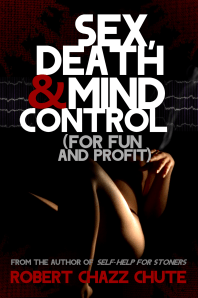
5. I’m not reaching some readers because I made some choices in titles that were challenging. (I almost wrote “unfortunate”, but that would put the onus on me and I’m not ready to own that yet.) The thing is, Sex, Death & Mind Control is one of the best things I’ve written but it has the lowest sales. It’s not sexy enough for those searching for erotica. It’s paranormal suspense (with award winners!), but when you see that always-interesting “What Else Customers Viewed” list, it’s almost all erotica on the Sex, Death & Mind Control sales page. “End of the Line” is probably the best short story I’ve ever written, but it  remains a hidden treasure because I turned readers off with a title I thought would get more attention, not less.

6. Ditto Self-help for Stoners. It was a clue for me when one of the reviewers who loved it added, “Don’t let the title scare you off.” It’s a weird mix of War of Art self-help and suspense. Strange, I know, but not really all that transgressive. (Should have called it Self-help for Surrealists to pull in readers who are also painters!) My strategy going in was to have an identifiable group to market to instead of saying it was for anybody who loved suspenseful fiction. To some extent that worked, but not as well as I’d hoped. (It still outsells Sex, Death & Mind Control four to one. I can’t say the Self-help for Stoners strategy was a failure, just that it could do better.)

You don’t have to be high to enjoy it. Sure, it would make you a better audience but…

7. Readers have less patience now. I changed my plotting and pacing with Bigger Than Jesus to cater to that lack of patience. I see it in myself. Maybe the Internet did it to our brains, I don’t know. That’s not even be a bad thing per se, but expect more Blake Crouch pacing and less Annie Proulx meandering. There used to be more room for both approaches.

8. There are still prejudices against anything labeled “experimental”. I wrote Bigger than Jesus in present tense, second-person. That alone is reason enough for some readers to run screaming. I can tell them all day that it worked. Won’t matter. That’s okay, but it’s still a prejudice.

I wanted to do something that some people thought couldn’t or shouldn’t be done and I wanted to do it so well they’d either quickly forget their prejudice or give me more credit for doing it so well. Blanket pronouncements of “You can’t do that!” are one of the reasons I did it. I don’t like being told what I can’t do. In fact, it makes me want to do it all the more. (I admit this attitude is not something that serves me well all the time. Having a job in the regular world, for instance, is uh…a problem.)

9. Readers look for ties to your real life. This is a byproduct of increased author/reader interaction. However, the Internet isn’t to blame for this one. This was very much the rage in English departments across the world years ago. Students were taught they couldn’t understand the fullness of the fiction without making judgments about the author, his or his gender, origin and life experience. They shouldn’t have done that. No one truly knows the inside of someone else’s skull. (I’ve even opened it up and had a look. Trust me, nobody really knows.) Besides, it’s fiction. Take it on its own merit. Please don’t make assumptions about the author from what you read in a book of fiction. Don’t make me kill again. (See what I mean?)

10. Readers fade. Even if they love your work, they move on. They get hungry for something new and different unless you keep feeding them. I don’t think anyone should race to publication if they aren’t up to the schedule and you do have to build in editorial time to make the book better. However, they are hungry and it is a race. People will tell you it isn’t. They’re wrong. It is. It’s a race against time. We don’t live forever and we have books in us and a readership to find and a readership we hope finds us. William Styron came out with a nice juicy thick book every ten years, but he was William Styron and that was before ebooks and our shiny,  new demand-per-click culture.

I love readers. People who don’t read creep me out. I can say that because how would they know I’ve insulted them? What do non-readers have to contribute? Those dummies!

Ha! Wait. You aren’t reading this aloud to someone are you?

~ Like my flavor? Listen to the first chapter of my crime thriller, Bigger Than Jesus. I’m podcasting the book through the summer. Enjoy! (Or be a hero and just click the cover to grab it. Thanks for reading!)

Filed under: publishing, , , , , , , , , , , , , , , , , ,

Ultimate Blog Challenge: Top 10 What I’ll soon do differently with my book promotion

1. Last November I started up my podcast to reach out to new readers. I called the podcast Self-help for Stoners

English: Third generation Amazon Kindle

English: Third generation Amazon Kindle (Photo credit: Wikipedia)

after my book of the same name. The podcast was a good idea, but tying the title to one book when I have dozens in me was a tactical error and I’ll change that soon.

2. This, my main blog, focuses on information, both original and curated, for anyone interested in publishing books.  The blog is not geared to readers. That’s what the author site is for. In the future, I think I’ll post to the author site more often than I do, especially as I have more reviews and events to talk about. I don’t regret writing about writing, though. Some people think authors are stupid for doing that, but I went with my passion. If I had tackled something I was less interested in, I wouldn’t be approaching 1,000 blog posts now and I wouldn’t be able to make two books out of it.

3. My two latest books, Bigger Than Jesus and The Dangerous Kind & Other Stories, are both on Amazon and exclusive to KDP Select so they do not appear in retail outlets. That’s fine for now, but eventually I will migrate them to other ebook platforms. Amazon was great at promotion, but with their new algorithms, they aren’t so great for me anymore. (I hope they rectify this and we, collectively, get through the current summer sales slump to see a more energetic autumn.)

4. In the future, I’ll raise the price of my books. They’re all at couch change for $2.99 now. This is the introductory price and will change, which will also make more sense with Amazon’s new price-based (rather than quantity sold) algorithms.

5. I have several books in revisions that reach beyond 120,000 words. If they were shorter they’d be done and available by now. If it makes editorial sense, I may break the longest books up into trilogies.

6. I will write shorter books. As I wrote Bigger Than Jesus, I discovered that I love to write a book with a high momentum. A fast write (and read) energizes me. The paperback will still clock in at 249 pages, so no one will feel I’m shortchanging them.

7. I will write no stand-alones. Bigger than Jesus is the first of The Hit Man Series. The Poeticule Bay Series is in development. The books are meant to stretch out into long series following certain characters. Stand alone novels are a heavy investment of my time that do not develop a following to the same numbers as a series can. To make more art, I have to make that business decision. What will be fun is when I have crossovers, where many of my characters from different books meet.

8. I will write faster. I wrote Bigger Than Jesus in a month. To perfect it, the editorial pipeline was longer than that, but I find I can write effectively and well at speed. My editor and beta team made that possible and, maybe it’s the journalistic training talking, deadlines are my friend.

9. I will have print versions available for all my books going forward. Currently I just have Self-help for Stoners available as a paperback. The other short story collections didn’t have quite the length needed to make for a paperback with heft. Everything I do from now on makes for a great mass market paperback. I just finished all the book design and print formatting on Bigger Than Jesus today so I’ll have the paperbacks on hand pretty soon. (I’m in love with Georgia. She’s a beautiful font.)

10. I will be less shy about contacting other authors for blurbs and book blogger for reviews. This is more of an affirmation than a plan since I have yet to compose those emails. I’ve sent out a few copies for review, but it’s an issue about which I am still an introvert. (I’m only pretending to be an extrovert here so someone will read my books.)

~ Like my flavor? Listen to the first chapter of my crime thriller, Bigger Than Jesus. I’m

Get Bigger Than Jesus

podcasting the book through the summer. Enjoy! (Or be a hero and just click the cover to grab it. Thanks for reading!)

Filed under: publishing, , , , , , , , , , , , , , , , , , , ,

Author Blog Challenge #26: The demons in my head

AVAILABLE ON AMAZON NOW!

The Dangerous Kind & Other Stories is up on Amazon! It’s kind of the perfect day to address the Author Blog Challenge prompt: What’s your next book about?

I wrote my novella, The Dangerous Kind, about small-town claustrophobia in Maine and the deadly contempt that familiarity can breed. Two brothers have just lost their father to an accident at the mill. They both want the insurance settlement and a hunting trip might yield an opportunity to solve problems with murder. Did I mention there are surprises? I love surprises, don’t you?

Now I’ve bundled The Dangerous Kind with the following SIX shorts,

all precursors to the coming Poeticule Bay Series of novels:

I’ve dealt out deadly consequences to collections agents in the popular award winner End of

Paranormal persuasion and scary stories.

the Line (from Sex, Death & Mind Control). This time I deal with real world problems in different ways. In The Sum of Me, an aspiring writer gets financial help that hurts. I gave a reading of this short story live at a writing convention (to thunderous applause) and it also won an honourable mention from Writer’s Digest. Everyone identified with the palpable writerly desperation.

What do you do when your psychotherapist dumps you? Read Vengeance is #1, about Georgie, a mean girl with bad timing. She’ll give you some tips on how to handle it. Please note: All her ideas are very bad. It reads like steroidal YA. Watch out for the sharp and dangerous mood swings.

You’re a serial killer. Your therapist is helping you to control your impulses. She only wants you to kill the lost causes of she chooses from her patient pool. Then someone comes along who you want to slay so badly you can almost taste the blood. What then? Then it’s mind game time! Take Corrective Measures.

In Over & Out, a wife abandons her husband and children. He tries to put up a brave front while quietly dying inside (maybe literally.) Then he discovers the power of hypochondria and how self-help is sometimes the opposite of real help. Psychological horror and revelations in a little neurotic cup!

In Asia Unbound, a starlet returns to Poeticule Bay for her uncle’s funeral. She meets up with her high school boyfriend, now Marcus in the Morning, your friendly and miserable radio DJ. Drinks are thrown back, mice are killed and awful secrets from the past are revealed. Your heart might bleed for them both, but you should really only feel sorry for one of them. Life’s a mystery you can solve and still get it all wrong.

In this strange follow-up to Asia Unbound, Marcus in the Morning is at work the next day using the power of his microphone to argue with God. In Parting Shots, Marcus is about to find out that there are some arguments you definitely do not want to win! A conundrum is drummed. Fatal deals are made. Hold on to your faith. You’re going to need it.

~ Robert Chazz Chute has won seven writing awards of vastly varying importance and was nominated for a Maggy Award for his columns. He is the author of the newly released (very funny and super twisty) crime novel Bigger Than Jesus. You might know him from Self-help for Stoners, meeting Kevin Smith and such industrial films as Hitting People in the Face with Ball Peen Hammers is Wrong (except in Texas) and Writing About Yourself in the Third Person for an Author Profile Sure Sounds Douchey, Doesn’t It? Please buy his books. Otherwise he cries and it’s hopelessly pathetic. Hopeless!

Filed under: publishing, , , , , , , , , , , , , , ,

AB Challenge 25: The 10 Worst Book Acknowledgements. Ever.

Available soon on Amazon!

I’ve thanked the usual suspects for their contributions privately in emails and publicly on my acknowledgements and dedication pages for all my books. With that attitude of gratitude well established, I’m going to take some liberty with the Author Blog Challenge writing prompt to acknowledge (not thank) a few of the elements that have contributed to my books:

1. Thanks to the elite secret military organization in which I attained the rank of Commander at the age of six. I kept talking to myself in the mirror, and addressing myself as Commander, until my late 20s. Hey, I grew up in a small town. Whatever gets you through the tough times. More despair = more talking to myself.

2. Thanks to the bullies who fuelled my revenge fantasies. My work is full of a lot of revenge fantasy and you started me on the path. Sorry about those groin injuries, boys.

3. Thanks to my Hapkido instructor for showing me the ways of skilled violence. I know what chipped teeth, broken bones and a smashed nose feel like. My experience of combat is not theoretical.

4. Thanks to the small town in which I grew up. In my fiction, you are Poeticule Bay, Maine. You can sample my small-town claustrophobia in The Dangerous Kind & Other Stories, coming out this week on Amazon. The town almost becomes a character in the Poeticule Bay stories. A bad character.

Paranormal persuasion and scary stories.

5. To my third grade teacher. I murdered you in my mind a thousand times. After the first couple of hundred delightful excursions in blood and righteousness, I explored more clever and fantastic ways to achieve a satisfactory death for you. Now in my fiction, people sometimes die in unorthodox ways. In death, you contributed to literature in a lasting way that you never equalled in your role as a teacher.

6. Thanks to Anger. (You got me through when I had nothing else left but #7.)

7. Thanks to Sadness. When I told my mother I was depressed at age thirteen, she replied, “You are not!” (Loop back to #6.)

8. Thanks to Sex, Movies, Books and TV, which broke me out of that awful #6/#7 loop.

9. Thanks to Fear, you ugly son of a bitch. Go ahead. Keep chasing me. You are my motivation.

10. Thank you to all my enemies. I will crush you in everlasting literature. If I haven’t gotten around to you yet, wait. You are on The List. Buy my books and keep an eye out for clues.

Filed under: publishing, , , , , , , , , , , , , , , , , , , , ,

AB Challenge 24: More on Free Books. Moron Free Books.

Yesterday, we talked about free ebooks and me. Now let’s talk about you, too. Recently we said, “Free is the new 99 cents!” Now free is fraught with diminished opportunity and all that lousy freeness. Let’s delve into pricing ebooks for promotions and try to figure out for ourselves if this is a time to rest and recover or should we double down on ebook marketing?

History: Last year, selling at 99 cents still moved some books and gained new readers. The royalty wasn’t great but it was a loss leader. Now 99 cents just seems to be a loss. I had my novella, The Dangerous Kind, up for 99 cents. It’s a great story that slides the steel home at around 10,000 words. After analysing the sales (took two seconds) I’ve taken it down. Later this week it will be back on Amazon for $2.99, bundled in with some Poeticule Bay short stories. My short story collections sell, but offering a deal on a shorter work didn’t attract readers and my short stories on Smashwords (each priced at 99 cents) aren’t moving as is so they’ll all be in one collection: The Dangerous Kind and Other Stories.

Part of the problem was the old cover for my novella. I’ve blogged about this issue before so I won’t rehash it. I’ll only say: Be indie if you want, but make sure your covers don’t look indie. (My graphic designer, Kit Foster can help you with that at a very reasonable price for a very professional look.)

GET BIGGER THAN JESUS

The Loss Leader Pricing Paradox: You’re pricing your work inexpensively to attract new readers. You’re hoping new people will find you, take a chance on you, dig your flavour, buy all your books and spread your holy word. However, going cheap actually repels some browsers because they associate a cheap price with a bad book. So many times I’ve read in comment threads, “If the author values their work so little, why should I?” There’s someone who doesn’t appreciate the indie author’s bind. I’ll save your life for free. Does that make your life worth less? (Ooh, he’s cranky today!)

Which brings us to the Opportunity/Problem Paradox: The same browsers who think 99 cents cheapens the inherent value of the book often think no less of an author who offers their work for free. All ebooks have free samples, of course, but I don’t think very many potential buyers look at them. They go by genre, the author’s rep, the cover and the description (not necessarily in the that order.) Free is easy and no risk and I haven’t seen many people casting aspersions on authors offering free entertainment. Free is so ubiquitous, it’s considered the norm. It’s an opportunity for the reader and the writer. Free is so ubiquitous, it’s a problem because of the glut of free ebooks on e-readers. We’re drowning in free.

The Perceived Value Corollary: There are so many free books filling up e-readers that readers have no commitment to what they download. (Amazon says, “Click to buy”, but if it’s free, it really means “Click to download”, doesn’t it?) Many of those free books will go unread. When you can click and get, click and get, click and get, there’s no investment on the reader’s part in individual books. Instead, the hoarder mentality rises. What this means for writers is, the minute you’ve dared to slow down your narrative, the quicker the reader is to dump you for another free ebook. We’ve already seen evidence of this trend: there’s less of a market for literary fiction that demands more of the reader.

PV Corollary Case study: A buddy of mine was a sales rep for Margaret Atwood and loved her to bits. I told him I couldn’t get into The Handmaid’s Tale. I bailed out after too many slow pages examining the scratchings of previous handmaids in the rear of the bedroom closet. “Chazz,” he said,”What you’ve got to learn to do when a story slows down too much is grab a few pages and flip forward.” I’m a bit OCD about reading every word so I was a bit shocked. Skipping a page  had never occurred to me. “So…” I said, “You haven’t read it, either!”

The Hidden Unintended Consequence: On an e-reader, no one knows what you’re reading on the bus to work. Sales of erotica have risen because we don’t have to hide our actual taste or pay at a bookstore register manned by a silver-haired woman who looks exactly like Baptist Grammy. Only Homeland Security and the computers that record everything know all you really want is Fifty Shades of Grey. However, it’s not just about erotica. The market has ruled and so-called “downmarket” fiction is what people buy. The readers disagree with the historic arbiters of taste about what’s important. (Did you hear that pop? Somebody’s head exploded again. Clean up, aisle three!)

The Value Addition: When you buy a book — not just download it for free — you show commitment. You’re trusting the author to show you a good time and if you throw it aside, you aren’t just tossing the book. You’re throwing away the bucks you put into it, too.

The Cost-benefit Analysis: For readers, free books are great because choice is awesome. For the writer, providing free books is a way to gain the trust of the reader at no risk (to the reader.) It’s about exposure so you get ranked on lists. Many readers don’t trust reviews (often unfairly) so free is one  avenue into their hearts and minds. We’re making a short-term sacrifice to get our work read, to get on “also viewed and also bought lists” and to get our share of that sweet lending pot of gold from Amazon. Giving our precious away for free is an advertising cost that doesn’t show up as a debit in our bank accounts, but it’s still a cost.

The Cost-benefit Caveat: Since Amazon changed their algorithm, it’s not as happy a story as it was last December. Unless you wrote Fifty Shades of Grey, sales have slumped across the board since March and we’re now into the summer doldrums of the book buying year. The market is as cyclical as the sea. The wind will come back in our sails. The readers will return as free diminishes. Some authors are opting out of KDP Select, or opting in for one three-month cycle for the promotion and then opting out to stop the exclusivity clause and give other sales outlets a chance.

The Irrational Variable Conundrum: Does free devalue literature? Will our prices be chronically depressed because of free? As an indie writer, this isn’t a question that affects me. The higher prices traditional publishers charge for ebooks doesn’t mean that their authors are getting more dough. It’s going to the publishers for their high overheads. I only have to pay me so the 70% royalty rate on my books still looks pretty sweet to me. Like they used to say in cheesy, local car commercials on cable, “How do we do it? Volume!” I’m glad traditional publishers keep their ebook prices high. It gives a guy like me a chance at being discovered.

Will these short-term sacrifices mean long-term financial pain? No, yes and maybe. Who knows? I’m suspicious of too much certainty. Your answer may vary because the fulcrum for this heavy conundrum rests of an irrational variable: How high were your expectations to begin with? Is this side money, the size, say, of the little Swiss Chalet side salad? Did you want the comfort of the double leg dinner as an income? Or did you want the richness of the full Swiss Chalet Family pack with the coconut cream pie for desert? Input your variable and solve for X.

Conclusions: Given the free ebook glut, do you market even harder now that we’re into summer’s slow days? I think I’ll just stay the course. It feels like trying to run up the down escalator and I already flog hard enough as it is. Instead, I’m focusing my energies on putting up more of the work I’ve prepared and I’m writing new stuff. I’m giving the market more time to recover so I’ll be ready with more books to sell.

Putting up more books is the only sure way I know of selling more books.

Predictions:  New strategies will emerge, but no one seems sure what The Answer is. It might not be one answer and it might not be as dramatic and sweeping as the free ebook boom that hit the market when Amazon’s KDP Select algorithms benefited us so much back in December. I suspect we’ll be actively spending more money on advertising and promotion for our books in the near future. I’m aware of a few new and clever-sounding strategies, but they are as yet untested by the market’s searing flame. I’ll revisit said strategies in a future post, but today’s post is already too long and don’t we have some serious writing to do?

Filed under: publishing, , , , , , , , , , , , , , , , , ,

Author Blog Challenge 23: Free sex and the value of an ebook

GET BIGGER THAN JESUS

Why should he pay for the cow when he can get the milk for free? If you’re unfamiliar with this distasteful euphemism, it’s meant to control and shame women so they defy their biological needs and get married too young to the first doofus* who comes along so they won’t risk being called sluts by a repressed and repressive patriarchy and said patriarchy’s agents. It’s the same misogyny behind, “For birth control, hold an aspirin between your knees,” and “Good cowgirls keep their calves together!” It’s kind of funny the first time you hear it. Then you realize it’s a power grab meant to squelch the joys of life and your humanness. (I do love a breakdown of social constructs so the deviant subtext in revealed.) What, you ask, does that have to do with ebooks? Everything.

Yesterday began a little after 5 a.m. It continued until 3 a.m. I hasten to add there were distractions. I did stop to shower and eat. There’s a shower hose over my desk chair by the IV pole. The IV bags are full of double espresso. The desk chair is a toilet. It’s like the helpful chairs in WALL-e, before that evil little robot screwed everything up for everybody and made them get up and move around outside. Mostly, I formatted my new book. For all the work, I wonder if people will buy it when they can have it for free?

Crack the Indie Author Code: Aspire to Inspire (by Robert Chazz Chute, coming in early July!) is a book based on the best of this blog. I’m creeping up on 1,000 posts and I thought it was time I made something more concrete of it. It’ll be my favorite posts in one convenient, pithy, humorous, inspirational package. I’m editing again and updating as I go, of course. At over 90,000 words, it will be my comprehensive take on what the newbie needs to know and what the self-publishing veterans’ choir likes to sing. I wrote a note in the front matter about who the book is for. I made sure to say: Hey, if you want the milk for free, feel free to sift through the blog. ChazzWrites is free. All the podcasts at AllThatChazz are free, too. Everything I sell is so close to free in price, you’d tip the pizza guy what you’d pay for my books. Enjoy! I give freely, without remorse or hesitation or hard feelings. Surprising, because, as a cheap writer who can pinch a Canadian quarter until the moose screams (that’s “eagle screams” if you’re in the United States), I’m actually a terrible tipper.

There is a lot of information that’s free on the Internet so I try to keep ChazzWrites.com fresh and a little different — even contrarian. I think I convey that information with a certain flair, but my hairdresser thinks he’s funny, too. Meanwhile, I just wish he’d never learned to speak english. I’m not going deep  into ever-changing information, either. Crack the Indie Author Code isn’t about the latest marketing theory for self-publishing. It’s evergreen stuff — old-fashioned from a new angle —  about writing craft as seen through my lens and as told to any writer who is more eager for cozy inspiration than ebook marketing advice. (With the changes at Amazon, a lot of marketing theory is still up in the air, but if you want a solid marketing book that’s user-friendly, buy my friend Jeff Bennington’s book, The Indie Author’s Guide to the Universe and check his site for updates.)

Since my new book is hidden right here within nigh 1,000 posts, why buy it to put it on your e-reader? What’s the unique selling point? What’s the value to the customer? I’d say: ease of use; improved readability; improved searchability; updates; new content; improved content; my moral support and your grasping consumerism. I make better jokes as I make another pass at the content, too.

As I go through Crack the Indie Author Code, I can see how some of my ideas have changed over time. When I started this blog, I talked a lot more about craft and writing mechanics. Self-publishing needed more cheerleaders then.  Now we need more leaders. Early on there was more, “Rah! Rah! Rah! Those guys in trad pub don’t get it and don’t see what’s coming!” I omitted some of those posts even though I was right. They were appropriate at the time, but it’s time to mature (the jokes are still less than mature.) Self-publishing’s next step is simply to call it publishing. We need to get past hang-ups about trad versus indie. Yes, of course, there’s still value in traditional publishing. It’s not going away. It’s just changing radically. The new paradigm is not necessarily either/or. Depending on business cases, multiple variables and your temperament, you may choose to do both and only the terminally crank y will fault you. Meanwhile, successful revolutions establish regimes.

But, will anyone bother to buy another writing book? Don’t we have enough?  The broad answer is, can you get enough of whatever your passion is? More particular to my writing book, those who like my flavor will buy it. Those who won’t, won’t.  That’s all beside the point, anyway. I know it’s a business, but I don’t write for you because I can’t anticipate all your  variables and idiosyncrasies. I can only write to my taste. I write for your adulation, sure, but first, I write to entertain myself. I’m hoping you’ll say, “Oh, Chazz, how clever you are! I’ll buy umpteen copies for all my friends!” But before you ever get a chance to evaluate, that’s me sitting at my keyboard enjoying the dopamine trickling and tickling my neo-cortex. That’s me saying, “Oh, Chazz, how clever you are!” We write for ourselves first, not the reader. The act of writing is primary, sometimes even primal. The point is to form the thoughts, think through your typing fingers and transcend the blank page until you’re high on the creative rush.

Will Free beat out $3.99 in the cost-benefit analysis? No. You’ll buy my cow for convenience or for other variables, not least of which is, to have and to hold. And, to answer the ugly metaphor that began this piece? Most  people enjoy free premarital sex and yet most people still marry (some to dark and very costly ends.) At $3.99, the risk is microscopic compared to marrying someone.

To win your $3.99, I just have to create something I’ll love.

If you’re of the same mind, I have a sale.

Back to the espresso drip. I’m off to make that dopamine gush!

* Generalizations aren’t fair. Sometimes the first doofus is the right doofus, but most people these days test out several to many doofuses before selecting the one doofus they can love (and be most angry at without opting for murder) for the length of their marriage and possibly the rest of their lives.

Filed under: publishing, , , , , , , , , , , , , , , , , , , , , ,

Bestseller with over 1,000 reviews!
Winner of the North Street Book Prize, Reader's Favorite, the
Literary Titan Award, the Hollywood Book Festival, and the
New York Book Festival.

http://mybook.to/OurZombieHours
A NEW ZOMBIE ANTHOLOGY

Winner of Writer's Digest's 2014 Honorable Mention in Self-published Ebook Awards in Genre

The first 81 lessons to get your Buffy on

More lessons to help you survive Armageddon

"You will laugh your ass off!" ~ Maxwell Cynn, author of Cybergrrl

Available now!

Fast-paced terror, new threats, more twists.

An autistic boy versus our world in free fall

Suspense to melt your face and play with your brain.

Action like a Guy Ritchie film. Funny like Woody Allen when he was funny.

Jesus: Sexier and even more addicted to love.

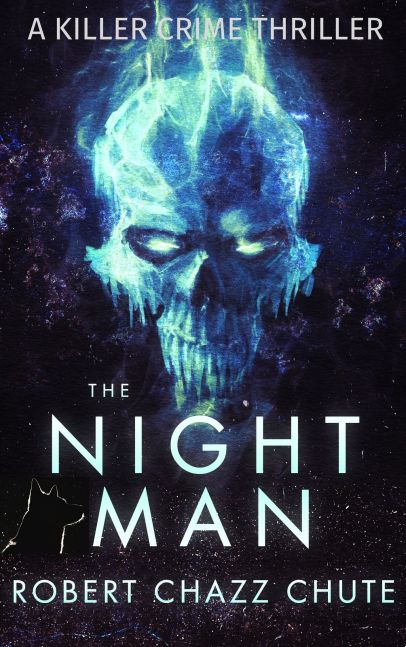
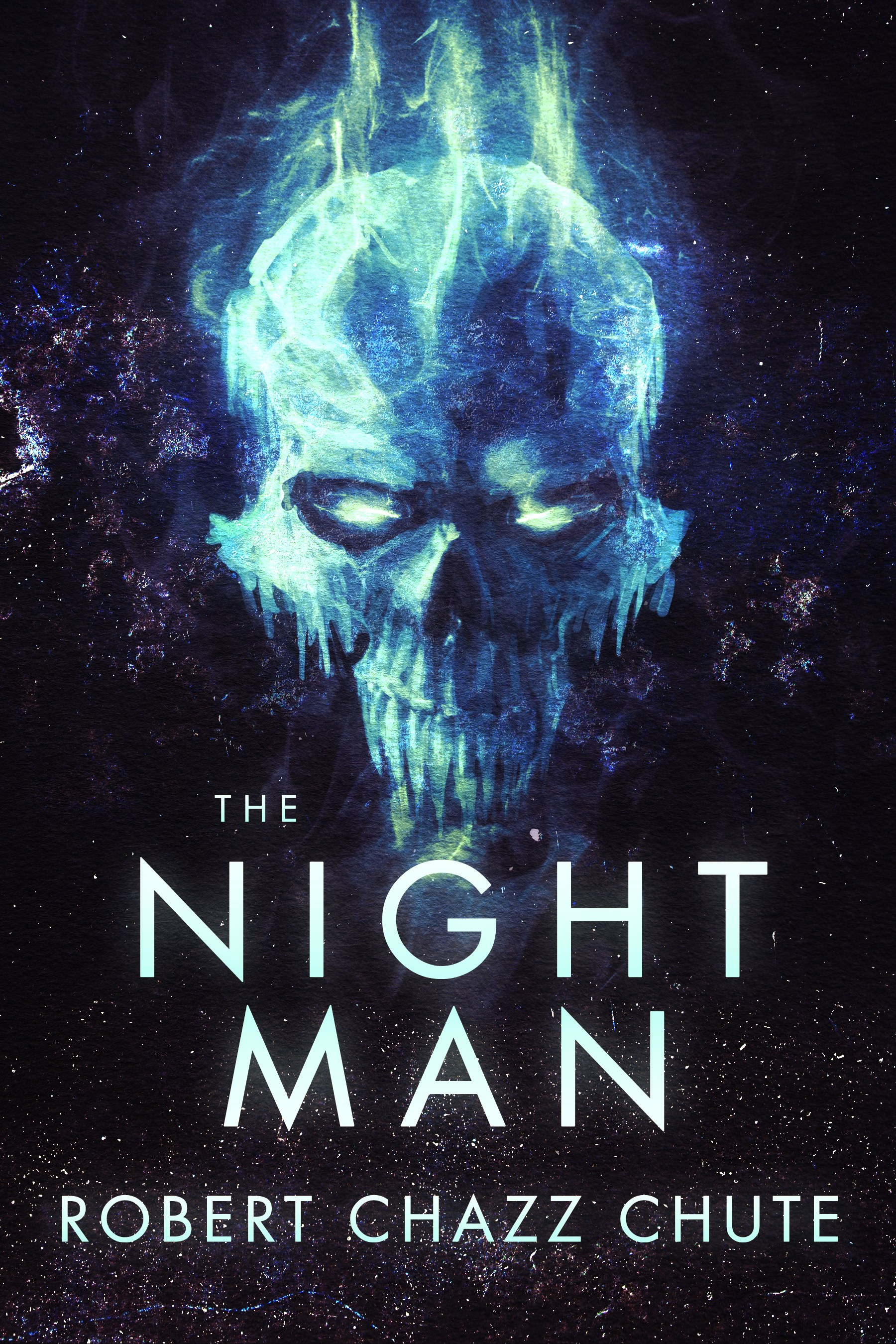
You can pick this ebook up for free today at this link: http://bit.ly/TheNightMan

Join my inner circle at AllThatChazz.com

See my books, blogs, links and podcasts.

Enter your email address to follow this blog and receive notifications of new posts by email.

Join 2,063 other subscribers