C h a z z W r i t e s . c o m

See all my books at AllThatChazz.com.

Another way your cover can promote your book (and who to hire)

We are all struggling to find new ways to get readers interested and invested in our books. How do you promote reader engagement and launch your book higher? By engaging them in your process, I suppose. Here’s one way I’m doing that for the launch of two books this weekend.

Short story:

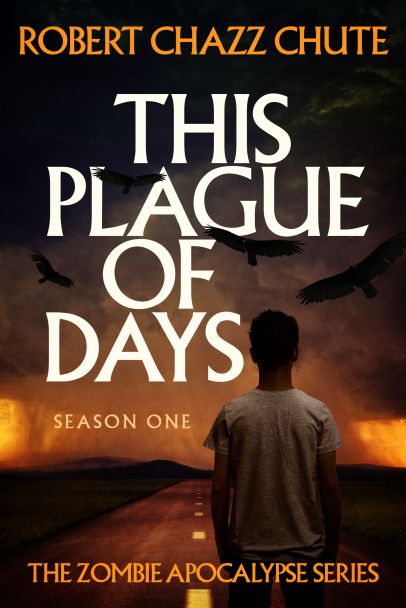
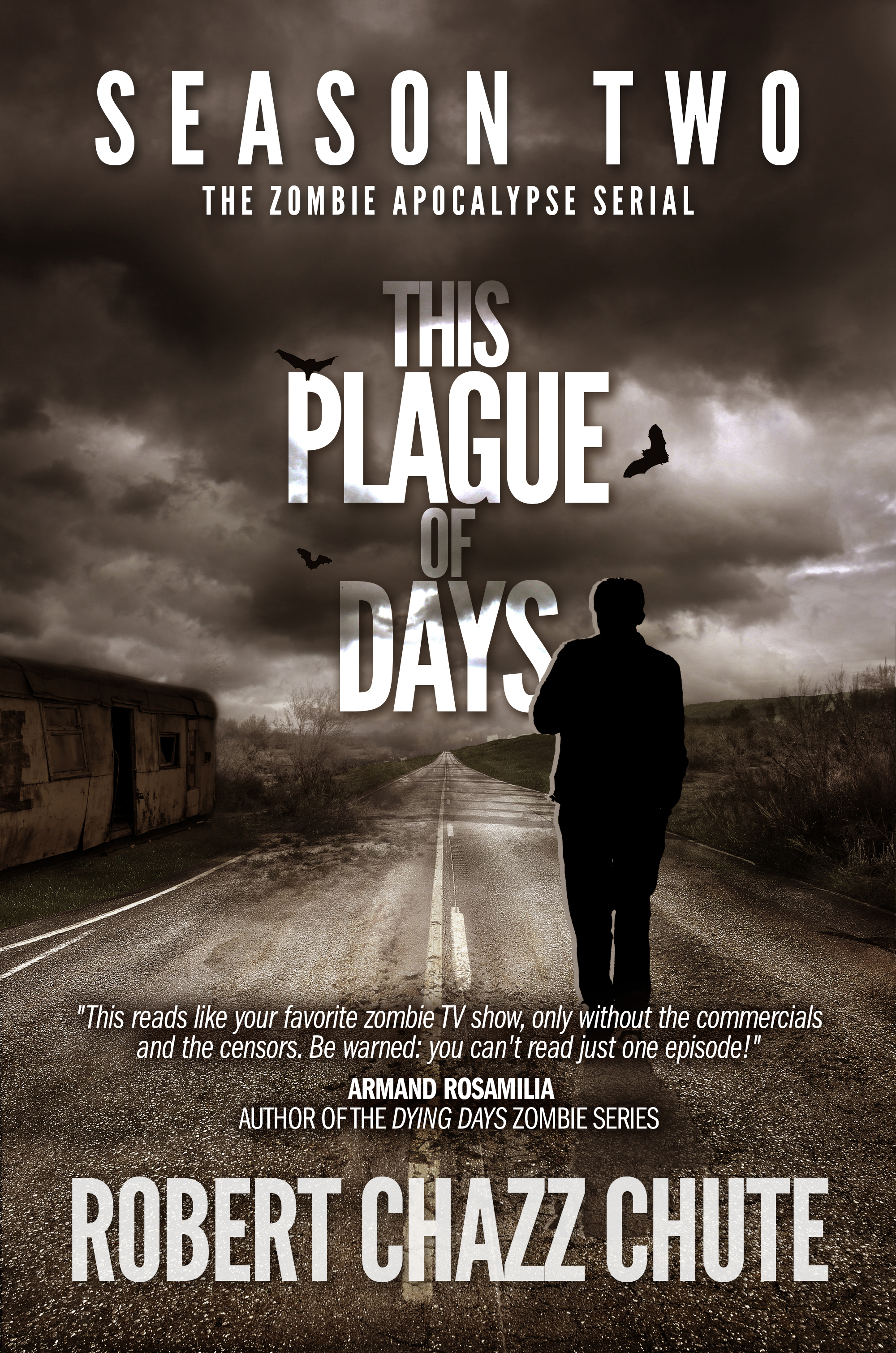
I’m giving away an ebook of the Plague of Days compendium to one random commenter on the Plague of Days website.

To enter the draw for three free ebooks in one, all you need is an opinion, so click here to see the cover choices. 

Okay, now here’s what you need to know and who you really need to hire for your next book cover:

To be clear, the covers you’ll see at the link are my designs, not those of my graphic artist. Anybody who reads this blog knows my graphic artist is the great Kit Foster of KitFosterDesign.com. He’s the sweet, book art genius. I came up with this idea because I already have Kit working on other designs. 

If you don’t already love his work, when I unveil This Plague of Days, Season 3, you’re going to want to check out the rest of his professional portfolio, for sure. He’s a joy to work with at very reasonable prices. Kit’s done almost all my covers. If the cover’s crappy, it’s not Kit’s work, it’s my design for The Little Book of Braingasms. Now, compare that to this cover of gorgeousness in Murders Among Dead Trees. Look at those flames! POW!

Kit also does the web banners for my websites. Those spruce up any blog and really give readers the idea (illusion?) you know what you’re doing.

Kit has even done Quote Art for me to promote my books. Don’t know Quote Art? See it here and on my Amazon author profile. It’s another way to stand out from the crowd. Quote Art would make a great poster for your next convention, too.

Kit is working on my TPOD print covers in addition to keeping all his many clients happy. When does this man sleep? He doesn’t. While he’s helping me with other stuff, I’m pitching in with the draw. It’s a new way of getting readers involved in feedback on covers for This Plague of Days, The Complete Three Seasons.

My books about the autistic zombie apocalypse that will soon kill us all launches on Father’s Day and, because of the draw, I’m sure I’ll have a few more eyeballs for the release. Because of Kit’s TPOD3 cover, they’ll keep looking and check it out.

Eventually I’ll call in Kit for a much better cover for the compendium (because he’s the sweet, book art genius, that’s why, and, yes, you’ll find my efforts sad by comparison.) In the meantime, help me move more books through your input at ThisPlagueOfDays.com. You might be the one chosen to win a free book. So there’s that.

Reader engagement is often fun but it doesn’t have to be a one-to-one thing all the time. It feels great when people are curious enough to come find you. A for a nice prize and asking for an opinion is a solid way to do that.

Filed under: author platform, Publicity & Promotion, publishing, , , , , , , , , , , , , , , ,

Identifying a good editor is about chair placement

I’ve worked with several editors over the years. Mostly, the experience has been good. If you work with enough people though, you get a horror story. The bad editors have one thing in common: they think it’s about them and they bleed self-importance. (Beware: at the editing stage, it’s not generally about the author, either. It’s about the reader.)


Bad editors are: 

1. Belittling, condescending and even angry.

Let’s face it, for some people, editing is a power thing. They love to tell people what to do and where they are wrong because it feels great to be right. Editors like this don’t have a lot of authors who return to the whipping room for another go, however. Life’s too short. If you’re looking for a fight, there are better ways to use that energy.

One person tried to be abusive with me once and their lure was a very low fee. “Wow! You mean I get the privilege of being your bitch for a very low fee? Gee, thanks, but no.” (Hint: if you try to sell your editorial services this way, that’s a paddlin’.)

2. Lazy.

One editor went through the last few pages of a manuscript in a sad effort to convince me she’d gone through the whole thing. That set my production schedule back three months.

3. Frustrated writers.

A friend of mine was an editor and I got a chance to see her in action. When she was done, the book still had the author’s name on it, but it should have been her name on the cover. When the edits are intrusive or delete the author’s voice, it’s time for the editor to write his or her own book instead of mucking up someone else’s dream.

I could go on with a long list of bad editing practices. Many of you probably have a horror story or two to share. Instead, let’s focus on what good (and great) editors have in common.

The good editors I’ve known all do the same thing:

Picture a desk. This is the work desk the editor and author will use, virtual or literal.

Visualize the chairs. See where the chairs are around said desk?

The skilled editor who works best with authors places the chair on the same side of the desk and works beside the writer.

Working with a good editor feels good.


The relationship does not devolve into a hostage negotiation. It’s a team effort and the author is the captain of the team because their name will be on the cover forever.

The good editor is honest, but flexible enough to allow for stylistic choices. Some choices are objectively right or wrong. A bunch aren’t. Suggestions are welcome, but the author gets the final say on what he or she wants to do. Rigidity is the enemy of Art and good editors and authors know that. (Hint: Sentence fragments can be cool. They are not worse than herpes plus Shia Labeouf compounded by our sun exploding on Thursday afternoon while Yoko Ono sings)

Good editors have a light touch on the text because they don’t start off assuming all writers are idiots in need of discipline and more education. They may end up there, of course. Some of us aren’t that bright. However, good editors aren’t so cynical that they begin Chapter 1 that way and they never let their eye rolls and contempt show.

Good and great editors have diplomatic skills as well as sharp eyes. Even when a heavier hand on the text is required, good authors can become great by accepting suggestions with grace.

Good and great editors are out there. When you find one, hold on tight.

~ Let’s cleanse the palate. Time for a sneak peek at This Plague of Days 3? Go to ThisPlagueOfDays.com for a new excerpt. TPOD3 and This Plague of Days, The Complete Three Seasons launches June 15th!

Filed under: Editing, Editors, , , , , , ,

The book marketing tool! (That’s a five dressed up as a nine?)

Every marketing guru will tell you to build your mailing list because that’s where the money is. They’re not wrong and I’m no marketing guru, but here are some deeper considerations, past the hype:

1. It’s gotten much harder to build that mailing list. The tools are there. I use Mailchimp on my author site (AllThatChazz.com.) Aweber is another good mailing list management tool. It’s lovely to be able to announce your latest book launch to a huge mailing list of eager fans. It’s also much more rare than the marketing gurus pretend. Everybody’s got a mailing list and they aren’t all equally special.

2. You need a really great giveaway to entice someone to subscribe to a mailing list: free fiction, a useful white paper or some other shiny thing. I offer free mentions on the All That Chazz podcasts, but through Facebook, Twitter, my blogs, Triberr, enthusiastic readers and my rebel writer allies, I’ve got a much wider reach.

3. If people are subscribing to the mailing list just for free stuff, will they keep that subscription after they’ve scooped up said free stuff? Periodically prune your mailing list by asking if your subscribers are still into you. Wise list owners seem to ask if you wish to continue receiving mailings annually.

You can check open rates and find out when interest has waned. A huge mailing list boosts the ego. However, if they’re mostly disinterested and cruising on momentum, that big list can cost you money and, worse, it won’t help. Better to have a smaller list of people who can’t wait for your next mailing.

4. Are your blog readers more interested in your latest blog post than your pestering through the mailing list? I’d rather be a destination blog than an obligation blog. By that I mean, it’s great when people make a point to come here or follow my posts.

Mailing list subscriptions are often ignored or deleted. Test your mailings and ask your subscribers what sort of material they want. It may be that all they really want is to know what your next book is and when and where they can buy it.

5. Subscriptions get deleted or ignored, especially when they come too fast and too furiously. Sure, you’ll mark it to read for later, but when the email is rolling in too often, it’s easier to delete it.

6. I’m currently following many blogs officially. Unofficially, with as many as 200 emails a day or more, I tend to stick with reading destination blogs. In other words, there are certain blogs I feel I have to check out and I don’t need a subscription service to remind me to go look.

7. If you’re producing material for a mailing list and for your blog, too, you’re doubling your effort. True, we all hope email subscribers are more invested in what we do. However, the folks who come to ChazzWrites just because they’re into what I do (which is to generally inform in a more entertaining fashion than I’m doing today)? They might be much more invested than those on the mailing list. Mailing lists aren’t quite as hot as advertised.

So my suggestions are:

Keep in touch with mailing list subscribers, but don’t overwhelm them.

I’m far behind on Seth Godin’s blog, but at least his posts are pithy and short. I’ll never get to some I’m subscribed to. If that describes you, save time and unsubscribe. Deleting posts each day as they come in is a time suck.

Content is king. Yeah, yeah, sure.

Lots of bloggers repeat that mantra, but they all think their content is great so it’s kind of an empty slogan. All I can add is, don’t post unless you have something to say. If you’re straining for a topic, you’re working too hard. Rest it. You’ll get more hits the more you post, until it feels to the reader like too much good content too often or too much drivel. Blogging is a high wire act, isn’t it? (And if all your content is that good every day, sell it as a book, instead.)

Take the opportunity to promote someone else’s excellent content instead banging your own drum.

Not feeling inspired for a blog post? No problem. Write your books instead or reblog. Point to other great content. You don’t have to be brilliant every day if you’re an excellent curator. Scoopit is another tool you can use to curate content and build a following.

Ease back on the throttle sometimes.

We talk a ton about getting out there and marketing books like mad and spreading the literary word. However, lots of readers appreciate us more if we know when to shut up.

I’m shutting up.

~ Chazz is preparing to release This Plague of Days, Season 3, on Father’s Day. The full TPOD compendium will launch then, too. Find out more about the zombie apocalypse with the young, autistic hero at ThisPlagueOfDays.com. It’s much more than a single zombie apocalypse. It’s your future.


Filed under: author platform, book marketing, Publicity & Promotion, publishing, , , , , , , , , , , , , , , , ,

11 Rules for Being the Best Writerly Soul You Can Be

This saved me writing a post. Sounds like stuff I say, therefore, back to work. 🙂

Filed under: publishing

Writing: Find time or make time in 22 quick tips

No one will give you time to write. You have to take it. I’m in a time crunch now, but I needed a break. Therefore, here are 22 tips it didn’t take me long to come up with: 

1. Say, “No.” Do that more.

2. Schedule your writing time.

3. Steal your writing time, between the other stuff you have to do and away from the stuff that’s optional.

4. Write when the kids are napping.

5. Get up before everyone else.

6. Get the kids to bed earlier and you stay up to write.

7. Stop reading reviews, checking Amazon stats and obsessing over what you can’t control. Write the next book.

8. Get away from Facebook and Twitter. That stuff is for breaks when you are creatively exhausted.

9. Plot while watching your kid’s soccer game. I came up with a book that way recently and still paid enough attention that I didn’t miss my kid’s heroics. 

10. Someone else is cooking tonight.

11. Delegate laundry. Ask for help.

12. Do more. Write more. Talk less.

13. Dump rituals around writing. Waiting for the perfect writing environment is procrastination disguised as usefulness.

14. Write on the train commute.

15. Turn off all screens but the one you use to write. Turn off your Internet connection during writing time.

16. Look at your email once, at the end of the day, if you must.

17. Don’t just delete the emails that don’t serve you. Dump the subscriptions to all those newsletters and blogs you don’t really follow.

18. Focus on what’s productive. Getting into arguments on the Internet isn’t productive. Feed your need for drama by writing books instead.

19. Someone will try to draw you into unproductive time sucks. If they won’t take a hint, do not tolerate trolls. Unfriend, unfollow, mute. Block them across all your social media so you don’t accidentally run into each other again after you’ve forgotten their names.

20. Make a habit of planning what you will write tomorrow. Momentum carries us forward.

21. Jump into writing first. What must be seen on television (precious little) is recorded for later.

22. Stop reading this blog. Go write.

Time is life. Manage it right and you’ll write more books.


Filed under: writing tips, , , , , , , , , ,

Summer of Zombie Blog Tour 2014 – Amazon Author Links

Horror fan? Here’s something for you.

Armand Rosamilia's avatarARMAND ROSAMILIA

SoZBanner

Here are links to the 33 authors involved in the Summer of Zombie Blog Tour 2014 for their Amazon Author page

Check out all the releases they have to offer, and not only purchase a couple-three but make sure you kindly leave reviews so they can continue to bring you great stories in the future… and follow the entire tour posts in June on the #SummerZombie event page! 

Alex Laybourne

Armand Rosamilia

Bryan Cassiday

Charles Ingersoll

Chris Tucker

Christine Verstraete

Claire Riley

David P Forsyth

Erik Gustafson

Ian McClellan

Ian Woodhead

Jack Wallen

Jaime Johnesee

Jay Wilburn

John O’Brien

Julianne Snow

Kirk Allmond

Mark Tufo

Melanie Karsak

Peggy Martinez

Rebecca Besser

Rhonda Parrish

Robert Chazz Chute

Sarah Lyons Fleming

Shana Festa

Shawn Chesser

Stephen Kozeniewski

Stevie Kopas

Thomas M. Malafarina

Timothy Baker

T.S. Alan

T.W. Brown

T.W. Piperbrook

*   *   *   *   *

The stench of rotting flesh is in…

View original post 66 more words

Filed under: publishing

Don’t Believe Your Own Hype

Wait for it…wait for it…

Armand Rosamilia's avatarARMAND ROSAMILIA

the thought process

Open letter (OK, blog post, get off my case) to Myself today from Me three years ago… 

I’m damn proud of you. It is unreal how much you’ve accomplished and how many goals you set before you and have surpassed. If you’d said three years ago you’d have over 100 releases on Amazon, worked with some great small press companies, attended World Horror and other conventions not just in Florida but in many other places, had stories published in some great anthologies with other great authors, had a couple of your story ideas turned into upcoming movies, signed a thirteen book deal with a Hollywood production company, got on the actual radio to talk and play the songs you grew up with, met the woman of your dreams and STILL own the beat-up Kia AND it still started, I’d have laughed. 

All amazing things, and a ton more you’ve accomplished…

View original post 413 more words

Filed under: publishing

How to write more, faster, now

After I publish a book, I tend to fall into a mild bout of postpartum depression. To head that off, I’m writing a new crime novel as I prepare to launch the finale to This Plague of Days. This new one has a very fast pace and I’m also writing it fast. This isn’t going to fall into a plotting versus pantsing discussion because, Thor knows, we’ve all hit that gong plenty hard already. Today, let’s talk about how to discover your story.

Here’s four writers to pay attention to, in case you don’t care what I think:

1. Anthony Burgess had a cool trick I’ve used. Pick three words at random. Those words will appear in your next chapter.

Go! You’ll find gooey, fudge brownie richness with that one tool alone.

2. E.L. Doctorow said writing a book is, “like driving a car at night. You never see further than your headlights, but you can make the whole trip that way.”

When I wrote my first crime novel, Bigger Than Jesus, I knew the last line of the book, but I had no idea from one night to the next what tomorrow’s chapter might bring. It worked out in a really peachy way.

3. Stephen King talks about excavating the story, discovering and unearthing dinosaur bones.

Some people start with character. I often find my brush and trowel to dig the dirt away is conflict. Everybody wants something. It’s more interesting if everyone’s competing for the same thing but use different methods to get what they want. (Game of Thrones, anyone?) Through conflict, character and snappy dialogue often emerge. Direction and velocity will reveal themselves as you discover how the story evolves. It may divert from your outline. That’s okay. Follow the drama. It might lead you off the map to a beautiful place.

4. Chuck Palahniuk suggests writing each chapter as a short story.

As each story connects to the next until the end, this process cuts down on a lot of intimidation. It also lessens the danger of a saggy middle because you’re demanding more of each story element instead of relying on the reader’s patience. Each chapter is a pillar. Don’t build a weak one and depend on it to hold up the structure.

I’m going to suggest the writing process as an exercise in free association.

Free association emerged as a counselling approach in Freudian analysis. The core of the therapy was to let the mind wander and for the patient to tell his or her own story rather than take on the worldview of the therapist. This was resolution by exploration.

The key is to let ideas bubble up and connect unhampered by the choke valve of self-criticism. Criticism is for later. In the creative process, let it go and flow. You’ll go faster and arrive in places that aren’t mundane and expected. Using these methods, you’re going to cut down on procrastination, too. You’ll write more because you’re having more fun. Stop agonizing. This is entertaining fiction you’re writing, not a eulogy.

In This Plague of Days, the autistic hero of my zompoc epic (Season 3 coming June 15!) is Jaimie Spencer. He’s obsessed with the dictionary. That’s me. I collect odd factoids. I let one Wikipedia entry lead me to another and to another until I free associate my way to new plot developments. The world is made of details and small components build bigger things. That’s also true if your world is fictional. The dictionary and Wikipedia are full of the atoms of your next story.

For instance, take a swig of Doctorow.

In my current WIP, I know the destination and I have a hastily drawn outline of how to get there. It’s not deep in details. I came up with most of it while watching my son’s soccer game. The first atom was a small conceit. The idea exploded when I had my hook. More on this later this summer.

Enjoy a tall, cold glass of Burgess.

Take a random fact from Wikipedia and see where that leads you. Your foundation is already getting poured.

In the crime story I’m working on, I needed to show the love interest’s character. She’s an underdog determined to win. That led me to a story from Wikipedia she could identify with. By showing the tragic, yet heroic story that guided her life, we understand her better and we like her immediately. (Me? I’m big on pathology. Give a character a medical problem and I can use that, for them and against them. Desmoid tumors saved the life of one character in This Plague of Days, for instance. Read the books. You’ll get that reference.)

Free association comes faster from good questions.

Quick! What are the hits playing on the radio in 1974? Which manager was first to get kicked out of a baseball game twice in the same day? What was happening to your protagonist that day in 1974 when he was thinking about baseball and listening to the radio? What song titles spoke to his state of mind? These are the connections I made to write a chapter (a pillar, if you will) that could stand on its own as a short story. Hello, Mr. Palahniuk!

As the factoids build and scenes connect into a river of stories that collect and flow into one ocean of words, new connections are made. New developments float to the surface. You’ll discover new intersections in the network of your story you didn’t suspect were there when you began to write.

That’s Stephen King’s story archeology.

Good stories aren’t written. They are discovered. It is the nuance we find in the depths of free association that contribute to verisimilitude and character interplay. It’s nuance that builds, not just a book, but a believable world.

Those details you’ll use through free association? It’s not the only key to Creativity’s lock, but it’s a good one. Try it.

~ I wrote Crack the Indie Author Code and Write Your Book, Aspire to inspire. Check out AllThatChazz.com for affiliate links to all my fiction. That would be double plus cool. Thanks.

Filed under: Writers, Writing exercise, writing tips, , , , , , , , , , , , , , , , , , , , , , , ,

Publishing: Rules are Rules (except when they aren’t)

I didn’t make up any of the following. I’ve observed it.

1. When Margaret Atwood writes dystopian sci-fi, it’s not dystopian sci-fi. If you wrote The Year of the Flood, you can be darn sure professional reviewers would call it dystopian sci-fi. Some special subgroup would think less of you for writing SFF, even if your work is as brilliant as Atwood’s work.

2. If you write an about-to-be-divorced, mid-life crisis novel from a man’s perspective, I know of at least one agent who would reject it without reading a word. Apparently, those authors are “wrong” to write that story. Roth had the last word and no more need be attempted. Ev-er! (Thank Thor for choices.)

3. If you’re young and writing an autobiographical, coming-of-age novel, many skeptics will sneer at your offered manuscript and declare that it is undoubtedly, “Too autobiographical.” Rewrite it to make that less transparent and, in round two, they’ll say it “lacks verisimilitude.”

4. If you’re a teen quoting your peers, a much older agent or editor may declare that “teens don’t talk that way.” (Yes. That happened.)

“B-but — “

“No. No one speaks that way. Anywhere, ever, in any world real or imagined.”

5. If a well-known author writes an homage to hardboiled fiction, it’s an homage to hardboiled fiction. If you do it, you’re plagiarizing Mickey Spillane.

6. If you attempt something different and innovative, it’s experimental and stupid. If it’s attempted in mainstream publishing (rarely), it’s different, innovative and brave. (Forget that. Always be brave. That’s often where the fun is.)

7. You may have lived in Dublin all your life, but some reviewer will tell you your characters, “don’t sound Irish enough.” That’s because they think the cartoon presentation of Irish dialect in a cereal commercial is a documentary. Not all Irish people sound like leprechauns.

Don’t worry about it. If you wrote it their way, you’d turn off too many readers with awkward depictions and hard to read dialect. And earn the wrath of all of Ireland. I like Amy Adams, but the movie Leap Year was an affront. Not a single Irish person had even a passing interest in particle physics, but the old men were all afraid of black cats. Nice.

8. You have a clever plot twist in your manuscript. That black sheep beta reader will rush to tell you he’s read that same twist in two books, so it’s a cliché. Back to square one for another rewrite. Never mind that the execution is different, all stories are similar in some regard and those two books he’s talking about were published before 1975.

9. Win a writing contest and somebody will spend a blog post on how undeserved the win was. They will claim they did not submit a losing entry into the same contest. However, the heat of their condemnation (a sun-surface temperature usually reserved for Nazis and pedophiles and Nazi-pedophiles) will reveal their jealous motives and their cowardly lies.

10. Someone will assume that, since you wrote a zombie novel, you’re a hack chasing money and trends. (And by “you”, I mean, “me.”) Never mind that I started writing This Plague of Days before there was a Walking Dead. I don’t chase trends and, while zombie readers tend to be rabid readers, it’s really a small sub-genre. I know few rich zombie writers, though I know several who deserve riches.

Sadly necessary addendum:

Someone called my serial “clichéd.” I won’t say whom and no hard feelings, really. It actually struck me as funny. Say what you will (and I know some will.) But really? “clichéd?” I guess it’s virtually indistinguishable from all the other zombie books where the zombies aren’t really zombies, the vampires aren’t really vampires, the humans might be the supernatural players, bio-terrorists attack in very weird ways, three worldwide plagues evolve as the virus spreads across continents and, oh, yeah, the hero of my zombie apocalypse is an autistic boy with an obsession for Latin proverbs who sees auras and is a selective mute.

Just like all the others.

The crux

I guess what I’m saying is, no matter how many manuscripts you read professionally or personally, for consideration or for review or for whatever, don’t fall into cynicism. Come to each manuscript or book innocent and free of preconceptions. Give us a day in court before you condemn. You might fall in love. That happens, too.

~ Robert Chazz Chute writes a lot of books. Check them out and click those affiliate links at AllThatChazz.com. Season 3 of This Plague of Days and This Plague of Days, The Complete Series, launches June 15, 2014. Find out more about This Plague of Days at ThisPlagueofDays.com.

Filed under: publishing, , , , , , , , , , , ,

Writing: Tics and traps to consider

We all have tics in our writing that show up as we revise our manuscripts. I think it was Elmore Leonard who said we shouldn’t use, “all hell broke loose,” and “suddenly.” I actually don’t see a problem with suddenly, but because Elmore Leonard didn’t like it, I’m too chicken to use it. I also think adverbs get a bad rap, though I use them sparingly.

Here are some more things that get repeated in manuscripts you should consider leaving out for a faster, easier and clearer read.

1. When you can say it in fewer words, do so. (General guideline. No, this doesn’t mean all novels should be reduced to their three-paragraph summaries. Yes, we’d all be better read, but it’s about the journey.)

2. When you can use a simpler word instead of an unfamiliar one, consider that. I use some Latin and unusual words in This Plague of Days, but all is explained and it all has a point.

3. The house across the street or right across the street? In Nova Scotia, we said “right across” often, which technically connotes “directly,” or “nearest.” But across the street will usually do. “Right over there,” becomes “Over there.” Nothing lost.

4. Eliminate gerunds where possible. This often accompanies a manuscript packed with “was.” “He was working on the plan”? Will “He worked on the plan,” serve your purpose with a more direct and muscular verb?

5. Felt. He felt this. He felt that. I’m not saying eliminate it completely. But showing is generally better than telling (though not always) and doing is better than feeling (often.) Feeling is passive. Demonstrate how he feels that his wife walked out and took the beloved dog he brought into the marriage.

6. Up and down. I go through my manuscripts looking for “up” because that’s my tic. He stood up? He stood is the same. And “she sat down in the purple chair”?  “She sat in the purple chair,” communicates the same thought, right?

7. Began. “He began to think about…” How about, “He thought about…”? Once you start thinking, you’re already into it, right?

8. Then. “She then lit the match. Then she lit the fuse and then it began to burn.” Things happen in sequence in the order you put it down  write. Then is often unnecessary.

9. And at the beginning of the sentence. It’s not that it’s wrong. Some of my old-school English teachers went hardcore on this point. It’s when it’s used too often, it becomes a placeholder that delays the action by three little letters. It’s often unnecessary.

10. So at the beginning of a sentence. It’s not wrong, but it’s a common tic. It’s often the writing equivalent of “um” in public speaking. “So, how are you doing?” versus, “How are you doing?” This can be a stylistic choice. In dialogue, maybe it’s a subtle cue to the reader that the speaker is attempting to appear casual or isn’t sure what to say.

BONUS

Look for opportunities to vary sentence length. It makes for an easier read. Run-on sentences intimidate, confuse and frustrate readers. 

~ Robert Chazz Chute is revising Season 3 of This Plague of Days. Season 3, and This Plague of Days, The Complete Series is scheduled for release June 15th, 2014.

Haven’t started Season 1 and Season 2, yet? There’s still time. Grab them here.

Filed under: Editing, writing tips, , , , , , , , , ,

Bestseller with over 1,000 reviews!
Winner of the North Street Book Prize, Reader's Favorite, the
Literary Titan Award, the Hollywood Book Festival, and the
New York Book Festival.

http://mybook.to/OurZombieHours
A NEW ZOMBIE ANTHOLOGY

Winner of Writer's Digest's 2014 Honorable Mention in Self-published Ebook Awards in Genre

The first 81 lessons to get your Buffy on

More lessons to help you survive Armageddon

"You will laugh your ass off!" ~ Maxwell Cynn, author of Cybergrrl

Available now!

Fast-paced terror, new threats, more twists.

An autistic boy versus our world in free fall

Suspense to melt your face and play with your brain.

Action like a Guy Ritchie film. Funny like Woody Allen when he was funny.

Jesus: Sexier and even more addicted to love.

You can pick this ebook up for free today at this link: http://bit.ly/TheNightMan

Join my inner circle at AllThatChazz.com

See my books, blogs, links and podcasts.

Enter your email address to follow this blog and receive notifications of new posts by email.

Join 2,063 other subscribers