C h a z z W r i t e s . c o m

See all my books at AllThatChazz.com.

What I Learned from The Practice

While recovering from hip surgery, I have had the opportunity to unearth a gem I missed when it aired: The Practice. David E. Kelley’s work for television is genius.

Steve Bochco dominated TV in the ’80s, but I had no idea how prolific Kelley was. Until recently, the only TV writer who sprang to my mind was Aaron Sorkin. However, Kelley has been steadily writing and producing for a very long time.

Consider David E. Kelley’s TV history:

Ally McBeal, The Practice, Boston Legal (my favorite), The Lincoln Lawyer, Big Little Lies, Picket Fences, Boston Public, Goliath, Chicago Hope, Mr. Mercedes, among many others. All these, plus multiple film credits? The man is a powerhouse of productivity. And he’s married to Michelle Pfieffer. Winner.

I’d seen James Spader in plenty of movies, but his performance in The Practice and Boston Legal made me a fan. He is uniquely talented, capable of delivering deep monologues with utter eloquence and passion. His character is a self-destructive good guy who often acts like a bad guy.

From Boston Legal: What kind of lawyer are you, anyway?”

“The damaged, but fun kind.”

I was never a fan of Ally McBeal, but I appreciated the bold tangents into surreality. Watching the evolution of The Practice has been edifying to me as a writer. Bobby Donnel, played by Dylan McDermott, too often hit one-note. The hub of the show’s wheel, his character lacked depth. That was, I’m sure, by design. I didn’t care for that tac, but the stories carried me through. The ensemble cast usually compensated for the bang of Bobby Donnel’s triangle with a symphony of compassion, pain, and earnestly trying to do the right thing in a broken judicial system. Actor Steve Harris was especially compelling and convincing as a criminal attorney. I don’t know why we haven’t seen more of him on TV and in films.

Bingeing The Practice all at once, I found the show’s too-frequent forays into “why do we get murderers off?” a bit tiring. Watching week to week, few viewers probably noticed. There were missteps. Besides Bobby Donnel trying to death stare judges into submission, I found the writers relied on the same reactions too often. The tics of “What?” and “Excuse me?” were particularly frequent. There was also a lot of unnecessary yelling over each other. Are these lawyers or stevedores on meth? I kind of wish I was the guy in charge of making the courtroom extras mumble and rabble-rabble in shock as each verdict was announced. Or did they just record it once and leave it to sound editing?

By the time we get to the spin-off of Boston Legal, most of the kinks are ironed out, and the writing rises to its zenith. The interplay between Spader and William Shatner was charming. Even when the characters were creeps, usually a human layer underneath shone through beaming good intentions. Alan Shore’s closing arguments were unfailing erudite. That’s what really sold me.

Takeaways for Writers

Craft develops over time. Be patient.

Watch out for your writing tics.

You will likely be remembered for one work more than others, but some writers build worlds and empires from their collected creations. It’s a great ambition.

Do the work as consistently as you can.

Research, not to beat the reader over the head with facts, but to create verisimilitude.

Vary your tone. If two characters sound too much alike, you probably don’t need both.

Jokes have a place, even in serious scenes. I preferred the dramedy of Boston Legal to the relentlessness of The Practice. Perhaps that’s why I missed The Practice the first time.

Recovering from hip surgery has been made a little easier with David E. Kelley supplying the entertainment.


For more on this, head over to my author site, AllThatChazz.com.

Filed under: writing, writing tips, , , , , , , , ,

Call it a Comeback

I am currently on two painkillers, an anti-inflammatory, and a plethora of other herbs and potions to keep me mobile. Insomnia and pain have plagued me. The hip replacement surgery was a success, but now the opposite hip is worse. Another surgery is coming, but in the meantime, here’s what I’ve learned about keeping up the habit of writing.

1. At first? Don’t. Pain can be so distracting that writing is too much of a chore. It’s good to know when to rest. Resting doesn’t mean you’re giving up. You may feel useless for a while. I sure have felt like I’m done and it’s all over, but I’m working my way past that.

2. Pain management requires time and patience. I am not patient, but I know the process. Ask for help. Follow instructions. Ignore the rise-and-grind culture that insists you’re lazy if you don’t push, push, push. That doesn’t apply to you right now (and probably better if it never applies). You are a healing person, not a broken machine.

3. My writing career has taken a hit, but fighters take hits all the time and keep going. Harness the power of positive expectation. Things will get better and/or more manageable.

4. Have a support network. Visits from my son just to watch TV together have cheered me immensely. A phone call, texts, or an email from a friend provide me occasions to rise to. I will complain, but I’ll do so in an entertaining fashion. As per Patton Oswalt: Horror plus time equals comedy.

5. Find distractions and joy where you can, when you can. I’ve been watching The Man from Atlantis, and my God, the bar was way too low for TV writers in the ’70s! The scripts are awful, but Patrick Duffy is blameless, the score is stirring, and the credits are solid. (That’s right. The show is so bad that I have to find worth in the font and color of the credits).

6. Once you’re through the first part of your recovery, explore whatever will prod you back to the keyboard. For me, it’s treating myself to a coffee in the morning. One rule: Can’t have that coffee without working at the keyboard. When I follow that rule, I get writing done.

7. If you can do #6, you’re ready to set a writing schedule again.

8. BIG BUT: It’s a schedule, not a shackle. Maybe you slept poorly, or you’re going through an inflammatory phase. Whatever the variable, be gentle with yourself now. You’re still recovering, so if the pain comes and you can’t concentrate, return to points #1 and #2.

9. Engage with the world beyond disease. Initially, recovery and its troubles were all I could think about. The other day I was writing, and I realized later that I hadn’t thought about my health for almost an hour straight. Last week, the longest I could go was probably twenty minutes. Osteoarthritis is not my entire personality anymore. I can talk about other things. Pain and worry aren’t taking up all my cerebral real estate.

10. Writing is one way I engage with the world. Despite the pain, I’m at Stage 9 today. I went for a limp (not a walk) in the sunshine this morning. I took my meds and bribed myself to get back to my writing desk. My favorite coffee is steaming beside me, and I’m about to disappear into my work in progress.

Good luck with your process, too, whether you’re wrestling with your WIP, your hip, or whatever other ills the flesh is heir to.

~ Rob’s writing again. His current WIP is a tale of vengeance that turns into a lifelong campaign. Read his many books from the links on his author site, AllThatChazz.com.

Filed under: publishing, writing, writing advice, , , ,

Hang Out With Me

I’m on a podcast! This is an instructive listen, but it was also a lot of plain old fun. Sadly, they cut out a bunch of jokes wherein I threatened the hosts. Tell somebody you wish their mother such great health that she outlives her children, and suddenly, I’m the bad guy! Come to think of it, I’m not sure Joe understood I was just joshin’. Alas.

Re-creative has an interesting premise. The hosts speak to artists of all sorts and discuss their influences. Of course, we have so many influences. I’ve got Stephen King for plotting and tone, Blake Crouch for pacing, and my ninth and tenth-grade English teachers who underestimated my dazzling powers. Darn their souls to heck and I hope their socks and shoes never fit quite right! Yes, spite counts as an influence, too.

My go-to guy for writing wisdom is William Goldman. I learned more about writing from Bill Goldman than I ever gleaned from a writing class. Allow me to explain here:

What are your artistic influences?

~ For more Robert Chazz Chute, check out my author site, AllThatChazz.com.

Filed under: writing, writing advice, writing tips, , , , , ,

Waiting for Dawn on the Comeback Trail

The first twenty minutes of coming back from the dead are the worst. After forty-four staples on a ten-inch wound, I’m working on my comeback.

Minor detail: I wasn’t coming back from the dead. I was returning to consciousness after major surgery. I thought I was dying, though. The last thing I remember was a surgical team member lowering a mask over my face and telling me to breathe deeply. I disappeared into nothingness, but in an instant, I was swimming back, wide awake and drowning. The pain was searing, and I was unprepared for the burn. I found out later the surgery had been difficult, but successful.

Pain. Four letters, one syllable. It’s really not a big enough word.

I’d been in the void for just over two hours, and that retreat was okay. Death doesn’t scare me. It’s the dying part that kills you. Why me? I thought. This should be happening to my many, many enemies.

“The morphine will kick in soon, but I can’t give you too much at once, or you’ll stop breathing. My job is to keep you breathing.” That was Laura, my post-op nurse and shepherd back to the land of the living. As the pain subsided, my sense of humor returned. Laura was great. I was going to be great. It was going to work out. But it’s been harder than I’d hoped.

I anticipated most post-op issues. My main problem is sleep. I can’t get enough of it, and I must sleep on my back for six weeks. The sedatives help a bit. At least I’m not watching reruns of Kung Fu at 3 a.m. anymore. I’m bingeing Justified and Fresh Off the Boat, but that’s a daytime distraction while I perform my remedial exercises. I’m off the narcotics, but I must admit arthritis really fucked me up. I’m feeling old and useless. You don’t fight a disease like this. That’s the wrong metaphor. Instead, I’m hobbling away from it. Using a walker and a cane, I’m putting distance from Decrepit Me. I’m nostalgic for the days when I could kick opponents in the jaw, but eventually I’ll walk normally. Surgery makes a pretty X-ray. Activity makes it a moving picture. I’m looking forward to returning to boxing.

Rehab is a full-time job.

My surgeon performed the vivisection and engineering expertly. I am a cyborg, renewed by titanium, cobalt, and polyethylene. My physiotherapist is endlessly encouraging. She sees a stationary bike in my near future. Though my progress is incremental, I’m retraining my body and improving daily. We set up a recovery room with assistive devices at home. My wife, She Who Must Be Obeyed, is a doctor. However, through this ordeal, she’s been doing double duty as my nurse. She’s also proved herself a saint.

That first twenty minutes haunts me, though.

I dwell on my mortality too much. My sense of time is still messed up. I’m morbid and more emotional than usual. I didn’t have claustrophobia before. Getting tangled in the sheets triggers me now. A week after surgery, I felt panic mount as it took me too long to find the neck hole in a hoodie. Even as I dismissed the problem as ridiculous, my lizard brain was fired up and ready to flail. Sometimes it feels like there isn’t enough oxygen in the room.

There are many milestones on the Comeback Trail, and I am not a patient patient. Anxiety and depression are common after major surgery, and I had those issues even before I went under the buzz saw. Last week I wrote my first work email, details on a book doctoring job. Typing up a few paragraphs of instructions wiped me out for the day.

I hope to get back to writing my next novel soon, but I had my first shower since the surgery only yesterday. I still want to record my audiobooks, but that’s a little further down the Comeback Trail just now. I must stop for the night. Darkness comes for us all, and I am waiting for the dawn. My surgery date was March 31. This post is the most I’ve written since March 30.

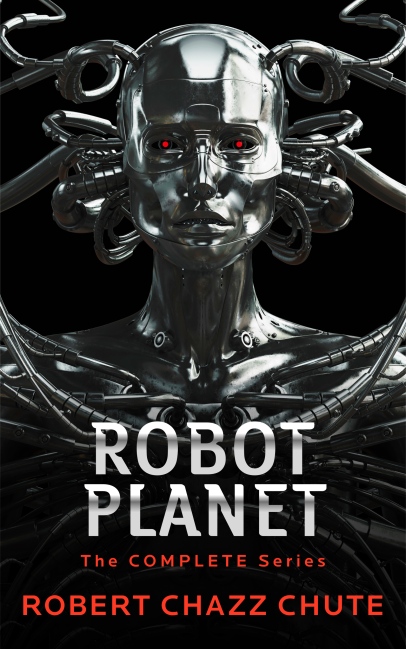
~ I am the cyborg writer of award-winning science fiction and killer crime thrillers. Find all books by Robert Chazz Chute on my author site, AllThatChazz.com.

Filed under: publishing, writing, , , , , , , , , ,

12 Tips to Write More

I’ve written, co-written, and worked as a book doctor for a long time. People have asked, how do you keep your ass in the chair long enough to be that productive? I do have a robot in my watch that tells me to get up and move around once an hour so I don’t become pudding. I set alarms to get me to bed and get me to work, too. Setting alarms is not just for nagging you to get out of bed.


Here are my simple suggestions for increasing your word count:

  1. Clear your workspace of distractions. (I have a blanket fort because I like to hide.)
  2. Clear your calendar so you have dedicated time to write. Be specific about when and where.
  3. Get excited about the current scene you’re writing. If it’s not exciting for you, it’s not exciting for the reader. If that’s the case, maybe it’s good you’re dragging your feet on writing it.
  4. Set a timer and, especially for that first draft, get the words down as fast as you can while you race the clock. You can accomplish a lot in short bursts.
  5. Shut off the internet so you focus on the job rather than checking out the latest on Huffington Post and Twitter news. The world’s ending. There, saved you some time.
  6. Do not wait for inspiration. Inspiration strikes at the keyboard, not while you’re playing Call of Duty.
  7. Since the hardest part is starting, tell yourself you’ll just write for ten minutes. Once you start swinging that hammer, you’ll get caught up in doing more damage.
  8. Take notes between writing sessions so you’ll have prompts when you’re back in the saddle.
  9. Drop your writing session on a note that’s easy to pick up again.
  10. Accountability is helpful. That could be just you counting your streaks in an app or on a spreadsheet, getting a writing partner, or finding a writing group. Tracking and reporting keeps you writing. My mastermind group has a writing room in Slack which tends to get me going.
  11. Visualize your success and how good it will feel to publish a book. You can’t get there without the homework part of being a writer, so do the thing.
  12. Picture the sad faces of all your haters when you hit it big. Cackle about it as you type. Motivation comes and goes, but fear of failure, terror of poverty, and ambition born of spite are strong emotions.

    What keeps you at the keyboard in this ridiculous, capricious business?

~ I’m Robert Chazz Chute. I write apocalyptic epics with heart and killer crime thrillers with muscle. Find links to all my books at AllThatChazz.com.

Filed under: writing, writing advice, writing tips, , , , , , , ,

For Anyone Who Has Been Pushed Around

Writing book descriptions is difficult, especially when your novel crosses genres. Mix apocalyptic and literary, for instance, and you’ve got a marketing problem. (And by you I mean me.)

Boil any premise down to its bare bones and it often sounds ridiculously stupid. You’ve seen the meme for The Wizard of Oz? Girl gets swept up in a tornado and kills a witch. Meets three strangers and goes off to kill again. How about Iron Man? Rich dude becomes a turtle to save the world repeatedly. Or The Metamorphosis: Salesman wakes up to discover he’s transformed into a cockroach. Nothing else much happens.

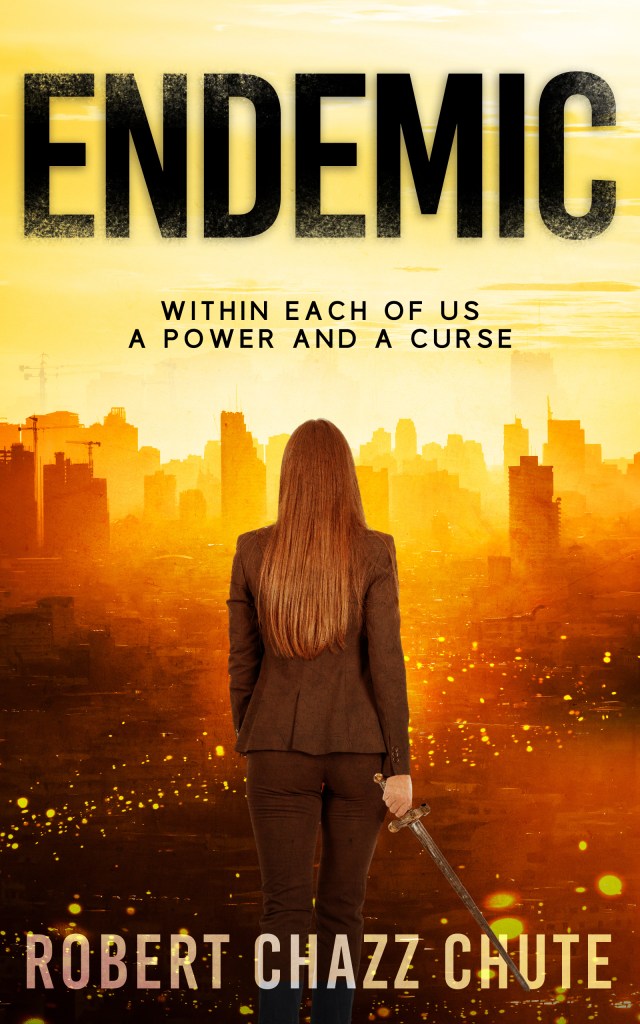
Endemic is set in a decaying New York after multiple rounds of the viral apocalypse have ravaged the United States. To cater to certain genre expectations, I gave readers the broad brushstrokes. Survivalists who respond to the title will get some tips they’ll like. Decoy gardens, solar stills, and compost toilets will intrigue that group of readers. But it goes much deeper than survivalist tips and doomsday prepper fantasies. The subtitle is Within Each of Us, A Power and a Curse.

Though Endemic is a dystopian novel, what’s it really about?

Amid the action, this is a deeply psychological novel. It’s about getting bullied and standing up to bullies. Ovid Fairweather is a highly sensitive person, an introverted book editor unsuited to dealing with marauders. And yet, with the help of her dead therapist, she grows and changes. She becomes a survivor thanks to her quirks, her strange obsessions, and the voices in her head. What’s her power and her curse? Memory. It’s the basis for all her regrets and all her potential.

Ovid has almost as much trouble with her abusive father as she does with the meanies out to steal her food. Several readers have contacted me to say (a) they love the novel, and (b) it reminded them of when they, too, were bullied. Resonance is great, but it’s not always comfortable. Events beyond her control force Ovid to adapt. In these troubled times, that’s a challenge we all face no matter who we are.

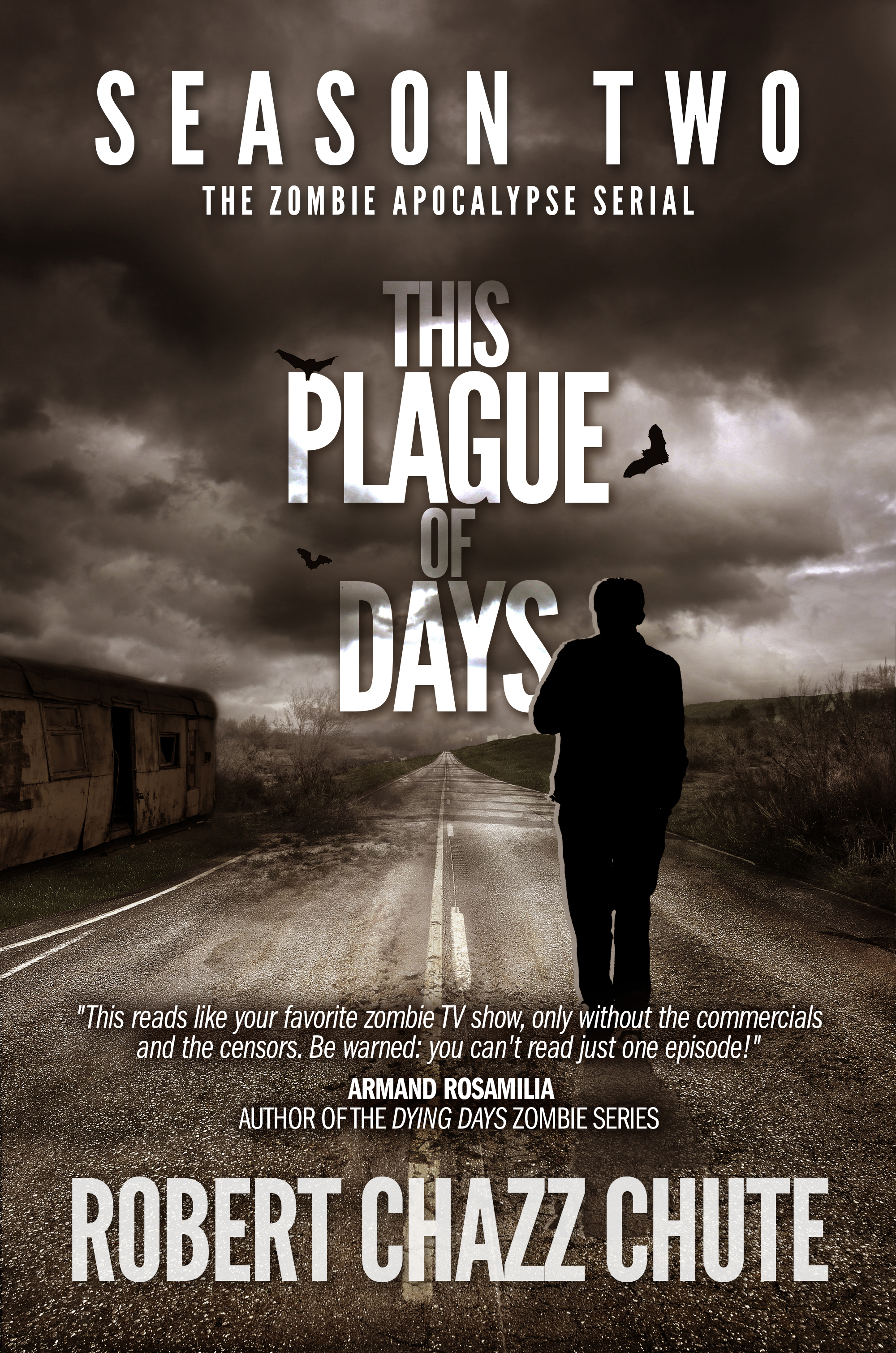
Writing Endemic was therapeutic for me. Through fiction, I got the weight of real angst and anger off my chest. That may not be what the survivalists who read apocalyptic fiction came for, but I’m betting the larger audience will dig it. (I’ve played this balancing act before in This Plague of Days, AFTER Life, and Amid Mortal Words.)

If you want great ROI your accountant will respect, write a long series to a particular niche with consistent and narrow branding on your graphics. That’s a more dependable approach to the business of writing. Alternatively, you could write across genres, defy expectations, and write a standalone book. It’s riskier, but I’m glad I did it. Your mileage may vary.

For anyone who has ever been pushed around.

Against those who do the pushing.

The DEDICATION of ENDEMIC

Filed under: Genre fiction, writing, writing advice, , , , , , , , , , , , , , ,

All of Us Are Wondering

The pandemic has altered our perceptions of what makes society’s gears turn. At their wit’s end, many people are exhausted of the fight against COVID-19. Not all changes are bad. I think the Great Resignation is a hopeful indicator that we’ll see more activism by labor in the future. However, the pandemic has also laid bare ignorance and institutional vulnerabilities. Watching the occupation of Ottawa, multiple failures have given birth to something ugly in the zeitgeist. I guess that ugly subtext was always there, but now that it’s out in the open, I wonder how these grotesqueries will change what we create in the next few years.

In my 20s, a friend often called me Mr. Cynical. After witnessing how a large contingent prizes convenience over the safety of others, I wasn’t cynical enough. A friend once insisted that people would come together in an emergency. Most will answer that call, sure. Others are too selfish to protect the vulnerable. I was cynical, but I did have higher hopes for us. George Carlin nailed it when he said, “Inside every cynical person, there is a disappointed idealist.”

What does this mean for writers and readers now?


I have a new book out, and like Endemic, the world at large has influenced my writing.

Our Alien Hours is about how humans react to the arrival of interstellar conquistadors. My editor made an interesting comment. “This is an unusual move for you. It doesn’t offer sunshine and lollipops.” She has a point. I always offer a bit of hope at the end of the journey and there are usually lots of jokes in the mix of action, suspense, and adventure. Always, that is, until Our Alien Hours. Offering too rosy a vision of alien invaders didn’t ring true to the scenario I posed. Resisting attackers who have the technology to cross the galaxy sounded so optimistic it was silly. Getting grim made more sense in this case. It’s that feeling you get when you watch the Korean sensation, All of Us Are Dead: Oh, no! Not her, too!

(Hint: The first episode of All of Us Are Dead is a hurdle, but after that, the series really picks up. They take the zombie genre in unusual directions that will be familiar to lovers of This Plague of Days and AFTER Life. I gotta love that.)

You’ve seen the memes. Does future lit have to be dumber?

“Zombie books of the future must have a scene where people run toward the zombies to get bit as they proclaim it’s all a hoax.” And, “We owe horror movie writers an apology. When the killer is breaking down the front door, a certain percentage of victims will definitely run upstairs instead of out the back door.” Heck, the human inclination to wish our problems away is the whole point of the Oscar-nominated Don’t Look Up! Given all we’ve seen, it’s hard to shake the feeling that plenty of idiots are in charge, or at least our leaders are willing to cave to the mob’s whims.

We want our fiction to ring true, but when there’s no one to cheer for, I’m out. I just don’t care for that at all. As writers, we’re going to have to strike a balance even as we endeavor to provide authenticity and a context of verisimilitude.

Here’s how one franchise failed in my estimation:

I find The Walking Dead‘s tone so relentlessly grim that survival seems pointless. I abandoned watching it because it seemed like so much rinse and repeat. It left me wondering why the survivors were fighting so hard to live since doing so seemed so joyless. There is a follow-up to TWD. It’s basically, TWD, The Next Generation. I couldn’t detect any fun to be had in that enterprise, either.

Train to Busan is brilliant, and the staging makes for an awe-inspiring film. However, if you stretched it over eleven seasons like TWD, it would surely wear out its welcome, too.

What are our options as writers?

Well, we could give in to despair, steer into the skid, and admit that the inspiring utopian Star Trek future we dreamed is beyond our reach. I don’t think that’s the way to go, though. Of course, in horror, readers demand the icy finger of grim reality delivering shivers down their spines. Those readers aren’t looking for Margaret Atwood-level character development from the villain. The maniac who dips his victims in hot wax isn’t that complex or worth knowing beyond a gesture toward a bad childhood. We’re in the entertainment business and that market wants to know how the victims react. Horror villains from Jason to zombies to vampires are rarely real characters. Instead, they usually represent Mortality itself as a force of nature. The entertainment value is measured differently in that genre. We don’t need to know the complexities behind the killer clown in It. We resonate with the kids he drags into the sewers.

Note to all fiction writers about educating readers versus entertaining them! Please, whatever you write, set out to entertain first. If your primary goal at the keyboard is to educate, stick to writing textbooks. Thanks!

Now, where were we?

Next option:

Balance out the horrors of grim reality with happy escapism. Write more romances where quirky people somehow get married to their frenemy accidentally. Ooh, the storm is here, the bridge is out, and golly gee! This romantic little B&B only has one room left and look at that queen-size bed! Romance has always been the most reliable powerhouse of genres. To get us past the pandemic so we finally arrive intact in the New Roaring ’20s, writing fiction that looks the other way is a sure bet. A hundred years from now, if there are any historians left, they won’t be combing old romances for clues to how we dealt with COVID-19. And that’s a good thing. I’m all for getting your comfort wherever you can find it.

Don’t forget hopepunk. It’s not a big genre, probably because it is so difficult to execute with authenticity. Go this way and who knows? To counter the difficulties of the pandemic, it could be the genre that explodes in the next couple of years.

Or, we could reflect reality.

Remember The War of the Worlds, the Tom Cruise movie from 2005? It’s an alien invasion story, but it’s really about how war affects refugees. Both the film and the book explore our foibles, failures, and vulnerabilities. Survival is the goal, but the journey rotates around heroism, family, commitment, and communication.

In Our Alien Hours, I didn’t look away from doom. The book is about communicating the experience of facing death and danger. Heroes and fools both make interesting choices. The phrase “the human condition” has always sounded empty to me, but after writing Our Alien Hours, that’s not true anymore. The outcome may sound grim, but the trip offers noble and true moments as we face mortality together.

My next book will offer more hope for the human race, but it won’t get there dishonestly. Salvation must be earned. I hope by the time I publish my next book, we’ll be at the other end of this pandemic. We have a long way to go yet.

~ Our Alien Hours just launched. For a gritty but not gory alien invasion, you can pick it up here.

For links to all my books, head over to my author page at AllThatChazz.com.

Filed under: pandemic, writing, , , , , , , , , , , , , , , ,

NaNoWriMo is not a bad thing

NaNoWriMo is a good thing.

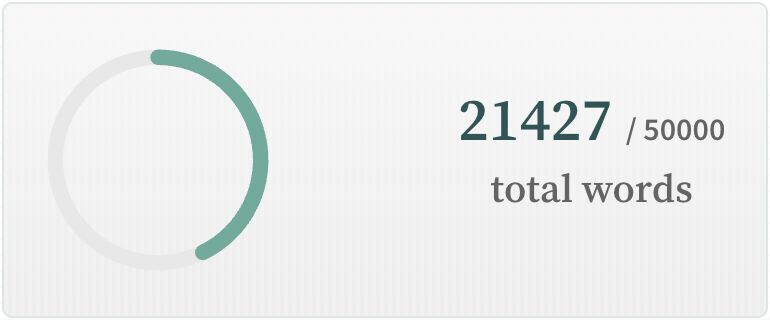
We’re coming up on the halfway point of November already (which scares the rabbit pellets out of me because Christmas is coming fast. I wasn’t going to do National Novel Writing Month this year, but changed my mind at the last moment. I enjoy their metrics and I’m a little ahead of the pace so everything is chunky hunky.

Some authors are down on NaNoWriMo, but I have to say their arguments against it are often made of straw and soggy bran cereal. It’s not just for novices who’ve always dreamed of writing a book. I write every day anyway. That doesn’t mean NaNo doesn’t give me a boost. A little friendly competition can get me started earlier and makes me write a bit longer than I might have otherwise. 2479 words last night!

NaNo is so big, sure, there are inevitably a few people in the mix who think they should fire their first draft off to an agent. However, most people are sane. The vast majority won’t commit that sin. NaNo doesn’t encourage that kind of slapdash approach, either, so ease off of those worries and enjoy a chocolate chip cookie.

Some question the word count. Why 50,000 words? Isn’t that too short for a novel? It didn’t used to be. Those word count conventions are a bit dated considering that the numbers are less of a factor with ebooks. More to the point, the originators of NaNoWriMo chose 50,000 words as a suitable goal for good reasons. It’s not too short for veterans nor too long for first-timers. It also happens to be the approximate word count for The Great Gatsby.

There’s a little Apocalypse Now energy around NaNo that I find helpful. I’m Martin Sheen at the beginning of the movie whispering, “Every minute I’m in this hotel room I get weaker. Every minute Charlie is out in the jungle he gets stronger.” Then I break a mirror because someone out there somewhere is writing.

Then I write.

~ The newest novel from Robert Chazz Chute is Endemic. Highly sensitive, bookish, and alone, Ovid Fairweather is bullied by her father, haunted by her dead therapist, and trapped in the viral apocalypse.

Get Endemic now. It’s about to go viral.

Filed under: NanNoWriMo, writing, , , , , , , , , ,

Dexter, My Panic Attack, and You

Michael C. Hall is reprising his most famous role in Dexter, New Blood. That this limited series is back is remarkable. The original series ended in 2013 and it did not end well. A bit about that, then let’s talk about The Bounce and how it applies to you and me.

In 2013, I listened to a podcast that was all about Dexter. This pod went deep, right down to the music cues. This was for hardcore fans who obviously loved the series. Most viewers agree that the show peaked at the end of the season with John Lithgow (no spoilers here.) This podcast was for fans who stuck with it to the bitter end. Count me among that hardy crew of diehards.

That so stipulated, the podcast had two letters shows wherein fans wrote to express their final thoughts. The overwhelming evidence was that most people were terribly disappointed. Let’s be real about this: endings are hard.

Evidence

  1. Kim’s Convenience’s end was anticlimactic and seemed mostly pointless, as if they didn’t know what to do with it. And don’t get me started on the end of the second-last season, where I thought my TV cut out prematurely.
  2. The Sopranos end is memorable for the wrong reasons. I thought the bartender Tony beat up several times should have come back to kill him for personal beef, not mob business. That end seems fitting since he was such a shitty person.
  3. Breaking Bad was fantastic, but they missed an opportunity when he meets his end without ever sampling his own product. That’s my only complaint there.
  4. I didn’t see the final season of Game of Thrones for a while. I heard it was terrible. When I finally did see it, honestly, I couldn’t figure out what everyone was complaining about. Was the end really that bad. I found it quite consistent. It seems bad is the consensus since so many fans have disavowed it and GOT disappeared from pop culture so thoroughly.
  5. How I Met Your Mother met with outrage at the end. They tried something and I applaud the experiment. The problem with the execution was it was a comedy that managed to land as a downer rather than achieving romance. That’s not why fans tuned in for so many years.

    Let’s first acknowledge there is such a thing as toxic fandom. If you’ve written a book, eventually some reviewer who thinks they’re helpful will try educate you on how you should have done it better. Even though the longest thing they ever wrote was three paragraphs of a sour review, they’re very confident they could have saved you if only they’d sat on your shoulder and told you what to do. Note to those reviewers: better not to do that. Like it or don’t like it. Write your own. You’ll probably find it’s not as easy as you think.

The Triumph of Hope Over Experience

Most famously, the fans brought Star Trek back to become a fantastic franchise with so many iterations it’s a disappointment again. Firefly returned as a movie because fans campaigned for it. It is generally acknowledged that the space western got short shrift from network execs who couldn’t find their ass with both hands. Similar story with Family Guy. The network canceled the series, but after three million DVD sales, brought it back to great success. FOX cancelled twenty-nine other shows in the meantime, so when it came back from its hiatus, Family Guy mocked them for it. Twenty-nine! The Winston Churchill joke comes to mind: “You can always count on the Americans to do the right thing after they’ve tried everything else.”

Finding the Way Back

The return of Dexter is a little different from other risings from the grave. They’re coming back to fix it. The final episode was so ill-conceived and ill-received, it was not relegated to the dustbin of TV trivia. It failed so hard, they’re getting another kick at the can. That’s what I call The Bounce. And you know what? It’s a good thing. We can learn from this,

I know it can be frustrating to see old ideas get recycled. It often seems like there are no original ideas in Hollywood. Perhaps your book should be made into a movie or a popular TV series. I know several of my books deserve to be made into films to stir the soul and make boffo box office. However, Dexter was very good before it went sour and it was always watchable. It’s taken a weird circuitous route to get to this place, but I think it deserves another chance to entertain us. Let’s be happy about it. Skepticism is understandable, but cynicism isn’t fun and hey, stay real. The stakes are low.

I miss Dexter living in Miami. I miss Angel Batista being sweet and kind and utterly oblivious to Dexter’s serial killer ways. Masuka was hilarious as comic relief in the original series. But there are new and fun characters to enjoy in this new iteration. I’m glad Dexter is back, and I enjoyed the first episode.
Welcome back, buddy!

What does The Bounce have to do with us?

As writers, you are the studio. If a book fails, you can kill the series or resurrect it in a new iteration. You have the freedom to edit it again, to add or delete chapters, to relaunch it. You don’t have to appeal to a network or suck up to a committee. You’re free to bounce back as many times as you can stand.

Last night, I had a panic attack. Those Bookbub ads I was experimenting with only worked on the first-in-series of AFTER Life, the one I give away for free. Three or four problems hit me all at once and I spiraled down. I couldn’t catch my breath. Caught up in catastrophizing, I felt like I was drowning and maybe dying.

This morning, I’m back to writing. I’m in NaNoWriMo and the word count is on track. I’m happy with what I’m creating. I am committed to bouncing back.

Lots of things fall apart for many reasons. You can’t control all the variables that lead to failure or success. As a writer, you are positioned to steer your own ship. If you steered into the rocks, you can fix the hull or jump onto another ship. It’s okay. We’re going to be okay.

The old joke is that a second marriage is the triumph of hope over experience. Art is a different story. Every book launch is full of hope. Every writer tends some small fire that signals they’ll “make it” (whatever that means to you.)

Make art. Just make art. Try not to panic.

Filed under: writing, writing advice, , , , , , , , , , , , , , , , , , , , , ,

Show me you are a writer

You know this meme:

Tell me you’re X without telling me you’re X.
It just occurred to me that this is another version of a good writing guideline: Show, don’t tell.

Good fiction exploits resonance and a certain amount of circuitousness. Don’t tell me your heroine is brave. Let the character demonstrate her bravery. Book readers want to meet the author halfway to achieve an immersive experience. They don’t want a telegram.

Of course, there are times to tell, not show. When dialogue is interesting and clever, let it be said in quotes. If the dialogue is merely informative and delivers zero bam-pop-pow, then it’s time to tell instead of show.

Telling:

He asked me if I wanted a coffee before the interview, and I declined.

Showing:

“Fancy a hot cup of java?”

“No offense, sir, but I make it my policy to never accept any beverage from a person of interest in a poisoning case.”

~ Robert Chazz Chute shows and tells appropriately. His killer crime thrillers and apocalyptic epics deliver lots of bam-pop-pow. Check out his books on his author site, AllThatChazz.com.

Filed under: writing, writing advice, writing tips, , , , , , , ,

Bestseller with over 1,000 reviews!
Winner of the North Street Book Prize, Reader's Favorite, the
Literary Titan Award, the Hollywood Book Festival, and the
New York Book Festival.

http://mybook.to/OurZombieHours
A NEW ZOMBIE ANTHOLOGY

Winner of Writer's Digest's 2014 Honorable Mention in Self-published Ebook Awards in Genre

The first 81 lessons to get your Buffy on

More lessons to help you survive Armageddon

"You will laugh your ass off!" ~ Maxwell Cynn, author of Cybergrrl

Available now!

Fast-paced terror, new threats, more twists.

An autistic boy versus our world in free fall

Suspense to melt your face and play with your brain.

Action like a Guy Ritchie film. Funny like Woody Allen when he was funny.

Jesus: Sexier and even more addicted to love.

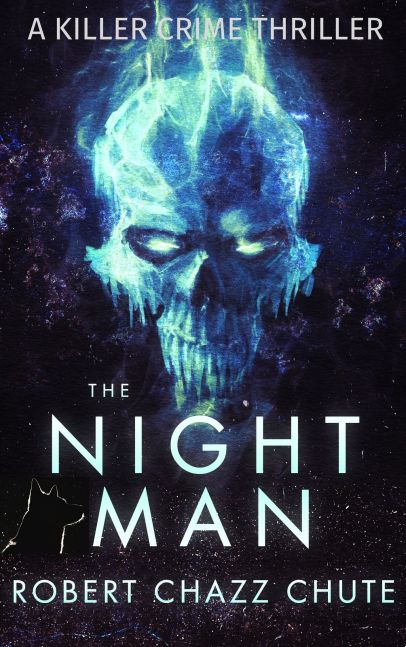
You can pick this ebook up for free today at this link: http://bit.ly/TheNightMan

Join my inner circle at AllThatChazz.com

See my books, blogs, links and podcasts.

Enter your email address to follow this blog and receive notifications of new posts by email.

Join 2,061 other subscribers