C h a z z W r i t e s . c o m

See all my books at AllThatChazz.com.

PLEASE: DO NOT SPAM ANOTHER LINK UNTIL YOU READ THIS!

See on Scoop.itWriting and reading fiction

Bestselling author Rachel Thompson from Badhead Redhead Media tells us the ugly truth about promotion. We’re going to have to actually talk, interact and engage with people. I don’t like the sound of that at all, of course, though I have no doubt she’s right. Sigh. Anyway, Rachel’s a peach (and taught me about tagging my books on Amazon yesterday.) Click and learn at the link! ~ Chazz

See on badredheadmedia.com

Filed under: publishing

AB Challenge 24: More on Free Books. Moron Free Books.

Yesterday, we talked about free ebooks and me. Now let’s talk about you, too. Recently we said, “Free is the new 99 cents!” Now free is fraught with diminished opportunity and all that lousy freeness. Let’s delve into pricing ebooks for promotions and try to figure out for ourselves if this is a time to rest and recover or should we double down on ebook marketing?

History: Last year, selling at 99 cents still moved some books and gained new readers. The royalty wasn’t great but it was a loss leader. Now 99 cents just seems to be a loss. I had my novella, The Dangerous Kind, up for 99 cents. It’s a great story that slides the steel home at around 10,000 words. After analysing the sales (took two seconds) I’ve taken it down. Later this week it will be back on Amazon for $2.99, bundled in with some Poeticule Bay short stories. My short story collections sell, but offering a deal on a shorter work didn’t attract readers and my short stories on Smashwords (each priced at 99 cents) aren’t moving as is so they’ll all be in one collection: The Dangerous Kind and Other Stories.

Part of the problem was the old cover for my novella. I’ve blogged about this issue before so I won’t rehash it. I’ll only say: Be indie if you want, but make sure your covers don’t look indie. (My graphic designer, Kit Foster can help you with that at a very reasonable price for a very professional look.)

GET BIGGER THAN JESUS

The Loss Leader Pricing Paradox: You’re pricing your work inexpensively to attract new readers. You’re hoping new people will find you, take a chance on you, dig your flavour, buy all your books and spread your holy word. However, going cheap actually repels some browsers because they associate a cheap price with a bad book. So many times I’ve read in comment threads, “If the author values their work so little, why should I?” There’s someone who doesn’t appreciate the indie author’s bind. I’ll save your life for free. Does that make your life worth less? (Ooh, he’s cranky today!)

Which brings us to the Opportunity/Problem Paradox: The same browsers who think 99 cents cheapens the inherent value of the book often think no less of an author who offers their work for free. All ebooks have free samples, of course, but I don’t think very many potential buyers look at them. They go by genre, the author’s rep, the cover and the description (not necessarily in the that order.) Free is easy and no risk and I haven’t seen many people casting aspersions on authors offering free entertainment. Free is so ubiquitous, it’s considered the norm. It’s an opportunity for the reader and the writer. Free is so ubiquitous, it’s a problem because of the glut of free ebooks on e-readers. We’re drowning in free.

The Perceived Value Corollary: There are so many free books filling up e-readers that readers have no commitment to what they download. (Amazon says, “Click to buy”, but if it’s free, it really means “Click to download”, doesn’t it?) Many of those free books will go unread. When you can click and get, click and get, click and get, there’s no investment on the reader’s part in individual books. Instead, the hoarder mentality rises. What this means for writers is, the minute you’ve dared to slow down your narrative, the quicker the reader is to dump you for another free ebook. We’ve already seen evidence of this trend: there’s less of a market for literary fiction that demands more of the reader.

PV Corollary Case study: A buddy of mine was a sales rep for Margaret Atwood and loved her to bits. I told him I couldn’t get into The Handmaid’s Tale. I bailed out after too many slow pages examining the scratchings of previous handmaids in the rear of the bedroom closet. “Chazz,” he said,”What you’ve got to learn to do when a story slows down too much is grab a few pages and flip forward.” I’m a bit OCD about reading every word so I was a bit shocked. Skipping a page  had never occurred to me. “So…” I said, “You haven’t read it, either!”

The Hidden Unintended Consequence: On an e-reader, no one knows what you’re reading on the bus to work. Sales of erotica have risen because we don’t have to hide our actual taste or pay at a bookstore register manned by a silver-haired woman who looks exactly like Baptist Grammy. Only Homeland Security and the computers that record everything know all you really want is Fifty Shades of Grey. However, it’s not just about erotica. The market has ruled and so-called “downmarket” fiction is what people buy. The readers disagree with the historic arbiters of taste about what’s important. (Did you hear that pop? Somebody’s head exploded again. Clean up, aisle three!)

The Value Addition: When you buy a book — not just download it for free — you show commitment. You’re trusting the author to show you a good time and if you throw it aside, you aren’t just tossing the book. You’re throwing away the bucks you put into it, too.

The Cost-benefit Analysis: For readers, free books are great because choice is awesome. For the writer, providing free books is a way to gain the trust of the reader at no risk (to the reader.) It’s about exposure so you get ranked on lists. Many readers don’t trust reviews (often unfairly) so free is one  avenue into their hearts and minds. We’re making a short-term sacrifice to get our work read, to get on “also viewed and also bought lists” and to get our share of that sweet lending pot of gold from Amazon. Giving our precious away for free is an advertising cost that doesn’t show up as a debit in our bank accounts, but it’s still a cost.

The Cost-benefit Caveat: Since Amazon changed their algorithm, it’s not as happy a story as it was last December. Unless you wrote Fifty Shades of Grey, sales have slumped across the board since March and we’re now into the summer doldrums of the book buying year. The market is as cyclical as the sea. The wind will come back in our sails. The readers will return as free diminishes. Some authors are opting out of KDP Select, or opting in for one three-month cycle for the promotion and then opting out to stop the exclusivity clause and give other sales outlets a chance.

The Irrational Variable Conundrum: Does free devalue literature? Will our prices be chronically depressed because of free? As an indie writer, this isn’t a question that affects me. The higher prices traditional publishers charge for ebooks doesn’t mean that their authors are getting more dough. It’s going to the publishers for their high overheads. I only have to pay me so the 70% royalty rate on my books still looks pretty sweet to me. Like they used to say in cheesy, local car commercials on cable, “How do we do it? Volume!” I’m glad traditional publishers keep their ebook prices high. It gives a guy like me a chance at being discovered.

Will these short-term sacrifices mean long-term financial pain? No, yes and maybe. Who knows? I’m suspicious of too much certainty. Your answer may vary because the fulcrum for this heavy conundrum rests of an irrational variable: How high were your expectations to begin with? Is this side money, the size, say, of the little Swiss Chalet side salad? Did you want the comfort of the double leg dinner as an income? Or did you want the richness of the full Swiss Chalet Family pack with the coconut cream pie for desert? Input your variable and solve for X.

Conclusions: Given the free ebook glut, do you market even harder now that we’re into summer’s slow days? I think I’ll just stay the course. It feels like trying to run up the down escalator and I already flog hard enough as it is. Instead, I’m focusing my energies on putting up more of the work I’ve prepared and I’m writing new stuff. I’m giving the market more time to recover so I’ll be ready with more books to sell.

Putting up more books is the only sure way I know of selling more books.

Predictions:  New strategies will emerge, but no one seems sure what The Answer is. It might not be one answer and it might not be as dramatic and sweeping as the free ebook boom that hit the market when Amazon’s KDP Select algorithms benefited us so much back in December. I suspect we’ll be actively spending more money on advertising and promotion for our books in the near future. I’m aware of a few new and clever-sounding strategies, but they are as yet untested by the market’s searing flame. I’ll revisit said strategies in a future post, but today’s post is already too long and don’t we have some serious writing to do?

Filed under: publishing, , , , , , , , , , , , , , , , , ,

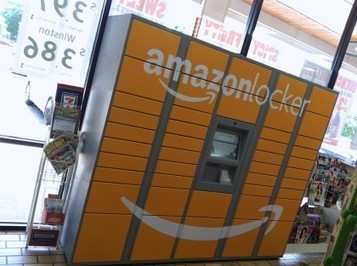
Amazon Lockers Arrive In Washington DC Suburbs

See on Scoop.itWriting and reading fiction

New service from Amazon. It will be interesting to see if this catches on. This is the first I’ve heard of it. I suppose apartment-dwellers without anyone to sign for their packages might hit the grocery store and pick up their Amazon shipment along the way. I can’t imagine using it myself, though I’m sure someone said they’d never trust ATMs.

See on www.zatznotfunny.com

Filed under: publishing

Four Ways to Think Long Term in Indie Publishing

See on Scoop.itWriting and reading fiction

The Indie Author News hosts this juicy piece from author Susan Kaye Quinn about playing the long game. Learn at the link… ~! Chazz

See on www.indieauthornews.com

Filed under: publishing

50 redundant phrases to avoid in writing

See on Scoop.itWriting and reading fiction

We get the point; no need to say it twice. Eliminate duplication for concise writing.

See on www.ragan.com

Filed under: publishing

Author Blog Challenge 23: Free sex and the value of an ebook

GET BIGGER THAN JESUS

Why should he pay for the cow when he can get the milk for free? If you’re unfamiliar with this distasteful euphemism, it’s meant to control and shame women so they defy their biological needs and get married too young to the first doofus* who comes along so they won’t risk being called sluts by a repressed and repressive patriarchy and said patriarchy’s agents. It’s the same misogyny behind, “For birth control, hold an aspirin between your knees,” and “Good cowgirls keep their calves together!” It’s kind of funny the first time you hear it. Then you realize it’s a power grab meant to squelch the joys of life and your humanness. (I do love a breakdown of social constructs so the deviant subtext in revealed.) What, you ask, does that have to do with ebooks? Everything.

Yesterday began a little after 5 a.m. It continued until 3 a.m. I hasten to add there were distractions. I did stop to shower and eat. There’s a shower hose over my desk chair by the IV pole. The IV bags are full of double espresso. The desk chair is a toilet. It’s like the helpful chairs in WALL-e, before that evil little robot screwed everything up for everybody and made them get up and move around outside. Mostly, I formatted my new book. For all the work, I wonder if people will buy it when they can have it for free?

Crack the Indie Author Code: Aspire to Inspire (by Robert Chazz Chute, coming in early July!) is a book based on the best of this blog. I’m creeping up on 1,000 posts and I thought it was time I made something more concrete of it. It’ll be my favorite posts in one convenient, pithy, humorous, inspirational package. I’m editing again and updating as I go, of course. At over 90,000 words, it will be my comprehensive take on what the newbie needs to know and what the self-publishing veterans’ choir likes to sing. I wrote a note in the front matter about who the book is for. I made sure to say: Hey, if you want the milk for free, feel free to sift through the blog. ChazzWrites is free. All the podcasts at AllThatChazz are free, too. Everything I sell is so close to free in price, you’d tip the pizza guy what you’d pay for my books. Enjoy! I give freely, without remorse or hesitation or hard feelings. Surprising, because, as a cheap writer who can pinch a Canadian quarter until the moose screams (that’s “eagle screams” if you’re in the United States), I’m actually a terrible tipper.

There is a lot of information that’s free on the Internet so I try to keep ChazzWrites.com fresh and a little different — even contrarian. I think I convey that information with a certain flair, but my hairdresser thinks he’s funny, too. Meanwhile, I just wish he’d never learned to speak english. I’m not going deep  into ever-changing information, either. Crack the Indie Author Code isn’t about the latest marketing theory for self-publishing. It’s evergreen stuff — old-fashioned from a new angle —  about writing craft as seen through my lens and as told to any writer who is more eager for cozy inspiration than ebook marketing advice. (With the changes at Amazon, a lot of marketing theory is still up in the air, but if you want a solid marketing book that’s user-friendly, buy my friend Jeff Bennington’s book, The Indie Author’s Guide to the Universe and check his site for updates.)

Since my new book is hidden right here within nigh 1,000 posts, why buy it to put it on your e-reader? What’s the unique selling point? What’s the value to the customer? I’d say: ease of use; improved readability; improved searchability; updates; new content; improved content; my moral support and your grasping consumerism. I make better jokes as I make another pass at the content, too.

As I go through Crack the Indie Author Code, I can see how some of my ideas have changed over time. When I started this blog, I talked a lot more about craft and writing mechanics. Self-publishing needed more cheerleaders then.  Now we need more leaders. Early on there was more, “Rah! Rah! Rah! Those guys in trad pub don’t get it and don’t see what’s coming!” I omitted some of those posts even though I was right. They were appropriate at the time, but it’s time to mature (the jokes are still less than mature.) Self-publishing’s next step is simply to call it publishing. We need to get past hang-ups about trad versus indie. Yes, of course, there’s still value in traditional publishing. It’s not going away. It’s just changing radically. The new paradigm is not necessarily either/or. Depending on business cases, multiple variables and your temperament, you may choose to do both and only the terminally crank y will fault you. Meanwhile, successful revolutions establish regimes.

But, will anyone bother to buy another writing book? Don’t we have enough?  The broad answer is, can you get enough of whatever your passion is? More particular to my writing book, those who like my flavor will buy it. Those who won’t, won’t.  That’s all beside the point, anyway. I know it’s a business, but I don’t write for you because I can’t anticipate all your  variables and idiosyncrasies. I can only write to my taste. I write for your adulation, sure, but first, I write to entertain myself. I’m hoping you’ll say, “Oh, Chazz, how clever you are! I’ll buy umpteen copies for all my friends!” But before you ever get a chance to evaluate, that’s me sitting at my keyboard enjoying the dopamine trickling and tickling my neo-cortex. That’s me saying, “Oh, Chazz, how clever you are!” We write for ourselves first, not the reader. The act of writing is primary, sometimes even primal. The point is to form the thoughts, think through your typing fingers and transcend the blank page until you’re high on the creative rush.

Will Free beat out $3.99 in the cost-benefit analysis? No. You’ll buy my cow for convenience or for other variables, not least of which is, to have and to hold. And, to answer the ugly metaphor that began this piece? Most  people enjoy free premarital sex and yet most people still marry (some to dark and very costly ends.) At $3.99, the risk is microscopic compared to marrying someone.

To win your $3.99, I just have to create something I’ll love.

If you’re of the same mind, I have a sale.

Back to the espresso drip. I’m off to make that dopamine gush!

* Generalizations aren’t fair. Sometimes the first doofus is the right doofus, but most people these days test out several to many doofuses before selecting the one doofus they can love (and be most angry at without opting for murder) for the length of their marriage and possibly the rest of their lives.

Filed under: publishing, , , , , , , , , , , , , , , , , , , , , ,

AB Challenge 22: John Leguizamo, I know you’re reading this. Call me.

Leguizamo outside the Broadway production of A...

Leguizamo outside the Broadway production of American Buffalo, November 21, 2008 (Photo credit: Wikipedia)

Today’s writing prompt: If a Hollywood agent were to come knocking on your door with an offer to turn your book into a movie and told you that you could call all the shots, who would you have direct and star in it? Write the first paragraph of Roger Ebert’s review of your film.

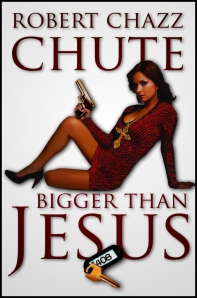
For my crime novel, Bigger Than Jesus, Martin Scorcese or Quentin Tarantino would be my first thought for directors.

For the Jesus Diaz, the Cuban hit man who wants out of the mob, could be played by the great John Leguizamo.

Eva Mendes comes to mind first to play the lovely Lily Vasquez, the most gorgeous woman in New York and the object of Jesus’s worship.

For Big Denny De Molina, Jesus’s best friend and biggest obstacle? Dwayne (The Rock) Johnson would be perfect, especially if he’s willing to keep the biceps but add a bit of a fat suit.

Jimmy Lima, the dangerous underboss? Jimmy Smits, of course! After his tour on Dexter, I can think of no one better for that role. Andy Garcia would be great, too.

Uma Thurman would be great as Barbara, Jimmy Lima’s wife. (Shades of an overlap with Pulp Fiction there.)

Harv and Marv, the twins with tattoos on their necks? Michael Fassbender or Ryan Gosling. (This one’s for you, ladies! Times two.)

Panama Bob is the other underboss who has skimmed a fortune in mob money (that Jesus needs to escape). I’m thinking a bold casting choice: Zach Galifianakis going against type.

For Vincent, the godfather of the piece, I’d take Jonathan Goldsmith, the actor who plays The Most Interesting Man in the World in the Dos Equis commercials.

My cousin David Strauss as the FBI agent. My other cousin is the actor and jazz singer Amy Hack. She’d be great singing a torch song in a bar.

As for the hypothetical Ebert review: I don’t have enough thumbs to point up! Run, don’t walk, to the nearest theatre to enjoy the best mob movie in ages. Jesus Diaz, played by John Leguizamo in his best role yet, is a clever hit man who wants to escape New York with stolen mafia money and his girlfriend, Lily Vasquez. In a darkly humorous trip full of witty dialogue and fast-paced action that will leave you breathless, it’s the unexpected twists and reversals you can’t see coming that elevate this to a movie you’ll want to see again and again. It’s so good, you’ll even want to buy the book by Robert Chazz Chute, too!

GET BIGGER THAN JESUS

Filed under: publishing, , , , , , , , , , , ,

About that Algorithm | Indie Jane

See on Scoop.itWriting and reading fiction

Found this post by Indie Jane through The Passive Voice and thought I had better spread the word on dealing with the new Amazon algorithm and pricing. I’d also draw your attention to the comment thread where someone noticed indie author reviews are disappearing! Has this happened to you? If so, there’s a major problem going on. I work too hard (as I’m sure you do) to get reviews, so losing them is not acceptable. I’m hoping that is a localized aberration. ~ Chazz

See on indiejane.org

Filed under: publishing

Author Blog Challenge 21: My Top 20 Best (Worst?) Advice for Authors

Обкладинка книги "Над прірвою у житі"

Обкладинка книги “Над прірвою у житі” (Photo credit: Wikipedia)

1. Be weird. Draw outside the lines. Live larger. Be different. If you can’t dare to be a little strange, or stranger, you sound too much like everyone else and there’s quite enough of that. Does your book’s title sound like all the other titles in its genre? Yes? You’re already boring me, mate, and I say that with love. Be three times more daring and ten times more clever.

2. Don’t write what you know. If we all did that, where would science fantasy be? Instead, write what you care about. You’ll get enough research to fill in the holes if you care enough to give your story verisimilitude. It’s always more about relationships, characters and action than it is about the guts of your ship’s stardrive engines, anyway.

3. Lose your thesaurus. You don’t need more words to tell me the story. The right words are the ones that come to you right away. If you use the word “epigonation”, you’re showing off and annoying your reader. A stupid thing to do, especially when you wanted to sound more intelligent. That must have been your aim because, unless you are sending your books back through a time tunnel to the time of Christ, you certainly weren’t trying for clarity in your reader’s mind.

4. Spam me. I don’t mind you telling me about your books one bit. I might be interested and I like to know what my options are. If you hit me over the head too much, of course I’ll ignore or unfollow you, but that doesn’t mean you should be silent. That means be clever and funny and engaging and giving most of the time. Lights are not for hiding under bushels. Light that bushel on fire and throw illumination.

5. Get into fights on the Internet. If you are getting along with everyone all the time, you’ve either got nothing to say or you’ve got no spine. Neither attribute attracts me to what else you might have to say within your book. I’m not advocating douchebaggery or fighting for fighting’s sake. Instead, have the courage to disagree with idiots while pretending to be civil and acting as if you don’t want them dead. We all know the truth.

6. Tell, don’t show. I know, I know. Somebody’s head just exploded and no amount of repainting ever covers up that mess. However, in grown up writing class, we encounter circumstances where telling is sometimes more appropriate. It saves the reader time and skips over stuff the reader doesn’t care about so we can get to the good stuff. Be more Elmore Leonard. Be less mime. Tell when you need to. Show when you need to. There aren’t rules, only guidelines. Learning all the rules before you break them? Sounds like a waste of time on a detour, doesn’t it? Instead, just write what works and stop mucking about.

7. Strangle your strict inner grammarian. If you write for clarity, that will cover most grammar rules, anyway. Some people are still holding on to stuff from eighth grade simply because it’s what they learned in eighth grade. The rest of us are splitting infinitives with wild, naked abandon, ending sentences with prepositions and using the word “hopefully” like a normal human (i.e. technically historically wrong) — and we don’t care. And sentence fragments? Rock! Common parlance trumps grammar. If it didn’t, none of us would communicate the way we do now. Strict grammarians fantasize about a language that isn’t organic and instead is frozen in amber from Dickensian England. They’re nuts. If language could freeze (and therefore die), we’d all still be angry cave people, grunting and pointing like New Yorkers in a Brooklyn deli.

8. Stop rewriting. I’m talking about your first chapter. You’re never going to get your book finished that way. Plunge! Get your atomic turbines to speed, Batman! Write and keep moving forward. Write like I’ll chase you in my Mustang with a twelve-gauge full of rock salt if you don’t finish two chapters tonight. (Because I will.) Rewriting is for later. A first chapter, endlessly written  and rewritten to perfection, does not a book make. Rewriting too soon is a formula for you, drooling on your deathbed, wondering if you should have taken out that comma on page three, and then put it back one more time before all trace of your existence is erased and there’s no book as evidence you ever were, you zero legacy stiff!

9. Stop reading old classics and start watching more movies and reading more comic books. Your english professor thinks Hemingway is the shit because that’s what he was taught in 1980. This is generational data lag. If you insist on classics, read: Crime and Punishment (so dates will think you’re deeper than you are); Hemingway’s short stories (not his novels); Portnoy’s Complaint to instil the value of a sense of humour in literature (a rare thing, that); A Confederacy of Dunces (for douchebag cred with hot Lit. majors at the dean’s cocktail parties and the nerdy chick at the bookstore) and Catcher in the Rye (in case the writing thing doesn’t work out and you turn to the next logical career choice: serial killer.) And nothing at all from Ayn Rand. Nothing! You have nothing to learn from her unless you’re going for what not to write, do, think or be.

Why movies and comic books? Because you need to make your storytelling more visual. (Hint: If most of your “action” takes place in a suburban living room much like your own, think harder. If you’re writing a certain kind of literary fiction that demands domestic ennui and the reader’s patience (yes, the reader — as in one reader — your mom), at least spice it up somehow. Make your main character do their sensitive contemplation by the river (so they can fall in or throw themselves in or get thrown in by a helpful plot enhancer). Or put them in the kitchen, next to the handy knife block so we get a sense that something might actually happen. Events must occur!

10. Stop writing huge, ambitious books. Write shorter books and make it a series so you have hope of making some money.

11. Write for the money. You think love and passion will get you through a whole book? No. There will come a time when you hit a wall, figuratively and literally, with your manuscript. Maybe you won’t want to do one more draft or you won’t have the energy to get up early and write another chapter. Screw that weak, loser talk. If you’re writing with the hope you’ll make some money some day, you get up. You’ll go the extra clichéd mile to yank out the clichés from your manuscript like black, seething tumours. Your kid wants to see Disney before she’s too tall for the rides. Your other kid wants to finally get an iPod for his birthday since he’s the last of his friends to get one. (Ooh, that one hits close to home.) Write for money because you need it. Write for money because, if it’s just a pleasant hobby, what’s at stake when the going gets rough?

12. Pay attention to how much better every other indie author is doing than you. Get angry, envious and jealous of those talentless, lucky hacks. The reasons are similar to #11. Take your ugly motivation wherever you can find it. (Notice I just told instead of showed — #6 — and you didn’t mind.)

13. Put references to popular culture in your books. Traditional publishers always eschewed that in manuscripts.  That’s why you have to infer so much about pop culture from old novels instead of knowing specifically what people paid attention to. The worry was that contemporary references to movies and issues would date the book. I can’t imagine why. What’s modern now will be a period piece in the future. So what? They might sell more books if they paid attention to what served the story and what was most entertaining instead of sticking to rules from from Lit. 101. (See #9) It works for John Locke’s readership.

14. Stop confusing process with product (Part 1). Neo-Luddites who wax poetic about the feel of a paper book are fetishizing the medium of dead trees over the book’s content and are possibly high on glue from all that sniffing. For people who claim they value the written word so much,  they seem overly concerned about the package it’s wrapped in. It’s fine to prefer a paperback to an ebook, but expect to pay more for the privilege and, by Thor’s hammer, stop whining to authors of ebooks about your fetish! When’s the last time you went out of your way to tell a used car salesman you think he’s shifty even though you weren’t buying a car from him anyway? What purpose does complaining serve if you never intend to buy our books? If you don’t want ebooks, then don’t buy them and don’t feel you have to tell me about it. We’re getting creeped out. (Alternative: buy my paperbacks, too.)

15. Stop confusing process with product (Part 2). Last week somebody called someone else a hack because he advocated writing fast. (No, it wasn’t me who was called out, though I have advocated writing faster if you’re up for it.) It’s the writing snob’s equivalent to a George Carlin joke: “Anybody driving slower than you is an idiot and anyone driving faster is a maniac!”

The mistaken subtext here is to think that anyone writing more quantity than you must be suffering in the Quality Assurance Department of the Writer’s Brain. Consider that A. Slow writing is no guarantee of quality, either. B. What counts is the end product, not the speed with which it arrived. (The slow writing advocate in this case admitted she hadn’t actually read any of The Speedy Author’s books, so she was letting her ass talk too much, wasn’t she? C. If someone else can write faster than you and you resent them for it, that might be jealousy talking. (See #12) Or D. Maybe you just aren’t as smart as The Speedy Author, you prejudiced dummy.

16. Wait for inspiration before you write because less competition would be great for me. Oh. For you? Not so much.

17. Offend your family. Disguise them, but use them. If they didn’t want you to use all of that useful childhood trauma, they should have been nicer when they had the chance. That time you got locked in the closet after the unjust beating? That’s rich writerly soil, right there. Rename your brother Larry so he’s Harry in the book. That ought to do it. Larry’s a moron.

18. Start building your author platform long before you need it and don’t whine that it’s hard. Your book is a loudspeaker. Without a platform, your loudspeaker is pointed at empty stands in a cavernous stadium. You don’t want to do this. Why do you think that matters?

19. In fact, hey, that’s another rule! No whining, period! Nothing worth doing is going to be easy. Besides, it’s unattractive. I once stopped watching a blog because a writer felt people weren’t grateful enough for her words. Gratitude is great (see yesterday’s author blog challenge post, below) but demanding unending thanks when you really haven’t done that much in the first place is petty narcissism. Writing professionally is about generous narcissism.

20. Stop reading Writers Digest and Publishers Weekly. There’s nothing in a paper magazine you can’t get in pixels faster and cheaper. WD is a holdover from traditional publishing and that’s why their advice is still weighted toward agents and the New York cadre. Those are lengthy pursuits with questionable ends that eat up your life. It’s procrastination in the guise of relevance and productivity. It’s patriarchal, systemic paralysis by matriarchal, editorial analysis. Chasing slush pile dreams is what my friend, author Al Boudreau, refers to as “dinosaur hunting”. (Brilliant, yes?)

As for all that crap in Publishers Weekly that spouts everything you need to know about traditional publishing? That’s all stuff you never need to know before you have a book written and probably not even then. What possible difference could knowing the industry make when they only ever talk to themselves? They talk too much about trad publishing because that’s where the ads come from. It’s incestuous, out of date and out of touch. If you want to know something about publishing that’s not out of date, read Konrath and Dean Wesley Smith and Passive Guy and Russell Blake and Jeff Bennington or even (for the love of Thor) this blog’s curations for that matter.

BONUS TIP: Instead of listening to the dinosaurs who refuse to see the meteor coming, be a contrarian. Contrarians are more interesting.

Wait.

What do you mean, you agree? What kind of contrarian are you, listening to some twit you don’t even know telling you, “My Top Twenty Best (Worst?) Advice for Authors”? As if I’m preaching the bloody sermon on the Mount! What kind of nonsense is that? Go ahead and write and make your own mistakes and write your own rules.

This blog post was for, as they say, “entertainment purposes only.”

Does anybody really learn anything much from another person’s mistakes?

For anything that really matters, you have to make those life altering mistakes for yourself.

I’m not your dad. I’m another writer, tap dancing for change.

Filed under: publishing, , , , , , , , , , , , , , , , ,

Don’t Be the Sneetch: An Open Letter Response to Shannon Hale

See on Scoop.itWriting and reading fiction

English: Mint Julep candies, made by Necco.

English: Mint Julep candies, made by Necco. (Photo credit: Wikipedia)

This was an interesting post. The original post Anna Elliot refers to (Shannon Hale slamming self-publishing and asserting the superiority of the rotten treehouse that is trad pubbing) sounds like a rather quaint, outdated and out of touch view of indie publishing. Rather than feed the flame of division with further comments, I shall retire to my hammock with a mint julep and allow Jorge to fan me as I contemplate what an idiot Shannon thinks I must be. When the sobbing’s done, I shall focus on Anna’s anti-Sneetch letter so I can recover from the drubbing. I’ll let Anna do the work on this one because I could not reply without using harsh, four-letter words. Such is my rage and sorrow. Decide for yourselves at the link. ~ Chazz

See on indiechickscafe.com

Filed under: publishing, , , , ,

Bestseller with over 1,000 reviews!
Winner of the North Street Book Prize, Reader's Favorite, the
Literary Titan Award, the Hollywood Book Festival, and the
New York Book Festival.

http://mybook.to/OurZombieHours
A NEW ZOMBIE ANTHOLOGY

Winner of Writer's Digest's 2014 Honorable Mention in Self-published Ebook Awards in Genre

The first 81 lessons to get your Buffy on

More lessons to help you survive Armageddon

"You will laugh your ass off!" ~ Maxwell Cynn, author of Cybergrrl

Available now!

Fast-paced terror, new threats, more twists.

An autistic boy versus our world in free fall

Suspense to melt your face and play with your brain.

Action like a Guy Ritchie film. Funny like Woody Allen when he was funny.

Jesus: Sexier and even more addicted to love.

You can pick this ebook up for free today at this link: http://bit.ly/TheNightMan

Join my inner circle at AllThatChazz.com

See my books, blogs, links and podcasts.

Enter your email address to follow this blog and receive notifications of new posts by email.

Join 2,063 other subscribers