C h a z z W r i t e s . c o m

See all my books at AllThatChazz.com.

The Author Selects the Agent Scam

Writers’ magazines occasionally run stories on “how to select an agent” or some such nonsense. Sure, you can check Preditors and Editors and ask around about particular agents, but the power differential between authors and agents is, well…the word “egregious” comes to mind. (In fact, that’s the same word that came to mind for Kristine Kathryn Rusch. See below for that most excellent link.)

When you submit work to an agent (note you’re already in submission and they are in dominance from the get go) it’s kind of like applying for a job. You send out a resume (your manuscript proposal) and agents say no. And more agents say no. Repeat until doubt and self-loathing kicks in.

When you do finally get the call, you’ll say yes to anybody.

Pick your metaphor: 

1. It’s the end of the world and don’t you want to experience the act of physical love just once before you die?

2. You’re a serial killer/diabetic and the warden says they’re fixing the electric chair and would you like your first and only chocolate éclair before they electrocute your ass?

3. The vampires have risen and this is the last sunset before Dracula’s armies of the undead close in on you, the last human survivor on the roof of The Mall of America. Suddenly Carrie Moss shows up piloting a helicopter. Do you jump on the rope ladder to safety? Or do you negotiate so she wears an even tighter leather outfit like the one from The Matrix?

Answers:

1. Of course, devirginize!

2. Eat that éclair. The sugar won’t have time to migrate to your rotten pancreas.

3. Board that helicopter and maybe you’ll live long enough for the sequel!

If you’ve run the long gauntlet of trying to find an agent, or just heard a few horror stories to that effect, you sign that contract as fast as you can. You’re closer to publication than you were, so an agent calling must be good, right?

“Must” is a strong word. In fact, read The Passive Voice  and you’ll be running to publish yourself after all. It’s about enslavement via contractual obligations that go on forever. This is scarier than anything Stephen King could possibly dream up. 

Passive Voice also links to Kristine Kathryn Rusch, which you should also read before you do anything. Don’t even poop before reading this.  

Before you put on that electric collar and tie the leash around your genitals, read your contract carefully. Make informed choices. Show contracts to a lawyer. Negotiate the egregious. Take responsibility so you hire the agent, not the other way around. And always be willing to walk away from any deal. Walking away may be the only way to get a decent deal.

Related articles

Filed under: agents, authors, DIY, publishing, queries, Rant, Rejection, Writers, writing tips, , , , , , , , , , ,

DRM: The Digital Rights Management Scam

At the Writers Union of Canada conference, an author stood to ask a panel the question:

Should authors fight to keep Digital Rights Management?

DRM:  is a term for access control technologies that are used by hardware manufacturers, publishers, copyright holders and individuals to limit the use of digital content and devices.

Someone from the panel replied that, yes. Authors need DRM to keep the pirates at bay.

I disagree. DRM has two major disadvantages. It keeps customers from enjoying your writing on whatever devices they choose so savvy readers won’t read your book if you’ve slapped the locks on it.

But the panel missed the most important problem with DRM on books: It doesn’t work. If you’ve got a work out there, it’s already cracked. It’s already distributed to pirates. However, it’s not all doom. Pirates were never going to buy your book, anyway. They’re pirates and it’s the pirate life for them.

If you want to protect your work from illegal copying, don’t bother with DRM. Make your book cheap, so cheap it’s not worth a pirate’s time to even think about cracking DRM.

Self-publishers putting out ebooks are 

in the impulse buy, couch change business. 

Pirate 1: Let’s disrespect the author’s work and steal his book! (Editor’s note: Because pirates these days talk like that and rarely say Ar! That’s cliche.)

Pirate 2: It’s like $2.99, dude. Why bother? Why risk a virus to download it from a pirate site?

Pirate 1: But we could read it for free, matey. (Editor’s note: Yes, they say matey. A lot.)

Pirate 2: Look, I’m okay with being a hosebag about enjoying somebody’s work for free, but I’m not going to waste my time. Just one-click it and own it.

Pirate 1: But free’s always better. If I like it, I’ll blog about it and publicize the book. (Editor’s note: I expected more swashbucklin’ talk, too.)

Pirate 2: And if you hate it, you’ll blog longer about it, right? You’ll complain and troll about something you got for free. Pathetic. Listen, order the pizza and we’ll look in your couch for change. You’ll find enough coins under the cushions to buy that book and still tip the pizza delivery guy.

(Editor’s note: This concludes Pirate Unlikely Verbalization of Argument in Conversation Form Theater for today.) 

Related articles

Filed under: Books, DIY, ebooks, self-publishing, Writers, writing tips, , ,

Publishing: Ownership

Ever see the follow-up to Get Shorty? It was Be Cool with Uma Thurman and John Travolta. While generally entertaining, there was a sour note and just didn’t feel at all right. It’s a problem with a lot of artistic gestation.

Uma’s character confesses her life’s ambition. She wants to turn on the radio and hear one of her songs. She says, “A song I produced.”  But she’s not talking about a song she wrote or sang or drummed or strummed. She’s talking about the bureaucracy that brings the art out and to the masses.

Producers talk about “their” films, “their” writers, “their” stable of talent. Like they own that talent, or at least rent it. When I hear an editor or agent refer to “their” writers, entitlement and ownership creeps into their tone. “I tell my writers…” “My books….”

But they aren’t your books, films and music, are they? Bureaucrats, like the rest of us, are each the star of their own movie. Money and access has been the root of that uneven power relationship.

Key words: Has been. Now agents and publishers are struggling harder to justify their roles. Why do you need an agent for access to digital publishing when you can DIY? Why should an author only get 25% for ebooks? (Or Harlequin’s egregious offer of 8%!) Meanwhile, some agents are morphing into writing coach services, expanding their offerings to stay in the role of taking care of authors. Some authors want to be taken care of. That’s fine, as long as they know their options.
The writer has been the last to get the cash. The writer has written on spec and often been a “speck” in the way they’re treated. It’s upside down. Writers are content providers. We make up things from nothing.

If you still feel powerless before the system, a small cog in a great machine, a serf among lords, a peon The Man pees on—now you’re just doing it to yourself. Take ownership of your ambitions and destiny.

Don’t blame them.

If you want power, don’t ask permission.

Just go take it.

I did. I’m now president and chief bottle washer, turd polisher and executive in charge of toilet paper replacement and Creative Arts at Ex Parte Press. Boo-ya!

Filed under: agents, authors, Books, DIY, ebooks, Editors, getting it done, Useful writing links, Writers, writing tips, , , , , , , , ,

Writers: What are you worth?

At last week’s Writer’s Union of Canada conference in Toronto, an author asked the head of ECW Press: “Why should authors should get a royalty of 25% (of net) when they could get 70%  publishing on their own digitally?”

Good question. 

The question rose from a discussion of ECW’s new ebook imprint. The replies from the panel were interesting. First there was the assertion of the value of editorial input, an advance of $500 and a promotion budget of $800. Production cost was $1600. So, the publisher’s risk up front was $2,900. The ebook price was set at $9.95 (though Amazon dropped the price to $7.96.)

The publisher emphasized his risk, saying that most of these ebooks haven’t been runaway successes and, because they are solely digital, it’s difficult (or impossible) to get them reviewed in traditional venues. The Globe & Mail refuses to review ebooks, even though ECW is a traditional publisher. (Insert your own joke about the fragility of newspapers’  relevance here.)

By now, my objections to these answers are pretty obvious: 70% is more, the publisher’s price point is too high for the competition, hire your own editor (edit and hire a graphic designer for less than $1600 and format it yourself), $800 for promotion* , $500 advance and giving up e-rights  frankly doesn’t make me swoon.

Am I missing something here? And, as a writer, what about your risk? What about all your time and energy invested as a writer? It takes much more of your finite resources to produce a book out of nothing than it does to shepherd it through to publication. Right?

What do you think? I welcome your comments.

Next post: Promoting your book. 

Filed under: DIY, ebooks, publishing, self-publishing, Writing Conferences, , , , , , , , ,

21 Bold Predictions: The changing future of books

Sure, you need to write a good book to make it marketable. But what will be more marketable in the future? What will be different? Here are my sweeping predictions:

1. Non-fiction Shrink: Got a question? Got a problem? Ask.com or Wikipedia or any number of  quick searches will probably answer that question. What do I need you (and your book) for? In the future we still won’t have flying cars. There will also be less call for a lot of non-fiction. Instant, quick answers beat your treatise on bed bug infestations. I just want to know who to call and what to do to get rid of them.

Another instance: After faithfully reading the magazine for years, I don’t buy Writer’s Digest anymore. There is already more information than I can possibly read on writing blogs. For free. Um, like right here, three times a week, for instance.

2. Short form explosion: My horror and sci-fi writing friend Rebecca Senese articulated this for me first and it makes sense. People have less time and shorter attention spans as the web changes their brains away from the usual experience of deep reading. Cyber ADD aside, short stories are also 0.99 each, so people will download a little bouquet of short stories and take a chance on new authors that way.

Also, with ebooks, novellas and short novels are practical again from a manufacturing/pricing perspective. Think of the works of Albert Camus. 50,000 words for a novel was common. Then New York lost confidence in that formula and bigger books became the norm (so much so, in fact, that many authors now scoff at NaNoWriMo‘s 50,000-word winners.) Now, book length is less relevant. Ebooks don’t have page numbers.

3. Merchandise and books shall marry: Your platform and your content should optimally come together in a cult that wants more of your work. Witness all the Fight Club quotes, Youtube videos, tees and, well, actual fight clubs (years after the film phenomenon.) You’ll be spreading the awesome with passive income from whatever secondary sources you can manage. (I already started to plant my seeds here.)

4. Domination by Series: Having more ebooks available improves your marketability. Having more ebooks in a series improves your marketability even more. So, rather than sticking to a one off, consider how you can turn your masterpiece into the foundation for a series of books fans will clamor for. Your advantage as a self-published author is long tail merchandising. Your work shall be available until we embrace the Singularity and join ebooks in the cyberspace holodeck of our disembodied, fully-uploaded immortal minds.

5. Product integration: Slightly different from #3, here I’m talking about books as vehicles for products instead of the other way around.

You are a carpenter who specializes in bathroom renos. Order the book on how to renovate a bathroom in three days. The book pushes the advantage of your special caulking gun, available for immediate drop shipping before sledgehammering the bathtub.

6. First-person non-fiction: More authors who did something stupid and dangerous (tour Iraq for pleasure or go skiing off the approved slopes) will write their own first-person accounts. They’ll self-publish and the covers won’t say “as told to” some ghostwriter. The results will be horrific and ubiquitous.

7. Excellent journalists will find their place in analysis: The freelance market sucks for writers. However, if you’re a journalist with extensive financial expertise a la Too Big To Fail or can write like Matt Taibbi in Rolling Stone, you can provide the long tail analysis of WTF happened?

8. To be successful, freelance writers must own smaller niches: If you aren’t a genius like Matt Taibbi, there’s still hope, but you’ll have to think small. Maybe microscopic, like the asbestos beat in the tri-state area.

Generalist writing isn’t dead exactly. In fact, generalists are everywhere, but they are also free.  You may not think of it this way, but really, blogging is instant publishing. If I want a non-expert opinion, that’s the simplest thing in the world to get and the blogger probably isn’t seeing a dime from it. The writers who are making money now are either tech experts  or people who are plowing ahead to make way for the rest of us in the digital publishing revolution.

9. Cross-genre will be accepted: Cross-genre books (a la Scott Sigler, for instance) have long been a problem for publishers. Even if they loved it, if it was sci-fi and horror, they worried which bookshelf it should be placed on to sell. (For those of you who aren’t sure, go look up what a bookstore used to be. That worry used to be much more relevant.) Cross-genre’s stigma is fading. And self-publishers care not at all, though they will have to do a really good job with their promotion and publicity.

10. More humor: In order for a humor book to sell, traditionally it had to be penned by a celebrity or it had to have a Shit My Dad Says-worthy hook (in other words, a novelty book.)

Comedy writer Ken Levine has a long history of sit com hits, from Mash and Cheers to Frasier, among others. Despite his track record, he wasn’t famous in front of the camera so traditional publishing hasn’t given him a chance to screw it up. Who he was wasn’t enough for traditional publishing to invest.

However, Ken has an incredibly popular blog with a following. He could go back to trad publishing and ask them how they like him now. Or he could just publish himself and keep the profits.  He has a platform that heretofore went unrecognized. He’s a guy with a blog today. He could be the new Dave Barry tomorrow.

11. People will get better at platform: Not long ago a clueless agent told a baffled writer,”Go make a viral video.” Yeah, sure. But what makes a video go viral? As time has passed, we have a better idea of what elements make something go viral.

I’m not saying there’s a formula. However, I think we’re at the point where we recognize what won’t go viral. If your book trailer is going to catch fire on Youtube, it will have to be powerful or clever or charming or heartfelt yet funny or at least cute. If you don’t have any of those elements, you’ll know (and if you don’t know, I hope you have good friends who will warn you.) At least the tech has improved so if you’ve got GarageBand, you already have a shot at putting together a better book trailer. And if you screwed it up, you can take comfort in trying again since the costs of trying have come way down.

12. Curation will get worse, then improve: People are already learning to distrust Amazon reviews. Many reviews are by haters with nothing better to do but snark on others’ work. Other reviews are by friends of writers or even by the writers themselves. There are a lot of books coming down the pipe and you are going to need a filter. Goodreads, for instance, seems to be a place for real people to provide feedback on what they love. I’d trust that (or a friend with similar tastes) before depending on Amazon alone for a helpful review.

13. Eventually: Ebooks will boil down to one or two standard formats.

14. Eventually (after #13): Your device will get sophisticated enough to take the download and format your downloaded ebook however you like it, no matter what the Big Six decree. Proprietary defenses (DRM) will be cracked as fast or faster than they are now so prices will fall, many current publishers will be former publishers and if you want money to eat, you’ll have to make up the difference with volume.

15. And #14 won’t happen on an e-reader: I love my e-readers, but they are interim devices, like pagers and electronic planners were. When e-readers go, they’ll probably be replaced by tablets that can do everything. The screens will be expandable so you won’t be peering at books through the keyhole like on a smart phone. Also, we’ll be back to the two-page spread you’re used to with paper books.

Some say ereaders are already on the way out but they’re in a rush. Ereaders will be around for some time to come because lots of people want to read ebooks, but they can’t afford higher-end integrated devices. Ereader prices will fall so market saturation will soak much deeper and faster than previously thought.

16. Media integration: I tried to read an integrated ebook. The experience sucked.  It won’t suck forever. You’ll have that two-page spread, but you’ll be able to bop over to a cut scene of the story’s climactic event. Merch links will be embedded into the text so you can buy the t-shirt your hero is wearing and the villain’s yummy high heels. One click (only it will be a swipe and eventually, a voice command. Later, a grunt. Then, a thought.)

17. The future of reading is hearing: Audio will rise much higher in popularity. You don’t have time to read so you listen in your car, while you work out, while you walk the dog, while you do the dishes and/or have sex. Time management is more important than  money management (though they are often merely equated. that’s a different post for the glorious future.)

Audio will continue to be more expensive until voice tech improves. While we’re still paying actors to read (minimum $150 an hour and usually $300 an hour and up) audio will stay the indie authors last foray. No disrespect to actors. I know some. However, your computer’s voice inflection is improving so when that dramatic reading is up to snuff, this Jetson’s future will kick in. The voice of George Jetson will come from a computer, not a talented voice actor.

18. You’ll care less about grammar: Well, not you. But your kids probably, especially since in school they are already taught spelling (and handwriting) matter less. As an editor, I regret every grammatical and typographical error. But with the deluge of self-published books replete with typos, we’ll relax our standards. Instead of fetishizing a book’s typographic purity, we’ll freak out less when we spot a typo. Instead, high praise will be, “That one didn’t have that many typos.” Practical acceptance will ensue once today’s outrage becomes the new normal. Sure, you pride yourself on being a sharp word nerd, but anyone who can sustain the level of outrage required will be exhausted and have no friends.

On the plus side, a book that is well written and well edited will stick out more.

19. Instant will be prized more: Trad publishing works on long publication deadlines because of budgets and logistics. (Though it’s a factor for the editorial staff, contrary to what you’ve heard, quality is not actually Job One.) If they could pump books out faster than 16 to 18 months per book, they certainly would. That kind of agility would allow them to be more topical, hit trends and, most important, have more stuff for sale. Recently I read an ebook that mentioned the Japanese earthquake. Compare that to how long it took 9/11 to show up in traditionally-published novels out of New York.

There will be little to no delay in the future. An ebook on the ramifications of Bin Laden’s death was up for sale within a week of his death. You might think it was mostly prepared ahead of time, but actually it was a bunch of emails from socio-political experts contacted as soon as Seal Team Six did their job.

20. Romance will continue to dominate, but now it will be recognized: The love of the paranormal romance genre is not a new thing, but romance has never been recognized as the dominant force it really is. Amanda Hocking’s recent success is no accident, especially because she writes in a genre that dominates reader demand.

Look at bestseller lists. You’ll see “important literary works”  by big publishers. Good for them! Those are the sorts of books I like. However, those weekly bestseller lists are often based on booksellers reporting which books are sitting in front of them in the biggest cubes and stacks. Much of the math is suspicious, especially since bestseller lists don’t take into account sales from non-traditional book venues (Walmart, drugstores, the spinner rack at beach resorts or the vast call for romance books among ESL learners. Nope. Not kidding about that. If you’re learning english, simple stories of ribaldry and girl-next-door heroines are one way to do it.)

You won’t see Harlequin romances on bestseller lists. However, I used to work at Harlequin. I’ve seen the numbers. Romance sells huge. Romance sells much bigger than anything on bestseller lists. Why? Because english majors run Big Six editorial departments. They do not run the real world. Yann Martel writes great books. Nora Roberts writes fast, easy reads. Even snobby english majors read trashy, naughty novels for a break from lit that might be fresh and surprising. In the real word, the hare beats the tortoise.

21. Someday soon, everyone will make these changes in spelling: email, ereaders, ebooks. Of all these predictions, this is probably the one which will happen first.

And yes, #18 will probably happen last. As in, over your dead body.

Filed under: Books, DIY, e-reader, ebooks, Editing, publishing, Rant, self-publishing, , , , , , , , , ,

How much should fiction cost?

There’s quite a gap between what publishers charge for ebooks and how self-publishers are pricing their work. Many authors (and readers) have a visceral reaction to price. Of course people are sensitive to a price they perceive too high, but many believe that if it’s too cheap, it must be crap. (JA Konrath suggests self-publishers play with price, and experiment to find the right price point.)

However pricing affects you intuitively, there’s no direct correlation between price and quality. Many fine ebooks are often priced low because the author is not well-known. Lower prices encourage timid readers to take a chance on new fiction. When the price is lower, readers buy more. It is freeing to click, click, click and still pay less for fiction than you might for a latte and a croissant.  Self-publishers hope to make it up on volume.

If you are trying to figure out how to price your ebooks, or what a fair price might be, Dean Wesley Smith has a great and useful  summary.

His suggestions have influenced my thinking greatly. As a result, my first book (that will be available digitally) will be a short story collection. I still plan to roll out my big novel in November, but the collection, including some award winners, will come this summer!

It’s all happening very quickly. It has to. And most glorious of all, now it can happen.

Time and me?

We wait for no one.

Not anymore. 

Filed under: Books, DIY, ebooks, grammar, links, My fiction, publishing, self-publishing, Writers, writing tips, , , , , ,

Publishers: What do I need you for?

Over at The Ranting Crone, my friend Pam Brierley has a great post about an encounter she had with a panel of publishers at last year’s Canadian Authors Association conference.

If they aren’t editing and they aren’t marketing, what are they doing (and is it worth it?)

These very sorts of questions are what’s pushed me to self-publishing.

Go visit Pam! 

Filed under: DIY, ebooks, publishing, self-publishing, Writers, Writing Conferences, , , , ,

The publisher’s temperament

Last week a baby video went viral. Two little twin boys babbled at each other. Back andSelfpublishing forth they went with a lively conversation “Da! Da! Da! Da!” Though unintelligible, they both were excited to talk to each other. I couldn’t hep but think of the conversation that goes back and forth about whether you should publish, or self-publish. There’s a lot of energy but not a lot of signal getting through.

The answer to the question of whether you should self-publish depends on the “you”.

Are you prepared to think of yourself as more than a hobbyist? Are you intimidated by new and unknown practices so much that you’re frozen? Do you prefer that others take care of things for you without you hiring them? Do you have any financial cushion? Are you prepared to take a chance? What is your real tolerance for risk? What is your tolerance for some people underestimating your work’s worth because you went your own way. Are you open to learning what you don’t yet know and ready to be a beginner?

There are a plethora of other factors to consider,  but first and foremost, it’s about you. Some people just aren’t interested in entrepreneurship. That’s not a judgment. Starting a business is not for everyone. You have to have a lot of discipline and interest in things beyond simply writing a good book (and god knows there’s nothing simple about that.)

Ask yourself, do you really want to do this?

We’ll have better self-published books when more authors ask themselves this question first. Why? Because they won’t just be self-publishers and the negative things that currently implies. We’ll have more publishers who happen to be publishing themselves.

Filed under: DIY, getting it done, publishing, self-publishing, Writers, writing tips, , , , , , , ,

Self-publishers are judged unfairly

I’ve been thinking about what makes things go viral. As per my last post, put twoanger babies together, let them babble, and you’ve got a ubiquitous video that’s hard to avoid. Cute animals go viral. When Sarah Palin said “squirmish” instead “skirmish” I thought that would go viral. It didn’t really, which is as telling a sign of her fifteen minutes being up as any deep analysis of her political future.

Then there was the author who lost her frigging mind.

If you somehow missed this story, here’s the ugly summary: She got a lukewarm review. The reviewer said the story was good but her self-published book was is dire need of a copy editor. The author unadvisedly went into the comments section of the book review blog and was anything but gracious. She blamed the book reviewer for downloading the wrong (substandard) copy. Then she railed some more. She was fighting uphill from the beginning, of course. You don’t pick a fight you can’t win in someone else’s house. Regular review readers rose to the reviewers defense. Things got even more heated when said author then resorted to profanity. The comments section blew up as people  piled on. I am not piling on. Plenty has been said about this and frankly, there’s nothing more for me to say about that. In fact, too much was said about that.

What I do want to talk about is the comment, made several times, about self-publishers. The point was that this author exemplified the lack of professionalism that reinforced the posters’ opinion that they would never, ever read a self-published book.

Wow. How unfair.

Traditionally published authors have made this same mistake.

Not all self-published authors let manuscripts go to press unedited.

Not all self-published authors would act so unprofessionally as to react so negatively to a book reviewer.

Clearly, the poster talking about “all self-publishers” has a bias and found an anecdote that confirmed that bias.

The phenomenon is called confirmation bias.

It’s lazy thinking that leads to prejudice.

Prejudice ≠ a good thing.

Filed under: authors, Books, DIY, ebooks, Editing, Editors, Rant, self-publishing, writing tips

Createspace or Lightning Source: Pros & cons breakdown

Jeff_Bennington

Jeff Bennington

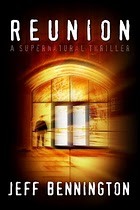
I’m trying to decide what company to go with to get my novel out. Smashwords grinds manuscripts into all e-book formats, of course, but what about the paper book issue? Createspace or Lightning Source? I recently asked some authors about their experience with companies that facilitate self-publishers. Some were satisfied with Createspace and others were fine with Lightning Source. Jeff Bennington, author of a paranormal thriller, Reunion as well as the blog The Writing Bomb,  hit me with a great, detailed reply. He has experience with both Createspace and Lightning Source. Rather than pushing me one way or another, he laid out the pros and cons as he sees it from his experience.

“Dude!” I said (because in my mind I’m still seventeen and it’s the ’80s.)  “This isn’t a mere reply to my question. This, sir, is a blog post. How about it?” He graciously said yes.  Here’s his breakdown:

Cons


At Lightning Source, starting an account is a bit cumbersome (much more paperwork than Createspace.) Once the paperwork was complete I had to get my cover just right, but Joleene Naylor, an independent cover artist, helped me do that with ease.
However, I’m not as happy with Lightning Source’s ink/cover quality as I am with Createspace. Lightning Source’s paper is much thinner than Createspace. (Same number of pages and Lightning Source is at least 1/4″ thinner. Very strange.)
The initial work to get a proof copy is somewhat exhausting and cost $39 (overnight, mandatory) for a proof every time!
I can get five proofs for $50 (overnight, not mandatory with Createspace).
I’ll use Createspace the next time if I discover that print copies just aren’t the thing for my books. I used them this time to get advanced reading copies (ARCs) out early. Createspace was fast and easy to work with but I was very limited on the back cover and spine art.
Expect 1 to 2 days for email return. But if you call..they answer.

Pros


The number one reason to use Lightning Source is the distribution: return availability and full industry discount (45-55%). That was enough for me because very few publishers for indies do that and if they say, as Createspace does, that they have full distribution, you better make doubly sure that the wholesale discount is 45+ and that you can have a return policy. Createspace  never told me that. I asked and they said, “We don’t make that decision.” I say “Bull^%$#!” Of course they do. They are the publisher.
With Lightning Source, you are definitely the publisher. I like that.
If you have a newer mac formatting is easy. Lightning Source will upload your sized PDF with no worries.
Once the book was uploaded and passed the tests, things moved rather quickly. Give yourself 2 months to get your account in process and book uploadedReunion
The best thing is you are assigned a customer rep—a real and a very nice and helpful person. My rep at Lightning Source is Carol Egan. She is wonderful!

Overall, I’m happy so far. I mostly want my print version to be available to local stores for signings (if I have one) and a lot of my friends and family want to buy it at a store. I can’t do that with most other self-pub outlets. Lightning Source is the real thing. Great for a small press…like me!


Right about now you’re bubbling over with gratitude for Jeff”s insights. Act on it and check out his book. Reunion just launched and the reviews on Amazon are very good. Plus, you need to own it for research purposes. (See what you think of the binding etc.,…) Buy Reunion.


Filed under: author Q&A, authors, Books, DIY, ebooks, publishing, Writers, writing tips, , , , , , , , , , ,

Bestseller with over 1,000 reviews!
Winner of the North Street Book Prize, Reader's Favorite, the
Literary Titan Award, the Hollywood Book Festival, and the
New York Book Festival.

http://mybook.to/OurZombieHours
A NEW ZOMBIE ANTHOLOGY

Winner of Writer's Digest's 2014 Honorable Mention in Self-published Ebook Awards in Genre

The first 81 lessons to get your Buffy on

More lessons to help you survive Armageddon

"You will laugh your ass off!" ~ Maxwell Cynn, author of Cybergrrl

Available now!

Fast-paced terror, new threats, more twists.

An autistic boy versus our world in free fall

Suspense to melt your face and play with your brain.

Action like a Guy Ritchie film. Funny like Woody Allen when he was funny.

Jesus: Sexier and even more addicted to love.

You can pick this ebook up for free today at this link: http://bit.ly/TheNightMan

Join my inner circle at AllThatChazz.com

See my books, blogs, links and podcasts.

Enter your email address to follow this blog and receive notifications of new posts by email.

Join 2,063 other subscribers