C h a z z W r i t e s . c o m

See all my books at AllThatChazz.com.

Please don’t bet on one book

Your stock of books are doors to your literary house. The more doors you have, the more points of entry you give to potential readers. More is better. More

An electric ceiling fan.

An electric ceiling fan. (Photo credit: Wikipedia)

multiplies opportunities for readers to discover you. Please don’t ask us all to squeeze in one door. Some authors bet they are Harper Lee and one book will take them on a To Kill a Mockingbird rocket ride to the top. It doesn’t work.

For example, I know a nice guy. You probably know one, too. The nice guy I’m thinking of published a novel more than a decade ago. He pushed that one book hard to little success. Recently, I noticed that he’s still pushing it. It’s not that you should give up on a novel’s eventual success in the market. With ebooks, the market is forever, or at least until the sun explodes or the zombies rise. But this good dude has nothing else to sell so he’s presenting a tiny target. That’s good on the battlefield and tragic in the marketplace.

And suppose a bunch of people did like that one book? Then what? They say, “I bought your book! Loved it. What else have you written that I could buy and read and love and spread the word about?”

Silence. Lost opportunity. Lost income. Despair. A rope knotted in a noose tied to a ceiling fan. A tipped chair in a dark room.

This author is a smart and talented guy, so he must have more to say. Somehow, he hasn’t managed to write another book and he’s still hoping readers will line up for that one special book. Unfortunately, the book’s not that special. He’s special. I’m not giving up on him, but he has to write and publish more books.

Being nice and smart and talented isn’t enough.

Write. Publish. Ship. Deliver. Deliver braingasms.

Filed under: publishing, , , , , , ,

Writers: Who do you want to be?

Ever been to a writer’s conference or a Comi-Con? Both kinds of conventions have something in common: Lots of people who wish they were someone else. The exhibitionist dresses as Poison Ivy (and has very close friends willing to paint her ass green.) The twenty-something is dressed up as a sad Autobot made of cardboard. The writer wants to be an author. Of these three examples, it’s the writer who can do something more concrete and lasting about his or her ambition. 

I feel self-conscious, uncomfortable and sometimes a little claustrophobic at these events. Mainly, I’m acutely aware of the Us and Them aspect of the relationship. The “celebrities” are over there, with security, publicists, handlers and an aura of wary separation. We “wannabes” and fans are in the pit, reaching up, grasping at the edges of dark holes, daring to touch the light in search of heat.

We yearn. We have not attained.

As writers, we want recognition of our work. We want privileges and respect, too. That power is illusory, sure. Knowing intellectually how fleeting and useless it is doesn’t make that goal any less tantalizing. As powerless as writers are in so many ways, the indie author feels his or her potential most. That’s the power of seething delusion transmuted into hope by our next great idea for a book. Art seduces its creator first. Indie authors have few barriers to publication and little time to wait. All that kinetic potential can make you high. Unrealized potential can make you angry.

It’s not jealousy that gives me this grim face. My annoyance is at myself. I’m bothered that I didn’t plan out my life in such a way that I am who and where I want to be. I’m not a “wannabe.” I’m a “shouldabeenbynow”. I want to be comfortable being me. I don’t want to stand on the outside of that metaphorical velvet rope, wishing I were someone suffering the problems that success brings. I want it all and, as Queen sang, I want it now.

Someone will tell me I should be happy with who I am. Bullshit. From where, then, would my ambition come? Needing to escape makes me try. I yearn for that addictive, dopamine-fueled floating sensation that comes with the composition of new life. I long for happy readers extolling me for aping God. Sharing entertaining stories with huge numbers of readers gives me stamina for the late night attack on that difficult, late middle in my manuscript. Greed and ego give me patience for solving seemingly endless formatting problems.

Let’s be clear: Wanting things is not the path to enlightenment. That’s okay. I’m not on the path to enlightenment. I’m on the path to publication. 

Some people say greed and ego and recognition are unworthy stimulants to propel you on your course. I say, take your motivation where you find it and go forward, self-aware and honest. Clearly, I’m not in the spirit of these events. I’ll go to these things again when the organizers ask me to sit on a panel. I’ll enjoy it much more when there’s someone excited to speak with me, not the other way around.

Meanwhile, my place is at the keyboard

dreaming up the lies

that make me who I am supposed to be.

Filed under: publishing, , , , , , , , , , , , , , ,

Author Blog Challenge 21: My Top 20 Best (Worst?) Advice for Authors

Обкладинка книги "Над прірвою у житі"

Обкладинка книги “Над прірвою у житі” (Photo credit: Wikipedia)

1. Be weird. Draw outside the lines. Live larger. Be different. If you can’t dare to be a little strange, or stranger, you sound too much like everyone else and there’s quite enough of that. Does your book’s title sound like all the other titles in its genre? Yes? You’re already boring me, mate, and I say that with love. Be three times more daring and ten times more clever.

2. Don’t write what you know. If we all did that, where would science fantasy be? Instead, write what you care about. You’ll get enough research to fill in the holes if you care enough to give your story verisimilitude. It’s always more about relationships, characters and action than it is about the guts of your ship’s stardrive engines, anyway.

3. Lose your thesaurus. You don’t need more words to tell me the story. The right words are the ones that come to you right away. If you use the word “epigonation”, you’re showing off and annoying your reader. A stupid thing to do, especially when you wanted to sound more intelligent. That must have been your aim because, unless you are sending your books back through a time tunnel to the time of Christ, you certainly weren’t trying for clarity in your reader’s mind.

4. Spam me. I don’t mind you telling me about your books one bit. I might be interested and I like to know what my options are. If you hit me over the head too much, of course I’ll ignore or unfollow you, but that doesn’t mean you should be silent. That means be clever and funny and engaging and giving most of the time. Lights are not for hiding under bushels. Light that bushel on fire and throw illumination.

5. Get into fights on the Internet. If you are getting along with everyone all the time, you’ve either got nothing to say or you’ve got no spine. Neither attribute attracts me to what else you might have to say within your book. I’m not advocating douchebaggery or fighting for fighting’s sake. Instead, have the courage to disagree with idiots while pretending to be civil and acting as if you don’t want them dead. We all know the truth.

6. Tell, don’t show. I know, I know. Somebody’s head just exploded and no amount of repainting ever covers up that mess. However, in grown up writing class, we encounter circumstances where telling is sometimes more appropriate. It saves the reader time and skips over stuff the reader doesn’t care about so we can get to the good stuff. Be more Elmore Leonard. Be less mime. Tell when you need to. Show when you need to. There aren’t rules, only guidelines. Learning all the rules before you break them? Sounds like a waste of time on a detour, doesn’t it? Instead, just write what works and stop mucking about.

7. Strangle your strict inner grammarian. If you write for clarity, that will cover most grammar rules, anyway. Some people are still holding on to stuff from eighth grade simply because it’s what they learned in eighth grade. The rest of us are splitting infinitives with wild, naked abandon, ending sentences with prepositions and using the word “hopefully” like a normal human (i.e. technically historically wrong) — and we don’t care. And sentence fragments? Rock! Common parlance trumps grammar. If it didn’t, none of us would communicate the way we do now. Strict grammarians fantasize about a language that isn’t organic and instead is frozen in amber from Dickensian England. They’re nuts. If language could freeze (and therefore die), we’d all still be angry cave people, grunting and pointing like New Yorkers in a Brooklyn deli.

8. Stop rewriting. I’m talking about your first chapter. You’re never going to get your book finished that way. Plunge! Get your atomic turbines to speed, Batman! Write and keep moving forward. Write like I’ll chase you in my Mustang with a twelve-gauge full of rock salt if you don’t finish two chapters tonight. (Because I will.) Rewriting is for later. A first chapter, endlessly written  and rewritten to perfection, does not a book make. Rewriting too soon is a formula for you, drooling on your deathbed, wondering if you should have taken out that comma on page three, and then put it back one more time before all trace of your existence is erased and there’s no book as evidence you ever were, you zero legacy stiff!

9. Stop reading old classics and start watching more movies and reading more comic books. Your english professor thinks Hemingway is the shit because that’s what he was taught in 1980. This is generational data lag. If you insist on classics, read: Crime and Punishment (so dates will think you’re deeper than you are); Hemingway’s short stories (not his novels); Portnoy’s Complaint to instil the value of a sense of humour in literature (a rare thing, that); A Confederacy of Dunces (for douchebag cred with hot Lit. majors at the dean’s cocktail parties and the nerdy chick at the bookstore) and Catcher in the Rye (in case the writing thing doesn’t work out and you turn to the next logical career choice: serial killer.) And nothing at all from Ayn Rand. Nothing! You have nothing to learn from her unless you’re going for what not to write, do, think or be.

Why movies and comic books? Because you need to make your storytelling more visual. (Hint: If most of your “action” takes place in a suburban living room much like your own, think harder. If you’re writing a certain kind of literary fiction that demands domestic ennui and the reader’s patience (yes, the reader — as in one reader — your mom), at least spice it up somehow. Make your main character do their sensitive contemplation by the river (so they can fall in or throw themselves in or get thrown in by a helpful plot enhancer). Or put them in the kitchen, next to the handy knife block so we get a sense that something might actually happen. Events must occur!

10. Stop writing huge, ambitious books. Write shorter books and make it a series so you have hope of making some money.

11. Write for the money. You think love and passion will get you through a whole book? No. There will come a time when you hit a wall, figuratively and literally, with your manuscript. Maybe you won’t want to do one more draft or you won’t have the energy to get up early and write another chapter. Screw that weak, loser talk. If you’re writing with the hope you’ll make some money some day, you get up. You’ll go the extra clichéd mile to yank out the clichés from your manuscript like black, seething tumours. Your kid wants to see Disney before she’s too tall for the rides. Your other kid wants to finally get an iPod for his birthday since he’s the last of his friends to get one. (Ooh, that one hits close to home.) Write for money because you need it. Write for money because, if it’s just a pleasant hobby, what’s at stake when the going gets rough?

12. Pay attention to how much better every other indie author is doing than you. Get angry, envious and jealous of those talentless, lucky hacks. The reasons are similar to #11. Take your ugly motivation wherever you can find it. (Notice I just told instead of showed — #6 — and you didn’t mind.)

13. Put references to popular culture in your books. Traditional publishers always eschewed that in manuscripts.  That’s why you have to infer so much about pop culture from old novels instead of knowing specifically what people paid attention to. The worry was that contemporary references to movies and issues would date the book. I can’t imagine why. What’s modern now will be a period piece in the future. So what? They might sell more books if they paid attention to what served the story and what was most entertaining instead of sticking to rules from from Lit. 101. (See #9) It works for John Locke’s readership.

14. Stop confusing process with product (Part 1). Neo-Luddites who wax poetic about the feel of a paper book are fetishizing the medium of dead trees over the book’s content and are possibly high on glue from all that sniffing. For people who claim they value the written word so much,  they seem overly concerned about the package it’s wrapped in. It’s fine to prefer a paperback to an ebook, but expect to pay more for the privilege and, by Thor’s hammer, stop whining to authors of ebooks about your fetish! When’s the last time you went out of your way to tell a used car salesman you think he’s shifty even though you weren’t buying a car from him anyway? What purpose does complaining serve if you never intend to buy our books? If you don’t want ebooks, then don’t buy them and don’t feel you have to tell me about it. We’re getting creeped out. (Alternative: buy my paperbacks, too.)

15. Stop confusing process with product (Part 2). Last week somebody called someone else a hack because he advocated writing fast. (No, it wasn’t me who was called out, though I have advocated writing faster if you’re up for it.) It’s the writing snob’s equivalent to a George Carlin joke: “Anybody driving slower than you is an idiot and anyone driving faster is a maniac!”

The mistaken subtext here is to think that anyone writing more quantity than you must be suffering in the Quality Assurance Department of the Writer’s Brain. Consider that A. Slow writing is no guarantee of quality, either. B. What counts is the end product, not the speed with which it arrived. (The slow writing advocate in this case admitted she hadn’t actually read any of The Speedy Author’s books, so she was letting her ass talk too much, wasn’t she? C. If someone else can write faster than you and you resent them for it, that might be jealousy talking. (See #12) Or D. Maybe you just aren’t as smart as The Speedy Author, you prejudiced dummy.

16. Wait for inspiration before you write because less competition would be great for me. Oh. For you? Not so much.

17. Offend your family. Disguise them, but use them. If they didn’t want you to use all of that useful childhood trauma, they should have been nicer when they had the chance. That time you got locked in the closet after the unjust beating? That’s rich writerly soil, right there. Rename your brother Larry so he’s Harry in the book. That ought to do it. Larry’s a moron.

18. Start building your author platform long before you need it and don’t whine that it’s hard. Your book is a loudspeaker. Without a platform, your loudspeaker is pointed at empty stands in a cavernous stadium. You don’t want to do this. Why do you think that matters?

19. In fact, hey, that’s another rule! No whining, period! Nothing worth doing is going to be easy. Besides, it’s unattractive. I once stopped watching a blog because a writer felt people weren’t grateful enough for her words. Gratitude is great (see yesterday’s author blog challenge post, below) but demanding unending thanks when you really haven’t done that much in the first place is petty narcissism. Writing professionally is about generous narcissism.

20. Stop reading Writers Digest and Publishers Weekly. There’s nothing in a paper magazine you can’t get in pixels faster and cheaper. WD is a holdover from traditional publishing and that’s why their advice is still weighted toward agents and the New York cadre. Those are lengthy pursuits with questionable ends that eat up your life. It’s procrastination in the guise of relevance and productivity. It’s patriarchal, systemic paralysis by matriarchal, editorial analysis. Chasing slush pile dreams is what my friend, author Al Boudreau, refers to as “dinosaur hunting”. (Brilliant, yes?)
As for all that crap in Publishers Weekly that spouts everything you need to know about traditional publishing? That’s all stuff you never need to know before you have a book written and probably not even then. What possible difference could knowing the industry make when they only ever talk to themselves? They talk too much about trad publishing because that’s where the ads come from. It’s incestuous, out of date and out of touch. If you want to know something about publishing that’s not out of date, read Konrath and Dean Wesley Smith and Passive Guy and Russell Blake and Jeff Bennington or even (for the love of Thor) this blog’s curations for that matter.

BONUS TIP: Instead of listening to the dinosaurs who refuse to see the meteor coming, be a contrarian. Contrarians are more interesting.

Wait.

What do you mean, you agree? What kind of contrarian are you, listening to some twit you don’t even know telling you, “My Top Twenty Best (Worst?) Advice for Authors”? As if I’m preaching the bloody sermon on the Mount! What kind of nonsense is that? Go ahead and write and make your own mistakes and write your own rules.

This blog post was for, as they say, “entertainment purposes only.”

Does anybody really learn anything much from another person’s mistakes?

For anything that really matters, you have to make those life altering mistakes for yourself.

I’m not your dad. I’m another writer, tap dancing for change.

Filed under: publishing, , , , , , , , , , , , , , , , ,

Alan Moore’s advice to unpublished authors

Filed under: author Q&A, authors, publishing, Writers, writing tips, , ,

Heresy for Writers: Choose The Not Writing Day

Rock Paper Scissors Lizard Spock it

Image via Wikipedia

There is a way to be miserable. It’s guaranteed. If you really want to ruin your day, promise yourself you’ll write something today, just not now. As the day stumbles forward, keep thinking any minute now you could start, but just now doesn’t feel right.

Now start feeling guilty. Is your head hot yet? Does it feel like a sword hanging by a very thin wire is above you? No?

Give it some more time. Wait until conditions are just right. What’s in the fridge? Can you really bring yourself to write knowing the bathtub hasn’t been cleaned yet? When was the last time you washed the sheets? There’s another chore in the way. Now you’ll need to reward yourself for that hard work. Oh, there’s that delicious book from the library. You know you shouldn’t read it now, but it is due next week. It’s The Book of Dead Philosophers by Simon Critchley! Who could resist that?

Then we’ve stepped on the procrastination treadmill: same thought running constantly, “I should start, I’ll start soon…”

Going nowhere.

I wonder what’s on TV at 10? 11? Noon. Well, now it’s lunch. Something’s missing… Oh, look at that! I’ve seen this movie three times and I get sucked in every time. Well, now it’s 3 pm. I feel a nap coming on…

4 pm. Need a coffee to boost my energy. Hm…should clean up the kitchen before everyone comes home…

5 pm Dinner’s started but I’ll definitely will get to writing a chapter before 7. Oh, the dishes.

And the kids want help with their homework…

9 pm. Got the kids to bed. I should start. I’ve been meaning to start all day and now…yawn. Fuzzy. Ooh, The Big Bang Theory rerun!

11 pm. I’ve got the Daily Show taping in the middle of the night so I won’t waste time…but I really want to know what Jon thinks of what’s going on in Egypt tonight.

Somehow, it’s midnight. It’s kind of late to start now. Shit.

Or

Schedule a time and stick to it like you would any other appointment. You don’t miss appointments with your dentist or an important business meeting.

Your writing time is an important business meeting.

Or

(here comes the heresy)

Take the day off! 

From the beginning, say this is not a writing day.

Enjoy it.

That’s right. I’m the Devil and I love idle, non-typing, hands. The  day I just described is a reasonably happy (though not remarkable) lazy day. What made it miserable was the guilt.You’re going to have recharge days. Don’t spoil them with guilt.You are not a machine. Enjoy not being a machine sometimes.

Enjoy your choices by making them

instead of letting them happen to you.

Filed under: authors, Books, Media, Writers, writing tips, , , , , , , , ,

Writer Links: Stephen King, evil editors and plugging plot holes

Stephen King, American author best known for h...

Image via Wikipedia

You’ve already worked hard today, right? Take a break.

Here are some useful links for your Friday afternoon:

Stephen King’s Top 7 Tips for Becoming a Better Writer

Editors are evil, and other fairy stories‏

AOS: How to avoid inconsistencies and plot holes

The Must-Have Writing Routine‏


Filed under: authors, Editing, Editors, Friday Publishing Advice Links, Useful writing links, Writers, writing tips, , , , , , , , , ,

Writers: Update & three links for you

a Science fiction city (Paris in a future.)

Image via Wikipedia

I had another frustrating day dealing with tech support that, for awhile, actually made things worse. Now another modem is on order and I’m searching for a technician to come save me. Yeah, it’s that bad.

However, this too shall pass. I’m going to try to get some writing done on my little AlphaSmart Neo. Once you’ve done all you can, you’ve done all you can. I’ve messed with the computer so much I’ve lost two days of my life. While others were enjoying snow days, I was staring at a screen trying to move the immoveable. No more.

Today I get back to my life and focus on the fun parts. I’ll let the on site tech deal with the trouble. (For those who missed it, a cyber attack is to blame, but don’t be afraid. I’m not contagious.)

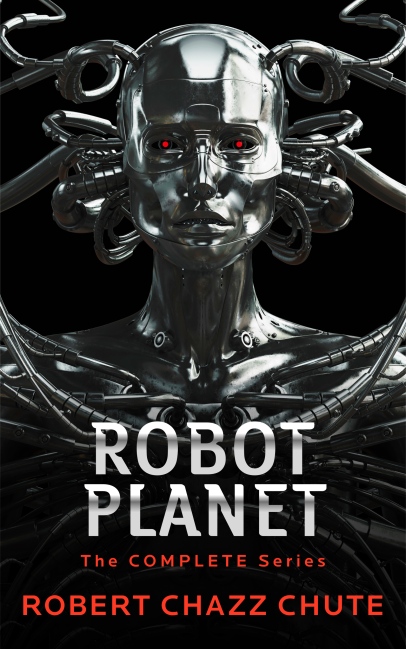
I recently finished a major editing stage for a client’s book so now it’s time to work on something of my own: a dystopian novel about soulful robots and a drug that improves human brains. Think Robert J. Sawyer meets William Gibson. Ooh, that’s high falutin’ talk. Anyway, I’ll put aside my present-day tech troubles and write about future tech troubles.

And finally, I’ll have some fun. Writing fiction is always fun. If you aren’t having fun as you write, your readers won’t have a chance. Stop putting it off. Go have fun, too. If you have to delegate your worries to get them away from you, then do that.

 (Well…after you check out these cool links, anyway.)


The Writers Alley: The Quixotic Pull of Your Future Novel‏

10 media and tech luminaries on the future of reading

7 Ways to Help Writers Survive the Holidays

Filed under: authors, My fiction, publishing, Useful writing links, What about Chazz?, writing tips, , , , , , , ,

Still sick. Here’s some publishing links for your Thursday.

Comparison between the iPad and iPod Touch's K...

Image via Wikipedia

Kindle vs. iPad: A False Choice | Lance Ulanoff | PCMag.com‏

This Futurebook survey says publishers should set e-book pricing (even though it’s not a long term adaptive strategy!)

There Are No Rules – Best Tweets for Writers (week ending 10/22/10)‏

Filed under: publishing, web reviews, ,

10 Questions & Missions for Writers

Short Story

Image via Wikipedia

What are you doing today that will advance your writing career? Not yesterday. Not tomorrow. Today.

Choose #1 plus one other:

1. Have you written today?

2. Have you read a writing blog (besides this one)?

3. Have you researched an agent’s blog?

4. Have you proofread your poetry or short story?

5. Have you sent out one of your stories to a contest, magazine or journal?

6. Have you come up with at least five queries today?

7. Have you checked where your queries or stories are and if it’s been more than three months, do you need to write a reminder?

8. Have you read at least some pages of a good book today?

9. Have you set a word count or page count for your writing or editing project so you know the end date of the current stage of your project? If so, have you worked out a ship date?

10. Have you taken a half hour for yourself where you go for a walk, get some exercise, meditate or otherwise flush out your head so you have a fresh and healthy perspective on your work?

Please tell me you at least completed #1. You know why? Because your writing is #1!


Filed under: getting it done, Writers, writing tips, , ,

(Top 10 Things) Writers Fear:

1. the blank page. And yet, ideas for stories are all around us. Look in newspapers, magazines, real life, fantasy, the net, your dreams and in the back of your sock drawer. Everywhere. Augusten Burroughs says if you experience writer’s block, then write about that. That will prime your pump.

2. that someone, somehow, will steal their ideas. You can’t copyright an idea, and that’s a good thing. Ideas are cheap because (see #1) ideas are everywhere. Execution and completion is what counts. Lots of people have book ideas but never type long enough to even get to the starting line. You’re the best one to take your idea through to fruition. Also, come up with an idea and pitch it to 100 people. One hundred different stories will shoot out from pulling that one trigger. (Note: I won’t steal your ideas. I’ve got plenty of ideas! I’ve got more ideas than I have life left to execute them all! …gulp.)

3. failure. Yeah? Who doesn’t? Failure is in not even trying. Nobody likes a whiner. Shut up and type.

4. success. Just kidding. Nobody really fears success. Change, sometimes, but never success. Fear of success is something somebody made up in  80s to sell self-help books. Who still believes that now?

5. criticism. You won’t join a critique group so you won’t learn (or will learn very slowly.) That’s how I learned very slowly. The truth is, not everybody is going to like you or what you write. That won’t change, so accept that and look for people who give you caring yet constructive criticism. Flush all others. As Walt Disney said, “I’m not gay.” No, no. He said, “Always move forward.”

6. rejection. People very rarely get a book deal from the first agent they approach. (See #5) Not everybody is going to like what you write. If it’s any good, eventually someone will. Then you can crow all you want about all the publishers, editors and agents who said no before you found the one genius who agrees with you. Your definition of a genius is anyone who loves your manuscript and is in a position to market it to the world.

CHAZZ DEFINITION OF GENIUS:

Anyone who agrees with Chazz.

7. revision. But your best writing is your rewriting. You know that. So go do it. Yeah, it really is that simple. That’s the same way everybody else who hates revision bulled their way through.

8. that our best friends will achieve astonishing literary success and we won’t. I guess you should start typing faster if you want to even have a horse in that race then, huh?

9. poverty. So make sure you get paid for what you write. Send out more queries. Suffer the day job until you achieve escape velocity. Keep the day job and enjoy both with a little less sleep. Be so adorable someone else will support you while you write (I am!). Launch a successful business you can escape to write. Make writing your successful business. Reality check: if you choose writing over riches, are you really going to end up in the street? Would the people who care for you really let that happen? (If so, you’re a right and proper bastard, aren’t you? You deserve homelessness. Maybe you should work on your social skills and bathe, hm?) Poverty isn’t so bad. Not writing would be worse. (If you don’t understand that equation, you aren’t a writer.)

10. anonymity. This is the worst. You fear anonymity because if no one reads your words, there goes your only shot at immortality. If you don’t achieve some success with your writing, soon it will be as if you never existed. You might as well have never existed if you can’t leave some kind of stamp of your personality, your brain and your thoughts on the careless, fickle future you’ll never see. The abyss is yawning beneath you. We are only a brief crack of light between two black infinities. If you don’t write, you can’t be published and if you aren’t published, you are forgotten. You are a helpless speck disappearing down the raging current of time. There is no return. Death waits for us all.

ANONYMITY = DEATH

Feel that fear? It’s not just real. It’s good.

You need some fear in your life to keep you motivated.

Back to the keyboard, friends!

Filed under: getting it done, Rant, writing tips, , , , ,

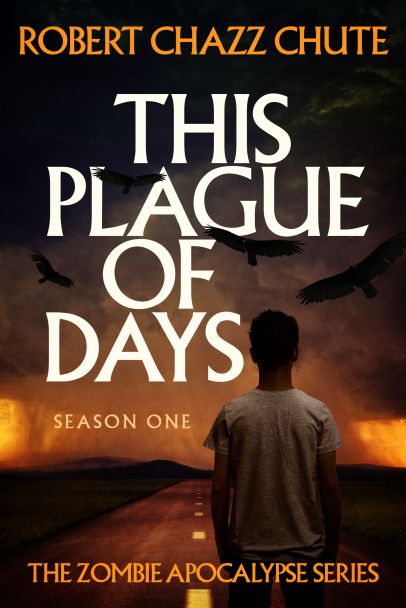
Bestseller with over 1,000 reviews!
Winner of the North Street Book Prize, Reader's Favorite, the
Literary Titan Award, the Hollywood Book Festival, and the
New York Book Festival.

http://mybook.to/OurZombieHours
A NEW ZOMBIE ANTHOLOGY

Winner of Writer's Digest's 2014 Honorable Mention in Self-published Ebook Awards in Genre

The first 81 lessons to get your Buffy on

More lessons to help you survive Armageddon

"You will laugh your ass off!" ~ Maxwell Cynn, author of Cybergrrl

Available now!

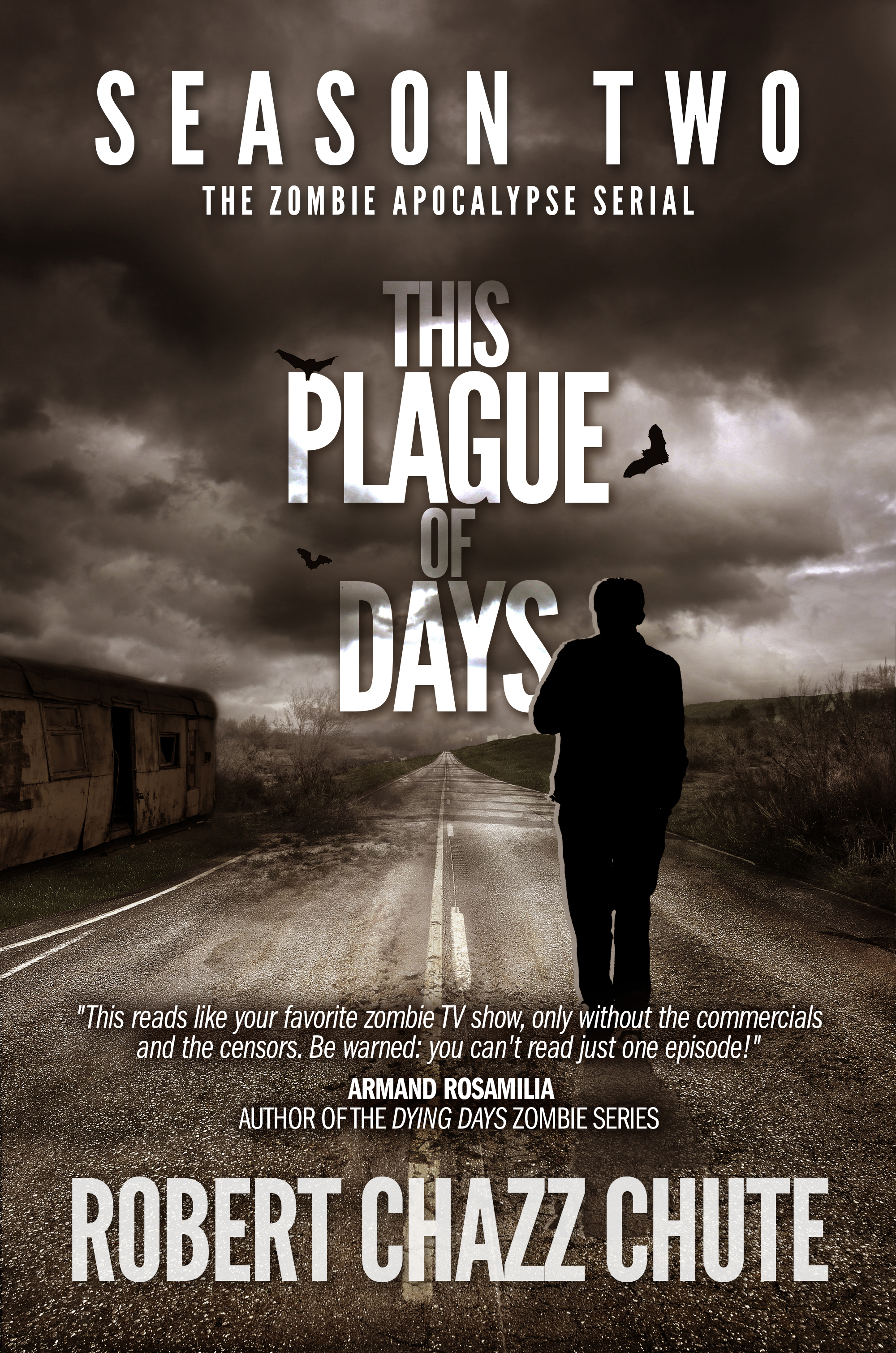
Fast-paced terror, new threats, more twists.

An autistic boy versus our world in free fall

Suspense to melt your face and play with your brain.

Action like a Guy Ritchie film. Funny like Woody Allen when he was funny.

Jesus: Sexier and even more addicted to love.

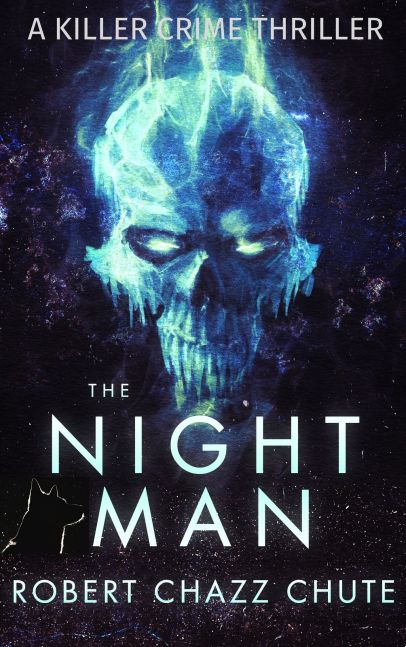
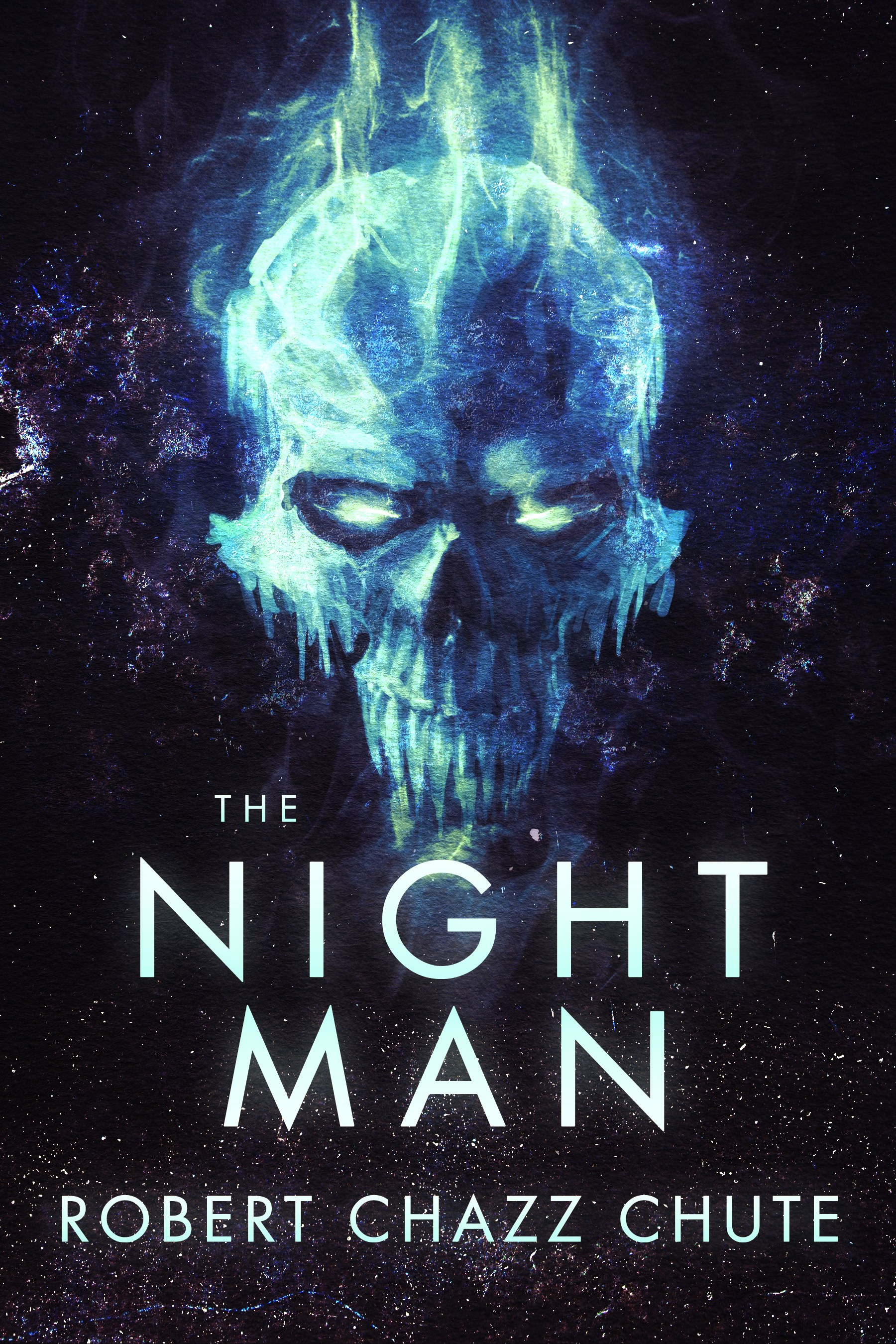
You can pick this ebook up for free today at this link: http://bit.ly/TheNightMan

Join my inner circle at AllThatChazz.com

See my books, blogs, links and podcasts.

Enter your email address to follow this blog and receive notifications of new posts by email.

Join 2,063 other subscribers