C h a z z W r i t e s . c o m

See all my books at AllThatChazz.com.

Chazz Writes: Q & A

Email Icon

Image via Wikipedia

Do you have a question for me about writing or editing?

(Mr. Director! Cue the happy music!) 

Email me at:

 chazz@chazzwrites.vpweb.ca

Also, at the bottom right of this screen is an email subscription box. Please take a moment to key in your email address. You’ll get my blog posts by email and never miss another scintillating post. I don’t share email lists with anyone and I won’t sell them to anyone. Thanks! 


Now, to clear your palate of my lonely plea for human contact in the outside world, below you’ll find meaty links on the subject of the slush pile. 

(Cue the ominous music.) 

Filed under: Editors, Publicity & Promotion, publishing, Writers, writing tips, , , , , , , ,

Lurking in bookstores

india calcutta bookstore

I’m on a diet. Yeah, I know I’m supposed to call it a “lifestyle” for long-term success. But no, this is a diet. Short-term and urgent. Grueling even. Low calorie, no processed foods etc.,… The other day I knew that if I stayed in the house, I would eat and I might not stop.  I found out that if I leave the house and it’s not to go get some food, my choices as to what to do are narrowed precipitously. Since eating raw and clean, I’ve noticed something about my spending habits. My mind is clearer and I see now that I’ve been a big consumer, figuratively and literally. With so much food off the table, I’m focused on buying knowledge and experience.

Naturally, I sought refuge in a bookstore. Among books I feel calm. There’s so much to browse that the experience is different each time. If you don’t know what you’re looking for, it’s a treasure hunt. I was distracted from my hunger pangs and felt my shoulders loosen as I disappeared among the shelves. I breathed deeper and took my time. I contemplated all the books there are to read and all the books I have to write.

And I was inspired. Despite all the bad news about the publishing industry (often detailed on this very blog by your trusty reporter) there are still so many ideas to explore in fiction and non-fiction. As I perused the how-tos, I thought about what I could write to help people. As I ran my hand along the spines of  paperbacks, I thought, “Soon.”

I admit bookstores and libraries make me happy in a way that browsing online does not. Shopping for books is a deeper experience when you hold the weight of it in your hand and flip through at random trying to get a sense if this is the book that will grant you a kind of glorious insomnia. I do hope bookstores will be around for a long time. The independents will have to be very creative and very knowledgeable to stay alive in the ebook environment. I do believe there will always be paper books, but they will be  a more expensive specialty item in the future. Some people say that won’t happen. Their (fallacious) argument often seems to be that it won’t happen because it hasn’t happened yet. It’s early days. Ebooks will get the bugs worked out. Then our consumer society’s spending habits will change again. We’ll get even less sunlight than we do now.

Bt for now, I have a safe place to run to as long as I stay away from Starbucks (conveniently located in the bookstore.) Otherwise, I’ll have to run to the gym looking for a place to hide from hunger pangs.

I so love books in all their forms. Also, I could be high on book glue.

Filed under: Books, ebooks, publishing, , , ,

Writers: Rejection does not build character

manuscript by Saint Andrzej Bobola, Polish Jes...

Image via Wikipedia


Some say rejection is part of “paying your dues” in the writing business. That’s over-analysis. Rejection is just someone saying no. When your query is rejected, do not read too much into it. 

Rejection is not useful on its own. It doesn’t thicken your skin for when you become a “real” writer. After you are published, you will get angry with critical reviews just as you are angry with rejections now. And why not? Your book is your child and an extension of you. If you are bent toward getting pissed off, you still will be. Rejection is not part of your training. Writing is your training. Learning your craft is a different proposition from receiving a form rejection slip. 

Rejection can be useful if you get specific feedback on why your story was rejected. Standard reply forms that say “not for us” tell you nothing except you must resubmit elsewhere. A manuscript evaluation (whether done by an editor you pay–ahem, like me) or by the people you submit to, can be useful. However, even then, it may be a question of taste in some regard. Agents and editors do sometimes take the time to tell you what they found wrong with a near miss. (Even if you disagree with their feedback, send a thank you note.) 

Understand this:

1. An agent or editor may give you a critique, but after you “fix” it, they are under no obligation to accept the manuscript. Many writers report great frustration over doing what they were told (perhaps even compromising their vision for the faint hope of publication) and still find themselves on the wrong side of the gate. No with details is still no. Doing everything you are told without running it through the filter of your own sensibility is no guarantee you’re on the right track. It also leaves you spineless and soulless. 

2. Publishers, editors and agents are extremely busy people. (Sometimes they wear that like a badge that they feel makes them special. However, I don’t know anybody who is at all cool who isn’t extremely busy, do you?) The point is, no one owes you a critique unless you paid them for said critique (ahem–like me.) Agents and editors typically say yes or no (mostly no.) They aren’t in the business of teaching you the craft. If they do send you a personal rejection and not a form rejection, it does mean you’re making progress. Handwritten notes of encouragement can make your day even though it’s a rejection doused with a little sweet perfume. 

3. If you send out a bunch of manuscripts and you receive no personal rejections, it means you have to tweak your manuscript or revisit your target selection process or both. Only you can decide how many rejections you suffer before you undertake further revision. Some say don’t tweak after you’re dome with revisions because by the time you’re finsally finsihed with revisions, you should be a little sick of it and ready to send your baby off to college. Fresh enthusiasm is what the new baby is for. Even as you edit the last book, your fickle nature should be pulling you toward the next book’s greatness.  

4. The rejection might not be about you. There are many variables that go into editorial decisions. Maybe the subject matter or execution is too foreign to the publisher or too much like one of the books they already have which failed. Maybe the editor loved it but it got shot down for budgetary reasons. Don’t get hung up on each rejection. Resubmit and move on to people who get you as quickly as possible. 

5. Don’t worry about rejection. It will occur. Expect it. It’s more important to do the writing and trust that good things are coming. Optimists are the only ones who succeed in this business. Pessimists, realists and the meek have the good sense not to try. They never succeed at much, but they’re cozy. Writers aren’t cozy with their place in the world. If they were, they wouldn’t be writers. 

6. Once you are published, you’ll realize the journey was more important than the destination. It’s the writing that matters, which is good because you’ll spend much more time writing than you will receiving prizes and getting drunk on fancy publicity junkets.  

BONUS:

When I was a kid, seeing my name in the paper was a big deal. By the time I was seventeen I had a regular byline in my local newspaper. By the time I was twenty, there was still a small thrill to see my byline on the front page of a provincial and city newspaper. My back page column in a magazine tickles. Recognition is still cool, but it’s not the same thrill and if a byline is all you write for, that’s not enough gas for the trip.  

The thrill is in the writing. The fun was finding just the right turn of phrase. It was always really about the writing. It always should be. 

Filed under: agents, Editors, manuscript evaluation, Rant, Rejection, writing tips, , , , , , , ,

Issues in Titling & Marketing a Manuscript

Romeo + Juliet (soundtrack)

Image via Wikipedia


I’m editing Romeo, Juliet & Jerome, my novel about a ADD-addled young man who dreams of becoming a movie star. He needs an acting credit and figures Romeo will be his ticket. When the dude who plays Mercutio overdoses and dies, the school shuts down the play and so, our hero’s dreams. He has to battle the school and stage the play himself, but now someone blames him for the drug death and wants to kill him with a hammer. Complications ensue. Also, Juliet’s a hottie so there’s young love. Will Romeo escape from New York to Hollywood‘s bright lights?  

It’s a hip coming of age story with dark humor, a gay subplot and lots of drugs and indie rock that tops out at about 80,000 words. It’s written. I’m just tinkering with the edit. 

Here’s the thing: Lots of books have incorporated Romeo and Juliet into their plots (and even more have used Shakespeare of all kinds. If you missed it, find Ten Things I Hate about You for a really funny modern take on Taming of the Shrew.) Today, while cruising Twitter I found that someone has written a book called Romeo and Juliet and Vampires. (There are similar videos, too. I had no idea.) Several books published in the last couple of years have joined classic tales and horror elements. I haven’t read them, but I think that horror subgenre has  taken off; the cover art is hilarious. Abraham Lincoln with a bloody axe. Queen Anne, also with an axe. Lots of zombie-axing action. 

The question is: will that book affect my book? 

The answer is: No, but for marketing purposes, it could change my title. I’m sure the premises are totally different so in terms of story, it’s a non-issue. However, when I pitch it to publishers, Shakespeare is familiar enough. I will not want them to think I’m trying to capitalize on someone else’s idea (who isn’t the long dead father of the English theater, anyway.) I’m not trying to catch up with a trend that will probably be dead by the time of actual publication. Story titles can sound familiar, but not too similar to something that has been published in the last couple years (unless it’s part of a series by the same author, of course. The Dexter book titles run together in my mind now, so even that may not be desirable.) 

I’ve said it before: Ideas are cheap. Your execution of an idea and mine will be very different. No matter how many people you stuff in a room, from a single idea, their plots will spin out in all directions. Don’t sweat that your idea sounds something like another idea. It’s all been done. There are no new stories, but there are infinite permutations and combinations. The trick is to make the familiar taste new and fresh again for jaded palates. 

Filed under: agents, My fiction, publishing, What about Chazz?, writing tips, , , , , ,

Happy Sept 1st! Three Publishing Tips (plus one awesome link)

A cartoon image showing an action described as...

Image via Wikipedia

1. If you’re looking for an agent, hunt for freshly minted ones on their way up at established agencies.   Brian Henry of Quick Brown Fox has a useful newsletter. He identifies fledgling agents who aren’t too jaded and are actually looking for clients. Imagine that! Keep an eye on his blog if you’re in the market for an agent. I knew Brian when we both worked at Harlequin. He doesn’t remember me, but I’ve decided he’s not a bad guy despite that.

2. Don’t let rejection so your production and shipping. Like they say, it’s a subjective business. Hone it and then follow Heinlein’s rule: keep sending it out.   

3. If it’s good, you will eventually connect with someone who loves it. Or at least sees that they can sell it.   

(Or become a publisher yourself…but that’s a different blog post.)   


Filed under: agents, web reviews, writing tips, , , , ,

Agents and (Non)Acquiring Editors: A Word on Gatekeeper’s Remorse (Some don’t have any!)

J. K. Rowling, after receiving an honorary deg...

Image via Wikipedia


When a book is a great success, the rumors eventually emerge. JK Rowling was rejected six times. Meyer of Twilight fame? Fifteen times. All authors have stories of deals that almost went through. Many tell stories of cruel writing groups, insensitive english professors or critics that were hypercritical. When one writer triumphs and rises above these obstacles, all us of share a little of that. In German, it’s called Schadenfreude. In English it’s called “Nyaa-nyaa, nya-nya-naaaaaah!”       

Editors who reject books that go on to great success interest me. First question: Do they still have their jobs? Answer: Yes, of course they do.       

In Hollywood, you fail up. (Getting any movie made is such an accomplishment, you can have a string of failures and be a working director like M. Night Shyamalan.) If the rumoured stats are trues (85%-95% of books not earning their advances) publishing surely has the  highest tolerance for failure of any industry. There is no product research. “Product research is the first print run,” as they say. (Due to technology and Seth Godin forces, that’s changing. That’s another post.)       

Agents who pass up gold and editors who turn their noses up at diamonds answer predictably: “It’s a subjective business.” Yes. It is.    

Second Question: “But if these people are the experts who are supposed to know better, why do so many of their books tank?” Should we put so much stock in the opinion of people who are so often wrong? Dick Cheney doesn’t get to make credible predictions on foreign policy anymore. Why are we held in such thrall by agents and editors who have similar track records?      

The other common reply is, “I can’t represent it if I don’t love it.”       

I call bullshit. I’ve slogged through the slush pile. I worked as a sales rep for several publishing companies. I represented, and sold,  many books I never even got to read. (There were too many–especially when I worked at Cannon Books which listed hundreds and hundreds of books each year.) I even sold some books I actively loathed.       

The key question is not, “Do I love it?”        

The key questions are, “Can I sell it? Will lots of other people love it?”       

The idea that you can’t represent something unless you “love” it can set a ridiculously high bar for manuscript acceptance. You’ve read lots of books you liked and were glad to have read. How many were so good you really “loved” them? No wonder it’s so hard to get an agent if love is the accepted standard. (Love is not a standard criterion in business practice. You may think art is exempt from standard business practice. That’s one of the reasons this industry is in so much trouble. Artists worry their art is compromised, but without the business side? No art.)      

CORE ISSUE:       

Writers, particularly those yet-to-be published, are expected to have a thick skin.      

That is useful, though any really successful author will tell you the harsh critics hurt just as much as ever. They feel the pain, but aren’t supposed to complain.     

Some editors and agents     

 (PLEASE NOTE: NOT ALL EDITORS AND AGENTS!)     

act as if their mistakes aren’t mistakes.      

Therefore, their mistakes will be repeated.     

When ego gets in a writer’s way, he or she can’t learn and improve. That same principle should apply to gatekeepers. However, when gatekeepers make mistakes, some seem to say, “Not my fault. That’s just the way it is. I didn’t love it enough.” I say, “The new economy is making million-dollar companies, often out of billion-dollar companies. The coffee’s brewing and it’s a quarter past Massive Industry Fail. Wake up! And open up!”      

When you see an agent blog wherein the agent rips new queries, keep in mind that of all the many queries they analyse, they may accept only a handful (some perhaps two a year…or less.) Also, don’t work with snarky people because mean people suck and eventually they’ll be mean to you.     

This post was critical, not snarky. If I were snarky, I would have named names.      

Filed under: agents, Editors, manuscript evaluation, publishing, Rant, Rejection, Writers, , , , , , , , , , ,

It’s a New World. Join the Publishing Revolution

I just added a five-star system so you can rate posts, a Digg button so you can “like” posts and several ways to share posts (Twitter, Facebook, Print, Reddit, Email, etc.,…) Don’t be cruel to a heart that’s true.

Your rare shameless (and fun!) plug begins here:

If you like the blog, please let me and your friends and followers know! Hit the Digg button above the comment box to “like” it. Share on Facebook. Tweet on twitter. I’m above grovelling, but I am willing to ask nicely for your support.

This is the fun part: I have added these buttons in a craven attempt to spread the word about Chazz Writes. I have big plans for the blog. As we get bigger I want to include book reviews, contests for prizes and, ultimately, annex a small tropical island nation whose national drink will be hollowed out pineapples with five kinds of rum. I shall be king, of course, but benevolent in my clothing-optional palace. We’ll be nuclear-weapons free, nuclear-capable, solar and wind-friendly, and establish a very reasonable flat tax. There will be free healthcare for all. We’ll be weed-legalized, jerk-averse and twelve kinds of awesome sexy. And everybody will get a Mac. (Acers for jerks. That’ll teach ’em!) Also, clothes lines are allowed and I’ll keep the needless spending down by force of Nerf bats and exile to lesser, non-Chazz-infused nations. (All that therapy is really nipping my narcissistic megalomania in the bud, huh?) But  I digress…

If you like my stuff, please let other people know. This is a relatively new publishing blog, but I’m not new to publishing. I do have a lot of information to share with writers from a writer’s and editor’s perspective. (Don’t know Chazz and wonder where he gets off talking publishing? Click here.) I just love to talk to people about their writing projects, publishing issues, and that book you’re going to publish some day. Every day I curate the best information on publishing I can find as I search the web for news about writers, interesting stories and stuff that helps writers figure out the best routes to getting published.

I also look for laughs along the way. We need it. The writer’s life can be a grim nobility. Unlike some writing blogs I detest (i.e. a few agent blogs and  angry blogs that mock writers) you are not a minion here. You are a travelling companion and friend. I love books and I love the people who love them.

Return often for updates and keep an eye on that Twitter feed to your right

OR

simply follow me on Twitter @RChazzChute

AND/OR

go to the bottom right and subscribe so you won’t miss a thing!

Like the blurb says:

The publishing revolution has begun.

Join me.

Rare shameless plug ends.

Filed under: blogs & blogging, Publicity & Promotion, publishing, Social Media, Twitter, What about Chazz?, Writers, , ,

Writers with Low Self-esteem? Blame Your Overlords.

I ran across this great post from SlushPile.net. Her delicious rant explains how writers and writing are often devalued. No wonder freelancers need to support each other so much.

I especially like the story about the freelancer who was expected to pay for an airline ticket for the privilege of writing a NY Times clip. Gee-zuzz!

STAY TUNED:

 A Few Things I’ve Learned from Publishing (#1 of a series)

hits your screen tomorrow morning.

Filed under: web reviews, Writers, , ,

Publishing: this is how hard it is

Les Edgerton’s latest post gives you a glimpse of how common query rejection is in the real world. And it’s not necessarily you. It’s them. Write it. Submit. Resubmit until it’s accepted. Don’t drive yourself nuts worrying about things you can’t control.

Filed under: agents, publishing, Rejection, ,

Who Should Self-Publish?

I recently had a discussion with a client who looked down on self-publishing. He saw it as an exercise in vanity. That was true for a long time, but not anymore. In fact, Google has made instant ebooks a reality, and not just for frustrated writers who can’t get published through traditional publishing houses. If you can get an agent and an editor with a traditional house, the common wisdom is that from now until the clock runs out in about five years, that’s still the best way to go for most projects.*

However, self-publishing is right for a lot of people. There is one group for whom it is essential. If you’re a professional speaker, you need to be talking at the front of the room and sell your books at the back of the room. If you leverage the marketing platform you already have, you keep more of the profit and cut out a middle man. Also, the middle man has committees and hoops for you and your brilliant idea to jump through. The client was shocked to find the book project could take one to two years to make it to publication (if it were accepted immediately.) Even if a project is identified as a winner, each publisher has budgetary restraints that can hold up publication. They can’t publish every book they’ve identified as saleable in one year.

The client wants to speak professionally, but still wants to go the traditional route. Fortunately, he has a solid contact with a publishing house. Had he not, I would have pushed harder for him to self-publish. As it is, I’ll be helping him put together a killer book proposal so he’ll have a book to sell as he works the room and works his magic.

If you already have a platform (or stage) from which to sell, DIY is the best way to go. Publishers are offering authors less and less. They offer tinier advances than ever, unambitious promotion, and less editing than ever. Traditional publishers have diminished themselves to distribution networks. Once the distribution becomes less relevent, what credibility they add will be largely be forgotten as well. 

The publishing people I know all say, “We have to learn from the mistakes the music industry made.” That’s true. But that’s where that conversation ends. Either they don’t know what mistakes the music industry made, or the analogy doesn’t bear up across the two industries.

*Self-publishing is also the ideal route for a memoir that’s meant for a small audience (e.g. your family) or for some projects that are distinctly regional if you have a platform.

YOUR NEXT QUESTION:

How do I build a platform?

A BRIEF ANSWER (AND MORE LINKS)

Filed under: publishing, self-publishing, Speeches, , ,

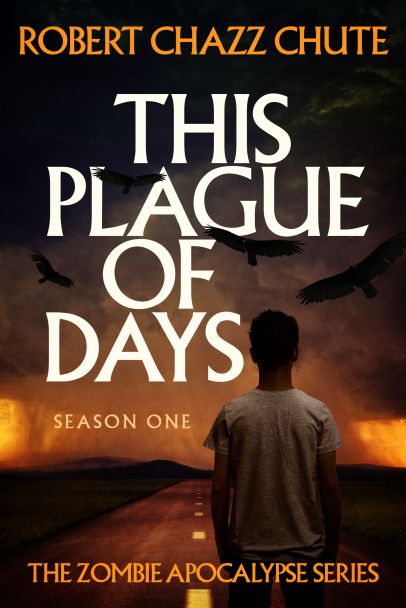
Bestseller with over 1,000 reviews!
Winner of the North Street Book Prize, Reader's Favorite, the
Literary Titan Award, the Hollywood Book Festival, and the
New York Book Festival.

http://mybook.to/OurZombieHours
A NEW ZOMBIE ANTHOLOGY

Winner of Writer's Digest's 2014 Honorable Mention in Self-published Ebook Awards in Genre

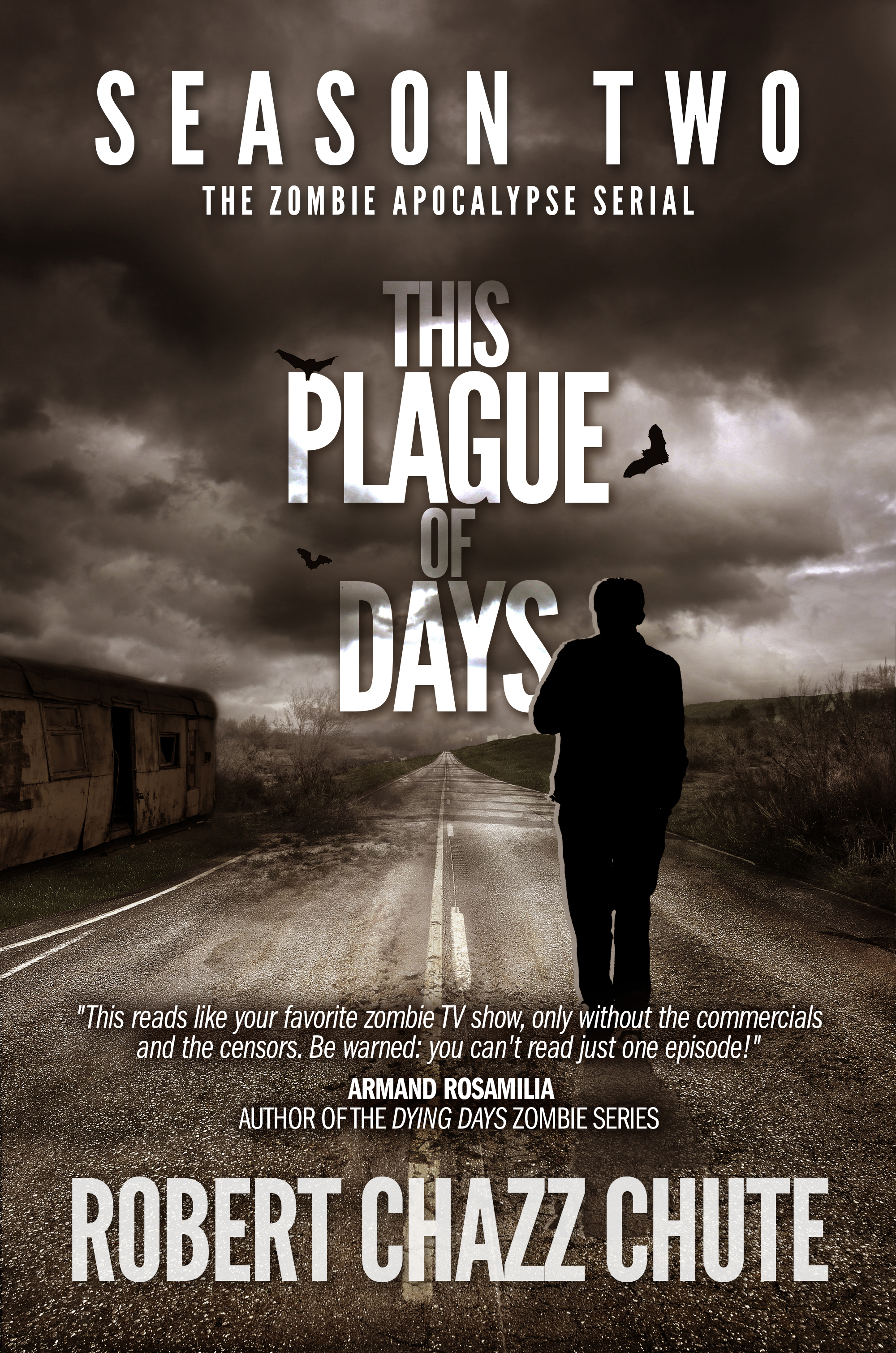
The first 81 lessons to get your Buffy on

More lessons to help you survive Armageddon

"You will laugh your ass off!" ~ Maxwell Cynn, author of Cybergrrl

Available now!

Fast-paced terror, new threats, more twists.

An autistic boy versus our world in free fall

Suspense to melt your face and play with your brain.

Action like a Guy Ritchie film. Funny like Woody Allen when he was funny.

Jesus: Sexier and even more addicted to love.

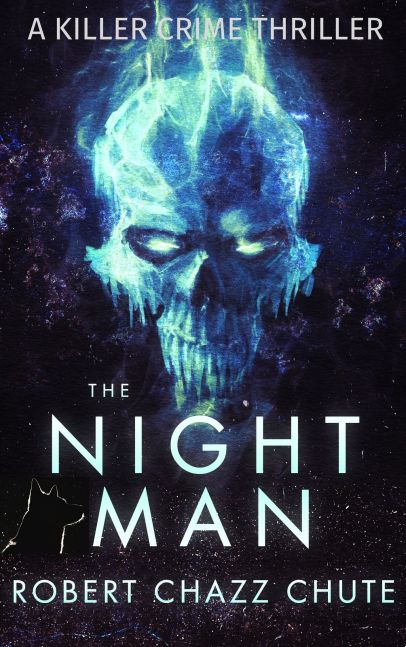
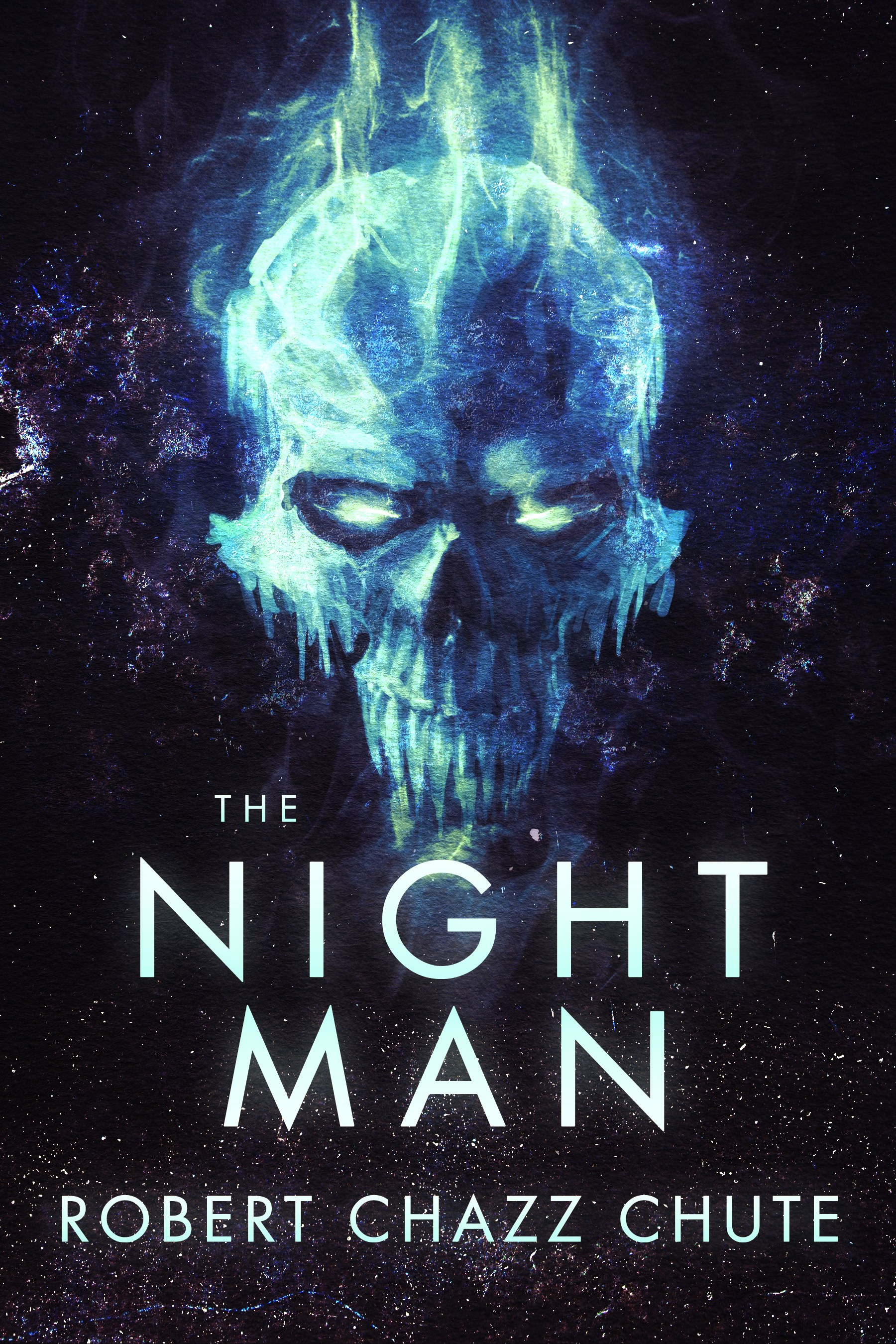
You can pick this ebook up for free today at this link: http://bit.ly/TheNightMan

Join my inner circle at AllThatChazz.com

See my books, blogs, links and podcasts.

Enter your email address to follow this blog and receive notifications of new posts by email.

Join 2,063 other subscribers