C h a z z W r i t e s . c o m

See all my books at AllThatChazz.com.

New Feature: Scoop it!

Scoop it! allows me to grab a bunch of articles to quickly curate an on-line magazine for your pleasure. My focus, of course, is writing and reading and publishing news, particularly indie publishing. It’s more great stuffing for my juicy and delicious info-turkey that will complement the Chazz Writes potatoes, mashed, potatoes and gravy you’ll find on this blog.
In other news, I think I need to go get some lunch.

Shoot on over to check it out.

Filed under: authors, blogs & blogging, Books, publishing, self-publishing, web reviews, Writers, , , , , , , ,

Shocked yet not surprised: Indigo halves its bookshelf space

Here’s the link to Five Rivers publisher Lorina Stephens’ excellent post on how Indigo is changing its returns policy (45 days and you’re out!) and cutting its space for books in half. So much for anybody whose name isn’t Rowling, King, Meyer and whoever the guy is who came up with Go the F**k to Sleep. This stirs up a lot of questions for people whose names are not those names. For instance, how many scented candles does anyone really need to buy in one lifetime? And how will traditional publishing cope?

For me personally, this is not a big deal because I am not in the least surprised. As I’ve been saying, this is not an if. It’s just about when. Blockbuster is battered senseless and HMVs are shrunk to nubs. I am so the opposite of an early adopter of new tech I’m nearly Amish and I don’t go near the Busted Block nor do I buy CDs anymore (though I understand some people still make them, everybody’s just picking the songs they want off iTunes.) I anticipated this boostore shift and consider it to be The Half-Measure of Doom on the Road to Bookstore Apocalypse.

Ahem. Pardon the hyperbole, but I’ve encountered a bunch of resistance from people who are convinced that my sole focus on ebooks was career suicide. No matter what I said, the doubters were sure a book had to be in a bookstore to be “real” and “worthy” and “made of paper and stuff.”

And I said, “What’s a bookstore?” Now I’m doing my “Told you so” dance and though I should be ashamed of myself, to be honest, I’m not feeling it.

But seriously, bookstores are literally farther and fewer between. As they cut down on shelf space to make room for doodads to dust, yo-yos and novelty pens, there will be no shelf for indies. You want choice, variety and a taste of the new? Go look online because you won’t find it in a bricks and mortar chain store.

But enough from me and my reactionary delusions of grandeur. Lorina says it all in detail in her usual reasonable, convincing tone, so do go read what she has to say. 

Filed under: authors, Books, ebooks, Useful writing links, , , , , , , , ,

The “But At What Cost?” Miscalculation

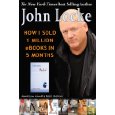
John Locke has written a book: How I Sold 1 Million Ebooks in Five Months.* (I recommend it) How_I_sold_1_million_ebooks_in_5_months

LA Times writer Carolyn Kellogg wrote a piece that asks, “At What Cost?” Here’s that nonsense argument and my bit of nonsense follows.

The upshot is, Ms. Kellogg thinks Mr. Locke undersold himself. He sold a million ebooks, but charged 0.99 for many of them. She says he could have made a million of with higher pricing instead of making do in the $300,000 range. (A figure that would make many authors swoon.) There are many interesting observations in the comments section of the LA Times article that pick apart Ms. Kellogg’s worries very well.

Here’s my take away: I had never heard of John Locke until now. He used 0.99 loss leaders to sell a shit-ton of books. Yes, he “only” made 0.30 on the 0.99 ebooks, but  low or no pricing allowed wary readers to try him out. And now many more people know  about him. And I bought his non-fiction ebook which details his success so far. And I bought it for $4.99.

Kellogg is saying Locke was an idiot for leaving money on the table, assuming he could have moved so much and so quickly with a middle man trad publisher involved. Why would she assume that, I wonder? There’s no basis for it. The new world is not the old world and hers is classic old world thinking.

Now you know, if you didn’t, who John Locke is. And now you’re thinking, maybe I should buy one of his books and give it a try. Maybe more than one, huh?

*Thanks to Joanna Penn for her post on Mr. Locke. I love Joanna’s blog and podcast, The Creative Penn. Subscribe if you haven’t!  

Filed under: authors, DIY, ebooks, getting it done, links, Media, Publicity & Promotion, publishing, self-publishing, Writers, , , , , , , ,

The Author Selects the Agent Scam

Writers’ magazines occasionally run stories on “how to select an agent” or some such nonsense. Sure, you can check Preditors and Editors and ask around about particular agents, but the power differential between authors and agents is, well…the word “egregious” comes to mind. (In fact, that’s the same word that came to mind for Kristine Kathryn Rusch. See below for that most excellent link.)

When you submit work to an agent (note you’re already in submission and they are in dominance from the get go) it’s kind of like applying for a job. You send out a resume (your manuscript proposal) and agents say no. And more agents say no. Repeat until doubt and self-loathing kicks in.

When you do finally get the call, you’ll say yes to anybody.

Pick your metaphor: 

1. It’s the end of the world and don’t you want to experience the act of physical love just once before you die?

2. You’re a serial killer/diabetic and the warden says they’re fixing the electric chair and would you like your first and only chocolate éclair before they electrocute your ass?

3. The vampires have risen and this is the last sunset before Dracula’s armies of the undead close in on you, the last human survivor on the roof of The Mall of America. Suddenly Carrie Moss shows up piloting a helicopter. Do you jump on the rope ladder to safety? Or do you negotiate so she wears an even tighter leather outfit like the one from The Matrix?

Answers:

1. Of course, devirginize!

2. Eat that éclair. The sugar won’t have time to migrate to your rotten pancreas.

3. Board that helicopter and maybe you’ll live long enough for the sequel!

If you’ve run the long gauntlet of trying to find an agent, or just heard a few horror stories to that effect, you sign that contract as fast as you can. You’re closer to publication than you were, so an agent calling must be good, right?

“Must” is a strong word. In fact, read The Passive Voice  and you’ll be running to publish yourself after all. It’s about enslavement via contractual obligations that go on forever. This is scarier than anything Stephen King could possibly dream up. 

Passive Voice also links to Kristine Kathryn Rusch, which you should also read before you do anything. Don’t even poop before reading this.  

Before you put on that electric collar and tie the leash around your genitals, read your contract carefully. Make informed choices. Show contracts to a lawyer. Negotiate the egregious. Take responsibility so you hire the agent, not the other way around. And always be willing to walk away from any deal. Walking away may be the only way to get a decent deal.

Related articles

Filed under: agents, authors, DIY, publishing, queries, Rant, Rejection, Writers, writing tips, , , , , , , , , , ,

Writing Conference Cataclysm: Ebooks versus the Amish

The room was packed with authors who were traditionally published. When the bookseller was talking, they were clapping. She told them what they wanted to hear. She insulted lovers of ebooks, told them to unplug, told them they needed to “get a life.” Her world is divided between ebooks and “real” books, nostalgia for what was and contempt for what is and will be.

Her emotional appeal worked well on that crowd. No one was paying near as much attention to the other guy on the panel. Formerly of Booknet and now with Kobo, Mark Tamblyn knew the numbers. The reality he knew and could quantify didn’t get any applause there so here are some highlights from his trip on the Reality Train:

1. Ebook lovers do love books, they just love them on ereaders. They do not fetishize the package. They read for love, enjoyment, entertainment and ideas, just like traditional readers claim to do…except:

2. Ebook lovers buy more books. Twice as much as people who love so-called “real” books.

3. Ebook readers are not 20 and 30-somethings. They are typically 45-55.

4. Ebook readers are not easily distracted. They do engage in deep reading and are not flighty cyber-ADD sufferers, after all.

One author asked how many people in the room owned an ereader. Only a handful of us raised our hands and he looked quite pleased with himself for a moment. Then someone pointed out the demographic in the room: the crowd skewed old and were, after all, a bunch of traditionally published authors. (And by the way, a couple of those older authors expressed excitement at fleeing to publish their own books so they can get off the mid-list and get paid 70% instead of 25% from a legacy publisher. I’m sure there will be many more to follow.)

So here’s another break from the illusions of The Matrix: Last year Kobo had a party to celebrate their one-millionth customer. A week later they held a party for their two-millionth customer. The month was December and that, my friends, is one major and measurable difference made by Jesus’s birthday. Clearly Jesus wants you all to buy ereaders.

It’s gauche, but since I predicted the ever-increasing appetite for ereaders last year and since I’m in a foul mood I will point out: I informed you thusly! I so informed you thusly! (Inside joke for Sheldon Cooper fans.)

And by the way, since I’m so damnably cranky: Last week I noticed someone saying the indie revolution was a good thing for creators but wasn’t any good for readers. Hey! I’m indie but I was a reader first and will always be a reader. I read ten books at a time. I’m more voracious for reading material than I am fudge. I’ve got a stack of pbooks by my bed, a huge library we call a house and a whack of ebooks loaded in my ereader. I relish more choice, even the stuff that isn’t particularly close to grammatically pure. So knock off that BS, thanks very much.

And have a day. Make it real.

Filed under: e-reader, ebooks, Rant, self-publishing, Writers, Writing Conferences, , , , , , , , ,

21 Bold Predictions: The changing future of books

Sure, you need to write a good book to make it marketable. But what will be more marketable in the future? What will be different? Here are my sweeping predictions:

1. Non-fiction Shrink: Got a question? Got a problem? Ask.com or Wikipedia or any number of  quick searches will probably answer that question. What do I need you (and your book) for? In the future we still won’t have flying cars. There will also be less call for a lot of non-fiction. Instant, quick answers beat your treatise on bed bug infestations. I just want to know who to call and what to do to get rid of them.

Another instance: After faithfully reading the magazine for years, I don’t buy Writer’s Digest anymore. There is already more information than I can possibly read on writing blogs. For free. Um, like right here, three times a week, for instance.

2. Short form explosion: My horror and sci-fi writing friend Rebecca Senese articulated this for me first and it makes sense. People have less time and shorter attention spans as the web changes their brains away from the usual experience of deep reading. Cyber ADD aside, short stories are also 0.99 each, so people will download a little bouquet of short stories and take a chance on new authors that way.

Also, with ebooks, novellas and short novels are practical again from a manufacturing/pricing perspective. Think of the works of Albert Camus. 50,000 words for a novel was common. Then New York lost confidence in that formula and bigger books became the norm (so much so, in fact, that many authors now scoff at NaNoWriMo‘s 50,000-word winners.) Now, book length is less relevant. Ebooks don’t have page numbers.

3. Merchandise and books shall marry: Your platform and your content should optimally come together in a cult that wants more of your work. Witness all the Fight Club quotes, Youtube videos, tees and, well, actual fight clubs (years after the film phenomenon.) You’ll be spreading the awesome with passive income from whatever secondary sources you can manage. (I already started to plant my seeds here.)

4. Domination by Series: Having more ebooks available improves your marketability. Having more ebooks in a series improves your marketability even more. So, rather than sticking to a one off, consider how you can turn your masterpiece into the foundation for a series of books fans will clamor for. Your advantage as a self-published author is long tail merchandising. Your work shall be available until we embrace the Singularity and join ebooks in the cyberspace holodeck of our disembodied, fully-uploaded immortal minds.

5. Product integration: Slightly different from #3, here I’m talking about books as vehicles for products instead of the other way around.

You are a carpenter who specializes in bathroom renos. Order the book on how to renovate a bathroom in three days. The book pushes the advantage of your special caulking gun, available for immediate drop shipping before sledgehammering the bathtub.

6. First-person non-fiction: More authors who did something stupid and dangerous (tour Iraq for pleasure or go skiing off the approved slopes) will write their own first-person accounts. They’ll self-publish and the covers won’t say “as told to” some ghostwriter. The results will be horrific and ubiquitous.

7. Excellent journalists will find their place in analysis: The freelance market sucks for writers. However, if you’re a journalist with extensive financial expertise a la Too Big To Fail or can write like Matt Taibbi in Rolling Stone, you can provide the long tail analysis of WTF happened?

8. To be successful, freelance writers must own smaller niches: If you aren’t a genius like Matt Taibbi, there’s still hope, but you’ll have to think small. Maybe microscopic, like the asbestos beat in the tri-state area.

Generalist writing isn’t dead exactly. In fact, generalists are everywhere, but they are also free.  You may not think of it this way, but really, blogging is instant publishing. If I want a non-expert opinion, that’s the simplest thing in the world to get and the blogger probably isn’t seeing a dime from it. The writers who are making money now are either tech experts  or people who are plowing ahead to make way for the rest of us in the digital publishing revolution.

9. Cross-genre will be accepted: Cross-genre books (a la Scott Sigler, for instance) have long been a problem for publishers. Even if they loved it, if it was sci-fi and horror, they worried which bookshelf it should be placed on to sell. (For those of you who aren’t sure, go look up what a bookstore used to be. That worry used to be much more relevant.) Cross-genre’s stigma is fading. And self-publishers care not at all, though they will have to do a really good job with their promotion and publicity.

10. More humor: In order for a humor book to sell, traditionally it had to be penned by a celebrity or it had to have a Shit My Dad Says-worthy hook (in other words, a novelty book.)

Comedy writer Ken Levine has a long history of sit com hits, from Mash and Cheers to Frasier, among others. Despite his track record, he wasn’t famous in front of the camera so traditional publishing hasn’t given him a chance to screw it up. Who he was wasn’t enough for traditional publishing to invest.

However, Ken has an incredibly popular blog with a following. He could go back to trad publishing and ask them how they like him now. Or he could just publish himself and keep the profits.  He has a platform that heretofore went unrecognized. He’s a guy with a blog today. He could be the new Dave Barry tomorrow.

11. People will get better at platform: Not long ago a clueless agent told a baffled writer,”Go make a viral video.” Yeah, sure. But what makes a video go viral? As time has passed, we have a better idea of what elements make something go viral.

I’m not saying there’s a formula. However, I think we’re at the point where we recognize what won’t go viral. If your book trailer is going to catch fire on Youtube, it will have to be powerful or clever or charming or heartfelt yet funny or at least cute. If you don’t have any of those elements, you’ll know (and if you don’t know, I hope you have good friends who will warn you.) At least the tech has improved so if you’ve got GarageBand, you already have a shot at putting together a better book trailer. And if you screwed it up, you can take comfort in trying again since the costs of trying have come way down.

12. Curation will get worse, then improve: People are already learning to distrust Amazon reviews. Many reviews are by haters with nothing better to do but snark on others’ work. Other reviews are by friends of writers or even by the writers themselves. There are a lot of books coming down the pipe and you are going to need a filter. Goodreads, for instance, seems to be a place for real people to provide feedback on what they love. I’d trust that (or a friend with similar tastes) before depending on Amazon alone for a helpful review.

13. Eventually: Ebooks will boil down to one or two standard formats.

14. Eventually (after #13): Your device will get sophisticated enough to take the download and format your downloaded ebook however you like it, no matter what the Big Six decree. Proprietary defenses (DRM) will be cracked as fast or faster than they are now so prices will fall, many current publishers will be former publishers and if you want money to eat, you’ll have to make up the difference with volume.

15. And #14 won’t happen on an e-reader: I love my e-readers, but they are interim devices, like pagers and electronic planners were. When e-readers go, they’ll probably be replaced by tablets that can do everything. The screens will be expandable so you won’t be peering at books through the keyhole like on a smart phone. Also, we’ll be back to the two-page spread you’re used to with paper books.

Some say ereaders are already on the way out but they’re in a rush. Ereaders will be around for some time to come because lots of people want to read ebooks, but they can’t afford higher-end integrated devices. Ereader prices will fall so market saturation will soak much deeper and faster than previously thought.

16. Media integration: I tried to read an integrated ebook. The experience sucked.  It won’t suck forever. You’ll have that two-page spread, but you’ll be able to bop over to a cut scene of the story’s climactic event. Merch links will be embedded into the text so you can buy the t-shirt your hero is wearing and the villain’s yummy high heels. One click (only it will be a swipe and eventually, a voice command. Later, a grunt. Then, a thought.)

17. The future of reading is hearing: Audio will rise much higher in popularity. You don’t have time to read so you listen in your car, while you work out, while you walk the dog, while you do the dishes and/or have sex. Time management is more important than  money management (though they are often merely equated. that’s a different post for the glorious future.)

Audio will continue to be more expensive until voice tech improves. While we’re still paying actors to read (minimum $150 an hour and usually $300 an hour and up) audio will stay the indie authors last foray. No disrespect to actors. I know some. However, your computer’s voice inflection is improving so when that dramatic reading is up to snuff, this Jetson’s future will kick in. The voice of George Jetson will come from a computer, not a talented voice actor.

18. You’ll care less about grammar: Well, not you. But your kids probably, especially since in school they are already taught spelling (and handwriting) matter less. As an editor, I regret every grammatical and typographical error. But with the deluge of self-published books replete with typos, we’ll relax our standards. Instead of fetishizing a book’s typographic purity, we’ll freak out less when we spot a typo. Instead, high praise will be, “That one didn’t have that many typos.” Practical acceptance will ensue once today’s outrage becomes the new normal. Sure, you pride yourself on being a sharp word nerd, but anyone who can sustain the level of outrage required will be exhausted and have no friends.

On the plus side, a book that is well written and well edited will stick out more.

19. Instant will be prized more: Trad publishing works on long publication deadlines because of budgets and logistics. (Though it’s a factor for the editorial staff, contrary to what you’ve heard, quality is not actually Job One.) If they could pump books out faster than 16 to 18 months per book, they certainly would. That kind of agility would allow them to be more topical, hit trends and, most important, have more stuff for sale. Recently I read an ebook that mentioned the Japanese earthquake. Compare that to how long it took 9/11 to show up in traditionally-published novels out of New York.

There will be little to no delay in the future. An ebook on the ramifications of Bin Laden’s death was up for sale within a week of his death. You might think it was mostly prepared ahead of time, but actually it was a bunch of emails from socio-political experts contacted as soon as Seal Team Six did their job.

20. Romance will continue to dominate, but now it will be recognized: The love of the paranormal romance genre is not a new thing, but romance has never been recognized as the dominant force it really is. Amanda Hocking’s recent success is no accident, especially because she writes in a genre that dominates reader demand.

Look at bestseller lists. You’ll see “important literary works”  by big publishers. Good for them! Those are the sorts of books I like. However, those weekly bestseller lists are often based on booksellers reporting which books are sitting in front of them in the biggest cubes and stacks. Much of the math is suspicious, especially since bestseller lists don’t take into account sales from non-traditional book venues (Walmart, drugstores, the spinner rack at beach resorts or the vast call for romance books among ESL learners. Nope. Not kidding about that. If you’re learning english, simple stories of ribaldry and girl-next-door heroines are one way to do it.)

You won’t see Harlequin romances on bestseller lists. However, I used to work at Harlequin. I’ve seen the numbers. Romance sells huge. Romance sells much bigger than anything on bestseller lists. Why? Because english majors run Big Six editorial departments. They do not run the real world. Yann Martel writes great books. Nora Roberts writes fast, easy reads. Even snobby english majors read trashy, naughty novels for a break from lit that might be fresh and surprising. In the real word, the hare beats the tortoise.

21. Someday soon, everyone will make these changes in spelling: email, ereaders, ebooks. Of all these predictions, this is probably the one which will happen first.

And yes, #18 will probably happen last. As in, over your dead body.

Filed under: Books, DIY, e-reader, ebooks, Editing, publishing, Rant, self-publishing, , , , , , , , , ,

Writers & Readers: I say something new & cranky

Joe Rogan

Image via Wikipedia

Alfred Hitchcock once said a painter needs a brush, a writer a pen and a director an army. The numbers needed to make a film are coming down, but it’s still a collaborative, team sport (or a war, depending how indie you are as a filmmaker.) Painting  is still a solo pursuit and for a long time writing was solitary. Then writing got decidedly less solitary. And now, with self-publishing, the game has changed again.

Authors used to have publishers. Later, agents entered the industry and took pressure off editors by curating. They helped many authors get better deals. Now a lot of agents want to intermediate and perform more of an editorial function, possibly because other traditional roles they have fulfilled are shrinking. See this post for more on that and much more.

Now there can be fewer people between you and publication. Publishing isn’t necessarily a team sport anymore. Publishing with a group of lovers of all things literary  has produced many great books (and has probably interfered with the production of great books, too.) You may think many minds produce better material because all of us have more brain power than one of us. I used to believe that was true in all cases.

Then comedian Joe Rogan challenged that idea for me and articulated something that was slowly percolating through my cranium. In his experience as a comedian on The Man Show, he found that more suits on the set diluted the funny. His stand-up is a pure art form, moderated only by his own sense of humor and direct feedback from his audience. (I saw him at Massey Hall in Toronto recently. He rocks hard.)

It’s an old adage that too many cooks spoil the broth. Now science, as presented in the fascinating book 59 Seconds: Change Your Life in Under a Minute, has disproved the notion that more brains help a creative project. The most creative solutions are not arrived at by the most creative person in the room. They are directed by the loudest person in the room.

So, if your agent says “I’m not submitting your work because I don’t think it’s ready,” and you cede that power, your work isn’t going to market whether your agent is right or not.

This is the sort of thing that drives the traditional world of publishing nuts. Without those mediators, obstacles, curators, gatekeepers, shepherds and rabbis, the worry is that we shall be inundated with a slew of awful, awful books. The deluge shall be as a fire hose pointed at the tiny tea cup of our fevered minds. Without those helpful interlocutors, who will keep the bad books away?

Rather than address the curation question directly (and I’ve already addressed it many times on this blog), I’d like to say something new on the subject:

Even if that objection is valid, so the f**k what? I reject the premise. I say this is not about your convenience in going to a legacy publisher you trust for all your curation wants. This is about my freedom to express my art, which you can enjoy or not. As they say at the convenience store, “Buy or leave!”

The marketplace of ideas is opening up to a lot more shelf stock. Buckle up and put on your big boy Underoos and your big girl panties. Soon you might find more variety and much more current reading material to explore and fill your mind.

I value my sovereignty of expression more than your convenience.

I said this was a revolution. I asked you to join me.

Did you really think no one would get hurt along the way to the shinier, freer new world we’re creating? 

The results will surely be messy, but the cost of your tender sensibilities is really negligible. There will be a lot of bad books delicate grammar doilies will decry. You’ll see a lot of typos (though I see a lot of typos in traditional books, too, by the way, and yet the earth keeps on spinning.)

We value freedom and freedom of expression. A lot. The US Supreme Court allows the Westboro Baptist Church to protest at funerals with ghoulish signs without regard to the feelings of the families of the dead. Evidence obtained illegally is routinely thrown out and murderers are sometimes set free as a result. We accept some consequences far worse than inconvenience so that greater individual sovereignty is assured.

If it sounds like I’m saying your worries

about all the coming bad books don’t matter,

you’ve read this blog post correctly. 

Filed under: agents, authors, Books, censors, publishing, self-publishing, , , , , , , ,

Announcements and changes 1, 2, 3

First, author India (The Great) Drummond will be profiled right here in a few hours. She’s really nice, which I value immensely. And her book sounds interesting, so check her out and order some copies.

(Also, if you’re an author, you know I do author q&a profiles, right? Shoot me an email by clicking my happy pic above and we’ll chat about publicizing your book, too.)

Second, I have a big announcement coming this Friday. If you follow me on Twitter, you already know the broad strokes. If not, follow me on Twitter! Also, here’s a hint: I found a publisher for my novel. More to come on that but it’s all very exciting. Well, especially to me. Lots of new news unfolding over the coming year on the publishing front. You’re used to lots of links, opinion and non-fiction in this space. My fiction will be coming to the forefront in a big way soon(ish).

Third,  I’m changing the schedule of the blog starting next week. You’ll recall I switched to three posts a week (unless I saw something that caught my fancy and couldn’t wait.)

I’m still in the publishing/information/curation business here

and will continue to be.

However, I notice that my Friday post stats take a dip so next week I’ll be posting Mondays, Wednesdays and Thursdays. Apparently on Friday afternoons, y’all just want to get the hell away from your desks and out into the sunshine! I don’t blame you. Might add or switch in a Sunday post in the future depending on how the stats work. I’m watching how I hit you for optimum impact with minimum annoyance on your part.

The blog is growing faster now that I only post three times a week! What does that say about me? Either a little of me goes a long way or girls just hate it when you look desperate.

Have a great night! Or make it one.

Filed under: blogs & blogging, publishing, Useful writing links, Writers, , , , , , , ,

The Nerdist Scott Sigler Interview

Scott Sigler

Image by Sebastian Bergmann via Flickr

I’m an addict.

Food. Comfort. Book-buying.

And podcasts. Lots and lots of podcasts.

If you’re a self-publisher or interested in how a self-publisher used podcasts to go from freemium to premium, from ignored to in demand, from reject to popular author, check this out: The Nerdist.

Favourite story: After so many rejections, Scott Sigler was sure publishers would chase him down if he could just get a huge following for his podcasted book.

He achieved the goal he set for himself and called up the publishers again.

“Howdayalikemenow?”

And they said, “What’s the internet?”

Filed under: Author profiles, author Q&A, authors, podcasts, self-publishing, Writers, writing tips, , , , , , ,

The publisher’s temperament

Last week a baby video went viral. Two little twin boys babbled at each other. Back andSelfpublishing forth they went with a lively conversation “Da! Da! Da! Da!” Though unintelligible, they both were excited to talk to each other. I couldn’t hep but think of the conversation that goes back and forth about whether you should publish, or self-publish. There’s a lot of energy but not a lot of signal getting through.

The answer to the question of whether you should self-publish depends on the “you”.

Are you prepared to think of yourself as more than a hobbyist? Are you intimidated by new and unknown practices so much that you’re frozen? Do you prefer that others take care of things for you without you hiring them? Do you have any financial cushion? Are you prepared to take a chance? What is your real tolerance for risk? What is your tolerance for some people underestimating your work’s worth because you went your own way. Are you open to learning what you don’t yet know and ready to be a beginner?

There are a plethora of other factors to consider,  but first and foremost, it’s about you. Some people just aren’t interested in entrepreneurship. That’s not a judgment. Starting a business is not for everyone. You have to have a lot of discipline and interest in things beyond simply writing a good book (and god knows there’s nothing simple about that.)

Ask yourself, do you really want to do this?

We’ll have better self-published books when more authors ask themselves this question first. Why? Because they won’t just be self-publishers and the negative things that currently implies. We’ll have more publishers who happen to be publishing themselves.

Filed under: DIY, getting it done, publishing, self-publishing, Writers, writing tips, , , , , , , ,

Bestseller with over 1,000 reviews!
Winner of the North Street Book Prize, Reader's Favorite, the
Literary Titan Award, the Hollywood Book Festival, and the
New York Book Festival.

http://mybook.to/OurZombieHours
A NEW ZOMBIE ANTHOLOGY

Winner of Writer's Digest's 2014 Honorable Mention in Self-published Ebook Awards in Genre

The first 81 lessons to get your Buffy on

More lessons to help you survive Armageddon

"You will laugh your ass off!" ~ Maxwell Cynn, author of Cybergrrl

Available now!

Fast-paced terror, new threats, more twists.

An autistic boy versus our world in free fall

Suspense to melt your face and play with your brain.

Action like a Guy Ritchie film. Funny like Woody Allen when he was funny.

Jesus: Sexier and even more addicted to love.

You can pick this ebook up for free today at this link: http://bit.ly/TheNightMan

Join my inner circle at AllThatChazz.com

See my books, blogs, links and podcasts.

Enter your email address to follow this blog and receive notifications of new posts by email.

Join 2,063 other subscribers