C h a z z W r i t e s . c o m

See all my books at AllThatChazz.com.

Writers’ Union of Canada VIDEO (plus a cool NEW word! Yay!)

Yesterday I blogged about The Writers’ Union of Canada and that particular post wasn’t altogether complimentary. In fact, I proposed that if they didn’t open up their membership criteria to self-published authors, an indie union could be formed.

I hope that isn’t necessary since it could duplicate effort across platforms and dilute the voice of the writing profession. (However, if the self-published aren’t represented at all…hm. I won’t get sucked into a rehash. If you missed it, read, cogitate, plot and plan.)

But I’m all about the balance. For instance, I complained in a long ago post that TWUC’s judging of one year’s short story competition…well, it sucked. I’ve also been very complimentary with regard to their most recent symposium in Toronto (that also went on tour across Canada.)

This video on Canada’s proposed copyright law is an example of one of the good things unions can do to deal with The Man. The education provision does appear too broad and is a detriment to writers who are, as the legislation is written, voluntold to give up recompense for their work.

Voluntold

Chazz Definition: To have your services, product and/or time volunteered by someone other than you who has no business telling you what to do with your services, product and/or time.

(e.g. “I can’t order you on a suicide mission but I need five volunteers to storm that machine gun nest. You, you, you, you and you, go! You’ve been voluntold. A grateful nation honors your blah, blah, blah…”)

Filed under: authors, Books, Cool Word of the Day, publishing, Rant, self-publishing, Writers, Writing Conferences, , , , , , ,

Opportunity knocks? Self-published writers could unionize (plus association links for writers)

A map of Canada exhibiting its ten provinces a...

Image via Wikipedia

We started off The Writer’s Union of Canada symposium with the presenter announcing,Self-publishing is mainstream!” Dead on and right on, brother! Come to Jesus! Most of the day was dedicated to authors taking hold of their careers, navigating through the logistics of self-publishing and going indie. As I’ve mentioned in several posts since, it was a great event filled with exciting information that went deep. The kick in the nuts didn’t come until the end of the day.

As we wrapped things up with questions to the presenters, someone asked if she qualified to join The Writers’ Union of Canada. Nope. It looked by the show of hands that about half of the attendees (at least) were not TWUC members, but they couldn’t join to lend their voice to Canadian professional writers.  Publishers decide who is traditionally published and only if you are traditionally published does TWUC recognize you as a candidate for the union. (Yes, there’s an appeals process in which a committee could decide your worthiness on a case-by-case basis, but I didn’t get the feeling that opened a lot of doors for the great unwashed.*)

There are people within the union who want to change this, but there is resistance. Despite all the DIY enthusiasm and knowledge of self-publishing displayed at the symposium, so far it seems the only writers the union recognizes are — and will be for the foreseeable future — the traditionally published. The concern, they say, is about quality. I’ll grant you many self-published books suck. They often are not edited or are not edited well. (In fact, I wrote a blog post not long ago entitled Why self-publishing sucks (and what you can do about it.)

However, the larger point is, you don’t professionalize a group by shutting them out. You raise the standard by bringing them in. Amateurs often become professionals by mentoring and community interaction. Self-publishers can also bring a lot to the table. Many DIY authors will have a lot of information and support to share when many trad authors switch to independent publishing. (Gasp! We talk and share and know things, too! Imagine that!)

Here’s a secret: quality is a myth. You don’t use traditional publishers as gatekeepers. Not anymore. You already refuse to read much of what they publish. You have your unique tastes. You use curators you trust to let you know about a great book to read. Anyone reading this post could name several books traditionally published that, according to their lights, do not constitute “quality.” It’s all, trad or indie, subjective. Do I have to remind anyone that The Best Laid Plans by Terry Fallis was rejected by trad publishing? That book  only saw the light of day  (and won the Stephen Leacock Award and CBC’s Canada Reads contest) because Fallis self-published first.

The presenters were not necessarily against letting self-published writers in. They seemed to say that it was the system that was slow on the uptake. “It’s an evolution,” said one.

Yeah? Since we spent the day talking about the publishing revolution, maybe we should splice some DNA and catch up!

“Apply anyway,” another presenter advised. “If they (meaning the admissions committee) get enough applications, maybe they’ll be moved.”

Bewildered, one participant asked, “Why wouldn’t you be proactive and lead” by going ahead and accepting self-published authors? Good question. I asked him if he wanted to be president of a new self-published writers union. He grinned and said, “Sure!” The presenter looked at me with…was that disdain?

Opening up the TWUC membership means a larger, more powerful and better-financed union. Look at the Romance Writers of America. If you’re interested and actively pursuing a writing career, you’re in. That is a big tent that’s open to anyone interested in romance books. They’re big enough they could stand up to their biggest sponsor (Harlequin) when necessary.

A powerful union filled with fresh blood and entrepreneurial, proactive people makes a small union into a big (and relevant) union.

But why should you care? What’s the alternative? Well…I’m not trying to start anything here, but since TWUC isn’t being especially proactive, there is a huge opportunity to start up a union for self-published writers. If you’re DIY, you could join, hold events, help with disputes, etc.,… Oh, and get some fucking respect.

I’m not saying we should. I’m saying we could if TWUC continues at a glacial pace while the old media models implode around them. The crazy part is there are forces within TWUC that agree. Apparently there aren’t enough of those like-minded individuals on the admissions committee. We could unionize. Should we? There are benefits, though if TWUC loosens up we wouldn’t have to invent that wheel.

Maybe they better move before you take the idea of a Self-published Writers of Canada and run with it. (SWOC? Nah, that’s the Steel Workers.) Shutting out the self-published is a major tactical error considering the self-published are a determined group of people who don’t take kindly asking permission to do things. We are all about git ‘er done, DIY ASAP.

Brain food, comrade. If they aren’t as forward-thinking as their own symposium, they could go from The Writers’ Union of Canada to A Writers’ Union of Canada.

*Alternatives? Where you live, there’s some kind of association of varying applicability to your writing career, amiability and varying strength.

Here’s a list of links which is by no means comprehensive: The Canadian Authors Association, the Editors Association of Canada and the Periodical Writers Association of Canada, the Horror Writers Association, the Science Fiction & Fantasy Writers of America, SF Canada, Crime Writers Association (UK), Crime Writers of Canada, Mystery Writers of America and the aforementioned Romance Writers of America . Check each association’s membership criteria and see if their goals match your own. Another aspect to consider is how active each organization is in your area.

Tomorrow’s posts: If you’re up early, a style ruling on when to use “each other” instead of “one another” (well, never ‘use’ another human being) and at 11:45 EST, one of the good things The Writers’ Union of Canada is trying to do. You know me, I’m all about the yin/yang balance of the universe.

Filed under: authors, Books, DIY, ebooks, getting it done, publishing, Rant, Rejection, self-publishing, Writers, Writing Conferences, , , , , , , , , ,

Writers: Four simple mistakes that ruin your reader’s trust (by Guest blogger Roz Morris)

nail_your_novel

Whether you write fiction or non-fiction, a mistake-free manuscript looks professional. It gives the reader confidence that they are in good hands. This is so important that publishers employ people specifically to worm out embarrassing errors so that the reader trusts what is on the page. I used to be one of them. But as we increasingly do it all ourselves, some howlers are getting through.

And not just typos. In self-published books, on blog posts, newsletters – and indeed query letters – there are four mistakes I see often that can seriously undermine the writer’s credibility:

Names are misspelt

The other day I came across a post on a blog I respect that referred to the heroine of the Tomb Raider game as ‘Lora Croft’. In editing circles, it’s a golden rule that if you use a name, you check it is spelled correctly. Then you check that when you typed it your fingers did what your brain wanted. ‘Lora Croft’ may have been an innocent typo but it makes the writer look like a twit.

Its and it’s are confused

Its means ‘belonging to it’.

It’s is short for ‘it is’.

If you’re still confused, ask yourself if you mean ‘it is’. If you don’t, it’s probably the other one. See how easy it’s?

There and their

If what you mean is ‘where’, the word you want is ‘there’. You may also use it without any meaning of its own in a sentence such as ‘if I see this mistake again there will be blood’. If you mean ‘belonging to them’, you need ‘their’. So there.

Reigns and reins

A horse has reins. A monarch reigns. You can have a reign of terror, but daily I see: ‘so-and-so took over the reigns of power’. This is wrong. They are speaking figuratively of leather straps that steer – and so the correct word is ‘reins’. I also see ‘we had to reign in our spending’. That refers to an act of braking – which is done with a rein. Nay, nay, nay.

These mistakes aren’t just irritating, like typos; they undermine your authority. Don’t lose readers by making them distrust what you write.

Roz_Morris

Roz Morris


Roz Morris is an editor, book doctor, bestselling ghostwriter. Now she’s coming out from under the sheet with novels of her own. She blogs, slightly less bossily, at http://www.nailyournovel.com, tweets as @dirtywhitecandy and is the author of Nail Your Novel – Why Writers Abandon Books and How You Can Draft, Fix and Finish With Confidence.

Find her book on Amazon.com http://ht.ly/3MWBC, outside the US from Lulu http://www.lulu.com/product/paperback/nail-your-novel/5301103 and on the Kindle http://www.amazon.com/Nail-Your-Novel-Confidence-ebook/dp/B004LROOEQ/ref=sr_1_2?ie=UTF8&m=A7B2F8DUJ88VZ&s=books&qid=1296691437&sr=1-2

Filed under: authors, Editing, Editors, getting it done, Writers, writing tips, , , , , ,
Writers: Self-publishing links

Patricia Benesh writes in the Huffington Post about the five questions you should ask yourself before going the self-publishing route.

At Self-publishing Central there’s a blog post about the journey to publication and finding peer support along the way.

Eoin Purcell‘s blog writes about the state of the traditional publishing industry and how it’s not all bad news. In fact, libraries are trending up.

And Jeff Bennington over at The Writing Bomb writes a compelling post evaluating Lightning Source versus Create Space. Do check that out!

Related Articles

Filed under: authors, blogs & blogging, Books, DIY, ebooks, self-publishing, Useful writing links, web reviews, Writers, writing tips, , , , , , , , , , , , ,

Writers: Are you skeptical about self-publishing?

keys

Image by atmasphere via Flickr

As you can see from a couple of posts ago, I was very enthused with the symposium put on by The Writer’s Union of Canada. I still am. However, there was so much useful information for writers (especially if you’re interested in self-publishing) that I can’t do it all in just one post. It’s worthy of many posts, and not all of them are mine. For instance, as you may have gathered, it’s official, I have a man crush on Ross Laird’s brain.

When someone else makes a great argument, I feel pretty stupid piling on with nothing else to add. (Hold on to your shorts. I still have plenty to say, but we’re going to jump to one of Ross Laird’s links in a moment.)

Why? Because the essential question before I follow up with anything else is this:

Is this the right time for you to jump to self-publishing?

Is traditional publishing so damaged it might even be crazy not to self-publish?

Now you need to click here to read Ross Laird’s short essay over at A Newbies Guide to Publishing for the answer.

I know when to shut up and let someone else make a brilliant summation to the jury.

Filed under: self-publishing, Useful writing links, Writers, Writing Conferences, , , ,

Book Distribution Company Bankruptcy

A map of Canada exhibiting its ten provinces a...

Image via Wikipedia

One-hundred and twenty-five employees are out of a job at HB Fenn, a major Canadian book distributor. It’s cold in Toronto and those rents are killer. Best of luck to all those employees.

I’ve worked for a publisher as they began to collapse. I was working at Lester & Orpen Dennys just before they went under. It was okay for me. When I came in, I knew I was hired for a short-term job. I was one of the lucky ones in that I bounced on to another publishing job at Cannon Books. The people who stayed longer had to face looking for work in publishing just as everyone else at the company was looking for work. It must have been a terrible situation for some.

For those who missed the details: HB Fenn, declared bankruptcy late last week. Until recently they distributed more than 50,000 titles including MacMillan, Whitecap Books and American sci-fi heavyweight, Tor.

According to The National Post, this marks “the largest collapse of a Canadian publishing company since General Distribution Services/Stoddart Publishing went under in August 2002.”

Publishers have to try to get skids of books back but that may be very difficult while the company deals with paying off creditors.  Authors will get it in the shorts as bookstores wait for cartons of books to arrive that never shall. This is a bad blow to Canadian book publishing, especially since, increasingly, publishers have less to offer but could still pride themselves on their bookstore access and distribution system.

HB Fenn once had controlling interest in the now-defunct Key Porter books, as well. Key Porter was once a major player in Canadian publishing.One company’s death would be enough of a bad sign. Two companies might be a bald symptom of the trend down we’ve been seeing.

NEXT POST: THE PROMISED BLOG-O-RAMA—ONE OF MANY TO COME—ABOUT THE WRITERS’ UNION OF CANADA SYMPOSIUM ON THE STATE OF PUBLISHING. (Yes, this post is a clue.)

Related Articles

Filed under: Books, publishing, , , , , , , , , ,

It’s official: Despite my weight loss, I’m an Editor-at-large

King's College Arts and Administration Buildin...

Image via Wikipedia

In addition to my regular projects, I’m editing books for Five Rivers. This was posted on the Five Rivers Facebook Page today by the publisher, Lorina Stephens:

This year marks a pivotal year for Five Rivers, with four books due for release, and the possibility of an additional two, many from debut authors, some from recognized and beloved experts.

Because of increased editorial demands, we’ve sought out another editor for our team, and are pleased to present our Editor-at-large, Robert Chute.

Robert “Chazz” Chute graduated from The University of King’s College with an honours degree in Journalism. After working in daily newspapers, he graduated from the Banff Publishing Workshop (Books and Magazines) and moved to Toronto to work in book publishing.

He has been a proofreader and slush pile evaluator (Harlequin), a publicist and senior editor (The Canadian Book Information Centre) and a book sales rep (Lester & Orpen Dennys and Cannon Book Distributors.) During that time he was also a co-founder of The Point, The Newsletter of Newsletters and junior editor for Film Canada Yearbook. He also vetted fiction manuscripts for authors.

After 16 years working in the alternative health field, he writes the regular back page column for Massage & Bodywork Magazine for which he was recently nominated for a Maggie Award. These days Chazz is writing and polishing manuscripts again full-time. And now part of Five Rivers’ editorial team.

We are thrilled to add Chazz to our masthead.

Filed under: Books, Editing, Editors, publishing, What about Chazz?, , ,

Writers: Self-publishing resources

Yesterday I wrote about a scenario that appealed to many people. After an encounter with her agent that doesn’t go well, a writer achieves the critical mass necessary for her to go indie.

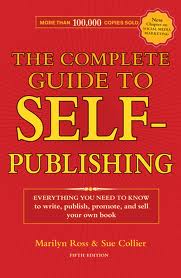
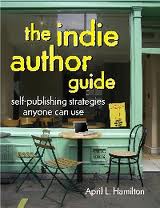
Whether that route is for you depends on many variables. Self-publishing is definitely not for everyone. If you’re wondering if self-publishing is for you, here are a few books to get you started so you know what you’re getting into:

self-publishing_manual

the_complete_guide_to_self-publishing

 the_indie_author_guide

Filed under: authors, Books, self-publishing, Writers, writing tips, , , , , , , , , , , , ,

Writers: Take a penny, leave a penny

New York City Serenade

Image by joiseyshowaa via Flickr

The agent talked about her latest sales: This fabulous author and that little debut. She called them her authors, her books. It sounded like such a glamorous world. The writer hadn’t seen any of it for herself, but she had a writer’s mind so she could imagine every tantalizing detail.

“Good for you,” the writer said.

“Well, it’s not all cocktail parties, you know. In fact, it’s not nearly enough cocktails. Sometimes I hate it. You should see our slush pile. Long nights. No down time. I’d love to read the latest good books, but I have so much to read, I end up reading more bad stuff than good. You know how it is.”

The writer nodded and smiled, but she didn’t know how it was. She only read the good stuff. She aspired to be one of those writers who get a book launch and get to gripe about not getting paid enough as they examine royalty statements.

She glanced down at her own manuscript in the middle of the desk between them. She had changed the title five times over the course of as many drafts. Now she thought the words on the cover sheet should read: THE ELEPHANT IN THE ROOM.

The writer thought of the bills that had been piling up as she wrote and rewrote multiple drafts of her book. She wanted to ask, “What do you think we can get for it? Any chance of an auction?” The writer didn’t have dollar signs blinding her vision. Her family had been supporting her efforts to get published for a long time. She wanted to finally have some money to show for it. She thought of all those nights she said, “Mommy’s working.” Everyone else she knew who worked got a paycheck.

But the writer knew those questions would sound impertinent. Unprofessional. Instead, she acted cool and casual and nodded at her manuscript. “Is it any good?”

Is it benign? is what she meant.

Sure, it’s good,” the agent replied. Then, a deep breath and a furrowed brow. “A lot of people might even think it’s great.”

The writer’s shoulders relaxed.

“But it’s not just a question of it being good.”

The writer’s shoulders tensed again. “It’s not?” Uh-oh…

The agent picked up the manuscript, felt its weight a moment and then placed it back on her desk. Then she slowly slid it back toward the writer. “The landscape has changed a bit since we last spoke.”

The writer sat up straight in her chair. She didn’t want to pick up her manuscript. Not yet. If she took it back, it would signify something she didn’t want to see.

“There are a lot fewer bookstores. The economy isn’t recovering as fast as we’d hoped. E-books are really screwing things up, I can tell you. There’s a lot of flux in the industry,” the agent said.

“Flux.”

“Yes.” The agent pushed back from the desk and stood. “I tell you what,” she said. “The market just isn’t ready for this sort of thing right now. I could have sold this a year ago, maybe even a few months ago.”

A few months ago you told me to take another swing at it, the writer thought.

“But it’s just not hot enough with my editors—”

There it was again. My authors, my books, my editors. It was if her agent held the keys to the whole world.

“…and I’m not as enthusiastic as I’d hoped. If I take something to them which isn’t really double-plus ready for prime time, they’ll never let me in the door again. I have to love it to sell it. You understand.”

The writer thought of all those years her father sold Fords. He didn’t love every model, but he had sold a lot of cars. The writer refused to rise from her chair. And she would not touch her manuscript. Promises hadn’t been made, no. But the agent had always sounded so positive. It had taken her two years to find this agent. Everyone said two years was lucky.

“Can I…? What could I do to fix the draft?” She hated the desperate tone that crept into her voice then.

The agent shook her head, but she was smiling in a way the writer guessed was supposed to be reassuring. “I wouldn’t worry,” the agent said. “Eventually, with a stick-to-it attitude, you’ll be published soon enough.”

Soon enough? What did that mean? The writer winced.

The agent put up her hands in a soothing gesture. “Relax and persevere. Your writing shows so much promise.”

The writer had heard this phrase many times. She thought if she heard it again, she might just throw a very embarrassing, very childish tantrum.

“So what should I do?” the writer asked.

“Oh, I think you should start fresh, of course,” the agent said. She was still smiling that infuriating smile.

Fresh? The writer had begun this manuscript (her third unsold manuscript) four years ago! The weight across her shoulders felt like an ox yoke.

“Don’t be discouraged,” the agent added breezily. “This is how this business works.”

“This business doesn’t seem to be working for me,” the writer said. I’m not even sure you’re working for me. She thought it but she didn’t dare say it.

The writer took a breath, held it a moment and then let it escape between her teeth in a slow hiss. “I don’t want to hear about flux. Give me something I can chew,” the writer said. “What’s wrong with it? You were so enthusiastic about the pitch.”

The agent came around the desk and took her elbow, ushering the writer toward the door as she spoke. “It’s a combination of elements. Not loving it enough is the main thing. If you’re looking for something more concrete to work on, I’d say this draft turned into a bit too much of a cross-genre issue. We have to be sure which shelf the book will be on so we can market it effectively. Is it a thriller or is it a sci-fi? I’m not sure. I bet you don’t know. It’s not…” the agent searched for the right word, “definitive.”

No, the writer thought. She’s appearing to search for the right word, but she’s acting. She’d said this many times before. She said it the way human resources people spit out, “…and we thank you for your years of service.”

“Wait. I do know. It’s a thriller, but if they aren’t sure—whoever they are—they can put it on both shelves,” the writer said. “And if bookstores are disappearing and people are buying books online so much, bookshelves aren’t really such an issue anymore are they? Shouldn’t we at least give some editors the chance to say no?”

The agent’s mouth was a line now. “You have to trust me,” she said. “I know this business. I’ve worked in it for almost twenty years.”

The writer said nothing. She was angry, but she wasn’t sure she should be angry with her agent. She wished she knew who to blame. The agent’s answer seemed to be that she should blame market conditions. Or herself. She didn’t know, but she wasn’t so far gone she didn’t wonder if the agent’s twenty years of experience meant she was now twenty-years stale.

The agent’s hand was on the doorknob. “I have a piece of advice for you,” she said. “I have to share it with all my clients at one time or another. Are you listening?”

The writer nodded. She could hold back the big fat baby tears until later, but she cursed herself still. She knew her eyes were wet and shiny. She wasn’t looking like a professional writer just now.

“Pick up the pennies,” the agent said.

“Wha…whut?”

Pick up the pennies! My mentor always told me that and now I’m telling you. When you see a penny or a dime in the street, pick it up. It’s your message to the universe that you’re open to receive your fortune. You’ll get good things eventually if you let the universe know you’re open to whatever it will give. When you pick up a penny, you’re telling the universe, God, Fate, whatever…you’re saying, ‘I’m patient and worthy of your grace. I’ll wait for my time and my turn.'”

With that, the agent grabbed her hand and pumped it firmly twice. “Good luck!” She seemed almost cheerful. “Pitch me again some day when you’re really really ready.”

Outside on a bench the writer searched her purse for tissues that didn’t look too well-used. Somehow she had the manuscript in her hands again. The agent had slipped it into her grasp so smoothly. She looked at the cover again. She felt the weight of it. It had seemed so valuable.

And what would she tell her family? Worse, what would her writing group say? They hadn’t been fans of the story at first but she’d honed it and they had come around. The people she had trusted most had loved the story, but now, obviously, their opinions had been wrong. All wrong. Not even close to right by accident.

This, she thought, had been needlessly humiliating. She should have just waited for an impersonal email instead of making an appointment. What had she been thinking when she picked up the phone? When she had spoken to the agent’s snotty assistant, the writer had said, “I’m in the city and I thought, hey, I can finally meet my agent in person!” As if she ever just happened to find herself in New York. As if she didn’t live three states away.

She’d felt so good about that move. It seemed so bold then. She had pictured the agent taking her to lunch where they could plot strategy over gourmet coffee with cinnamon swizzle sticks. The agent, she knew from her blog, was big on planning her stable’s careers. She felt like such a rube now that she hadn’t even stayed long enough for a stale cup of office coffee with lousy powdered creamer in a paper cup.

The city street bustled on around her. Hundreds walked past and they all ignored the woman snuffling on the bench. How much older would she be before it was her turn to get noticed? How much patience was reasonable? Maybe it was time to quit.

She had always dreamed of being a published author, but it was a dream with no known origin. She didn’t have to do it. It wasn’t beyond the dictates of her own will. Would she always be held hostage to the whim of her eight-year-old self? This was like running a marathon with no known finish line. Why not stop? No one was making her do this. She couldn’t call this a profession after this. Now it was just a hobby.

She could do something else, too. She had talents. She loved to cook. It wasn’t too late for culinary school. Maybe she would write a cookbook one day. She didn’t like the hours and the time it would mean away from the kids, but she could go for that real estate license. If she saved enough, there was still time to go back to university, she supposed. But what, besides english lit, would interest her? And wouldn’t all those books be a terrible, daily reminder of the beautiful dream she’d abandoned?

The writer looked down. At her feet she spotted a penny on the sidewalk. It was so soiled it was almost black. This, she thought, was one of those plot twists that would make an editor with a MFA scoff. She smiled and, without thinking, reached for it. Before her hand touched it, she froze.

What message was she sending the universe? Patience and openness and receptivity? Like her place could only be a gift? Like the universe was deciding whether she was worth a favor?

No.

That’s when she knew what picking up pennies really meant: If she stooped for a penny she was really telling the universe she’d settle for anything.

No.

She would not settle for a grudging gift. She would choose the dignity of earning her place instead. She would go get it herself.

The writer marched down the street with renewed purpose as she shoved the manuscript into her bag. She’d print off a new one as soon as she got home. She held her head high. Her step was fast and her shoulders light. A plan was forming. There was so much to do. She had to research ebooks and POD and formatting. She had to figure out self-distribution. She had to hire an editor and recruit proofreaders. When she got back to the hotel she’d call her husband and announce the great news. She wasn’t just an author anymore. She was a publisher now, too.

She knew she wasn’t supposed to smile at New Yorkers. You were supposed to look straight ahead, avoid everyone’s eyes and blend in. Instead, the writer beamed at everyone she saw. “Bright lights, big deal.”

Filed under: agents, authors, Books, ebooks, getting it done, manuscript evaluation, publishing, Rant, Rejection, Writers, , , , , , , , ,

Writers: Is writing therapy for you?

Reverend Billy from The Church of Life After S...

Image via Wikipedia


Writing can be therapeutic. You can get some etheric vengeance, exorcise your demons and find peaceful transcendence.

But I don’t think your therapy should show. If you stray into telling the reader how to feel, your writing experience intrudes into their reading experience.

Don’t do that, please.

What writing teachers don’t say is, “Not getting preachy is really hard.” For instance, in my WIP, I touch on issues around censorship. In fact, I’ve noticed my penchant for not just touching on the issue, but hammering on it.

How do you know you’re hammering your personal issue too hard? Overexplaining irritates readers. Making two characters argue and leaving the opposing side too weak is another sign. Look for when the action stops and restart it. For instance, when your protagonist slips into a monologue that goes on uninterrupted, he’s at the pulpit and you’re losing readers.

You can still have a point of view, of course. Just lay out facts. Let your readers decide. Slip the facts amongst the action of the story. Don’t lay it all out at once. Instead of pontificating, let arguments percolate through the story.

Orwell’s 1984, for instance, shows the horror of the all-controlling state. Orwell doesn’t tell you it’s awful and list why. He shows cages full of rats. Chuck Palahniuk‘s style is another good example. He doesn’t tell the reader how to feel. Non-judgmental writing yields effective results.

Don’t write from your therapist’s couch. The benefits you get from writing may be every bit as personal and profound as a therapy session from In Treatment, but if you’re writing for an audience, please let your readers find their own therapy.  In Finding Forrester, Sean Connery says, “You write the first draft with your heart and the next with your head.” 

Filed under: Books, manuscript evaluation, publishing, Rant, Rejection, Useful writing links, Writers, writing tips, , , , , , , , , , , ,

Bestseller with over 1,000 reviews!
Winner of the North Street Book Prize, Reader's Favorite, the
Literary Titan Award, the Hollywood Book Festival, and the
New York Book Festival.

http://mybook.to/OurZombieHours
A NEW ZOMBIE ANTHOLOGY

Winner of Writer's Digest's 2014 Honorable Mention in Self-published Ebook Awards in Genre

The first 81 lessons to get your Buffy on

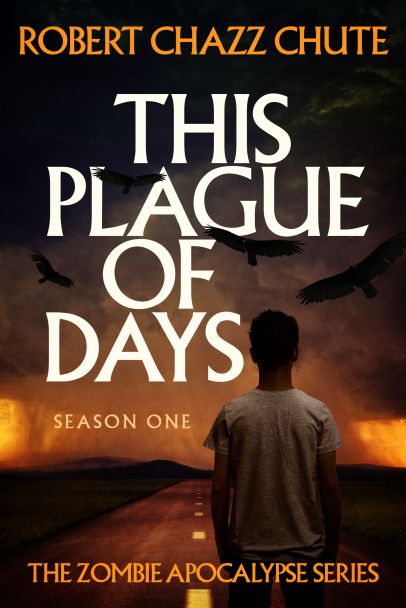
More lessons to help you survive Armageddon

"You will laugh your ass off!" ~ Maxwell Cynn, author of Cybergrrl

Available now!

Fast-paced terror, new threats, more twists.

An autistic boy versus our world in free fall

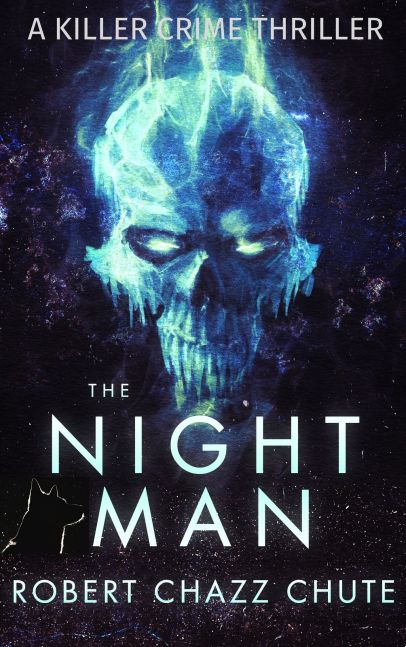
Suspense to melt your face and play with your brain.

Action like a Guy Ritchie film. Funny like Woody Allen when he was funny.

Jesus: Sexier and even more addicted to love.

You can pick this ebook up for free today at this link: http://bit.ly/TheNightMan

Join my inner circle at AllThatChazz.com

See my books, blogs, links and podcasts.

Enter your email address to follow this blog and receive notifications of new posts by email.

Join 2,063 other subscribers