C h a z z W r i t e s . c o m

See all my books at AllThatChazz.com.

TOP TEN: What used to be cool

I used to think people don’t change, but we do, around the edges.

Here’s my list of what used to impress me…overly.

1. Movie memory: My wife remembers where we were on vacations. She recalls the restaurants, the sights and the good times. I can’t remember any of that. My memory box is stuffed with movie dialogue. In fact, that’s my super power. My parents owned a video store and I watched at least two movies a day for years. If you’re watching a movie with me and I feel the urge to show off —a sad, dependable occurrence — I’ll jump in and tell you the next line before the  actor can deliver it. It doesn’t have to be a great movie like The Karate Kid. It could even be The Karate Kid 3.

I’m briefly, ridiculously, proud when this happens and She Who Must Be Obeyed smiles tolerantly. But it’s not a super power that saves babies from house fires. I can’t monetize it. Any memory that’s at all useful, and much that isn’t, can be found on the web. Every time I hear a podcast where the host and guest speculate about what happened, which movie was what and who was Miss October 1993, I think: Look it up! We don’t need our pitiful brains anymore for trivia!We’ve got Wikipedia and the hive mind! Google it!

If our experience makes us what we are and all I’ve got is movie dialogue?

I. Am. Screwed.

2. Unguarded moment memory: Yesterday I chatted with a college buddy on Facebook. We have a strange friendship because: on the political spectrum, I’m Lefty Lefterson, he’s to the right; he loves debate and I love people who agree with me too easily; and we weren’t that tight in college. We even came close to getting into fisticuffs once. And what’s more? He doesn’t remember it. I have joked with him, somewhat passive aggressively, that I remember all his unguarded moments. We spent very little time together at school, but for some reason, as soon as I was around him, my brain box was wired in to his every utterance as if he were on film. (See #1)

One incident in particular became a source of hilarity: In the journalism school newsroom, he looked at me and then he ogled my girlfriend (who years later became my wife.) “How could a guy like you get a girl like that?” he asked, genuinely dumbfounded. I was a tad sandpapered by that at the time. Now, as I write this, I’m suppressing a giggle. He’s a supportive, funny guy who manages to think and smile, often at the same time. I don’t have that capacity and I admire it. But my wife’s still hot.

When I bring up unguarded moments from the past, my buddy has a certain lopsided smile of chagrin. I confessed to him yesterday that I have an eidetic memory for everything he said or did in college whenever I was within ten feet of him. (No, Marvel Studios won’t be making a superhero movie about this mutant power, either.) I told him that if I were him, I’d kill me.

But we’ve found transcendence. We laugh a lot. And I’d rather laugh than remember #2 sandpaper moments from the dead past.

(I’m an asshole for carnivoring yesterday’s conversation and bringing this up at all, so this was the last time.)

3. Domination: I used to watch Bruce Lee, Chuck Norris, Jackie Chan and a host of Hong Kong martial arts movies obsessively. The idea that one man could dominate others with precise kicking skills was attractive. Now it strikes me as silly, simplistic and repetitive. Back then, I aspired to — this is really embarrassing — a whole whack of macho bullshit. As I edit my books, the theme that macho doesn’t mean mucho comes up a lot. Many of my stories explore how men relate to men, how men relate to women and how to be a man without devolving into a bully or a pussy.

I’ve figured out that my need for domination wasn’t rooted in strength.

That bullshit was all about fear.

4. Being a loner: I grew up in the ’70s and ’80s, so I wasn’t brought up by parents, but by movies. And what do all cool movie gods have in common? They’re alone.

Dirty Harry didn’t have to pick up the kids from daycare. Except for Casablanca, even bulldog-faced Bogey got the girl. The movie was about the getting, never about enjoying the having. Bachelors are available and open to romantic and adventurous opportunity. They don’t have to arrange a babysitter before they go on safari or take up a mission. Martin Sheen wasn’t on screen debating about who left a ring in the tub after the crazy caper to tunnel into the bank vault in Loophole. Heroes were alone and liked it until they chose, at the end of the story, to start a new, more mundane, domestic story. The few female heroes of that era were largely  indistinguishable from men. The glamorous life was not a life that included children. All movie heroes (who aren’t superheroes) were, and are, marvellously egocentric.

Since I’m not-so-marvellously egocentric, emulating The Loner with a Mysterious Past or The Last Honest Man seemed a good thing. I need space and a buffer zone and time to myself, too! I’m a writer. Of course being a loner was the key to happiness!

But I was confusing fiction and reality. 

Being a loner in real life isn’t glamorous. It’s lonely. 

5. My library: I’ve been getting rid of a lot of books, but I still have a lot of books. My collection not only conveys to visitors that I’m bookish. It says, I’ve found an alternative way to further insulate my home. Look at all those books! See? I must be smart. Please love me! Respect me even though I prefer books to interacting with people!

SAT question:

A doughy guy in a midlife crisis is to an expensive red sports car

as you are to…?

Choose one:

A. The hypotenuse of the square

B. John Adams

C. the Bill of Rights

or D. books.

Yes, D was the correct answer.

As my e-readers fill up, the walls of books look less like a personal statement of integrity and more like (Krom forgive me) clutter.

My new policy with paper books is to sell them or give them away once I’m done with them.

If all that macho bullshit was about fear,

my hoarding is about low self-esteem.

6. Anger: I mistake self-righteousness for being right. Often.

I always loved that line from Dr. Bruce Banner just before he turned into the Hulk: “Don’t make me angry. You wouldn’t like me when I’m angry.”

You know what I’ve figured out about readership with all the blogging I do?

People don’t like me when I’m angry.

People like me when I’m honest and authentic.

Well…most people. Fuck those trolls.

(See what I mean?)

7. Heroes: My daughter asked me who my heroes are. Her first guess was, “Kevin Smith, right?” A few glib, funny answers sprang to mind, but she had that earnest look on her face, so I went serious and gave her the true, complicated answer.

I like Kevin Smith a lot for his independent spirit, wit and smarts. We agree on a lot. He’s definitely Top 10 material, though I get the feeling he’s also a mercurial god who can be moody. Maybe that’s why I relate to him. But I’m lucky because I know my top heroes personally. They aren’t nationally known, but they should be.

My heroes are celebrities in small circles who lead by example:

Anne is the bravest woman I’ve ever known. She suffered greatly from a terrible disease, nearly died several times, and overcame it all to rise again from her electric wheelchair and walk again. She remade her life long after most of us would have given up.

The late, great Reverend Johnny T. Collins was the single best Christian I’ve ever known. My love and respect for him hasn’t changed a bit though I became an atheist after his death. It would grieve him enormously to discover that I became an atheist largely because of his death.

One of my best friends (I’ve mentioned several times in this blog) is Peter. He has a super power that’s much more useful than mine: Peter makes friends easily and unselfconsciously. Few people have so deep a capacity for joie de vivre. He’s forever the Big Man on Campus no one can hate. (As opposed to the other Big Man on Campus, the smug bastard who led the football team and everyone secretly hoped would get leprosy.) Everyone is richer who has Pete in their lives.

And number one? I’m a very lucky man because my wife is hero number one. She’s the single most kind and generous person I know. (Also, as previously, pervilly mentioned, hot. Really can’t go without mentioning that.) It makes sense that the woman I’m married to must be a paragon of patience.

The heroes I know as individuals are beyond cool. But heroes as a class of people to look up to? No. Heroes as a group are overrated. Kevin Smith, for instance, idolized Brice Willis until he worked with him. I’ll never forget Kevin’s look of regret and disappointment when he stared at the floor and said, “Never meet your heroes, man.”

My heroes are stellar people who are my friends and family. They are people I can rise to be among and still belong. Any hero worth the title empowers you, assuring you that you can be a hero, too.

Don’t just watch heroes. Be one. 


8. Greatness: Perfectionism is self-hatred or, as writer Mur Lafferty says, “It’s okay to suck.” I write books. I’ll begin making them available to the universe this fall. The universe may or may not notice. That’s okay because this is what I do now, whether it goes big or stays small. Of course I want all my books to be made into movies and checks in the mail, but that sort of all-or-nothing thinking will hurt and hold me back. Last night I was up until two finishing a draft of my third book. I had stamina because I was excited about what I was creating. I wasn’t living in the future, thinking about accolades from strangers from whom I desperately want love, respect and money. I do want those things. But writing is about how to make the story more clever, more funny and more surprising. I get brain tickles from the dopamine kick of doing my thing.

Enjoying the journey is the only way to get to the destination.

BONUS:

We learned in The Matrix “There is no spoon.” There’s also no destination. It’s all a journey.

CHAZZ PARADOX:

Knowing there is no destination allows you the chance to get to the destination

(Yup, I have a minor in philosophy, studied Zen and yes, that was annoying!)

9. Ego: When I started out as a therapist, I put on my ID badge and my shoulders went up and my chest went out, much the same way Erik Estrada always substituted posing for acting on CHIPS. I walked into my clinic, “The Expert.” I didn’t know it at the time, but this was self-aggrandizing bullshit I used to meet challenges I wasn’t sure I equal to.

Ego can make you do stupid things. Longer. Everybody needs self-esteem, but too much ego pushes people away and makes you a prick. As a prick in rehab, I know.

Ego leads to stupid shit, like planking. All over the web you can see pictures of people doing the latest thing: Somebody had the balls to stand up and call it planking. Or, as we used to call it, “Lying down.”

Too much ego betrays the truth about ourselves:

NOT. ENOUGH. SUBSTANCE.

10. Certainty: I used to want to know exactly how things will turn out. That’s part of the whole, living-in-the-future disease. I thought that if I could just get this one thing right, everything else would fall into place and success would be mine. Certainty is poison, though. Success comes from doing a lot of little things right along the way, not from sweeping mission statements (like this.) A need for certainty can lead you to avoid tackling those little things.

For instance, I don’t know how to format my manuscripts for ebook formats. Yet. If I had to know it all before I could start, I’d never get it done. Instead I’m learning as I go and nibbling away at it. I’ll never know it all and get it “perfect”, but eventually I’ll be able to digest enough to get my ebooks done and out there.

Recently I listened to a podcast about how to podcast. There is a staggering amount of trivia to know about podcasting. But you don’t have to know it all to begin. You just have to begin. A need for certainty can give you paralysis by analysis (a confident, oft-spouted aphorisms which must be true because it rhymes.)

George Bush elevated certainty as a virtue over intelligence. (Obama doesn’t convey any certainty, so the culture may have over-corrected on that one. Oops.)

Certainty is a conceptual synonym to dangerous things like patriotism and zero tolerance. When someone comes at me with too much certainty, my bullshit detector rings an alarm. Absolute certainty tells me there’s a loss of nuance, somebody’s a quart low on compassion and probably suffering a dearth of thinking.

And I’m sure of that.

Filed under: Books, ebooks, self-publishing, What about Chazz?, , , , , , , , , , , , ,

Top 20 Facebook Apps for Book Lovers – GalleyCat

Top 20 Facebook Apps for Book Lovers – GalleyCat.

Got a book you want to review, find, sell or promote? Your publicity list starts with this link. Supremely useful collection of apps for the author, publicist and book lover.

Filed under: authors, blogs & blogging, book reviews, Books, Publicity & Promotion, self-publishing, , , , , , , , ,

Writers: Do you have time to get published? And can we dump the “self” from publishing?

P Harry Potter

Image via Wikipedia

Wow. I just noticed that an author profiled on this blog, the great JE Knowles*, was rejected 100 times before her book Arusha, was accepted by Spinster Press. I’ll say it again: Wow. That’s common. Many authors who later went on to great success were rejected many times before someone in traditional publishing saw their manuscript’s sales potential. One day, JK Rowling will announce who rejected Harry Potter before Bloomsbury picked up the deal of a lifetime. (Then the tears, excuses and recriminations can really begin. That promises to be quite delicious, but I digress.)

The reasons for such rejection are many (and many of those reasons have little or nothing to do with any particular author.) I’ve delved into that reasoning elsewhere, so let’s talk about time. It takes you a long time to write a book and get your editor and/or beta-readers lined up. You comb and comb the manuscript and until at last you don’t find any typos. (As soon as you send off the manuscript, inevitably you will find a new round of typos and errors but just do what you can because that’s all any of us can do.)

You do your research and you send it off to editors or agents. You format your submission to the individual requirements of each agency or publishing house. Most just want queries up front and some want an outline, too. Others will ask for partials but the length of a partial can vary. If it’s non-fiction, you’ll need a business plan for all the marketing you intend to do to sell the book and evidence of your vast platform. You send it all off to five agents or houses and you wait. In the meantime, you work on expanding your platform and thinking happy thoughts and get all caught up in that positive thinking bullshit of The Secret.

Many agents and houses don’t actually do rejection slips anymore. No answer is an answer. The trouble with that is, you don’t know when they’re done with you. Next, after some undetermined time, you feel like your stress headaches will squeeze your forehead so hard your brains pop out through your nose. So you decide it’s time to decide upon the next five agents and you begin your research again.

And so on. And you begin to question your mission on earth and the need for your existence. And you get more of those brains and blood in the Kleenex headaches. And then you get a nibble. An agent wants a partial from a query you’d assumed had been forgotten. This tentative bit of interest can go south so many ways so quickly, I’m not even going to belabor those ugly facets here. Let’s just say, it’s a long road to getting an agent, and that’s no guarantee you’ll be published.

Once you get over the initial ecstasy of someone validating your wretched writerly existence (and that little orgasm is disappointingly brief) you start to get itchy that your book isn’t up for sale and won’t be for a long time.  “Patience,” you’re told. You’ll be told that a lot. Eventually you may begin to wonder if it’s just you being impatient. Then that will pass and you’ll start to wonder if there really is a flaw in the argument of  “This is how it’s done and this is how we’ve always done it.” The point is, after you’re accepted by a traditional publishing house, it still an 18-month wait until you hold a book in your hand. In most cases, unless you’re Sarah Palin (and thank God you aren’t!) that time-frame is a minimum.

So, how old are you? Do you have years to wait before you’re in print? There are alternatives. Smaller presses and POD publishers might have a shorter time frame to get your work in print. Using Smashwords, you could have your book out very quickly.  E-books are fast. Often, too fast.

If you’re not prepared to wait for the traditional publishing model, the deeper question is: Are you prepared to start your own business and become an independent publisher? I see a lot of self-publishers, but I see far fewer independent publishers who are prepared to dive in and get really serious.  The difference between a self-publisher and an independent, I think, is one of seriousness and commitment. You can get anything out there quick and awful. Any half-considered manuscript full of errors and dropped threads can be pushed on an unsuspecting populace quickly. (Of course, it won’t sell well, the word of mouth will consist of warnings and readers you suckered the first time won’t come back for your next book.)

I’d like to see more independent publishers who are ready to hire an editor (said the editor) and swim in the deep end of the pool. The stink on self-publishing is that the quality is atrocious. Eventually, I’d love it if the independent publishers who committed to quality outnumbered the self-publishers. In many people’s minds, “self” will always signify “vanity.” Those objections aren’t all wrong.

As creators, we must demand more of ourselves for emerging models to fly. We’re at the end of the beginning. Now let’s knuckle down.

And yes, you’ll see my first book, independently published, up and out there, later this year.


*See the first link below for that interview and more information about JE Knowles.

Filed under: DIY, ebooks, Editing, Editors, publishing, self-publishing, Useful writing links, Writers, writing tips, , , , , , , ,

Writers: What I learned from Kevin Smith about AUDIENCE (they don’t own you)

Follow me on Twitter logo

@RChazzChute

The other day I was feeling feisty and I said something about DIY on Twitter (full of bravado):

Burned bridges with a blog I wrote tonight. Fuck the bridge. I’ll swim. Go indie. Live free or die hard.

Someone shot back with a sarcastic:

Proudly alienate those who are not your fans. Awesome.

Well…yeah. People who don’t get me are not my fans. Why should I chase people who don’t like me for me? I have a particular voice and point of view, in my fiction and non-fiction and my blog, that will appeal to you or it won’t. If it doesn’t, no hard feelings and I hope you find something you do enjoy. However, when I dilute my voice, I lose the little tribe I have and any hope of real fans in the future. I’ve heard the quote attributed to a couple of celebrities, but basically it goes like this:

I don’t know what the secret to success is,

but to guarantee failure, try to please everyone.

Which brings us to my personal icon for all things indie, director Kevin Smith. For years, he argued with people who didn’t love him. If you look at his old tweets, he had a serious anger (and sometimes still does) for media, critics and haters. He would do battle with them and, despite all his success and wealth, would still end up arguing with some loser living in his parents’ basement. People who complained about what he did in his career—sometimes about everything he attempted—really bothered him. (Think on that a second: Some people wouldn’t even give him credit for getting something right once in a while even by accident!) Mr. Smith engaged in flame wars while his lovely wife looked on perplexed saying, “You have a wonderful life and live in a mansion! Why do you care?”

Mr. Smith is more relaxed now. Part of his new attitude is the prodigious amount of weed he smokes, but it’s not just that. He’s been successful for so long that he recognizes the pattern: People who are haters don’t do much else. People who don’t write will tell you how to write. People who can’t do, don’t teach. They snipe and snark.

You don’t find your audience so much as your audience finds you. As you try to build your platform and reach out to express your art, you’re going to dredge up some people who are pissed you aren’t what they’re looking for. We don’t do this with things other than art. You don’t go to the pharmacy and get pissed off because they don’t have coconuts in stock. You go to the grocery store for coconuts instead.

Do what you do. Write what you write. Define your voice through your expression and remember that it is your voice. I think harsh critics think they own your art (even if they haven’t paid a dime for it) because, unlike those coconuts, they take what you write into themselves. That doesn’t mean they own it, though. And they certainly don’t own you. They can react to it. They can criticize it. They can argue with it. They can move on (which makes the most sense.)

People who do nothing but hate think hate is art.

They’re wrong.

Art is a creative force, not a destructive one.

What does matter is your core audience. Now if you write and write and produce and put your stuff out there and very few people are feeling any love for it, that’s a different problem. However, if your core audience can be built big enough, that’s all you need. You don’t have to go chasing after the people who are running away from you. No one gets universal acceptance. Don’t even try for it. Expect obstacles and naysayers and pay little or no attention to them if you can. For everything you love, for everything you think is the best, there are millions of people who sneer and call it shit.

Check the comments on any book you love on Amazon.com. See all those nasty reviews? Now, do you really love that book any less because some guy  you don’t know thinks it’s the worst thing on earth since the rise of Hitler and Pottery Barn?

Great people make you feel like you can be great, too.

Haters don’t do that. They don’t even know how to do that.

Now is the time for all good indies to stand up. You now have the technology in your hands to let your unique voice be heard. You can be read when, just a short time ago, gatekeepers could hold you back. There are no gatekeepers anymore. You don’t have to approach publishing or film or any other art as if you’re going to The Man for a job! You can employ yourself and deploy yourself. You can Crowd Source your financing or  convince a fan of your blogged fiction to spend a few bucks for an e-book that costs nothing to distribute. You can grow your fan base without old media’s distribution system and middle man percentages. You can be the boss if you want to be. Your art doesn’t have to wait and you don’t have to ask permission. Make your art and see who shows up. Whoever shows up and stays is your audience.

Remember Chili Palmer in Get Shorty? Some guy tells him how easy it is to write a screenplay. “We can do this…we can do that…” Chili lights a smoke and says, “It’s really that easy? Then I got one question. What do I need you for?”

Here’s today’s message for you if you’re my core audience:

Not sure how to proceed? Resolve to ask questions, learn and try.

When you mess up, resolve to begin again.

If you’re new here and like it, welcome. I’m Chazz.

If you don’t like it, via con dios, friend. I hope you find what you’re looking for.

If you don’t like it and you choose to stay, well, that’s your own damn fault

because you’re looking for coconuts at the drugstore, you idiot!

Oh, and the person who felt alienated by my Twitter post? I saved her some trouble. I agreed with her.

Then, in honor of Kevin Smith’s fine example, I didn’t just block that bitch. I KA-blocked her.

Filed under: publishing, self-publishing, Twitter, Writers, writing tips, , , , , , , , , , , , , , , ,

Ahoy, matey! Neil Gaiman VIDEO on why book piracy can be good

I’ve spoken with several publishers on this topic. They knew they shouldn’t do what the music industry did (i.e. sue their own customers) but that’s typically where the thought process ended. At a writing conference I recently attended, there were a lot of worried writers. They worried that someone would steal their stuff.

Don’t worry about it.

It’s either:

1. pretty rare (maybe it’s not good enough to bother stealing—uh-oh!),

OR

2. the people who steal it are power users and curators who are going to read more of your stuff and pay for it and the related products and services you sell  (so be prolific and imaginative),

OR

3. the pirates are scum who never pay for anything anyway so the sale isn’t really  lost. If they weren’t stealing your stuff, they’d be stealing someone else’s stuff instead. (Don’t waste time or base your business model on the lowest common denominator douche.)

Maybe that’s counter-intuitive, but I’d rather concern myself with factors I can control rather than worry about things I cannot control.

Free not only can work, giving to get often does work. You can hide your light under a bushel or put it out there so more people can find it. Scott Sigler built a bestselling franchise, for instance. So did Cory Doctorow, and the list of authors who embrace free and easy access is growing.

Repurpose what you write so more people can find you (and find you interesting.) The churning of information raises sales.

There are some instances of publishers stealing work, but it’s a rare anecdote, especially in an era where, with Google, stolen material is so easy to find. I’ve found a few things stolen from my features and columns in magazines. Usually it’s a case of someone on the other end who is clueless rather than malicious. We just ask that they attribute the material so I get credit and make sure a link back to the source is included. That’s the basis of the Creative Commons model. It’s not really a big deal.

What people forget is, though e-books and web bits are easy to snatch, so is a regular old paper book. When I worked at Harlequin, foreign knockoffs happened often in the  Chinese and French romance markets.)  The text was stolen and lousy covers were slapped on the books. All they needed was a photocopier. Easy, peasy, lemon squeezy.

Consider this: put some or all of your book up on your website (using whatever model you choose: a taste, weekly podcast-a-chapter meal or the whole feast at once) and you’ve got proof of ownership in every time stamp.


Filed under: authors, Books, Publicity & Promotion, publishing, Writers, , , , , , , , ,

Book Distribution Company Bankruptcy

A map of Canada exhibiting its ten provinces a...

Image via Wikipedia

One-hundred and twenty-five employees are out of a job at HB Fenn, a major Canadian book distributor. It’s cold in Toronto and those rents are killer. Best of luck to all those employees.

I’ve worked for a publisher as they began to collapse. I was working at Lester & Orpen Dennys just before they went under. It was okay for me. When I came in, I knew I was hired for a short-term job. I was one of the lucky ones in that I bounced on to another publishing job at Cannon Books. The people who stayed longer had to face looking for work in publishing just as everyone else at the company was looking for work. It must have been a terrible situation for some.

For those who missed the details: HB Fenn, declared bankruptcy late last week. Until recently they distributed more than 50,000 titles including MacMillan, Whitecap Books and American sci-fi heavyweight, Tor.

According to The National Post, this marks “the largest collapse of a Canadian publishing company since General Distribution Services/Stoddart Publishing went under in August 2002.”

Publishers have to try to get skids of books back but that may be very difficult while the company deals with paying off creditors.  Authors will get it in the shorts as bookstores wait for cartons of books to arrive that never shall. This is a bad blow to Canadian book publishing, especially since, increasingly, publishers have less to offer but could still pride themselves on their bookstore access and distribution system.

HB Fenn once had controlling interest in the now-defunct Key Porter books, as well. Key Porter was once a major player in Canadian publishing.One company’s death would be enough of a bad sign. Two companies might be a bald symptom of the trend down we’ve been seeing.

NEXT POST: THE PROMISED BLOG-O-RAMA—ONE OF MANY TO COME—ABOUT THE WRITERS’ UNION OF CANADA SYMPOSIUM ON THE STATE OF PUBLISHING. (Yes, this post is a clue.)

Related Articles

Filed under: Books, publishing, , , , , , , , , ,

Writers: Love in the time of Book Trailers

Filed under: authors, book trailer, Books, Intentionally Hilarious, publishing, , , , , , ,

Chazz Writes: The Top Post of 2010 was…

An Evening with Kevin Smith 2: Evening Harder

Image via Wikipedia


The most popular post of 2010, and my favorite, was about the evening I spent with Kevin Smith in Kitchener, Ontario. If you missed it, here’s that link one more time: 

https://chazzwrites.wordpress.com/2010/11/04/thatkevinsmith-10-lessons-received-from-an-evening-with-kevin-smith/

I attended two publishing conferences in 2010 (loved them!) but An Evening with Kevin Smith kicked up my energy and changed how I felt about me, art and writing. (Are you sick of my man crush on Kevin Smith? Too bad. Suck up the goodness.)

Do you need some New Year’s resolution energy and inspiration to overcome that stale 2010 inertia? Here are some more Kevin Smith posts to put some heavy horsepower into your creative life:

My Top Three (Living) Writing Heroes. Who are Yours?

Writers: DIY vs traditional publishing

Are You a Consumer or a Creator?

Kevin Smith on Writing

We tell our stories. It’s not supposed to be about fame. Or is it?

Kevin Smith loved the blog post! The aftermath…

https://chazzwrites.wordpress.com/2010/11/15/thatkevinsmith-feelgood-story-of-the-day-week-year/

Now go make 2011 your year. I’m going to make it mine!

HAPPY NEW YEAR!

Filed under: authors, DIY, getting it done, Media, My fiction, publishing, Rant, Useful writing links, What about Chazz?, writing tips, , , , , , , , , , , , , ,

Writers: Top 10 of the 2010 Top 10 Chazz Writes posts

Top10

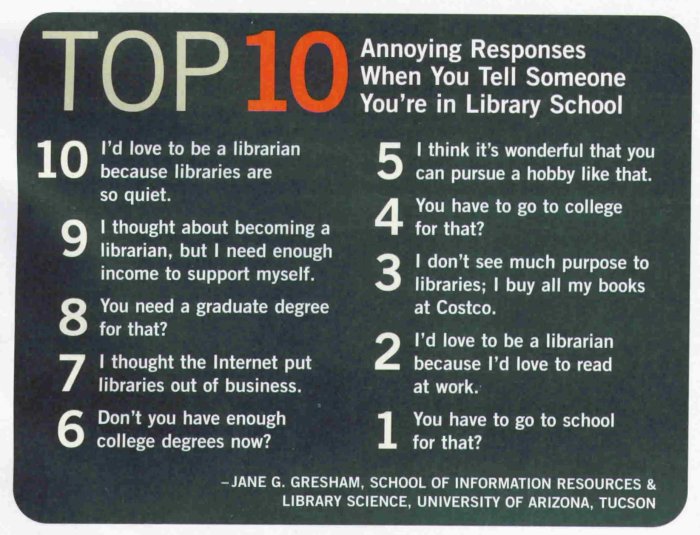
Early last year I considered going back to school to become a librarian. (I dumped that idea before I saw this graphic, but it does make me feel better about my choice.)

After some career counselling, I decided to refocus my efforts on my writing and editing. I needed (and need!) to bring art to the front burner. I began this blog as part of reorganizing my life to that end. Since last May I’ve posted 402 times and gained lots of readers, friends and even some clients (hurrah!) Things progress.

 For lucky #403, this is a look back through the Top 10 lists of 2010:

1. Authors! Part II: Top Ten Lessons from the Networking Master

2. Top 10 Ways Writers Waste Time

3. Writers & Editors: Top 10 Editorial Considerations

4. (Top 10 Things +1) Writers Love

5. Top 10 Reasons We Write Sci-fi

6. Top 10 (plus one) Publishing Conference Lessons

7. Top 10 Things Writers Fear

8. Top 10 Reasons We Write Horror

9. Top 10 Reasons We Write Romance

10. Writers Top Ten: Why blogging about publishing is important

Filed under: authors, Books, ebooks, Editing, Editors, getting it done, Horror, Publicity & Promotion, publishing, Rant, Top Ten, Useful writing links, Writers, writing tips, , , , , , , , , , , , ,

Writers: Books versus Internet

The delicious irony is, you aren’t going to see this video in a book. You’re watching it on your computer. While I don’t wholly agree with the sentiment, it is an entertaining video (via Books for Everyone) and you know me. I’m all about the yuks.

Just to be clear on the ebook versus tree book thing, I’m enthusiastic about books no matter what form they take. In fact, a book’s form is beside the point.

(Besides, today is my birthday, so I’m posting this and then running off to goof off for the rest of the day.)

As Kurt Vonnegut said,

“We’re here to fart around. Don’t let anyone tell you anything different.”

Enjoy!


Filed under: Intentionally Hilarious, , , ,

Bestseller with over 1,000 reviews!
Winner of the North Street Book Prize, Reader's Favorite, the
Literary Titan Award, the Hollywood Book Festival, and the
New York Book Festival.

http://mybook.to/OurZombieHours
A NEW ZOMBIE ANTHOLOGY

Winner of Writer's Digest's 2014 Honorable Mention in Self-published Ebook Awards in Genre

The first 81 lessons to get your Buffy on

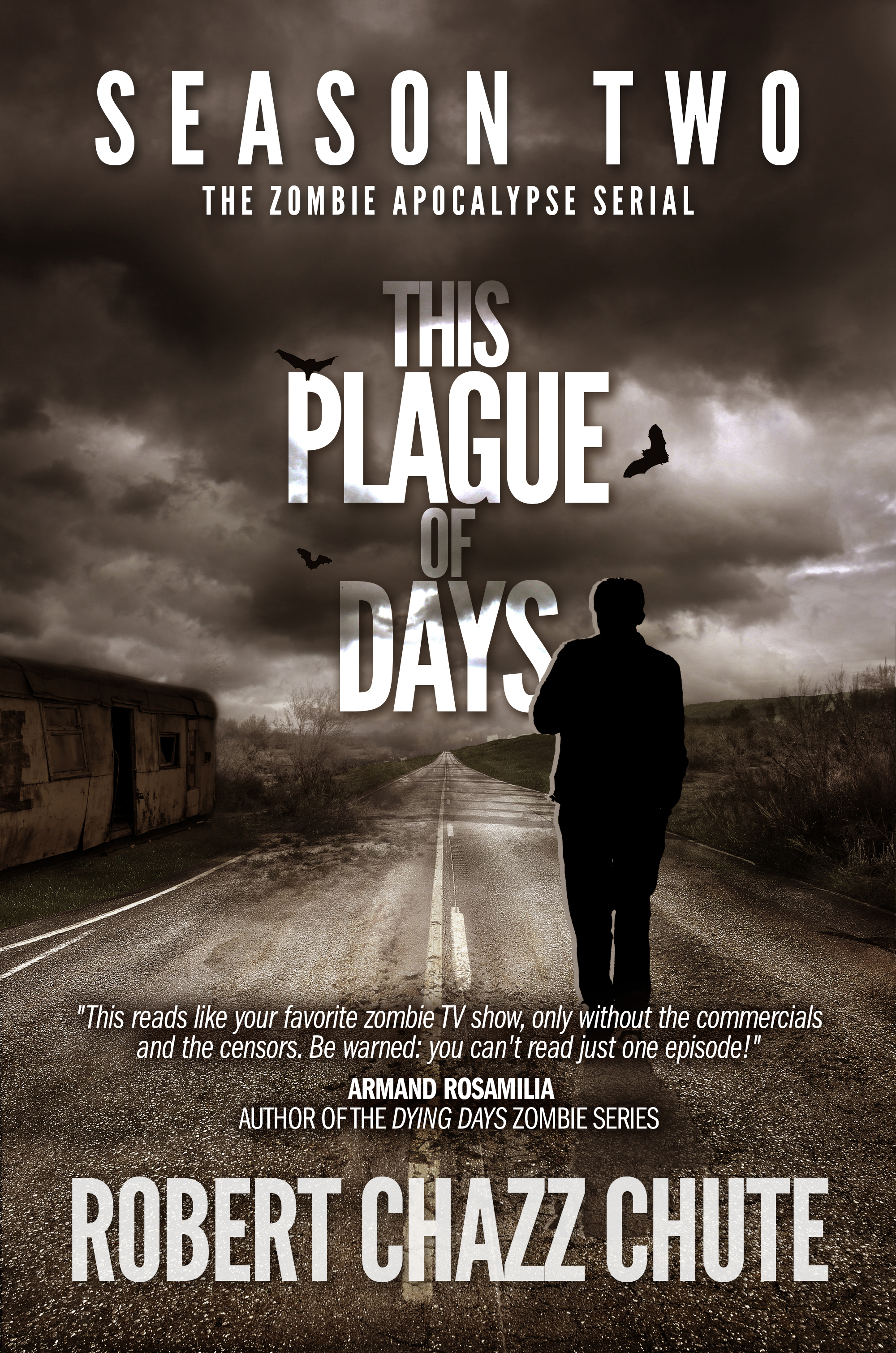
More lessons to help you survive Armageddon

"You will laugh your ass off!" ~ Maxwell Cynn, author of Cybergrrl

Available now!

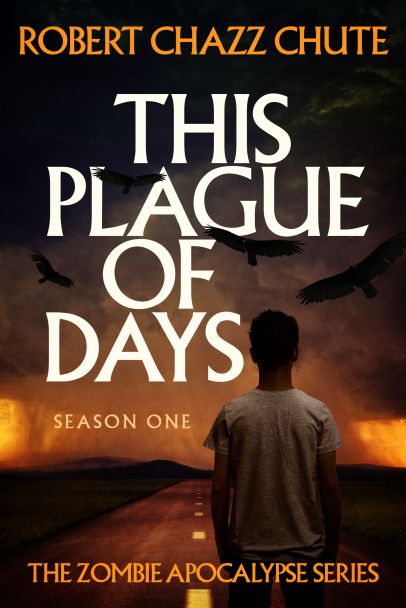
Fast-paced terror, new threats, more twists.

An autistic boy versus our world in free fall

Suspense to melt your face and play with your brain.

Action like a Guy Ritchie film. Funny like Woody Allen when he was funny.

Jesus: Sexier and even more addicted to love.

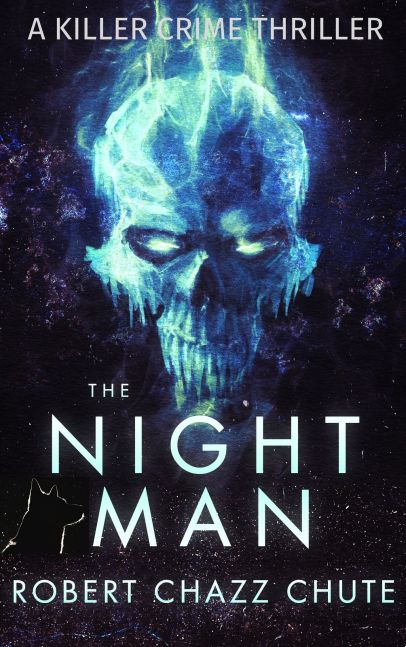
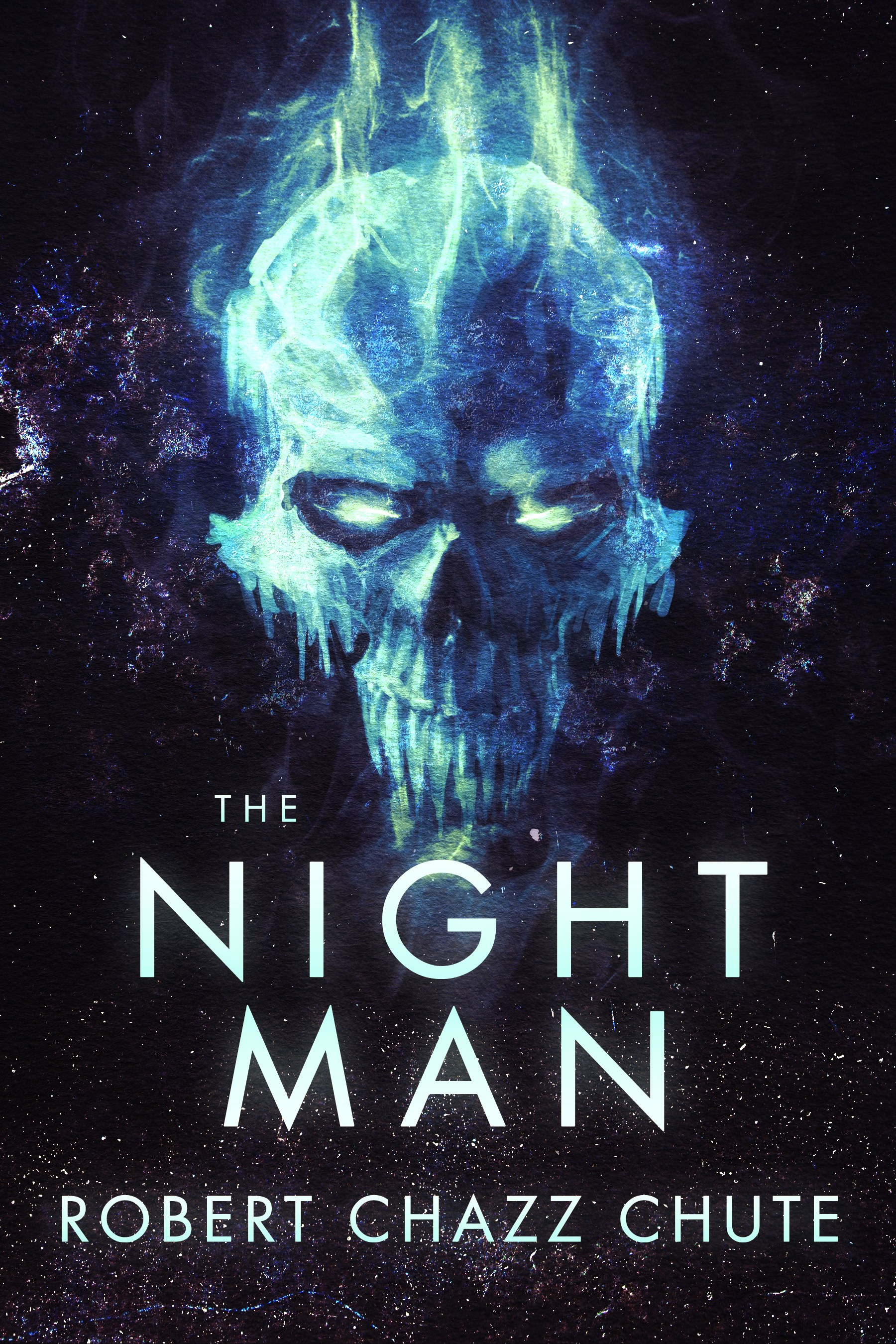
You can pick this ebook up for free today at this link: http://bit.ly/TheNightMan

Join my inner circle at AllThatChazz.com

See my books, blogs, links and podcasts.

Enter your email address to follow this blog and receive notifications of new posts by email.

Join 2,063 other subscribers