C h a z z W r i t e s . c o m

See all my books at AllThatChazz.com.

Ultimate Blog Challenge: Writing Books on Writing

Can writing be taught?Sure, but what most people mean by the question is, can anyone write to a professional level? One

On Writing

On Writing (Photo credit: Wikipedia)

newspaper colleague of mine insisted that it was something you were born with or you weren’t. I think the desire to immerse yourself in writing might spring from a quirk of genetics, but after that it’s up to you.

Certainly, anyone’s writing can be improved. Eliminate excess adverbs and don’t strain a metaphor until it breaks and you’re off to a good start. I’ve taught a couple of writing classes now and I suspect that writing skill is self-selecting anyway. If you aren’t interested in writing to begin with — as it is with anything — you probably won’t improve much. The best training in writing I got was first to read extensively early on. In my childhood home, books were a big deal and they still are now that I’m supposed to be a grown-up. Toward the end of journalism school, I think the best training I got in writing was to write copiously for a daily newspaper with feedback from editors.
There are a ton of books on writing advice and I’m sure I’ve read just about all of them. Reading about writing is often less about learning something new (there’s not really that much new to say about craft, is there?) as it is confirming my thoughts, feelings and biases. Sometimes a unique idea will rise out of that reading. Mostly I read writing advice books to enjoy the voice and the company of likeminded writers and to find inspiration. It’s motivating, yet cozy as a warm blanket, to read a book on writing advice and think, “Yes, I agree. I’m doing that. I could try that. I should go write some more now.” I end up reading writing advice for the same reasons I drink coffee. It’s a stimulant that makes you feel warm inside.

That’s ultimately why I decided I will soon add to the tonnage of writing advice books. Some books are very specific and prescriptive about writing. Others give excellent advice and strategies for marketing for the indie author (like Jeff Bennington’s intrepid Indie Author’s Guide to the Universe.)

Mine will be a softer approach for newer writers, like Bird by BirdI’ve gone back to Stephen King’s On Writing again and again. These are the books that told me I wasn’t alone and this wasn’t so hard or crazy if I just pecked away at it. It was simply craft and there isn’t a secret besides sitting down (or getting on my treadmill desk) and doing the work I knew I could do.

The aspiration for this book is more modest than some who take a step-by-step, flow chart approach. My book on writing will be inspiration for the new indie author, much of it drawn from posts on this blog. Early on I linked to others less and wrote more about craft (instead of focusing on marketing the Indie Author Revolution as I seem to do now.) I selected the best and most useful posts from over 900 articles on ChazzWrites.com, then added to them, wrote some new stuff and edited again.

My book won’t be as ambitious as some who (may Thor bless them) give strict advice on what to do and how to do it. My ideal reader will be a writer like me who wants to grab a steaming coffee, curl up in an armchair and read Crack the Indie Author Code: Aspire to Inspire (yes, that’s what I called it and yes, it’s coming soon). Readers will find an ally, inspiration and company on the journey to publication. For me, the work is about the writing first and foremost. The real fun happens in our heads as we write and nurture that spark of inspiration into a flame that throws light and heat. I’m happiest at my keyboard hooked up to the coffee in the intravenous drip.

Do I think writing can be taught? Sure. If you want it enough to bother to go looking for the education, that’s the cardinal sign and symptom that you’re already infected with the writing bug, anyway.

Filed under: publishing, , , , , , , , , , , , ,

Ultimate Blog Challenge: Top 10 things I wish I didn’t know about readers

Small-town terrors and psychological mayhem in Maine.

1. They get bored too easily. We used to have writers who were flavours of the month. With Amazon rankings, you can be the flavour of the hour and then disappear into obscurity unless you fight the death spiral and/or get lucky.

2. Readers are too busy. With the proliferation of “free” we all have huge To Be Read piles. Sadly, as with to-do lists, many of us never get to the bottom of those piles.

3. Many people prefer a genre I don’t write. Romance is much more popular. I used to read romances professionally when I worked for Harlequin. My books have a key romantic element, but they are not romances, so de facto, I am not on the radar of a large group of very dedicated readers.

4. The readers who love me might get sick of me trying to reach the readers who don’t know me. I’m very careful on Twitter to promote others, not just me. Still, I need to kick back and tweet a little joke here and there and say hello. It’s difficult to find the balance.

Paranormal persuasion and scary stories.

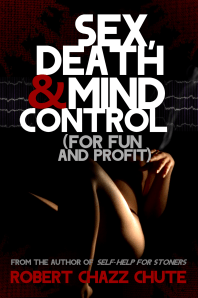
5. I’m not reaching some readers because I made some choices in titles that were challenging. (I almost wrote “unfortunate”, but that would put the onus on me and I’m not ready to own that yet.) The thing is, Sex, Death & Mind Control is one of the best things I’ve written but it has the lowest sales. It’s not sexy enough for those searching for erotica. It’s paranormal suspense (with award winners!), but when you see that always-interesting “What Else Customers Viewed” list, it’s almost all erotica on the Sex, Death & Mind Control sales page. “End of the Line” is probably the best short story I’ve ever written, but it  remains a hidden treasure because I turned readers off with a title I thought would get more attention, not less.

6. Ditto Self-help for Stoners. It was a clue for me when one of the reviewers who loved it added, “Don’t let the title scare you off.” It’s a weird mix of War of Art self-help and suspense. Strange, I know, but not really all that transgressive. (Should have called it Self-help for Surrealists to pull in readers who are also painters!) My strategy going in was to have an identifiable group to market to instead of saying it was for anybody who loved suspenseful fiction. To some extent that worked, but not as well as I’d hoped. (It still outsells Sex, Death & Mind Control four to one. I can’t say the Self-help for Stoners strategy was a failure, just that it could do better.)

You don’t have to be high to enjoy it. Sure, it would make you a better audience but…

7. Readers have less patience now. I changed my plotting and pacing with Bigger Than Jesus to cater to that lack of patience. I see it in myself. Maybe the Internet did it to our brains, I don’t know. That’s not even be a bad thing per se, but expect more Blake Crouch pacing and less Annie Proulx meandering. There used to be more room for both approaches.

8. There are still prejudices against anything labeled “experimental”. I wrote Bigger than Jesus in present tense, second-person. That alone is reason enough for some readers to run screaming. I can tell them all day that it worked. Won’t matter. That’s okay, but it’s still a prejudice.

I wanted to do something that some people thought couldn’t or shouldn’t be done and I wanted to do it so well they’d either quickly forget their prejudice or give me more credit for doing it so well. Blanket pronouncements of “You can’t do that!” are one of the reasons I did it. I don’t like being told what I can’t do. In fact, it makes me want to do it all the more. (I admit this attitude is not something that serves me well all the time. Having a job in the regular world, for instance, is uh…a problem.)

9. Readers look for ties to your real life. This is a byproduct of increased author/reader interaction. However, the Internet isn’t to blame for this one. This was very much the rage in English departments across the world years ago. Students were taught they couldn’t understand the fullness of the fiction without making judgments about the author, his or his gender, origin and life experience. They shouldn’t have done that. No one truly knows the inside of someone else’s skull. (I’ve even opened it up and had a look. Trust me, nobody really knows.) Besides, it’s fiction. Take it on its own merit. Please don’t make assumptions about the author from what you read in a book of fiction. Don’t make me kill again. (See what I mean?)

10. Readers fade. Even if they love your work, they move on. They get hungry for something new and different unless you keep feeding them. I don’t think anyone should race to publication if they aren’t up to the schedule and you do have to build in editorial time to make the book better. However, they are hungry and it is a race. People will tell you it isn’t. They’re wrong. It is. It’s a race against time. We don’t live forever and we have books in us and a readership to find and a readership we hope finds us. William Styron came out with a nice juicy thick book every ten years, but he was William Styron and that was before ebooks and our shiny,  new demand-per-click culture.

I love readers. People who don’t read creep me out. I can say that because how would they know I’ve insulted them? What do non-readers have to contribute? Those dummies!

Ha! Wait. You aren’t reading this aloud to someone are you?

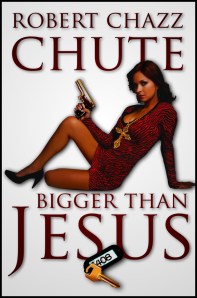
~ Like my flavor? Listen to the first chapter of my crime thriller, Bigger Than Jesus. I’m podcasting the book through the summer. Enjoy! (Or be a hero and just click the cover to grab it. Thanks for reading!)

Filed under: publishing, , , , , , , , , , , , , , , , , ,

Ultimate Blog Challenge: Top 10 What I’ll soon do differently with my book promotion

1. Last November I started up my podcast to reach out to new readers. I called the podcast Self-help for Stoners

English: Third generation Amazon Kindle

English: Third generation Amazon Kindle (Photo credit: Wikipedia)

after my book of the same name. The podcast was a good idea, but tying the title to one book when I have dozens in me was a tactical error and I’ll change that soon.

2. This, my main blog, focuses on information, both original and curated, for anyone interested in publishing books.  The blog is not geared to readers. That’s what the author site is for. In the future, I think I’ll post to the author site more often than I do, especially as I have more reviews and events to talk about. I don’t regret writing about writing, though. Some people think authors are stupid for doing that, but I went with my passion. If I had tackled something I was less interested in, I wouldn’t be approaching 1,000 blog posts now and I wouldn’t be able to make two books out of it.

3. My two latest books, Bigger Than Jesus and The Dangerous Kind & Other Stories, are both on Amazon and exclusive to KDP Select so they do not appear in retail outlets. That’s fine for now, but eventually I will migrate them to other ebook platforms. Amazon was great at promotion, but with their new algorithms, they aren’t so great for me anymore. (I hope they rectify this and we, collectively, get through the current summer sales slump to see a more energetic autumn.)

4. In the future, I’ll raise the price of my books. They’re all at couch change for $2.99 now. This is the introductory price and will change, which will also make more sense with Amazon’s new price-based (rather than quantity sold) algorithms.

5. I have several books in revisions that reach beyond 120,000 words. If they were shorter they’d be done and available by now. If it makes editorial sense, I may break the longest books up into trilogies.

6. I will write shorter books. As I wrote Bigger Than Jesus, I discovered that I love to write a book with a high momentum. A fast write (and read) energizes me. The paperback will still clock in at 249 pages, so no one will feel I’m shortchanging them.

7. I will write no stand-alones. Bigger than Jesus is the first of The Hit Man Series. The Poeticule Bay Series is in development. The books are meant to stretch out into long series following certain characters. Stand alone novels are a heavy investment of my time that do not develop a following to the same numbers as a series can. To make more art, I have to make that business decision. What will be fun is when I have crossovers, where many of my characters from different books meet.

8. I will write faster. I wrote Bigger Than Jesus in a month. To perfect it, the editorial pipeline was longer than that, but I find I can write effectively and well at speed. My editor and beta team made that possible and, maybe it’s the journalistic training talking, deadlines are my friend.

9. I will have print versions available for all my books going forward. Currently I just have Self-help for Stoners available as a paperback. The other short story collections didn’t have quite the length needed to make for a paperback with heft. Everything I do from now on makes for a great mass market paperback. I just finished all the book design and print formatting on Bigger Than Jesus today so I’ll have the paperbacks on hand pretty soon. (I’m in love with Georgia. She’s a beautiful font.)

10. I will be less shy about contacting other authors for blurbs and book blogger for reviews. This is more of an affirmation than a plan since I have yet to compose those emails. I’ve sent out a few copies for review, but it’s an issue about which I am still an introvert. (I’m only pretending to be an extrovert here so someone will read my books.)

~ Like my flavor? Listen to the first chapter of my crime thriller, Bigger Than Jesus. I’m

Get Bigger Than Jesus

podcasting the book through the summer. Enjoy! (Or be a hero and just click the cover to grab it. Thanks for reading!)

Filed under: publishing, , , , , , , , , , , , , , , , , , , ,

Ultimate Blog Challenge: The Warm Chocolate Chip Cookie Exposition

After reading the book descriptions, someone sent me a question:

“What are your books like?” 

“Suspense that’s often funny with lots of twists,” I said.

“Yeah, but what are they like?”

Um…what? I wasn’t sure what they were getting at, so I replied via email.

If you like:

the twists of William (The Princess Bride) Goldman’s plots;

the fast pace of a Blake (Run) Crouch;

the worldview of Chuck (Fight Club) Palahniuk;

the punchy, funny dialogue of Elmore (Get Shorty) Leonard;

and the disappointed humanism of Kurt (I shouldn’t have to name any Kurt Vonnegut books! Read them all!) Vonnegut,

then you’ll love my crime novel Bigger Than Jesus. Enjoy!

My potential reader/interrogator then wrote, “I’m not familiar with any of those books so don’t tell me about them. Tell me what your book is like!”

I sighed and then I fired off another helpful email:

Best chocolate chip cookies I've made in decades.

Best chocolate chip cookies I’ve made in decades. (Photo credit: Wikipedia)

“Don’t you love chocolate chip cookies when they’re straight out of the oven? The chocolate is melting a bit and you risk burning your tongue because you can hardly wait. These are the best-tasting chocolate chip cookies ever. You force yourself to slow down and put one in your mouth. It’s really soft and you just hold it there as long as you can to savour it while you pour a tall, cold glass of milk? Then the kitchen floor falls out from under you and you’re sucked down into quicksand and you’re trying not to die and you can’t figure out why God hates you and all you want is to get away and make the woman of your dreams love you. You only have seconds before the suffocating sludge is over your head and you’re about to find out if what follows this tortured life is hell or oblivion. Your heart is full of regret and if you can just live, you swear you’ll turn your life around. Kind of like that, but with more jokes.”

No reply yet, but I’m guessing he’s not a reader, anyway.

If they do email again, I’ll suggest they consider breaking down and read a sample chapter.


Filed under: publishing, , , , , , , , , , , , , , , , ,

Author Blog Challenge 19: Choose how to grow your author platform

The Author Blog Challenge writing prompt was: What are the three most important things you are doing to grow your platform? This is such a good question and everyone has so many different answers. I don’t have an answer. I have a survey of what I do. How to grow your author platform? Eh…I have a menu of stuff from which to choose. Choose to do what you’ll enjoy so you can be effective and sustain it.

Just today I read a fellow indie author opine that one day a week of concentrated social media, pumping and pimping, hadn’t helped him a bit. Mind you, his sample was a bit too small. He was only talking about a month, which translated to four workdays. However, he’s not alone in the complaint. You can do a lot of work and still not move the needle in a measurable way, and measurable is really what counts. I suspect what was missing was connection. You have to be interested in people and what they’re doing. Interacting is better than spouting (he spouted.) Failing earnest interaction, when you just can’t bear to rip your heart out of your chest again for another blog post or comment thread, do what I do and make more jokes about strangling mimes.

I’m really very consistent in establishing my web presence. I do something every day and here’s what I’m active in: three Twitter accounts (though the main one is @rchazzchute); Facebook pages; a podcast broadcast two times a week; the author site (AllThatChazz.com) and, of course, this site. I even do a little bit of Google Plus. I always think of G+ last, but I know I picked up a new reader (who promised to review my book!) through G+ today. I know that’s a lot. This is part of my full-time job, no whining. The rest of the time, I’m writing, and no, there’s not time for much of anything else. Most people can’t devote the amount of time I do to marketing and promotion, and yes, I realize I’m very lucky to have such a supportive spouse in She Who Must Be Obeyed.

When you do a lot of social media, you do risk annoying people. I certainly risked that today. My Amazon free promo day was plastered across my podcast, my Twitter and retweeted across at least 50 other Twitter accounts. I emailed some people and reached out a bit through Facebook. Somebody must have thought, “Yeah, yeah, we get it. You’re excited about your book but I got a sammich here!” Even as I was promoting, I noticed a fellow author got cussed out severely on Facebook for his pleas. In my defence, everyone who tweeted me got my support, too. I share. They share. Some would say that adds up to a lot of noise and signal degradation. On the other hand, my novel rose from a dark place in my skull a couple of days ago to #545 on the general Amazon list last I checked (UPDATE: and #73 in Mysteries & Thrilers! Yay!) Self-help for Stoners shot up 140,000 places as a collateral benefit so something’s selling in addition to all those free books.

I curate a lot of helpful information for indie authors. On the one hand, this blog brings me a lot of traffic, but they (well…you) aren’t necessarily interested in reading suspense, funny and weird self-help in the form of fiction, strange humour and crime novels. Some people say writing about writing is a complete waste of time. I say write what you’re passionate about and you’ll never run out of blog posts. I don’t want to blog about animal husbandry. It’s icky hanging out with naked animals.

When I joined Klout, I had assumed most of my influence came through this blog or Twitter. Klout says it’s Facebook where I make the most impact (though my Ex Parte Press page only has 37 likes and my personal page only 177 friends. That’s lousy, though it’s almost 177 more friends that I ever had elsewhere.) I doubt Klout, but it’s hard to say. Besides, maybe that’s too reductionist. In layered marketing, you do a lot of things in order to appear to be just about everywhere at once, like The Flash or herpes.

So what are the three things I do that are most effective? I’m sorry. No easy answers. I couldn’t narrow it down that much. I think my podcast, though small, helps me reach out to new people around the world and when the podcast went up at 6 pm this evening, listeners snapped up the free promo. Triberr is effective. World Literary Cafe Tweet Teams help. I’m exploring new ways to advertise on a tiny (to zero budget) like Masquerade Crew, Kindle Nation Daily, and Kindle Book Review. I have to reach out to book reviewers to get noticed. I have to find crime novelists or suspense writers willing to give up a blurb for Bigger Than Jesus.

There’s only one thing I am sure will help me sell more books: I have to get the next book up. And the next, and the next and so on until I am discovered, die or you decide you want you r kids back with all their thumbs attached.

What to do?

Do what you can. Do what you love. Get the writing done first. Nothing should cut into your writing time.

How do I do it? I don’t sleep much. It’s like cramming for finals every day and night.

It would be hell, except I’m having fun.

Filed under: publishing, , , , , , , , , , , , , , , , , , ,

Author Blog Challenge 14: Eleven ways writers get surprised

Gremlins will push you 'round^ Look where you'...

Gremlins will push you ’round^ Look where you’re going^ Back up our battleskies^ – NARA – 535380 (Photo credit: Wikipedia)

Some surprises you’re in for when you publish your book

Please note: This list of surprises for writers is not meant to be comprehensive. The worst surprises, like dying by flaming harpoon attack to the forehead (before you finish your novel) or a hard drive exploding and taking out two floors of your house are not included. Those circumstances just aren’t lighthearted enough for my intent here. Oops. Well, I guess you’re worried about that stuff now, too.

1. You thought your manuscript was clean and it was, it was! Gremlins went in and put those ugly typos in there! That’s the only reasonable explanation.

2. Publishing your book is a huge event in your life. Remember when you had a baby and you expected the world to pause to acknowledge your contribution to, and sacrifice for, the human race? Wars should stop and the earth’s rotation should cease for a moment, if only so we can all bow. Sadly, it’s not a huge event in everyone’s else’s life. Many people are indifferent and it’s just not efficient to go out and kill all of them with a rusty axe.

3. The people you thought would love your book? They don’t. My dad still hasn’t read anything I’ve written. He’s waiting for me to write about him. (What he doesn’t know is that he really doesn’t want that!)

4. Lots of people are readers but they do not write reviews. You’ll expect reviews. Eventually you probably beg for reviews. Worse? You still won’t get them, even from friends and family! I thought about it, but there is no joke I can tag on this item that will soothe the sting. It’s more tragic than a flaming harpoon to the crotch.

5. Someone will object to something you wrote. What will surprise you is what they object to. For example, some people get riled up about which font you chose for your cover. You’ll assume that joke your main character made about religion was, at most, funny. At worst? Somewhat innocuous. Some blogger, somewhere, will call you the Anti-Christ and call on Jesus to smite you because, apparently, Jesus loved capital punishment. Oh, wait… (At least outrage and threats of censorship increase sales, so there’s that.)

6. Some people will treat you better, briefly, because you’re an author. Then they’ll treat you worse when they find out you’re a self-published author. For some reason, you have to answer for every grammatical mistake and every (so-called) undeserved success of your breed. Corollary: If you become a very successful traditionally published author, some people will hate you because lots of people read your books. Or the haters will hate because they aren’t you. Suggestion: A dog is reliably faithful. Definitely buy a dog. They can’t read so they’re blameless.

7. Formatting will be tough the first time. The first time, you’re a dim-witted chimpanzee with a keyboard. The second time you do it, you’ll be surprised how easy it is. You will have evolved to a very intelligent Rhesus monkey.

8. By the time you’re through revisions and formatting, you and your editorial team will have gone through the manuscript so many times you’ll be sick of it. This is the story you loved so much. Now your cute baby has grown into an angry, gangly, acne-scarred teenager and you just want them out of the house they can go make money and so you can make room for a sweet new baby who loves to cuddle.

9. Actual publication won’t be quite as momentous as you anticipated. How could it equal all those dreams you’ve had since childhood? You pictured a limo and an elegant cocktail party. Instead, it’s you in sweats, late at night and a little drunk on weighty potential and rum and Coke, debating if you’ve done everything you can before pushing a button. It will feel more like pulling a trigger. You may be filled with more dread of bloody failure than anticipation of success. I’m about to push that button and I’ve had stress headaches all week. I just want to sleep instead of poking around Scrivener‘s bowels to prep the manuscript for Amazon and CreateSpace. You’re not alone in the struggle, but that’s of little solace because you are alone in the room.

10. Getting someone to read your book is harder than writing your book. You’ll spend more time marketing than you ever dreamed necessary, even if you figured it would take a lot of time. Triple your marketing expectations and get a treadmill desk so your ass won’t get as big and wide as your hopes and dreams for your writing career.

11. But here’s the biggest surprise: Though you will get luckier the harder you work, it’s still a lot about luck and timing and some happenstance. Nobody admits this variable. When you win, it’s all attributable your meteoric wisdom. When you succeed, you’ll figure it’s because you made all the right moves and you knew what you were doing with every step. Revising history and shining up the truth is natural. Everybody does that. It keeps us from running away screaming from that “Click to Publish” button.

Filed under: publishing, , , , , , , , , , , , , ,

Day 8 of the Author Blog Challenge: Indie Self-defence

English: Rock Paper Scissors Lizard Spock - &q...

English: Rock Paper Scissors Lizard Spock – “The Big Bang Theory”. Español: Un diagrama de la resolución del juego «Piedra, papel, tijera, lagarto, Spock.» (Photo credit: Wikipedia)

When indie authors rock so hard they succeed after traditional publishers have turned them down, they sometimes get news coverage or, naturally, blog about it. Then some people accuse said authors of gloating. I recently read a complaint that the tone of those indie author success stories are always, “Neener! Neener! Neener!” Here’s…the truth? Well, here’s what no one else is saying anyway that I think needs to be said: 

1. When you’ve been turned down and kept down and toiled for little or no money and then you win, some gloating is in order! You get to be happy when you prove your doubters and detractors wrong. No need to name names or burn down anybody’s house, but we inspire others to aspire when we tell them the truth of our success stories, defy the status quo and flip the power differential from institutions to individuals. Some people get pissed at Konrath for his aggressive tone, for instance. I notice the people who get really angry at him often lack facts to back their complaints. It appears they are mad, not because he is wrong, but because he is right. You don’t have to be Mr. Spock to see that’s a bad reason to be angry.

2. Consider: Not everyone who is supposed to be an expert is; not everyone wants you to keep trying; not everyone acts professionally when they reject a writers’ work; and there are a lot of people who aren’t happy when you’re doing well. A friend began a pitch to a famous New York agent. Nearby diners were startled when, not one sentence into the pitch, the agent shouted, “Spare me!” That author found success with that same book elsewhere, and continues to, with his subsequent books. The big New York agent isn’t so big anymore. In fact, I don’t think he’s in the business anymore. What a loss.

3. What? We don’t get to celebrate our successes but you, in traditional publishing, do? There’s an appropriate two-word response to that assertion. The second word is “you”. The first word is not “thank”. Of course, not all of trad publishing hates indies. When I hear people in traditional publishing trash successful indies, I suspect that’s a vocal minority who are wary of change. It’s not even about the indies, per se. According to a recent survey, most traditionally published authors aren’t happy with their publishers and many plan to self-publish in the future. Only 37% of authors want the status quo of 2007. That’s okay. Entrepreneurship is not for everyone and doing it all by yourself is often a drag. (You will figure out who is bitter or behind the times pretty quick when you hear the words “vanity press”, though.) Many indies would still take a traditional book deal if the terms were sane. It doesn’t have to be either/or. It can be both. I hope traditional publishing not only survives but perseveres. Book proliferation is good for the human race.

4. As a newspaper and magazine reporter, I looked for the interesting angle on any story. You have a new book coming out? So what? So do lots of people. You have a new book coming out that agents and editors all turned down several dozen times and now it’s a bestselling series? And an editor and an agent was abysmally rude to you along the way? Bonus! Now there’s a story people will read. The “Neener-neener!” tone may well have been determined long before the reporter called up the indie novelist for the interview. That’s not the novelist’s fault. (And if you turned down the bestselling book and were rude about it, that’s your fault.)

5. If you begrudge indies their success after you turned down their work, you didn’t just make one, forgivable error in judgment in a subjective business. Now you’re revealing yourself to be a petty person, as well. Doubters will note a defiant tone in this post, but I’m not pushing. I’m pushing back. I do value civil discourse and keeping exchanges classy (Caveat: Except in self-defence where humour disarms and on those occasions when mean is funny and the target deserves it.) What I’m reacting to is the flack indies get for choosing independence. Amazon changed the equation and we’ve all got to get used to the new math.

So here’s a link to a happy self-publishing story. If you are of a certain mindset, you’ll read it as a bitter tale of “Vengeance is mine!” If you’re of another mindset, you may well think, here’s an inspiring story of self-determination, self-reliance, perseverance and success. This is a test.

Filed under: publishing, , , , , , , , ,

Author Blog Challenge (plus a sneak peek podcast*): Outlining, pantsing, spilling & sprinting

If you just popped in for the suspenseful sneak peek podcast, click here to hear The First Fiction Friday Edition of my podcast.

The Author Blog Challenge prompt asked how I stay organized as I write. My methods have changed over time. I used to come up with plots on the fly early on. Then I got scared off from that strategy when I got deep into a dreadfully long novel and found I had to backtrack fifty pages. Hitting a dead end is, well, death. It’s a waste of time and energy and I hate it.

I started outlining because I was writing big books and I didn’t want to lose whole sections of my book in which I was already invested. When you write 80 – 100,000 words or (ye gods!) more, an outline helps. I didn’t write an outline with Roman numerals and all that formal, high school nonsense. Instead, I planned the book one cogent sentence at a time. I described the actions in each chapter to plot the arcs of A and B stories. I looked for where those paths would logically cross, discover the beats and suss out the high and low points. Index cards got to be too much to keep track of, so in the end my outline was just three pages with a numbered list. I read and reread the outline and then I didn’t look at it again. That got me through the big books pretty well.

Recently I read Run by Blake Crouch, and as Blair Warner used to say on The Facts of Life,

“I just had another one of my brilliant ideas!”

It’s about speed. I resolved to write a crime novel with the same furious pace as Run — a book I couldn’t put down. Yeah. I know it’s a cliché, but this cliché is both apt and true in the case of Run. (Great book. Buy it.)

I resolved to do the thing I love with stories. The chapters would be relatively short. They would skip along. There would be lots of twists and turns to my racetrack. I wrote Bigger Than Jesus in about a month, one chapter a day, roughly 2,000 words each. There was no outline. Instead, I wrote with the expectation that I’d get my hero into a troubling cliffhanger at the end of each chapter. If I wrote myself into a corner in the process, too bad. I’d be clever and write my way out of it and keep moving forward. Writing like this is as fresh and as exciting as walking a tightrope naked in a high wind over a crowd of angry TSA agents with a new shipment of polar mint rubber gloves.

Many nights I went to bed thinking that I had no idea what I would write in the morning, but I trusted that I could figure it out. I believed in lightning strikes. The juice kept flowing and with it came a high level of complexity. It’s a crime novel so people lie a lot. If I’d taken longer to write it, it would have necessarily been less complex because I’d be afraid of losing track of the threads. There’s shocking emotional depth, too. Nobody, including me, foresaw the strange and sad angle on my main character’s childhood. It sneaks up.

Why did this work?

1. I knew the opening chapter and the last line so I had a target at which to aim. I’m also a more confident writer than I was with those early attempts, I suppose.

2. If I didn’t know what was going to happen next, the reader wouldn’t be able to guess, either.

3. Speed. The book is not especially long and I wrote it all in a short space of time so I could keep it all in my head at once without getting lost.

How else do I keep organized? 

In the Point File, I note things like street names I’ll use twice and aspects like eye colour so they don’t change from the beginning of the book to the end. I did mess up in having twin brothers as bad guys with names that were awfully similar. I had to go back to make sure I was talking about the right brother at the correct stage of the book.

I always have a Spill File handy so if I do write something that I end up dumping, I save it for later. I might change my mind about how useless it is or I might use it another time in another story. In Bigger Than Jesus, the writing went so quickly and breezily that I never had anything to pour much into the Spill File. I wrote fast and then went back to the stage of writing where I’m always sure I’m a deluded idiot: revisions. I cut, prune and delve. More of the jokes come clear on the second pass, too. Typically, by the third pass, I begin to feel good about the book again. Bigger Than Jesus was just about as easy as writing a blog post a day, actually. Maybe easier sometimes because what dictated the action was logic and surprise. When in doubt, surprise!

Some writers labor under a notion that I once shared: To be good, you must write slowly, perhaps even at a glacial pace, and the serifs are where your heart and soul get squeezed in and choked for blood. There are books I have tinkered with for years. One short story went through many incarnations over a year before I felt I nailed the landing and deserved 10s from all the judges. However, Self-help for Stoners came together quickly and everything worked out well with that.

Bigger Than Jesus will be released in the next week or so and all the feedback I’m getting from the editorial team tells me I’m glad I didn’t buy into the idea that it had to come slowly to be worthy. I think that’s true sometimes, but not always — not for every book and not for every writer. That’s good news because I’m using the same strategy with the next book in the series. It’s coming fast and well and I do enjoy the danger of not knowing what happens in the next chapter. Those angry TSA agents are actually spurring me to succeed.

*BONUS:

Please take a few minutes to enjoy my latest podcast on the author site. It’s The First Fiction Friday Edition! 

It’s a sneak peek at Chapter 8 from my first novel in the Poeticule Bay Series:

An old woman is lost with her tiny dog in the Maine woods and snow is on the way.

Related articles

Filed under: publishing, , , , , , , , , , , , , , , , , , , ,

Author Blog Challenge: The Writing Mistake You Might be Making

English: The main character in the comic serie...

English: The main character in the comic series “Lame Strips” (Photo credit: Wikipedia)

I sat at the front of the writing class, giving a reading from Self-help for Stoners. The story, “Another Day at the Office” is  about a guy with a skunk talking his way out of search, seizure, jail and worse at the hands of a policeman in Texas during a traffic stop.

When I finished, I looked up and asked, “How old is the main character?”

I pointed around the classroom. “22! 28! 35! 40!” they answered.

“What colour was his hair?”

“Red! Blonde! Bald! Black! Brown! Wispy Comb over!” (Good for you. I never would have thought of wispy combover for that character.)

There you go. Too much description limits your readers’ imaginations and puts their visions in little boxes that belong only to you. Be more generous and don’t assume your reader is an idiot. They’ve seen people in their lives. They’ll fill in the blanks. The readers want some ownership of the story in the theatre of their minds, too. Don’t describe too much. Was it Dashiell Hammet who said his hero was “knuckly” and left it at that? Too much description has  become a cliche that often opens a lot of books: the main character inspects himself in the mirror before heading off for work. They preen and describes themselves to the reader. Don’t. Instead, please let the action and dialogue carry me along. Let me insert my own vision of your characters. I’ll have a picture in my mind before long and I might even be annoyed if the author’s description differs with my own.

Even then, be sparing. My hit man in Bigger Than Jesus has a thing for expensive suits. It comes up as it pertains to the action and as it pertains to character. It is not there just to make up an arbitrary word count. In fact, it’s crucial to the character. No campfire story starts with a long description of what everyone is wearing unless there’s a point or a clue to character. Be just as judicious, whether you’re telling ghost stories to a bunch of kids around a campfire on their first trip into the woods or writing books for the masses.

BONUS:

Tuesdays and Fridays, I do a little podcast from my author site at AllThatChazz.com. A fresh episode (#29!) is up now in which I tackle letters from Republicans, creep out my twelve-year-old and worry, too late, about my blood pressure.

Filed under: publishing, , , , , , , , , , ,

Traditional vs. self publishing. Which would you choose?

See on Scoop.itWriting and reading fiction

You know what I love about this post? Mr. Ing doesn’t have an agenda. He’s asking an honest question and I love the cost-benefit analysis he’s offering us here. Given the variables, which would you choose? More at the Scoopit! link. ~ Chazz

See on www.graemeing.com

Filed under: publishing, , , , , , , , ,

Bestseller with over 1,000 reviews!
Winner of the North Street Book Prize, Reader's Favorite, the
Literary Titan Award, the Hollywood Book Festival, and the
New York Book Festival.

http://mybook.to/OurZombieHours
A NEW ZOMBIE ANTHOLOGY

Winner of Writer's Digest's 2014 Honorable Mention in Self-published Ebook Awards in Genre

The first 81 lessons to get your Buffy on

More lessons to help you survive Armageddon

"You will laugh your ass off!" ~ Maxwell Cynn, author of Cybergrrl

Available now!

Fast-paced terror, new threats, more twists.

An autistic boy versus our world in free fall

Suspense to melt your face and play with your brain.

Action like a Guy Ritchie film. Funny like Woody Allen when he was funny.

Jesus: Sexier and even more addicted to love.

You can pick this ebook up for free today at this link: http://bit.ly/TheNightMan

Join my inner circle at AllThatChazz.com

See my books, blogs, links and podcasts.

Enter your email address to follow this blog and receive notifications of new posts by email.

Join 2,063 other subscribers