C h a z z W r i t e s . c o m

See all my books at AllThatChazz.com.

#NaNoWriMo Tip: How to blast out of the gate

Find tons more tips and inspiration here.

As you write your manuscript, grab your readers by the eyeballs right away. Here’s how:

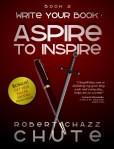
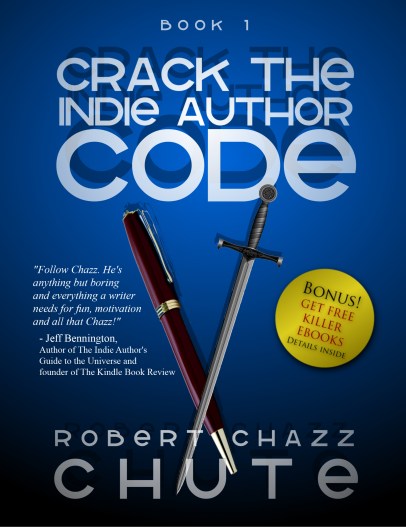
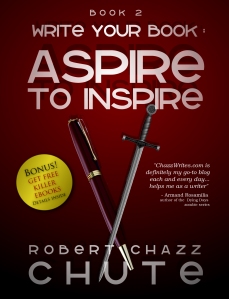
Crack the Indie Author Code and Write Your Book: Aspire to Inspire both have bonus offers of free ebooks. Buy two books and you get four!

1. Start late and bait the hook. When writing guides say, “Come in late,” they mean to bring the reader into the action quickly without throat clearing. Stick your media in the res.

2. “Throat clearing” means  focussing the back story and distractions more than the action. (Usually weak first draft paragraphs tarry too long over the weather, flora and fauna.)

3. Instead of taking too long to set the scene, let character be revealed through action and dialogue.

4. Look for the unusual and strong verbs in to give your hook strong bait.

5. Preserve mystery to pull readers in. Don’t give it all away at once. For instance, if your protagonist is chasing someone through a dark warehouse in your opening paragraph, don’t tell me she is FBI right away. Focus on the pursuit and the danger around the next corner. Let the details leak through. It’s much more intriguing to have a woman chasing a bad guy when you don’t know right away that she’s on the righteous side of justice, has a ton of training and resources and her back up is on the way.

Free to download Nov 5 to Nov 9, 2012.

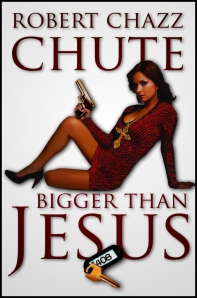
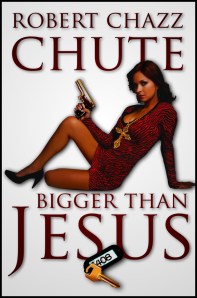
Here’s my opening to Bigger Than Jesus (which, ahem, happens to be free to download here from Monday, November 5 to Friday Nov. 9.)

Water drips from the soot-black gargoyle’s tongue like thin saliva, as if the grotesque statue is mocking you and eager for blood. Panama Bob Lima clings to the gargoyle, using it as a shield. You are on a thin ledge on the side of a very high building and for once you wish you wore your Nikes instead of twelve-hundred dollar Tanino Crisci shoes. So far, this job is not going at all as planned.

Rationale: A mood is set in an unusual situation. Weather (the water through the gargoyle) is mentioned because it’s relevant to the danger the protagonist faces and we get a taste of the crazy to come. The second-person, present tense brings the reader into the middle of the action and provides immediacy. The second-person present tense and reference to the ominous gargoyle is purposely disorienting in the first sentence, just as the threat of the long fall is dizzying. It’s an opening that poses questions: What is the job and why the pricey shoes? The protagonist is probably not there to help since Panama Bob uses the gargoyle as a “shield”. The opening tells the reader they can expect a fast pace and the ironic last line is a clue that the story won’t be told straight. Dry humor is ahead.

6. Open every chapter with a baited hook and action. Give readers action that propels and compels and you’re on your way to a better book.

Higher Than Jesus, the follow-up to Bigger Than Jesus, is available here.

~ Robert Chazz Chute is the author of five books of suspense and two writing guides that, if you’re reading this far into this blog, you obviously need. They are Crack the Indie Author Code and Write Your Book: Aspire to Inspire. Check out all of Chazz’s books here.

Filed under: publishing, , , , , , , , , , , , , , , , , , , , , , , , , , , ,

#NaNoWriMo: The key tip to write a much better book

When we plunge into writing a book, there’s lots of enthusiasm on the front end of the challenge. But how will we fill all those pages, especially in that saggy middle where we really don’t know exactly what’s going to happen? How will we give our story verisimilitude? How will we make readers care about our characters and give the book depth? Where will all the conflict come from? How will we sustain our enthusiasm all the way to the end of NaNoWriMo?

There is a solution that many writers shy away from to their detriment. They want their protagonists to be likeable so they make them Christlike figures. This saps a lot of juice from your book. Here’s why you must make your characters more flawed:

1. With flawed characters, there’s much more to write about. A former writer on Seinfeld said recently that stories that focussed on Jerry were always the hardest to write because he had the fewest flaws. George and Kramer and Elaine had plenty of neuroses and quirks, so that allowed the writers plenty of material with which to play. Give your detective an obsession or a hobby that doesn’t help him. Nero Wolfe had the orchids upstairs. Monk has OCD. Everybody has a blind spot or maybe even a fatal flaw that your plot can turn on.

2. Flawed characters have an interesting past that has a bearing on the present and future. My hit man in Bigger Than Jesus and Higher Then Jesus was abducted and abused as a child. Those scars interfere with his love life now. He wears very expensive suits and can’t stand to have sex without his clothes on because he has emotional scars. He also doesn’t want a lover to see the physical scars across his chest. His psychological quirks go deep, dealing with PTSD, addiction and his relationships with women. He falls in love too quickly always searching for a woman he can idolize and worship. Or is he really looking for mom?One of my favorite chapters in Higher Than Jesus is the one in which my hit man goes to group therapy (and fails miserably at it.)

You don’t want to stop your narrative cold with flashbacks too often, but if you can weave those flashbacks into the story well — and if those flashbacks are compelling enough — you’ve got a tool to give your readers a much richer story.

3. Flawed characters create tension. Your plot should spring from character. For instance, Jesus Diaz is prideful. If there’s a problem, he feels he has to handle it. Other circumstances conspire to make him feel he can’t simply call the police to handle his issues, but his resolve is key to that plot point. Higher Than Jesus would be at least a third shorter if Jesus solved problems the same way normal people solve problems.

4. Flawed characters have more conflict with their world. Jesus has a hard time relating to anyone else as a “boss”, for instance. He’s not a guy who is meant for the 9 – 5 world, especially with his limited skill sets in finding people, his inability to work in law enforcement because of his shady history and the creative uses he finds for super glue. Tension and heat increase from friction so be mean to your protagonist and make at least some of his problems his own damn fault.

Crack the Indie Author Code and Write Your Book: Aspire to Inspire both have bonus offers of free ebooks. Buy two books and you get four!

5. Readers relate to flawed characters. A novice writer asked me to read a chapter from her paranormal romance. The hero was very heroic — blandly so — and had an impossibly heroic name. The heroine was everything you’d expect from a heroine and more. They’d never done anything wrong and never would. They were always right, always predictable and always relatively safe because they were amazingly capable. Meanwhile, most readers think they should get to the gym today and most of us won’t make it. When you write your hero as if he’s Superman, he’s boring and you have a book the length of a comic book with just as much believability. Go Batman. In the ’60s comics, he was written as The World’s Greatest Detective, kind of Sherlock Holmes in a cowl with a cool car. The character’s real surge came when writer Frank Miller tuned into the underlying subtext of Batman’s vibe: He’s a billionaire with Daddy issues who trains himself to become a psychotic badass vigilante who won’t kill, but he’s no boy scout, either. That’s much more interesting than relentless virtue.

My hit man is obsessed with movies (just like me). Movies are our society’s touchstone, so Jesus has seen the same movies you’ve seen and sees the world through that Hollywood prism. He not only wants the Happily Ever After ending; he thinks he deserves it. Through movies, I make readers share a common interest and knowledge base with a hit man.

Consider Elmore Leonard’s characters: They’re often a bunch of criminals doing crazy things you’d never do, but some of their traits remind you of your crazy, racist Uncle Larry or that nutty girl you shared a room with in second semester before she dropped out to go to Art School. Flawed characters are people we know and believe because we’re surrounded by people who are flawed.

Resist the urge to make your characters better than human. In fact, we’ll like and believe them more if they aren’t perfect.

For more tips, inspiration and motivation for National Novel Writing Month, check out Crack the Indie Author Code and Write Your Book: Aspire to Inspire, on sale now.

~ Robert Chazz Chute is the author of Crack the Indie Author Code, Write Your Book: Aspire to Inspire, Self-help for Stoners, The Dangerous Kind & Other Stories, Bigger Than Jesus, Higher Than Jesus and Sex, Death & Mind Control (for fun and profit).

BONUS:

A fresh podcast is up at AllThatChazz.com which explains how you can get free ebooks. 

Filed under: publishing, , , , , , , , , , , , , , , , , , , , , , , , , , , , , ,

The Great Review Robbery

See on Scoop.itWriting and reading fiction

Change.org has a petition against Amazon, requesting that they stop removing book reviews without warning, explanation or appeal. Authors (especially Indie authors)  have lost reviews and they can’t get them back. We work too hard to get any reviews in the first place to have them ripped away by an indiscriminate bot with an erroneous algorithym. If you agree, please sign the petition against this overreaction and overcorrection. I’m more concerned about freedom of speech, lost book sales and time stolen from reviewers than bad  book reviews.


For more on this issue, read JA Korath’s blog at http://jakonrath.blogspot.ca.


For your consideration… ~ Chazz

See on www.change.org

Filed under: publishing

#NanoWriMo Tip: How to finish with a flourish

Jodi McMaster asked a great question: Got any tips on how to approach endings? As a matter of fact, I do! I talk about story arcs and related whatnot in the writing guides, but here’s my take:
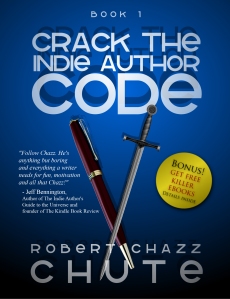
Crack the Indie Author Code and Write Your Book: Aspire to Inspire both have bonus offers of free ebooks. Buy two books and you get four!

1. Some people think you have to have happy endings. I prefer satisfying endings. A satisfying ending isn’t necessarily a happy one, but it should be generally perceived as an inevitable ending in retrospect. Surprising, yet logical and inevitable when you look back on it. That’s the ticket to reader happiness. It’s a tough order to fill, but it works every time when you do it right.

2. I love surprise endings. Twist endings are shunned in some literary circles, but the readers in those circles are squares. I once read a literary critic sneer at surprise endings as “too, too O. Henry.” Oh, please. “Too” O. Henry? As in the guy who wrote some of the most memorable, popular and enjoyed fiction of his time and beyond? It’s not a cheap ending if it’s logical and entertaining. Do that and nobody minds a surprise ending.

3. No cheap tricks, such as “And then the little girl fell out of bed and realized it was all a dream.” A really bad movie called Wisdom with Emilio Estevez did something like that. It was not wise and that’s why you’ve never heard of that movie, unless some unfortunate movie goer was speaking about lousy films on which to spit.

4. Readers should not be puzzled with your ending. If you’ve read a bunch of winning short story contest entries at some pretentious lit mag, you’ve read this sort of ending. It’s the nebulous ending favored by some very expensive MFA programs. It’s the sort of ending that’s so vague, it’s unsatisfying or downright opaque. You read it and reread and wonder if there’s any meaning behind that poetic last paragraph? Then you wonder if you just had a stroke and that’s why you can’t figure out what the heck the author is trying to say. Annoying. You can have intriguing endings. You can’t have loose ends that read like a quantum physics equation.

For Higher Than Jesus, my first ending was clear-ish. One of my beta team told me to make it more explicit and less poetic because that’s the last impression the reader gets before they go write a review. He was right so I rewrote the last paragraph for more of a punch between the eyes.

5. It should be an ending but you can hint that there’s more to come. I love leaving the door open a little. When readers invest themselves in a character, it kind of hurts to say goodbye to them. Characters should be so rich that the reader feels that the heroine’s and hero’s story will continue beyond the life recorded in the book. Hope for more from your characters in the future is uplifting. It can also uplift your sales when you turn one book into a series.

6. If you’ve got a too-easy ending, think about it longer. At the end of Casablanca — a movie I love — there aren’t any Nazis at the plane checking travel documents, the point the structure of the movie turned on. They could have wrung a little more tension out of that final plot point if there was some question of an external factor keeping Ilsa and Victor from getting on the plane, too.

7. Don’t stay too long saying goodbye. This is the dreaded viscous ending. Think of the last Lord of the Rings movie. It didn’t have one ending. It had five endings that dragged on and on. This was meant to appease lovers of the book. It made my butt numb in the movie theatre. Instead, hit your last power peak in the story and opt for the short dénouement. (Note that the end of the trilogy had a little of Casablanca’s plot niggle, too: Why all the walking when you can ride a giant eagle and zip back to the Shire in no time?)
8. Be very careful about killing off your protagonist. It’s a lot to ask of a reader to go through a whole book cheering for a character and killing them off at the end anyway. (See Point #1 again.) Remember how everybody hated Alien 3? There was lots to hate, but consider (spoiler alert) that after rooting for the little girl to live all through Alien 2, she dies in her cryotube at the beginning of Alien 3. It wasn’t a great start and it did not get better. Why? Because the audience was cheated of their earlier victory. It’s not that you can’t kill off a protagonist, but be smart about it and give the reader a payoff to make the sacrifice worth it. If you’re going to kill off Bruce Willis on an asteroid in Armageddon,  for instance, it better serve the cause of saving the planet from said asteroid. (This was back when Bruce Willis was more popular. We’re okay with killing him off earlier in the show now.)

9. More specifically to Jodi’s question: Great endings and great books spring from character. What does the protagonist want? Are they  worthy of that goal? As we make the reader care and amp up the tension along the way, the story is all about the obstacles in the protagonist’s way. When we’re through the obstacles, failures and reversals of fortune, have they won the day? Does the hero or heroine mourn the sacrifice it took to get them to end of the story but at least reach a higher level (e.g. wiser, stronger, redemption, making the family unit whole, saving the world, saving themselves, vanquishing their enemies, winning love etc.,…)? The protagonist doesn’t have to meet all their goals to provide a satisfying ending, but for the reader to be satisfied, they should feel that the trip was worth the time and the stakes were high enough.

Another example from movies  (and a spoiler alert ahead): Michael Keaton is awesome in the film Clean and Sober. However, as good as Keaton is in the drama, the ending is unsatisfying. It ends with Keaton declaring his first days of sobriety, but it doesn’t feel like he’s really earned the achievement. He goes through a lot, yes, but it seems like he gets sober through an unlikely inability to get his hands on any drugs rather than an act of will and discipline. Sobriety is something that happens to him, not something he went out and did or didn’t do. Heroes own the locus of control. That’s why everyone’s a sucker for a training montage in any sports movie.

10. The clue to a great ending is often hinted at in the beginning of the book. Your opening is a statement of the core problems the protagonist faces. Your ending is the solution to whatever that problem is. At the opening of Higher Than Jesus, I’ve got my hit man, Jesus Diaz, about to kill a guy in a sleazy after-hours joint in Chicago on Christmas Day. Jesus needs money and he has to get rid of the bad guy. I won’t spoil anything, but I will say that at the end of Higher Than Jesus, he’s clearer about his own character and why he does what he does. The payoff is wisdom and growth and…much more I can’t tell you.

My first clues to great endings were in reading Esquire magazine. Any great magazine article saves a little punch at the end. (Newspapers use the inverse pyramid model, so all the good stuff it’s up top and they edit coarsely by cutting from the bottom.) Magazine pieces always end on a strong note. It can be ironic or funny or powerful or triumphant or geared to make you cry. Read a bunch of those articles and then compare that feeling to the feeling you get at the end of your book. If you have a similar tickle in your brain and pull at your heart, you’ve got a memorable ending with punch.

~ Robert Chazz Chute is the author of two writing guides: Crack the Indie Author Code and Write Your Book: Aspire to Inspire. They aren’t your Grampy’s and Grammy’s guides to writing and publishing. Lots more inspiration, zero scolding and tons of ideas and motivation for writing your books to completion. (“To completion” is not an orgasm joke. That’s a terrible euphemism. Don’t use that!)


Filed under: publishing, , , , , , , , , , , , , , , , ,

My crucial brain hack to win #NaNoWriMo

There’s a trick I use for problem-solving, plot twists, brainstorming and inspiration that really works. (I blogged about it long ago, but it’s so powerful, it bears repeating and you probably haven’t seen it.)  This writing tip will be especially useful to you if you’re a pantser, but plotters can use it, too.

I wrote Bigger Than Jesus and Higher Than Jesus (each over 60-some thousand words in about a month for the first drafts) using the hypnogogic state. I wrote these thrillers chapter by chapter, covering at least a couple of thousand words a day. Most nights I went to bed not knowing what adventures and twists my hit man, Jesus Diaz, would face in the morning.

If you’ve read the books, you know  it’s always something surprising. Things go well and things go awry (mostly awry) in clever, unexpected ways. Getting into the hypnogogic state is not hypnosis per se, but this technique does access a state of mind that’s particularly useful for writers, especially during National Novel Writing Month where you need a lot of cool ideas in a short time.

To access the hypnogogic state for greater creativity:

STEP 1: Just before I go to sleep, I plant the seed. What question do I want answered in the morning? (e.g. What will happen to my Cuban hit man in the next chapter? How will he get off that cliff he’s hanging from?)

STEP 2: Go to sleep. No light in the bedroom, no TV. Beds are for sex and sleeping and that’s all. Turn your clock face away so the big glowing red numbers don’t taunt you. Avoid stimulants, alcohol and exercise late in the day. The magnesium in mineral water can help you relax, but don’t drink so much you’re up peeing all night. Do whatever you normally do to achieve a good night’s sleep.

STEP 3: Wake up slow. It’s far preferable if you do not wake to an alarm clock. The time between sleeping and waking is a precious time and you want to prolong it. (That’s what all that great stuff in Step 2 is about, so you don’t need to wake to alarm bells.)

In that time between sleeping, dreaming and waking? That is where you will access your creative genius and, as you slowly swim up to consciousness, ask yourself: What’s the answer? The answer will come to you in that special, relaxed state.

Sounds too simple doesn’t it? It works for me every night and every morning.

~For more writing tips, inspiration and motivation for your journey from keyboard to publishing, pick up Crack the Indie Author Code and Write Your Book: Aspire to Inspire by Robert Chazz Chute. Chazz — a former newspaper journalist, magazine columnist and insider in traditional publishing — now has seven books for sale.

Filed under: publishing, , , , , , , , , , , , , , , , , , ,

NaNoWriMo: My crucial mistake

The first time I tried National Novel Writing Month, I did a lot right but I did one crucial thing wrong. 

What went right:

1. I created a loose outline before NaNoWriMo started so I wouldn’t write myself into too many corners and dead ends.

2. I planned my calendar and even reserved babysitters to make sure I had enough time to write.

3. I wrote more than the bare minimum each day (1,666 words) so I got ahead of my word count goal early. You don’t want to derail your NaNoWriMo challenge just because you had the flu for a few days or other work demands pulled you away unexpectedly. 

The crucial mistake:

It’s okay to paste in the broad strokes to fill in later (e.g. “insert awesome sex scene here” or “this is the chapter where little Bobby discovers he can crush badger skulls with the power of his mind.”)

However, as I reached 50,000 words, I stopped short. I didn’t write the last scene before typing “The End”. Later, when I returned to my manuscript to revise and edit, the magic momentum was gone. The missing end sucked my enthusiasm for the project. NaNoWriMo is a sprint and it feels great to cross that finish line. Fifty-thousand words isn’t the only finish line. Build the skeleton of the entire book and you’ll have something more solid to work with when you’re done.

For more on National Novel Writing Month and brainstorming tips, tricks and inspiration to carry you to the end, get my new book, Crack the Indie Author Code.

Crack the Indie Author Code and Write Your Book: Aspire to Inspire both have bonus offers of free ebooks. Buy two books and you get four!

Filed under: publishing, , , , , , , , , , , , , , , , , ,

Ta-da! Motivation, Inspiration & Information for Writers

Whether you’re about to throw yourself into the teeth of National Novel Writing Month or every month feels like a NaNoWriMo frenzy, I have two new books (in pixels and paper) to keep your writing and publishing flow: Crack the Indie Author Code and Write Your Book: Aspire to Inspire. Boiled down from over 1,000 posts on this blog, I’ve edited again, added bonus writing and publishing  tips plus new content that’s never been seen on ChazzWrites. 

Need more? How about free ebooks? When you sign up for my newsletter at AllThatChazz.com, you automatically get a shout out on the All That Chazz podcast and a plug for your website. However, there’s a new and different cross-promotion you can’t get anywhere else. Sign up for the newsletter, answer a qualifying question in the back of the books, and you get a coupon to receive a free ebook of suspense. Complete the easy giveaway instructions and you get the podcast plug, and/or Sex, Death & Mind Control and/or Self-help for Stoners! If writing and publishing books aren’t for you, there’s a similar offer in the back of Higher Than Jesus, the next instalment of The Hit man Series. (#1 was Bigger than Jesus.)

Jump in for the hardboiled fun. Higher Than Jesus promises a little less swearing, snappy dialogue and jokes, more sex, more twists and more clever violence. My Cuban hit man is embroiled in a conspiracy around an arms deal in Chicago that has dire ramifications for the entire United States. It’s a classic tale of Bad versus Evil.

LATEST PODCAST: The Halloween edition of the All That Chazz Podcast is up with a reading of “The Way Out is Through”, a chapter of Bigger Than Jesus. Hear the podcast at the AllThatChazz author site.

~ Robert Chazz Chute is the author of Bigger Than Jesus, Higher Than Jesus, The Dangerous Kind & Other Stories, Self-help for Stoners, Crack the Indie Author Code, Write Your Book: Aspire to Inspire, and Sex, Death & Mind Control (for fun and profit). 

Filed under: publishing, , , , , , , , , , , , , , , , , , ,

#Promotip: Use Rafflecopter to Manage Promotional Giveaways

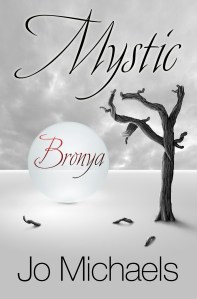
Click here to grab Jo’s book on Amazon

My guest blogger today is author Jo Michaels. She knows all about using Rafflecopter, a free and powerful promotional tool you need to know about, too. Here’s her experience: 

I love Rafflecopter. It’s one of the easiest tools I’ve found to gain followers and provide quality contests for my fans. Besides, the icon is adorable. Rafflecopter keeps track of entries and creates a list you can export right to excel and even randomly chooses your winners for you amongst the entrants.

It’s a great tool for building an e-mail list (if that’s your goal) or getting followers on a multitude of platforms. As an added bonus, Rafflecopter allows you to choose other activities people can do like: tweet about the contest, post a comment or have a free entry just because you happen to be feeling all-powerful during creation.

When you log in, you’re guided down a golden path that’s as easy to follow as putting one foot in front of the other. It holds your hand and lets you take baby steps when setting up your contest. It’s an easy copy/paste to share the links with the featured/participating authors as well. Rafflecopter even embeds the contest to a FaceBook page from their website rafflecopter.com with a click of your mouse.

When I used Rafflecopter for a giveaway I did recently, I garnered over 100 entries. I gained twenty FaceBook page likes and ten new Twitter followers. It was a giveaway of an ARC of Lily (releases 10/30) and two copies of Bronya (free on Amazon from 10/27-10/31), the first two books in my Mystic series, and it ran for five days. The first winner was a new follower and the second was an established fan.

I’d have to say Rafflecopter has helped me gain new fans and provide rewards to current ones. I highly recommend using it to manage your giveaway.

Author bio: Jo Michaels writes full-time in her garage while imbibing copious amounts of coffee. Her inspiration comes from relationships, life, friends, passion and her incredible imagination. Jo uses her artistic talents and training to create stunning covers. The fight for achieving her dream drags her out of bed every morning to do what she does best: spin tales laced with high-octane emotion for readers worldwide. Jo has written six books, all self-published. Check out her website, blog and find her on Facebook at facebook.com/writejomichaels and Twitter, @WriteJoMichaels.

Filed under: publishing, , , , , , ,

Triberr OVERLOAD! #promotip

Author Rachelle Ayala has a great post on  the new trouble with Triberr and how she’s dealing with it. Learn smarter promotion strategies here. ~ Chazz

P.S. So busy I had to drop out of blogging much personally this week and no podcast, either. In other news, last polish is about done and formatting begins. Three new books coming very soon. ~ Sleepless Chazz


Filed under: publishing

Is Humble Bundle the new way to buy books?

See on Scoop.itWriting and reading fiction

Stephen Woodfin | BLOG…


Hm. Finally, a new twist on book buying for your consideration from Stephen Woodfin’s blog. Learn at the link! ~ Chazz

See on venturegalleries.com

Filed under: publishing

Bestseller with over 1,000 reviews!
Winner of the North Street Book Prize, Reader's Favorite, the
Literary Titan Award, the Hollywood Book Festival, and the
New York Book Festival.

http://mybook.to/OurZombieHours
A NEW ZOMBIE ANTHOLOGY

Winner of Writer's Digest's 2014 Honorable Mention in Self-published Ebook Awards in Genre

The first 81 lessons to get your Buffy on

More lessons to help you survive Armageddon

"You will laugh your ass off!" ~ Maxwell Cynn, author of Cybergrrl

Available now!

Fast-paced terror, new threats, more twists.

An autistic boy versus our world in free fall

Suspense to melt your face and play with your brain.

Action like a Guy Ritchie film. Funny like Woody Allen when he was funny.

Jesus: Sexier and even more addicted to love.

You can pick this ebook up for free today at this link: http://bit.ly/TheNightMan

Join my inner circle at AllThatChazz.com

See my books, blogs, links and podcasts.

Enter your email address to follow this blog and receive notifications of new posts by email.

Join 2,063 other subscribers