C h a z z W r i t e s . c o m

See all my books at AllThatChazz.com.

We tell our stories. It’s not supposed to be about fame. Or is it?

Illustration depicting thought.

Image via Wikipedia

You’re at your computer. You’re in a coffee shop. You’re in your bed. You’re at your desk. You’re thinking of me reaching out to you through these words.

I’m here at my keyboard, typing these words, thinking of you and how isolated we are from each other.

I’m thinking about how isolation allows things to happen that shouldn’t. For instance, last week one of my pages was attacked in a creepy cyber way (and it still isn’t fixed completely. Costly tech support arrives today on a white horse, carrying new modems.) If the hacker knew me, he probably wouldn’t have done what he did. We’d kick back and have coffee instead. Our mutual isolation makes me a number. To him, I’m just another IP address, not a human being.

And yet, there is such potential for the electronic web that stretches out among us to pull into a tighter weave.

The Internet has such power and possibility if we can only figure out how to harness it.

For instance, this week on Kevin Smith’s podcast Plus One, Smith and his wife talked about how Mitch Albom hit him up for some help with a charity to feed a village of starving children. Albom needed $80,000 a year. Kevin generously got the charity ball rolling. Sure, if you’re rich, you can give. But if you’re rich and famous, you can give and alert others to the opportunity to give.

The Tiny Science of Your Fragile Humanity

Yes, a chance to donate is an opportunity. It’s your chance to provide aid. It feels good to give if you have something to give. It feels good because we are wired to be sympathetic. Our brains have mirror neurons that allow us to empathize so much we cry when we see an actor in emotional pain on a movie screen, even though we know it’s fiction.

Mirror neurons are that bit of biological microscopy and brain chemistry that make us human instead of irredeemable monsters bent only on survival by domination and murder. Boot camp, by the way, doesn’t turn off your mirror neurons, by the way. The discipline and brutality uses tribalism so your sympathy and courage is directed only to the benefit of your fellow soldiers.

That’s how you make good people do awful things.

To be creative and find an audience for your creativity is not just about making money. In fact, many artists would work for free (and many do) just for the love of art. Expression is often an inexplicable compulsion. If money comes, it is a side benefit. You hope to be paid for the fruits of your imagination, but wealth is something to be hoped for, not expected.

Seeing how privileged people use their influence to make the planet a better place, I see that I was wrong about fame. I undervalued it. I thought it had the potential to be a big pain in the ass, but that’s not fame’s only aspect. Now I see how it can be used beyond art. Fame can be a tool to help starving kids, for instance.

So many artists of all genres and stripes are poor. I wish you success (and much of the content here is aimed at helping you achieve it.) Success is important, but not just for you. Famous artists have bigger audiences. Famous artists make enough money so they can help others. There’s no nobility in a starving artist’s hovel. When you’re hungry, it’s very difficult to produce art.

 Getting paid is good. 

If you want to help the poor:

Don’t be one of them.

Recently, on The Biggest Loser, one of the contestants, Frado, found a way to use his good fortune to “pay it forward.” He had a clever idea. Frado won a session with chef Curtis Stone. Instead of just getting the expected tutorial for his family alone, Frado asked Stone to hook his name to a charity event. Stone cooked up some healthy food and Frado hosted five charities to raise more than $25,000. The hit and run tutorial would have come and gone. Frado found a way to use his newfound fame, and the celebrity’s chef’s notoriety, to make an impact on people’s lives.

It made me wonder, how can we harness social media, our fans and our followers, to help people in need? I think of the clients I know who have breast cancer or have had breast cancer. I think of my cousin and my neighbour, both hit with prostate cancer. My mother died of lung cancer though she never once smoked. These causes need research dollars. There are so many causes that need voices raised for them. There are so many everyday injustices and our silence is taken for complacency. I suppose, to my shame, that is what it is. 

I have undervalued fame. I didn’t think I should value it because that would make me shallow. Then I saw how fortunate people are using their fame in constructive ways. Now I have a larger goal beyond simple publication, teaching and the petty propagation of my little entertainments. I’m working on my books.  One day they will sell and I may achieve a little bit of recognition in some circles.

If we can get flash mobs together, how about flash protests and flash fundraisers? We try to make book trailers go viral. How about YouTube videos that show the needs that must be met. How about using our narrative powers to activate those mirror neurons so people are moved to help each other?

What then?

Better: What now?

Everyone dreams about what they’ll do if money comes their way.

What dreams can we light, as one flame fires another, with bright fame?  

What can I do in the meantime, in these mean times?

What can we achieve, working together?

We have the most power tools of connection and interactivity

that have ever existed. Now.

Please let me know your ideas.

There are too many hungry. There are too many sick. We will all be sick.

There are too few who are reaching out to draw the whole together.

We have to find the way. We can start small, but we must start.

You and I could make the change that others will not.

Let’s become WE. 


Filed under: DIY, grammar, Horror, Publicity & Promotion, publishing, Rant, Social Media, , , , , , , ,

Writer Links: Stephen King, evil editors and plugging plot holes

Stephen King, American author best known for h...

Image via Wikipedia

You’ve already worked hard today, right? Take a break.

Here are some useful links for your Friday afternoon:

Stephen King’s Top 7 Tips for Becoming a Better Writer

Editors are evil, and other fairy stories‏

AOS: How to avoid inconsistencies and plot holes

The Must-Have Writing Routine‏


Filed under: authors, Editing, Editors, Friday Publishing Advice Links, Useful writing links, Writers, writing tips, , , , , , , , , ,

Author Profile: Nate Hendley

Nate Hendley is a Toronto-based author who was born in Connecticut in 1966. He is a full-time journalist and writer and has published

nate hendley

Nate Hendley

over a dozen books, primarily on true-crime topics. He lives with a demanding cat and has a website at www.natehendley.com. You can check out his latest works on the Five Rivers website at http://www.5rivers.org/index1.html

His books: Motivate to Create: A Guide for Writers (Practical tips on how to start up or step up a freelance writing career) & Al Capone: Chicago’s King of Crime (An intimate portrait of America’s most famous gangster)

Previous works by Nate Hendley:

Edwin Alonzo Boyd: The Life and Crimes of Canada’s Master Bank Robber, The Black Donnelly’s: The Outrageous Tale of Canada’s Deadliest Feud, Dutch Schultz: The Beer Baron of the Bronx, John Lennon: Music, Myth and Madness, Crystal Meth, American Gangsters Then and Now: An Encyclopedia, Bonnie and Clyde: A Biography, Jean Chretien: The Scrapper Who Climbed His Way to the Top, William Lyon Mackenzie King: The Loner Who Kept Canada Together

 CW: When did you first know you wanted to be an author?

NH: I was around 10 or so, living in England (where my dad took a year-long sabbatical in 1975-76). I recall I started writing—by hand—a long war story that I ended up calling “Tank Tracks in North Africa”. As might be surmised by the title, it was all about a bunch of guys in a tank fighting Rommel in the desert in World War Two. That’s the first long-form book I recall putting together. I think it ran to something like 50 pages.

CW: Tell us about your book. How did you get the idea?Al_Capone_book[1]

NH: Two books actually. One of them is on Al Capone, the other is about motivation for writers. The Capone book was originally part of a series of gangster tomes I penned for Altitude Publishing, an Alberta-based company that ,alas, is no longer around. When Altitude went belly up, Five Rivers Chapmanry kindly bought some of my Altitude books for republishing.

The second book, Motivate to Create: A Guide for Writers, is a rather drastic revision of a book I initially self-published. Lorina Stephens, publisher at Five Rivers, liked the concept of my book but wasn’t totally excited by the contents. I ended up rewriting quite a bit of the book, making it more professional and taking out a lot of the personal anecdotes that filled my self-published tome. The newly revised book is considerably better than the original, which demonstrates the power of having a good editor crack down on your material.

 The idea for Motivate to Create came from the fact that there is a dearth of info out there on motivation for non-fiction writers. Almost every writers’ motivation book is aimed at creative writing, which is fine, but not what I do. A lot of the existing books seemed very sappy, too—all this crap about “finding and unleashing your inner muse.” I was more concerned with concrete, practical advice that had already been field-tested by other, established writers.

CW: What research was involved in your book’s development?

NH: Researching Al Capone involved reading all the available literature on the man (which is quite considerable) and tracking down newspaper and magazine articles from the period in which he lived. I was pleased to be able to correct certain falsehoods about Capone that have been perpetuated throughout the years. He was never a national crime boss, for example. He controlled the Chicago underworld but certainly didn’t control organized crime across America.

For Motivate, I queried various writer friends and acquaintances and used some of their quotes throughout. The rest of the material was thought up by me.

 CW: Do you have any formal training in writing?

 NH: I went to journalism school after finishing university. I never actually completed J-school, having failed desk-top publishing three times in a row. Anyway, journalism school taught me the nuts and bolts of news and feature writing and was an invaluable experience.

 CW: What is your writing process?

I don’t really have a writing process. One of the tips I offer in Motivate to Create is not to get too precious about your writing time (i.e. “I only write when the golden sun rises from the horizon and the muse dances upon my forehead”). When I have a writing project to do, I just sit down and do it.

CW: How long did it take you to write the book and find an agent and publisher?

NH: Capone took about a year to put together (research, writing, editing.) Motivate was spread over a longer period because I essentially rewrote the book when Five Rivers purchased it. Self-publishing is a pain in the butt so I am glad that a real publisher took the book over. I still have about 30 copies of the original book sitting around my apartment. Unless you’re really interested in marketing and promotion, I would not recommend self-publication.

 CW: What’s the most surprising thing you discovered in writing this book?

motivate_to_create[1]NH: Can’t really think of any. I was pleasantly surprised at the number of freelance writers willing to respond to a general questionnaire I sent around for Motivate to Create.

CW: What was the biggest disappointment you experienced through this book? 

NH: The biggest disappointment was that I didn’t get fabulously wealthy through self-publishing. I thought orders would come flowing like a river. More like a trickle from a tiny pond.

CW: What was the hardest part of the publishing process? What did you most enjoy?

NH: Research and editing are by far the hardest part of the publishing process. Writing is the most enjoyable. When you self-publish, doing all the promotion and marketing is the hardest part.

CW: What advice would you give unpublished writers?

 As Creedence Clearwater Revival once expressed it so well, “keep on chooglin’.” In other words, just keep at it. Practise doesn’t necessarily make perfect but it does make you more professional.

CW: Have changes in the book industry forced you to change how you published or marketed your work?

NH: Yes. Thanks to websites like Facebook, Twitter and LinkedIn I can do more to promote my wares online.

CW: What’s your next book project and what can you tell us about it?

NH: I’m revising a book about the drug methamphetamine for Five Rivers. It is a revamped version of a book I initially did for Altitude that came out in 2005. The new version has new interviews and updated statistics.

CW: Thanks for doing this, Nate! You can follow Nate on twitter at http://twitter.com/natehendley or email me at nhendley@sympatico.ca . The Five Rivers site is located at http://www.5rivers.org/. Best to check the Five Rivers site for any info on upcoming book signings.

Filed under: Author profiles, author Q&A, authors, Books, publishing, writing tips, , , , , ,

When did you know you wanted to be a writer?

Aquarelliste - MCL

Image via Wikipedia

It’s a question I ask as part of the regular author profile feature (appearing in this space Thursdays.) 

It’s one of those questions that I find endlessly fascinating, like:

1. How did you and your love first meet?

2. What do the voices in your head tell you?

3. Would you rather be right or happy?

Almost every writer, it seems, can remember the moment they felt the pull.

Maybe it happened when they read a great book. (Which book was it for you?) Or they like the lifestyle because they are unsuited for anything else (read: you are otherwise unemployable.) Maybe they had an amazing experience they had to share or teach. (What was yours?) Even a lousy book spurs some people to say, “I could do better than this crap!” (If that’s you, which book was it?)

For me, it began with reading, I’m sure, though there wasn’t a particular book that got me thinking writing was for me. I first announced my writerly intentions to strangers. I was maybe eight, though it’s hard to say. I ascribe any vague memory from childhood to that year and, in truth, it can’t possibly have been that eventful. That would leave all the other years empty of anything. But that is how it feels.

The strangers to whom I made my announcement were the printers at a local shop. I wandered in (ignorance is a strange propellant) and asked for paper. “For a book” I added, because I thought I needed to get it from them, for some reason now unfathomable.

I remember the inky and oily smell of the place and the noise of the machines. I loved that smell. I still love stationery stores. All those empty pages call to me. Due to this compulsion, which stops just short of a sexual fetish, I own many more journals than I’ll ever fill and many more pens than I could ever use. The smell in that shop (and the look and smell of sunlight on turquoise water colour paint) are the only solid sense memories I carry from early childhood.

The printers smiled, indulged me, and I walked out with some brownish scrap paper. I walked taller and with real purpose, probably for the first time. I should have been holed up in a library at that stage, though I did that, too. I always preferred books to people. Childhood was rough.

Imagination, stories and the waiting world were my escape.

They still are.

When did you first know?


Filed under: Author profiles, author Q&A, Books, publishing, What about Chazz?, Writers, , , , , ,

Writers: Update & three links for you

a Science fiction city (Paris in a future.)

Image via Wikipedia

I had another frustrating day dealing with tech support that, for awhile, actually made things worse. Now another modem is on order and I’m searching for a technician to come save me. Yeah, it’s that bad.

However, this too shall pass. I’m going to try to get some writing done on my little AlphaSmart Neo. Once you’ve done all you can, you’ve done all you can. I’ve messed with the computer so much I’ve lost two days of my life. While others were enjoying snow days, I was staring at a screen trying to move the immoveable. No more.

Today I get back to my life and focus on the fun parts. I’ll let the on site tech deal with the trouble. (For those who missed it, a cyber attack is to blame, but don’t be afraid. I’m not contagious.)

I recently finished a major editing stage for a client’s book so now it’s time to work on something of my own: a dystopian novel about soulful robots and a drug that improves human brains. Think Robert J. Sawyer meets William Gibson. Ooh, that’s high falutin’ talk. Anyway, I’ll put aside my present-day tech troubles and write about future tech troubles.

And finally, I’ll have some fun. Writing fiction is always fun. If you aren’t having fun as you write, your readers won’t have a chance. Stop putting it off. Go have fun, too. If you have to delegate your worries to get them away from you, then do that.

 (Well…after you check out these cool links, anyway.)


The Writers Alley: The Quixotic Pull of Your Future Novel‏

10 media and tech luminaries on the future of reading

7 Ways to Help Writers Survive the Holidays

Filed under: authors, My fiction, publishing, Useful writing links, What about Chazz?, writing tips, , , , , , , ,

Writers: Optimizing your social media (and a question)

Mostly I talk about writing and publishing here, but if you have a book to sell, promotion and publicity is integral to the process. Social media has democratized book promotion in that it’s an all-access pass and the admission is free.

Writers, this afternoon, I have three great links on the topic of optimizing your use of social media to spread the word about your words:

TNW Social Media » 10 Ways Journalists and the Media Use Twitter‏

How to triple your Twitter traffic in 7 days‏

Is It Time to Take a Social Media Inventory? | FreelanceFolder‏

 And a question: Which social media are you using to promote your book or business?

Please let me know in the comments below.

Filed under: Publicity & Promotion, publishing, Social Media, Twitter, Useful writing links, , , , , , , , ,

Snowstorms & Setbacks: Dealing with them (somewhat)

Snowflake. Small microscope kept outdoors. Sna...

Image via Wikipedia

My apologies for no post today. (I’m on a borrowed computer for this post.) Two interesting things have happened. I was the victim of a cyber attack and a state of emergency has been declared in London, Ontario due to unprecedented snowfall which has shut the city down. We’re trapped, but it could be worse.

I’ve taken some measures to deal with the cyber attack. My computer has been damaged and some more will have to be done on that score. When things you don’t budget for happen at inopportune times (i.e. right before Christmas in the middle of a blizzard) it can really drag you down and sap your energy. And by “you” of course I mean “me.” You’re probably more resilient. I get headaches and need to lie very still.

I could have used to today to get some writing done and get productive. Instead I alternated between fiddling with the computer and shovelling to try to keep up with the snowfall. And, of course, there was the laying down, headachy part. When the computer is down and I can’t see clients, I’m not making money. Worries and the headaches grow in that fertile soil.

It really is an amazing storm, especially if you are looking at it from inside. The thing that I think is my van is now a pile of snow, now elegantly sculptured by the wind and almost as high as the house. I’ve knocked snow off my satellite dish five times now and each time there is just as much snow. As we shovel, the sirens keep wailing in the background. (House fires, people who ignore the warnings to stay off the roads, people who have to get to a hospital and will go by ladder truck, fat guys with heavy shovels and thick hearts etc.,…)

After the massive black out a few years ago, I started preparing for this. That black out happened during the summer and all I could think then was, what if the power outage that took out half of North America had happened during the winter?

We started scraping together emergency supplies. We have a cord of wood and a good wood stove. We’ve stocked up on batteries and the flashlights are ready. We have packaged food set aside. The kids won’t like it, but no one will starve. At some point the power will probably go out and then the challenge will be keeping the kids occupied and the fire stoked through the night, snuggling close and calling it the Adventure They Will Remember. We’re ready. Not Walking Dead ready, but reasonably prepared. We don’t have anywhere to go and we’ve cancelled everything that required face-to-face contact. Lie jail, even if you have nowhere to go, knowing you can’t go is the claustrophobia of it.

Which leaves my disappointment over the cyber attack. I worry about malware and wonder how expensive this will be for me, just so someone with no life could take over my Facebook page address. (And I’m hoping that was all they were after.) If you have the power to annoy someone with your technological expertise, why wouldn’t you go after one of those Goldman Sachs fraudsters or a North Korean dictator or Sarah Palin? Why, hacker? Why victimize a writer? (With kids? Before Christmas? In the library? With a candlestick? Up the…you get the idea.)

So tomorrow I’ll begin again. I’ll have a coffee and make some phone calls to get my computer to recognize the modem that sits beside it. Currently the machine is blind to the existence of the little machine that sits so near, no matter how many times I say, “Look! It’s right effin’ there!” And I’ll hope the power doesn’t go just as I’m finding the solution from Bangalore.

And some day, I’ll use this feeling. The particular circumstance won’t make it into my writing, but the feelings I endured will wind their way into a story. This is not to say that bad things happening does a writer a favour. We have great imaginations for that, thank you very much. But we do use what we have, whatever it is. The heart makes it to the page, all bloody and awful, to deepen our connection with our readers and their problems.

Through writing and reading, we recognize each other. “I get it,” we say. And by getting it, we mean we’ve made the human connection through our web of shared experiences, the large and small pains spread amongst the roses.

Filed under: What about Chazz?, Writers, , ,

WordPress people: Textbook, Tips and tutorial links

Let me be clear: I do love WordPress. However, WordPress can be a bit baffling at first. Even regular users may not be familiar with all WordPress can do. I have two recommendations to use this tool to the fullest. First, check out the WordPress 24-Hour Trainer by George Plumley. I met the author at a writers’ conference. He was a nice guy, who, incidentally, got the gig to write a WordPress manual when the publisher put a call out for an author through Twitter. (Some people say that sort of thing doesn’t happen. It does.)

Then there’s this very useful link:

50 WordPress People to Follow on Twitter for News, Tips and Tutorials

Cover image for product 0470554584

Filed under: blogs & blogging, Books, , , ,

Writers: Spread your word

Syphmag at the Toronto Small Press Fair

Image by 'Lil via Flickr

All authors, whether self-published or traditional, look for opportunities to promote their books. Now there’s way to do that with the Independent Authors Network. If you are self-published or are published with a small press, check out this site to help new readers find you.

Filed under: authors, Publicity & Promotion, , ,

Resistance is futile: Social media, doc trailers and blog vision

I just watched about as much as I could stand (not much) of a documentary called We Live In Public. It’s about internet pioneer and visionary Josh Harris. In 1989, he was a nobody researcher in New York. But he saw the Internet coming and capitalized on it. He was one of the young multimillionaires who hit it big before the locus of Internet power went to Silicon Valley and the west coast. It’s not that the documentary is particularly bad. It’s just that if they had a big point to make, it’s either out of date or they buried the lead the past the first half hour.

Here’s the deal: The future of books is digital. Arguably, the present of books is digital. After this Christmas, even more so because wow, are there ever going to be a lot of Nooks, Kindles, Sony Readers, iPads etc.,… unwrapped on the morning of December 25th!

We are all connected. What was once metaphorical is now electronic. We consume digitally, therefore we are. (That’s not all good, by the way. The planet will suffer and in turn, make us suffer for our rampant consumerism, but that’s another post. For a great documentary on that issue, check out How to Boil a Frog or take a look at this trailer.)

[MORE AFTER THE JUMP]

The point is, We Live in Public documents how one guy saw future possibilities and so stepped in to make them happen. What was once sagacious is now a mundane truism, the I-told-you-so stuff makes you feel bad if you happened to be around at the birth of the Internet and are still poor.

The technology has changed again. And yet, there are the still modern-day Luddites. I recently connected with a bunch of editors on Linked In. Good folks. Smart, interesting people all…but that doesn’t mean they are like-minded. I ran into some people who were disparaging Twitter as a marketing source. They intoned sagely about the Law of Diminishing Returns kicking in.

I’ve already blogged about the proper use of Twitter, so I won’t pound away on it here. However, there was a general sense from some that they were being dragged screaming into the present. No matter how hard opportunities pull, some people want to resist the allure precisely because it’s the shiny new thing. It’s a knee-jerk contrarianism that won’t serve them considering what they say they want to achieve. (For instance, yes, studies say you catch more edits if you edit hard copy on dead trees. Too bad. Adapt. Learn to edit the pixellated stuff. The efficiency lost in editing websites on paper isn’t worth it.) Still, their knuckles are white as they cling to Future’s door frame no matter how hard possibilities pull.

Yesterday a friend complimented me on the many useful writing and publishing links on this blog. (Insert smile of pride here.) I take the curation of useful information very seriously here. And where do I find all those great links? Mostly from Twitter because it pushes information to me that I wouldn’t necessarily think to find on a search engine. Also, some links wouldn’t be in the first few pages of a search term I’d think to use.

The people I follow, the living and breathing humans behind those Twitter avatars, are sending me links all the time and I’m boiling down what I find into the elixir I find most intriguing and useful for my readers. Some of those readers will be authors some day, either published traditionally or self-published. They have websites that need editing. They’ll need my help beyond the information I provide here. I’m ready.

But, the foot-draggers object, is all this translating into present-day moolah? Nope. Not yet. I’m working fairly steadily on my freelance gigs and expanding my sphere of influence. When I worked in publishing in Toronto I had to meet people in person to do that.

Now I’m reaching out from my office in a house that’s much cheaper than what it would cost t in T.O. My kids go to a great school and I feel well-placed and cozy here by the wood stove and the warm glow of the world through my screen, reaching through my keyboard. I’m building my brand (and things have really taken off lately as more people find Chazz Writes. Thank you if you’ve already spread the word!) I’ve had other blogs but this one hasn’t really been up long. It’s already delivering intangibles (i.e. My God, this is fun and instructive for me, too!) I’ve built it slower than I could have, but it’s a learning curve I’m climbing. I can see the top from here. I’m enjoying the view. This is going to be great!

I see the future.

I’m making it happen.

Here.

Now.

So, I’ve got passion and skills and a big dream…so what? Where’s the evidence?

Well, there’s this:

The Numbers Tell the Story: Why Social Media Matters

Filed under: Friday Publishing Advice Links, links, Twitter, Useful writing links

Bestseller with over 1,000 reviews!
Winner of the North Street Book Prize, Reader's Favorite, the
Literary Titan Award, the Hollywood Book Festival, and the
New York Book Festival.

http://mybook.to/OurZombieHours
A NEW ZOMBIE ANTHOLOGY

Winner of Writer's Digest's 2014 Honorable Mention in Self-published Ebook Awards in Genre

The first 81 lessons to get your Buffy on

More lessons to help you survive Armageddon

"You will laugh your ass off!" ~ Maxwell Cynn, author of Cybergrrl

Available now!

Fast-paced terror, new threats, more twists.

An autistic boy versus our world in free fall

Suspense to melt your face and play with your brain.

Action like a Guy Ritchie film. Funny like Woody Allen when he was funny.

Jesus: Sexier and even more addicted to love.

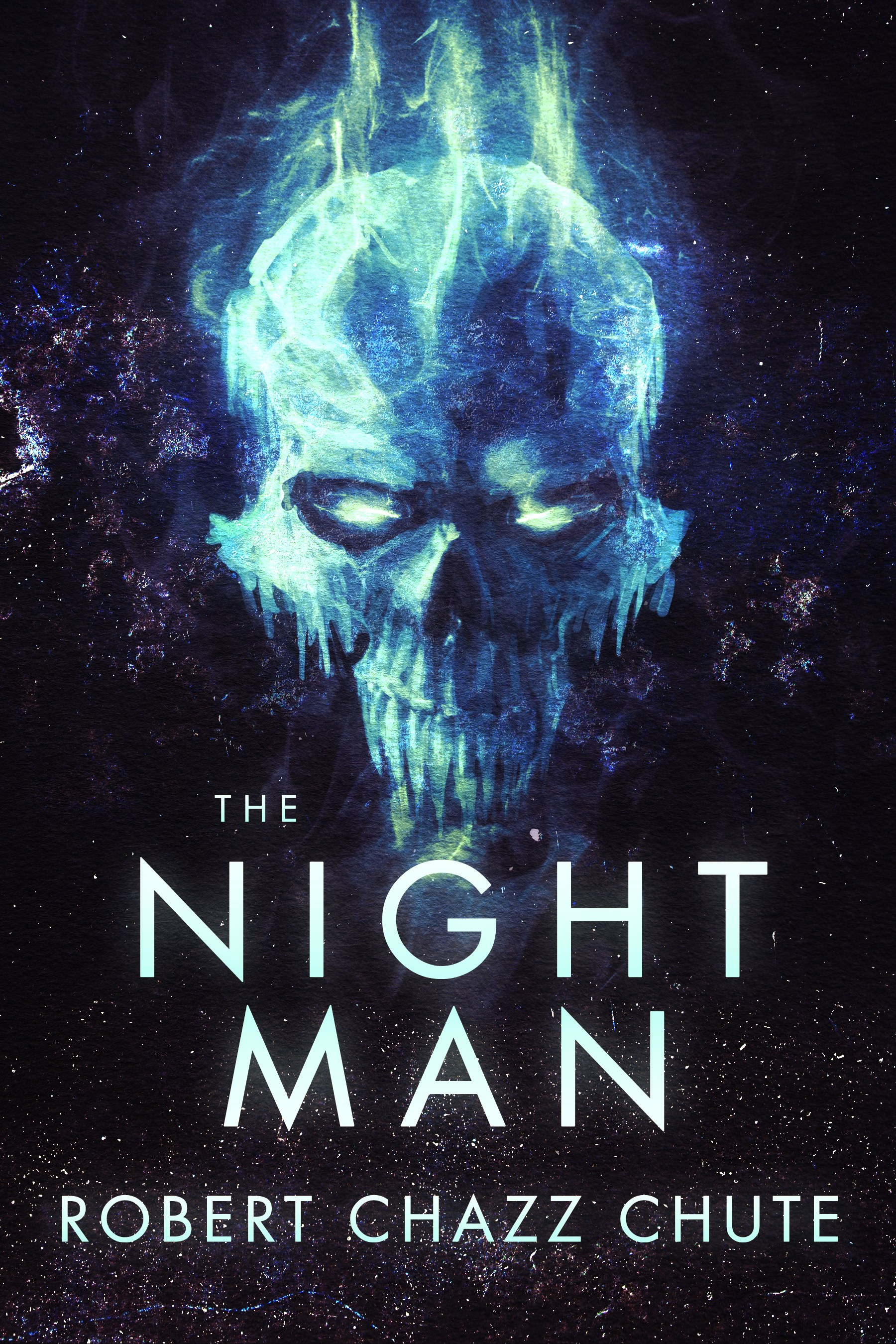
You can pick this ebook up for free today at this link: http://bit.ly/TheNightMan

Join my inner circle at AllThatChazz.com

See my books, blogs, links and podcasts.

Enter your email address to follow this blog and receive notifications of new posts by email.

Join 2,063 other subscribers