C h a z z W r i t e s . c o m

See all my books at AllThatChazz.com.

Publishing is sick. You should quit. Take up knitting.

I attended a lovely writing conference. The best value of these get-togethers is often not in the classes, but in the networking, either by finding an agent, getting  useful feedback or networking with writer allies who can hook you up with what you need (e.g. a graphic designer, beta readers, a photographer, an inexpensive website developer, software you didn’t know existed etc.,…)

A couple of instructors at this conference gave me some really great technical information. Much of the discussion was about stuff you’ll find on this very blog (Shameless plug. Subscribe and send love.) Much of the talk was yet another rehash of commonly known information (e.g. get yourself an editor for your self-published work). A bunch of it was stuff you see spread across the internet endlessly for free (e.g. a rehash of the Amanda Hocking/Barry Eisler unfoldment).

(Heh.Unfoldment. I like that.) 

There was also some bad advice. But today, let’s focus on the health of the publishing industry: It’s sick. Really sick. Especially for the ones upon whose brains and bones rest the cracked foundation: writers.

Of course, it has been thus for a long time. Even when it was healthy, publishers operated on thin margins and predicted imminent doom. Many of those publishing companies anticipating the end were right; I worked for several that are long closed. (I didn’t kill ’em, but I helped hold ’em down. Good times.)

We all know the common complaints today: fewer editors, the corporate profit-push squeezing the midlist, the crash of the bookstore (ask your parents, they’ll tell you what they were), the discount tyranny of the chains and the crush of all that self-publishing pressure and the ennui that sets in when you realize you’re a rusty cog in an old machine that needs a lot of parts replaced.

I’d like to  suggest a new measure of the health of the industry:

How many jobs do the major players have?

A short, relevant aside: I am currently a part-time massage therapist, columnist, feature writer, writer-writer, blogger and editor. Also, I’m a house husband and stay-at-home dad. That’s plenty of hats. Okay, I’m a freak, but not as much as I used to be it seems. And I’m cutting down my number of roles soon (Hint: keeping the sexy wife, brilliant kids and the horror writing that chills my victims’ readers’ blood.) 

Aside over. To business: 

Now watch what happens when we look at instructors at writing conferences:

People at the top of their game aren’t making their living from writing.

Of all the people I encountered at the writing conference, two were at it full-time. Andrew Pyper wrote a book I loved called The Killing Circle and gave a funny, charming and wise speech. Wayson Choi spoke briefly and he’s also plenty charming. (Just read Not Yet, liked it.)

Mr. Choi gave the same encouragement he did last year: You aren’t alone in this. We are all together in this. (As if writing and actually getting published is equal to a struggle with a terrible disease and all caregivers and support for the afflicted must be rallied.) As if the diagnosis is in and it’s not good. The doc is giving you that look that says you might make it, but the treatment is so horrible and there is so much pain to endure, refusing to undergo medical torture is a worthy consideration. Getting better (or published) is sort of like winning the lottery.

(Trivia bonus: Wayson Choi is not only published but once won $100,000 in a lottery. He also survived terrible lung and cardiac problems so he might be the sweetest, luckiest sumbitch you’ve ever heard of. Sure, lots of people win big prizes and survive heart attacks, but to be published? That’s rare!)

But are writing conferences really about getting published? There’s a lot of amateur desperation in that big hall. Nice people, but not all writers. Dilettantes and the terminally confused are also a large component from what I could tell.

I don’t count delusion against people, by the way. To be a writer at all, you must be deluded…well, for fiction writers,  it’s a job requirement.

Are writing conferences helping these people get published, or are they just  another income stream or promotional avenue for poverty-stricken writers? Several presenters used their seminar teaching position to flog their books and editorial services pretty hard (though I didn’t mind the guy who had the grace to be funny about being spammy.) The rest were so fed-up, sad or desperate they were perspiring audibly.

When the “stars” in an industry have to spend a lot of time doing non-writing activity to eat, that’s another indicator of an industry on life support.

If any other industry had this much necessary moonlighting (go ahead, name any one you like), you wouldn’t want your kid on that career path. Imagine if all the civil engineers also had to work as mail carriers and mimes to avoid starvation. Suppose all the doctors were also telemarketers/poets/screenwriters/dog walkers/financial advisors/supply teachers, just so they could cobble together one living income from all their part-time jobs. There’s nothing wrong with any of these jobs but…

But if you have to do it all…well, my point is, sorry…you should quit. 

If you think you can quit, then good. You’re free to move on to something that could give you the security of three squares, dignity, hope for the future and some level of satisfaction.

If you can’t quit, either….

Maybe my writing as a disease analogy wasn’t so inept after all. 

 Related Articles

Filed under: publishing, Rant, Rejection, Useful writing links, Writers, writing tips, , , , , , , ,

Writing Exercise: Idea Generation


Last Saturday I attended a great workshop on Editing and Revising with editor extraordinaire Brian Henry.

I’m deep into doing revisions on my own work and that of others, so a refreshing blast of continuing education was a nice change of pace. Brian is on the road every weekend to teach a workshop. He’s a genuinely nice guy and a skilled editor with tons of experience.

(Click here to find out more about his teaching or to receive his newsletter.)

The odd thing is, I did some freelance work for Brian when I worked at Harlequin in 1988/89. I was working in production, proofreading romance and after romance with a few military books mixed in so I wouldn’t grow breasts. (I proofread a lot of the Mack Bolan series back then.)

To pick up a little more cash, I waded into the slush pile for Brian, who was an editorial assistant at the time, to evaluate spec manuscripts. After taking several of his workshops over the last few years, he finally remembers who I am when I see him now. (I think.)

I’ve written a short story in two of his workshops now. I’m not usually a great fan of writing prompts from other people. I’ve got lots of ideas on my own. However, at Brian’s workshops I’ve leaped into the breach and come up with a couple of short pieces, written on the spot, with which I am quite pleased.

On Saturday, here’s what got the ball rolling; Brian called it his Chinese Fortune Cookie Exercise: We wrote a short fortune, say six words. Each participant came up with two fortunes to share. The fortunes preferably had a verb, included two people (implied was fine, not named) and there had to be an element of “tension or strangeness.”

Also, it’s okay if the fortune sucks. It’s just a prompt, not a plan. We exchanged fortunes with people at our table so everyone had something fresh. Then we started writing furiously.

The fortune I focused on was this:

“A relative will vex you.”

What I came up with was short and surprisingly soulful with a murderous sucker punch. My fellow participants were enthused. It is very affirming for any writer to come up with something quick on the spot that works so nicely. Now I have yet another short piece to add to my short story collection (available through Smashwords this summer!)

If you write, go read Quick Brown Fox, too. 

Filed under: ebooks, links, manuscript evaluation, publishing, self-publishing, short stories, Writing Conferences, writing tips, , , , , ,

How much should fiction cost?

There’s quite a gap between what publishers charge for ebooks and how self-publishers are pricing their work. Many authors (and readers) have a visceral reaction to price. Of course people are sensitive to a price they perceive too high, but many believe that if it’s too cheap, it must be crap. (JA Konrath suggests self-publishers play with price, and experiment to find the right price point.)

However pricing affects you intuitively, there’s no direct correlation between price and quality. Many fine ebooks are often priced low because the author is not well-known. Lower prices encourage timid readers to take a chance on new fiction. When the price is lower, readers buy more. It is freeing to click, click, click and still pay less for fiction than you might for a latte and a croissant.  Self-publishers hope to make it up on volume.

If you are trying to figure out how to price your ebooks, or what a fair price might be, Dean Wesley Smith has a great and useful  summary.

His suggestions have influenced my thinking greatly. As a result, my first book (that will be available digitally) will be a short story collection. I still plan to roll out my big novel in November, but the collection, including some award winners, will come this summer!

It’s all happening very quickly. It has to. And most glorious of all, now it can happen.

Time and me?

We wait for no one.

Not anymore. 

Filed under: Books, DIY, ebooks, grammar, links, My fiction, publishing, self-publishing, Writers, writing tips, , , , , ,

The Nerdist Scott Sigler Interview

Scott Sigler

Image by Sebastian Bergmann via Flickr

I’m an addict.

Food. Comfort. Book-buying.

And podcasts. Lots and lots of podcasts.

If you’re a self-publisher or interested in how a self-publisher used podcasts to go from freemium to premium, from ignored to in demand, from reject to popular author, check this out: The Nerdist.

Favourite story: After so many rejections, Scott Sigler was sure publishers would chase him down if he could just get a huge following for his podcasted book.

He achieved the goal he set for himself and called up the publishers again.

“Howdayalikemenow?”

And they said, “What’s the internet?”

Filed under: Author profiles, author Q&A, authors, podcasts, self-publishing, Writers, writing tips, , , , , , ,

The publisher’s temperament

Last week a baby video went viral. Two little twin boys babbled at each other. Back andSelfpublishing forth they went with a lively conversation “Da! Da! Da! Da!” Though unintelligible, they both were excited to talk to each other. I couldn’t hep but think of the conversation that goes back and forth about whether you should publish, or self-publish. There’s a lot of energy but not a lot of signal getting through.

The answer to the question of whether you should self-publish depends on the “you”.

Are you prepared to think of yourself as more than a hobbyist? Are you intimidated by new and unknown practices so much that you’re frozen? Do you prefer that others take care of things for you without you hiring them? Do you have any financial cushion? Are you prepared to take a chance? What is your real tolerance for risk? What is your tolerance for some people underestimating your work’s worth because you went your own way. Are you open to learning what you don’t yet know and ready to be a beginner?

There are a plethora of other factors to consider,  but first and foremost, it’s about you. Some people just aren’t interested in entrepreneurship. That’s not a judgment. Starting a business is not for everyone. You have to have a lot of discipline and interest in things beyond simply writing a good book (and god knows there’s nothing simple about that.)

Ask yourself, do you really want to do this?

We’ll have better self-published books when more authors ask themselves this question first. Why? Because they won’t just be self-publishers and the negative things that currently implies. We’ll have more publishers who happen to be publishing themselves.

Filed under: DIY, getting it done, publishing, self-publishing, Writers, writing tips, , , , , , , ,

Self-publishers are judged unfairly

I’ve been thinking about what makes things go viral. As per my last post, put twoanger babies together, let them babble, and you’ve got a ubiquitous video that’s hard to avoid. Cute animals go viral. When Sarah Palin said “squirmish” instead “skirmish” I thought that would go viral. It didn’t really, which is as telling a sign of her fifteen minutes being up as any deep analysis of her political future.

Then there was the author who lost her frigging mind.

If you somehow missed this story, here’s the ugly summary: She got a lukewarm review. The reviewer said the story was good but her self-published book was is dire need of a copy editor. The author unadvisedly went into the comments section of the book review blog and was anything but gracious. She blamed the book reviewer for downloading the wrong (substandard) copy. Then she railed some more. She was fighting uphill from the beginning, of course. You don’t pick a fight you can’t win in someone else’s house. Regular review readers rose to the reviewers defense. Things got even more heated when said author then resorted to profanity. The comments section blew up as people  piled on. I am not piling on. Plenty has been said about this and frankly, there’s nothing more for me to say about that. In fact, too much was said about that.

What I do want to talk about is the comment, made several times, about self-publishers. The point was that this author exemplified the lack of professionalism that reinforced the posters’ opinion that they would never, ever read a self-published book.

Wow. How unfair.

Traditionally published authors have made this same mistake.

Not all self-published authors let manuscripts go to press unedited.

Not all self-published authors would act so unprofessionally as to react so negatively to a book reviewer.

Clearly, the poster talking about “all self-publishers” has a bias and found an anecdote that confirmed that bias.

The phenomenon is called confirmation bias.

It’s lazy thinking that leads to prejudice.

Prejudice ≠ a good thing.

Filed under: authors, Books, DIY, ebooks, Editing, Editors, Rant, self-publishing, writing tips

Editing post: Words to do without

Harbour of Peggys Cove, Nova Scotia

Image via Wikipedia

Monday morning I woke at 4:17 a.m. to a thunderclap. The storm had knocked out our phone and satellite already. And a A story poured like liquid gold into my mind. The premise was there appeared and all I had to do was pull the string to find where the thread ended up. Before I pulled myself out of bed, I had my story pretty much worked out.

I went right to work on it when I got up. I’ve been editing a lot and writing less, so although I was prepped, I had to warm up to my story. I found myself writing wrote a paragraph or two, doubling doubled back, revising revised, then moving moved forward. It’s not ideal for me, but since I had such a clear idea I wanted to match that vision as closely as I could. right away.

And I noticed I have tics. All writers have them. I grew up in Nova Scotia, so when I speak or write a sentence (the first time) I seem incapable of writing “The house was across the street from the store.” I have to write, “The house was right across the street from the store.” Right is my tic.

And “just”. Just is sadly ubiquitous. “I just thought…” “He had just dropped his underwear on the floor when…” There is a place and a time for “just” but it shouldn’t be littered everywhere. It’s a word you can often do without.

Like “that”. It’s also a word that you can often do without.

Look for words you can do without.

Filed under: ebooks, Editing, writing tips, , ,

Createspace or Lightning Source: Pros & cons breakdown

Jeff_Bennington

Jeff Bennington

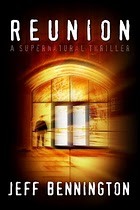
I’m trying to decide what company to go with to get my novel out. Smashwords grinds manuscripts into all e-book formats, of course, but what about the paper book issue? Createspace or Lightning Source? I recently asked some authors about their experience with companies that facilitate self-publishers. Some were satisfied with Createspace and others were fine with Lightning Source. Jeff Bennington, author of a paranormal thriller, Reunion as well as the blog The Writing Bomb,  hit me with a great, detailed reply. He has experience with both Createspace and Lightning Source. Rather than pushing me one way or another, he laid out the pros and cons as he sees it from his experience.

“Dude!” I said (because in my mind I’m still seventeen and it’s the ’80s.)  “This isn’t a mere reply to my question. This, sir, is a blog post. How about it?” He graciously said yes.  Here’s his breakdown:

Cons


At Lightning Source, starting an account is a bit cumbersome (much more paperwork than Createspace.) Once the paperwork was complete I had to get my cover just right, but Joleene Naylor, an independent cover artist, helped me do that with ease.
However, I’m not as happy with Lightning Source’s ink/cover quality as I am with Createspace. Lightning Source’s paper is much thinner than Createspace. (Same number of pages and Lightning Source is at least 1/4″ thinner. Very strange.)
The initial work to get a proof copy is somewhat exhausting and cost $39 (overnight, mandatory) for a proof every time!
I can get five proofs for $50 (overnight, not mandatory with Createspace).
I’ll use Createspace the next time if I discover that print copies just aren’t the thing for my books. I used them this time to get advanced reading copies (ARCs) out early. Createspace was fast and easy to work with but I was very limited on the back cover and spine art.
Expect 1 to 2 days for email return. But if you call..they answer.

Pros


The number one reason to use Lightning Source is the distribution: return availability and full industry discount (45-55%). That was enough for me because very few publishers for indies do that and if they say, as Createspace does, that they have full distribution, you better make doubly sure that the wholesale discount is 45+ and that you can have a return policy. Createspace  never told me that. I asked and they said, “We don’t make that decision.” I say “Bull^%$#!” Of course they do. They are the publisher.
With Lightning Source, you are definitely the publisher. I like that.
If you have a newer mac formatting is easy. Lightning Source will upload your sized PDF with no worries.
Once the book was uploaded and passed the tests, things moved rather quickly. Give yourself 2 months to get your account in process and book uploadedReunion
The best thing is you are assigned a customer rep—a real and a very nice and helpful person. My rep at Lightning Source is Carol Egan. She is wonderful!

Overall, I’m happy so far. I mostly want my print version to be available to local stores for signings (if I have one) and a lot of my friends and family want to buy it at a store. I can’t do that with most other self-pub outlets. Lightning Source is the real thing. Great for a small press…like me!


Right about now you’re bubbling over with gratitude for Jeff”s insights. Act on it and check out his book. Reunion just launched and the reviews on Amazon are very good. Plus, you need to own it for research purposes. (See what you think of the binding etc.,…) Buy Reunion.


Filed under: author Q&A, authors, Books, DIY, ebooks, publishing, Writers, writing tips, , , , , , , , , , ,

The Heart of the Matter: Ebooks and Self-Publishing Part 2 – Another Dialog Between Authors Barry Eisler and Joe Konrath

The Heart of the Matter: Ebooks and Self-Publishing Part 2 – Another Dialog Between Authors Barry Eisler and Joe Konrath.


Here’s a conversation all writers should grok. This is a long read, but worth it.

Filed under: authors, Books, DIY, ebooks, publishing, Writers, writing tips, , , , , ,

The Big Authors Begin To Bolt – The Daily Dish | By Andrew Sullivan

A photo of author and political commentator An...

Image via Wikipedia

This will blow you away. $30,000 a year for a short story? And to think I have boxes of short stories around the house to hold the edges of carpets down.

The Big Authors Begin To Bolt – The Daily Dish | By Andrew Sullivan.

Love the delicious little dig at publishing at the end of Sullivan’s article. Hm. I’ll have to read more from Sullivan on this topic to see precisely what he’s on about.

Filed under: authors, blogs & blogging, DIY, ebooks, links, Media, publishing, Rant, writing tips, , , , ,

Bestseller with over 1,000 reviews!
Winner of the North Street Book Prize, Reader's Favorite, the
Literary Titan Award, the Hollywood Book Festival, and the
New York Book Festival.

http://mybook.to/OurZombieHours
A NEW ZOMBIE ANTHOLOGY

Winner of Writer's Digest's 2014 Honorable Mention in Self-published Ebook Awards in Genre

The first 81 lessons to get your Buffy on

More lessons to help you survive Armageddon

"You will laugh your ass off!" ~ Maxwell Cynn, author of Cybergrrl

Available now!

Fast-paced terror, new threats, more twists.

An autistic boy versus our world in free fall

Suspense to melt your face and play with your brain.

Action like a Guy Ritchie film. Funny like Woody Allen when he was funny.

Jesus: Sexier and even more addicted to love.

You can pick this ebook up for free today at this link: http://bit.ly/TheNightMan

Join my inner circle at AllThatChazz.com

See my books, blogs, links and podcasts.

Enter your email address to follow this blog and receive notifications of new posts by email.

Join 2,063 other subscribers