C h a z z W r i t e s . c o m

See all my books at AllThatChazz.com.

Announcements and changes 1, 2, 3

First, author India (The Great) Drummond will be profiled right here in a few hours. She’s really nice, which I value immensely. And her book sounds interesting, so check her out and order some copies.

(Also, if you’re an author, you know I do author q&a profiles, right? Shoot me an email by clicking my happy pic above and we’ll chat about publicizing your book, too.)

Second, I have a big announcement coming this Friday. If you follow me on Twitter, you already know the broad strokes. If not, follow me on Twitter! Also, here’s a hint: I found a publisher for my novel. More to come on that but it’s all very exciting. Well, especially to me. Lots of new news unfolding over the coming year on the publishing front. You’re used to lots of links, opinion and non-fiction in this space. My fiction will be coming to the forefront in a big way soon(ish).

Third,  I’m changing the schedule of the blog starting next week. You’ll recall I switched to three posts a week (unless I saw something that caught my fancy and couldn’t wait.)

I’m still in the publishing/information/curation business here

and will continue to be.

However, I notice that my Friday post stats take a dip so next week I’ll be posting Mondays, Wednesdays and Thursdays. Apparently on Friday afternoons, y’all just want to get the hell away from your desks and out into the sunshine! I don’t blame you. Might add or switch in a Sunday post in the future depending on how the stats work. I’m watching how I hit you for optimum impact with minimum annoyance on your part.

The blog is growing faster now that I only post three times a week! What does that say about me? Either a little of me goes a long way or girls just hate it when you look desperate.

Have a great night! Or make it one.

Filed under: blogs & blogging, publishing, Useful writing links, Writers, , , , , , , ,

The Amanda Hocking Effect: She didn’t sell out. Trad publishing bought in.

Amazon Kindle e-book reader being held by my g...

Image via Wikipedia

Successful e-book author Amanda Hocking has signed a six-figure deal with a traditional publisher, St. Martin’s Press. No sooner was it announced,  some haters emerged in website comments sections. I’m pleased to say that most people were happy for Ms. Hocking—as they should be—but of course there were some trolls, one of whom said she was a sell-out and a traitor to the digital revolution’s cause.

The haters are wrong about that and here’s why: Ms. Hocking got to be a big-time author because of e-books, but she never signed up to lead a revolution. She just signed up to get readers for her books. Good for her! The traditional publishing model is useful to big-time authors and due to her solitary efforts, she is a big-time author. The larger issue is that publishing often falls down when the author’s success does not qualify as stellar.

I don’t see that this deal speaks to the limits of self-publishing at all. The deal must have been sweet because, as I pointed out not more than a week or so ago, with her 70% cut through Amazon, publishers would have to back up a truck full of money and provide an army of logistical support to justify any deal with that author. St. Martin’s is one of the few publishers big enough to provide that scale of mucho macho mojo. Hocking tried to get published the traditional way first and mainstream publishing turned her down. She proved herself worthy doing it her way. Now she can focus more on writing and less on the business side of publishing. Writers love to write first, and most of us only become entrepreneurs by necessity and circumstance.

Look deeper into the implications of this deal. Amanda Hocking didn’t sell out. Traditional publishing did. Hemorrhaging money fuel due to Wall Street’s global economic destruction spree, publishers cut back on editors and squeezed the mid-list authors. They failed to adapt to the changing digital environment to preserve the old media model as long as possible.  Many of those mid-list authors got squeezed right into self-publishing. For those with some experience and an entrepreneurial bent, the water over in digital publishing can be nice and warm.

Another author, Barry Eisler, recently walked away from a $500,000 deal because he decided he could make more on his own. Also, good for him. One of the joys of self-publishing is maintaining control and choice. Whether you choose to stay outside trad publishing or sign a contract, you’re making the best choices for you.

Amanda Hocking didn’t sell out. She made traditional publishing buy in.

(And she’s consistently more gracious about it than I would be. )


Filed under: authors, Books, DIY, ebooks, publishing, Rejection, Useful writing links, Writers, , , , , , , , , , ,

Writers: Do you have time to get published? And can we dump the “self” from publishing?

P Harry Potter

Image via Wikipedia

Wow. I just noticed that an author profiled on this blog, the great JE Knowles*, was rejected 100 times before her book Arusha, was accepted by Spinster Press. I’ll say it again: Wow. That’s common. Many authors who later went on to great success were rejected many times before someone in traditional publishing saw their manuscript’s sales potential. One day, JK Rowling will announce who rejected Harry Potter before Bloomsbury picked up the deal of a lifetime. (Then the tears, excuses and recriminations can really begin. That promises to be quite delicious, but I digress.)

The reasons for such rejection are many (and many of those reasons have little or nothing to do with any particular author.) I’ve delved into that reasoning elsewhere, so let’s talk about time. It takes you a long time to write a book and get your editor and/or beta-readers lined up. You comb and comb the manuscript and until at last you don’t find any typos. (As soon as you send off the manuscript, inevitably you will find a new round of typos and errors but just do what you can because that’s all any of us can do.)

You do your research and you send it off to editors or agents. You format your submission to the individual requirements of each agency or publishing house. Most just want queries up front and some want an outline, too. Others will ask for partials but the length of a partial can vary. If it’s non-fiction, you’ll need a business plan for all the marketing you intend to do to sell the book and evidence of your vast platform. You send it all off to five agents or houses and you wait. In the meantime, you work on expanding your platform and thinking happy thoughts and get all caught up in that positive thinking bullshit of The Secret.

Many agents and houses don’t actually do rejection slips anymore. No answer is an answer. The trouble with that is, you don’t know when they’re done with you. Next, after some undetermined time, you feel like your stress headaches will squeeze your forehead so hard your brains pop out through your nose. So you decide it’s time to decide upon the next five agents and you begin your research again.

And so on. And you begin to question your mission on earth and the need for your existence. And you get more of those brains and blood in the Kleenex headaches. And then you get a nibble. An agent wants a partial from a query you’d assumed had been forgotten. This tentative bit of interest can go south so many ways so quickly, I’m not even going to belabor those ugly facets here. Let’s just say, it’s a long road to getting an agent, and that’s no guarantee you’ll be published.

Once you get over the initial ecstasy of someone validating your wretched writerly existence (and that little orgasm is disappointingly brief) you start to get itchy that your book isn’t up for sale and won’t be for a long time.  “Patience,” you’re told. You’ll be told that a lot. Eventually you may begin to wonder if it’s just you being impatient. Then that will pass and you’ll start to wonder if there really is a flaw in the argument of  “This is how it’s done and this is how we’ve always done it.” The point is, after you’re accepted by a traditional publishing house, it still an 18-month wait until you hold a book in your hand. In most cases, unless you’re Sarah Palin (and thank God you aren’t!) that time-frame is a minimum.

So, how old are you? Do you have years to wait before you’re in print? There are alternatives. Smaller presses and POD publishers might have a shorter time frame to get your work in print. Using Smashwords, you could have your book out very quickly.  E-books are fast. Often, too fast.

If you’re not prepared to wait for the traditional publishing model, the deeper question is: Are you prepared to start your own business and become an independent publisher? I see a lot of self-publishers, but I see far fewer independent publishers who are prepared to dive in and get really serious.  The difference between a self-publisher and an independent, I think, is one of seriousness and commitment. You can get anything out there quick and awful. Any half-considered manuscript full of errors and dropped threads can be pushed on an unsuspecting populace quickly. (Of course, it won’t sell well, the word of mouth will consist of warnings and readers you suckered the first time won’t come back for your next book.)

I’d like to see more independent publishers who are ready to hire an editor (said the editor) and swim in the deep end of the pool. The stink on self-publishing is that the quality is atrocious. Eventually, I’d love it if the independent publishers who committed to quality outnumbered the self-publishers. In many people’s minds, “self” will always signify “vanity.” Those objections aren’t all wrong.

As creators, we must demand more of ourselves for emerging models to fly. We’re at the end of the beginning. Now let’s knuckle down.

And yes, you’ll see my first book, independently published, up and out there, later this year.


*See the first link below for that interview and more information about JE Knowles.

Filed under: DIY, ebooks, Editing, Editors, publishing, self-publishing, Useful writing links, Writers, writing tips, , , , , , , ,

Writers: TOP 10 Objections to Self-Publishing

Amazon Kindle e-book reader being held by my g...

Image via Wikipedia

As I read the growing number of success stories about self-published authors, I’ve seen some of the same worries and objections pop up again and again. Let’s deal with some.

Objection 1: As self-publishing grows, who will be the gatekeepers to keep out all the self-published books that are gonna suck?

My answer: Who keeps all the awful books off your bookshelf now? You do. The people you trust help you curate your book collection. This is really a question of taste and quantity. Your taste is still yours. The variable is going to be quantity as we’re crushed under the weight of so much bad prose. Sure, as an indie author, it will be hard to be heard above the promotional din. It’s hard to stand out anyway. However, through social media, word about good books spreads faster. Readers curate. Sounds more democratic than a small faceless editorial and sales cabal determining your destiny from an office you’ll never see, doesn’t it?

Objection 2: Without traditional publishers, authors will have to promote their own books.

My answer: Most of them do that themselves now. In fact, Margaret Atwood recently suggested that, since authors are their own publicity department, they should get a cut. For instance, one solution would be: If you, the author, spends $10,000 on promotion, you don’t have to earn that $10,000 again before you start getting royalties. (Many savvy authors—if they can afford it—plow their advance right back into promotion.)

Objection 3: E-readers are selling much faster in the United States than they are in Canada. Can Canadian authors make any money from e-books?

My answer: When you upload to Amazon, or any other platform, there aren’t any flags on your book that say “This one’s from Canada and this one’s from Tunisia so ignore this shit.” The web makes us citizens of the world so you can sell to the vast US market. The British and Australian markets are pretty big, too. We live in an Age of Wonders. Borders? We don’t need no stinkin’ borders!

There’s a deeper and much more serious answer to Objection 3, but I’ll save that for tomorrow’s post because it will sound unpatriotic.

Objection 4: But self-publishing is expensive.

My answer: It used to be but that’s old data. You can start selling e-books for just about nothing down. And many e-publishers are now looking at the paper version of their product as a nice add-on, not a necessity. Also, beware of companies that call themselves indie, but they’re really working on the vanity press business model and are out to bleed you dry.

Objection 5: Self-publishing sucks because it’s not professionally edited.
My answer: That one’s mostly true (though you could argue a lot of traditionally published books also suffer this malady as agents edit more and big houses edit less.)

I’ll take the middle road: Unedited work gets savaged in the marketplace. Few people will buy, word will get around and even fewer will buy the next book. It’s such a losing strategy that it won’t survive. A lack of editing is really the main complaint I hear about self-publishing. I think people who are serious about it will get it. I’m optimistic that as we hammer away at that complaint, writers will see they need some professional objective input.

(And yes, I’m an editor, too, so take that into consideration as you weigh the validity of my uncharacteristic optimism on this point.)

Objection 6: You can only be a financial success with the Big  Six behind you.

My answer: Anyone, even if they have a steady-paying job, dreams of winning the lottery. (Me, too!) But getting recognized by an editor or agent and getting the full JK Rowling billion-dollar deal is like winning the lottery, but with lousier odds.

If you’re good at math, you see through this objection quickly. Most books—indie or trad—don’t sell. Most authors don’t live off their writing income. There are people who are making good passive income from selling books, short stories and novellas. They aren’t in the billionaire’s club though Amanda Hocking’s now a millionaire.

As a self-published author, you’re selling your books for prices which are the equivalent of couch cushion change, but you do get a much larger percentage of each sale. JA Konrath has done the math and proved you can hold on to your rights, work for yourself and make much more money than a traditionally published author. With time, the fallacy of this objection will sink into the consciousness.

Just like my daddy said, “You don’t get rich working for somebody else.” Just like my ma said, “The Man is out to get you. The only way to control your life is to seize the means of production.” Good old Black Panther Marxist Ma.

Objection 7: Self-publishing is for losers who wouldn’t get published traditionally.

My answer: Has been true. Less true as time passes. As more traditionally published authors jump to e-books (already happening) this impression will fade. (This ties into the curation worry in #1.) It also has to do with ego. As someone with a huge ego, I’ve struggled with this, too.

Objection 8: If I self-publish and wear all the hats, when will I have time to write?

My answer: When you find or make time, I guess. My rule is, I don’t indulge in social media when it interferes with writing time. Twitter is for winding down, breaks and commercials and when I feel like it. It’s not an obligation that cuts into otherwise productive time. I’m not unsympathetic to the problem, but it’s not a new one. As I said, most traditionally published authors are hustling their books on their own anyway, without assistance or input from their publishing house.

At least we have more leisure time than we’ve ever had in all of human history. You probably don’t have to chop wood, skin your own cow and make your own clothes and rope in addition to feeding yourself.

Maybe you need to stop making excuses and sit down to write. If you missed Tuesday’s kick-ass,  light-your-hair-on-fire, no-excuses, take-no-prisoners, no-apologies self-evaluation rant, you better read it here. You don’t like me now? Ha! You are going to hate me when you read that!

Objection 9: If  I go out into the world without an agent, who will plan my career?

My answer: Okay, I’ve phrased that objection facetiously and unfairly. A lot of agents do talk about planning their authors’ careers, though. Aside from encouraging you to write more books faster and write the best books you can, I’m dubious about advice that comes after those no-surprise generalities. (For more on that lunacy, read Dean Wesley Smith’s take on agents here.)

So what will you do when you’re looking for support? You’ll talk with your friends. You’ll reach out to your network of mentors and followers. You’ll get feedback from your beta readers. You’ll learn many of the things you need to know from fellow travelers, Google and YouTube.

Objection 10: But I hate reading on an e-reader!

My answer: You aren’t alone. Not everything is for everyone. But young consumers will take it for granted. That’s one of the reasons Young Adult e-reading is exploding. YA is also extremely popular because it’s the one genre where traditional publishing is open to cross-genre books; lots of adults read YA, too. Older people were the surprise e-reader buyers early on. As the price drops, more kids getting e-readers and the age ratio is shifting.

There is resistance to change. It’s not all bad and it’s not all good. Consider that, if you’re older, you remember someone who hated mandatory seat belts. Not an objection you hear much anymore. The New Normal is a dangerous concept, though I don’t think all the paranoia applies in this case.

Also, let’s get real: Many people who hate e-readers haven’t actually tried them yet. As I was reading mine, my 11-year-old stopped and touched the screen. “Oh!” she said. “I thought that was paper at first. I thought you had a piece of paper on top of your e-reader screen! Wow, that looks so real!”

Yup. I smiled.

These are my answers to objections to self-publishing.

Do you have some, too?

Filed under: authors, Books, DIY, Editing, publishing, Top Ten, Useful writing links, Writers, writing tips, , ,

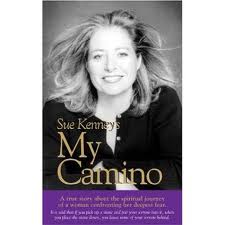
Check out Sue Kenney’s My Camino

In case you missed this morning’s nice comment from the post below, here it is again! Woo-hoo, Sue! That sure made me feel good.Sue_Kenney
Chazz. Glad you got your very own copy of My Camino. Hiring you to do an edit/polish, I felt confident and relieved to have another chance to clean up the grammar, tenses and spelling mistakes before the next printing. Your expertise and attitude made this editing process exciting for me. My Camino came out in 2004 with a small publishing house and I was told it had ‘long legs’ (just like me) and might survive 3 years on the shelf . Who would have thought that 7 years later the book is a national best seller, there is a feature film adaptation in development (I co-wrote the script with Bruce Pirrie) and in the next couple of weeks it will be available on Podiobooks as an audio book. What a journey and now you are a part of it. Thank you so much. It was truly an honour to work with you. See you at the movie première in 2013! (fingers crossed)
Sue

Go to her website here: Sue Kenney

Filed under: Author profiles, authors, Books, Editing, Editors, publishing, Useful writing links, , , , , , ,

Writers: Two mavericks to follow (plus a surprising original)

Monkeys Blogging

Image via Wikipedia

Are you indie? Are you non-indie but want to increase your awareness of what goes on behind the scenes in the publishing industry? Here are two blogs to follow:
Dean Wesley Smith takes the publishing industry’s engine apart, looks through all the pipes and valves and gives you the goods on what you need to know.

And you need to know what Kristine Kathryn Rusch has to say about making your way as a writer.

BONUS:

There is a guy who got into blogging early. You know him. You’ve seen him. He’s cooler than you thought. And he’s showing others they can self-publish, too.

Click here to find out who I’m talking about.

Filed under: authors, blogs & blogging, Books, DIY, ebooks, links, publishing, Rant, rules of writing, self-publishing, Useful writing links, web reviews, Writers, writing tips, , , , , , , ,

Writerly link roundup: word counts by genre (& send in the cavalry!)

I’m in the editing basilica today but I wanted to take a moment to lay out three little info-gifts for you, and then, something special.cover_front_soe_gol


Three interesting links:

An Author’s Perspective on Scribd versus Bookbuzzr

What word count fits your manuscript’s genre?

A writer and her hate mail

And finally, an author decides to give away his e-book. What makes this special? No gimmicks, no forms, no following, no email subscriptions, zero ordeal.

JS Chancellor’s book got pirated but he’s turning things around. It will be interesting to see how his strategy works to promote the book.

So let’s help. Pump up his blog. Pump up the volume. Go see if you like his writing and maybe a great experience and reader-writer relationship will begin.

He calls it “a shameless plea for help.” I say we help out because, hey, we’re writers! We can help out other writers! More important, we’re readers! And helping out feels good.

And the dude’s giving you a book! What’s to think about? If you like it, spread his word. Go there, bookmark it and pick it up March 1.

Check here for details:

Free Copy of Son of Ereubus

Filed under: authors, Books, ebooks, links, publishing, Useful writing links, writing tips, , , , , , , , ,

Writers: Self-publishing links

Patricia Benesh writes in the Huffington Post about the five questions you should ask yourself before going the self-publishing route.

At Self-publishing Central there’s a blog post about the journey to publication and finding peer support along the way.

Eoin Purcell‘s blog writes about the state of the traditional publishing industry and how it’s not all bad news. In fact, libraries are trending up.

And Jeff Bennington over at The Writing Bomb writes a compelling post evaluating Lightning Source versus Create Space. Do check that out!

Related Articles

Filed under: authors, blogs & blogging, Books, DIY, ebooks, self-publishing, Useful writing links, web reviews, Writers, writing tips, , , , , , , , , , , , ,

Writers: How to Publish on Smashwords (by Guest blogger Rebecca Senese)

Image representing Smashwords as depicted in C...

Image via CrunchBase

Firstly, thanks to Robert for allowing me to do a guest post on his blog. This is my very first guest post and I’m thrilled to “be” here!

This is an exciting time to be a writer, full of opportunity and scary possibilities. It’s easy to become paralyzed. I know I felt like that for some time over the past year as I watched the e-book market explode. I knew I wanted to start putting up my back list of pre-published short stories but I wasn’t sure how to go about doing it. I decided to jump right in.

One of the sites I decided to post my work on was Smashwords. According to their website, they claim over one billion words published. That’s a lot of typing!

Of course, the very first step is to create a free account at Smashwords. Make sure to print out and read their publishing agreement. This is true for any site you wish to publish on. When you load up your work, you are effectively acting as your own publisher and need to know what kind of agreement you are making with the site that is acting as a distributor. Take the time to print and read the contract before putting anything up. Remember to take responsibility for your own writing career.

Next I downloaded their free style guide. This guide, written by Smashwords founder Mark Coker, provides a step-by-step manual for formatting your book to meet Smashwords’s requirements.

Once you’ve completed the proper formatting, Smashwords takes your single format file, processes it through their Meatgrinder software and outputs it into approximately 10 separate ebook formats, including ePub, PDF, Mobi (Kindle) and RTF among others. There’s no trying to figure out how to do it yourself. Smashwords’ Meatgrinder does it for you!

I created my cover page and formatted my first short story according to the style guide and I was ready. From the top menu, I choose Publish. This took me to the upload area.

Section 1 “Title & Synopsis” included Title, Short Description (400 characters allowed), Long Description (4,000 characters allowed) and Language of Book with a part for adult content.

Section 2 is Price and Sampling. Unlike Amazon, Smashwords allows for free content, readers set the price (with a note that Barnes & Noble no longer accepts books with this option), or with a price set from a minimum of 0.99 cents or up.

Sampling allowed me to choose the amount of my work available for a reader to download to review before buying. I chose 40% as an option, to give readers a good chance to read my work. I have downloaded e-book samples that don’t even go past the table of contents page before the sample is done. I never got a chance to even taste the author’s writing. That’s not a book I would buy. Sampling is the equivalent of being able to pick up a book and crack it open to take a look at the writing. It’s a good idea to give readers a real opportunity to see if they like your work and also to get hooked on your story. Give them enough to really get into it and they’ll want to buy to find out what happened at the end.

Section 3 is Categories which open up to the right, from general categories to more specific subjects.

Section 4 is Tags that I used to tag my e-books.

Section 5 is eBook Formats and the default is set for all of them. I left all the defaults in place. My thinking is that the more formats, the better for a reader to find one that works for her.

Finally, Section 6 Covers and Section 7 Select File of Book to Publish are where I was able to upload my cover and my e-book file. Section 8 is the Publish button. Once I pressed this, my file was uploaded for processing.

My first e-book took about twenty minutes to upload. Others have taken as long as four to five hours. It seems to depend on how many other books are being uploaded at the same time as yours.

After uploading my first ebook, I created my Smashwords author page under My Smashwords tab. Here I uploaded a photo, a small bio and was able to link to my website, blog, Twitter account, Facebook and LinkedIn. On this page, all of my uploaded e-books are listed with a tag cloud at the bottom of the page.

Smashwords includes a Dashboard tab where you can obsessively track your sales or sample downloads. As one writer suggested online, the best thing to do with e-books is to publish and forget it. It’s very tempting to check on the Dashboard every day or every few hours and become disappointed when you aren’t rivaling Amanda Hocking’s sales. The best cure is to keep writing and keep publishing. The more e-books you have available, the more chance you give the readers to find you and like your work. When that happens, they’ll look for more.

That’s my plan as I continue to move forward into this new world of publishing. And I’m sticking to it!

Rebecca M. Senese is a writer of Horror, Science Fiction & Mystery. Now that you’ve read about how she uploaded to Smashwords, complete your research and go by her stuff!

rebecca_senese

Website: http://www.RebeccaSenese.com
Twitter: http://twitter.com/RebeccaSenese
LinkedIn: http://ca.linkedin.com/in/RebeccaSenese
Blog: http://RebeccaSenese.wordpress.com

Filed under: authors, DIY, ebooks, publishing, self-publishing, Useful writing links, Writers, writing tips, , , , , , ,

Writers: Are you skeptical about self-publishing?

keys

Image by atmasphere via Flickr

As you can see from a couple of posts ago, I was very enthused with the symposium put on by The Writer’s Union of Canada. I still am. However, there was so much useful information for writers (especially if you’re interested in self-publishing) that I can’t do it all in just one post. It’s worthy of many posts, and not all of them are mine. For instance, as you may have gathered, it’s official, I have a man crush on Ross Laird’s brain.

When someone else makes a great argument, I feel pretty stupid piling on with nothing else to add. (Hold on to your shorts. I still have plenty to say, but we’re going to jump to one of Ross Laird’s links in a moment.)

Why? Because the essential question before I follow up with anything else is this:

Is this the right time for you to jump to self-publishing?

Is traditional publishing so damaged it might even be crazy not to self-publish?

Now you need to click here to read Ross Laird’s short essay over at A Newbies Guide to Publishing for the answer.

I know when to shut up and let someone else make a brilliant summation to the jury.

Filed under: self-publishing, Useful writing links, Writers, Writing Conferences, , , ,

Bestseller with over 1,000 reviews!
Winner of the North Street Book Prize, Reader's Favorite, the
Literary Titan Award, the Hollywood Book Festival, and the
New York Book Festival.

http://mybook.to/OurZombieHours
A NEW ZOMBIE ANTHOLOGY

Winner of Writer's Digest's 2014 Honorable Mention in Self-published Ebook Awards in Genre

The first 81 lessons to get your Buffy on

More lessons to help you survive Armageddon

"You will laugh your ass off!" ~ Maxwell Cynn, author of Cybergrrl

Available now!

Fast-paced terror, new threats, more twists.

An autistic boy versus our world in free fall

Suspense to melt your face and play with your brain.

Action like a Guy Ritchie film. Funny like Woody Allen when he was funny.

Jesus: Sexier and even more addicted to love.

You can pick this ebook up for free today at this link: http://bit.ly/TheNightMan

Join my inner circle at AllThatChazz.com

See my books, blogs, links and podcasts.

Enter your email address to follow this blog and receive notifications of new posts by email.

Join 2,063 other subscribers