C h a z z W r i t e s . c o m

See all my books at AllThatChazz.com.

The publisher’s temperament

Last week a baby video went viral. Two little twin boys babbled at each other. Back andSelfpublishing forth they went with a lively conversation “Da! Da! Da! Da!” Though unintelligible, they both were excited to talk to each other. I couldn’t hep but think of the conversation that goes back and forth about whether you should publish, or self-publish. There’s a lot of energy but not a lot of signal getting through.

The answer to the question of whether you should self-publish depends on the “you”.

Are you prepared to think of yourself as more than a hobbyist? Are you intimidated by new and unknown practices so much that you’re frozen? Do you prefer that others take care of things for you without you hiring them? Do you have any financial cushion? Are you prepared to take a chance? What is your real tolerance for risk? What is your tolerance for some people underestimating your work’s worth because you went your own way. Are you open to learning what you don’t yet know and ready to be a beginner?

There are a plethora of other factors to consider,  but first and foremost, it’s about you. Some people just aren’t interested in entrepreneurship. That’s not a judgment. Starting a business is not for everyone. You have to have a lot of discipline and interest in things beyond simply writing a good book (and god knows there’s nothing simple about that.)

Ask yourself, do you really want to do this?

We’ll have better self-published books when more authors ask themselves this question first. Why? Because they won’t just be self-publishers and the negative things that currently implies. We’ll have more publishers who happen to be publishing themselves.

Filed under: DIY, getting it done, publishing, self-publishing, Writers, writing tips, , , , , , , ,

Self-publishers are judged unfairly

I’ve been thinking about what makes things go viral. As per my last post, put twoanger babies together, let them babble, and you’ve got a ubiquitous video that’s hard to avoid. Cute animals go viral. When Sarah Palin said “squirmish” instead “skirmish” I thought that would go viral. It didn’t really, which is as telling a sign of her fifteen minutes being up as any deep analysis of her political future.

Then there was the author who lost her frigging mind.

If you somehow missed this story, here’s the ugly summary: She got a lukewarm review. The reviewer said the story was good but her self-published book was is dire need of a copy editor. The author unadvisedly went into the comments section of the book review blog and was anything but gracious. She blamed the book reviewer for downloading the wrong (substandard) copy. Then she railed some more. She was fighting uphill from the beginning, of course. You don’t pick a fight you can’t win in someone else’s house. Regular review readers rose to the reviewers defense. Things got even more heated when said author then resorted to profanity. The comments section blew up as people  piled on. I am not piling on. Plenty has been said about this and frankly, there’s nothing more for me to say about that. In fact, too much was said about that.

What I do want to talk about is the comment, made several times, about self-publishers. The point was that this author exemplified the lack of professionalism that reinforced the posters’ opinion that they would never, ever read a self-published book.

Wow. How unfair.

Traditionally published authors have made this same mistake.

Not all self-published authors let manuscripts go to press unedited.

Not all self-published authors would act so unprofessionally as to react so negatively to a book reviewer.

Clearly, the poster talking about “all self-publishers” has a bias and found an anecdote that confirmed that bias.

The phenomenon is called confirmation bias.

It’s lazy thinking that leads to prejudice.

Prejudice ≠ a good thing.

Filed under: authors, Books, DIY, ebooks, Editing, Editors, Rant, self-publishing, writing tips

Writers: Chazz Law versus Masnick’s Law

A cropped photograph depicts singer Elvis Pres...

Image via Wikipedia

Thanks for all the nice feedback and e-mails about Monday’s blog post on Amanda Hocking. There was so much, in fact, that I need to do a follow-up about the mistakes we make when we compare our potential for success with another’s. Some people see another author’s success as a door slamming shut on their own noses. These are people who believe Masnick’s Law (which comes from the music industry.) The idea is that only a certain band at a certain time had certain advantages that can’t be replicated. They came along at the right time or had just the right choice of sound, or the moon was in alignment with the stars etc.,….

In other words, if they make it, you won’t.

Wussies.

You might make it in a different way (Elvis ≠The Beatles) but if you have a great book, success can be yours. Amanda Hocking isn’t stopping you from succeeding. Not writing your book is keeping you from succeeding. (Not revising or hiring an editor, too.) Hocking took a machete and cut a path into the jungle. JA Konrath, Barry Eisler and many other authors who went the self-published way are forging ahead. When you see others succeed, take it as inspiration. Masnick’s Law isn’t a law. It’s a self-defeating fallacy.

CHAZZ LAW:

Art inspires more art.

Read it.

Rock it.

Roll it out.

(And don’t be a wuss.)

Filed under: authors, Books, DIY, ebooks, Editing, Editors, getting it done, links, publishing, Rant, Rejection, self-publishing, Writers, writing tips, , , , , , , , , , , ,

Writers: Do you have time to get published? And can we dump the “self” from publishing?

P Harry Potter

Image via Wikipedia

Wow. I just noticed that an author profiled on this blog, the great JE Knowles*, was rejected 100 times before her book Arusha, was accepted by Spinster Press. I’ll say it again: Wow. That’s common. Many authors who later went on to great success were rejected many times before someone in traditional publishing saw their manuscript’s sales potential. One day, JK Rowling will announce who rejected Harry Potter before Bloomsbury picked up the deal of a lifetime. (Then the tears, excuses and recriminations can really begin. That promises to be quite delicious, but I digress.)

The reasons for such rejection are many (and many of those reasons have little or nothing to do with any particular author.) I’ve delved into that reasoning elsewhere, so let’s talk about time. It takes you a long time to write a book and get your editor and/or beta-readers lined up. You comb and comb the manuscript and until at last you don’t find any typos. (As soon as you send off the manuscript, inevitably you will find a new round of typos and errors but just do what you can because that’s all any of us can do.)

You do your research and you send it off to editors or agents. You format your submission to the individual requirements of each agency or publishing house. Most just want queries up front and some want an outline, too. Others will ask for partials but the length of a partial can vary. If it’s non-fiction, you’ll need a business plan for all the marketing you intend to do to sell the book and evidence of your vast platform. You send it all off to five agents or houses and you wait. In the meantime, you work on expanding your platform and thinking happy thoughts and get all caught up in that positive thinking bullshit of The Secret.

Many agents and houses don’t actually do rejection slips anymore. No answer is an answer. The trouble with that is, you don’t know when they’re done with you. Next, after some undetermined time, you feel like your stress headaches will squeeze your forehead so hard your brains pop out through your nose. So you decide it’s time to decide upon the next five agents and you begin your research again.

And so on. And you begin to question your mission on earth and the need for your existence. And you get more of those brains and blood in the Kleenex headaches. And then you get a nibble. An agent wants a partial from a query you’d assumed had been forgotten. This tentative bit of interest can go south so many ways so quickly, I’m not even going to belabor those ugly facets here. Let’s just say, it’s a long road to getting an agent, and that’s no guarantee you’ll be published.

Once you get over the initial ecstasy of someone validating your wretched writerly existence (and that little orgasm is disappointingly brief) you start to get itchy that your book isn’t up for sale and won’t be for a long time.  “Patience,” you’re told. You’ll be told that a lot. Eventually you may begin to wonder if it’s just you being impatient. Then that will pass and you’ll start to wonder if there really is a flaw in the argument of  “This is how it’s done and this is how we’ve always done it.” The point is, after you’re accepted by a traditional publishing house, it still an 18-month wait until you hold a book in your hand. In most cases, unless you’re Sarah Palin (and thank God you aren’t!) that time-frame is a minimum.

So, how old are you? Do you have years to wait before you’re in print? There are alternatives. Smaller presses and POD publishers might have a shorter time frame to get your work in print. Using Smashwords, you could have your book out very quickly.  E-books are fast. Often, too fast.

If you’re not prepared to wait for the traditional publishing model, the deeper question is: Are you prepared to start your own business and become an independent publisher? I see a lot of self-publishers, but I see far fewer independent publishers who are prepared to dive in and get really serious.  The difference between a self-publisher and an independent, I think, is one of seriousness and commitment. You can get anything out there quick and awful. Any half-considered manuscript full of errors and dropped threads can be pushed on an unsuspecting populace quickly. (Of course, it won’t sell well, the word of mouth will consist of warnings and readers you suckered the first time won’t come back for your next book.)

I’d like to see more independent publishers who are ready to hire an editor (said the editor) and swim in the deep end of the pool. The stink on self-publishing is that the quality is atrocious. Eventually, I’d love it if the independent publishers who committed to quality outnumbered the self-publishers. In many people’s minds, “self” will always signify “vanity.” Those objections aren’t all wrong.

As creators, we must demand more of ourselves for emerging models to fly. We’re at the end of the beginning. Now let’s knuckle down.

And yes, you’ll see my first book, independently published, up and out there, later this year.


*See the first link below for that interview and more information about JE Knowles.

Filed under: DIY, ebooks, Editing, Editors, publishing, self-publishing, Useful writing links, Writers, writing tips, , , , , , , ,

Writing Conferences: What we need

Grand Bend, Ontario. The beach seen from the p...

Image via Wikipedia

Writing conferences are great opportunities to learn and be inspired. Though self-publishing is growing, by far most topics tend to be very oriented to traditional publishing. The experts are agents and editors. What these conferences will need in the future are workshops for the indie author.

I’m not denying we still need to hear from traditional publishing. But there are people I want to speak with, like experts in web development,  DIY e-book uploading and publicity. (Watch for some savvy writing and publishing conference organizers to court Amanda Hocking as their next keynote speaker.)

I’ve already posted about the possibility of a writer’s union for the self-published. Maybe soon we’ll see new kinds of workshops from writing conference organizers, workshops that acknowledge the new reality doesn’t match the old reality.

Are you planning to attend a writing conference this year?

Here are some to consider:

Ontario Writers’ Conference, Ajax, Ontario, April 30

Canwrite, Grand Bend, Ontario, May 2 – 8

Surrey International Writers’ Conference, Surrey BC, Oct. 21 – 23

Related Articles

Filed under: DIY, self-publishing, Writing Conferences, , , , , , , ,

Editing Part III: The joy of editing

The Chicago Manual of Style, 16th edition, 3rd...

I just received the gift of a book in the mail. I had already read this book but I was very pleased to receive it. In fact, I’d gone through this particular book in meticulous detail. The author signed the title page for me and graciously thanked me for my advice. The book in hand was a bonus for editing the work.

Editing is such picky work. I zip into and out of the on-line Chicago Manual of Style a lot. I tweak here and economize there. No matter the level of the edit, the key to good editing is asking the right questions.

Here’s a sample of the sorts of questions that run through my mind as I work:

Should that be 18th Century or Eighteenth century? Should I leave a quirky passage alone to keep the author’s voice or is the joke too much of a reach? Should I suggest new elements? Does the material make more sense if it is reorganized? Does this follow logically from that? Is that assertion a fact? Is that translation correct? What design elements could I suggest to make the book pop? What elements could I suggest that would convert a browser into a buyer? Is there an opportunity missed here? What marketing strategy could I suggest to make this a book with real long-tail potential? What’s missing? (That last one can take the work to a new level.)

In short, a good editor or proofreader will question everything.

An experienced editor will pick up on what’s on the page and what’s not there that’s hurting the book.

In the end, I let it go back to the author to decide which of my suggestions to act upon. When it’s done, the author’s name is on the front cover. I always say some variation of: “She’s still your baby. She’s healthy and you’ll recognize her. She wasn’t sick but she’s feeling even better now.” The reader will never know how much or how little I did. The job is to make the author look good. (And sell more books.)

And you know what? It’s fun. I’m not gleeful about it in the way I know some editors are. When I was in journalism school and when I worked for a daily newspaper, I ran into editors who were looking for stuff so they could catch you out. It was a game for them and they acted like it was the only way they could find to feel good about themselves. When they caught something—anything—writers got snarky remarks and not just a little passive aggressive indignation. Editors like that are sad and make me tired.

I find editing fun because it’s an intellectual challenge and the collaborative process makes the book better than it otherwise would have been. Higher quality editorial work translates to more authority to the author, more sales for the current book and more sales for the author’s next book. A helpful edit can morph an experiment that didn’t quite come together into a legacy book that will delight, distract, elevate, educate, provoke, redeem and earn for years to come.

A good edit will pay for itself.

And generally? No, an unedited book doesn’t stand a chance.

Filed under: authors, Books, ebooks, Editing, Editors, grammar, publishing, self-publishing, Writers, writing tips, , , , , , , , , , , , , ,

Amanda Hocking VIDEO

Good for her.

Good for all of us.

Filed under: Author profiles, authors, Books, self-publishing, Writers

Bookstores: How sick are they?

Cover of "Glass Houses"

Cover of Glass Houses

Recently I’ve seen what I call “backlash” articles* about the health of bookstores. You’ve probably seen them, too. In the wake of the Borders chain closings, some media are hitting back with counter-programming (either out of nostalgia or as a way to stand out.)

Their message is simple:

“We love bookstores and they aren’t all dying. Look at this tiny independent where the defiant owners are making a brave stand.”

I love brave stands. I’m also fond of truth and this is an obvious case where the part is not the whole. It reminds me of all the people who object to the digital revolution with, “Look at all those e-books with all their different platforms. It’s a mess so it won’t survive.” I dislike stupid stands.

Perhaps the problem is confirmation bias. They’re looking for reasons why what will happen, is happening, won’t happen. Whatever bump in the road they find they take gleefully to be an insurmountable obstacle. Actually, multiple platforms for e-books are a sign of health (assuming competition is good in that it keeps prices down and choices up) and of growth (as in growing pains due to rapid, unexpected expansion.) The technology to make us all publishers is developing.

“Developing” implies transition from stupid to primitive to flawed to workable to better to a higher state (and eventually to a new tech.) Instant/indie publishing is not going to be perfect all at once. Nothing is, though not long ago I heard a Luddite say he wasn’t going to buy a computer until the tech wasn’t “perfected.” Hahahaha! He was calling from the corner of Unreasonable Expectations Boulevard and Are You High? Avenue.)

There is  a reductionist view with a subtext that categorizes anyone who predicts the demise of bookstores as a gloating goblin. I’m not gloating. I love bookstores. As (I’ve often pointed out, having milk delivered to the house was convenient, too.)

But I’m not saying bookstores will disappear completely. You’ll just pay more if you want the premium paper product. Heck, you already do that, but the price of old media will rise more. You can still buy turntables, for instance, but if you want to hear the scratches on Billy Joel‘s Glass Houses, you’re paying a very high price for a new needle to make that old pig spin.

Paper books are going to co-exist with e-books for some time…at least until consumers really get kicked in the teeth by manufacturing costs. Books get cheaper when produced in volume, but as digital sourcing rises, e-books don’t have to replace all paper books to make paper book production go from unattractive to cost-prohibitive.

There are too many variables and my brain is too small to say precisely when it will happen. I’m simply confident it will occur and one day, maybe even you will say, “Oh, look, darling! A bookstore! There isn’t a bookstore within 2 days’ drive of our house! Let’s go in and buy coffee and look at their tiny collection. How quaint!”

Yes, Virginia, 100 years from now there will still be paper books.

But you’ll be sewing and gluing the binding yourself.

*Chazz definition: A backlash article is an article written to assure the reader that the writer is the sane voice of wisdom when in fact they’re really just knee-jerk contrarians railing against all evidence. Like how the writers at Slate work from the premise, “We’ll hate on what everyone loves and make snide remarks at what everyone thought unassailable because we’re the sophisticated cool kids! Anything goes as long as it doesn’t agree with Salon.”

Filed under: Books, DIY, ebooks, Media, publishing, Rant, self-publishing, , , , , , , , , , ,

Writers: Two mavericks to follow (plus a surprising original)

Monkeys Blogging

Image via Wikipedia

Are you indie? Are you non-indie but want to increase your awareness of what goes on behind the scenes in the publishing industry? Here are two blogs to follow:

Dean Wesley Smith takes the publishing industry’s engine apart, looks through all the pipes and valves and gives you the goods on what you need to know.

And you need to know what Kristine Kathryn Rusch has to say about making your way as a writer.

BONUS:

There is a guy who got into blogging early. You know him. You’ve seen him. He’s cooler than you thought. And he’s showing others they can self-publish, too.

Click here to find out who I’m talking about.

Filed under: authors, blogs & blogging, Books, DIY, ebooks, links, publishing, Rant, rules of writing, self-publishing, Useful writing links, web reviews, Writers, writing tips, , , , , , , ,

Writers: What I learned from Kevin Smith about AUDIENCE (they don’t own you)

Follow me on Twitter logo

@RChazzChute

The other day I was feeling feisty and I said something about DIY on Twitter (full of bravado):

Burned bridges with a blog I wrote tonight. Fuck the bridge. I’ll swim. Go indie. Live free or die hard.

Someone shot back with a sarcastic:

Proudly alienate those who are not your fans. Awesome.

Well…yeah. People who don’t get me are not my fans. Why should I chase people who don’t like me for me? I have a particular voice and point of view, in my fiction and non-fiction and my blog, that will appeal to you or it won’t. If it doesn’t, no hard feelings and I hope you find something you do enjoy. However, when I dilute my voice, I lose the little tribe I have and any hope of real fans in the future. I’ve heard the quote attributed to a couple of celebrities, but basically it goes like this:

I don’t know what the secret to success is,

but to guarantee failure, try to please everyone.

Which brings us to my personal icon for all things indie, director Kevin Smith. For years, he argued with people who didn’t love him. If you look at his old tweets, he had a serious anger (and sometimes still does) for media, critics and haters. He would do battle with them and, despite all his success and wealth, would still end up arguing with some loser living in his parents’ basement. People who complained about what he did in his career—sometimes about everything he attempted—really bothered him. (Think on that a second: Some people wouldn’t even give him credit for getting something right once in a while even by accident!) Mr. Smith engaged in flame wars while his lovely wife looked on perplexed saying, “You have a wonderful life and live in a mansion! Why do you care?”

Mr. Smith is more relaxed now. Part of his new attitude is the prodigious amount of weed he smokes, but it’s not just that. He’s been successful for so long that he recognizes the pattern: People who are haters don’t do much else. People who don’t write will tell you how to write. People who can’t do, don’t teach. They snipe and snark.

You don’t find your audience so much as your audience finds you. As you try to build your platform and reach out to express your art, you’re going to dredge up some people who are pissed you aren’t what they’re looking for. We don’t do this with things other than art. You don’t go to the pharmacy and get pissed off because they don’t have coconuts in stock. You go to the grocery store for coconuts instead.

Do what you do. Write what you write. Define your voice through your expression and remember that it is your voice. I think harsh critics think they own your art (even if they haven’t paid a dime for it) because, unlike those coconuts, they take what you write into themselves. That doesn’t mean they own it, though. And they certainly don’t own you. They can react to it. They can criticize it. They can argue with it. They can move on (which makes the most sense.)

People who do nothing but hate think hate is art.

They’re wrong.

Art is a creative force, not a destructive one.

What does matter is your core audience. Now if you write and write and produce and put your stuff out there and very few people are feeling any love for it, that’s a different problem. However, if your core audience can be built big enough, that’s all you need. You don’t have to go chasing after the people who are running away from you. No one gets universal acceptance. Don’t even try for it. Expect obstacles and naysayers and pay little or no attention to them if you can. For everything you love, for everything you think is the best, there are millions of people who sneer and call it shit.

Check the comments on any book you love on Amazon.com. See all those nasty reviews? Now, do you really love that book any less because some guy  you don’t know thinks it’s the worst thing on earth since the rise of Hitler and Pottery Barn?

Great people make you feel like you can be great, too.

Haters don’t do that. They don’t even know how to do that.

Now is the time for all good indies to stand up. You now have the technology in your hands to let your unique voice be heard. You can be read when, just a short time ago, gatekeepers could hold you back. There are no gatekeepers anymore. You don’t have to approach publishing or film or any other art as if you’re going to The Man for a job! You can employ yourself and deploy yourself. You can Crowd Source your financing or  convince a fan of your blogged fiction to spend a few bucks for an e-book that costs nothing to distribute. You can grow your fan base without old media’s distribution system and middle man percentages. You can be the boss if you want to be. Your art doesn’t have to wait and you don’t have to ask permission. Make your art and see who shows up. Whoever shows up and stays is your audience.

Remember Chili Palmer in Get Shorty? Some guy tells him how easy it is to write a screenplay. “We can do this…we can do that…” Chili lights a smoke and says, “It’s really that easy? Then I got one question. What do I need you for?”

Here’s today’s message for you if you’re my core audience:

Not sure how to proceed? Resolve to ask questions, learn and try.

When you mess up, resolve to begin again.

If you’re new here and like it, welcome. I’m Chazz.

If you don’t like it, via con dios, friend. I hope you find what you’re looking for.

If you don’t like it and you choose to stay, well, that’s your own damn fault

because you’re looking for coconuts at the drugstore, you idiot!

Oh, and the person who felt alienated by my Twitter post? I saved her some trouble. I agreed with her.

Then, in honor of Kevin Smith’s fine example, I didn’t just block that bitch. I KA-blocked her.

Filed under: publishing, self-publishing, Twitter, Writers, writing tips, , , , , , , , , , , , , , , ,

Bestseller with over 1,000 reviews!
Winner of the North Street Book Prize, Reader's Favorite, the
Literary Titan Award, the Hollywood Book Festival, and the
New York Book Festival.

http://mybook.to/OurZombieHours
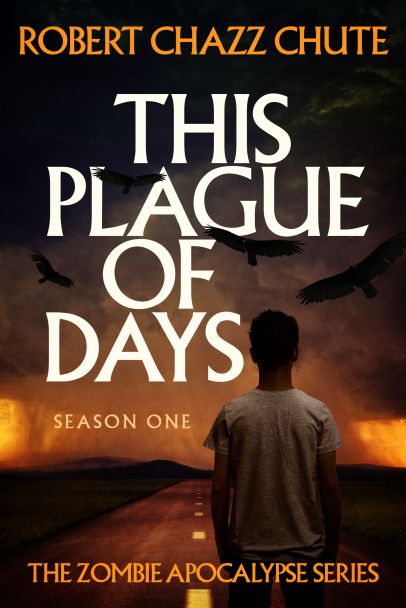
A NEW ZOMBIE ANTHOLOGY

Winner of Writer's Digest's 2014 Honorable Mention in Self-published Ebook Awards in Genre

The first 81 lessons to get your Buffy on

More lessons to help you survive Armageddon

"You will laugh your ass off!" ~ Maxwell Cynn, author of Cybergrrl

Available now!

Fast-paced terror, new threats, more twists.

An autistic boy versus our world in free fall

Suspense to melt your face and play with your brain.

Action like a Guy Ritchie film. Funny like Woody Allen when he was funny.

Jesus: Sexier and even more addicted to love.

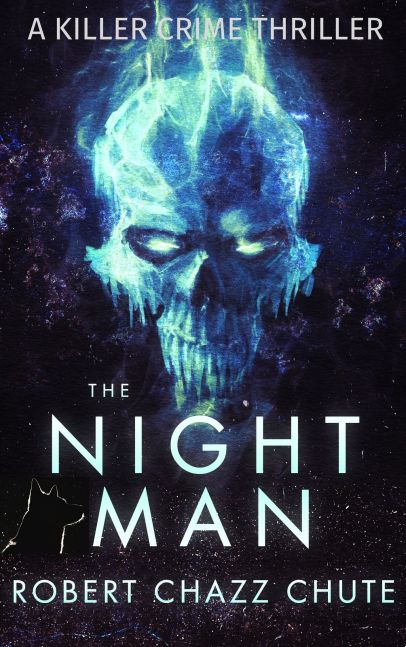
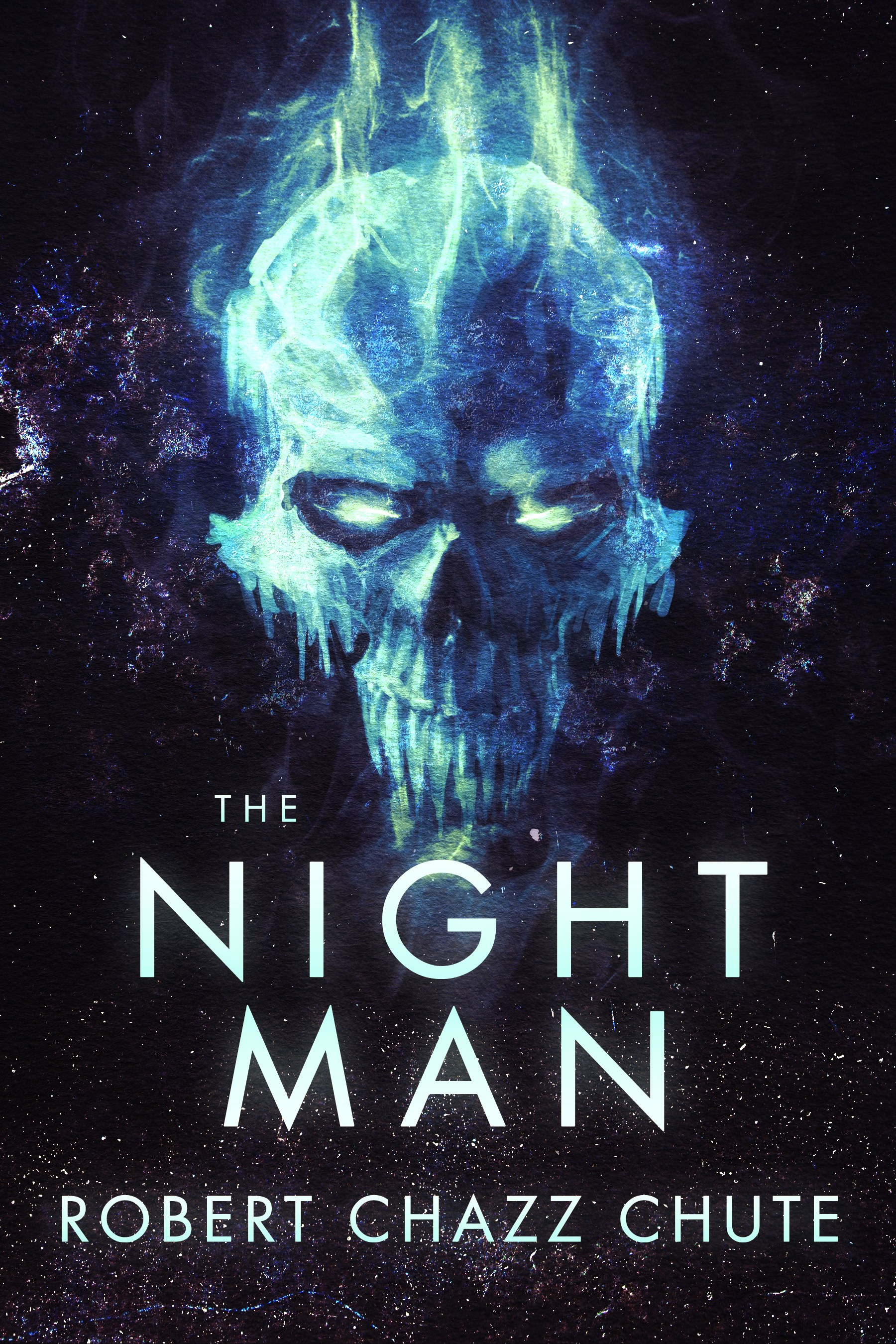
You can pick this ebook up for free today at this link: http://bit.ly/TheNightMan

Join my inner circle at AllThatChazz.com

See my books, blogs, links and podcasts.

Enter your email address to follow this blog and receive notifications of new posts by email.

Join 2,063 other subscribers