C h a z z W r i t e s . c o m

See all my books at AllThatChazz.com.

21 Bold Predictions: The changing future of books

Sure, you need to write a good book to make it marketable. But what will be more marketable in the future? What will be different? Here are my sweeping predictions:

1. Non-fiction Shrink: Got a question? Got a problem? Ask.com or Wikipedia or any number of  quick searches will probably answer that question. What do I need you (and your book) for? In the future we still won’t have flying cars. There will also be less call for a lot of non-fiction. Instant, quick answers beat your treatise on bed bug infestations. I just want to know who to call and what to do to get rid of them.

Another instance: After faithfully reading the magazine for years, I don’t buy Writer’s Digest anymore. There is already more information than I can possibly read on writing blogs. For free. Um, like right here, three times a week, for instance.

2. Short form explosion: My horror and sci-fi writing friend Rebecca Senese articulated this for me first and it makes sense. People have less time and shorter attention spans as the web changes their brains away from the usual experience of deep reading. Cyber ADD aside, short stories are also 0.99 each, so people will download a little bouquet of short stories and take a chance on new authors that way.

Also, with ebooks, novellas and short novels are practical again from a manufacturing/pricing perspective. Think of the works of Albert Camus. 50,000 words for a novel was common. Then New York lost confidence in that formula and bigger books became the norm (so much so, in fact, that many authors now scoff at NaNoWriMo‘s 50,000-word winners.) Now, book length is less relevant. Ebooks don’t have page numbers.

3. Merchandise and books shall marry: Your platform and your content should optimally come together in a cult that wants more of your work. Witness all the Fight Club quotes, Youtube videos, tees and, well, actual fight clubs (years after the film phenomenon.) You’ll be spreading the awesome with passive income from whatever secondary sources you can manage. (I already started to plant my seeds here.)

4. Domination by Series: Having more ebooks available improves your marketability. Having more ebooks in a series improves your marketability even more. So, rather than sticking to a one off, consider how you can turn your masterpiece into the foundation for a series of books fans will clamor for. Your advantage as a self-published author is long tail merchandising. Your work shall be available until we embrace the Singularity and join ebooks in the cyberspace holodeck of our disembodied, fully-uploaded immortal minds.

5. Product integration: Slightly different from #3, here I’m talking about books as vehicles for products instead of the other way around.

You are a carpenter who specializes in bathroom renos. Order the book on how to renovate a bathroom in three days. The book pushes the advantage of your special caulking gun, available for immediate drop shipping before sledgehammering the bathtub.

6. First-person non-fiction: More authors who did something stupid and dangerous (tour Iraq for pleasure or go skiing off the approved slopes) will write their own first-person accounts. They’ll self-publish and the covers won’t say “as told to” some ghostwriter. The results will be horrific and ubiquitous.

7. Excellent journalists will find their place in analysis: The freelance market sucks for writers. However, if you’re a journalist with extensive financial expertise a la Too Big To Fail or can write like Matt Taibbi in Rolling Stone, you can provide the long tail analysis of WTF happened?

8. To be successful, freelance writers must own smaller niches: If you aren’t a genius like Matt Taibbi, there’s still hope, but you’ll have to think small. Maybe microscopic, like the asbestos beat in the tri-state area.

Generalist writing isn’t dead exactly. In fact, generalists are everywhere, but they are also free.  You may not think of it this way, but really, blogging is instant publishing. If I want a non-expert opinion, that’s the simplest thing in the world to get and the blogger probably isn’t seeing a dime from it. The writers who are making money now are either tech experts  or people who are plowing ahead to make way for the rest of us in the digital publishing revolution.

9. Cross-genre will be accepted: Cross-genre books (a la Scott Sigler, for instance) have long been a problem for publishers. Even if they loved it, if it was sci-fi and horror, they worried which bookshelf it should be placed on to sell. (For those of you who aren’t sure, go look up what a bookstore used to be. That worry used to be much more relevant.) Cross-genre’s stigma is fading. And self-publishers care not at all, though they will have to do a really good job with their promotion and publicity.

10. More humor: In order for a humor book to sell, traditionally it had to be penned by a celebrity or it had to have a Shit My Dad Says-worthy hook (in other words, a novelty book.)

Comedy writer Ken Levine has a long history of sit com hits, from Mash and Cheers to Frasier, among others. Despite his track record, he wasn’t famous in front of the camera so traditional publishing hasn’t given him a chance to screw it up. Who he was wasn’t enough for traditional publishing to invest.

However, Ken has an incredibly popular blog with a following. He could go back to trad publishing and ask them how they like him now. Or he could just publish himself and keep the profits.  He has a platform that heretofore went unrecognized. He’s a guy with a blog today. He could be the new Dave Barry tomorrow.

11. People will get better at platform: Not long ago a clueless agent told a baffled writer,”Go make a viral video.” Yeah, sure. But what makes a video go viral? As time has passed, we have a better idea of what elements make something go viral.

I’m not saying there’s a formula. However, I think we’re at the point where we recognize what won’t go viral. If your book trailer is going to catch fire on Youtube, it will have to be powerful or clever or charming or heartfelt yet funny or at least cute. If you don’t have any of those elements, you’ll know (and if you don’t know, I hope you have good friends who will warn you.) At least the tech has improved so if you’ve got GarageBand, you already have a shot at putting together a better book trailer. And if you screwed it up, you can take comfort in trying again since the costs of trying have come way down.

12. Curation will get worse, then improve: People are already learning to distrust Amazon reviews. Many reviews are by haters with nothing better to do but snark on others’ work. Other reviews are by friends of writers or even by the writers themselves. There are a lot of books coming down the pipe and you are going to need a filter. Goodreads, for instance, seems to be a place for real people to provide feedback on what they love. I’d trust that (or a friend with similar tastes) before depending on Amazon alone for a helpful review.

13. Eventually: Ebooks will boil down to one or two standard formats.

14. Eventually (after #13): Your device will get sophisticated enough to take the download and format your downloaded ebook however you like it, no matter what the Big Six decree. Proprietary defenses (DRM) will be cracked as fast or faster than they are now so prices will fall, many current publishers will be former publishers and if you want money to eat, you’ll have to make up the difference with volume.

15. And #14 won’t happen on an e-reader: I love my e-readers, but they are interim devices, like pagers and electronic planners were. When e-readers go, they’ll probably be replaced by tablets that can do everything. The screens will be expandable so you won’t be peering at books through the keyhole like on a smart phone. Also, we’ll be back to the two-page spread you’re used to with paper books.

Some say ereaders are already on the way out but they’re in a rush. Ereaders will be around for some time to come because lots of people want to read ebooks, but they can’t afford higher-end integrated devices. Ereader prices will fall so market saturation will soak much deeper and faster than previously thought.

16. Media integration: I tried to read an integrated ebook. The experience sucked.  It won’t suck forever. You’ll have that two-page spread, but you’ll be able to bop over to a cut scene of the story’s climactic event. Merch links will be embedded into the text so you can buy the t-shirt your hero is wearing and the villain’s yummy high heels. One click (only it will be a swipe and eventually, a voice command. Later, a grunt. Then, a thought.)

17. The future of reading is hearing: Audio will rise much higher in popularity. You don’t have time to read so you listen in your car, while you work out, while you walk the dog, while you do the dishes and/or have sex. Time management is more important than  money management (though they are often merely equated. that’s a different post for the glorious future.)

Audio will continue to be more expensive until voice tech improves. While we’re still paying actors to read (minimum $150 an hour and usually $300 an hour and up) audio will stay the indie authors last foray. No disrespect to actors. I know some. However, your computer’s voice inflection is improving so when that dramatic reading is up to snuff, this Jetson’s future will kick in. The voice of George Jetson will come from a computer, not a talented voice actor.

18. You’ll care less about grammar: Well, not you. But your kids probably, especially since in school they are already taught spelling (and handwriting) matter less. As an editor, I regret every grammatical and typographical error. But with the deluge of self-published books replete with typos, we’ll relax our standards. Instead of fetishizing a book’s typographic purity, we’ll freak out less when we spot a typo. Instead, high praise will be, “That one didn’t have that many typos.” Practical acceptance will ensue once today’s outrage becomes the new normal. Sure, you pride yourself on being a sharp word nerd, but anyone who can sustain the level of outrage required will be exhausted and have no friends.

On the plus side, a book that is well written and well edited will stick out more.

19. Instant will be prized more: Trad publishing works on long publication deadlines because of budgets and logistics. (Though it’s a factor for the editorial staff, contrary to what you’ve heard, quality is not actually Job One.) If they could pump books out faster than 16 to 18 months per book, they certainly would. That kind of agility would allow them to be more topical, hit trends and, most important, have more stuff for sale. Recently I read an ebook that mentioned the Japanese earthquake. Compare that to how long it took 9/11 to show up in traditionally-published novels out of New York.

There will be little to no delay in the future. An ebook on the ramifications of Bin Laden’s death was up for sale within a week of his death. You might think it was mostly prepared ahead of time, but actually it was a bunch of emails from socio-political experts contacted as soon as Seal Team Six did their job.

20. Romance will continue to dominate, but now it will be recognized: The love of the paranormal romance genre is not a new thing, but romance has never been recognized as the dominant force it really is. Amanda Hocking’s recent success is no accident, especially because she writes in a genre that dominates reader demand.

Look at bestseller lists. You’ll see “important literary works”  by big publishers. Good for them! Those are the sorts of books I like. However, those weekly bestseller lists are often based on booksellers reporting which books are sitting in front of them in the biggest cubes and stacks. Much of the math is suspicious, especially since bestseller lists don’t take into account sales from non-traditional book venues (Walmart, drugstores, the spinner rack at beach resorts or the vast call for romance books among ESL learners. Nope. Not kidding about that. If you’re learning english, simple stories of ribaldry and girl-next-door heroines are one way to do it.)

You won’t see Harlequin romances on bestseller lists. However, I used to work at Harlequin. I’ve seen the numbers. Romance sells huge. Romance sells much bigger than anything on bestseller lists. Why? Because english majors run Big Six editorial departments. They do not run the real world. Yann Martel writes great books. Nora Roberts writes fast, easy reads. Even snobby english majors read trashy, naughty novels for a break from lit that might be fresh and surprising. In the real word, the hare beats the tortoise.

21. Someday soon, everyone will make these changes in spelling: email, ereaders, ebooks. Of all these predictions, this is probably the one which will happen first.

And yes, #18 will probably happen last. As in, over your dead body.

Filed under: Books, DIY, e-reader, ebooks, Editing, publishing, Rant, self-publishing, , , , , , , , , ,

Writers & Readers: I say something new & cranky

Joe Rogan

Image via Wikipedia

Alfred Hitchcock once said a painter needs a brush, a writer a pen and a director an army. The numbers needed to make a film are coming down, but it’s still a collaborative, team sport (or a war, depending how indie you are as a filmmaker.) Painting  is still a solo pursuit and for a long time writing was solitary. Then writing got decidedly less solitary. And now, with self-publishing, the game has changed again.

Authors used to have publishers. Later, agents entered the industry and took pressure off editors by curating. They helped many authors get better deals. Now a lot of agents want to intermediate and perform more of an editorial function, possibly because other traditional roles they have fulfilled are shrinking. See this post for more on that and much more.

Now there can be fewer people between you and publication. Publishing isn’t necessarily a team sport anymore. Publishing with a group of lovers of all things literary  has produced many great books (and has probably interfered with the production of great books, too.) You may think many minds produce better material because all of us have more brain power than one of us. I used to believe that was true in all cases.

Then comedian Joe Rogan challenged that idea for me and articulated something that was slowly percolating through my cranium. In his experience as a comedian on The Man Show, he found that more suits on the set diluted the funny. His stand-up is a pure art form, moderated only by his own sense of humor and direct feedback from his audience. (I saw him at Massey Hall in Toronto recently. He rocks hard.)

It’s an old adage that too many cooks spoil the broth. Now science, as presented in the fascinating book 59 Seconds: Change Your Life in Under a Minute, has disproved the notion that more brains help a creative project. The most creative solutions are not arrived at by the most creative person in the room. They are directed by the loudest person in the room.

So, if your agent says “I’m not submitting your work because I don’t think it’s ready,” and you cede that power, your work isn’t going to market whether your agent is right or not.

This is the sort of thing that drives the traditional world of publishing nuts. Without those mediators, obstacles, curators, gatekeepers, shepherds and rabbis, the worry is that we shall be inundated with a slew of awful, awful books. The deluge shall be as a fire hose pointed at the tiny tea cup of our fevered minds. Without those helpful interlocutors, who will keep the bad books away?

Rather than address the curation question directly (and I’ve already addressed it many times on this blog), I’d like to say something new on the subject:

Even if that objection is valid, so the f**k what? I reject the premise. I say this is not about your convenience in going to a legacy publisher you trust for all your curation wants. This is about my freedom to express my art, which you can enjoy or not. As they say at the convenience store, “Buy or leave!”

The marketplace of ideas is opening up to a lot more shelf stock. Buckle up and put on your big boy Underoos and your big girl panties. Soon you might find more variety and much more current reading material to explore and fill your mind.

I value my sovereignty of expression more than your convenience.

I said this was a revolution. I asked you to join me.

Did you really think no one would get hurt along the way to the shinier, freer new world we’re creating? 

The results will surely be messy, but the cost of your tender sensibilities is really negligible. There will be a lot of bad books delicate grammar doilies will decry. You’ll see a lot of typos (though I see a lot of typos in traditional books, too, by the way, and yet the earth keeps on spinning.)

We value freedom and freedom of expression. A lot. The US Supreme Court allows the Westboro Baptist Church to protest at funerals with ghoulish signs without regard to the feelings of the families of the dead. Evidence obtained illegally is routinely thrown out and murderers are sometimes set free as a result. We accept some consequences far worse than inconvenience so that greater individual sovereignty is assured.

If it sounds like I’m saying your worries

about all the coming bad books don’t matter,

you’ve read this blog post correctly. 

Filed under: agents, authors, Books, censors, publishing, self-publishing, , , , , , , ,

Writers: Choose choice, not ideology

Bertrand Russell's views on philosophy

Image via Wikipedia

Talking politics with someone the other day, they said a particular candidate was so stupid they didn’t know when a reporter was rude to them. I doubt that. Assuming the politician dressed himself that morning, he did know and instead of reacting to the rudeness, he stayed on topic. He was polite—or even too polite.

The guy I was talking to already didn’t like the politician, so he chose not just to disagree with him, but to assume he was an idiot.

People choose sides. Sometimes they don’t even know why, but they get heavily invested in one outcome, often before we have any facts. Sure, people like to think they’re logical, but in fact they’re often intuitive. They jump to their conclusion and the logic that’s recruited only feels like logic. It’s actually rationalization.

We’re hardwired to make quick decisions. It’s in our genes to choose a tribe, too. We stick with that tribe, even when the tribe doesn’t serve us. Even when it’s a bunch of  millionaire basketball players, fans think they’re somehow on the team. It’s a religious fervor to join, to believe, to be one with a larger whole.

And it gets goofy. Nationalism, for instance, is tribalism write large. If you own a Mac and extol its virtues, a bunch of disproportionately angry people will call you a wuss in some web forum or other. We take ownership of things we don’t own. We choose up sides to divide us and them where there is no us and them. Gay teens get ostracized and bullied, many to suicide. Liberals are too quick to write off all conservatives. People can’t seem to make a distinction between “supporting the troops” and “disagreeing with the mission.”

Or, for writers, watch traditionally published authors shit on self-publishing. But this post isn’t about traditional versus indie. I’m not talking today about which way is best (as if any one way is best for everyone.) This is not another one of those posts debating the use of terms, indie versus self-published and who gets to claim what (as if words are owned or static.)

This is a post that simply says: compared to all the big problems we have, traditional publishing versus the new publishing? Pretty trivial. (And it doesn’t have to be all one thing or the other thing, anyway.)

Lighten up. Choose your own path. If you’re shitting on somebody or telling others what to do, ease up on tribal tendencies and focus on you.

Man in the Mirror and all that.

You be you. I’ll be me.

Filed under: Books, ebooks, links, publishing, Rant, self-publishing, Writers, , , , , ,

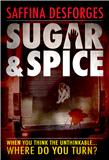
Author profile: Saffina Desforges’ Sugar & Spice

When you think the unthinkable, where do you turn?
Sugar & Spice is the groundbreaking debut novel from Saffina Desforges.
Yet to be published on paper, Sugar & Spice has swept up the Amazon UK Kindle charts with sales of more than 18,000 a month despite having neither an agent nor a publishing house behind it.
~
Inspired by a news story of a man who begged a Judge to give him a longer sentence because he knew he would harm another child if released without treatment, Sugar & Spice is meticulously researched, asking questions society prefers not to have answered.
At once disquieting and challenging, this is car-crash reading.
~
It’s every parent’s worst nightmare: A child fails to return home.  Some children never come back.

“An unsettling read with echoes of Mo Hayder.”
Crimetime.co.uk

“A disturbing and cleverly-woven story. Powerful first novel.”
Jake Barton

“Compelling! A very tough subject handled exceptionally well.”
Mel Comley

CW: When did you first know you wanted to be an author?Sugar_and_Spice

SD: I have always known. As a child, I would spend hours scribbling in an exercise book and making up stories in my head. In fact, most would say, I have spent my whole life living in a fantasy world!

CW: Tell us about Sugar & Spice.

SD: As the louder half of a writing team, I cannot personally take credit for the concept for Sugar & Spice, that was Mark’s. (There is a full guest post on the subject here if anyone is interested.)

CW:  Do you have any formal training in writing?

SD: I don’t, only a couple of on-line courses, but (co-author) Mark Williams has written before as a journalist, a teacher and for stage and television.

CW: How did you arrive at the decision to self-publish?

Saffina DesforgesSD: We took the decision to self-publish rather quickly with Sugar & Spice. Agents liked the book, but were uncomfortable with the subject matter. With the growing popularity in the UK with e-readers, it was a no-brainer. We have sold 40,000 plus copies since Christmas and are currently selling just under 20,000 a month in the UK alone. The book is currently out with an agent who has requested to read it fully. We would have to think long and hard about any deal (with traditional publishing.)

CW:  What was the biggest disappointment you experienced through this book?

SD: The biggest disappointment for us with Sugar & Spice is how no one (thus far) has had the balls to see the book for what it is, a great story, and convince a publisher to do the same, but hey, that may change. Another disappointment is how some readers have misread the messages within the book and suggested that we are being sympathetic to criminals, when that certainly isn’t the case.

CW: What was the hardest part of the publishing process? What did you most enjoy?

SD: Self-publishing is relatively easy these days. Getting people to buy your book is the hard part.

CW: What advice would you give unpublished writers?

SD: Forget being a writer, you have to be the complete business person. No matter which route you take, writing is a very small part of the process.

CW: Have changes in the book industry forced you to change how you published or marketed your work?

SD: Yes, and will influence any future decisions we make. We are confident that if time allowed, we could have at least 3, if not 4 books a year published as ebooks and be making money from them. Traditional publishing will not allow that, nor will we have any control over what we write.

CW: What’s your next book project and what can you tell us about it?

SD: We have several projects on the go, but the most imminent, is the first book of The Rose Red Crime Series, Snow White. This is a series of fast-paced, commercial crime thrillers, set in modern day but based on fairy tales. Snow White will be available on Amazon and Barnes & Noble for the end of July 2011.

In October, we will release the first of a dark, urban (adult) fantasy series – Equilibrium: First Blood. At some point before the end of the year, we might even share our experiences in a ‘how to’ book!

 For details of how to purchase Sugar & Spice – the UK bestseller and the recently released US edition, please visit here : www.sugarandspicethenovel.com

Our website:

www.saffinadesforges.com

Twitter: @safficscribe

Filed under: Author profiles, Books, self-publishing, , , ,

Top 20 Facebook Apps for Book Lovers – GalleyCat

Top 20 Facebook Apps for Book Lovers – GalleyCat.

Got a book you want to review, find, sell or promote? Your publicity list starts with this link. Supremely useful collection of apps for the author, publicist and book lover.

Filed under: authors, blogs & blogging, book reviews, Books, Publicity & Promotion, self-publishing, , , , , , , , ,

Writing Exercise: Idea Generation


Last Saturday I attended a great workshop on Editing and Revising with editor extraordinaire Brian Henry.

I’m deep into doing revisions on my own work and that of others, so a refreshing blast of continuing education was a nice change of pace. Brian is on the road every weekend to teach a workshop. He’s a genuinely nice guy and a skilled editor with tons of experience.

(Click here to find out more about his teaching or to receive his newsletter.)

The odd thing is, I did some freelance work for Brian when I worked at Harlequin in 1988/89. I was working in production, proofreading romance and after romance with a few military books mixed in so I wouldn’t grow breasts. (I proofread a lot of the Mack Bolan series back then.)

To pick up a little more cash, I waded into the slush pile for Brian, who was an editorial assistant at the time, to evaluate spec manuscripts. After taking several of his workshops over the last few years, he finally remembers who I am when I see him now. (I think.)

I’ve written a short story in two of his workshops now. I’m not usually a great fan of writing prompts from other people. I’ve got lots of ideas on my own. However, at Brian’s workshops I’ve leaped into the breach and come up with a couple of short pieces, written on the spot, with which I am quite pleased.

On Saturday, here’s what got the ball rolling; Brian called it his Chinese Fortune Cookie Exercise: We wrote a short fortune, say six words. Each participant came up with two fortunes to share. The fortunes preferably had a verb, included two people (implied was fine, not named) and there had to be an element of “tension or strangeness.”

Also, it’s okay if the fortune sucks. It’s just a prompt, not a plan. We exchanged fortunes with people at our table so everyone had something fresh. Then we started writing furiously.

The fortune I focused on was this:

“A relative will vex you.”

What I came up with was short and surprisingly soulful with a murderous sucker punch. My fellow participants were enthused. It is very affirming for any writer to come up with something quick on the spot that works so nicely. Now I have yet another short piece to add to my short story collection (available through Smashwords this summer!)

If you write, go read Quick Brown Fox, too. 

Filed under: ebooks, links, manuscript evaluation, publishing, self-publishing, short stories, Writing Conferences, writing tips, , , , , ,

How much should fiction cost?

There’s quite a gap between what publishers charge for ebooks and how self-publishers are pricing their work. Many authors (and readers) have a visceral reaction to price. Of course people are sensitive to a price they perceive too high, but many believe that if it’s too cheap, it must be crap. (JA Konrath suggests self-publishers play with price, and experiment to find the right price point.)

However pricing affects you intuitively, there’s no direct correlation between price and quality. Many fine ebooks are often priced low because the author is not well-known. Lower prices encourage timid readers to take a chance on new fiction. When the price is lower, readers buy more. It is freeing to click, click, click and still pay less for fiction than you might for a latte and a croissant.  Self-publishers hope to make it up on volume.

If you are trying to figure out how to price your ebooks, or what a fair price might be, Dean Wesley Smith has a great and useful  summary.

His suggestions have influenced my thinking greatly. As a result, my first book (that will be available digitally) will be a short story collection. I still plan to roll out my big novel in November, but the collection, including some award winners, will come this summer!

It’s all happening very quickly. It has to. And most glorious of all, now it can happen.

Time and me?

We wait for no one.

Not anymore. 

Filed under: Books, DIY, ebooks, grammar, links, My fiction, publishing, self-publishing, Writers, writing tips, , , , , ,

Publishers: What do I need you for?

Over at The Ranting Crone, my friend Pam Brierley has a great post about an encounter she had with a panel of publishers at last year’s Canadian Authors Association conference.

If they aren’t editing and they aren’t marketing, what are they doing (and is it worth it?)

These very sorts of questions are what’s pushed me to self-publishing.

Go visit Pam! 

Filed under: DIY, ebooks, publishing, self-publishing, Writers, Writing Conferences, , , , ,

Write. Commit. Do.

Last Saturday night I went for a long walk with She Who Must be Obeyed. We talked about the future.  I’d analyzed the finances. I’d considered my options. Now I have  a plan. I’ve been on both sides of the argument for and against self-publishing (and a lot of those arguments against were good objections when they were true not so long ago.)
It’s time for some grown-up decisions since I’ve been a kid in long pants for some time now. I have a manuscript to publish. Well, several, actually (and plans for more.) What to do with them though?

I’ve read Seth Godin, JA Konrath, Dean Wesley Smith, Barry Eisler and Cory Doctorow. I’ve read multiple defences of the status quo from legacy publishing. In the end, the latter were not convincing. I’ve spoken to Rebecca Senese about her experience with Smashwords and Jeff Bennington blogged in this space about Lightning Source. I kept an open mind as long as I could and decided I have to jump. Now.

Inspired by Kevin Smith, I see where the puck is going and I will not chase after where the puck has been. I’ve decided to pick myself, go big, go indie and publish my books myself. I’ll be using Smashwords and Lightning Source.

What are the main reasons I’m committing to indie? I’m looking forward to having the first book out by November. Traditional publishing would take much, much longer than that even if I struck a deal tomorrow (and the royalty rates are not favorable.)

I have had mainstream interest in the first book. I was concerned that self-publishing is seen by some as cheating the system, an evasion of gatekeepers who ensure quality. As I’ve explained in previous posts, I reject that premise.

JA Konrath ran the numbers. Ross Laird was very persuasive. Barry Eisler really got my attention when he said opting for self-publishing came down to a business decision versus an ego decision. That rang true for me personally.

Self-publishing is not the quick route to publication some people think it is. I won’t be skipping lightly over editing. I’ll be doing most everything a traditional publisher would do. I’m a tad intimidated by the tech side of things, but I’m a smart guy. I can generally figure most things out or ask for help. And I worked inside traditional publishing for five years so I’m not intimidated by a lot of things that would worry others. I’ve written and published a lot already so I’m not going in starry-eyed. But I am optimistic and excited. Much of the time, this is going to be fun!

I’m not saying that you shouldn’t go with a New York publisher, a Canadian press, a university press, a small press or a micro press. I am saying this is the right choice for me because it suits my temperament and it suits the material (cross-genre, late YA with humor and sex, drugs and school bullying wrapped up with some literary pretensions.) Books coming later fall into horror (a plague’s coming so buckle up) and two fantasies (one with a vampire cannibal cult, the other is angels in the End of Days). Also, there’s a sexy and occasionally horror-oriented short story collection. Down the road I can see two non-fiction books, as well. Lots to do.

This is my time (before it’s too late…I hope.) I’ve started up several businesses to  employ myself. I haven’t had a “real” job working for someone else since 1991! I’m used to living on the edge of the real world. Self-publishing is for me. It might not be for you. I need choice and independence. I need to be a control freak about some things. (Okay, a lot of things.)

So, thank you to everyone who responded to my Twitter announcement last week with such kind wishes.

And before anybody tries jumping on my head about my decision,

let’s try this:

I’ll be me. You be you.

Filed under: My fiction, self-publishing, short stories, , , , , , , , , ,

The Nerdist Scott Sigler Interview

Scott Sigler

Image by Sebastian Bergmann via Flickr

I’m an addict.

Food. Comfort. Book-buying.

And podcasts. Lots and lots of podcasts.

If you’re a self-publisher or interested in how a self-publisher used podcasts to go from freemium to premium, from ignored to in demand, from reject to popular author, check this out: The Nerdist.

Favourite story: After so many rejections, Scott Sigler was sure publishers would chase him down if he could just get a huge following for his podcasted book.

He achieved the goal he set for himself and called up the publishers again.

“Howdayalikemenow?”

And they said, “What’s the internet?”

Filed under: Author profiles, author Q&A, authors, podcasts, self-publishing, Writers, writing tips, , , , , , ,

Bestseller with over 1,000 reviews!
Winner of the North Street Book Prize, Reader's Favorite, the
Literary Titan Award, the Hollywood Book Festival, and the
New York Book Festival.

http://mybook.to/OurZombieHours
A NEW ZOMBIE ANTHOLOGY

Winner of Writer's Digest's 2014 Honorable Mention in Self-published Ebook Awards in Genre

The first 81 lessons to get your Buffy on

More lessons to help you survive Armageddon

"You will laugh your ass off!" ~ Maxwell Cynn, author of Cybergrrl

Available now!

Fast-paced terror, new threats, more twists.

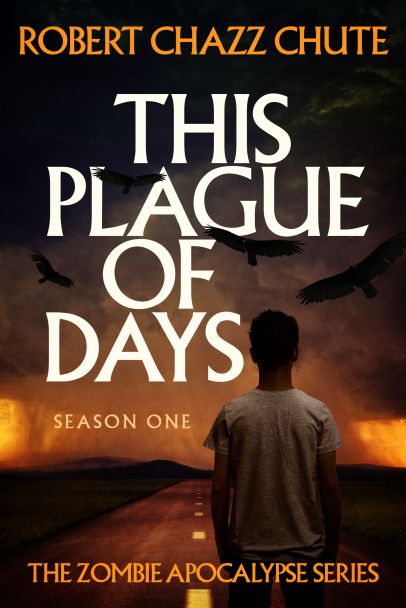
An autistic boy versus our world in free fall

Suspense to melt your face and play with your brain.

Action like a Guy Ritchie film. Funny like Woody Allen when he was funny.

Jesus: Sexier and even more addicted to love.

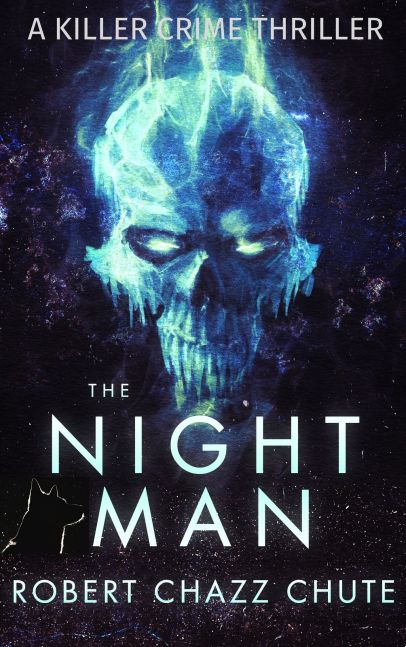
You can pick this ebook up for free today at this link: http://bit.ly/TheNightMan

Join my inner circle at AllThatChazz.com

See my books, blogs, links and podcasts.

Enter your email address to follow this blog and receive notifications of new posts by email.

Join 2,063 other subscribers