C h a z z W r i t e s . c o m

See all my books at AllThatChazz.com.

Stats on literacy & the literary: Books aren’t that important

42% of university graduates never read another book after they graduate.

Whoa! Wh-wh-what now?!

Yes, you read that correctly. When it comes down to it, books aren’t all that important to a staggering number of people. 

I’ve found several scary statistics for this post, but that 42% bugs me most. Those are people who can read, but choose not to.

I used to think that once you made someone a reader, you had them for life. Not so!

Like you, I’m a big fan of books, of course. But this post is about perspective and where we stand in the flood of things to do.

1. Market fragmentation: There’s a lot going on. Literally. I don’t watch TV much anymore. I used to schedule my life around television programming. I could read more books in a week, but I don’t because I also make time to listen to a lot of podcasts. So many websites call my name. Plus, I have a lot to do. With so many demands on my time, a lot gets curated. I use the word curation here as a synonym for “flushed.” I filter out a lot of things I don’t have time to read, watch and listen to. (Also, I’m on Team Coco, so Leno’s banished and cursed.) There are only so many waking hours in a day, and, frankly? I’ve got more free time than most people do.

2. Market skew: You only think you love all books. But you really love a small fraction of books, no matter how much you read. How many readers do you meet who say, “I read everything”? (Sarah Palin who was lying and has officially “authored” more books than she’s read.) My point is, niches are narrow. For instance, I love Chuck Palahniuk’s work and have read all of his books. I wouldn’t have to look very far to find someone who has read Fight Club. But I’d have to travel far to find someone else who has read them all. Chuck’s very successful, but he’ll just never have the market penetration of Hemingway because Hemingway is taught in schools. (In other words, a lot of high school and college kids are forced to read Hemingway. Snuff, a book about a porn shoot,  won’t make it into many curricula.)

As an author, you’re going to meet a lot of readers, but sadly, they won’t be your market because you’re into A, B, and C and they’re into X, Y, Z.

Worse? They’ll sneer at you for it because people don’t make any distinction between what’s to their taste and what’s good.

3. We say we’re a society that values reading and education. But we don’t. Here’s a few illiteracy statistics to blow your brain around: About three in five of America’s prison inmates are illiterate. The cost of illiteracy to business and the US taxpayer is $20 billion per year. More than 20 percent of adults read at or below a fifth-grade level – far below the level needed to earn a living wage. 44 million adults in the U.S. can’t read well enough to read a simple story to a child. Nearly half of America’s adults are poor readers, or “functionally illiterate.” They can’t carry out simple tasks like balancing check books, reading drug labels or writing essays for a job. 21 million Americans can’t read at all. 45 million are marginally illiterate and one-fifth of high school graduates can’t read their diplomas.

4. Number 3? That’s about people who can’t read. But many people just don’t: The average reader spends about 1/6th of the time they spend reading actually rereading words.* One-third of high school graduates never read another book for the rest of their lives. 80 percent of U.S. families did not buy or read a book last year. 70 percent of U.S. adults have not been in a bookstore in the last five years. 57 percent of new books are not read to completion. 70 percent of books published do not earn back their advance. 70 percent of the books published do not make a profit. (Source: http://www.JenkinsGroupInc.com)

5. If you’re self-published, a lot of people won’t read your stuff, perhaps because of prejudice fueled by bad experiences with the previous generation of self-publishing. Traditional publishers aren’t generally that much further ahead anymore, either. (See #3 and #4.) Bookstores (remember them?) are reluctant to stock the self-published. They don’t even have space for traditionally published midlist authors anymore, let alone the indie unwashed masses. And newspapers? (They used to be on paper and very profitable. Ask your parents.) Newspapers still don’t review the self-published. We’re also shut out of many literary awards so there’s not much notoriety gained there. That situation will change, but not soon. We may have to wait for a bunch of old school book critics to die.

Great, now your depressed. So what do we do about it? Well, first, think about these stats and honestly evaluate your chances as an author. This post is essentially a test. If you think about your chances (for realsies!) and are still undeterred, congratulations! There is no hope for you. You’re doomed to take your shot at a life in letters. This choice is, for most writers, really no choice at all. Many of us will fail. A few of us would have been great at something else. Some are a great loss to the fields of animal husbandry and the manufacture of novelty chattering teeth toys.

We choose to write books despite the scary stats. Somewhat perversely, we may choose to write books because of those scary stats! If we can write books people want to read, maybe we can save humanity and turn things around. (I think JK Rowling got not a few kids reading who otherwise might not have.)

Kurt Vonnegut wrote in A Man Without a Country:

“If you really want to hurt your parents, and you don’t have the nerve to be gay, the least you can do is go into the arts.

I’m not kidding. The arts are not a way to make a living. They are a very human way to make life more bearable.”

(Kurt was the kind of wise-ass I love.)


I’ll leave you with something else positive to think about. I heard Red State director Kevin Smith say this on a podcast recently:

“Surround yourself with Why Not? people.”

Too often you try to do your art and people say why? Forget them and go do your thing. 

I mean…why not? 

*All the stats above the asterisk can be found at readfaster.com.

Filed under: Books, publishing, self-publishing, , , , , , , ,

Self-publishing: The Couch Change Economy vs. The Great Personality Argument

How does a guy go from getting paid $85 an hour to taking the risk of self-publishing? It’s not such a big leap.

Last night, on impulse, I bought a little tub of Heavenly Hash ice cream for $1.99. 

That explains everything, huh? Okay. Let’s go deeper:

When a new tax hike hit my province last July, my business changed. I’ve been a massage therapist for 18 years. I have great clients I care about and not just a few who care about me. To accommodate the new tax, my hourly rate went up to $85 per hour. A bunch of my clients took it in stride, but several just couldn’t afford to come in for treatment as often. I live in a lovely, but economically depressed area. Since I work as a part-time therapist and that fee is before tax, $85 an hour isn’t quite as great as it sounds. When I did my taxes, the numbers confirmed what I suspected: I like my work, but it wasn’t paying. I needed to change something if I was going to have anything left over at the end of the month. I could go back to working out of clinics full-bore and full-time and make “real” money or I could explore other options.

Then I thought, “You know, I don’t have that much to lose now.”

That’s the “A-ha” moment. I believe in my writing and marketing savvy. It was time to bet on that and switch to writing full-time. This wasn’t coming out of nowhere. I’d held several positions in traditional book publishing and trained and worked as  a journalist. As a freelance editor, columnist, features and speech writer, my writing income rose to become a healthy chunk of my overall income. Last year I spent more time working on writing and editing than I did in health care.

Also—and this is crucial—I had five novels in my drawer ready to edit and bring to fruition.

Many authors propose books and only start to write them after they get someone to ask them to do so. (That’s a smart way to do it, by the way, but it’s not the only way.) I had opportunities to go that route. However, I had  no interest in doing so. I have a strong streak of I-want-to-do-it-my-way (which doesn’t always serve me best but, for me, that’s the only way it’s going to happen and sustain.) I hadn’t sent out any manuscripts at all! As soon as I completed one book, I rushed on to the next, giddy and getting high off the writing. Writing is always way more fun than chasing agents and editors. It’s an odd kind of procrastination, staying busy kneading dough but never actually finishing a loaf of bread so you can eat it.  I helped several authors get their books published, but was in no hurry to bring my own out into the world. I was waiting for something and that something was me.

This week, I finally caught up to me. I finished the last manuscript I needed to get written before I could move forward with my grand plans to go full-time as a writer. (More on my complex marketing plans in another post, another time.)

Soon I will jump into what I call the Couch Change Economy.  You could call it the iTunes Purchasing Model or more simply, impulse buying.

That Heavenly Hash ice cream I bought? It was a stab of nostalgia that did it. I grew up in Nova Scotia. In the summer my parents would sometimes take me to the shore in the evening to cool off and watch the sunset. An old clapboard ice cream shop with poor posture  leaned into stiff Atlantic winds just 100 feet from relentless ocean waves. That was the only place I ever ate a waffle cone with two scoops of Heavenly Hash. If the tub had been priced higher, I wouldn’t have picked it up and put it in my shopping basket. I haven’t tasted it yet. I may not even finish it all. But for $1.99, it’s a cheap indulgence that reminds me of a good time with a dead mom.

When a book is cheap, no one minds taking a chance on an author they don’t know if the book sounds like it might interest them. If you don’t like a cheap ebook, you aren’t going to lose sleep over the equivalent of the sum of coins you can find in your couch.

How low that ebook price must be is the subject of many passionate discussions. 

John Locke says 99 cents (and a marketing strategy) made him a million-book seller. 

Joe Konrath has run the numbers and says $2.99 is the “sweet spot.” 

Others object that these prices devalue the work and no author who believes in their writing should charge so little. While I understand where they’re coming from, that sounds suspiciously like The Great Personality Argument. You can have a great personality, but if you don’t arrive at the party smiling, freshly scrubbed, with your hair combed, few people will approach you to discover how smart and funny you are. In short, couch change pricing sells more books than pricing on arbitrary values the author holds for his work. An author can believe in their work all they want (and they should) but for the sale, what matters is how much the buyer values the work. Your ideal readers may never discover how great your book is unless you make the package very attractive at low to no risk. Pricing at couch change levels is the No-pressure, Get-to-know-you price.

As debt ceiling negotiations rage in the United States and nervous stock market investors watch in horror as economies go off the rails, this is an excellent time to be working in a non-premium market. Low-priced items are low risk. Low-priced items sell at higher volume. (And a massage therapist doesn’t ever work in high volume.) I’m optimistic—which doesn’t come easy for me—that this is the year to make the jump if I ever will. And so I’ve begun informing my patients that I’m wrapping up my practice. Self-publishing suits the kind of hairpin I am and the math makes sense to me, if not to everyone.

Most important, writing full-time is my unfulfilled dream. I don’t believe in heaven or reincarnation, so I get one shot at making my heaven here and now.

A client (who isn’t mean but does have sarcastic streak) asked, “So when do the millions start rolling in?”

“I may never make millions,” I said. “It’s quite a loss compared to the billions I make as a massage therapist.”

We both laughed because the working poor are, considering all the challenges we face, surprisingly good-natured.

But I think things will work out. I believe in my books. I’m willing to price my work low enough that readers will find me, take a chance on something fun and quirky, new and different. Over time, I believe they will believe in me, too.

And last, consider this:

I’ve written books for years, very happily, giving no thought to getting paid at all.

Filed under: authors, Publicity & Promotion, publishing, Rant, self-publishing, , , , ,

TOP TEN: The divide between the published and the self-published

At a recent writers’ conference, I was in grand company. I met a lot of cool people. Almost all of them were traditionally published authors. I watched them ask questions of panels of publishers, agents and editors.

Here’s what I noticed:

1. They don’t want to change along with the rest of the publishing landscape.
Inertia is powerful, even in broken systems. And why should they want to change? Things haven’t actually been good, but they didn’t have to worry about things they have to worry about now with the DIY route. It used to be that they were expected to write, mostly to the exclusion of all else. That was job #1 and everything else was supposed to be, in theory, someone else’s job. However, many authors have already felt this pressure change because more and more book promotion and publicity duties have been unloaded on them by publishers.

2. Some of them are excited to self-publish. Either they had bad experiences with agents and traditional publishers or they simply want more control of their books. Their out-of-print books and their unpublished books may have new life as self-published works. The digital revolution, to these authors, is an opportunity. (Also, some DIY authors see self-publishing as their way into legacy publishing.)

3. Some are still wringing their hands, aggressively…as if that will turn back time. Like the music industry, Blockbuster, milk men, buggy whips and enjoyable air travel, there was a lot of nostalgia in that room. But nostalgia isn’t an argument against the proliferation of ebooks. It’s sadness at loss and change. They mourn the loss of some of the perks. Though many authors complained about the six city book tour and hanging out in bookstores ignored and unnoticed, admit it: all those bookstore signings had cachet. Book signings were part of the dream of being published and it was nice to rely on the publisher to pay for the trip.

4. Some traditionally published authors denigrate indie authors.
That’s understandable. I admit, many self-published books are, at the very least, utter crap. Not just to my taste! Crap! If careless authors call themselves authors, their old world club is no longer quite as special in the new world. However, blanket condemnations are pretty silly. Writers on either side of the divide are amorphous and as unified as a herd of cats. That’s part of our charm.

5. I found many authors I listened to weren’t angry at indies. They weren’t pointing fingers with nonsense “pay your dues like I did” rhetoric. Instead, they were worried that they themselves couldn’t adapt. Look at the demands on the self-published: write, revise, edit, review, format, upload, distribute, promote, market, repeat, improve and next time so it all faster. So much for self-publishing being the lazy way to get published. The mantra is, “When will I have time to write in this environment?” Indies worry about this, too. Though more books will be published digitally, somewhat fewer may be produced per author. As my self-published author friend Jeff Bennington observed recently, half of his time is spent writing and the other half is spent marketing. Somewhere in there, Jeff mixes in a job and probably eats and sleeps a little, too. There’s simply so much authors have to do to have a chance at getting noticed (and perhaps even getting their books bought.)

6. Some view digital publishing as part of the decline of literature. Hm. That’s an interesting one. The digital revolution propagates more books conveniently therefore there are many more books out there. If you are very concerned about the difference between low brow fiction and vaunted literature (say “literature” with a royal British accent), then go write some literature, you big baby. If it can’t be found amid the din, that doesn’t mean it’s not available. It’s means you can’t sell it. If the argument is that you don’t like the taste of the hoi polloi, that’s not digital publishing’s fault. That’s your fault. Or maybe it’s the educational system’s fault. Or the human brain isn’t as good as you’d like. You can blame readers, I suppose, but that’s a rather unprofessional stance. Most people who claim their stuff is good but out of step with their fellow humans are really just writing stuff that can’t connect. On the other hand, lots of people (well…English majors) will love you high-lit writers after you’re dead. So there’s that.

7. Some traditional authors are very concerned about the change in gatekeepers.
It’s not a small group of editors anymore. The market is the gatekeeper. Democracy can be scary because the group may go where you don’t want it to go. There’s still a very strong market for vampire books and bodice-ripper romances and yes, even the Jersey Shore, for instance. If actual readers don’t want your fiction, there might still be a market for it with traditional publishing (which, by the way, isn’t disappearing completely) but traditional publishing is less adventurous the bigger the press. You’ll have better luck with a small press or DIY. It’s as if the kids who ran the chess club suddenly had to contend with a bunch of dumb jocks getting a voting membership…and the lunkheads want a kegger.

8. Authors want reassurance that bookstores will survive. What am I? A freaking miracle worker? You want a combination of Harry Potter and Merlin to fix it so more bookstores won’t die? Magicians are on film, TV and in books. Hey! I love bookstores, too! But that’s more nostalgia. (See point #3.)

9. Many authors will carry on with their traditional publishers. They got in early and they got in good and they’re going to ride that train right to the end of the line and hope the fuel doesn’t run out. Yes, they wonder about the pittance publishers are throwing them with regards to ebook royalties (or wonder how well those sales are recorded.) Yes, they’ve had spats with their agents. But a broken system isn’t a dead system and there is…eh, has been…much to recommend it.

10. Indies and the traditionally published agree: its about the writing.
We all love good books. We may be dubious about how it’s delivered, but the core product is no less valued on either side of the divide. The concerns about the delivery and quality may vary, but we’re all writers and readers.

It used to take a powerful store of hope to be a self-published author. Now more faith is demanded of my traditionally published friends.

Filed under: authors, DIY, e-reader, ebooks, Publicity & Promotion, publishing, Rant, self-publishing, Top Ten, Writing Conferences, , , , , ,

New Feature: Scoop it!

Scoop it! allows me to grab a bunch of articles to quickly curate an on-line magazine for your pleasure. My focus, of course, is writing and reading and publishing news, particularly indie publishing. It’s more great stuffing for my juicy and delicious info-turkey that will complement the Chazz Writes potatoes, mashed, potatoes and gravy you’ll find on this blog.

In other news, I think I need to go get some lunch.

Shoot on over to check it out.

Filed under: authors, blogs & blogging, Books, publishing, self-publishing, web reviews, Writers, , , , , , , ,

Writers: Balance out the sedentary life

You have to take care of yourself. I certainly haven’t been for the last week. It’s been a monster week for writing since that’s pretty much all I’ve been doing. Late last year I was writing in such a frenzy (to the exclusion of all else) that I actually hurt my shoulder and back and it was painful for weeks. As I move to writing full-time, I’ve realized that I have to get the cardio and strength training to balance out sitting and sitting and sitting. Hemingway boxed and hunted and fished. The least I can do is get my ass off the chair.

Filed under: publishing, What about Chazz?, Writers, Writing exercise, writing tips, , , , , ,

The “But At What Cost?” Miscalculation

John Locke has written a book: How I Sold 1 Million Ebooks in Five Months.* (I recommend it) How_I_sold_1_million_ebooks_in_5_months

LA Times writer Carolyn Kellogg wrote a piece that asks, “At What Cost?” Here’s that nonsense argument and my bit of nonsense follows.

The upshot is, Ms. Kellogg thinks Mr. Locke undersold himself. He sold a million ebooks, but charged 0.99 for many of them. She says he could have made a million of with higher pricing instead of making do in the $300,000 range. (A figure that would make many authors swoon.) There are many interesting observations in the comments section of the LA Times article that pick apart Ms. Kellogg’s worries very well.

Here’s my take away: I had never heard of John Locke until now. He used 0.99 loss leaders to sell a shit-ton of books. Yes, he “only” made 0.30 on the 0.99 ebooks, but  low or no pricing allowed wary readers to try him out. And now many more people know  about him. And I bought his non-fiction ebook which details his success so far. And I bought it for $4.99.

Kellogg is saying Locke was an idiot for leaving money on the table, assuming he could have moved so much and so quickly with a middle man trad publisher involved. Why would she assume that, I wonder? There’s no basis for it. The new world is not the old world and hers is classic old world thinking.

Now you know, if you didn’t, who John Locke is. And now you’re thinking, maybe I should buy one of his books and give it a try. Maybe more than one, huh?

*Thanks to Joanna Penn for her post on Mr. Locke. I love Joanna’s blog and podcast, The Creative Penn. Subscribe if you haven’t!  

Filed under: authors, DIY, ebooks, getting it done, links, Media, Publicity & Promotion, publishing, self-publishing, Writers, , , , , , , ,

Life & book marketing update shouted from a speeding car

Happy Sunday. Things are moving somewhat quickly as I start making transitions to writing full-time. I have a marketing plan: It’s important to be prolific. I believe in being available across as many e-platforms as possible (and zero DRM). Having just one ebook up won’t cut it. Being prolific allows cross-promotion (e.g. You like this? Then you might like to buy that, too!)

Over the coming months I’ll be offering individual short stories (at 0.99 each), a collection of short stories ($1.99 or 2.99, haven’t decided yet), a novella ($1.99) and another collection of short stories with a quirky hook I can market effectively ($2.99). At some point I’ll package the aforementioned individual stories—there are six—in another book (conveniently priced at $2.99 probably.)

There are several full-length novels that are written and need revision before they’re ready to be swallowed by the masses, but most of them are for next year.

A few things about the slingshot launches:

1. I’m doing a soft launch until I have a bunch of ebooks available. Then I’ll be carpet bombing (more details to come in another post on what that means.)

2. I will be launching another website in addition to this one. Chazz Writes is all about writing craft and publishing and I intend to continue. However, I have broader plans for the new website that will expand my mandate and goals. I’ll be talking about a lot of different things on the new site.

3. And I do mean talking. I’ll be incorporating video and podcasts. Fancy plans with pants to match. More on that closer to the new website launch.

4. I want to do  a hard launch of the first novel in my line, but I’m not sure if I can pull it together for Christmas. There are more than the usual variables. For instance, I need to get permissions to use the names of a major Hollywood star and a major porn star. (Yes, I’m familiar with the rules of fair use—and both characters as they appear in the novel are adored by the hero. However, this isn’t a fair use issue. It’s a Smashwords rule issue.)

5. I’m not in the least interested this year in printing books with which to assail bookstores. It’s a lot of work for less reward. It’s an exciting venture I do not, at present, have time to pursue. (And yes, I’ve looked at the numbers.)

6. However, I will need printed Advance Reading Copies (ARCs) for promotional purposes when the hard launch takes off. I’ll be using CreateSpace to print a few sample copies since there is no punishing fee for each revision. For bigger print runs, once the formatting is solidified, I’ll switch to Lightning Source.

If you’re wondering how I’ll get it all done, sometimes I wonder, too. Then I remember that I’m severely underemployed. (Except for the soul-crushing poverty, it’s a fantastic advantage and a real time saver.)

There’s more to the book marketing and promotion plan and I’ll share it with you as soon as I can. In the meantime, back to my editing suite in the batcave beneath the bunker under the Chuck E. Cheese.

Thanks to my buddies Jeff Bennington, author of Reunion, and author Rebecca Senese (look her up, she’s a fountain of short stories), for clarifying my strategy on the issues in #6. Both these lovely people have guest blogged here. You’ll remember Rebecca did a great job summarizing the workings of Smashwords and Jeff compared CreateSpace with Lightning Source. (If you don’t remember their posts, search this site in the search box top right. Sorry! I’d link it for you but I’m in a huge hurry just this minute. I bet you can guess why when you see this tiny portion of my to-do list.)

Jeff tells me he will do me the honour of another guest blog soon. I think the discussion will be about book promotion and what he found effective for his massive push for Reunion

Filed under: authors, blogs & blogging, Books, DIY, e-reader, ebooks, getting it done, Publicity & Promotion, publishing, What about Chazz?, Writers, , , , , , , , , ,

The Author Selects the Agent Scam

Writers’ magazines occasionally run stories on “how to select an agent” or some such nonsense. Sure, you can check Preditors and Editors and ask around about particular agents, but the power differential between authors and agents is, well…the word “egregious” comes to mind. (In fact, that’s the same word that came to mind for Kristine Kathryn Rusch. See below for that most excellent link.)

When you submit work to an agent (note you’re already in submission and they are in dominance from the get go) it’s kind of like applying for a job. You send out a resume (your manuscript proposal) and agents say no. And more agents say no. Repeat until doubt and self-loathing kicks in.

When you do finally get the call, you’ll say yes to anybody.

Pick your metaphor: 

1. It’s the end of the world and don’t you want to experience the act of physical love just once before you die?

2. You’re a serial killer/diabetic and the warden says they’re fixing the electric chair and would you like your first and only chocolate éclair before they electrocute your ass?

3. The vampires have risen and this is the last sunset before Dracula’s armies of the undead close in on you, the last human survivor on the roof of The Mall of America. Suddenly Carrie Moss shows up piloting a helicopter. Do you jump on the rope ladder to safety? Or do you negotiate so she wears an even tighter leather outfit like the one from The Matrix?

Answers:

1. Of course, devirginize!

2. Eat that éclair. The sugar won’t have time to migrate to your rotten pancreas.

3. Board that helicopter and maybe you’ll live long enough for the sequel!

If you’ve run the long gauntlet of trying to find an agent, or just heard a few horror stories to that effect, you sign that contract as fast as you can. You’re closer to publication than you were, so an agent calling must be good, right?

“Must” is a strong word. In fact, read The Passive Voice  and you’ll be running to publish yourself after all. It’s about enslavement via contractual obligations that go on forever. This is scarier than anything Stephen King could possibly dream up. 

Passive Voice also links to Kristine Kathryn Rusch, which you should also read before you do anything. Don’t even poop before reading this.  

Before you put on that electric collar and tie the leash around your genitals, read your contract carefully. Make informed choices. Show contracts to a lawyer. Negotiate the egregious. Take responsibility so you hire the agent, not the other way around. And always be willing to walk away from any deal. Walking away may be the only way to get a decent deal.

Related articles

Filed under: agents, authors, DIY, publishing, queries, Rant, Rejection, Writers, writing tips, , , , , , , , , , ,

Making a Living Writing Fiction (via Self-Published Author’s Lounge)

This is a good read. Recommended!

When I went into my dashboard, I noticed the more people were searching for this topic than any other, so I thought I’d make a post about it.  Is it possible?  Yes.  I didn’t always think so, and from the agents, editors, and traditionally published authors I’ve talked to, they didn’t think so either.  But if you self-publish, I think you have a good chance.  Besides writing a good book, having a great cover, and polishing up your book the best y … Read More

via Self-Published Author's Lounge

Filed under: publishing, , , ,

Book promotion: I was wrong

I used to be a book publicist and, as a book sales rep, have worked with book publicists. Gotta say: not impressed with the breed. Most have a shiny coat, bark loudly, no teeth. I expected a lot of them. I don’t think I was wrong then, but now that the tech and culture have changed, I realize I’ve expected too much from publishers and their publicists.

In the old days, publicists organized events, book tours, mailed out advanced reading copies (ARCs) and hoped for reviews. The publicists I knew were pretty smug and full of themselves, especially considering how frequently they were unsuccessful.

The other wrinkle in the mix from an author’s point of view is, if you’re with a trad publisher, the publicity department has little time to get attention to any one book or author. The other continual complaint is, besides the small media/promotion window, most of the promotion budget always goes to the author who seems to need it least. That’s the publisher trying to maximize profits (rather than pimping a mid-list author.)

The world has changed and authors need to shift expectations: Publishers don’t publicize your book much and mostly download marketing duties to the author. That annoyed me. Now I think that’s the way it should be.

My reasoning is that the author/reader relationship has changed. Readers don’t want to interact with your publisher. They want to interact with you. Who cares about publishers. With the exception of Harlequin—the one company where you always know what you’re going to get—publishers don’t have brands. Authors have brands.

Old model:

Send stuff out (press releases, ARCs, bookmarks, catalogs, book tours) hoping media will bite.

New model:

Engage readers directly with Twitter conversations, blogger reviews and blog tours and hoping they will bite.

Yes, there’s still room for old model tactics, but they are either limited, outmoded, less effective or costly.

So nevermind that your publisher’s publicists aren’t returning your calls two weeks out from your book launch. Chances are they’re busy with another book and have expended your promotional budget. You can do better for yourself over the long run, anyway. (Or you can hire your very own publicist and do it up right for a longer time.)

Publishers unloaded marketing responsibilities to authors for budgetary reasons. Authors should shoulder that responsibility for a better reason:

Your readers want to talk to you, not them. 

Filed under: authors, Publicity & Promotion, publishing, Rant, , , , , , , ,

Bestseller with over 1,000 reviews!
Winner of the North Street Book Prize, Reader's Favorite, the
Literary Titan Award, the Hollywood Book Festival, and the
New York Book Festival.

http://mybook.to/OurZombieHours
A NEW ZOMBIE ANTHOLOGY

Winner of Writer's Digest's 2014 Honorable Mention in Self-published Ebook Awards in Genre

The first 81 lessons to get your Buffy on

More lessons to help you survive Armageddon

"You will laugh your ass off!" ~ Maxwell Cynn, author of Cybergrrl

Available now!

Fast-paced terror, new threats, more twists.

An autistic boy versus our world in free fall

Suspense to melt your face and play with your brain.

Action like a Guy Ritchie film. Funny like Woody Allen when he was funny.

Jesus: Sexier and even more addicted to love.

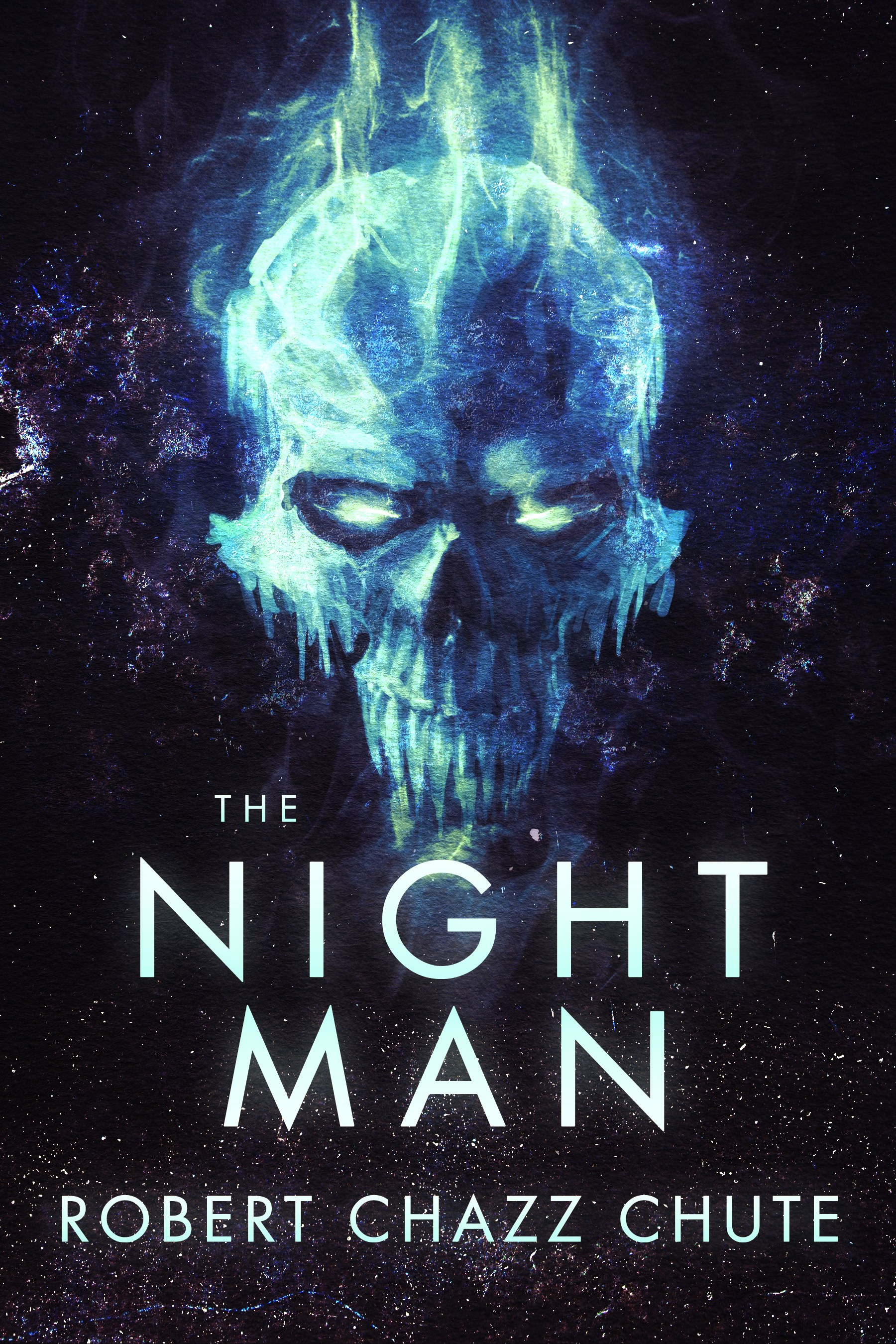
You can pick this ebook up for free today at this link: http://bit.ly/TheNightMan

Join my inner circle at AllThatChazz.com

See my books, blogs, links and podcasts.

Enter your email address to follow this blog and receive notifications of new posts by email.

Join 2,063 other subscribers