C h a z z W r i t e s . c o m

See all my books at AllThatChazz.com.

Top Ten: My best fight

I’m so happy with my new fight scene from Higher Than Jesus.

Here’s why:
Check out all the books by Robert Chazz Chute here.

1. My first draft of this chapter was too easy on the protagonist. I wanted to show that Jesus had skills. He’s not a lame sad sack, though he is subject to Murphy’s Law: If something can go wrong, it will. This seems particularly true of my Cuban hit man Jesus Diaz. When I went revised, the chapter doubled in length to a much more tense and intense sequence.

2. I needed to use this scene to show that the heroine was worth fighting for. I really dislike stories where the heroine is merely an interchangeable object who, when things get dicey, can’t be depended upon. There are already too many stories out there where the guy fights the bad guy while the woman runs away, is tied up, twists an ankle, or presses herself against a wall while looking on in horror. (That’s a way too retro view of women. I like strong women.) A real man in any fight for his life will shriek, “Grab a shovel and hit this monster in the head! Don’t just stand there! He’s trying to kill me, for god’s sake!” Heroes who fight alone with an ally/romantic interest nearby aren’t heroes. They’re morons.

3. I put my protagonist through the burner. His reactions are realistic. He shakes. He trembles. He feels the euphoria of savagery and depths of fear. When bad things happen, he doesn’t just shrug it off. When somebody shoots at you, it’s totally unrealistic to react as if the shooter has offered you a sandwich of a sort you simply do not prefer.

4. The obstacles don’t stop. The guiding principle in The Hit Man Series is this: I don’t like it when the reader knows what’s coming next. Try to anticipate the unexpected. A lot of the time, I’m not sure what’s coming next, either. Expect a fast pace, twists and reversals.

5. A lot of fight scenes are dumb. This one isn’t. It means something much more to the larger story and to the characters.

6. There are long term consequences to a good fight scene. It’s not an episodic chapter of action only for action’s sake.

7. This fight scene elucidates in part how Jesus got the skills he did so what he can do doesn’t arrive out of nowhere.

8. The fight unearths something from Jesus Diaz’s personal history that overturns what readers think they know about his origin story. There was much more going on in Cuba than was revealed in the first book. I only found out when Jesus told me the other day.

9. The fight scene establishes my hit man’s amoral centre, but, because of his love for the heroine, he wants to reach higher. He wants to change. One of his challenges for the long arc of the series is, can he change? Can anyone?

10. When Higher Than Jesus comes out, you’ll see what I mean about this. No spoilers here, but I can say when the action is fast, the scene slows to take in details and make you grit your teeth. When the action slows down, the tension cranks up so there are questions that propel the story to the last word of the scene and the chapter.

This particular fight scene shows where Jesus Diaz has been and where he’s going.

The fight isn’t just with a couple of bad guys.

It’s about the fight between the two sides of Jesus’s character.

It’s about the fight we all face with the devils of our worse nature.

~ Like my flavor? Listen to the first chapter of my crime thriller, Bigger Than Jesus. I’m podcasting the book through the summer. Enjoy! (Or be a hero and just click the cover to grab it. Thanks for reading!)

UPDATE: Click here for the audio of Bigger Than Jesus, Chapter 2.

Filed under: publishing, , , , , , , , , , , , , , , , , ,

How Much Does Self-Publishing Cost? The Ultimate Guide

See on Scoop.itWriting and reading fiction

For real-life stories from indie authors on how much they spent to self-publish their work, check out our discussion: How Much Does It Cost to Self-Publish a…


Duolit provides an interesting resource in this article on the costs of being indie. The price list is irresistable, if only to compare what prices you have already paid for certain services to figure out: Did you get a deal or did you possibly pay too much? Learn at the link! ~ Chazz

See on selfpublishingteam.com

Filed under: publishing

UBC #15: What’s missing from this thriller’s back matter?

Something is missing from the following back matter from Bigger Than Jesus.

Pop quiz, hotshot! What’s missing?

About the Author

After several years working in the publishing industry, I took a long hiatus and then founded Ex Parte Press. I was a journalist and magazine columnist and now write in a lead-lined bunker full-time. I’m happily chained to my writing desk by an intravenous line feeding me espresso. My desk chair is a toilet and I’m writing as fast and as well as I can.

Thank you so much for reading Bigger Than Jesus. If you liked it, it will help Jesus Diaz and me immensely if you could please leave a happy review on Goodreads or Amazon or wherever you bought this book. Watch for the next instalment in this series: Higher Than Jesus, coming soon. Five books are planned for this series so far. If you’d like to get a glimpse of Jesus as a mature, more professional, hit man, you can find the story that started his character in my collection of short stories, Self-help for Stoners. You’ll find he’s more polished, but things still go awry. All the latest updates about my books can be found at AllThatChazz.com.

After this note I have a list of my other titles and notes on how to contact me through my websites, email, media inquiries and a note about my podcast and Twitter.

Steady…ready…go!

Here’s my answer about what’s missing:

In its current incarnation, I haven’t loaded up the first chapter of the follow-up book in The Hit Man Series.

Click to get Bigger Than Jesus

It’s written and I should include it. People like a sneak peek and, after spending so much time with my clever, funny and scarred protagonist, they will probably want to get a hint at where Jesus Diaz goes next. I think I really need to include a chapter from Higher Than Jesus. His story continues in unexpected ways, means and places in a plot that includes Neo-nazis, a street gang, drugs, arms, a very tall blonde and a plot to assassinate the President of the United States.

Fortunately, since I can upload at any time, it’s never too late for an afterthought, an improvement or a tweak.

Next question:

What else do you want to see in the back matter of a book you’ve enjoyed?

Related articles

Filed under: publishing, , , , , , , , , , , , , , , , , , , ,

UBC #14: Smart Free means Give it Away and Bank On It

I was really looking forward to using ACX.com to get my crime novel, Bigger Than Jesus, out there as an audiobook. Unfortunately, ACX isn’t ready to deal with non-US citizens yet. (Dang! Don’t hate me because I’m Canadian!) If you are a US citizen and an indie author, definitely consider ACX. It’s a great set up I learned about through Jeff Bennington.) Until then, I’m going to take the Scott Sigler approach to book promotion and podcast my books.

Scott Sigler was one of the first indie authors to podcast his books, chapter by chapter, and leave it up for free. He found, as he doled it out week by week, that lots of readers couldn’t wait a week for the next instalment. They wanted to buy the whole thing immediately. The strategy works and, despite all his success, Sigler continues to give the books away in audio form even though he’s now published traditionally. This podcast strategy flummoxed his publisher, whose sales force couldn’t understand how his sales kept going and going. Traditional publishing strategies don’t allow for free and expect spikes of sales followed by doldrums. That doesn’t happen with Sigler because he stays out there, available and free to sample and enjoy and building his fan base with, among other things, books as free podcasts. I should add that he’s a clever marketer, but the books are strong. No marketing strategy works if the writing isn’t strong. In fact, if your book is weak, good marketing may hasten its trip down to oblivion. That said, Sigler is a brilliant guy who keeps the free coming, but to maximum advantage. This isn’t Dumb Free: Give It All Away and Hope. This is Smart Free: Give it Away and Bank On It.

There’s another benefit to podcasting your book. The ebook of my crime novel is out now. I plan to release the Bigger Than Jesus paperback at the end of the month. Despite all the editorial eyes on the manuscript, there’s still a bit of tinkering I want to do before the print version is released. Last night, as I recorded another chapter, I realized there were still a couple of minor edits I wanted to address. Nothing that’s a huge deal, but we all want to get a little closer to perfection. Over the next two or three days, I’m doing a podcast marathon so I’ll have the whole book banked in its audio form. If there are any further niggles to tweak, I’ll find them. Reading your book aloud can be a powerful editing tool and, by podcasting the book a chapter at a time, I make the podcast do double duty.

Listen to Chapter 1 of Bigger Than Jesus now.

Filed under: publishing, , , , , , , , , , , , ,

Kobo: The Heavyweight Challenger?

See on Scoop.itWriting and reading fiction

Could Kobo be a game changer? Take a look at this article that breaks down how Kobo is more powerul than Amazon in some (worldwide) markets. Kobo’s policies and reach are changing and it’s the platform to watch. I especially like that this isn’t a “hate Amazon” piece. It’s about providing options to authors.


It also reminded me that Smashwords is still strong and very much in the game because, strangely, they are still the only publishing platform that offers authors a powerful promotional tool: coupons for discounts and copies to readers and reviewers. (I left a similar comment on the thread as well.) Great post from Matthew iden. Learn at the link!~Chazz

See on matthew-iden.com

Filed under: publishing

Ultimate Blog Challenge: Top 10 Things I know I don’t know (yet)

THINGS I DON’T KNOW INCLUDE:

1. How to push my stats for my author site (AllThatChazz.com) as high as this writing blog (though spillover should be inevitable.

English: John Leguizamo at the 2007 Toronto In...

English: John Leguizamo at the 2007 Toronto International Film Festival. (Photo credit: Wikipedia)

Or should it? Not so far.)

2. How to get more attention to my podcast (though numbers have gone up since I started reading Bigger Than Jesus a chapter at a time.)

3. Have I put off more readers than I’ve gained with my strange titles?

4. Should I have pushed the title of Self-help for Stoners harder when I met Kevin Smith in a video simulcast, or would that have made me look like a douche?

5. If I’d started writing books seriously twenty years ago, would I be happier now, or trapped in contracts I’d hate?

6. Did John Leguizamo ever read the blog post about casting him in the movie of Bigger Than Jesus? Probably not, but we all go ego surfing from time to time, don’t we?

7. Will I ever get Scrivener to work the way it says it works when I format my books? So far I just play with it until I get incrementally better but so far it’s more like stabbing a keyboard in the dark than arriving at solutions logically.

8. Will Amazon look at the numbers and switch their algorithm back to the way it was in December so giving away a ton of books means something useful in selling books on the paid side? (When an Amazon fan like Joe Konrath says, okay, I’m out of KDP Select until they change terms, we should all take notice.)

9. Will my books take off before I run out of money completely? I am in a race. (I just got some help with this and things might be looking up if a strategy I’m working on takes off. More on that later.)

Get Bigger Than Jesus

10. I don’t know if my gamble/mid-life crisis will pay off. I do know I’m glad I pulled the trigger. I’ll find out. It’s better than not ever knowing and looking back in regret at what might have been.

(UBC #14)

Filed under: publishing, , , , , , , , , , ,

Ultimate Blog Challenge: I was on CBC Radio’s Cross Country Checkup yesterday

Yesterday I spoke on national radio in Canada. The show is Cross Country Checkup on CBC Radio. I reference the show in my

English: Lion's mane jellyfish Español: Medusa...

English: Lion’s mane jellyfish Español: Medusa melena de león ártica (Photo credit: Wikipedia)

book Self-help for Stoners (it’s the last story, called Context.) I did get to plug my latest book, but I didn’t mention Context on the show, though. It wasn’t the same host. The topic was basically, Social Media: Good or Bad?

They tried to finesse it, but that was the basic, kind of clunky, out-of-date, black and white question. Thing is, I think I was in the minority in extolling the virtues of social media! I was a bit shocked about how many people called in to say how terrible social media was for the children, the zombified masses and the fate of our doomed society. After I hung up I realized that, though they did have a few social media experts to balance things out, the demographic of listeners to CBC Radio on a Sunday afternoon aren’t exactly social media mavens.

For all the hand wringing, most of the objections people raised about social media seem to come down to poor time management and either/or thinking. They couldn’t say no to their kids. They couldn’t turn it off or they were nostalgic for a time that never was.

Here’s what I said on the show (and a couple of points I didn’t get a chance to add):

1. Social media allows me to have the business I do. (Yes, here’s where the plug for Bigger Than Jesus came in.)

2. I like what social media does to my brain. More neural input leads to more complex neural output.

3. Social media allows me to meet people I never would. And I wasn’t at all social in person before. I pretend to be an extrovert here. In real life, I’m one long beard and a pack of chewing tobacco away from being a recluse.

4. My neighbours are fine people, but our relationships are infrequent and accidents of proximity. Social media gives me the tribe, followers and conversationalists I choose.

5. Get used to it. Social media is spatial displacement. I don’t have to be there to be there. Physical presence is not required. This should be obvious since I was speaking on a national phone-in show that’s broadcast around the world.

6. We are social animals. (If we weren’t, we’d be extinct.) Social media is the new place to be social. Wring your hands all you want. We aren’t going backwards. Is it just for narcissists? I’d say we are all so subjective, we are all narcissists. However, the guy who extolled the virtues of cutting himself off from the noise of social media so he could explore only what his brain could come up with? That jerk sounded like the King of the Narcissists.

7. With Twitter and Facebook, I get information pushed at me that I wouldn’t think to search for. The other day I saw a Lion’s Mane Jellyfish for the first time. (See the picture above? That’s one.) It’s amazing. It predates the dinosaurs and they are still floating around in the Arctic Ocean. Oh, yeah. Did I mention they are about the size of a huge cube van? They’re a-MAZ-ing! I ended up using a reference to the Lion’s Mane Jellyfish in my new crime thriller. (I know that sounds crazy, but you’ll get the metaphor when you read Higher Than Jesus this fall.)

8. People worry social media takes too much time. The founding fathers of the United States wrote reams and reams of letters in their lifetimes that must have taken hours out of every day. They still got a few things done, don’t you think? (You could argue that the founding fathers had slaves. True, though I read somewhere that all our modern conveniences which automate our lives so much actually replace the work of fifty slaves, so everything evens out except for the awful horror of slavery.)

9. Someone argued that social media reduces us to selling ourselves all the time. How is that different from always except we now have a more efficient way to do it? We sell ourselves, our time, our personalities to get a job, get a mate, keep a job, keep a mate and to avoid being disowned by our parents and children. Tools change quickly. We evolve slowly.

10. Social media has a tremendous power for good and just because the critics can’t handle it doesn’t mean the rest of us can’t love it and use it responsibly. Through social media I sell my books. Without social media I wouldn’t know all the cool people I know. Were it not for social media, I would not have been privileged to participate in a campaign to help a young man suffering leukaemia with his medical bills. (I wouldn’t even have known about his struggle in the first place.)

I probably irritated some CBC listeners because

Get Bigger Than Jesus

I was one of the few who weren’t worried about the damage social media can do.

It will make them feel better to know that my appearance didn’t help me sell a single book.

So much for moving that needle.

(UBC #13 of 31)

Filed under: publishing, , , , , , , , , , , , ,

Ultimate Blog Challenge: I am an artist, not a beggar

A forum post out of the cyber-ether really irritated me,

and not just because the person who posted was biased against self-publishing.

She was horribly misinformed and self-centered.

Her complaint is about “all these self-published authors begging for likes on their Facebook pages” and that apparently angered her by…okay, I’m not sure how that could bother her so much. Cluttering up her world, I guess. The strength  of venom I detected is usually found in a rattler’s fangs. Anyway, let’s flesh out the ugly misconception in her deluded subtext:

1. It’s not just indie authors. All authors with a Facebook page ask for “likes”. The more important likes are the like and buy buttons of our Amazon pages, but we all want to be liked. Most traditionally published authors understand that their publisher’s publicists are already stretched too thin, are often less effective than publicity that comes directly from authors and what resources that are channelled toward their books tend to be minuscule and fleeting.

2. It’s not begging. It’s asking politely and you often get something in exchange, like free entertainment, free education (like this post) and books that are much cheaper than what you’d pay a traditional publisher. All my books are currently priced at $2.99. That’s couch change — an impulse buy — for professionally published books. For less than the cost of one Starbucks coffee you get hours of entertainment I am happy to provide. I am an artist, not a beggar.

I’m not asking for loose change in exchange for nothing. I’m offering you a chance at relaxed Sunday afternoon with a book when it’s too hot to go outside; a cozy read on a winter’s night when you can’t sleep; suspense that won’t let you go to sleep;  a euphoric discovery that will delight you and might even change you. Yeah, you betcha that’s a bargain. If you refuse, no hard feelings.

3. Providing you with information or the opportunity to help out is not spam. It’s a question you don’t even have to answer. Get over yourself or turn off your Internet connection and take a break. I’m sorry the world isn’t catering to you. It’s not catering to me, either, but I suspect I hate fewer people than you do. I’d define spam as bombarding people with ads that provide no value, are out to scam you and a steady stream of blaring that gives you no opportunity to opt out. (i.e. You don’t get to complain if you decide for yourself you’re going to read it.)

4. Ignoring  the request takes nothing from you. Simply ignoring a request takes the bare minimum of tolerance. This person must be a nightmare in real life. How would she handle a real problem?

5. Why all the animus toward authors? Helping out costs nothing and I don’t think authors have any bad feelings toward those who don’t bother to “like” their books on Amazon, click “Agree with these tags” button on Amazon (it’s toward the bottom of each sales page) and “like” their Facebook page. (Thanks for helping to spread the word. And if you didn’t, no hard feelings.)

6. Ads are only irritating if you aren’t interested. On the computer, I click away. If assailed by the TV, I ignore it, fast forward, check my email or get up from the couch and get a glass of water. Indie authors (well, everyone) deserve more compassion than the complainer was willing to bestow. Sadly because the complainer might even love our work if she gave it a chance.

7. Despite my frustrated tone here, I know authors are not entitled to sales any more than Wal-mart or Toyota “deserves” your sales. We don’t even “deserve” your attention. That’s the myth of the entitled author I hear so much about. I honestly haven’t met many authors who suffer that delusion.

We get it. It’s a book. To most, “just” a book. We write them and lots of people don’t care. A lot of people don’t even read! Still, we stand behind our work and hope to find our audience. We hope our audience finds us. If I’m speaking to a crowd, I’m not speaking to everyone and I know it. Please be patient and polite while I direct my audience toward my books. I promise I won’t take long doing it and I’ll be as entertaining and quick as I can as I ask these things. You can always opt out.

Whether you’re indie or traditionally published, the promotion for your book really is up to you, your tribe, your followers and your readers. Publishers do very little for most authors. Stephen King gets a big promotional budget. That’s right. The authors who need the promotion least get the biggest boost because it’s a simple business decision: the publisher banks on the biggest title. Big publisher or small, these are the evaluations we all have to make.

I make that same evaluation every week. I have two very new titles just released in June. One is a short story

Get Bigger Than Jesus

collection bundled with a novella, The Dangerous Kind & Other Stories. The other is my crime thriller, Bigger Than Jesusthe first in a series. Which do I spend my limited resources promoting? Obviously, the crime thriller.

No short story collection will sell as well as a thriller. In all likelihood, my short story collections’ sales (there are three collections in all) will come after readers decide they like my flavor by discovering the novel. Some of the stories include characters and references that cross books, so there’s cross-pollination going on, too.  The short story collections are great, but they’re harder to sell (though they will be a valuable long term sales avenue.)

Yes, we have to interact and connect and make connections and help others to be heard.

Endure a little promotion amid all that for art’s sake.

Everybody’s trying to make a living

and civility is the grease to the gears of civilization.

Filed under: publishing, , , , , , , , , , , , , , , , , , , ,

Book That Disappears As You Read – GalleyCat

See on Scoop.itWriting and reading fiction

Book That Disappears As You Read…


This is so cool and innovative, I can’t tell you, You have to watch the video. Learn at the Link! ~ Chazz

See on www.mediabistro.com

Filed under: publishing

Ultimate Blog Challenge: How to avoid signal fade on your blog and in your books

Authors, podcasters, bloggers, bloviators and cultural icons of all kinds: Everyone is subject to signal fade.

Encoding the MP3 after the Memorial Day podcast

Encoding the MP3 after the Memorial Day podcast (Photo credit: rbieber)

Signal fade equals audience entropy. Most people stop reading and listening over time because there are so many new things that demand our attention. Most of the fans and followers you have now will not be your fans and followers in the future. You might make one wrong move on Twitter and insult irradiated Japanese disaster victims like Gilbert Gottfried did. Maybe your fans will jump ship to the new simply because we’re programmed to seek out fresh experiences. They’ll get bored of your schtick. If you’re Jay Leno or Dennis Miller, it’s over, but for the rest of us, there’s still hope. What to do?

1. Don’t fall into schtick. Keep your writing and your words fresh. The person the masses will listen to the longest and with the most interest will be the one who says the unexpected. When I write a Facebook post or have some fun on Twitter, there’s probably a joke coming. Ah. But how will I arrive at that twisted coda? “Expect the unexpected.” That’s what my wife says when I tickle her. I didn’t take the threat seriously until I woke up in the middle of the night with her braining me with a frying pan. (See? Twisted coda sneak attack!) A better example is Chuck Palahniuk. He didn’t write Fight Club and then keep writing the same book again and again (as many authors do). He dipped into experimental fiction and several of his books are a jazz fiction fusion. It’s not all the same. You don’t have to change your unique voice, but be flexible how you use it.

2. Grow your base. This is tricky, because you don’t want to waste energy chasing down people who won’t dig you. Director Kevin Smith, for instance, was flummoxed to learn that one of his movies was advertised at great expense in The Ladies Home Journal. There’s not a chance that advertising paid for itself. That magazine’s readers probably couldn’t abide his penchant for profanity and Star Wars-obsessed dialogue. Instead, be you but in more places, so people can find you. Do guest blogs, grow your twitter following, appear on podcasts or whatever other book promotion you do. Most important on this to-do list, and the only one that is critical, is write more books. Be prolific. If your bookshelf and your base isn’t growing, it’s shrinking and dying faster than grandma.

3. Add to the mix. Host guest posts on your blog. Do interviews to get out of your head and into someone else’s. Link to a variety of blogs using Scoopit! to give your readers a smorgasbord. Bring more minds into your mix. Co-author a book. Have a guest on your podcast or play off your stooge of a brother. Try joining a writing group. Try a writing partner. Add a new voice to your old formula.

4. Set your mind free. This step is one way to accomplish #1. Too many people have the same thoughts because they’re talking to the same people all the time. Check out a book, a topic, a podcast or a blog you wouldn’t ordinarily read to get some fresh input to fuel your output. Go to court and watch arraignments for a couple of mornings this week. Get a tour of a morgue. Read this for a change of worldview instead of watching regular news. Take a language class and hang out with your fellow students. Learn the piano. Buy a homeless guy a coffee and talk to him. Go to a different church or hang out at a gay bar. Do something different from what you’ve done.

5. Step away from the keyboard. If it were up to me, I’d never go anywhere and never take a vacation. However, She Who Must Be Obeyed insists on vacations once a year at least. I hate leaving my writing bunker. I’m always here! Why try to alter my agoraphobic tendencies? However, every time I come back, I have fresh insights, more energy and new, aired-out ideas. You need a reboot, too.

Small-town terrors and psychological mayhem in Maine.

6. Write in more than one genre. If you’re into different types of fiction or want to branch out into non-fiction, do that. Cross-pollination will feed both grafted branches on your tree. More new people will have another way to discover The Magic That is You. Aside from my crime novels, I’ll publish a book on writing and I just published another fiction collection of suspense recently. Don’t just sit there. Juggling is energizing.

7. Or narrow your focus. The alternative is to own a topic so much, to be so unique, that anyone interested in a particular topic will have to read you. Certain names spring to mind for this rarified stratum of writer: Malcolm Gladwell, Seth Godin, and Matt Taibbi of Rolling Stone. Of course, these guys take on big topics like economics and entrepreneurship and how to achieve success, but maybe you’re the master storm drain coupler of the Midwest. If you can drill down deep and achieve mastery of a subject to the degree that it makes you a specialist, your audience will have to read you to know what’s up. Whatever you do, own your category or aspire to own it.

8. Expand your outlets. You write, say, books of horror. What about podcasting about it as well as writing it? What about audiobooks? What about t-shirt sales on Cafe Press or Zazzle.com? How about graphic novels of your existing work? What about serious speaking engagements or stand-up comedy? How else can you not just monetize, but be different? Different and more is good. Different boosts your signal to a wider audience. More is more. Some people say less is more, but those people flunked math.

9. Change your process. So you’ve always outlined and plotted your books in great OCD detail? Instead, start pulling it out of your butt and see what surprises you’ve got stuffed up there. Or vice versa. Do you write one book a year or one book every three years? Resolve to write your next book in one month and then hold yourself to that promise. Do you write longhand in a library? Go to the coffee shop opposite the men’s mission and get a window seat and write there. Surprise yourself not just in what you write, but how you write it.

10. Change your support system. For my crime novel, Bigger Than Jesus, I added an ex-military buddy to my beta read team. I didn’t know he’d be interested in the book, but on a whim, I asked because of his military expertise. He read it in a day and was very enthusiastic. When he came over with the marked up manuscript, we talked for three hours. Not only did he give me helpful ideas for the current book, I got great ideas for future books in the series. For my next book, I’m hiring a new editor to add fresh insight and plan to mix and match my beta read team.

Your signal won’t fade so fast if you vary its energy, amplitude and range. New people will tune in to replace the fans who wandered away. As for the fans that stay with you through all your books, podcasts and creative incarnations? They’re the ones on your mailing list you should pay particular attention to. Encourage conversation with them. They may even hang in long enough to warn you when you are getting stale, selling out or losing your freaking mind.

Filed under: publishing, , , , , , , , , , , , , ,

Bestseller with over 1,000 reviews!
Winner of the North Street Book Prize, Reader's Favorite, the
Literary Titan Award, the Hollywood Book Festival, and the
New York Book Festival.

http://mybook.to/OurZombieHours
A NEW ZOMBIE ANTHOLOGY

Winner of Writer's Digest's 2014 Honorable Mention in Self-published Ebook Awards in Genre

The first 81 lessons to get your Buffy on

More lessons to help you survive Armageddon

"You will laugh your ass off!" ~ Maxwell Cynn, author of Cybergrrl

Available now!

Fast-paced terror, new threats, more twists.

An autistic boy versus our world in free fall

Suspense to melt your face and play with your brain.

Action like a Guy Ritchie film. Funny like Woody Allen when he was funny.

Jesus: Sexier and even more addicted to love.

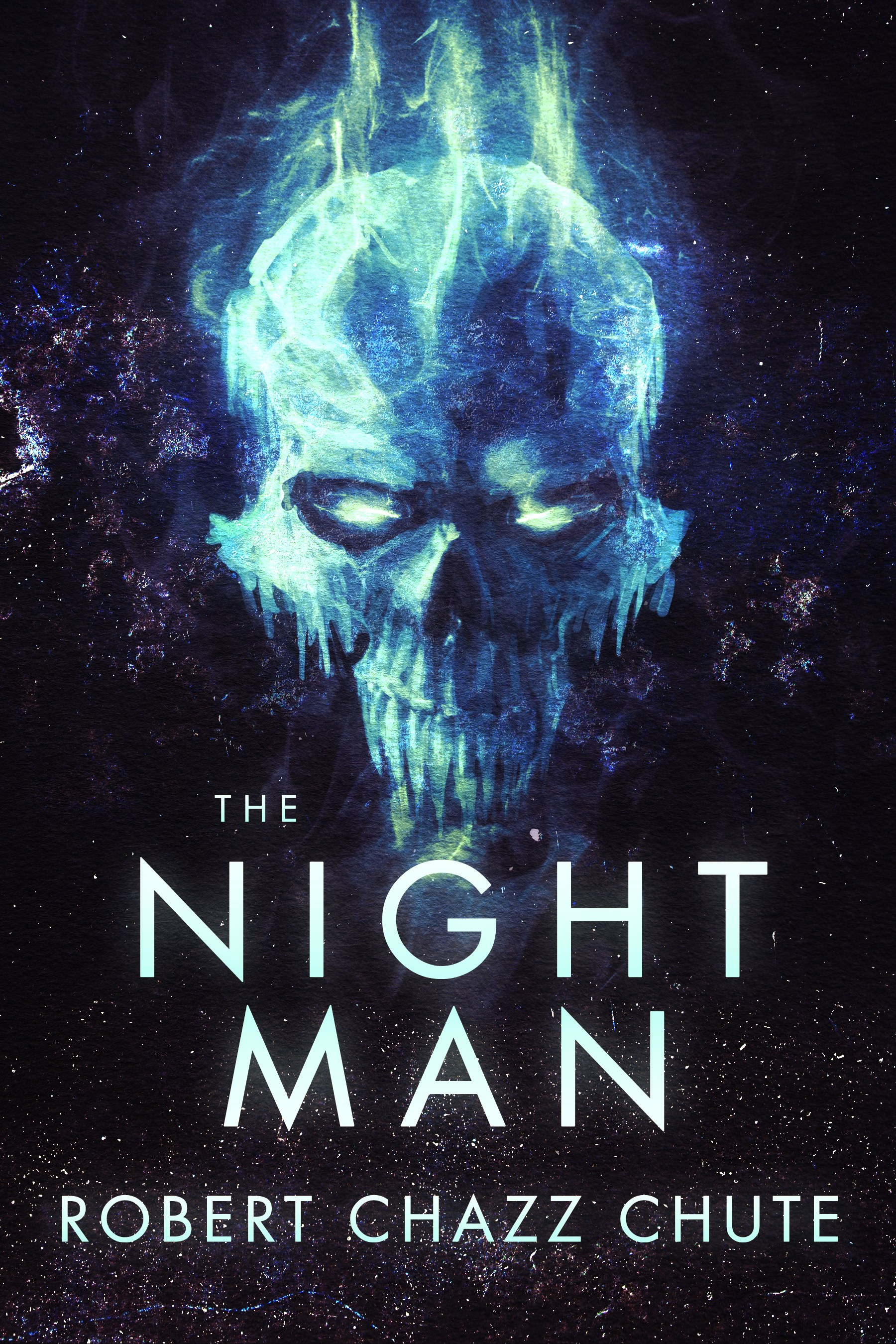
You can pick this ebook up for free today at this link: http://bit.ly/TheNightMan

Join my inner circle at AllThatChazz.com

See my books, blogs, links and podcasts.

Enter your email address to follow this blog and receive notifications of new posts by email.

Join 2,063 other subscribers