C h a z z W r i t e s . c o m

See all my books at AllThatChazz.com.

Top 20 Facebook Apps for Book Lovers – GalleyCat

Top 20 Facebook Apps for Book Lovers – GalleyCat.

Got a book you want to review, find, sell or promote? Your publicity list starts with this link. Supremely useful collection of apps for the author, publicist and book lover.

Filed under: authors, blogs & blogging, book reviews, Books, Publicity & Promotion, self-publishing, , , , , , , , ,

How much should fiction cost?

There’s quite a gap between what publishers charge for ebooks and how self-publishers are pricing their work. Many authors (and readers) have a visceral reaction to price. Of course people are sensitive to a price they perceive too high, but many believe that if it’s too cheap, it must be crap. (JA Konrath suggests self-publishers play with price, and experiment to find the right price point.)

However pricing affects you intuitively, there’s no direct correlation between price and quality. Many fine ebooks are often priced low because the author is not well-known. Lower prices encourage timid readers to take a chance on new fiction. When the price is lower, readers buy more. It is freeing to click, click, click and still pay less for fiction than you might for a latte and a croissant.  Self-publishers hope to make it up on volume.

If you are trying to figure out how to price your ebooks, or what a fair price might be, Dean Wesley Smith has a great and useful  summary.

His suggestions have influenced my thinking greatly. As a result, my first book (that will be available digitally) will be a short story collection. I still plan to roll out my big novel in November, but the collection, including some award winners, will come this summer!

It’s all happening very quickly. It has to. And most glorious of all, now it can happen.

Time and me?

We wait for no one.

Not anymore. 

Filed under: Books, DIY, ebooks, grammar, links, My fiction, publishing, self-publishing, Writers, writing tips, , , , , ,

Support authors. Buy books.

FYI: I promised the big announcement today.

That post drops here

at 12:01 pm EST.

Now, to business:

Author Jeff Bennington from The Writing Bomb wrote a very helpful post for Chazz Writes comparing his publishing experience with Lightning Source vs CreateSpace. 

Besides helping self-publishers out with some great information, Jeff’s written a great book. The early reviews are very exciting, so I’m not just asking that you help out an author. I’m asking that you enjoy a good book.

http://www.amazon.ca/Reunion-Jeff-P-Bennington/dp/0615450865/ref=sr_1_1?ie=UTF8&qid=1302828982&sr=1-1Jeff is trying to climb high in Amazon‘s rankings today so readers can find his novel. Get in on the ground floor and help kickstart Jeff’s career. He’s encouraging fans and future fans to buy Reunion today. The novel has received great reviews, so why not? It’s not expensive.

Check out the awesome reviews and blurbs here.

Why not buy two? I will.

For this strategy to work best, it would be great if you bought the book today, April 15, if you please. It’s tax day in the States, so console yourself and forget about that horror by reading Jeff’s cool horror story.

Please support the arts and chill with a good book. Thank you.

UPDATE: Just bought two copies of Reunion.

Can’t wait!

Filed under: authors, book reviews, Books, publishing, Writers, , , , , , , , , , , , , , ,

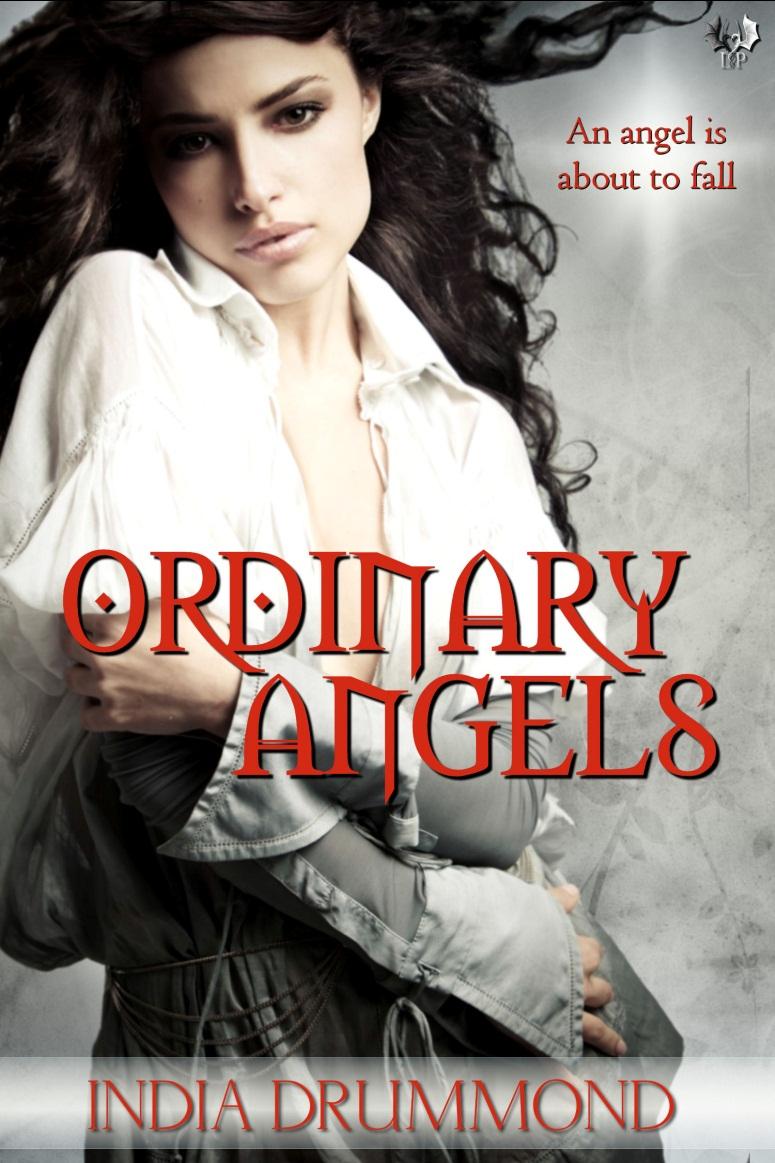
Author Profile: India Drummond’s Ordinary Angels

India Drummond knew from age nine that writing would be her passion. Since thenordinary_angels she’s discovered many more, but none quite so fulfilling as creating a world, a character, or a moment and watching them evolve into something complex and compelling. She has lived in three countries and four American states, is a dual British and American citizen, and currently lives at the base of the Scottish Highlands in a village so small its main attraction is a red phone box. In other words: paradise.

india_drummondOrdinary Angels (Lyrical Press) is an urban fantasy/paranormal romance novel in which Zoë Pendergraft falls in love with an angel, frees a soul from necromancers, releases a ghost trapped in the Void and saves his living grandson from demons. Most of Zoë’s friends are dead, but she doesn’t mind because they died long before she met them. Then one Tuesday night an angel takes her salsa dancing and turns her world upside down. Grim reality closes in when she discovers a body in her company’s boiler room and Higher Angels accuse her best ghost friend of murder.

CW: When did you first know you wanted to be an author?

ID: I’ve always written stories. I started my first book at 21 but didn’t seriously consider trying to make it a profession until the past couple of years. The coming of eReaders, in particular, has changed publishing so much. It’s a fantastic time to be an author.

CW: How did you get the idea for your book?

ID: My husband said to me one day, “I’m a perfect angel.” Of course, I laughed, because he only says things like that when he’s doing something troublesome. I proceeded to tell him what sort of hideous, fallen angel he would make. It got me thinking about what angels would be like if they were real and the storyline spun from that.

CW: What research was involved in your book’s development?

ID: The novel is set in San Francisco, a city I love to visit. I wanted the place to feel real in the book, so I had a couple of San Francisco natives on hand and shot them emails incessantly during the polish process, making sure I got details right about trains, the library, streets, parking, etc. Even suggestions on where my protagonist lived and the setting for my ghost town came from helpful locals.

CW: What is your writing process? Do you have any formal training in writing?

ID: I studied creative writing at university, but honestly, 95% of what I learned there wasn’t much help in the real world of publishing. I was taught how to write literary fiction, but not told that literary fiction is a teeny-tiny fraction of the market. (I wasn’t very good at it anyway… it isn’t what I like to read, so it showed in my writing.) My professors looked down on genre fiction, and I came out of it with a very clouded idea of publishing reality. What I did learn was how to take criticism: what to listen to, what to discard and how to use that feedback best to improve my stories. That was worth gold.

CW: How long did it take you to write the book and find an agent and publisher?

ID: The book I had accepted by a publisher, Ordinary Angels, was actually my second attempt. The first one took me years to write and was rejected countless times. Ordinary Angels, however, only took me six weeks to write (and a few months after that to polish and rework the rough bits). I looked for an agent for a few months, but after a while realized that getting a publisher amongst the small, indie publishers might not only be easier, but might be better for me as a new novelist. Once I decided that, I sent it to three publishers at once. One of them accepted it.

CW: What was the hardest part of the publishing process? What did you most enjoy?

ID: I think the waiting and not knowing during submissions is horribly hard. I felt I was going a bit mental, hitting send/receive over and over, hoping they would reply, but being afraid the reply would be negative. Even after acceptance, there is a lot of sitting around and waiting during the editing and even post-editing process. What I enjoyed most is crafting the story—I love the beginning when anything is possible and the characters surprise me at every turn.

CW: What advice would you give unpublished writers?

ID: Don’t give up and realize there is more than one good way to do publishing these days. Don’t just set your sights on the big six publishers in New York City. There are many small, indie publishers out there that might love your book and give you a much more personal, helpful experience. Remember, the biggest publishers are like Hollywood. They’re really only interested in blockbusters, so it’s a huge mountain to climb for an unpublished author to get noticed in that shark tank. So don’t dismiss those small publishers. Also, I am a big believer in indie publishing. I’ve read some fabulous indie books and am going to release my next book, Blood Faerie, as an indie book. Just remember that you have to do it like a pro if you’re going the indie route. Do your homework, and for the love of all that is holy, hire an editor. I do freelance editing and even I hire an editor because no one can see their own mistakes. Do it. Really.

CW: Have changes in the book industry forced you to change how you published or marketed your work?

ID: These days, authors have to take responsibility for marketing themselves but I don’t mind that. I love social networking so I’d be on Facebook and Twitter even if I weren’t an author. I think e-publishing and indie publishing have forced all of us to change, but in my mind, it all benefits authors. We have more choice and choice means power.

CW: What’s your next book project and what can you tell us about it?

ID: Blood Faerie is set here where I live, in Perth Scotland. It’s a modern-day urban fantasy about an exiled faerie. It’s due to be released in July 2011.

Here’s a short blurb: Eilidh was cast out of the kingdom lands in the forests and forced to live on Perth’s city streets. She survived alone for years, but when a human is killed below the abandoned church where she lived, she recognized it as the work of one of her own kind. To stop the murders, she must tap into the forbidden magic that cost her everything.

Click here for more on India Drummond.

Filed under: Author profiles, author Q&A, Books, , , , ,

Self-publishers are judged unfairly

I’ve been thinking about what makes things go viral. As per my last post, put twoanger babies together, let them babble, and you’ve got a ubiquitous video that’s hard to avoid. Cute animals go viral. When Sarah Palin said “squirmish” instead “skirmish” I thought that would go viral. It didn’t really, which is as telling a sign of her fifteen minutes being up as any deep analysis of her political future.

Then there was the author who lost her frigging mind.

If you somehow missed this story, here’s the ugly summary: She got a lukewarm review. The reviewer said the story was good but her self-published book was is dire need of a copy editor. The author unadvisedly went into the comments section of the book review blog and was anything but gracious. She blamed the book reviewer for downloading the wrong (substandard) copy. Then she railed some more. She was fighting uphill from the beginning, of course. You don’t pick a fight you can’t win in someone else’s house. Regular review readers rose to the reviewers defense. Things got even more heated when said author then resorted to profanity. The comments section blew up as people  piled on. I am not piling on. Plenty has been said about this and frankly, there’s nothing more for me to say about that. In fact, too much was said about that.

What I do want to talk about is the comment, made several times, about self-publishers. The point was that this author exemplified the lack of professionalism that reinforced the posters’ opinion that they would never, ever read a self-published book.

Wow. How unfair.

Traditionally published authors have made this same mistake.

Not all self-published authors let manuscripts go to press unedited.

Not all self-published authors would act so unprofessionally as to react so negatively to a book reviewer.

Clearly, the poster talking about “all self-publishers” has a bias and found an anecdote that confirmed that bias.

The phenomenon is called confirmation bias.

It’s lazy thinking that leads to prejudice.

Prejudice ≠ a good thing.

Filed under: authors, Books, DIY, ebooks, Editing, Editors, Rant, self-publishing, writing tips

Createspace or Lightning Source: Pros & cons breakdown

Jeff_Bennington

Jeff Bennington

I’m trying to decide what company to go with to get my novel out. Smashwords grinds manuscripts into all e-book formats, of course, but what about the paper book issue? Createspace or Lightning Source? I recently asked some authors about their experience with companies that facilitate self-publishers. Some were satisfied with Createspace and others were fine with Lightning Source. Jeff Bennington, author of a paranormal thriller, Reunion as well as the blog The Writing Bomb,  hit me with a great, detailed reply. He has experience with both Createspace and Lightning Source. Rather than pushing me one way or another, he laid out the pros and cons as he sees it from his experience.

“Dude!” I said (because in my mind I’m still seventeen and it’s the ’80s.)  “This isn’t a mere reply to my question. This, sir, is a blog post. How about it?” He graciously said yes.  Here’s his breakdown:

Cons


At Lightning Source, starting an account is a bit cumbersome (much more paperwork than Createspace.) Once the paperwork was complete I had to get my cover just right, but Joleene Naylor, an independent cover artist, helped me do that with ease.
However, I’m not as happy with Lightning Source’s ink/cover quality as I am with Createspace. Lightning Source’s paper is much thinner than Createspace. (Same number of pages and Lightning Source is at least 1/4″ thinner. Very strange.)
The initial work to get a proof copy is somewhat exhausting and cost $39 (overnight, mandatory) for a proof every time!
I can get five proofs for $50 (overnight, not mandatory with Createspace).
I’ll use Createspace the next time if I discover that print copies just aren’t the thing for my books. I used them this time to get advanced reading copies (ARCs) out early. Createspace was fast and easy to work with but I was very limited on the back cover and spine art.
Expect 1 to 2 days for email return. But if you call..they answer.

Pros


The number one reason to use Lightning Source is the distribution: return availability and full industry discount (45-55%). That was enough for me because very few publishers for indies do that and if they say, as Createspace does, that they have full distribution, you better make doubly sure that the wholesale discount is 45+ and that you can have a return policy. Createspace  never told me that. I asked and they said, “We don’t make that decision.” I say “Bull^%$#!” Of course they do. They are the publisher.
With Lightning Source, you are definitely the publisher. I like that.
If you have a newer mac formatting is easy. Lightning Source will upload your sized PDF with no worries.
Once the book was uploaded and passed the tests, things moved rather quickly. Give yourself 2 months to get your account in process and book uploadedReunion
The best thing is you are assigned a customer rep—a real and a very nice and helpful person. My rep at Lightning Source is Carol Egan. She is wonderful!

Overall, I’m happy so far. I mostly want my print version to be available to local stores for signings (if I have one) and a lot of my friends and family want to buy it at a store. I can’t do that with most other self-pub outlets. Lightning Source is the real thing. Great for a small press…like me!


Right about now you’re bubbling over with gratitude for Jeff”s insights. Act on it and check out his book. Reunion just launched and the reviews on Amazon are very good. Plus, you need to own it for research purposes. (See what you think of the binding etc.,…) Buy Reunion.


Filed under: author Q&A, authors, Books, DIY, ebooks, publishing, Writers, writing tips, , , , , , , , , , ,

The Heart of the Matter: Ebooks and Self-Publishing Part 2 – Another Dialog Between Authors Barry Eisler and Joe Konrath

The Heart of the Matter: Ebooks and Self-Publishing Part 2 – Another Dialog Between Authors Barry Eisler and Joe Konrath.


Here’s a conversation all writers should grok. This is a long read, but worth it.

Filed under: authors, Books, DIY, ebooks, publishing, Writers, writing tips, , , , , ,

Writers: Chazz Law versus Masnick’s Law

A cropped photograph depicts singer Elvis Pres...

Image via Wikipedia

Thanks for all the nice feedback and e-mails about Monday’s blog post on Amanda Hocking. There was so much, in fact, that I need to do a follow-up about the mistakes we make when we compare our potential for success with another’s. Some people see another author’s success as a door slamming shut on their own noses. These are people who believe Masnick’s Law (which comes from the music industry.) The idea is that only a certain band at a certain time had certain advantages that can’t be replicated. They came along at the right time or had just the right choice of sound, or the moon was in alignment with the stars etc.,….

In other words, if they make it, you won’t.

Wussies.

You might make it in a different way (Elvis ≠The Beatles) but if you have a great book, success can be yours. Amanda Hocking isn’t stopping you from succeeding. Not writing your book is keeping you from succeeding. (Not revising or hiring an editor, too.) Hocking took a machete and cut a path into the jungle. JA Konrath, Barry Eisler and many other authors who went the self-published way are forging ahead. When you see others succeed, take it as inspiration. Masnick’s Law isn’t a law. It’s a self-defeating fallacy.

CHAZZ LAW:

Art inspires more art.

Read it.

Rock it.

Roll it out.

(And don’t be a wuss.)

Filed under: authors, Books, DIY, ebooks, Editing, Editors, getting it done, links, publishing, Rant, Rejection, self-publishing, Writers, writing tips, , , , , , , , , , , ,

The Amanda Hocking Effect: She didn’t sell out. Trad publishing bought in.

Amazon Kindle e-book reader being held by my g...

Image via Wikipedia

Successful e-book author Amanda Hocking has signed a six-figure deal with a traditional publisher, St. Martin’s Press. No sooner was it announced,  some haters emerged in website comments sections. I’m pleased to say that most people were happy for Ms. Hocking—as they should be—but of course there were some trolls, one of whom said she was a sell-out and a traitor to the digital revolution’s cause.

The haters are wrong about that and here’s why: Ms. Hocking got to be a big-time author because of e-books, but she never signed up to lead a revolution. She just signed up to get readers for her books. Good for her! The traditional publishing model is useful to big-time authors and due to her solitary efforts, she is a big-time author. The larger issue is that publishing often falls down when the author’s success does not qualify as stellar.

I don’t see that this deal speaks to the limits of self-publishing at all. The deal must have been sweet because, as I pointed out not more than a week or so ago, with her 70% cut through Amazon, publishers would have to back up a truck full of money and provide an army of logistical support to justify any deal with that author. St. Martin’s is one of the few publishers big enough to provide that scale of mucho macho mojo. Hocking tried to get published the traditional way first and mainstream publishing turned her down. She proved herself worthy doing it her way. Now she can focus more on writing and less on the business side of publishing. Writers love to write first, and most of us only become entrepreneurs by necessity and circumstance.

Look deeper into the implications of this deal. Amanda Hocking didn’t sell out. Traditional publishing did. Hemorrhaging money fuel due to Wall Street’s global economic destruction spree, publishers cut back on editors and squeezed the mid-list authors. They failed to adapt to the changing digital environment to preserve the old media model as long as possible.  Many of those mid-list authors got squeezed right into self-publishing. For those with some experience and an entrepreneurial bent, the water over in digital publishing can be nice and warm.

Another author, Barry Eisler, recently walked away from a $500,000 deal because he decided he could make more on his own. Also, good for him. One of the joys of self-publishing is maintaining control and choice. Whether you choose to stay outside trad publishing or sign a contract, you’re making the best choices for you.

Amanda Hocking didn’t sell out. She made traditional publishing buy in.

(And she’s consistently more gracious about it than I would be. )


Filed under: authors, Books, DIY, ebooks, publishing, Rejection, Useful writing links, Writers, , , , , , , , , , ,

Writers: Your mistakes taunt you

The original Ruby slippers used in The Wizard ...

Image via Wikipedia

I saw the movie Limitless over the weekend. I loved it (and it helped the loser/hero starts out as a scrambled slacker writer who is hopelessly blocked . It’s a great time, but as I hit the parking lot I thought, (MINI-SPOILER! SPOILER! SPOILER!) how come they left the dangling thread of the unsolved murder? Was it lost on the editing room floor?

There are plenty of precedents for such mistakes. For instance, a truly great classic, Casablanca is brutally flawed if you think about the ending for a moment. The engine of the plot turns on there being only two travel passes so only two people can leave. Will Ilsa go with Rick or Victor? The resistance needs Victor so Rick must sacrifice his desires for Ilsa for the greater good. But there are no Nazis checking passports at the airport!

In fact, in the background at the end of Casablanca just a few little people (they were “dwarves” when the same extras were in The Wizard of Oz) pretend to fuel a cardboard cut-out plane. Rick could have escaped, as well. Instead he stays with Louie and they begin a beautiful friendship that, years later, would inspire the raw, hot homo-eroticism of Bert and Ernie of Sesame Street fame. (Okay, I made up that last bit.)

Sometimes people underestimate the importance of editing. When stuff is left out, it sticks out. Even if you enjoy a story, as you put it down, you think about that niggling deficit. I guess it’s just the way our brains are wired. You forget praise, but point out a screw up, that you remember forever.

I recently went through a writing sample for an author. I might have seemed harsh though I took great pains to be kind. The truth is, I found a lot to fix. The author wanted to send it off for traditional publication. Without those fixes, there was no way it was going to get past the first gatekeeper.

Publishing has changed. There are fewer editors doing more work and if they accept a new author at all, they do not want to have to do much editing at all.
With To Kill a Mockingbird, Harper Lee‘s acquisition editor took a year off to perfect the book. There is no way in hell that would happen today.

You want your text to be excellent. If you publish it yourself, good might do. Even “good enough” might pass. But is that really what you want? Mistakes in books stand out and stick, burning you at the thought of readers stumbling over a glaring error and questioning your ability, craft or intelligence.

Errata are in all books. They shouldn’t be dancing around in neon taunting you.


Filed under: authors, Books, Editing, Editors, movies, publishing, Writers, writing tips, , , , , , , , ,

Bestseller with over 1,000 reviews!
Winner of the North Street Book Prize, Reader's Favorite, the
Literary Titan Award, the Hollywood Book Festival, and the
New York Book Festival.

http://mybook.to/OurZombieHours
A NEW ZOMBIE ANTHOLOGY

Winner of Writer's Digest's 2014 Honorable Mention in Self-published Ebook Awards in Genre

The first 81 lessons to get your Buffy on

More lessons to help you survive Armageddon

"You will laugh your ass off!" ~ Maxwell Cynn, author of Cybergrrl

Available now!

Fast-paced terror, new threats, more twists.

An autistic boy versus our world in free fall

Suspense to melt your face and play with your brain.

Action like a Guy Ritchie film. Funny like Woody Allen when he was funny.

Jesus: Sexier and even more addicted to love.

You can pick this ebook up for free today at this link: http://bit.ly/TheNightMan

Join my inner circle at AllThatChazz.com

See my books, blogs, links and podcasts.

Enter your email address to follow this blog and receive notifications of new posts by email.

Join 2,063 other subscribers