C h a z z W r i t e s . c o m

See all my books at AllThatChazz.com.

Heresy for Writers: Choose The Not Writing Day

Rock Paper Scissors Lizard Spock it

Image via Wikipedia

There is a way to be miserable. It’s guaranteed. If you really want to ruin your day, promise yourself you’ll write something today, just not now. As the day stumbles forward, keep thinking any minute now you could start, but just now doesn’t feel right.

Now start feeling guilty. Is your head hot yet? Does it feel like a sword hanging by a very thin wire is above you? No?

Give it some more time. Wait until conditions are just right. What’s in the fridge? Can you really bring yourself to write knowing the bathtub hasn’t been cleaned yet? When was the last time you washed the sheets? There’s another chore in the way. Now you’ll need to reward yourself for that hard work. Oh, there’s that delicious book from the library. You know you shouldn’t read it now, but it is due next week. It’s The Book of Dead Philosophers by Simon Critchley! Who could resist that?

Then we’ve stepped on the procrastination treadmill: same thought running constantly, “I should start, I’ll start soon…”

Going nowhere.

I wonder what’s on TV at 10? 11? Noon. Well, now it’s lunch. Something’s missing… Oh, look at that! I’ve seen this movie three times and I get sucked in every time. Well, now it’s 3 pm. I feel a nap coming on…

4 pm. Need a coffee to boost my energy. Hm…should clean up the kitchen before everyone comes home…

5 pm Dinner’s started but I’ll definitely will get to writing a chapter before 7. Oh, the dishes.

And the kids want help with their homework…

9 pm. Got the kids to bed. I should start. I’ve been meaning to start all day and now…yawn. Fuzzy. Ooh, The Big Bang Theory rerun!

11 pm. I’ve got the Daily Show taping in the middle of the night so I won’t waste time…but I really want to know what Jon thinks of what’s going on in Egypt tonight.

Somehow, it’s midnight. It’s kind of late to start now. Shit.

Or

Schedule a time and stick to it like you would any other appointment. You don’t miss appointments with your dentist or an important business meeting.

Your writing time is an important business meeting.

Or

(here comes the heresy)

Take the day off! 

From the beginning, say this is not a writing day.

Enjoy it.

That’s right. I’m the Devil and I love idle, non-typing, hands. The  day I just described is a reasonably happy (though not remarkable) lazy day. What made it miserable was the guilt.You’re going to have recharge days. Don’t spoil them with guilt.You are not a machine. Enjoy not being a machine sometimes.

Enjoy your choices by making them

instead of letting them happen to you.

Filed under: authors, Books, Media, Writers, writing tips, , , , , , , , ,

Writers’ Union of Canada VIDEO (plus a cool NEW word! Yay!)

Yesterday I blogged about The Writers’ Union of Canada and that particular post wasn’t altogether complimentary. In fact, I proposed that if they didn’t open up their membership criteria to self-published authors, an indie union could be formed.

I hope that isn’t necessary since it could duplicate effort across platforms and dilute the voice of the writing profession. (However, if the self-published aren’t represented at all…hm. I won’t get sucked into a rehash. If you missed it, read, cogitate, plot and plan.)

But I’m all about the balance. For instance, I complained in a long ago post that TWUC’s judging of one year’s short story competition…well, it sucked. I’ve also been very complimentary with regard to their most recent symposium in Toronto (that also went on tour across Canada.)

This video on Canada’s proposed copyright law is an example of one of the good things unions can do to deal with The Man. The education provision does appear too broad and is a detriment to writers who are, as the legislation is written, voluntold to give up recompense for their work.

Voluntold

Chazz Definition: To have your services, product and/or time volunteered by someone other than you who has no business telling you what to do with your services, product and/or time.

(e.g. “I can’t order you on a suicide mission but I need five volunteers to storm that machine gun nest. You, you, you, you and you, go! You’ve been voluntold. A grateful nation honors your blah, blah, blah…”)

Filed under: authors, Books, Cool Word of the Day, publishing, Rant, self-publishing, Writers, Writing Conferences, , , , , , ,

Ahoy, matey! Neil Gaiman VIDEO on why book piracy can be good

I’ve spoken with several publishers on this topic. They knew they shouldn’t do what the music industry did (i.e. sue their own customers) but that’s typically where the thought process ended. At a writing conference I recently attended, there were a lot of worried writers. They worried that someone would steal their stuff.

Don’t worry about it.

It’s either:

1. pretty rare (maybe it’s not good enough to bother stealing—uh-oh!),

OR

2. the people who steal it are power users and curators who are going to read more of your stuff and pay for it and the related products and services you sell  (so be prolific and imaginative),

OR

3. the pirates are scum who never pay for anything anyway so the sale isn’t really  lost. If they weren’t stealing your stuff, they’d be stealing someone else’s stuff instead. (Don’t waste time or base your business model on the lowest common denominator douche.)

Maybe that’s counter-intuitive, but I’d rather concern myself with factors I can control rather than worry about things I cannot control.

Free not only can work, giving to get often does work. You can hide your light under a bushel or put it out there so more people can find it. Scott Sigler built a bestselling franchise, for instance. So did Cory Doctorow, and the list of authors who embrace free and easy access is growing.

Repurpose what you write so more people can find you (and find you interesting.) The churning of information raises sales.

There are some instances of publishers stealing work, but it’s a rare anecdote, especially in an era where, with Google, stolen material is so easy to find. I’ve found a few things stolen from my features and columns in magazines. Usually it’s a case of someone on the other end who is clueless rather than malicious. We just ask that they attribute the material so I get credit and make sure a link back to the source is included. That’s the basis of the Creative Commons model. It’s not really a big deal.

What people forget is, though e-books and web bits are easy to snatch, so is a regular old paper book. When I worked at Harlequin, foreign knockoffs happened often in the  Chinese and French romance markets.)  The text was stolen and lousy covers were slapped on the books. All they needed was a photocopier. Easy, peasy, lemon squeezy.

Consider this: put some or all of your book up on your website (using whatever model you choose: a taste, weekly podcast-a-chapter meal or the whole feast at once) and you’ve got proof of ownership in every time stamp.


Filed under: authors, Books, Publicity & Promotion, publishing, Writers, , , , , , , , ,

Opportunity knocks? Self-published writers could unionize (plus association links for writers)

A map of Canada exhibiting its ten provinces a...

Image via Wikipedia

We started off The Writer’s Union of Canada symposium with the presenter announcing,Self-publishing is mainstream!” Dead on and right on, brother! Come to Jesus! Most of the day was dedicated to authors taking hold of their careers, navigating through the logistics of self-publishing and going indie. As I’ve mentioned in several posts since, it was a great event filled with exciting information that went deep. The kick in the nuts didn’t come until the end of the day.

As we wrapped things up with questions to the presenters, someone asked if she qualified to join The Writers’ Union of Canada. Nope. It looked by the show of hands that about half of the attendees (at least) were not TWUC members, but they couldn’t join to lend their voice to Canadian professional writers.  Publishers decide who is traditionally published and only if you are traditionally published does TWUC recognize you as a candidate for the union. (Yes, there’s an appeals process in which a committee could decide your worthiness on a case-by-case basis, but I didn’t get the feeling that opened a lot of doors for the great unwashed.*)

There are people within the union who want to change this, but there is resistance. Despite all the DIY enthusiasm and knowledge of self-publishing displayed at the symposium, so far it seems the only writers the union recognizes are — and will be for the foreseeable future — the traditionally published. The concern, they say, is about quality. I’ll grant you many self-published books suck. They often are not edited or are not edited well. (In fact, I wrote a blog post not long ago entitled Why self-publishing sucks (and what you can do about it.)

However, the larger point is, you don’t professionalize a group by shutting them out. You raise the standard by bringing them in. Amateurs often become professionals by mentoring and community interaction. Self-publishers can also bring a lot to the table. Many DIY authors will have a lot of information and support to share when many trad authors switch to independent publishing. (Gasp! We talk and share and know things, too! Imagine that!)

Here’s a secret: quality is a myth. You don’t use traditional publishers as gatekeepers. Not anymore. You already refuse to read much of what they publish. You have your unique tastes. You use curators you trust to let you know about a great book to read. Anyone reading this post could name several books traditionally published that, according to their lights, do not constitute “quality.” It’s all, trad or indie, subjective. Do I have to remind anyone that The Best Laid Plans by Terry Fallis was rejected by trad publishing? That book  only saw the light of day  (and won the Stephen Leacock Award and CBC’s Canada Reads contest) because Fallis self-published first.

The presenters were not necessarily against letting self-published writers in. They seemed to say that it was the system that was slow on the uptake. “It’s an evolution,” said one.

Yeah? Since we spent the day talking about the publishing revolution, maybe we should splice some DNA and catch up!

“Apply anyway,” another presenter advised. “If they (meaning the admissions committee) get enough applications, maybe they’ll be moved.”

Bewildered, one participant asked, “Why wouldn’t you be proactive and lead” by going ahead and accepting self-published authors? Good question. I asked him if he wanted to be president of a new self-published writers union. He grinned and said, “Sure!” The presenter looked at me with…was that disdain?

Opening up the TWUC membership means a larger, more powerful and better-financed union. Look at the Romance Writers of America. If you’re interested and actively pursuing a writing career, you’re in. That is a big tent that’s open to anyone interested in romance books. They’re big enough they could stand up to their biggest sponsor (Harlequin) when necessary.

A powerful union filled with fresh blood and entrepreneurial, proactive people makes a small union into a big (and relevant) union.

But why should you care? What’s the alternative? Well…I’m not trying to start anything here, but since TWUC isn’t being especially proactive, there is a huge opportunity to start up a union for self-published writers. If you’re DIY, you could join, hold events, help with disputes, etc.,… Oh, and get some fucking respect.

I’m not saying we should. I’m saying we could if TWUC continues at a glacial pace while the old media models implode around them. The crazy part is there are forces within TWUC that agree. Apparently there aren’t enough of those like-minded individuals on the admissions committee. We could unionize. Should we? There are benefits, though if TWUC loosens up we wouldn’t have to invent that wheel.

Maybe they better move before you take the idea of a Self-published Writers of Canada and run with it. (SWOC? Nah, that’s the Steel Workers.) Shutting out the self-published is a major tactical error considering the self-published are a determined group of people who don’t take kindly asking permission to do things. We are all about git ‘er done, DIY ASAP.

Brain food, comrade. If they aren’t as forward-thinking as their own symposium, they could go from The Writers’ Union of Canada to A Writers’ Union of Canada.

*Alternatives? Where you live, there’s some kind of association of varying applicability to your writing career, amiability and varying strength.

Here’s a list of links which is by no means comprehensive: The Canadian Authors Association, the Editors Association of Canada and the Periodical Writers Association of Canada, the Horror Writers Association, the Science Fiction & Fantasy Writers of America, SF Canada, Crime Writers Association (UK), Crime Writers of Canada, Mystery Writers of America and the aforementioned Romance Writers of America . Check each association’s membership criteria and see if their goals match your own. Another aspect to consider is how active each organization is in your area.

Tomorrow’s posts: If you’re up early, a style ruling on when to use “each other” instead of “one another” (well, never ‘use’ another human being) and at 11:45 EST, one of the good things The Writers’ Union of Canada is trying to do. You know me, I’m all about the yin/yang balance of the universe.

Filed under: authors, Books, DIY, ebooks, getting it done, publishing, Rant, Rejection, self-publishing, Writers, Writing Conferences, , , , , , , , , ,

Writers: Four simple mistakes that ruin your reader’s trust (by Guest blogger Roz Morris)

nail_your_novel

Whether you write fiction or non-fiction, a mistake-free manuscript looks professional. It gives the reader confidence that they are in good hands. This is so important that publishers employ people specifically to worm out embarrassing errors so that the reader trusts what is on the page. I used to be one of them. But as we increasingly do it all ourselves, some howlers are getting through.

And not just typos. In self-published books, on blog posts, newsletters – and indeed query letters – there are four mistakes I see often that can seriously undermine the writer’s credibility:

Names are misspelt

The other day I came across a post on a blog I respect that referred to the heroine of the Tomb Raider game as ‘Lora Croft’. In editing circles, it’s a golden rule that if you use a name, you check it is spelled correctly. Then you check that when you typed it your fingers did what your brain wanted. ‘Lora Croft’ may have been an innocent typo but it makes the writer look like a twit.

Its and it’s are confused

Its means ‘belonging to it’.

It’s is short for ‘it is’.

If you’re still confused, ask yourself if you mean ‘it is’. If you don’t, it’s probably the other one. See how easy it’s?

There and their

If what you mean is ‘where’, the word you want is ‘there’. You may also use it without any meaning of its own in a sentence such as ‘if I see this mistake again there will be blood’. If you mean ‘belonging to them’, you need ‘their’. So there.

Reigns and reins

A horse has reins. A monarch reigns. You can have a reign of terror, but daily I see: ‘so-and-so took over the reigns of power’. This is wrong. They are speaking figuratively of leather straps that steer – and so the correct word is ‘reins’. I also see ‘we had to reign in our spending’. That refers to an act of braking – which is done with a rein. Nay, nay, nay.

These mistakes aren’t just irritating, like typos; they undermine your authority. Don’t lose readers by making them distrust what you write.

Roz_Morris

Roz Morris


Roz Morris is an editor, book doctor, bestselling ghostwriter. Now she’s coming out from under the sheet with novels of her own. She blogs, slightly less bossily, at http://www.nailyournovel.com, tweets as @dirtywhitecandy and is the author of Nail Your Novel – Why Writers Abandon Books and How You Can Draft, Fix and Finish With Confidence.

Find her book on Amazon.com http://ht.ly/3MWBC, outside the US from Lulu http://www.lulu.com/product/paperback/nail-your-novel/5301103 and on the Kindle http://www.amazon.com/Nail-Your-Novel-Confidence-ebook/dp/B004LROOEQ/ref=sr_1_2?ie=UTF8&m=A7B2F8DUJ88VZ&s=books&qid=1296691437&sr=1-2

Filed under: authors, Editing, Editors, getting it done, Writers, writing tips, , , , , ,

Writers: Self-publishing links

Patricia Benesh writes in the Huffington Post about the five questions you should ask yourself before going the self-publishing route.

At Self-publishing Central there’s a blog post about the journey to publication and finding peer support along the way.

Eoin Purcell‘s blog writes about the state of the traditional publishing industry and how it’s not all bad news. In fact, libraries are trending up.

And Jeff Bennington over at The Writing Bomb writes a compelling post evaluating Lightning Source versus Create Space. Do check that out!

Related Articles

Filed under: authors, blogs & blogging, Books, DIY, ebooks, self-publishing, Useful writing links, web reviews, Writers, writing tips, , , , , , , , , , , , ,

Writers: How to Publish on Smashwords (by Guest blogger Rebecca Senese)

Image representing Smashwords as depicted in C...

Image via CrunchBase

Firstly, thanks to Robert for allowing me to do a guest post on his blog. This is my very first guest post and I’m thrilled to “be” here!

This is an exciting time to be a writer, full of opportunity and scary possibilities. It’s easy to become paralyzed. I know I felt like that for some time over the past year as I watched the e-book market explode. I knew I wanted to start putting up my back list of pre-published short stories but I wasn’t sure how to go about doing it. I decided to jump right in.

One of the sites I decided to post my work on was Smashwords. According to their website, they claim over one billion words published. That’s a lot of typing!

Of course, the very first step is to create a free account at Smashwords. Make sure to print out and read their publishing agreement. This is true for any site you wish to publish on. When you load up your work, you are effectively acting as your own publisher and need to know what kind of agreement you are making with the site that is acting as a distributor. Take the time to print and read the contract before putting anything up. Remember to take responsibility for your own writing career.

Next I downloaded their free style guide. This guide, written by Smashwords founder Mark Coker, provides a step-by-step manual for formatting your book to meet Smashwords’s requirements.

Once you’ve completed the proper formatting, Smashwords takes your single format file, processes it through their Meatgrinder software and outputs it into approximately 10 separate ebook formats, including ePub, PDF, Mobi (Kindle) and RTF among others. There’s no trying to figure out how to do it yourself. Smashwords’ Meatgrinder does it for you!

I created my cover page and formatted my first short story according to the style guide and I was ready. From the top menu, I choose Publish. This took me to the upload area.

Section 1 “Title & Synopsis” included Title, Short Description (400 characters allowed), Long Description (4,000 characters allowed) and Language of Book with a part for adult content.

Section 2 is Price and Sampling. Unlike Amazon, Smashwords allows for free content, readers set the price (with a note that Barnes & Noble no longer accepts books with this option), or with a price set from a minimum of 0.99 cents or up.

Sampling allowed me to choose the amount of my work available for a reader to download to review before buying. I chose 40% as an option, to give readers a good chance to read my work. I have downloaded e-book samples that don’t even go past the table of contents page before the sample is done. I never got a chance to even taste the author’s writing. That’s not a book I would buy. Sampling is the equivalent of being able to pick up a book and crack it open to take a look at the writing. It’s a good idea to give readers a real opportunity to see if they like your work and also to get hooked on your story. Give them enough to really get into it and they’ll want to buy to find out what happened at the end.

Section 3 is Categories which open up to the right, from general categories to more specific subjects.

Section 4 is Tags that I used to tag my e-books.

Section 5 is eBook Formats and the default is set for all of them. I left all the defaults in place. My thinking is that the more formats, the better for a reader to find one that works for her.

Finally, Section 6 Covers and Section 7 Select File of Book to Publish are where I was able to upload my cover and my e-book file. Section 8 is the Publish button. Once I pressed this, my file was uploaded for processing.

My first e-book took about twenty minutes to upload. Others have taken as long as four to five hours. It seems to depend on how many other books are being uploaded at the same time as yours.

After uploading my first ebook, I created my Smashwords author page under My Smashwords tab. Here I uploaded a photo, a small bio and was able to link to my website, blog, Twitter account, Facebook and LinkedIn. On this page, all of my uploaded e-books are listed with a tag cloud at the bottom of the page.

Smashwords includes a Dashboard tab where you can obsessively track your sales or sample downloads. As one writer suggested online, the best thing to do with e-books is to publish and forget it. It’s very tempting to check on the Dashboard every day or every few hours and become disappointed when you aren’t rivaling Amanda Hocking’s sales. The best cure is to keep writing and keep publishing. The more e-books you have available, the more chance you give the readers to find you and like your work. When that happens, they’ll look for more.

That’s my plan as I continue to move forward into this new world of publishing. And I’m sticking to it!

Rebecca M. Senese is a writer of Horror, Science Fiction & Mystery. Now that you’ve read about how she uploaded to Smashwords, complete your research and go by her stuff!

rebecca_senese

Website: http://www.RebeccaSenese.com
Twitter: http://twitter.com/RebeccaSenese
LinkedIn: http://ca.linkedin.com/in/RebeccaSenese
Blog: http://RebeccaSenese.wordpress.com

Filed under: authors, DIY, ebooks, publishing, self-publishing, Useful writing links, Writers, writing tips, , , , , , ,

Writers: Self-published book wins big on CBC’s Canada Reads

Cover of "The Best Laid Plans"

Cover of The Best Laid Plans

CBC’s Canada Reads winner is Terry Fallis,

author of The Best Laid Plans.

Congratulations to Mr. Fallis

for his well-deserved victory.

You know what’s really great about this story, right? Mr. Fallis submitted his manuscript to agents and publishers everywhere and was turned down flat.

Next, he podcasted his book.

Then he self-published his book.

That would have been the end of it, but when he won the Stephen Leacock award, finally McClelland & Stewart paid attention.

Now Best Laid Plans is celebrated.

(I wonder, are any of the publishers who passed up on the opportunity to publish the book questioning their judgment today? Of course not. That’s a rhetorical question.)

Shrill British paint guru Debbie Travis defended The Birth House (poorly). She might have fared better if she understood that (a) she should have read all of Best Laid Plans instead of dismissing it with such disdain, and (b) she might even have won if she wasn’t so damn cranky. When she dismissed other contestants’ objections as “ridiculous” I knew she already lost.

The Birth House might be a good book, but after Debbie Travis’s poor representation, I’m sure I’ll never give that one a chance. It’s kind of important to be likeable, even in debate. No, it’s not fair to the author, Ami McKay, (sorry Ms. McKay!) but it’s clear it’s more diatribe than novel.

Note to CBC Radio‘s Q host Jian Ghomeshi: Maybe she’s good for ratings but she’s no good for books. A judge who doesn’t read all of the books, and then has the temerity to condemn it without reading it all, shouldn’t be back on air.

Filed under: authors, Books, Contest announcement, podcasts, Publicity & Promotion, publishing, Rant, self-publishing, writing contests, , , , , , , , ,

The Charles Bukowski Quote

Charles Bukowski

Image via Wikipedia

From the novel, Hollywood:

The screenplay went well. Writing was never work for me. It had been the same for as long as I could remember: turn on the radio to a classical music station, light a cigarette or a cigar, open the bottle. The typer did the rest. All I had to do was be there. The whole process allowed me to continue when life itself offered very little, when life itself was a horror show. There was always the typer to soothe me, to talk to me, to entertain me, to save my ass. Basically, that’s why I wrote: to save my ass, to save my ass from the madhouse, from the streets, from myself.

~Charles Bukowski, Hollywood, p. 88, 1989, HarperCollins

He’s an ordinary guy who transcends ordinary. His poetry inspired me to write poems (that he would hate.) His prose reminded me how easy writing should feel, even if I don’t share his ease at the keyboard all the time. He was a bewildered, unapologetic drunk. He didn’t write from his brain or his heart. Bukowski wrote from his balls. If you’re unfamiliar with his work, I recommend it (whether or not you enjoy the image of writing that seems to originate from the genitalia.)

Hollywood takes a delicious stab at Jack Kerouac for whom Bukowski obviously had no respect. It’ a fun read, especially when Norman Mailer shows up in a disguise so thin you can imagine Bukowski giving you a funny little wink.

Bukowski is the uncle you’re supposed to hate, but you can’t bring yourself to think he’s unredeemable. There is an innocence there, like a child unaware of social norms that define good behavior.

Related Articles

Filed under: authors, Books, Poetry, Writers, , , , , ,

Writers: The short form is roaring back

Ernest Hemingway's Grave

Image by gharness via Flickr

I met The Fab Rebecca Senese (I think of her as TFRS at all times) at the Writers’ Union symposium. We went to Tims and went through that excited decompression phase. You know the one. It’s where you are packed with new information to mesh and meld with your old data and you talk fast to get it all out and solidify new, useful neuropathways.

She made an observation that really got my attention:

Amid the hubbub, TFRS said that e-books were a sure opportunity for the short form to make a strong comeback. Got a short flight or need a distraction over lunch? Read a short story or two. If you just want to gulp down a tale but don’t have time for a whole book, enjoy a novella after work.

Makes sense to me. I love short fiction. For instance, it’s a mystery to me why people say they love Ernest Hemingway‘s books, but I do like some of his short stories very much.

Short stories have been relegated to the back of the bus (read: unread literary journals.)

Until recently people have been buying books by weight, so publishers laughed at their puniness and demanded big doorstops they could sell. Length is an issue with paper, constrained as it is by the strictures of the printing press and bookstore manager’s expectations.

Novellas are ignored by many professional critics who often don’t take it seriously because they think the short punch packs less heft behind it. As if we all feel that way all the time.

A good short story takes talent to write and in some ways is a different skill set from the novel. (These critics must be those same twits who scoff at Twitter just because they can’t put together one clever coherent thought in less than 140 characters.)

Now with e-books, the answers to those objections are: Who needs publishers for that? What’s a professional critic and what is this “newspaper” thing you’re babbling about? And lit journals? What’s that? Is all this stuff available online?

Click this link to see  Rebecca Senese’s short fiction.

Please do take a look.

Filed under: authors, blogs & blogging, Books, ebooks, self-publishing, short stories, Twitter, Writers, , , , , , , , , , , , , ,

Bestseller with over 1,000 reviews!
Winner of the North Street Book Prize, Reader's Favorite, the
Literary Titan Award, the Hollywood Book Festival, and the
New York Book Festival.

http://mybook.to/OurZombieHours
A NEW ZOMBIE ANTHOLOGY

Winner of Writer's Digest's 2014 Honorable Mention in Self-published Ebook Awards in Genre

The first 81 lessons to get your Buffy on

More lessons to help you survive Armageddon

"You will laugh your ass off!" ~ Maxwell Cynn, author of Cybergrrl

Available now!

Fast-paced terror, new threats, more twists.

An autistic boy versus our world in free fall

Suspense to melt your face and play with your brain.

Action like a Guy Ritchie film. Funny like Woody Allen when he was funny.

Jesus: Sexier and even more addicted to love.

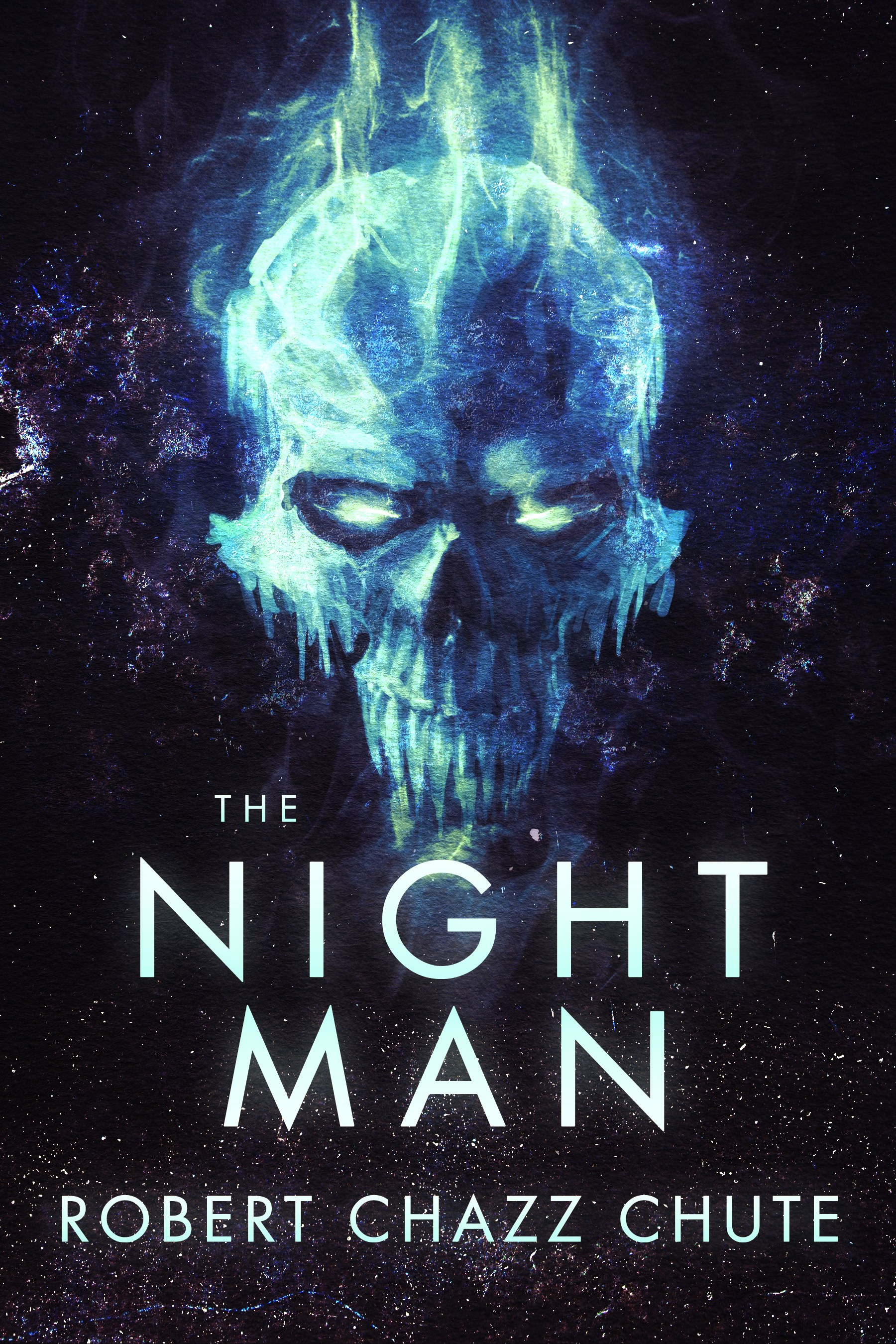
You can pick this ebook up for free today at this link: http://bit.ly/TheNightMan

Join my inner circle at AllThatChazz.com

See my books, blogs, links and podcasts.

Enter your email address to follow this blog and receive notifications of new posts by email.

Join 2,063 other subscribers