C h a z z W r i t e s . c o m

See all my books at AllThatChazz.com.

Writers: Beware of Pen Names

This image is a reproduction of an original pa...

Image via Wikipedia

Good Christmas Eve afternoon to you!

Since you’re all out doing battle in malls, cutting your way through the crowds with a machete,

I’d like to make a quick point with this quick post:

Watch out for pen names. There’s a use for them, but there’s been some bad advice splashed around because of some weird over thinking about branding. I use my middle name and go by Robert Chazz Chute for this blog and my fiction submissions. I do this for the same reason Michael J. Fox has a J. There is a native American poet from Maine who goes by the name Robert Chute. He came first, so to avoid confusion and out of respect, I went with my middle name. I think that’s a good reason to use a nom de plume.

About the bad uses of pen names: In the past, agents, editors and publishers often advised writers to use pen names when writing for different genres. They feared brand confusion. That was silly. Consider the biggest book brand of them all: Stephen King. I’ve read all his horror. It turns out I have no interest in his Dark Tower series or the any of those graphic novels. But I did try them out because I like Stephen King books generally. If you like an author’s book, you might like their other books.

Too few people buy and read books to play games making it more difficult to find your work!

Consider James Patterson and his 157 or so books that are now out in different genres. One name provides cross-marketing and cross-pollination for his body of work. Isaac Asimov wrote what? 500 books? Much of it was non-fiction, too. (The most readable anatomy book I own is by Isaac Asimov.)

So if you’re going to use a nom de plume, do it for considered reasons. Don’t do it because you fear your romance audience won’t follow you to your fantasy epic.

People who read books get enthusiastic about particular authors, not just particular books.


Filed under: authors, Publicity & Promotion, publishing, Rant, rules of writing, What about Chazz?, Writers, writing tips, , , , , , , , , , , , , ,

Writers: The mire of conflicting advice & unfair criticism

The hierarchical structure of the autobiograph...

Image via Wikipedia

When I got into the business, there was a criticism meant to shut writers down.

“Too autobiographical” was the kiss of death.

That’s ironic for several reasons:

Biographies and autobiographies are moneymaking books. Sarah Palin‘s ghosts have already published more books than you and possibly more books than she’s read. Okay, that was a cheap shot, but somewhat funny and it has the added bonus of being an Irish fact—that is, something that is a lie, but should be true.

I digress.

Back to the issue of unfair criticisms and misguided advice:

 The mind boggles at Augusten Burroughs work. How much childhood trauma can one man recycle into his fiction and non-fiction? He has enough monsters, addictions and insanity in his past that he’s set for several more books at least.

“Too autobiographical” is now a stale criticism when you consider the movement of the market toward tell-alls, whistleblowing and confessionals. There’s a lot of popular fiction that’s thinly veiled life story, too. In fact, if you’ve been a lion tamer-stripper-celebrity-prostitute, you’re a much easier sale than if you’re just another writer working away at your desk making stuff up.

Diablo Cody is a talented writer, but she had a lot more heat going into the fray because of her tattooed image and history as a stripper. I’m not saying she wouldn’t have sold the brilliant Juno script anyway, but really, how many celebrity screenwriters can you name besides her, McKee and William Goldman? If you came up with a few names, it’s probably because they are famous writer-directors, not just writers.

(And notice that irksome phrase “just writers.” I use it advisedly, as a synonym for “merely,” since that’s the stature writers generally have in film, television and publishing.)

“Too autobiographical” was once a stinging barb. It marked a talent that was undeveloped. It suggested teenage angst worthy of a diary, not of publishable quality.

The worm has turned. Now your tortured history as a brawler helps; Chuck Palahniuk brawled a bit and escorted sick people to support groups long before Fight Club. Your time in seedy bars lends authenticity to your writing and manuscript evaluators may well take you more seriously because of the stuff you don’t want your mom to know. A work can still be too autobiographical, but that criticism doesn’t carry the weight it once did.

Evaluators can be off the mark in what they think qualifies as authentic, anyway. One writer, for instance, was told that her dialogue didn’t ring true for how contemporary teenagers speak. She was advised to hang out with some kids to catch the flavor of the real thing. What the manuscript reader didn’t know was the writer was 17 at the time.

We’re a culture that worships celebrity, so “too autobiographical” isn’t a criticism that comes up as much (unless your life story is deadly dull.)

The true irony is that the same editors who would say “too autobiographical” would also routinely tell aspiring writers to “Write what you know.”

That’s bad, even egregious advice. Don’t write what you know. If you only write what you knew, there wouldn’t be much fantasy, science fiction…or much literature at all, come to think of it.

Instead, write what you care about.

 Your research and the knowledge

flows from caring, anyway.

Filed under: authors, book reviews, Books, Editors, links, manuscript evaluation, Rant, scriptwriting, Useful writing links, writing tips, , , , , , , , , , , , ,

Author profile: Alicia Hendley’s Subtle Thing

Alicia Hendley’s book A Subtle Thing tells the story of Beth, a young woman who attempts to navigate through life while experiencing recurrent clinical depression. Throughout the novel, Beth copes with life’s difficulties. Beth’s trials may resonate with many readers, especially those related to education, career, parenthood, and relationships.

Alicia_Hendley

Alicia Hendley, author of A Subtle Thing


Alicia was born in Kitchener, Ontario in 1970. She completed a B.A. at Wilfrid Laurier University in psychology. Then she progressed to her Master’s degree and PhD in clinical psychology at the University of Windsor. Alicia’s a psychologist in the Counselling Centre at the University of Waterloo. She’s on maternity leave with her fourth child. She lives in Guelph with her husband (a journalist.)

CW: Alicia,when did you first know you wanted to be an author?

AH: That’s a good question, but a hard one for me to answer. I can’t remember a time in which writing and reading stories were not integral parts of my life. When I was growing up, my mother was a librarian and my father was a philosophy professor so books were fundamental to family life. When I was about ten, my parents gave me an old manual typewriter. From then on I spent much of my free time pounding out stories and poems. My writing continued and became a welcome stress reliever for me. I count on writing to ground me, no matter how busy or pressured the rest of my world. Now as a psychologist and mother of four, writing is something separate that just belongs to me. It’s vital for maintaining my sense of self.

CW: Tell us about A Subtle Thing. How did you get the idea for your book?

AH: Indirectly, the idea of writing a book about depression likely came from my job. I’m a clinical psychologist, so thinking about mental health is normal for me. I’ve always been interested in the more complex side of human experience. What probably drew me to psychology in the first place was my interest in more existential stuff: the importance of meaning, resilience, and authenticity in people’s lives.

CW: What’s your writing process?

AH: While I don’t have a formal writing process, per se, the way I start writing something new (whether a poem or a story) is often the same. Basically, I jot ideas down whenever they strike. Ideas seem come at me rather than me sitting down and consciously thinking about what I want to write. I wrote much of A Subtle Thing while on maternity leave with my third child so I had limited time to devote to it. Parts of the book were written on the back of receipts and paper bags, whatever I had handy at the time. I then used the small breaks I did have in the day to develop those ideas.

I perfected writing in spurts when trying to finish my dissertation in grad school. I was a single mother of two then, with very limited time to research or write. I was forced to learn how to immediately take advantage of free time when it became available, be it a half-hour nap period or early in the morning. Writer’s block is not a term known to single mothers, at least not to me)!

CW: How long did it take you to write the book and find an agent and publisher?

AH: I’d say that the book took about a year to write. The short stories upon which The book is based on short stories I wrote during lunch breaks in my office. I completed the rest of the book on my maternity leave.

CW: And your path to publication was…?

AH: After I completed the first version of A Subtle Thing, I sent it to a few small presses. I received positive feedback from one, but they rejected it. I then learned from my brother Nate (who is also an author) about a fairly new, independent publishing house (Five Rivers Chapmanry.) He encouraged me to send my manuscript to them. The feedback I received from Five Rivers was encouraging. They suggested I lengthen the book and resubmit it.

CW: What’s the most surprising thing you discovered writing this book?

AH: A Subtle Thing struck me as an odd little book, something I thought might be considered too dark, too out of the mainstream for most readers to embrace. Since it’s been published, however, I’ve learned that a lot of people do connect with it. For example, I know of a men’s book club that recently read my novel and gave it positive feedback. I like being surprised!

CW: What were the obstacles you faced getting the book out? 

AH: I guess the biggest challenge now that it’s published is getting exposure for the book, getting the word out. As a previously unpublished, unknown author, this can be really tough. I had assumed all books were on a level playing field with regard to getting book reviews. That’s not necessarily true, which can be frustrating. To me, negative feedback is much better than indifference or silence.

CW: Publishing can be a hard road. Did you doubt yourself along the way? 

AH: I’d say that the hardest part of the publishing process is maintaining your motivation level and belief in yourself in the face of rejection. As a psychologist, I’m used to pretty instant feedback in my work—I learn very quickly if what I’m doing with a client is helping or hindering them. What I most enjoy is hearing feedback from readers. After a lifetime of writing mainly just for me, this is exhilarating.

Sending out manuscripts to publishers is a different beast altogether. For about three years I sent out one manuscript (a memoir) to publishers. I received a number of standard rejection letters, but was able to get over the first “hump” a few times, with the manuscript being sent out to readers. I would then learn several months later that the manuscript had again been rejected. In hindsight, the memoir did need revision. I found the process equal parts discouraging, humbling, and frustrating.

CW: What advice would you give unpublished writers?

AH: My advice would be twofold: be tenacious but also be open to constructive criticism. When a professional writer or publisher has taken the time to actually give me feedback about my writing (rather than a standard rejection letter), I listen. At the same time, what one publisher might not like another could, so writers need to lick their wounds, rework what needs reworking, and then try, try again.

CW: Have changes in the book industry forced you to change how you published or marketed your work?

AH: I am still very naïve when it comes to the book industry so I haven’t changed anything I’ve done. That said, following the advice of my wise publisher, Lorina Stephens, I have done things that, as a fairly shy person, I would not have believed possible, such as blogging and tweeting.

CW: What can you tell us about your next book?

AH: I recently completed a book about childhood female bullying and the impact such aggression has years later. Tentatively called The Bystander, it’s not the story of a victim or a victimizer, but rather that of an observer who, through silence and distancing, may imply tacit approval. I attempt to raise various ethical questions for the reader, including questions related to goodness, accountability, responsibility, and tolerance of differences.

I’ve also just started writing a new story, which may become a book. The main character is an 11-year-old boy who was inadvertently the cause of his twin’s death. We’ll see where that goes.

CW: Thanks telling us about your work, Alicia!
A_Subtle_ThingA Subtle Thing is Alicia’s debut novel, published by Five Rivers Chapmanry Visit their website at http:www.5rivers.org. A Subtle Thing is available at Amazon and www.chapters.indigo.ca.

Find her on Twitter (@AliciaHendley) and visit Alicia’s blog at http://aliciahendley.blogspot.com. 

Filed under: Author profiles, author Q&A, authors, publishing, writing tips, , , , , , ,

Writers : How “hands-on” do you want your agent to be?

A diagram of cognitive dissonance theory

Image via Wikipedia

I ran across an interview with an agent here. She sounds very nice. But the first couple of questions got me to wondering…

The agent mentions that she’s been lucky to never have to work on a book she didn’t “love.”

Okay. That’s great. Or is this a red flag? It’s a common sentiment among agents across the board. They want to be “delighted.” They have to love it to sell it. Hm. As a former sales rep of hundreds (thousands?) of books, I can tell you I sold many books I hadn’t even read. I’m not recommending that. I am saying that’s real. I fail to understand why agents have to love books to sell them. Shouldn’t the question be, would others want to read this? Do I know an editor who would like this?

You’ve bought a lot of books. You’ve read quite a few of that number, even to the end. How many books have you read that you really and truly “love”?

Then the agent discusses being very “hands-on.” There’s kind of a cognitive dissonance here, isn’t there? I’m not picking on this one agent. Again, she’s saying stuff that a lot of agents say. But on the one hand, the agent has to love the manuscript. On the other, there’s apparently lots of work ahead before it’s presentable for submission to an editor. Uh…whut? Shouldn’t it be one or the other?

Here’s a take on this from an author who sees the agent-author relationship a different way, and by that I mean upside-down from the way it’s usually portrayed. Dean Wesley Smith sees the agent as his employee and is not interested in jumping through their hoops. He doesn’t want to be slowed down by the agent’s process (though he has used agents.) He’s not interested in any employee slowing his process, production or sales. I recommend you read all his posts on Killing the Sacred Cows of Publishing. It’s refreshing.

So here are my questions:

Do you want your agent to love your book or is liking it good enough for you?

Do you want your agent to edit your manuscript to make it better up front?

Do you prefer that your agent be more hands-off and just get it to market?

Addendum: The agent adds, “Basically, build yourself as big of a social media platform as you can before your book ever comes out.” Good advice for both the indie published and the traditionally published. But, if you can get your social media platform big enough, do you need a traditional publisher at all?

My new BFF Jason Alexander Greenwood asked himself these questions and came up with an indie answer. If you missed my link to his post on Sunday, read Shoot the Gatekeepers here.

Filed under: agents, authors, Editors, getting it done, links, manuscript evaluation, publishing, Rant, Rejection, , , , , ,

Christopher Hitchens interview

Filed under: author Q&A, authors, , ,

Author Profile: Sue Kenney & My Camino

CW: Most authors I speak to know they want to be a writer in childhood. That wasn’t true in your case. Tell us about that. 

SK: After being suddenly downsized from my corporate telecom career, I walked 780 kms on the Camino de Santiago de Compostela, a medieval pilgrimage route in Spain on a search to figure out what was important in life. When I came home I started telling stories about my journey. It was during this time that people asked me to write a book. I kept saying I wasn’t a writer. Over time with the encouragement of many people, mostly strangers, I felt it was something I was called to do.

CW: It sounds like your audience found you first and demanded you write about your journey.

My Camino

Sue Kenney

SK: People told me they wanted to read more about what I was thinking about and how my perceptions changed as I walked. The book is the true story of how I confronted my deepest fear. I start talking about the events that led to my decision to walk the Camino and why I went alone in the winter. Then, I tell stories about the people I met, the experiences I had, what I was thinking and how it impacted my perspective on life.

CW: How did you begin?

SK: I researched the Camino’s rich history extensively, the pilgrims (modern and pilgrims of old), miracles and the folklore. I took a course at Ryerson University in creative writing before I wrote my first book. My process was to sit down and write 1000 words a day for 2 months to complete a first draft manuscript of at least 50k words. I was disciplined about keeping to my goal and I met it.

 CW: How long did it take you to find a publisher?

SK: I went to Toronto’s Word on the Street and found three publishers who were interested in my idea. I was asked for a writing sample by one of the publishers but I hadn’t written anything. Fortunately, I had a storytelling CD called Stone by Stone I recorded. I transcribed those stories. Then I picked the longest story and gave it a chapter number and title. I sent it as my writing sample along with a strong marketing plan. White Knight Books agreed to publish My Camino the following year. The whole process took about six months because I was insistent on having the book published quickly and I delivered what was requested by the publisher on time.

CW: What surprised you the most about the writing process?

SK: If I surrendered to writing the truth then I was guided in the process. When I tried to control the process, I had more struggles. Early on, I decided to surrender to the creative process and I was completely surprised that I never experienced writer’s block.

CW: What was your biggest challenge you experienced through this book?

SK: Editing the book was a big challenge and an inspiration. Initially, I wasn’t impressed with the way the publisher edited the book because I felt as though my voice was being changed. He agreed to let me look for another editor. I found Bruce Pirrie. He hadn’t edited a book before, but he was a professional screen/stage/television writer who worked on The Red Green Show. He had also directed several Second City comedy shows. I took a chance on him and it proved to be the right decision. Bruce would give me notes, I’d make the revisions and then he would read it to me out loud.

When I asked him why he wanted to do that he said, “How do you know what it will sound like?” The inspiring part of this story is that I believe as a result of reading the book out loud, it is more visual. This was important when we pitched a screenplay adaptation to Pierre Even, (C.R.A.Z.Y.) a producer in Montreal. The book is now in development as a feature film. Bruce and I co-wrote the screenplay. In five years I went from being an Account Executive in the telecom industry to writing two books, a stage play, a screenplay and recording a storytelling CD.

CW: What was the hardest part of the publishing process for you and what did you most enjoy?

SK: The hardest part was getting the bookstores to keep copies of the books on the shelves. The big box stores want to sell volumes of books and being a first-time author, I didn’t have a well known name.

The part I most enjoyed was doing the book signings and readings. Often authors loathe doing this but I love it. In the first year, I did 54 author events. I gave free stones to people walking by and this always stirred up interesting conversations. When people find out I walked 780 kilometers across the north of Spain alone in the winter they’re intrigued. It took me over two years to become a Canadian bestseller but I never gave up. I believe my life purpose is to tell stories to inspire people on their life journeys. At book events I get to live my life purpose. It doesn’t get better than that!

CW: Any advice would you give unpublished writers?

SK: If people ask you to write your story, do it. Set a goal and write every day until it’s done. NaNoWriMo is a great event to help develop discipline. Don’t worry about getting a publisher or how you are going to sell books. Just get the story down on paper.

CW: Have changes in the book industry altered how you market your work?

SK: It’s easier to market now. I can blog, Facebook, tweet and send out my newsletter with updates. When I wrote a second book about the Camino called Confessions of a Pilgrim, I decided to use a self-publishing house because it gave me everything I needed to get a book on the market quickly and efficiently.  

CW: What’s your next project?

SK: I’m narrating an audiobook version of My Camino this month. This allows me to use my “voice” to share stories, something I’ve wanted to do since the book was published. In January, I’ll be offering a download version of the book on my website www.suekenney.ca initially for FREE co-incident with the launch of my new website. The CD audio book version will be launched on International Woman’s Day on March 8, 2011. I’ve penned the first draft of a novel about a woman who travels to India in search of pure love. I believe there is a correlation to walking and creativity so I walk every day.

CW: Thanks for doing this, Sue.For more on Sue Kenney, go here:

www.suekenney.ca

mycaminobook@gmail.com

Facebook: My Camino

Filed under: Author profiles, author Q&A, authors, Books, publishing, Writers, writing tips, , , , , , , , ,

Here’s a good one on editors, authors & the dance we do

This article is a long read but definitely worth the time. This gives quite an insight into the long process we must all endure (whether you’re self-published or traditionally published.) It’s especially useful to see how editors and authors relate. Check it out:

Five Writers Talk About Their Book Editors | The Awl

Racing off to help someone in need at the moment.

Alfred! My cape! My cowl!

See you back here tomorrow morning, same bat-time, same bat-channel.

Filed under: authors, Editing, Editors, publishing, self-publishing, Writers, writing tips, , ,

Writer Links: Stephen King, evil editors and plugging plot holes

Stephen King, American author best known for h...

Image via Wikipedia

You’ve already worked hard today, right? Take a break.

Here are some useful links for your Friday afternoon:

Stephen King’s Top 7 Tips for Becoming a Better Writer

Editors are evil, and other fairy stories‏

AOS: How to avoid inconsistencies and plot holes

The Must-Have Writing Routine‏


Filed under: authors, Editing, Editors, Friday Publishing Advice Links, Useful writing links, Writers, writing tips, , , , , , , , , ,

Author Profile: Nate Hendley

Nate Hendley is a Toronto-based author who was born in Connecticut in 1966. He is a full-time journalist and writer and has published

nate hendley

Nate Hendley

over a dozen books, primarily on true-crime topics. He lives with a demanding cat and has a website at www.natehendley.com. You can check out his latest works on the Five Rivers website at http://www.5rivers.org/index1.html

His books: Motivate to Create: A Guide for Writers (Practical tips on how to start up or step up a freelance writing career) & Al Capone: Chicago’s King of Crime (An intimate portrait of America’s most famous gangster)

Previous works by Nate Hendley:

Edwin Alonzo Boyd: The Life and Crimes of Canada’s Master Bank Robber, The Black Donnelly’s: The Outrageous Tale of Canada’s Deadliest Feud, Dutch Schultz: The Beer Baron of the Bronx, John Lennon: Music, Myth and Madness, Crystal Meth, American Gangsters Then and Now: An Encyclopedia, Bonnie and Clyde: A Biography, Jean Chretien: The Scrapper Who Climbed His Way to the Top, William Lyon Mackenzie King: The Loner Who Kept Canada Together

 CW: When did you first know you wanted to be an author?

NH: I was around 10 or so, living in England (where my dad took a year-long sabbatical in 1975-76). I recall I started writing—by hand—a long war story that I ended up calling “Tank Tracks in North Africa”. As might be surmised by the title, it was all about a bunch of guys in a tank fighting Rommel in the desert in World War Two. That’s the first long-form book I recall putting together. I think it ran to something like 50 pages.

CW: Tell us about your book. How did you get the idea?Al_Capone_book[1]

NH: Two books actually. One of them is on Al Capone, the other is about motivation for writers. The Capone book was originally part of a series of gangster tomes I penned for Altitude Publishing, an Alberta-based company that ,alas, is no longer around. When Altitude went belly up, Five Rivers Chapmanry kindly bought some of my Altitude books for republishing.

The second book, Motivate to Create: A Guide for Writers, is a rather drastic revision of a book I initially self-published. Lorina Stephens, publisher at Five Rivers, liked the concept of my book but wasn’t totally excited by the contents. I ended up rewriting quite a bit of the book, making it more professional and taking out a lot of the personal anecdotes that filled my self-published tome. The newly revised book is considerably better than the original, which demonstrates the power of having a good editor crack down on your material.

 The idea for Motivate to Create came from the fact that there is a dearth of info out there on motivation for non-fiction writers. Almost every writers’ motivation book is aimed at creative writing, which is fine, but not what I do. A lot of the existing books seemed very sappy, too—all this crap about “finding and unleashing your inner muse.” I was more concerned with concrete, practical advice that had already been field-tested by other, established writers.

CW: What research was involved in your book’s development?

NH: Researching Al Capone involved reading all the available literature on the man (which is quite considerable) and tracking down newspaper and magazine articles from the period in which he lived. I was pleased to be able to correct certain falsehoods about Capone that have been perpetuated throughout the years. He was never a national crime boss, for example. He controlled the Chicago underworld but certainly didn’t control organized crime across America.

For Motivate, I queried various writer friends and acquaintances and used some of their quotes throughout. The rest of the material was thought up by me.

 CW: Do you have any formal training in writing?

 NH: I went to journalism school after finishing university. I never actually completed J-school, having failed desk-top publishing three times in a row. Anyway, journalism school taught me the nuts and bolts of news and feature writing and was an invaluable experience.

 CW: What is your writing process?

I don’t really have a writing process. One of the tips I offer in Motivate to Create is not to get too precious about your writing time (i.e. “I only write when the golden sun rises from the horizon and the muse dances upon my forehead”). When I have a writing project to do, I just sit down and do it.

CW: How long did it take you to write the book and find an agent and publisher?

NH: Capone took about a year to put together (research, writing, editing.) Motivate was spread over a longer period because I essentially rewrote the book when Five Rivers purchased it. Self-publishing is a pain in the butt so I am glad that a real publisher took the book over. I still have about 30 copies of the original book sitting around my apartment. Unless you’re really interested in marketing and promotion, I would not recommend self-publication.

 CW: What’s the most surprising thing you discovered in writing this book?

motivate_to_create[1]NH: Can’t really think of any. I was pleasantly surprised at the number of freelance writers willing to respond to a general questionnaire I sent around for Motivate to Create.

CW: What was the biggest disappointment you experienced through this book? 

NH: The biggest disappointment was that I didn’t get fabulously wealthy through self-publishing. I thought orders would come flowing like a river. More like a trickle from a tiny pond.

CW: What was the hardest part of the publishing process? What did you most enjoy?

NH: Research and editing are by far the hardest part of the publishing process. Writing is the most enjoyable. When you self-publish, doing all the promotion and marketing is the hardest part.

CW: What advice would you give unpublished writers?

 As Creedence Clearwater Revival once expressed it so well, “keep on chooglin’.” In other words, just keep at it. Practise doesn’t necessarily make perfect but it does make you more professional.

CW: Have changes in the book industry forced you to change how you published or marketed your work?

NH: Yes. Thanks to websites like Facebook, Twitter and LinkedIn I can do more to promote my wares online.

CW: What’s your next book project and what can you tell us about it?

NH: I’m revising a book about the drug methamphetamine for Five Rivers. It is a revamped version of a book I initially did for Altitude that came out in 2005. The new version has new interviews and updated statistics.

CW: Thanks for doing this, Nate! You can follow Nate on twitter at http://twitter.com/natehendley or email me at nhendley@sympatico.ca . The Five Rivers site is located at http://www.5rivers.org/. Best to check the Five Rivers site for any info on upcoming book signings.

Filed under: Author profiles, author Q&A, authors, Books, publishing, writing tips, , , , , ,

Writers: Update & three links for you

a Science fiction city (Paris in a future.)

Image via Wikipedia

I had another frustrating day dealing with tech support that, for awhile, actually made things worse. Now another modem is on order and I’m searching for a technician to come save me. Yeah, it’s that bad.

However, this too shall pass. I’m going to try to get some writing done on my little AlphaSmart Neo. Once you’ve done all you can, you’ve done all you can. I’ve messed with the computer so much I’ve lost two days of my life. While others were enjoying snow days, I was staring at a screen trying to move the immoveable. No more.

Today I get back to my life and focus on the fun parts. I’ll let the on site tech deal with the trouble. (For those who missed it, a cyber attack is to blame, but don’t be afraid. I’m not contagious.)

I recently finished a major editing stage for a client’s book so now it’s time to work on something of my own: a dystopian novel about soulful robots and a drug that improves human brains. Think Robert J. Sawyer meets William Gibson. Ooh, that’s high falutin’ talk. Anyway, I’ll put aside my present-day tech troubles and write about future tech troubles.

And finally, I’ll have some fun. Writing fiction is always fun. If you aren’t having fun as you write, your readers won’t have a chance. Stop putting it off. Go have fun, too. If you have to delegate your worries to get them away from you, then do that.

 (Well…after you check out these cool links, anyway.)


The Writers Alley: The Quixotic Pull of Your Future Novel‏

10 media and tech luminaries on the future of reading

7 Ways to Help Writers Survive the Holidays

Filed under: authors, My fiction, publishing, Useful writing links, What about Chazz?, writing tips, , , , , , , ,

Bestseller with over 1,000 reviews!
Winner of the North Street Book Prize, Reader's Favorite, the
Literary Titan Award, the Hollywood Book Festival, and the
New York Book Festival.

http://mybook.to/OurZombieHours
A NEW ZOMBIE ANTHOLOGY

Winner of Writer's Digest's 2014 Honorable Mention in Self-published Ebook Awards in Genre

The first 81 lessons to get your Buffy on

More lessons to help you survive Armageddon

"You will laugh your ass off!" ~ Maxwell Cynn, author of Cybergrrl

Available now!

Fast-paced terror, new threats, more twists.

An autistic boy versus our world in free fall

Suspense to melt your face and play with your brain.

Action like a Guy Ritchie film. Funny like Woody Allen when he was funny.

Jesus: Sexier and even more addicted to love.

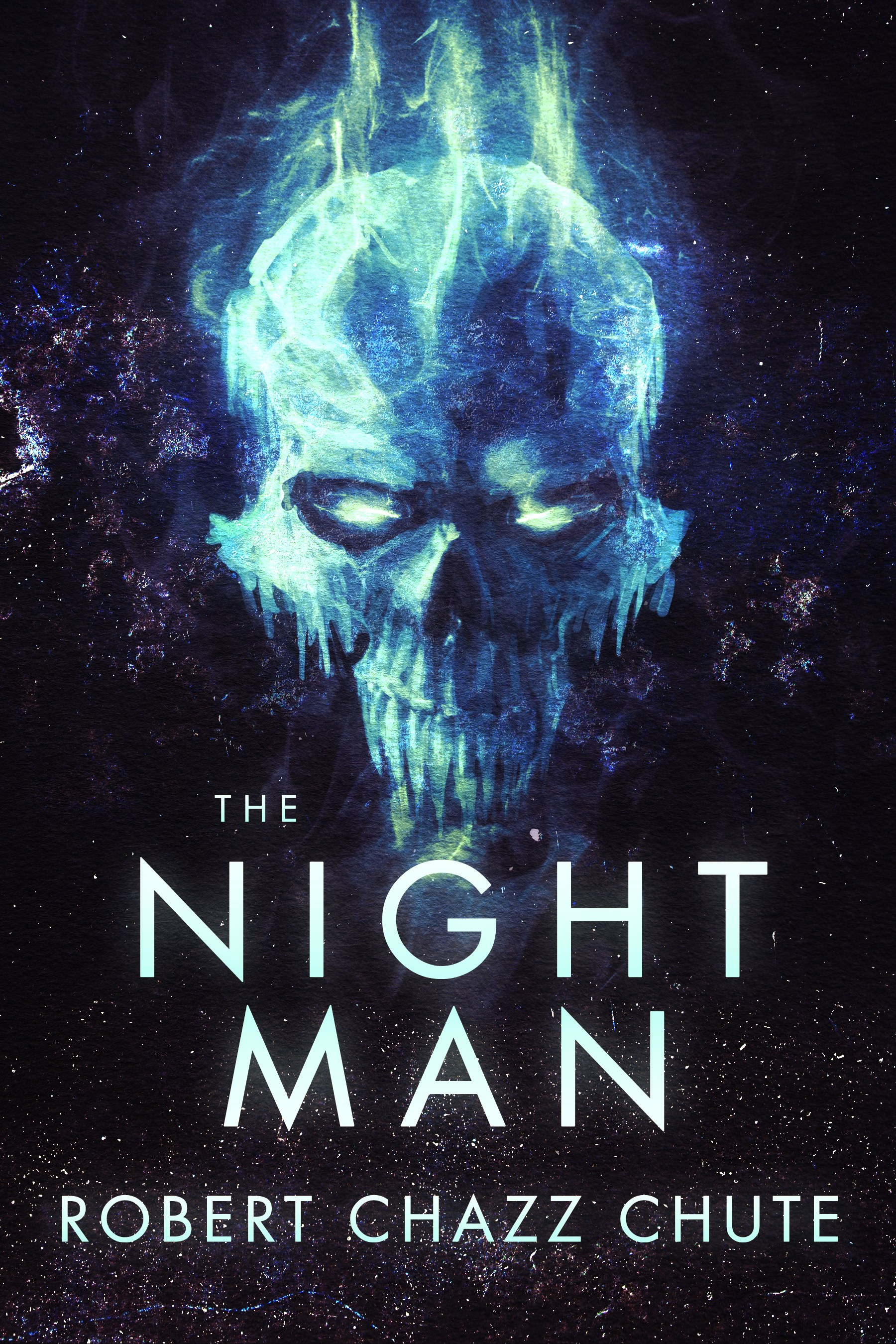
You can pick this ebook up for free today at this link: http://bit.ly/TheNightMan

Join my inner circle at AllThatChazz.com

See my books, blogs, links and podcasts.

Enter your email address to follow this blog and receive notifications of new posts by email.

Join 2,063 other subscribers