C h a z z W r i t e s . c o m

See all my books at AllThatChazz.com.

My God! Even More Writing Advice Links!

Jane Friedman’s blog at Writer’s Digest. writers_digest_1932_11_a

If you’re a writer, you must read this.

She also includes the best links she finds each week for even more great advice.

A Newbie’s Guide to Publishing: The Changing Face of Publishing‏

A full-time thriller writer makes predictions about the future of publishing.

How Publishing Really Works

(Good blog, irresistible title)


Filed under: publishing, web reviews, writing tips, , , , , ,

Writers: Rejection does not build character

manuscript by Saint Andrzej Bobola, Polish Jes...

Image via Wikipedia


Some say rejection is part of “paying your dues” in the writing business. That’s over-analysis. Rejection is just someone saying no. When your query is rejected, do not read too much into it. 

Rejection is not useful on its own. It doesn’t thicken your skin for when you become a “real” writer. After you are published, you will get angry with critical reviews just as you are angry with rejections now. And why not? Your book is your child and an extension of you. If you are bent toward getting pissed off, you still will be. Rejection is not part of your training. Writing is your training. Learning your craft is a different proposition from receiving a form rejection slip. 

Rejection can be useful if you get specific feedback on why your story was rejected. Standard reply forms that say “not for us” tell you nothing except you must resubmit elsewhere. A manuscript evaluation (whether done by an editor you pay–ahem, like me) or by the people you submit to, can be useful. However, even then, it may be a question of taste in some regard. Agents and editors do sometimes take the time to tell you what they found wrong with a near miss. (Even if you disagree with their feedback, send a thank you note.) 

Understand this:

1. An agent or editor may give you a critique, but after you “fix” it, they are under no obligation to accept the manuscript. Many writers report great frustration over doing what they were told (perhaps even compromising their vision for the faint hope of publication) and still find themselves on the wrong side of the gate. No with details is still no. Doing everything you are told without running it through the filter of your own sensibility is no guarantee you’re on the right track. It also leaves you spineless and soulless. 

2. Publishers, editors and agents are extremely busy people. (Sometimes they wear that like a badge that they feel makes them special. However, I don’t know anybody who is at all cool who isn’t extremely busy, do you?) The point is, no one owes you a critique unless you paid them for said critique (ahem–like me.) Agents and editors typically say yes or no (mostly no.) They aren’t in the business of teaching you the craft. If they do send you a personal rejection and not a form rejection, it does mean you’re making progress. Handwritten notes of encouragement can make your day even though it’s a rejection doused with a little sweet perfume. 

3. If you send out a bunch of manuscripts and you receive no personal rejections, it means you have to tweak your manuscript or revisit your target selection process or both. Only you can decide how many rejections you suffer before you undertake further revision. Some say don’t tweak after you’re dome with revisions because by the time you’re finsally finsihed with revisions, you should be a little sick of it and ready to send your baby off to college. Fresh enthusiasm is what the new baby is for. Even as you edit the last book, your fickle nature should be pulling you toward the next book’s greatness.  

4. The rejection might not be about you. There are many variables that go into editorial decisions. Maybe the subject matter or execution is too foreign to the publisher or too much like one of the books they already have which failed. Maybe the editor loved it but it got shot down for budgetary reasons. Don’t get hung up on each rejection. Resubmit and move on to people who get you as quickly as possible. 

5. Don’t worry about rejection. It will occur. Expect it. It’s more important to do the writing and trust that good things are coming. Optimists are the only ones who succeed in this business. Pessimists, realists and the meek have the good sense not to try. They never succeed at much, but they’re cozy. Writers aren’t cozy with their place in the world. If they were, they wouldn’t be writers. 

6. Once you are published, you’ll realize the journey was more important than the destination. It’s the writing that matters, which is good because you’ll spend much more time writing than you will receiving prizes and getting drunk on fancy publicity junkets.  

BONUS:

When I was a kid, seeing my name in the paper was a big deal. By the time I was seventeen I had a regular byline in my local newspaper. By the time I was twenty, there was still a small thrill to see my byline on the front page of a provincial and city newspaper. My back page column in a magazine tickles. Recognition is still cool, but it’s not the same thrill and if a byline is all you write for, that’s not enough gas for the trip.  

The thrill is in the writing. The fun was finding just the right turn of phrase. It was always really about the writing. It always should be. 

Filed under: agents, Editors, manuscript evaluation, Rant, Rejection, writing tips, , , , , , , ,

Agents and (Non)Acquiring Editors: A Word on Gatekeeper’s Remorse (Some don’t have any!)

J. K. Rowling, after receiving an honorary deg...

Image via Wikipedia


When a book is a great success, the rumors eventually emerge. JK Rowling was rejected six times. Meyer of Twilight fame? Fifteen times. All authors have stories of deals that almost went through. Many tell stories of cruel writing groups, insensitive english professors or critics that were hypercritical. When one writer triumphs and rises above these obstacles, all us of share a little of that. In German, it’s called Schadenfreude. In English it’s called “Nyaa-nyaa, nya-nya-naaaaaah!”       

Editors who reject books that go on to great success interest me. First question: Do they still have their jobs? Answer: Yes, of course they do.       

In Hollywood, you fail up. (Getting any movie made is such an accomplishment, you can have a string of failures and be a working director like M. Night Shyamalan.) If the rumoured stats are trues (85%-95% of books not earning their advances) publishing surely has the  highest tolerance for failure of any industry. There is no product research. “Product research is the first print run,” as they say. (Due to technology and Seth Godin forces, that’s changing. That’s another post.)       

Agents who pass up gold and editors who turn their noses up at diamonds answer predictably: “It’s a subjective business.” Yes. It is.    

Second Question: “But if these people are the experts who are supposed to know better, why do so many of their books tank?” Should we put so much stock in the opinion of people who are so often wrong? Dick Cheney doesn’t get to make credible predictions on foreign policy anymore. Why are we held in such thrall by agents and editors who have similar track records?      

The other common reply is, “I can’t represent it if I don’t love it.”       

I call bullshit. I’ve slogged through the slush pile. I worked as a sales rep for several publishing companies. I represented, and sold,  many books I never even got to read. (There were too many–especially when I worked at Cannon Books which listed hundreds and hundreds of books each year.) I even sold some books I actively loathed.       

The key question is not, “Do I love it?”        

The key questions are, “Can I sell it? Will lots of other people love it?”       

The idea that you can’t represent something unless you “love” it can set a ridiculously high bar for manuscript acceptance. You’ve read lots of books you liked and were glad to have read. How many were so good you really “loved” them? No wonder it’s so hard to get an agent if love is the accepted standard. (Love is not a standard criterion in business practice. You may think art is exempt from standard business practice. That’s one of the reasons this industry is in so much trouble. Artists worry their art is compromised, but without the business side? No art.)      

CORE ISSUE:       

Writers, particularly those yet-to-be published, are expected to have a thick skin.      

That is useful, though any really successful author will tell you the harsh critics hurt just as much as ever. They feel the pain, but aren’t supposed to complain.     

Some editors and agents     

 (PLEASE NOTE: NOT ALL EDITORS AND AGENTS!)     

act as if their mistakes aren’t mistakes.      

Therefore, their mistakes will be repeated.     

When ego gets in a writer’s way, he or she can’t learn and improve. That same principle should apply to gatekeepers. However, when gatekeepers make mistakes, some seem to say, “Not my fault. That’s just the way it is. I didn’t love it enough.” I say, “The new economy is making million-dollar companies, often out of billion-dollar companies. The coffee’s brewing and it’s a quarter past Massive Industry Fail. Wake up! And open up!”      

When you see an agent blog wherein the agent rips new queries, keep in mind that of all the many queries they analyse, they may accept only a handful (some perhaps two a year…or less.) Also, don’t work with snarky people because mean people suck and eventually they’ll be mean to you.     

This post was critical, not snarky. If I were snarky, I would have named names.      

Filed under: agents, Editors, manuscript evaluation, publishing, Rant, Rejection, Writers, , , , , , , , , , ,

Kurt Vonnegut from A Man Without a Country

Filed under: Writers, , , ,

Bestseller with over 1,000 reviews!
Winner of the North Street Book Prize, Reader's Favorite, the
Literary Titan Award, the Hollywood Book Festival, and the
New York Book Festival.

http://mybook.to/OurZombieHours
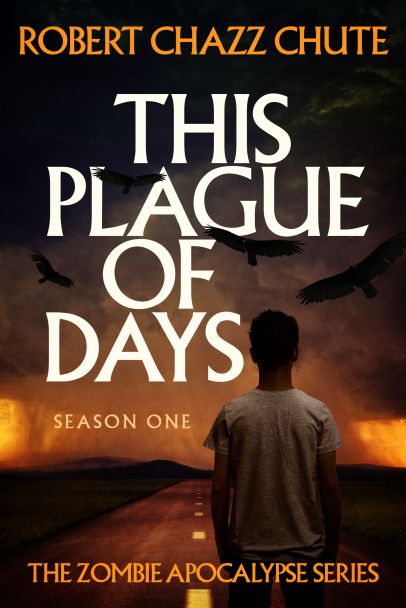
A NEW ZOMBIE ANTHOLOGY

Winner of Writer's Digest's 2014 Honorable Mention in Self-published Ebook Awards in Genre

The first 81 lessons to get your Buffy on

More lessons to help you survive Armageddon

"You will laugh your ass off!" ~ Maxwell Cynn, author of Cybergrrl

Available now!

Fast-paced terror, new threats, more twists.

An autistic boy versus our world in free fall

Suspense to melt your face and play with your brain.

Action like a Guy Ritchie film. Funny like Woody Allen when he was funny.

Jesus: Sexier and even more addicted to love.

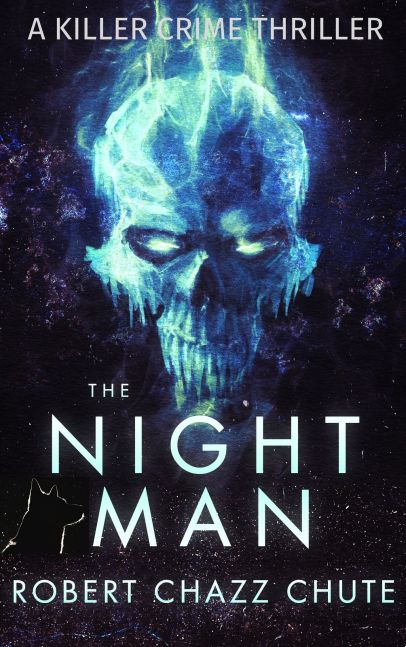
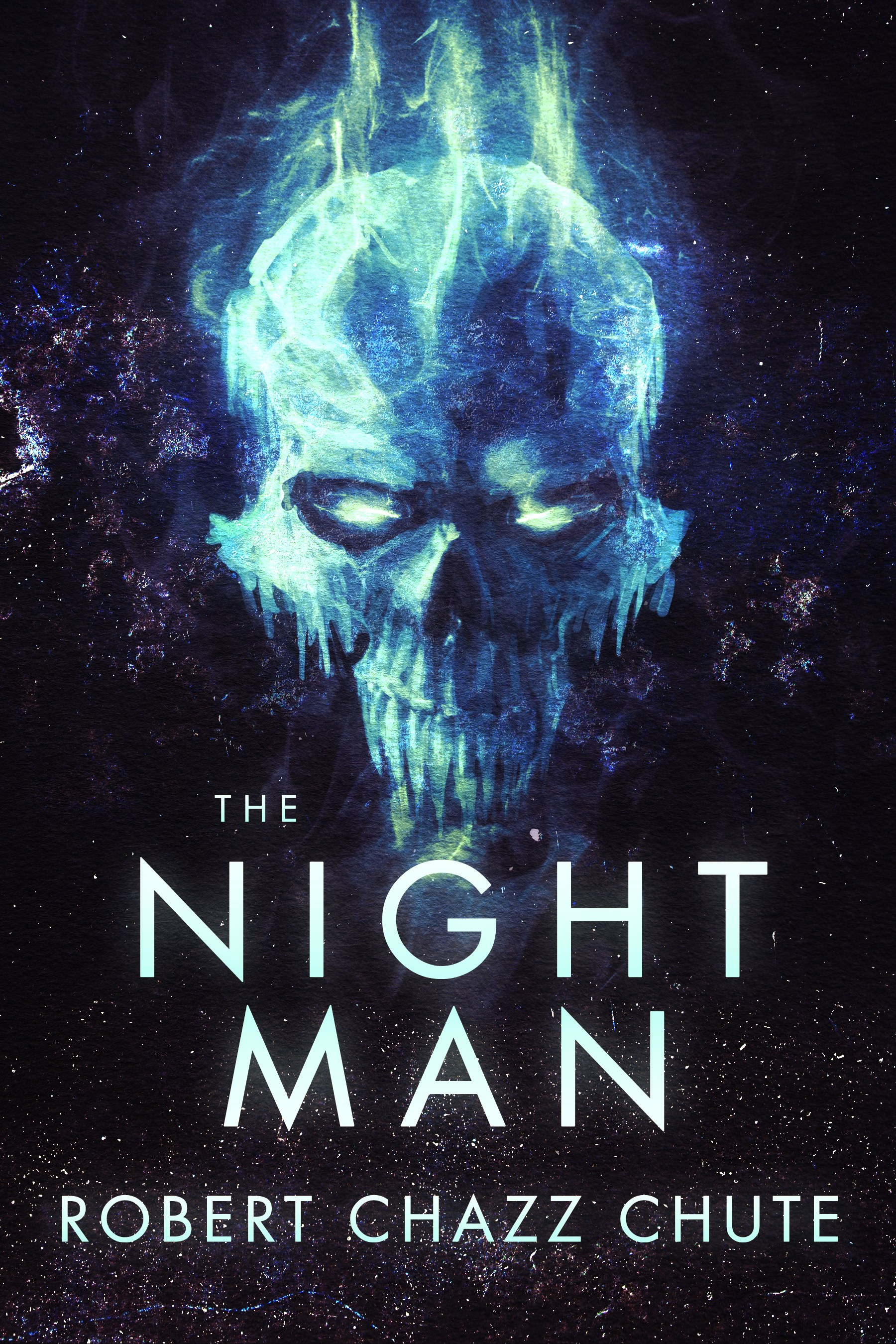
You can pick this ebook up for free today at this link: http://bit.ly/TheNightMan

Join my inner circle at AllThatChazz.com

See my books, blogs, links and podcasts.

Enter your email address to follow this blog and receive notifications of new posts by email.

Join 2,063 other subscribers