C h a z z W r i t e s . c o m

See all my books at AllThatChazz.com.

Author Profile: Sue Kenney & My Camino

CW: Most authors I speak to know they want to be a writer in childhood. That wasn’t true in your case. Tell us about that. 

SK: After being suddenly downsized from my corporate telecom career, I walked 780 kms on the Camino de Santiago de Compostela, a medieval pilgrimage route in Spain on a search to figure out what was important in life. When I came home I started telling stories about my journey. It was during this time that people asked me to write a book. I kept saying I wasn’t a writer. Over time with the encouragement of many people, mostly strangers, I felt it was something I was called to do.

CW: It sounds like your audience found you first and demanded you write about your journey.

My Camino

Sue Kenney

SK: People told me they wanted to read more about what I was thinking about and how my perceptions changed as I walked. The book is the true story of how I confronted my deepest fear. I start talking about the events that led to my decision to walk the Camino and why I went alone in the winter. Then, I tell stories about the people I met, the experiences I had, what I was thinking and how it impacted my perspective on life.

CW: How did you begin?

SK: I researched the Camino’s rich history extensively, the pilgrims (modern and pilgrims of old), miracles and the folklore. I took a course at Ryerson University in creative writing before I wrote my first book. My process was to sit down and write 1000 words a day for 2 months to complete a first draft manuscript of at least 50k words. I was disciplined about keeping to my goal and I met it.

 CW: How long did it take you to find a publisher?

SK: I went to Toronto’s Word on the Street and found three publishers who were interested in my idea. I was asked for a writing sample by one of the publishers but I hadn’t written anything. Fortunately, I had a storytelling CD called Stone by Stone I recorded. I transcribed those stories. Then I picked the longest story and gave it a chapter number and title. I sent it as my writing sample along with a strong marketing plan. White Knight Books agreed to publish My Camino the following year. The whole process took about six months because I was insistent on having the book published quickly and I delivered what was requested by the publisher on time.

CW: What surprised you the most about the writing process?

SK: If I surrendered to writing the truth then I was guided in the process. When I tried to control the process, I had more struggles. Early on, I decided to surrender to the creative process and I was completely surprised that I never experienced writer’s block.

CW: What was your biggest challenge you experienced through this book?

SK: Editing the book was a big challenge and an inspiration. Initially, I wasn’t impressed with the way the publisher edited the book because I felt as though my voice was being changed. He agreed to let me look for another editor. I found Bruce Pirrie. He hadn’t edited a book before, but he was a professional screen/stage/television writer who worked on The Red Green Show. He had also directed several Second City comedy shows. I took a chance on him and it proved to be the right decision. Bruce would give me notes, I’d make the revisions and then he would read it to me out loud.

When I asked him why he wanted to do that he said, “How do you know what it will sound like?” The inspiring part of this story is that I believe as a result of reading the book out loud, it is more visual. This was important when we pitched a screenplay adaptation to Pierre Even, (C.R.A.Z.Y.) a producer in Montreal. The book is now in development as a feature film. Bruce and I co-wrote the screenplay. In five years I went from being an Account Executive in the telecom industry to writing two books, a stage play, a screenplay and recording a storytelling CD.

CW: What was the hardest part of the publishing process for you and what did you most enjoy?

SK: The hardest part was getting the bookstores to keep copies of the books on the shelves. The big box stores want to sell volumes of books and being a first-time author, I didn’t have a well known name.

The part I most enjoyed was doing the book signings and readings. Often authors loathe doing this but I love it. In the first year, I did 54 author events. I gave free stones to people walking by and this always stirred up interesting conversations. When people find out I walked 780 kilometers across the north of Spain alone in the winter they’re intrigued. It took me over two years to become a Canadian bestseller but I never gave up. I believe my life purpose is to tell stories to inspire people on their life journeys. At book events I get to live my life purpose. It doesn’t get better than that!

CW: Any advice would you give unpublished writers?

SK: If people ask you to write your story, do it. Set a goal and write every day until it’s done. NaNoWriMo is a great event to help develop discipline. Don’t worry about getting a publisher or how you are going to sell books. Just get the story down on paper.

CW: Have changes in the book industry altered how you market your work?

SK: It’s easier to market now. I can blog, Facebook, tweet and send out my newsletter with updates. When I wrote a second book about the Camino called Confessions of a Pilgrim, I decided to use a self-publishing house because it gave me everything I needed to get a book on the market quickly and efficiently.  

CW: What’s your next project?

SK: I’m narrating an audiobook version of My Camino this month. This allows me to use my “voice” to share stories, something I’ve wanted to do since the book was published. In January, I’ll be offering a download version of the book on my website www.suekenney.ca initially for FREE co-incident with the launch of my new website. The CD audio book version will be launched on International Woman’s Day on March 8, 2011. I’ve penned the first draft of a novel about a woman who travels to India in search of pure love. I believe there is a correlation to walking and creativity so I walk every day.

CW: Thanks for doing this, Sue.For more on Sue Kenney, go here:

www.suekenney.ca

mycaminobook@gmail.com

Facebook: My Camino

Filed under: Author profiles, author Q&A, authors, Books, publishing, Writers, writing tips, , , , , , , , ,

Writers Top Ten: Why blogging about publishing is important

Publishing

Image via Wikipedia


My father does not understand me.

This was a given when I was a teenager.

Time passed.

Nothing changed.

When the subject of my online work came up, my father said, in a tone that could only be termed condescending, “Why would you bother with that?” He means well, which is never soothing though for some reason it’s supposed to ease the pain of casual negation. Think of that. Have you ever not taken offense when anyone starts out with, “No offence, but…”

But to the question, why do I bother with Chazz Writes? Well, lots of reasons (beyond the simple enjoyment of bagging on my 84-year-old father.)

1. I write because I can do naught else. He really should get that by now.

2. I write to learn what I think about things.  Don’t you find your thoughts are better articulated and organized when they go through your keyboard first?

3. I write to educate and, in so doing, I become better educated about writing and the publishing industry. I research a hippo’links before I shoot them your way. Curation is a large part of what I do on the blog.

4. I write for recognition. As detailed in my previous post (immediately below), I’ve decided it’s important to become a fame whore and not just the regular sort we all are (i.e. for money.)

5. I write so clients can find me. That happy pic up there? It takes you to my business site where there’s a free trial for editing manuscripts. I also edit websites for a flat rate. I write and I edit and this, all of this, is an ad. And yet, I am unashamed.

6. I write to build a following. When I kick my fiction out into the world, I want an audience to be ready. Eager even!

7. I write for myself. It’s not just for business. Without the business side, I’d do it anyway. (I wrote a couple of blogs before this one.) In short, it’s fun.

8. I write as a distraction from my “real” writing. When one of my book chapters fails to get written or edited as quickly as I’d like, my blog post can succeed where other ambitions may (temporarily) fall short.

9. I write the blog for the energy and feedback my readers give me through their comments, their attention and the chakra vortex I have hooked up which funnels your etheric power through your tilde key, through the interwebs and into my root chakra. So, thanks readers!

10. I write for the pure enjoyment of gentle vengeance upon family members who don’t get what I do. That’s right. I said it. Vengeance. Chazz does not take condescension well! Condescension makes Chazz write of himself in the third person! It’s that serious.

Here’s a spot-on and more serious link about why you should familiarize yourself

with what’s going on in the publishing industry:

Ten Reasons to Get to Know and Get Involved in the Publishing Industry

from Pens with Cojones.

(I love that name, don’t you? Just don’t think through to the disturbing visual… D’oh!)

Filed under: links, My fiction, publishing, Rant, Top Ten, Useful writing links, What about Chazz?, Writers, , , , , , , , , , , , , ,

Writers: Publishing breakdown by the numbers

"L'Enfant et la Fortune" by French p...

Image via Wikipedia

MAKE MINE MYSTERY: The Three Rules of Dialogue

Agent Mollie Glick Talks: 7 Things Agents Want to See in a Query, and 9 Things They Don’t

An Agent Breaks Down Royalty Numbers

Seven Rules of Writing

10 Mistakes Authors Make that Can Cost a Fortune (and how to avoid them) : Selling Books

5 Ways to Promote your Blog: What You Should Be Writing Besides Blog Posts

Be My Villain: 10 Things That Will Make Your Writing Better (and Your Editor Happier)


…and a partridge in a pear tree!


Filed under: agents, blogs & blogging, links, Useful writing links, writing tips, , , , , ,

How to be a Bad Editor

The phrase that pays.

Image by pirateyjoe via Flickr

Most editors are pretty good to great. Then there are the others. Here’s how to be one of those bad editors:

1. Edit without being asked. A copy editor I knew came up with a detailed critique of small advertisement I had for one of my businesses. I hadn’t asked and his manner was that he had caught me out at something. He hadn’t, actually. He didn’t like the paragraph’s wording but everyone else was okay with it. At best, his editorial suggestion was a lateral move. Worse, when I gently brushed him off, he didn’t have the grace to shut up. Then I had to brush him off with force.

2. Treat catches like a moral victory. A newspaper editor descended on me because, on my first day, I wrote Sidney instead of Sydney, Nova Scotia. I thanked her for catching my error. “This is not a minor error!” she said. “I said thanks,” I replied. “Were you looking for? Blood? I’m fresh out.” Mistakes happen. It was her job to catch my errors. I owed her my gratitude, not an apology.

3. Be very sure, and pissy about it, even when you’re wrong. A teacher, who was presumably responsible for helping generations of students, circled a word in a business document. She used her red pen as if I were one of her unfortunate, young charges (though I was about 30 at the time.) “You got this wrong!” she said with delight. (See #2) By that time I’d already edited and/or proofread hundreds of books. I knew what I was talking about and here’s the rule: You affect the effect. This is a common mistake. She stayed sure I was wrong. It was just too delightful to think she was right, I guess. That’s another common mistake.

4. Treat your writers like crap. (And refer to them as “your” writers, as if we’re owned.) Working in a big daily’s newsroom was an intense environment, sometimes unnecessarily so. For some reason, the air was also very dry. You’d think all those tears would be humidifying. Anyway, I had a nosebleed and some assignment editor (who was all of a year or two my senior) walked up and dropped an assignment on the keyboard upon which I was trying not to bleed. He didn’t say a word about my hemorrhage and went on about his work. A year later I was working in publishing with someone who had worked at the Toronto Star and she told me she’d experienced the exact same story with a person who was just as uncaring about her welfare. Weird.

5. Be a strict grammarian. Insist on obsolete rules. Insist the legendary “to boldly go where no one has gone before” was a mistake in two Star Trek series, a crime worthy of beheading. And never allow anyone to start a sentence with “And.” Also, grow visibly nauseous when anyone dares to end a sentence with a preposition. That’s something up with which you will not put.

6. Insist that new word usage is the cause of all our economic, political and moral woes. Insist we should freeze the language at some arbitrary point that makes you comfortable. Verbing nouns particularly irks you. Exclaim your objections and try not to faint with the vapours when someone says, “I’ll google that.” Civilization began to end when we started using “impact” as a verb and texting abbreviations are not analogous to a new language. Texting is a sign of End Times.

7. Be a tyrant. Change your mind. A lot. This is particularly fun for assignment editors. Expect writers to read your mind about how you want the story to go. Don’t tell them what you want. That would ruin your fun. Instead, get angry when they guess wrong. For extra bonus douche points, decree that you loathe simultaneous submissions and take forever to answer queries (or don’t answer them at all.) Pay a pittance on publication. Better, pay in bird-cage liners and tell seasoned writers they should be grateful you’re allowing them to “pay their dues.”

8. Be cruel in your rejections. When work you’ve turned down succeeds elsewhere, never doubt your judgment. Sniff at the plebian tastes of the masses instead. Better, put up examples of queries you find execrable and hilarious on your website. Mock it mercilessly. Sure, you’re a ball breaker and a soul crusher, but if you call what you do helping, it’s okay.

9. When you edit, don’t focus on making the text better. Focus on making yourself feel better. It’s that kind of prioritizing that can make you a famous infamous editor. Be sure to crow to everyone how x,y, and z author owes everything to you because you gave them their big break. Act as if you did them a favour (instead of the business decision it really was.) When your fledgling authors come to their senses and flee to work with someone sane, declare them a bunch of ingrates and try to have them banned from ever making a living or even having lunch in your town again. (Yes, these legends aren’t just in New York. I’ve met a couple of these demons in Toronto’s publishing houses,too. They’re people who never figured out that it’s not how you treat your superiors and your supposed equals that defines you. How people see you is determined by how you treat your assistant and those lowly writers.)

10. Be a frustrated writer. I once knew an editor who worked in educational publishing. She was a nice person, or at least I thought so until I saw an example of her work. While it’s true, particularly of educational publishing, that there is a style to follow, her changes to copy were gratuitous. She wanted to write, not edit. It showed. 

Follow these ten examples and you will soon be recognized as an editor to fear, loathe and avoid. Congratulations!

Filed under: Editing, Editors, grammar, Horror, publishing, Rant, Top Ten, , , , , , ,

#Editors, Readers and Critics

Painting The Writing Master by Thomas Eakins

Image via Wikipedia

Earlier this week in this space I contributed to the Internet shredding of a thieving editor (see below) so it’s time to balance things out with a happy story. 

About My EditorLast night someone asked me what my relationship with my magazine editor is like. 

The short answer is, “Terrific.” The long answer is that we joke around. A lot. We have a lot of fun and have rarely disagreed. We are reasonable people. We’ve never met in person though we plan to some day (and almost made that work this summer.) We talk about projects on the phone on occasion, but mostly we email back and forth. We’re both incredibly busy people, so emails allow me to say something funny without intruding too much on her crazy schedule.

Of course, we have disagreed. Most of the time (98 percent of the time, not 51 percent) I figure out immediately or soon after that she was right. She’s held me back from saying a few things that, on sober second thought, were kind of out there. When I’ve stuck to my guns and presented a cogent argument, she has capitulated. A good editor is always trying to make the writing better (and occasionally has to protect the writer from himself.) As with dealing with any great person, when we’re finished talking or writing back and forth, I feel valued.

About My Readers:

I have two beta readers. The first is my wife. She has graded so many students during her time in academia, she’s the one with a sharp eye for my typos (many) and my obfuscations (less of those, I hope. Maybe. I dunno…) She’ll notice a construction that seems awkward, but she’s gentle about it.

The second reader is my oldest friend. He used to work in publishing and has edited a literary journal. Best of all, he’s a writer at heart. He is invaluable for broader editorial suggestions when my idea is almost there but not quite at the destination at which it will finally arrive in the last draft. He can be my biggest fan and, depending on his mood and my subject, my harshest critic.

When I wrote a short story that included a gay protagonist in a military environment, he disagreed with my take vehemently. I ignored him on that one and I thought the story fell apart for other reasons so I never tried to publish it and it’s tucked away on a thumb drive. 

On another occasion I wrote a humour piece for a magazine. He’s funny. I’m funny. What could go wrong? He broke it down for me in detail and ended with this bon mot: “For a humour piece, it’s not all that funny.”

Thud!

I picked myself up off the floor and took another run at it, made the humour more relevant and hit the piece out of the park. I took his criticism to heart and the next draft was so very much better for it. He’s got a great perspective on publishing and I usually end up considering about 60 to 70 percent of his suggestions.

I do not send everything I write through my readers first. Most of my magazine writing is of a kind that I don’t feel I need the extra feedback and it’s all between my editor and me. (She also has a light touch on my copy and I like that she works with me and consults on every change.)

If it’s fiction—especially long fiction—it goes through my beta readers.

When I develop marketing materials or write speeches, only the principles are involved. With short pieces, it’s easier to keep a handle on what’s to be achieved, anyway. Occasionally, with proprietary information, it wouldn’t be appropriate to bring in an outside reader. Also, if you work in a variety of niches as I do, it’s not fair to your beta readers to expect them to have an opinion on something outside their interests.

About Critics:

There are the kind of critiques you ask for. You get those opinions from people you trust, the ones with whom you have a history.

There are the kind of critiques that come at you. Sometimes those criticisms are thoughtful, have substance and bring up a new angle or experience. I love it when I pose a question in a piece and people come forward with interesting ideas and possible solutions. (That’s happening now with a column I wrote. We’re getting a lot of kind letters from people anxious to share their view on a question I posed.)

Occasionally, you get somebody who seems cranky and has an axe to grind. I find this type of critic tends to have their say about what they want to say and if it seems they didn’t really read what was written…well, they didn’t. They just want to be heard and recognized. That’s okay. Everyone gets to have an opinion.

But you don’t have to take everyone’s opinion so seriously. You get to choose who matters to you most and who you’ll go back to the next time you need a fresh set of eyes on your draft.

And you as the author? You get the final say on what appears under your name.

Filed under: Editing, Editors, publishing, Writers, writing tips, , , , , , , ,

10 Tips for NaNoWriMo

240/365 National Novel Writing Month begins
Image by owlbookdreams via Flickr

NaNoWriMo begins November 1. A few suggestions:

1. If you can do more than 1700+ words per day, try to do so. It takes the panic out of the equation when you miss a day. And you will miss a day. You aren’t a machine. You may miss several. Do more when you are able so there’s a cushion.

2. Stay calm. You’re not actually writing with a gun to your head. Remember this is supposed to be fun.

3. It’s probably best to have an outline. Yes, you can explore instead, but when you’re against the clock, it’s good to plan out what the major scenes are going to be ahead of time. If you find yourself pulled in another direction, there’s still no gun to your head. You can veer off as necessary and discover an entirely different ending than you had pictured. It happens all the time.

4. Remember, this is just a first draft. Don’t worry about heavy research. That’s for later. You can always fill in gaps and correct niggling details in your next draft.

5. Remember, this is just a first draft. Every year agents and editors get some submissions which are obviously the raw feed. Novels are not ready for submission just because a writer takes the time to hit spell check once.

6. Write with a buddy. Write against a buddy. Make a bet. Get some stakes in this game.

7. Know why you’re writing. Maybe this is the one way you will get a first draft done…or a good start on a first draft.

8. Try to get to the end of you story. Even if you have to stick in pages that summarize scenes, this tip will help you complete your draft later. (e.g. X happens here, write that. Y happens here, write this.) That strategy will help you harness the momentum NaNoWriMo gives and protect you from frustration and disappointment. 

9. Know why you’re doing NaNoWriMo. Some writers have acted like poo heads (not Winnie the) about National Novel Writing Month. They dislike it because they figure it’s for people who aren’t very serious about their writing. Well, d’uh! They’re right! A lot of participants aren’t very serious about it. Some people participate just so they can scratch “Write a novel” off their bucket list. If you’ve read No Plot? No Problem! you know that the spirit of this thing is fun.

10. For others, it’s deadly serious and provides the motivation they feel they need to get started. What’s wrong with that? They know it’s their first draft. Maybe they haven’t written anything and been paid for it. Yet. So what? Every professional writer started out from that same place. The hotheads must be awfully threatened and snobby. Or worse, they receive awful first draft manuscripts from naïve people who don’t know the word revision.


Filed under: NanNoWriMo, , , , , ,

Monday Writing Links

Sci-fi

Image via Wikipedia

It’s mid-afternoon. You need a break. Here are three good links to perk you up. Indulge with a writer recommendation (I have a soft spot for Irish writers), some titles that will sound familiar (but not quite) and a useful guide to clichés to avoid when you’re constructing your next sci-fi epic.

John Self on the best Irish writer you’ve never heard of.

The Guide to Sci-fi Clichés


Filed under: publishing, Useful writing links, writing tips, , ,

Chosen Ones: Three Blog Contests

SCROLL DOWN FOR FRESH CONTENT OR CLICK MORE↓

TWO CONTESTS LEFT! DETAILS HERE TO WIN!

Read the rest of this entry »

Filed under: blogs & blogging, book reviews, publishing, writing contests, writing tips, , , , ,

The Short Story: Find the Right Ending

Freytag's Pyramid, which illustrates dramatic ...

Image via Wikipedia

A novel is a long journey with many plot developments. In short stories, the major change is in character. It’s up to you to make the ending a satisfying, surprising and yet inevitable revelation.

But sometimes we get stuck. The story unfolds, but we aren’t sure how to end it correctly. When you get stuck for a last paragraph, I suggest you look to your first paragraph. Your ending’s seed often grows from the opening.

The right opening is intriguing, informative, gives a sense of place and introduces the problem. You may think of your closing as a callback (as comedians label a bit, perhaps a finisher, that recalls an earlier premise.) After the last word, ask yourself how your reader will interpret the story. How did the character change? What was learned (without being too obvious or moralistic)?

Short stories shouldn’t be too obvious in their endings, of course, but you have to find a balance between showing a situation and telling your reader what to think. Too often, in an effort to be subtle, writers veer off into the obscure. Sometimes people write arty endings. Some teachers  even seem to encourage that. I don’t.

As a writer, a mysterious ending makes me think the short story author is trying to distract me from their muddled thinking. I am not distracted by flowery words that say nothing. I’m irritated by that. As a readers, unclear conclusions feel like camouflage for a place where the writer stopped the story rather than ending it.

Opaque writing is unsatisfying. You can be subtle without leaving the reader stunned into incomprehension. Good short stories, with a proper beginning, have a clear ending. Give it an interesting middle and you have a story.

Tall orders, I know. But that’s what it takes. I’m struggling with a short story ending now. However, I’m confident the solution to that tricky last paragraph will be found in the first.

Filed under: My fiction, short stories, writing tips, , , , , ,

Writers: Publishing Advice Links

Seduced By History: Author One Sheets  ‏One Sheets are a great networking idea.

Accentuate Writers Forum – Writing Contests & Writing Grants

10 Lies that Cripple New Bloggers

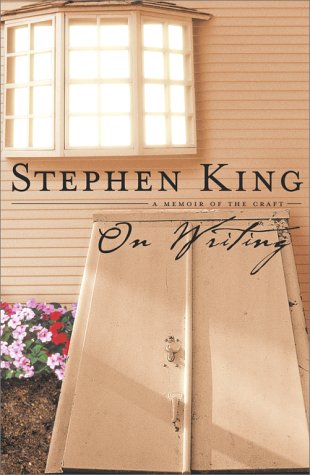
Everything You Need to Know About Writing Successfully: in Ten Minutes with Stephen King. By the way, my favorite book on writing is undoubtedly Stephen King’s On Writing.

Freelance Writing Jobs Network: Traffic Secrets for Writers

 Six Free and Amazing Ways to Promote Your Business

Filed under: blogs & blogging, Publicity & Promotion, publishing, writing tips, , , , , ,

Bestseller with over 1,000 reviews!
Winner of the North Street Book Prize, Reader's Favorite, the
Literary Titan Award, the Hollywood Book Festival, and the
New York Book Festival.

http://mybook.to/OurZombieHours
A NEW ZOMBIE ANTHOLOGY

Winner of Writer's Digest's 2014 Honorable Mention in Self-published Ebook Awards in Genre

The first 81 lessons to get your Buffy on

More lessons to help you survive Armageddon

"You will laugh your ass off!" ~ Maxwell Cynn, author of Cybergrrl

Available now!

Fast-paced terror, new threats, more twists.

An autistic boy versus our world in free fall

Suspense to melt your face and play with your brain.

Action like a Guy Ritchie film. Funny like Woody Allen when he was funny.

Jesus: Sexier and even more addicted to love.

You can pick this ebook up for free today at this link: http://bit.ly/TheNightMan

Join my inner circle at AllThatChazz.com

See my books, blogs, links and podcasts.

Enter your email address to follow this blog and receive notifications of new posts by email.

Join 2,063 other subscribers