C h a z z W r i t e s . c o m

See all my books at AllThatChazz.com.

The downside of cheap ebooks

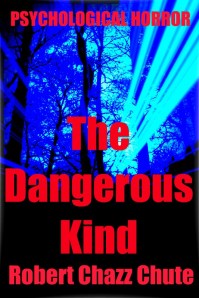
The_Dangerous_KindEbooks are often so inexpensive that they have become impulse buys available for mere couch change. (That’s how I’m selling my ebooks. Two of them will be up for sale November 1 at $2.99 and one long

Self-help for Stoners

Available Nov. 1

short story goes for 99 cents.) It should be an easy sell for people who can read, like to read and actually do read. The Dangerous Kind, the short story, should lead people to buy the collections (Self-help for Stoners, Stuff to Read When You’re High and Sex, Death & Mind Control.) Well…it’s a good theory.

But will my work actually be read by anyone even after it’s bought?

Everybody’s to-read pile is so big!

Go to Goodreads and surf a bit and you’ll soon find a bunch of books that catch your eye, each one calling with equal force, “Add me to your to-read list!” I’ve recently become more active on Goodreads. I love the site and, after reading some personal recommendations from my GR friends, I’ve even reconsidered a couple of books I picked up and put back down at the bookstore.

An arresting cover can get surfers to slow down to gawk.

Killer ad copy helps.

Friendly, happy reviews help most.

Sex_Death_&_Mind_ControlBut if people buy it but don’t read it and then recommend it enthusiastically…
Let’s just say I can’t bear to think about that possibility very hard.

Filed under: DIY, e-reader, ebooks, My fiction, Publicity & Promotion, What about Chazz?, , , , , ,

Do readers expect too much of ebooks?

I love people who wisely challenge authority and the status quo.

They question the way things are to make them better.

Recently I pointed the way to a post by the insightful Derek Haines over at The Vandal. The discussion evolved from talk about how low, low, low ebook prices don’t match up with many readers’ expectations of perfection. I promoted Mr. Haines’ blog post, but too clumsily since I just mentioned it in a comment reply. Mr. Haine’s thoughts need more attention than I gave them so I’m remedying that today. Derek Haines was one of the first people to  welcome me to Twitter. I often find his blog posts eye-opening (e.g. Free e-books, do they get read? and The Self-publishing Money Trap). His thoughts on ebook pricing, value and quality, What did you expect for 99 cents?, are in need of a good, solid ponder. 

To freshen and deepen the discussion, novelist Reena Jacobs wrote in with something very thoughtful and heartfelt. I didn’t want her contribution lost down in the bottom of the comments. I asked her if I could repost. The first link takes you to the original post by the great Derek Haines and here’s Reena’s comment again as a guest post:

Derek Haines makes an excellent point. It broke my shriveled blackened heart to offer my full-length novel at $0.99, considering all the work I put into it. To think I toiled over the book for months…over a year with no pay, and folks didn’t even want to shell out $0.99…and forget $2.99.

Indie authors aren’t asking much but I think some readers expect perfection when they’re not willing to pay an asking price which is less than fair to the author to begin with. Some seem to forget the money used from sales is not only necessary to earn back the money already spent, but also to invest in future publications.

I don’t go to people’s place of businesses and demand freebies. Or worse, insult them with comments like, this should have been free or I’m glad I didn’t pay for this. If it’s free, folks should be happy they even had an opportunity to try it. Someone took time out of their life to offer readers a gift. It may not be to the readers’ liking or meet their personal set of standards, but it was still a gift. It has value.

Anyway, my wee little heart couldn’t take it anymore. If people want a $0.99 work from me, they’re welcome to my short story. I’d rather hoard all my works and never publish another title again than beg for $0.99 ($0.35 royalty) for a work I put months of my heart and soul into. Every time I read about someone complaining about a $0.99-2.99 work, it makes me want to bump my prices again. It’s gotten to the point I don’t even care if folks buy my books (kinda…’cause let’s be serious, sales matter to all authors) as long as I don’t feel like people are taking advantage of me and implying my work is worth less than it is.

Like Derek said, it doesn’t make sense to invest big money into a product that yields little return. In my opinion, that’s bad business.

I’ve already made a goal not to spend more money on publishing books than I make in sales. If that means no more full-length works, then so be it. Short stories are quick, dirty, and can be edited entirely through a critique group. I can part with one for $0.99 and not feel ripped off.

Reena Jacobs is just your typical writer who loves to see her words in print. As an avid reader, she’s known to hoard books and begs her husband regularly for “just one more purchase.” Her home life is filled with days chasing her preschooler and nights harassing her husband. Between it all, she squeezes in time for writing and growling at the dog. You can find Reena on Ramblings of an Amateur Writer, Amazon, Goodreads, Barnes & Nobles, and Smashwords

www.reenajacobs.com

www.reenajacobs.com/blog

http://twitter.com/ReenaJacobs

Alexandria (Alex) Carmichael guards two secrets close to her heart.

One–she’s in love with her best friend, Seth. Two–he’s gay.

 Add I Loved You First to your Goodreads list!

 I Loved You First

Filed under: blogs & blogging, Books, DIY, ebooks, Guest blog post, publishing, self-publishing, , , , , , , ,

Robert Chazz Chute: Literature hater & narcissistic bastard!

I realized something about myself the other day. I’ve been writing since I was a kid. So why haven’t I published a string of books yet?

Narcissistic Bio (Feel free to skip this paragraph to get closer to the point arrived at below): I went to journalism school. I wrote for newspapers and magazines. I worked in book publishing for five years in several positions, making books, editing books, selling books and promoting books. I’ve written a column for a magazine for three years. I submitted to and won writing awards or honorable mentions. And yet…I never pushed to get a book written. I have written several books, but I never got to the point with one where I was satisfied enough. For  a long time I thought this was just laziness or perfectionism or both. Even as I edited other people’s books, I still had my own cooking in the background. But I never sent out manuscripts or pestered agents or got anything really done, except short stories and feature articles, speeches and presentations. I’ve written about writing extensively, attended publishing conferences and writing workshops, chewed through publishing issues and edited several books this year for Five Rivers Chapmanry. I’m proud of all these things and enjoy them.

But everything I’ve accomplished centered around tasks with a short deadline, stuff that paid up front, stuff that required short bursts of intensity. I wasn’t working on my personal long term writing and publishing dreams. I wasn’t digging in to do the long hail work. It’s as if I’ve been mixing dough, letting it rise, shoving it in the oven and letting it bake…and never eating any bread.

I used to think that I wanted to be a writer because I love literature. I read and read and read and still can’t get enough, it’s true. (At least some of the above headline is supposed to be ironic, folks!) Obviously I don’t hate literature, but I don’t love literature as much as I thought I did. If I loved it all that much for its own sake, I would have either settled for reading tons of books without thoughts of my own. Or I’d have finished those revisions and delivered my stuff over publishers’ transoms. I would have added to slush piles and wallowed in rejection slips until I finally started breaking through. I didn’t do that. I raised kids, did piece work, indulged another career, dabbled around the edges and did other stuff.

So why self-publish now? I was disillusioned with the failures of traditional publishing when I worked within it (another post for another time.) I loved reading, still do. I love that floaty feeling you get when you write, go deep and a story comes together.

But these loves weren’t enough on their own.

I’m self-publishing now because ebooks have finally arrived. I can finally indulge my loves as well as my need to remain independent. Clearly, I’ve got a problem with authority.

My motto is Question authority before authority questions you. I do not wear a tie and I’m the kind of dog who pulls out of his collar.

 Love of literature wasn’t enough. Love of literature plus love of self plus digital opportunity was the ticket.

Embrace independence:

Control freaks! Unite! 

(Ahem…well, do what you want. Far be it from me to tell you what to do.) 

The revolution

(I didn’t know I was waiting for)

has arrived. 

Filed under: e-reader, ebooks, Rant, self-publishing, What about Chazz?, , , , , , , ,

Life & book marketing update shouted from a speeding car

Happy Sunday. Things are moving somewhat quickly as I start making transitions to writing full-time. I have a marketing plan: It’s important to be prolific. I believe in being available across as many e-platforms as possible (and zero DRM). Having just one ebook up won’t cut it. Being prolific allows cross-promotion (e.g. You like this? Then you might like to buy that, too!)

Over the coming months I’ll be offering individual short stories (at 0.99 each), a collection of short stories ($1.99 or 2.99, haven’t decided yet), a novella ($1.99) and another collection of short stories with a quirky hook I can market effectively ($2.99). At some point I’ll package the aforementioned individual stories—there are six—in another book (conveniently priced at $2.99 probably.)

There are several full-length novels that are written and need revision before they’re ready to be swallowed by the masses, but most of them are for next year.

A few things about the slingshot launches:

1. I’m doing a soft launch until I have a bunch of ebooks available. Then I’ll be carpet bombing (more details to come in another post on what that means.)

2. I will be launching another website in addition to this one. Chazz Writes is all about writing craft and publishing and I intend to continue. However, I have broader plans for the new website that will expand my mandate and goals. I’ll be talking about a lot of different things on the new site.

3. And I do mean talking. I’ll be incorporating video and podcasts. Fancy plans with pants to match. More on that closer to the new website launch.

4. I want to do  a hard launch of the first novel in my line, but I’m not sure if I can pull it together for Christmas. There are more than the usual variables. For instance, I need to get permissions to use the names of a major Hollywood star and a major porn star. (Yes, I’m familiar with the rules of fair use—and both characters as they appear in the novel are adored by the hero. However, this isn’t a fair use issue. It’s a Smashwords rule issue.)

5. I’m not in the least interested this year in printing books with which to assail bookstores. It’s a lot of work for less reward. It’s an exciting venture I do not, at present, have time to pursue. (And yes, I’ve looked at the numbers.)

6. However, I will need printed Advance Reading Copies (ARCs) for promotional purposes when the hard launch takes off. I’ll be using CreateSpace to print a few sample copies since there is no punishing fee for each revision. For bigger print runs, once the formatting is solidified, I’ll switch to Lightning Source.

If you’re wondering how I’ll get it all done, sometimes I wonder, too. Then I remember that I’m severely underemployed. (Except for the soul-crushing poverty, it’s a fantastic advantage and a real time saver.)

There’s more to the book marketing and promotion plan and I’ll share it with you as soon as I can. In the meantime, back to my editing suite in the batcave beneath the bunker under the Chuck E. Cheese.

Thanks to my buddies Jeff Bennington, author of Reunion, and author Rebecca Senese (look her up, she’s a fountain of short stories), for clarifying my strategy on the issues in #6. Both these lovely people have guest blogged here. You’ll remember Rebecca did a great job summarizing the workings of Smashwords and Jeff compared CreateSpace with Lightning Source. (If you don’t remember their posts, search this site in the search box top right. Sorry! I’d link it for you but I’m in a huge hurry just this minute. I bet you can guess why when you see this tiny portion of my to-do list.)

Jeff tells me he will do me the honour of another guest blog soon. I think the discussion will be about book promotion and what he found effective for his massive push for Reunion

Filed under: authors, blogs & blogging, Books, DIY, e-reader, ebooks, getting it done, Publicity & Promotion, publishing, What about Chazz?, Writers, , , , , , , , , ,

Write your thriller in chapters: 10 tips for greater productivity

There’s no one way to write a novel. I do, however, have ten suggestions to make it go easier and faster:

1. Outline. Have some idea where you’re going and what the destination might be. It’ll save you time doubling back from dead ends. Believe me, I’ve written myself into cul-de-sacs and it’s a time suck no one can afford. (No, you’re not married to the outline and you don’t have to go OCD with the Roman numeral outline you learned in grade eight. I’m trying to increase your productivity and enhance your creativity, not shackle it.)

2. If you outline, you don’t have to write your story in sequence. With an outline, you already have the beats, the bases you have to touch as you tell your story. If you’re not feeling very inspired one day, no big deal. Focus on the high points of your outline on the days you don’t start off “in the mood.” Bonus benefit: you’ll get all your sex scenes written first.

3. Write each chapter as if it’s a short story. Your novel has a beginning, middle and end. So should your chapters. I often see substandard chapters which finish without the pulls of intrigue, a cliffhanger or a bang. Some writers reason that if they make the larger story interesting, they can afford to have a chapter or two that isn’t compelling. It does sound reasonable. It’s also wrong. Tension has one direction: up. There are way too many great books to read (and a million other things to do) so, for many readers, you bore them, you lose them. Sure, you’ve made this sale, but they won’t be burnt again.

4. For each chapter, identify a purpose. If a chapter has no dramatic purpose, drop it. Too often I see manuscripts where the characters are up and moving around, but to no purpose. (When editing, purposeless activity is called “business” as in “busy-ness.” There’s movement, but nothing’s really happening.  A chapter without purpose signals self-indulgence, a writer who got lost for awhile, not enough editing or an author who insisted on a tangent at the expense of the book.

The other common problem? Too much world-building and not enough character. A writer once described to me in excruciating detail about the far out environment of his book. It was a very ethereal place in space with no points of reference between human readers and the gaseous clouds that were his characters. I had to shut him up. He was driving me crazy with exhaustive, pretty detail. “But what’s the story? How is your reader going to relate to that?” Science fiction is about people first. Fantasy is about people first. Stories are all, at their core, about people and the choices they make. Sift your world-building detail in amongst action and character development. Otherwise, it will be unreadable, confusing or the reader won’t care.

Chapters with purpose are compelling and propelling toward an conclusion the reader wants to discover. (But they also want to be fooled, too. So make them say, “Ah, I bet I know what happens next.” Then find a way to surprise them. Read any of William Goldman’s novels to really get this deep into the marrow.)

5. What are the scenes in your chapter and are they in the right sequence? Are you revealing too much early in the story? Are you being too coy with the reader in later chapters? Does the pace pick up as you reach the climax and solve the novel’s core problem? Is it really a surprise (and logical) when you get to that climax?

6. Are you taking shortcuts in logic or logistics? Somewhere in your book there’s a less favorite scene or something that requires more research that, frankly, you don’t want to do. If your heroine is in Paris and your hero is in New York, they can’t meet in the middle of the Atlantic on a train (unless your novel is set in the future or a past that never was, of course.)

Are you missing a bridge to get you from one event to another? This is a logistics problem. Your FBI investigators are in Virginia at Quantico. The kidnapping is in the Pacific Northwest. Do you need a scene of conflict within the team on the private or military jet to get to the crime scene? You may make that transition in just a single sentence or it might be a chapter, but without some acknowledgement of the travel issue, it will be jarring for the reader to have them materialize in Seattle. Time and space and placement of people in relation to each other is something to trip over if you don’t make the effort to handle it logically.

7. Do your chapters fit together? Suppose you have an entire book that takes place, A to B, sequentially over the course of the hottest August in a century. But there’s that one winter scene you’re slipping in with a flashback. Does this puzzle piece fit in with the tone of your other chapters? If not, is there a reason for it? For instance, if your hero needs a look back at an early Christmas morning for the one time he was happy to give him a clue or change of direction, it fits better than an odd chapter that seems plugged in.

8. Is each chapter satisfying? This is a little different from #3, and a larger, more esoteric editorial question. You’ve written each chapter as a short story. That’s fine and can help you face the challenge of writing an entire novel-length manuscript. Now I’m asking, does each chapter feel full? Is it contributing something more to the larger story arc? When all these short stories are cobbled together, will each contribute to a greater whole than the sum of the parts? Is there a richness in description, character and action that will leave the reader satisfied with the effort overall? Is the core problem big enough to bother with a full-length book? Do you force the reader through several hundred pages only to kill off the protagonist (can be done, but often iffy) or worse, find out said protagonist is a lummox they hate? Too often, authors make their obstacles too small, the villains too stupid, the stakes microscopic and the core problem not nearly big enough. You don’t have to save the world on every outing. Maybe you’re just saving one person, but make us care.

9. Does each chapter’s length make sense? When I say “make sense” here, I mean, do you achieve in the chapter what you need to accomplish at an appropriate pace? Chapters don’t have to have a uniform length. Mary Higgins Clarke’s chapters get progressively  shorter as she goes so it feels like a race to the finish. I find I like short chapters as a reader (and as an editor) because I feel like I’m making progress as I go through, marking up the milestones. Short chapters often feel like a breezy  read. As a writer, however, I find my chapters are longer so they have time and space to wind to their conclusion. However, some writers go so short they aren’t providing enough beats within each chapter. I sometimes see underwritten, choppy chapters where action isn’t happening and characters aren’t developing. When that happens, you don’t have a chapter yet. In that case, you probably have the components for scenes within one chapter.

10. Set a schedule. If you use each suggestion here as a guideline, you also have an estimation for how long it will take you to write your novel based in real time.  Since you’re writing your novel as short stories, progressing at a fairly predictable pace, set an end date for the first draft. Make a schedule to get to that date and stick to it.

Follow these guidelines and you’ll make real progress toward your goals. 

Related Articles

Filed under: Books, Editing, getting it done, publishing, Writers, writing tips, , , , , , , , , , , ,

Writing Exercise: Idea Generation


Last Saturday I attended a great workshop on Editing and Revising with editor extraordinaire Brian Henry.

I’m deep into doing revisions on my own work and that of others, so a refreshing blast of continuing education was a nice change of pace. Brian is on the road every weekend to teach a workshop. He’s a genuinely nice guy and a skilled editor with tons of experience.

(Click here to find out more about his teaching or to receive his newsletter.)

The odd thing is, I did some freelance work for Brian when I worked at Harlequin in 1988/89. I was working in production, proofreading romance and after romance with a few military books mixed in so I wouldn’t grow breasts. (I proofread a lot of the Mack Bolan series back then.)

To pick up a little more cash, I waded into the slush pile for Brian, who was an editorial assistant at the time, to evaluate spec manuscripts. After taking several of his workshops over the last few years, he finally remembers who I am when I see him now. (I think.)

I’ve written a short story in two of his workshops now. I’m not usually a great fan of writing prompts from other people. I’ve got lots of ideas on my own. However, at Brian’s workshops I’ve leaped into the breach and come up with a couple of short pieces, written on the spot, with which I am quite pleased.

On Saturday, here’s what got the ball rolling; Brian called it his Chinese Fortune Cookie Exercise: We wrote a short fortune, say six words. Each participant came up with two fortunes to share. The fortunes preferably had a verb, included two people (implied was fine, not named) and there had to be an element of “tension or strangeness.”

Also, it’s okay if the fortune sucks. It’s just a prompt, not a plan. We exchanged fortunes with people at our table so everyone had something fresh. Then we started writing furiously.

The fortune I focused on was this:

“A relative will vex you.”

What I came up with was short and surprisingly soulful with a murderous sucker punch. My fellow participants were enthused. It is very affirming for any writer to come up with something quick on the spot that works so nicely. Now I have yet another short piece to add to my short story collection (available through Smashwords this summer!)

If you write, go read Quick Brown Fox, too. 

Filed under: ebooks, links, manuscript evaluation, publishing, self-publishing, short stories, Writing Conferences, writing tips, , , , , ,

Writers: The short form is roaring back

Ernest Hemingway's Grave

Image by gharness via Flickr

I met The Fab Rebecca Senese (I think of her as TFRS at all times) at the Writers’ Union symposium. We went to Tims and went through that excited decompression phase. You know the one. It’s where you are packed with new information to mesh and meld with your old data and you talk fast to get it all out and solidify new, useful neuropathways.

She made an observation that really got my attention:

Amid the hubbub, TFRS said that e-books were a sure opportunity for the short form to make a strong comeback. Got a short flight or need a distraction over lunch? Read a short story or two. If you just want to gulp down a tale but don’t have time for a whole book, enjoy a novella after work.

Makes sense to me. I love short fiction. For instance, it’s a mystery to me why people say they love Ernest Hemingway‘s books, but I do like some of his short stories very much.

Short stories have been relegated to the back of the bus (read: unread literary journals.)

Until recently people have been buying books by weight, so publishers laughed at their puniness and demanded big doorstops they could sell. Length is an issue with paper, constrained as it is by the strictures of the printing press and bookstore manager’s expectations.

Novellas are ignored by many professional critics who often don’t take it seriously because they think the short punch packs less heft behind it. As if we all feel that way all the time.

A good short story takes talent to write and in some ways is a different skill set from the novel. (These critics must be those same twits who scoff at Twitter just because they can’t put together one clever coherent thought in less than 140 characters.)

Now with e-books, the answers to those objections are: Who needs publishers for that? What’s a professional critic and what is this “newspaper” thing you’re babbling about? And lit journals? What’s that? Is all this stuff available online?

Click this link to see  Rebecca Senese’s short fiction.

Please do take a look.

Filed under: authors, blogs & blogging, Books, ebooks, self-publishing, short stories, Twitter, Writers, , , , , , , , , , , , , ,

Editing: How to take advice

qestion mark and exclamation mark

Image via Wikipedia

Mostly people follow the advice that appeals to them. If five people give them the same uncomfortable advice, they’ll keep asking until lucky advisor number 15 tell them what they were hoping to hear. That’s not the way to progress.

Blogging about writing and publishing can be a quixotic adventure. For instance, I went through an entire short story one time and showed the writer precisely how he could improve his writing. These were very straight-forward craft issues that got in the way of readability. The next piece he sent me had the same problems.

Not everyone has to write like I do. However, since he was so enthusiastic about my original suggestions, I wondered if it was a question of the writer needing more time to absorb the information and practice.

In a writing critique group, you can spot the defensive people quickly. They write Stet! beside each suggestion (including that tell-tale exclamation point.) Defensive writers spend a lot of time talking when their critique group colleagues ask questions or are confused. Instead, they should be listening. Any writer is free to disregard suggestions, but not during the explanation of the concern.

Is advice all for naught? Sometimes. But professional writers take advice most of the time. They aren’t so attached to their writing that they expect it will be 100% perfect on the first draft. That’s crazy-talk. Professional writers respect writing too much to make that assumption.

Just remember: an editor’s focus is the text. They’re trying to help you.

However, if you sense an editor is looking at it as a game where they’re tracking points, zeroing in on every error as if it’s a moral victory…well. Delete them.

Also, I have to mention that sometimes the advice is just bad:

At Psychology Today I found a great post called 11 Types of Bad Writing Advice.

Filed under: Editing, Editors, getting it done, manuscript evaluation, publishing, Rejection, rules of writing, Writers, , , , , , ,

#Editors, Readers and Critics

Painting The Writing Master by Thomas Eakins

Image via Wikipedia

Earlier this week in this space I contributed to the Internet shredding of a thieving editor (see below) so it’s time to balance things out with a happy story. 

About My EditorLast night someone asked me what my relationship with my magazine editor is like. 

The short answer is, “Terrific.” The long answer is that we joke around. A lot. We have a lot of fun and have rarely disagreed. We are reasonable people. We’ve never met in person though we plan to some day (and almost made that work this summer.) We talk about projects on the phone on occasion, but mostly we email back and forth. We’re both incredibly busy people, so emails allow me to say something funny without intruding too much on her crazy schedule.

Of course, we have disagreed. Most of the time (98 percent of the time, not 51 percent) I figure out immediately or soon after that she was right. She’s held me back from saying a few things that, on sober second thought, were kind of out there. When I’ve stuck to my guns and presented a cogent argument, she has capitulated. A good editor is always trying to make the writing better (and occasionally has to protect the writer from himself.) As with dealing with any great person, when we’re finished talking or writing back and forth, I feel valued.

About My Readers:

I have two beta readers. The first is my wife. She has graded so many students during her time in academia, she’s the one with a sharp eye for my typos (many) and my obfuscations (less of those, I hope. Maybe. I dunno…) She’ll notice a construction that seems awkward, but she’s gentle about it.

The second reader is my oldest friend. He used to work in publishing and has edited a literary journal. Best of all, he’s a writer at heart. He is invaluable for broader editorial suggestions when my idea is almost there but not quite at the destination at which it will finally arrive in the last draft. He can be my biggest fan and, depending on his mood and my subject, my harshest critic.

When I wrote a short story that included a gay protagonist in a military environment, he disagreed with my take vehemently. I ignored him on that one and I thought the story fell apart for other reasons so I never tried to publish it and it’s tucked away on a thumb drive. 

On another occasion I wrote a humour piece for a magazine. He’s funny. I’m funny. What could go wrong? He broke it down for me in detail and ended with this bon mot: “For a humour piece, it’s not all that funny.”

Thud!

I picked myself up off the floor and took another run at it, made the humour more relevant and hit the piece out of the park. I took his criticism to heart and the next draft was so very much better for it. He’s got a great perspective on publishing and I usually end up considering about 60 to 70 percent of his suggestions.

I do not send everything I write through my readers first. Most of my magazine writing is of a kind that I don’t feel I need the extra feedback and it’s all between my editor and me. (She also has a light touch on my copy and I like that she works with me and consults on every change.)

If it’s fiction—especially long fiction—it goes through my beta readers.

When I develop marketing materials or write speeches, only the principles are involved. With short pieces, it’s easier to keep a handle on what’s to be achieved, anyway. Occasionally, with proprietary information, it wouldn’t be appropriate to bring in an outside reader. Also, if you work in a variety of niches as I do, it’s not fair to your beta readers to expect them to have an opinion on something outside their interests.

About Critics:

There are the kind of critiques you ask for. You get those opinions from people you trust, the ones with whom you have a history.

There are the kind of critiques that come at you. Sometimes those criticisms are thoughtful, have substance and bring up a new angle or experience. I love it when I pose a question in a piece and people come forward with interesting ideas and possible solutions. (That’s happening now with a column I wrote. We’re getting a lot of kind letters from people anxious to share their view on a question I posed.)

Occasionally, you get somebody who seems cranky and has an axe to grind. I find this type of critic tends to have their say about what they want to say and if it seems they didn’t really read what was written…well, they didn’t. They just want to be heard and recognized. That’s okay. Everyone gets to have an opinion.

But you don’t have to take everyone’s opinion so seriously. You get to choose who matters to you most and who you’ll go back to the next time you need a fresh set of eyes on your draft.

And you as the author? You get the final say on what appears under your name.

Filed under: Editing, Editors, publishing, Writers, writing tips, , , , , , , ,

10 Things that Happen When You Win a Writing Contest

You get the letter or the phone call. You’ve won a short story contest!

What happens next?

1. Dance.

2. Call your spouse. “I knew you could!” they say. “This makes all those times I watched the kids while you wrote…almost worth it! Dinner’s on you tonight, Snoogums!” Get your freak on.

3. Call your non-literary friends. “Congratulations!” they say. Then, “I have to get back to work. I don’t hang around a home office, alone all day celebrating like some people I know.”

4. Call your literary friends. “Congratulations!” they say, through gritted teeth. Make encouraging sounds. Assure them they could have won in your place, but it’s a subjective business. (True, though you will never, can never, think of these small triumphs as mere luck. To continue as a writer, you must know you deserve it all. Otherwise you’ll come to your senses and start making money doing something more people value, like grouting.)

5. Call your parents. “Congratulations!” they say. “How much money did you win?” For most contests, when you buy the celebration dinner tonight, there goes at least half. (I won $1,000 for a short story once. I blew that on paying taxes. Whoo-hoo.)

6. Go out for a coffee. This is an obvious ploy to tell strangers. They don’t care. Tip the barista well.

7. Wait for the prize and or publication. The prize may come along quickly assuming it’s a legitimate contest. If publication is part of the prize, it will be a long wait.

8. Discover typos or tiny changes you’d love, nay, need to make to avoid immortalizing the coming ridicule. They won’t make the changes. The release you signed but did not read said so in a sub-paragraph. You’ll try to pester someone about it, but the happy people who called to say you won will now no longer return your calls. (This is also when you figure out you gave away more rights to the story than you would have if you weren’t so giddy when they called. Don’t blame yourself. When they called to inform, you were like the zittiest kid at junior prom asked to dance by the prettiest girl.)

9. Before you can tell them you’re pulling it, you shall receive rejections from other contests and magazines for the same story who apparently thought it sucked. (Don’t let the spark of your enthusiasm get drowned out.)

10. (a) Publication and then anonymity as history moves on.

(b) Publication on the net will result in comments (possibly even an awful blog post railing against you as happened after one of my tiny triumphs) from a bunch of bitter losers who can’t believe their genius went unrecognized. Oh, they’ll be mean. They’ll demand the judges quit and express disgust at your existence, you know-nothing poseur!

BONUS:

11. Reminisce about your past triumph, write something else, put something else in the mail and sublimate your rage with a passive-aggressive blog post.

Filed under: What about Chazz?, writing contests, writing tips, , , , ,

Bestseller with over 1,000 reviews!
Winner of the North Street Book Prize, Reader's Favorite, the
Literary Titan Award, the Hollywood Book Festival, and the
New York Book Festival.

http://mybook.to/OurZombieHours
A NEW ZOMBIE ANTHOLOGY

Winner of Writer's Digest's 2014 Honorable Mention in Self-published Ebook Awards in Genre

The first 81 lessons to get your Buffy on

More lessons to help you survive Armageddon

"You will laugh your ass off!" ~ Maxwell Cynn, author of Cybergrrl

Available now!

Fast-paced terror, new threats, more twists.

An autistic boy versus our world in free fall

Suspense to melt your face and play with your brain.

Action like a Guy Ritchie film. Funny like Woody Allen when he was funny.

Jesus: Sexier and even more addicted to love.

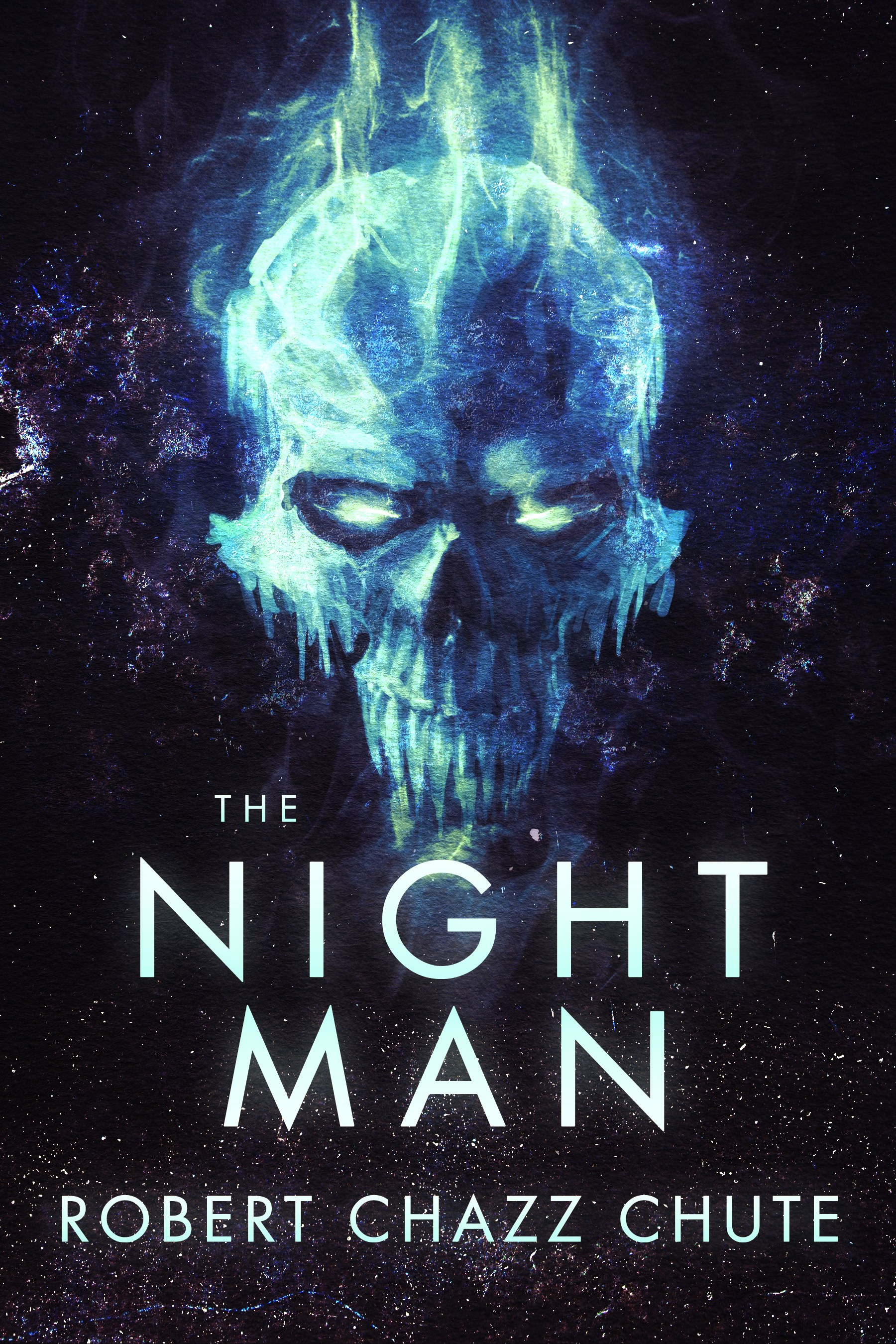
You can pick this ebook up for free today at this link: http://bit.ly/TheNightMan

Join my inner circle at AllThatChazz.com

See my books, blogs, links and podcasts.

Enter your email address to follow this blog and receive notifications of new posts by email.

Join 2,061 other subscribers