C h a z z W r i t e s . c o m

See all my books at AllThatChazz.com.

Writers & Readers: I say something new & cranky

Joe Rogan

Image via Wikipedia

Alfred Hitchcock once said a painter needs a brush, a writer a pen and a director an army. The numbers needed to make a film are coming down, but it’s still a collaborative, team sport (or a war, depending how indie you are as a filmmaker.) Painting  is still a solo pursuit and for a long time writing was solitary. Then writing got decidedly less solitary. And now, with self-publishing, the game has changed again.

Authors used to have publishers. Later, agents entered the industry and took pressure off editors by curating. They helped many authors get better deals. Now a lot of agents want to intermediate and perform more of an editorial function, possibly because other traditional roles they have fulfilled are shrinking. See this post for more on that and much more.

Now there can be fewer people between you and publication. Publishing isn’t necessarily a team sport anymore. Publishing with a group of lovers of all things literary  has produced many great books (and has probably interfered with the production of great books, too.) You may think many minds produce better material because all of us have more brain power than one of us. I used to believe that was true in all cases.

Then comedian Joe Rogan challenged that idea for me and articulated something that was slowly percolating through my cranium. In his experience as a comedian on The Man Show, he found that more suits on the set diluted the funny. His stand-up is a pure art form, moderated only by his own sense of humor and direct feedback from his audience. (I saw him at Massey Hall in Toronto recently. He rocks hard.)

It’s an old adage that too many cooks spoil the broth. Now science, as presented in the fascinating book 59 Seconds: Change Your Life in Under a Minute, has disproved the notion that more brains help a creative project. The most creative solutions are not arrived at by the most creative person in the room. They are directed by the loudest person in the room.

So, if your agent says “I’m not submitting your work because I don’t think it’s ready,” and you cede that power, your work isn’t going to market whether your agent is right or not.

This is the sort of thing that drives the traditional world of publishing nuts. Without those mediators, obstacles, curators, gatekeepers, shepherds and rabbis, the worry is that we shall be inundated with a slew of awful, awful books. The deluge shall be as a fire hose pointed at the tiny tea cup of our fevered minds. Without those helpful interlocutors, who will keep the bad books away?

Rather than address the curation question directly (and I’ve already addressed it many times on this blog), I’d like to say something new on the subject:

Even if that objection is valid, so the f**k what? I reject the premise. I say this is not about your convenience in going to a legacy publisher you trust for all your curation wants. This is about my freedom to express my art, which you can enjoy or not. As they say at the convenience store, “Buy or leave!”

The marketplace of ideas is opening up to a lot more shelf stock. Buckle up and put on your big boy Underoos and your big girl panties. Soon you might find more variety and much more current reading material to explore and fill your mind.

I value my sovereignty of expression more than your convenience.

I said this was a revolution. I asked you to join me.

Did you really think no one would get hurt along the way to the shinier, freer new world we’re creating? 

The results will surely be messy, but the cost of your tender sensibilities is really negligible. There will be a lot of bad books delicate grammar doilies will decry. You’ll see a lot of typos (though I see a lot of typos in traditional books, too, by the way, and yet the earth keeps on spinning.)

We value freedom and freedom of expression. A lot. The US Supreme Court allows the Westboro Baptist Church to protest at funerals with ghoulish signs without regard to the feelings of the families of the dead. Evidence obtained illegally is routinely thrown out and murderers are sometimes set free as a result. We accept some consequences far worse than inconvenience so that greater individual sovereignty is assured.

If it sounds like I’m saying your worries

about all the coming bad books don’t matter,

you’ve read this blog post correctly. 

Filed under: agents, authors, Books, censors, publishing, self-publishing, , , , , , , ,

Publishing is sick. You should quit. Take up knitting.

I attended a lovely writing conference. The best value of these get-togethers is often not in the classes, but in the networking, either by finding an agent, getting  useful feedback or networking with writer allies who can hook you up with what you need (e.g. a graphic designer, beta readers, a photographer, an inexpensive website developer, software you didn’t know existed etc.,…)

A couple of instructors at this conference gave me some really great technical information. Much of the discussion was about stuff you’ll find on this very blog (Shameless plug. Subscribe and send love.) Much of the talk was yet another rehash of commonly known information (e.g. get yourself an editor for your self-published work). A bunch of it was stuff you see spread across the internet endlessly for free (e.g. a rehash of the Amanda Hocking/Barry Eisler unfoldment).

(Heh.Unfoldment. I like that.) 

There was also some bad advice. But today, let’s focus on the health of the publishing industry: It’s sick. Really sick. Especially for the ones upon whose brains and bones rest the cracked foundation: writers.

Of course, it has been thus for a long time. Even when it was healthy, publishers operated on thin margins and predicted imminent doom. Many of those publishing companies anticipating the end were right; I worked for several that are long closed. (I didn’t kill ’em, but I helped hold ’em down. Good times.)

We all know the common complaints today: fewer editors, the corporate profit-push squeezing the midlist, the crash of the bookstore (ask your parents, they’ll tell you what they were), the discount tyranny of the chains and the crush of all that self-publishing pressure and the ennui that sets in when you realize you’re a rusty cog in an old machine that needs a lot of parts replaced.

I’d like to  suggest a new measure of the health of the industry:

How many jobs do the major players have?

A short, relevant aside: I am currently a part-time massage therapist, columnist, feature writer, writer-writer, blogger and editor. Also, I’m a house husband and stay-at-home dad. That’s plenty of hats. Okay, I’m a freak, but not as much as I used to be it seems. And I’m cutting down my number of roles soon (Hint: keeping the sexy wife, brilliant kids and the horror writing that chills my victims’ readers’ blood.) 

Aside over. To business: 

Now watch what happens when we look at instructors at writing conferences:

People at the top of their game aren’t making their living from writing.

Of all the people I encountered at the writing conference, two were at it full-time. Andrew Pyper wrote a book I loved called The Killing Circle and gave a funny, charming and wise speech. Wayson Choi spoke briefly and he’s also plenty charming. (Just read Not Yet, liked it.)

Mr. Choi gave the same encouragement he did last year: You aren’t alone in this. We are all together in this. (As if writing and actually getting published is equal to a struggle with a terrible disease and all caregivers and support for the afflicted must be rallied.) As if the diagnosis is in and it’s not good. The doc is giving you that look that says you might make it, but the treatment is so horrible and there is so much pain to endure, refusing to undergo medical torture is a worthy consideration. Getting better (or published) is sort of like winning the lottery.

(Trivia bonus: Wayson Choi is not only published but once won $100,000 in a lottery. He also survived terrible lung and cardiac problems so he might be the sweetest, luckiest sumbitch you’ve ever heard of. Sure, lots of people win big prizes and survive heart attacks, but to be published? That’s rare!)

But are writing conferences really about getting published? There’s a lot of amateur desperation in that big hall. Nice people, but not all writers. Dilettantes and the terminally confused are also a large component from what I could tell.

I don’t count delusion against people, by the way. To be a writer at all, you must be deluded…well, for fiction writers,  it’s a job requirement.

Are writing conferences helping these people get published, or are they just  another income stream or promotional avenue for poverty-stricken writers? Several presenters used their seminar teaching position to flog their books and editorial services pretty hard (though I didn’t mind the guy who had the grace to be funny about being spammy.) The rest were so fed-up, sad or desperate they were perspiring audibly.

When the “stars” in an industry have to spend a lot of time doing non-writing activity to eat, that’s another indicator of an industry on life support.

If any other industry had this much necessary moonlighting (go ahead, name any one you like), you wouldn’t want your kid on that career path. Imagine if all the civil engineers also had to work as mail carriers and mimes to avoid starvation. Suppose all the doctors were also telemarketers/poets/screenwriters/dog walkers/financial advisors/supply teachers, just so they could cobble together one living income from all their part-time jobs. There’s nothing wrong with any of these jobs but…

But if you have to do it all…well, my point is, sorry…you should quit. 

If you think you can quit, then good. You’re free to move on to something that could give you the security of three squares, dignity, hope for the future and some level of satisfaction.

If you can’t quit, either….

Maybe my writing as a disease analogy wasn’t so inept after all. 

 Related Articles

Filed under: publishing, Rant, Rejection, Useful writing links, Writers, writing tips, , , , , , , ,

Writers: Choose choice, not ideology

Bertrand Russell's views on philosophy

Image via Wikipedia

Talking politics with someone the other day, they said a particular candidate was so stupid they didn’t know when a reporter was rude to them. I doubt that. Assuming the politician dressed himself that morning, he did know and instead of reacting to the rudeness, he stayed on topic. He was polite—or even too polite.

The guy I was talking to already didn’t like the politician, so he chose not just to disagree with him, but to assume he was an idiot.

People choose sides. Sometimes they don’t even know why, but they get heavily invested in one outcome, often before we have any facts. Sure, people like to think they’re logical, but in fact they’re often intuitive. They jump to their conclusion and the logic that’s recruited only feels like logic. It’s actually rationalization.

We’re hardwired to make quick decisions. It’s in our genes to choose a tribe, too. We stick with that tribe, even when the tribe doesn’t serve us. Even when it’s a bunch of  millionaire basketball players, fans think they’re somehow on the team. It’s a religious fervor to join, to believe, to be one with a larger whole.

And it gets goofy. Nationalism, for instance, is tribalism write large. If you own a Mac and extol its virtues, a bunch of disproportionately angry people will call you a wuss in some web forum or other. We take ownership of things we don’t own. We choose up sides to divide us and them where there is no us and them. Gay teens get ostracized and bullied, many to suicide. Liberals are too quick to write off all conservatives. People can’t seem to make a distinction between “supporting the troops” and “disagreeing with the mission.”

Or, for writers, watch traditionally published authors shit on self-publishing. But this post isn’t about traditional versus indie. I’m not talking today about which way is best (as if any one way is best for everyone.) This is not another one of those posts debating the use of terms, indie versus self-published and who gets to claim what (as if words are owned or static.)

This is a post that simply says: compared to all the big problems we have, traditional publishing versus the new publishing? Pretty trivial. (And it doesn’t have to be all one thing or the other thing, anyway.)

Lighten up. Choose your own path. If you’re shitting on somebody or telling others what to do, ease up on tribal tendencies and focus on you.

Man in the Mirror and all that.

You be you. I’ll be me.

Filed under: Books, ebooks, links, publishing, Rant, self-publishing, Writers, , , , , ,

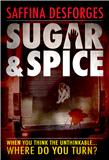
Author profile: Saffina Desforges’ Sugar & Spice

When you think the unthinkable, where do you turn?
Sugar & Spice is the groundbreaking debut novel from Saffina Desforges.
Yet to be published on paper, Sugar & Spice has swept up the Amazon UK Kindle charts with sales of more than 18,000 a month despite having neither an agent nor a publishing house behind it.
~
Inspired by a news story of a man who begged a Judge to give him a longer sentence because he knew he would harm another child if released without treatment, Sugar & Spice is meticulously researched, asking questions society prefers not to have answered.
At once disquieting and challenging, this is car-crash reading.
~
It’s every parent’s worst nightmare: A child fails to return home.  Some children never come back.

“An unsettling read with echoes of Mo Hayder.”
Crimetime.co.uk

“A disturbing and cleverly-woven story. Powerful first novel.”
Jake Barton

“Compelling! A very tough subject handled exceptionally well.”
Mel Comley

CW: When did you first know you wanted to be an author?Sugar_and_Spice

SD: I have always known. As a child, I would spend hours scribbling in an exercise book and making up stories in my head. In fact, most would say, I have spent my whole life living in a fantasy world!

CW: Tell us about Sugar & Spice.

SD: As the louder half of a writing team, I cannot personally take credit for the concept for Sugar & Spice, that was Mark’s. (There is a full guest post on the subject here if anyone is interested.)

CW:  Do you have any formal training in writing?

SD: I don’t, only a couple of on-line courses, but (co-author) Mark Williams has written before as a journalist, a teacher and for stage and television.

CW: How did you arrive at the decision to self-publish?

Saffina DesforgesSD: We took the decision to self-publish rather quickly with Sugar & Spice. Agents liked the book, but were uncomfortable with the subject matter. With the growing popularity in the UK with e-readers, it was a no-brainer. We have sold 40,000 plus copies since Christmas and are currently selling just under 20,000 a month in the UK alone. The book is currently out with an agent who has requested to read it fully. We would have to think long and hard about any deal (with traditional publishing.)

CW:  What was the biggest disappointment you experienced through this book?

SD: The biggest disappointment for us with Sugar & Spice is how no one (thus far) has had the balls to see the book for what it is, a great story, and convince a publisher to do the same, but hey, that may change. Another disappointment is how some readers have misread the messages within the book and suggested that we are being sympathetic to criminals, when that certainly isn’t the case.

CW: What was the hardest part of the publishing process? What did you most enjoy?

SD: Self-publishing is relatively easy these days. Getting people to buy your book is the hard part.

CW: What advice would you give unpublished writers?

SD: Forget being a writer, you have to be the complete business person. No matter which route you take, writing is a very small part of the process.

CW: Have changes in the book industry forced you to change how you published or marketed your work?

SD: Yes, and will influence any future decisions we make. We are confident that if time allowed, we could have at least 3, if not 4 books a year published as ebooks and be making money from them. Traditional publishing will not allow that, nor will we have any control over what we write.

CW: What’s your next book project and what can you tell us about it?

SD: We have several projects on the go, but the most imminent, is the first book of The Rose Red Crime Series, Snow White. This is a series of fast-paced, commercial crime thrillers, set in modern day but based on fairy tales. Snow White will be available on Amazon and Barnes & Noble for the end of July 2011.

In October, we will release the first of a dark, urban (adult) fantasy series – Equilibrium: First Blood. At some point before the end of the year, we might even share our experiences in a ‘how to’ book!

 For details of how to purchase Sugar & Spice – the UK bestseller and the recently released US edition, please visit here : www.sugarandspicethenovel.com

Our website:

www.saffinadesforges.com

Twitter: @safficscribe

Filed under: Author profiles, Books, self-publishing, , , ,

Publishers: What do I need you for?

Over at The Ranting Crone, my friend Pam Brierley has a great post about an encounter she had with a panel of publishers at last year’s Canadian Authors Association conference.

If they aren’t editing and they aren’t marketing, what are they doing (and is it worth it?)

These very sorts of questions are what’s pushed me to self-publishing.

Go visit Pam! 

Filed under: DIY, ebooks, publishing, self-publishing, Writers, Writing Conferences, , , , ,

Writers’ Union of Canada VIDEO (plus a cool NEW word! Yay!)

Yesterday I blogged about The Writers’ Union of Canada and that particular post wasn’t altogether complimentary. In fact, I proposed that if they didn’t open up their membership criteria to self-published authors, an indie union could be formed.

I hope that isn’t necessary since it could duplicate effort across platforms and dilute the voice of the writing profession. (However, if the self-published aren’t represented at all…hm. I won’t get sucked into a rehash. If you missed it, read, cogitate, plot and plan.)

But I’m all about the balance. For instance, I complained in a long ago post that TWUC’s judging of one year’s short story competition…well, it sucked. I’ve also been very complimentary with regard to their most recent symposium in Toronto (that also went on tour across Canada.)

This video on Canada’s proposed copyright law is an example of one of the good things unions can do to deal with The Man. The education provision does appear too broad and is a detriment to writers who are, as the legislation is written, voluntold to give up recompense for their work.

Voluntold

Chazz Definition: To have your services, product and/or time volunteered by someone other than you who has no business telling you what to do with your services, product and/or time.

(e.g. “I can’t order you on a suicide mission but I need five volunteers to storm that machine gun nest. You, you, you, you and you, go! You’ve been voluntold. A grateful nation honors your blah, blah, blah…”)

Filed under: authors, Books, Cool Word of the Day, publishing, Rant, self-publishing, Writers, Writing Conferences, , , , , , ,

Opportunity knocks? Self-published writers could unionize (plus association links for writers)

A map of Canada exhibiting its ten provinces a...

Image via Wikipedia

We started off The Writer’s Union of Canada symposium with the presenter announcing,Self-publishing is mainstream!” Dead on and right on, brother! Come to Jesus! Most of the day was dedicated to authors taking hold of their careers, navigating through the logistics of self-publishing and going indie. As I’ve mentioned in several posts since, it was a great event filled with exciting information that went deep. The kick in the nuts didn’t come until the end of the day.

As we wrapped things up with questions to the presenters, someone asked if she qualified to join The Writers’ Union of Canada. Nope. It looked by the show of hands that about half of the attendees (at least) were not TWUC members, but they couldn’t join to lend their voice to Canadian professional writers.  Publishers decide who is traditionally published and only if you are traditionally published does TWUC recognize you as a candidate for the union. (Yes, there’s an appeals process in which a committee could decide your worthiness on a case-by-case basis, but I didn’t get the feeling that opened a lot of doors for the great unwashed.*)

There are people within the union who want to change this, but there is resistance. Despite all the DIY enthusiasm and knowledge of self-publishing displayed at the symposium, so far it seems the only writers the union recognizes are — and will be for the foreseeable future — the traditionally published. The concern, they say, is about quality. I’ll grant you many self-published books suck. They often are not edited or are not edited well. (In fact, I wrote a blog post not long ago entitled Why self-publishing sucks (and what you can do about it.)

However, the larger point is, you don’t professionalize a group by shutting them out. You raise the standard by bringing them in. Amateurs often become professionals by mentoring and community interaction. Self-publishers can also bring a lot to the table. Many DIY authors will have a lot of information and support to share when many trad authors switch to independent publishing. (Gasp! We talk and share and know things, too! Imagine that!)

Here’s a secret: quality is a myth. You don’t use traditional publishers as gatekeepers. Not anymore. You already refuse to read much of what they publish. You have your unique tastes. You use curators you trust to let you know about a great book to read. Anyone reading this post could name several books traditionally published that, according to their lights, do not constitute “quality.” It’s all, trad or indie, subjective. Do I have to remind anyone that The Best Laid Plans by Terry Fallis was rejected by trad publishing? That book  only saw the light of day  (and won the Stephen Leacock Award and CBC’s Canada Reads contest) because Fallis self-published first.

The presenters were not necessarily against letting self-published writers in. They seemed to say that it was the system that was slow on the uptake. “It’s an evolution,” said one.

Yeah? Since we spent the day talking about the publishing revolution, maybe we should splice some DNA and catch up!

“Apply anyway,” another presenter advised. “If they (meaning the admissions committee) get enough applications, maybe they’ll be moved.”

Bewildered, one participant asked, “Why wouldn’t you be proactive and lead” by going ahead and accepting self-published authors? Good question. I asked him if he wanted to be president of a new self-published writers union. He grinned and said, “Sure!” The presenter looked at me with…was that disdain?

Opening up the TWUC membership means a larger, more powerful and better-financed union. Look at the Romance Writers of America. If you’re interested and actively pursuing a writing career, you’re in. That is a big tent that’s open to anyone interested in romance books. They’re big enough they could stand up to their biggest sponsor (Harlequin) when necessary.

A powerful union filled with fresh blood and entrepreneurial, proactive people makes a small union into a big (and relevant) union.

But why should you care? What’s the alternative? Well…I’m not trying to start anything here, but since TWUC isn’t being especially proactive, there is a huge opportunity to start up a union for self-published writers. If you’re DIY, you could join, hold events, help with disputes, etc.,… Oh, and get some fucking respect.

I’m not saying we should. I’m saying we could if TWUC continues at a glacial pace while the old media models implode around them. The crazy part is there are forces within TWUC that agree. Apparently there aren’t enough of those like-minded individuals on the admissions committee. We could unionize. Should we? There are benefits, though if TWUC loosens up we wouldn’t have to invent that wheel.

Maybe they better move before you take the idea of a Self-published Writers of Canada and run with it. (SWOC? Nah, that’s the Steel Workers.) Shutting out the self-published is a major tactical error considering the self-published are a determined group of people who don’t take kindly asking permission to do things. We are all about git ‘er done, DIY ASAP.

Brain food, comrade. If they aren’t as forward-thinking as their own symposium, they could go from The Writers’ Union of Canada to A Writers’ Union of Canada.

*Alternatives? Where you live, there’s some kind of association of varying applicability to your writing career, amiability and varying strength.

Here’s a list of links which is by no means comprehensive: The Canadian Authors Association, the Editors Association of Canada and the Periodical Writers Association of Canada, the Horror Writers Association, the Science Fiction & Fantasy Writers of America, SF Canada, Crime Writers Association (UK), Crime Writers of Canada, Mystery Writers of America and the aforementioned Romance Writers of America . Check each association’s membership criteria and see if their goals match your own. Another aspect to consider is how active each organization is in your area.

Tomorrow’s posts: If you’re up early, a style ruling on when to use “each other” instead of “one another” (well, never ‘use’ another human being) and at 11:45 EST, one of the good things The Writers’ Union of Canada is trying to do. You know me, I’m all about the yin/yang balance of the universe.

Filed under: authors, Books, DIY, ebooks, getting it done, publishing, Rant, Rejection, self-publishing, Writers, Writing Conferences, , , , , , , , , ,

Writers: Are you skeptical about self-publishing?

keys

Image by atmasphere via Flickr

As you can see from a couple of posts ago, I was very enthused with the symposium put on by The Writer’s Union of Canada. I still am. However, there was so much useful information for writers (especially if you’re interested in self-publishing) that I can’t do it all in just one post. It’s worthy of many posts, and not all of them are mine. For instance, as you may have gathered, it’s official, I have a man crush on Ross Laird’s brain.

When someone else makes a great argument, I feel pretty stupid piling on with nothing else to add. (Hold on to your shorts. I still have plenty to say, but we’re going to jump to one of Ross Laird’s links in a moment.)

Why? Because the essential question before I follow up with anything else is this:

Is this the right time for you to jump to self-publishing?

Is traditional publishing so damaged it might even be crazy not to self-publish?

Now you need to click here to read Ross Laird’s short essay over at A Newbies Guide to Publishing for the answer.

I know when to shut up and let someone else make a brilliant summation to the jury.

Filed under: self-publishing, Useful writing links, Writers, Writing Conferences, , , ,

Bestseller with over 1,000 reviews!
Winner of the North Street Book Prize, Reader's Favorite, the
Literary Titan Award, the Hollywood Book Festival, and the
New York Book Festival.

http://mybook.to/OurZombieHours
A NEW ZOMBIE ANTHOLOGY

Winner of Writer's Digest's 2014 Honorable Mention in Self-published Ebook Awards in Genre

The first 81 lessons to get your Buffy on

More lessons to help you survive Armageddon

"You will laugh your ass off!" ~ Maxwell Cynn, author of Cybergrrl

Available now!

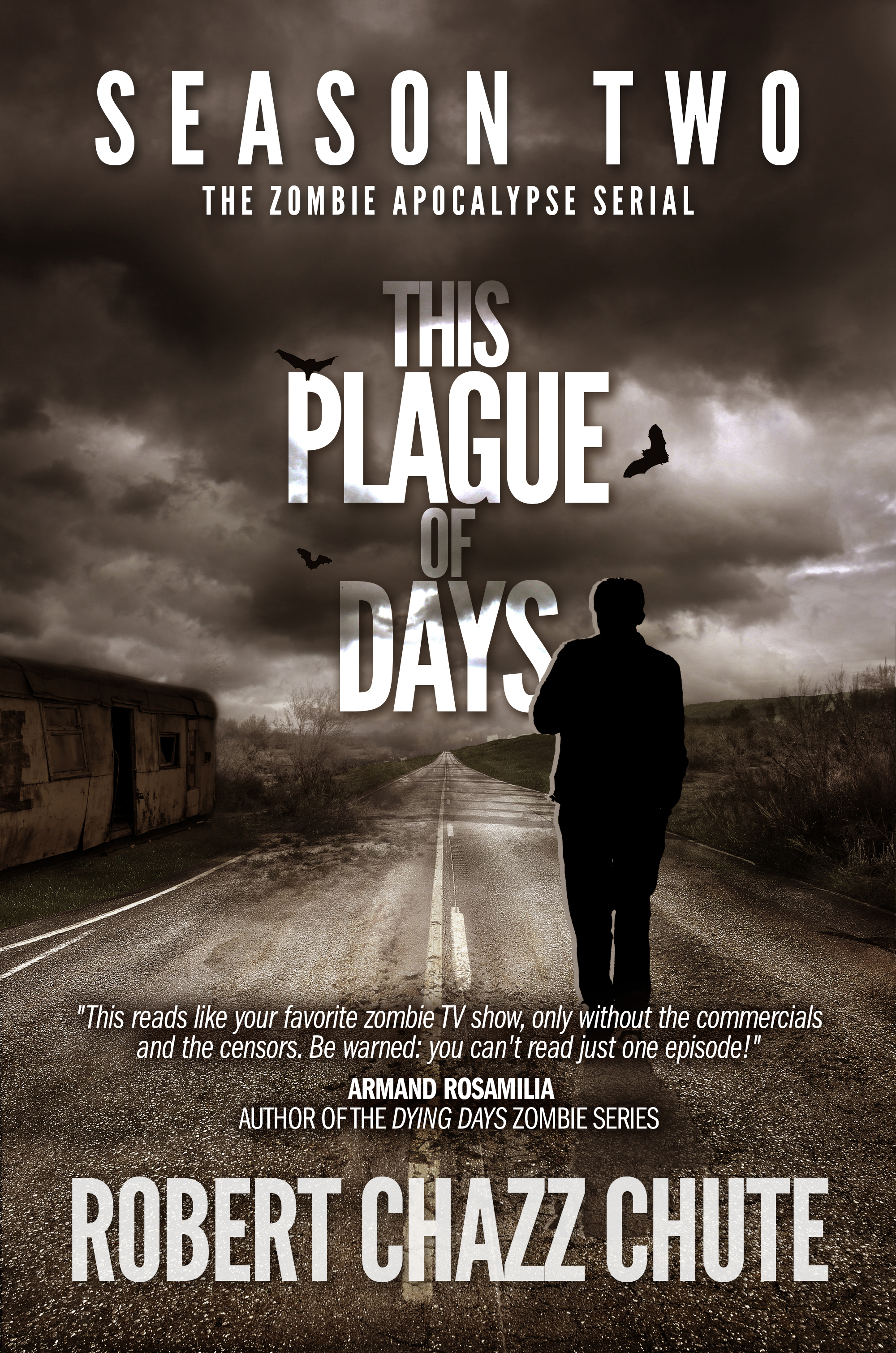
Fast-paced terror, new threats, more twists.

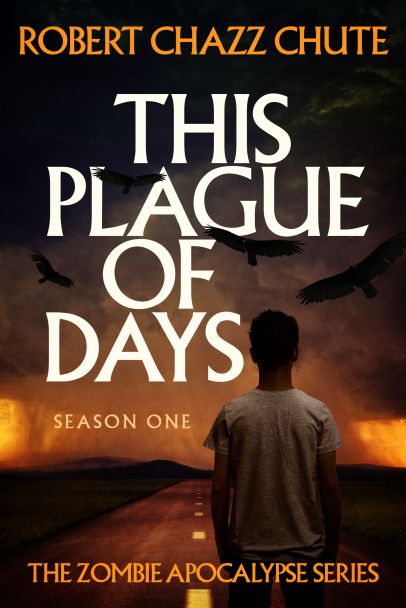
An autistic boy versus our world in free fall

Suspense to melt your face and play with your brain.

Action like a Guy Ritchie film. Funny like Woody Allen when he was funny.

Jesus: Sexier and even more addicted to love.

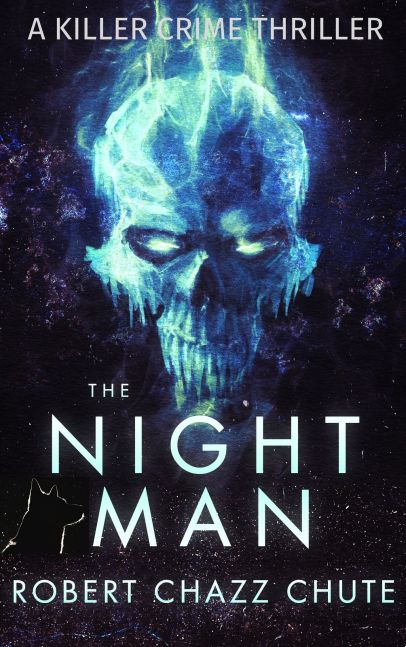
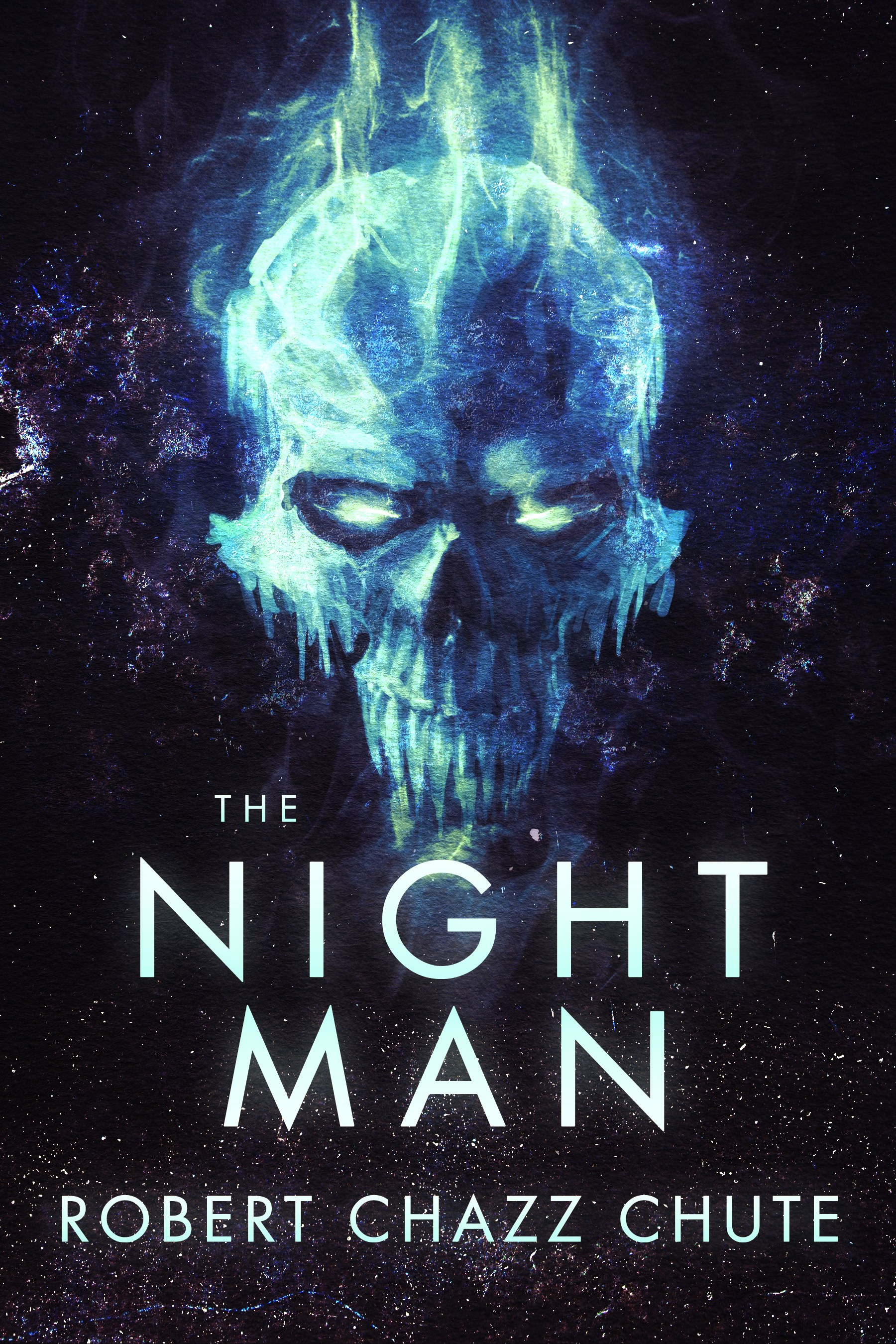
You can pick this ebook up for free today at this link: http://bit.ly/TheNightMan

Join my inner circle at AllThatChazz.com

See my books, blogs, links and podcasts.

Enter your email address to follow this blog and receive notifications of new posts by email.

Join 2,063 other subscribers