C h a z z W r i t e s . c o m

See all my books at AllThatChazz.com.

Self-publishers and the traditionally published (not versus)

I spotted it again today and frankly, I’m kind of tired of the narrative

that all self-publishers are a bunch of talentless hacks.

I can think of quite a few traditionally published authors who fit that category.

This is not to shit on the traditionally published.

This is simply to suggest that everybody ease up on the “everybody sucks but ___ ” rhetoric and the gatekeeper drama.

There’s room for everybody without getting too emo about it. You might even end up trying both routes.

Discuss.

Filed under: publishing, self-publishing, Writers, , , , , ,

Update: The choice to go indie

A friend had heard a rumour that I was quitting my part-time job to go full-time as a writer and self-publisher. “What’s this I hear?” he said. He didn’t sound impressed with my chutzpah.

I explained my plans and he crossed his arms. “That’s an…interesting choice.”

I mimicked him and made a joke out of it, but clearly, he’s worried about me. Then he mentioned that a relative, after years of writing short stories and playing the submit/reject/resubmit game, just got a publishing deal with a traditional publisher for his first novel.

“That’s great!” I said. “When does his book come out?”

“Not for another year or so.”

And there it is. I’m truly happy for him (I am!) but by the time he has his first novel out, I’ll have at least six ebooks for sale. There are trade-offs, but this is a great time to be a writer who has a problem with authority.

Filed under: authors, DIY, ebooks, getting it done, publishing, self-publishing, Writers, , , , ,

Writers: Not everyone will love us. I’m okay with that.

AllgemeineGesichts-Hals massage

Image via Wikipedia

I’m a couple of months away from writing and publishing full-time now. After 18 years as a massage therapist, I’m seeing an unflattering commonality between professions. Writers and massage therapists both seem to want respect desperately. And that’s the problem.

As I move into writing full-time, I see some of the same mistakes among the self-published that I witnessed in my (soon-to-be-former) occupation. Massage therapists want respect so badly they often give up their power to other health care practitioners and bureaucrats . That’s not how to gain respect. They should get respect by doing great things rather than trying to regulate to the lowest common denominator. (But that’s another rant about having a shred of dignity for another time and place.)

As writers seeking respect, we must give respect, but not require it of others artificially. Instead of respect, I suggest we seek out a readership.Respect must arise organically from circumstance and accomplishment. We have to do what we do well. That is all that’s needed. There’s a lot to that process, of course. Writing well, editing well, proofing well, formatting well, publishing with as few mistakes as possible…makes the head spin, doesn’t it? Most of all, tell a good story that keeps readers engaged. Sell a lot of books. Ultimately, sales will really get the attention of naysayers (and then they’ll really get cranky with you!)

Until then, self-published authors are called wannabes, amateurs, pretenders, unvetted, unproven, and unserious hobbyists.

Don’t worry about that.

You can mount a number of logical, fiscally sound arguments worthy of Joe Konrath, but until you deliver on the numbers, you’re just another “one of those.”

Sales figures aren’t subjective.

In my crotchety opinion, the best thing self-published authors can do is stay the course and ignore naysayers. Don’t even try to convince them. Let your success with readers be your argument. You know why, right? Because some publishers and critics and traditionally published authors don’t want to concede anything. They don’t want to give what you’re doing any respect. They fear change. They don’t want to like you. Maybe that will come later. (I’m not saying all critics and legacy authors want to dislike you, of course. However, the naysayers are loud and already get too much attention. They can hurt your feelings and sap your motivation if you give them your energy.)

You know who does want to like what you do? People who like stories. Readers. Readers and writers are not the same group. Readers differ from writers in number, grammar fetish, decibels, expertise, enjoyment and predisposition. Readers want to like your story and they want to like you. Cater to the right audience and maybe someday the naysayers will come around. If they don’t, either you didn’t do a good job or they are very determined snobs. If it’s the former, improve and carry on. If it’s the latter, screw ’em. Not everybody has to love you.

Wanting love without needing it from just any bonehead?

That’s the beginning of self-respect.

Filed under: DIY, ebooks, getting it done, self-publishing, Writers, writing tips, , , , , , , ,

Robert Chazz Chute: Literature hater & narcissistic bastard!

I realized something about myself the other day. I’ve been writing since I was a kid. So why haven’t I published a string of books yet?

Narcissistic Bio (Feel free to skip this paragraph to get closer to the point arrived at below): I went to journalism school. I wrote for newspapers and magazines. I worked in book publishing for five years in several positions, making books, editing books, selling books and promoting books. I’ve written a column for a magazine for three years. I submitted to and won writing awards or honorable mentions. And yet…I never pushed to get a book written. I have written several books, but I never got to the point with one where I was satisfied enough. For  a long time I thought this was just laziness or perfectionism or both. Even as I edited other people’s books, I still had my own cooking in the background. But I never sent out manuscripts or pestered agents or got anything really done, except short stories and feature articles, speeches and presentations. I’ve written about writing extensively, attended publishing conferences and writing workshops, chewed through publishing issues and edited several books this year for Five Rivers Chapmanry. I’m proud of all these things and enjoy them.

But everything I’ve accomplished centered around tasks with a short deadline, stuff that paid up front, stuff that required short bursts of intensity. I wasn’t working on my personal long term writing and publishing dreams. I wasn’t digging in to do the long hail work. It’s as if I’ve been mixing dough, letting it rise, shoving it in the oven and letting it bake…and never eating any bread.

I used to think that I wanted to be a writer because I love literature. I read and read and read and still can’t get enough, it’s true. (At least some of the above headline is supposed to be ironic, folks!) Obviously I don’t hate literature, but I don’t love literature as much as I thought I did. If I loved it all that much for its own sake, I would have either settled for reading tons of books without thoughts of my own. Or I’d have finished those revisions and delivered my stuff over publishers’ transoms. I would have added to slush piles and wallowed in rejection slips until I finally started breaking through. I didn’t do that. I raised kids, did piece work, indulged another career, dabbled around the edges and did other stuff.

So why self-publish now? I was disillusioned with the failures of traditional publishing when I worked within it (another post for another time.) I loved reading, still do. I love that floaty feeling you get when you write, go deep and a story comes together.

But these loves weren’t enough on their own.

I’m self-publishing now because ebooks have finally arrived. I can finally indulge my loves as well as my need to remain independent. Clearly, I’ve got a problem with authority.

My motto is Question authority before authority questions you. I do not wear a tie and I’m the kind of dog who pulls out of his collar.

 Love of literature wasn’t enough. Love of literature plus love of self plus digital opportunity was the ticket.

Embrace independence:

Control freaks! Unite! 

(Ahem…well, do what you want. Far be it from me to tell you what to do.) 

The revolution

(I didn’t know I was waiting for)

has arrived. 

Filed under: e-reader, ebooks, Rant, self-publishing, What about Chazz?, , , , , , , ,

Book promotion: I was wrong

I used to be a book publicist and, as a book sales rep, have worked with book publicists. Gotta say: not impressed with the breed. Most have a shiny coat, bark loudly, no teeth. I expected a lot of them. I don’t think I was wrong then, but now that the tech and culture have changed, I realize I’ve expected too much from publishers and their publicists.

In the old days, publicists organized events, book tours, mailed out advanced reading copies (ARCs) and hoped for reviews. The publicists I knew were pretty smug and full of themselves, especially considering how frequently they were unsuccessful.

The other wrinkle in the mix from an author’s point of view is, if you’re with a trad publisher, the publicity department has little time to get attention to any one book or author. The other continual complaint is, besides the small media/promotion window, most of the promotion budget always goes to the author who seems to need it least. That’s the publisher trying to maximize profits (rather than pimping a mid-list author.)

The world has changed and authors need to shift expectations: Publishers don’t publicize your book much and mostly download marketing duties to the author. That annoyed me. Now I think that’s the way it should be.

My reasoning is that the author/reader relationship has changed. Readers don’t want to interact with your publisher. They want to interact with you. Who cares about publishers. With the exception of Harlequin—the one company where you always know what you’re going to get—publishers don’t have brands. Authors have brands.

Old model:

Send stuff out (press releases, ARCs, bookmarks, catalogs, book tours) hoping media will bite.

New model:

Engage readers directly with Twitter conversations, blogger reviews and blog tours and hoping they will bite.

Yes, there’s still room for old model tactics, but they are either limited, outmoded, less effective or costly.

So nevermind that your publisher’s publicists aren’t returning your calls two weeks out from your book launch. Chances are they’re busy with another book and have expended your promotional budget. You can do better for yourself over the long run, anyway. (Or you can hire your very own publicist and do it up right for a longer time.)

Publishers unloaded marketing responsibilities to authors for budgetary reasons. Authors should shoulder that responsibility for a better reason:

Your readers want to talk to you, not them. 

Filed under: authors, Publicity & Promotion, publishing, Rant, , , , , , , ,

New mugs for editors at http://www.cafepress.ca/chazzwrites

As I recover from minor surgery, I’m taking it easy today. However, I do have a new product up at the store for editors who want to gently remind writers that it’s not called a liveline. It’s a deadline. Check out the new mugs here.

In fact, check out all the inventory at my store.

Tomorrow, in case you are struggling with a deadline: Top 10 ways to get back your motivation to write. Then, a post on how to edit without reading. Crazy shit, I know! Stay tuned.

Now I’m back to the couch with one more day feeling sorry for myself. I’ll get my groove back tomorrow, Stella.

(I’m okay. Minor injury sustained while defending Gotham from dark forces.)

Filed under: blogs & blogging, Editing, Editors, Shop Happy, writing tips, , , , ,

Writers & Readers: I say something new & cranky

Joe Rogan

Image via Wikipedia

Alfred Hitchcock once said a painter needs a brush, a writer a pen and a director an army. The numbers needed to make a film are coming down, but it’s still a collaborative, team sport (or a war, depending how indie you are as a filmmaker.) Painting  is still a solo pursuit and for a long time writing was solitary. Then writing got decidedly less solitary. And now, with self-publishing, the game has changed again.

Authors used to have publishers. Later, agents entered the industry and took pressure off editors by curating. They helped many authors get better deals. Now a lot of agents want to intermediate and perform more of an editorial function, possibly because other traditional roles they have fulfilled are shrinking. See this post for more on that and much more.

Now there can be fewer people between you and publication. Publishing isn’t necessarily a team sport anymore. Publishing with a group of lovers of all things literary  has produced many great books (and has probably interfered with the production of great books, too.) You may think many minds produce better material because all of us have more brain power than one of us. I used to believe that was true in all cases.

Then comedian Joe Rogan challenged that idea for me and articulated something that was slowly percolating through my cranium. In his experience as a comedian on The Man Show, he found that more suits on the set diluted the funny. His stand-up is a pure art form, moderated only by his own sense of humor and direct feedback from his audience. (I saw him at Massey Hall in Toronto recently. He rocks hard.)

It’s an old adage that too many cooks spoil the broth. Now science, as presented in the fascinating book 59 Seconds: Change Your Life in Under a Minute, has disproved the notion that more brains help a creative project. The most creative solutions are not arrived at by the most creative person in the room. They are directed by the loudest person in the room.

So, if your agent says “I’m not submitting your work because I don’t think it’s ready,” and you cede that power, your work isn’t going to market whether your agent is right or not.

This is the sort of thing that drives the traditional world of publishing nuts. Without those mediators, obstacles, curators, gatekeepers, shepherds and rabbis, the worry is that we shall be inundated with a slew of awful, awful books. The deluge shall be as a fire hose pointed at the tiny tea cup of our fevered minds. Without those helpful interlocutors, who will keep the bad books away?

Rather than address the curation question directly (and I’ve already addressed it many times on this blog), I’d like to say something new on the subject:

Even if that objection is valid, so the f**k what? I reject the premise. I say this is not about your convenience in going to a legacy publisher you trust for all your curation wants. This is about my freedom to express my art, which you can enjoy or not. As they say at the convenience store, “Buy or leave!”

The marketplace of ideas is opening up to a lot more shelf stock. Buckle up and put on your big boy Underoos and your big girl panties. Soon you might find more variety and much more current reading material to explore and fill your mind.

I value my sovereignty of expression more than your convenience.

I said this was a revolution. I asked you to join me.

Did you really think no one would get hurt along the way to the shinier, freer new world we’re creating? 

The results will surely be messy, but the cost of your tender sensibilities is really negligible. There will be a lot of bad books delicate grammar doilies will decry. You’ll see a lot of typos (though I see a lot of typos in traditional books, too, by the way, and yet the earth keeps on spinning.)

We value freedom and freedom of expression. A lot. The US Supreme Court allows the Westboro Baptist Church to protest at funerals with ghoulish signs without regard to the feelings of the families of the dead. Evidence obtained illegally is routinely thrown out and murderers are sometimes set free as a result. We accept some consequences far worse than inconvenience so that greater individual sovereignty is assured.

If it sounds like I’m saying your worries

about all the coming bad books don’t matter,

you’ve read this blog post correctly. 

Filed under: agents, authors, Books, censors, publishing, self-publishing, , , , , , , ,

Writing Conference: 10 Bad things

When you go to a writing conference, there’s going to be information that’s good and information that doesn’t apply to you and information that’s quite bad. Here are some of the things that came up at my most recent conference which you can safely ignore as wrong or silly or misguided:

1. How will we curate all those bad books coming from self-publishers? I’m so tired of this objection, and have dealt with it so much elsewhere here, I’m not ev–zzz. (See Related articles below for that rehash if you feel the urge.)

2. Don’t mix gay narrative with straight narrative. So…ghettoize gays and keep everyone separate, as if our gayness or straightness is our single defining characteristic? Nope! I reject the premise. Screw you…in whatever way you prefer.

3. Order 1,000 books because, due to cost per unit, 1,000 won’t cost much more than 200 books. This, versus the more experienced publisher who pointed out that he only ordered what he needed because he knew it would take him two years to sell 500 books. (Plus a garage full of books is so depressing and unnecessary with the advent of POD.)

4.  Any worries about Amazon’s first novel contest. You have nothing to lose from participating in it.

5. Any worries that someone will steal your idea. There is a scientific correlation to this particular worry: The more you worry about it, the more your idea sucks anyway.

6. This is the end of publishing. Publishing’s changing, that’s all. Adapt or die.

7. I shudder at e-books. Then you’re old. Get over it or wait and that problem will resolve itself.

8. “Twitter is awful. What can I say in 140 characters?” This, from an editor. My internal monologue was: You must be a really lousy editor and you’re telling me you are committed to not being at all clever.

9. “Twitter cuts into my writing time.” This, from the same editor. If she read my blog (DEATH STARE!) she’d know (CHAZZ LAW) Twitter is for time that would be unproductive anyway. Fully functional adults manage their time. (And addicts have to want to change.)

10. “Get an editor for your self-published book!” This is not bad advice. It’s not wrong. However, it is condescending. The people who will take this advice are already on board. The people who won’t take this good advice won’t change no matter what you say.

Filed under: Books, Writers, Writing Conferences, writing tips, , , , , ,

Publishing is sick. You should quit. Take up knitting.

I attended a lovely writing conference. The best value of these get-togethers is often not in the classes, but in the networking, either by finding an agent, getting  useful feedback or networking with writer allies who can hook you up with what you need (e.g. a graphic designer, beta readers, a photographer, an inexpensive website developer, software you didn’t know existed etc.,…)

A couple of instructors at this conference gave me some really great technical information. Much of the discussion was about stuff you’ll find on this very blog (Shameless plug. Subscribe and send love.) Much of the talk was yet another rehash of commonly known information (e.g. get yourself an editor for your self-published work). A bunch of it was stuff you see spread across the internet endlessly for free (e.g. a rehash of the Amanda Hocking/Barry Eisler unfoldment).

(Heh.Unfoldment. I like that.) 

There was also some bad advice. But today, let’s focus on the health of the publishing industry: It’s sick. Really sick. Especially for the ones upon whose brains and bones rest the cracked foundation: writers.

Of course, it has been thus for a long time. Even when it was healthy, publishers operated on thin margins and predicted imminent doom. Many of those publishing companies anticipating the end were right; I worked for several that are long closed. (I didn’t kill ’em, but I helped hold ’em down. Good times.)

We all know the common complaints today: fewer editors, the corporate profit-push squeezing the midlist, the crash of the bookstore (ask your parents, they’ll tell you what they were), the discount tyranny of the chains and the crush of all that self-publishing pressure and the ennui that sets in when you realize you’re a rusty cog in an old machine that needs a lot of parts replaced.

I’d like to  suggest a new measure of the health of the industry:

How many jobs do the major players have?

A short, relevant aside: I am currently a part-time massage therapist, columnist, feature writer, writer-writer, blogger and editor. Also, I’m a house husband and stay-at-home dad. That’s plenty of hats. Okay, I’m a freak, but not as much as I used to be it seems. And I’m cutting down my number of roles soon (Hint: keeping the sexy wife, brilliant kids and the horror writing that chills my victims’ readers’ blood.) 

Aside over. To business: 

Now watch what happens when we look at instructors at writing conferences:

People at the top of their game aren’t making their living from writing.

Of all the people I encountered at the writing conference, two were at it full-time. Andrew Pyper wrote a book I loved called The Killing Circle and gave a funny, charming and wise speech. Wayson Choi spoke briefly and he’s also plenty charming. (Just read Not Yet, liked it.)

Mr. Choi gave the same encouragement he did last year: You aren’t alone in this. We are all together in this. (As if writing and actually getting published is equal to a struggle with a terrible disease and all caregivers and support for the afflicted must be rallied.) As if the diagnosis is in and it’s not good. The doc is giving you that look that says you might make it, but the treatment is so horrible and there is so much pain to endure, refusing to undergo medical torture is a worthy consideration. Getting better (or published) is sort of like winning the lottery.

(Trivia bonus: Wayson Choi is not only published but once won $100,000 in a lottery. He also survived terrible lung and cardiac problems so he might be the sweetest, luckiest sumbitch you’ve ever heard of. Sure, lots of people win big prizes and survive heart attacks, but to be published? That’s rare!)

But are writing conferences really about getting published? There’s a lot of amateur desperation in that big hall. Nice people, but not all writers. Dilettantes and the terminally confused are also a large component from what I could tell.

I don’t count delusion against people, by the way. To be a writer at all, you must be deluded…well, for fiction writers,  it’s a job requirement.

Are writing conferences helping these people get published, or are they just  another income stream or promotional avenue for poverty-stricken writers? Several presenters used their seminar teaching position to flog their books and editorial services pretty hard (though I didn’t mind the guy who had the grace to be funny about being spammy.) The rest were so fed-up, sad or desperate they were perspiring audibly.

When the “stars” in an industry have to spend a lot of time doing non-writing activity to eat, that’s another indicator of an industry on life support.

If any other industry had this much necessary moonlighting (go ahead, name any one you like), you wouldn’t want your kid on that career path. Imagine if all the civil engineers also had to work as mail carriers and mimes to avoid starvation. Suppose all the doctors were also telemarketers/poets/screenwriters/dog walkers/financial advisors/supply teachers, just so they could cobble together one living income from all their part-time jobs. There’s nothing wrong with any of these jobs but…

But if you have to do it all…well, my point is, sorry…you should quit. 

If you think you can quit, then good. You’re free to move on to something that could give you the security of three squares, dignity, hope for the future and some level of satisfaction.

If you can’t quit, either….

Maybe my writing as a disease analogy wasn’t so inept after all. 

 Related Articles

Filed under: publishing, Rant, Rejection, Useful writing links, Writers, writing tips, , , , , , , ,

Writers: Choose choice, not ideology

Bertrand Russell's views on philosophy

Image via Wikipedia

Talking politics with someone the other day, they said a particular candidate was so stupid they didn’t know when a reporter was rude to them. I doubt that. Assuming the politician dressed himself that morning, he did know and instead of reacting to the rudeness, he stayed on topic. He was polite—or even too polite.

The guy I was talking to already didn’t like the politician, so he chose not just to disagree with him, but to assume he was an idiot.

People choose sides. Sometimes they don’t even know why, but they get heavily invested in one outcome, often before we have any facts. Sure, people like to think they’re logical, but in fact they’re often intuitive. They jump to their conclusion and the logic that’s recruited only feels like logic. It’s actually rationalization.

We’re hardwired to make quick decisions. It’s in our genes to choose a tribe, too. We stick with that tribe, even when the tribe doesn’t serve us. Even when it’s a bunch of  millionaire basketball players, fans think they’re somehow on the team. It’s a religious fervor to join, to believe, to be one with a larger whole.

And it gets goofy. Nationalism, for instance, is tribalism write large. If you own a Mac and extol its virtues, a bunch of disproportionately angry people will call you a wuss in some web forum or other. We take ownership of things we don’t own. We choose up sides to divide us and them where there is no us and them. Gay teens get ostracized and bullied, many to suicide. Liberals are too quick to write off all conservatives. People can’t seem to make a distinction between “supporting the troops” and “disagreeing with the mission.”

Or, for writers, watch traditionally published authors shit on self-publishing. But this post isn’t about traditional versus indie. I’m not talking today about which way is best (as if any one way is best for everyone.) This is not another one of those posts debating the use of terms, indie versus self-published and who gets to claim what (as if words are owned or static.)

This is a post that simply says: compared to all the big problems we have, traditional publishing versus the new publishing? Pretty trivial. (And it doesn’t have to be all one thing or the other thing, anyway.)

Lighten up. Choose your own path. If you’re shitting on somebody or telling others what to do, ease up on tribal tendencies and focus on you.

Man in the Mirror and all that.

You be you. I’ll be me.

Filed under: Books, ebooks, links, publishing, Rant, self-publishing, Writers, , , , , ,

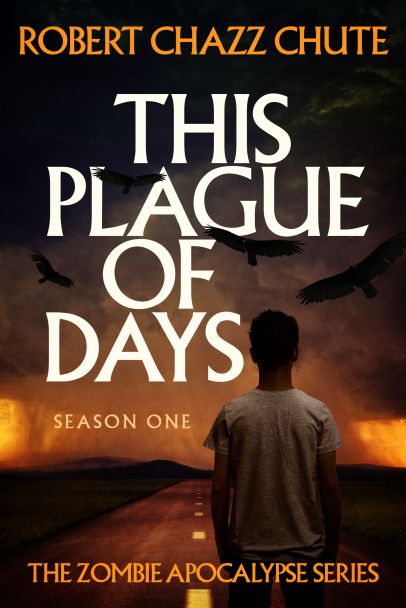
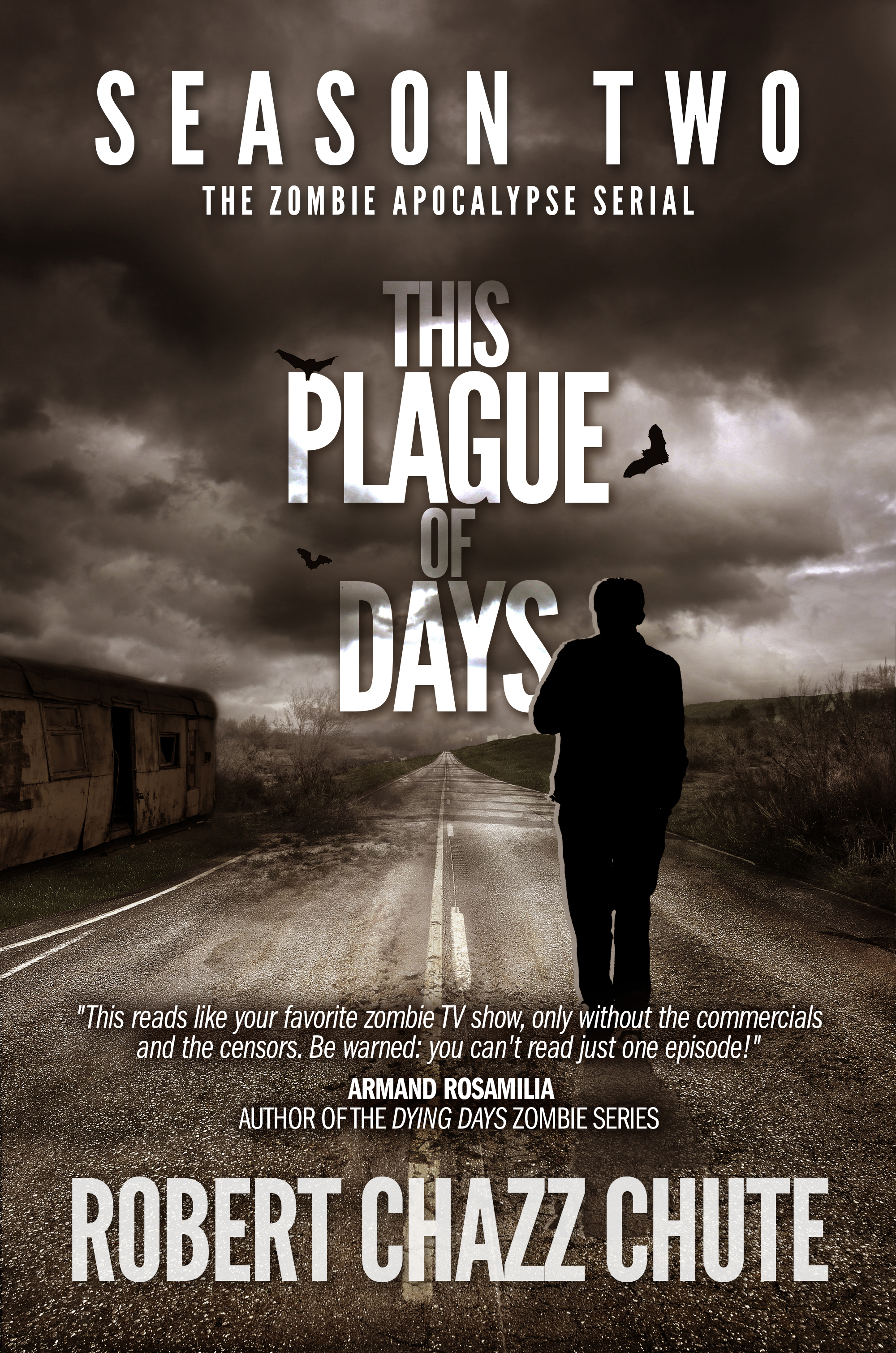
Bestseller with over 1,000 reviews!
Winner of the North Street Book Prize, Reader's Favorite, the
Literary Titan Award, the Hollywood Book Festival, and the
New York Book Festival.

http://mybook.to/OurZombieHours
A NEW ZOMBIE ANTHOLOGY

Winner of Writer's Digest's 2014 Honorable Mention in Self-published Ebook Awards in Genre

The first 81 lessons to get your Buffy on

More lessons to help you survive Armageddon

"You will laugh your ass off!" ~ Maxwell Cynn, author of Cybergrrl

Available now!

Fast-paced terror, new threats, more twists.

An autistic boy versus our world in free fall

Suspense to melt your face and play with your brain.

Action like a Guy Ritchie film. Funny like Woody Allen when he was funny.

Jesus: Sexier and even more addicted to love.

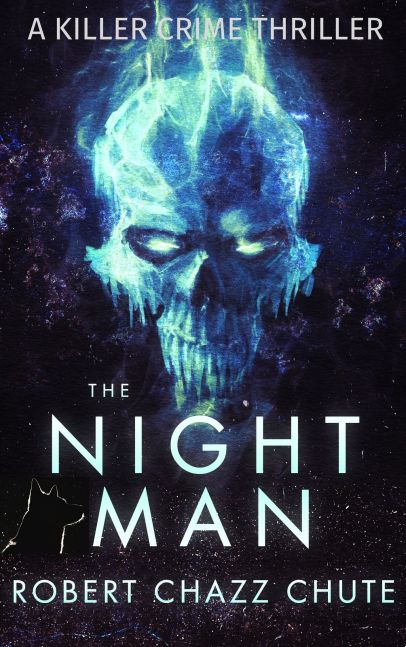
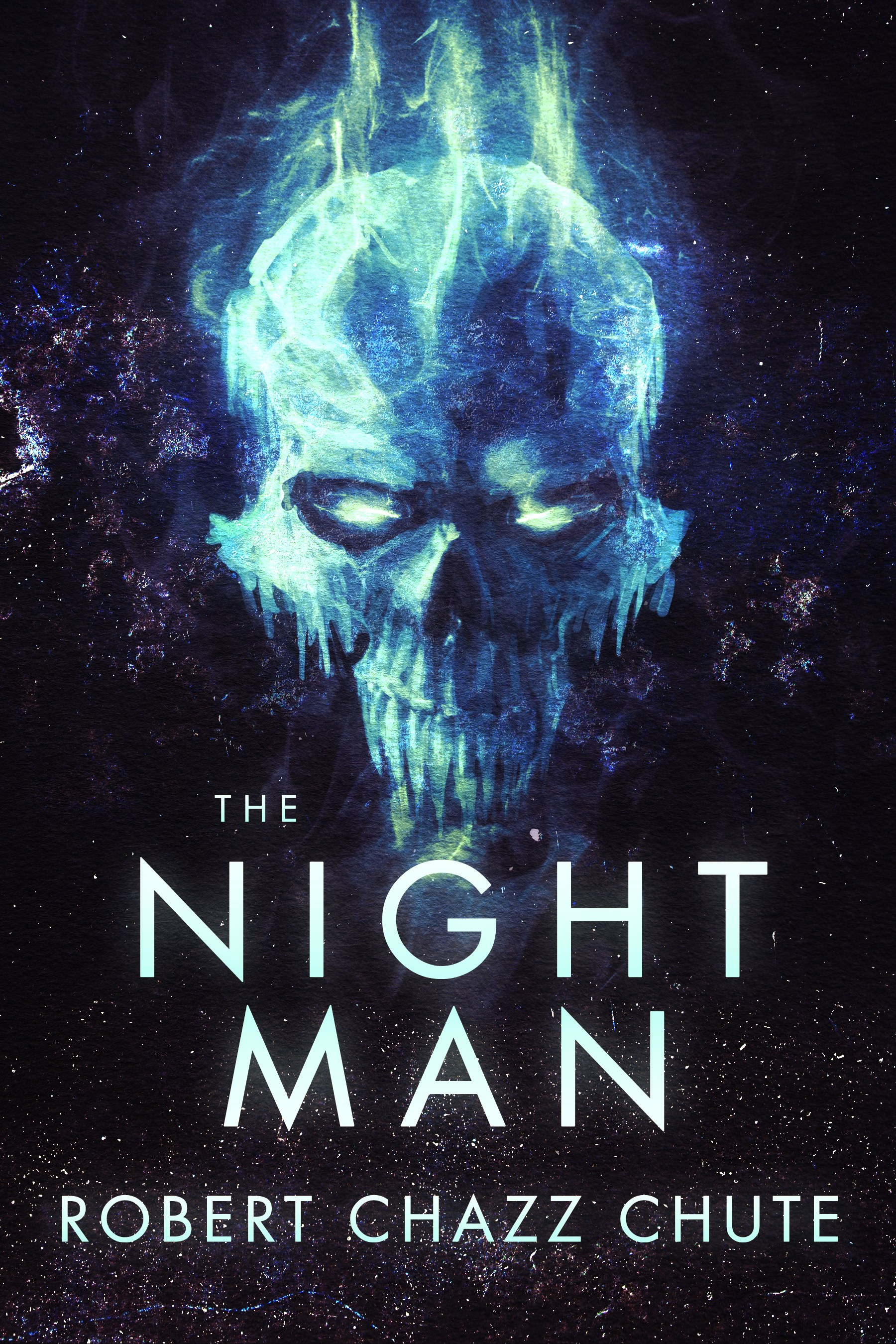
You can pick this ebook up for free today at this link: http://bit.ly/TheNightMan

Join my inner circle at AllThatChazz.com

See my books, blogs, links and podcasts.

Enter your email address to follow this blog and receive notifications of new posts by email.

Join 2,063 other subscribers