C h a z z W r i t e s . c o m

See all my books at AllThatChazz.com.

Writerly link roundup: word counts by genre (& send in the cavalry!)

I’m in the editing basilica today but I wanted to take a moment to lay out three little info-gifts for you, and then, something special.cover_front_soe_gol


Three interesting links:

An Author’s Perspective on Scribd versus Bookbuzzr

What word count fits your manuscript’s genre?

A writer and her hate mail

And finally, an author decides to give away his e-book. What makes this special? No gimmicks, no forms, no following, no email subscriptions, zero ordeal.

JS Chancellor’s book got pirated but he’s turning things around. It will be interesting to see how his strategy works to promote the book.

So let’s help. Pump up his blog. Pump up the volume. Go see if you like his writing and maybe a great experience and reader-writer relationship will begin.

He calls it “a shameless plea for help.” I say we help out because, hey, we’re writers! We can help out other writers! More important, we’re readers! And helping out feels good.

And the dude’s giving you a book! What’s to think about? If you like it, spread his word. Go there, bookmark it and pick it up March 1.

Check here for details:

Free Copy of Son of Ereubus

Filed under: authors, Books, ebooks, links, publishing, Useful writing links, writing tips, , , , , , , , ,

Writers: The short form is roaring back

Ernest Hemingway's Grave

Image by gharness via Flickr

I met The Fab Rebecca Senese (I think of her as TFRS at all times) at the Writers’ Union symposium. We went to Tims and went through that excited decompression phase. You know the one. It’s where you are packed with new information to mesh and meld with your old data and you talk fast to get it all out and solidify new, useful neuropathways.

She made an observation that really got my attention:

Amid the hubbub, TFRS said that e-books were a sure opportunity for the short form to make a strong comeback. Got a short flight or need a distraction over lunch? Read a short story or two. If you just want to gulp down a tale but don’t have time for a whole book, enjoy a novella after work.

Makes sense to me. I love short fiction. For instance, it’s a mystery to me why people say they love Ernest Hemingway‘s books, but I do like some of his short stories very much.

Short stories have been relegated to the back of the bus (read: unread literary journals.)

Until recently people have been buying books by weight, so publishers laughed at their puniness and demanded big doorstops they could sell. Length is an issue with paper, constrained as it is by the strictures of the printing press and bookstore manager’s expectations.

Novellas are ignored by many professional critics who often don’t take it seriously because they think the short punch packs less heft behind it. As if we all feel that way all the time.

A good short story takes talent to write and in some ways is a different skill set from the novel. (These critics must be those same twits who scoff at Twitter just because they can’t put together one clever coherent thought in less than 140 characters.)

Now with e-books, the answers to those objections are: Who needs publishers for that? What’s a professional critic and what is this “newspaper” thing you’re babbling about? And lit journals? What’s that? Is all this stuff available online?

Click this link to see  Rebecca Senese’s short fiction.

Please do take a look.

Filed under: authors, blogs & blogging, Books, ebooks, self-publishing, short stories, Twitter, Writers, , , , , , , , , , , , , ,

Writers: Top 10 of the 2010 Top 10 Chazz Writes posts

Top10

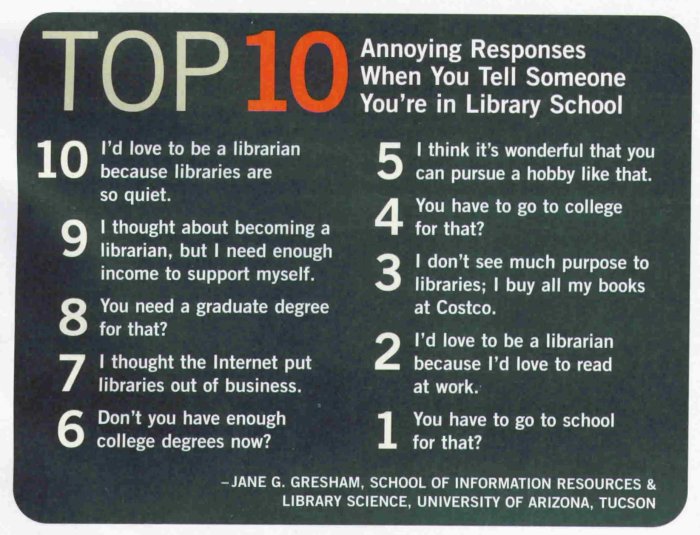
Early last year I considered going back to school to become a librarian. (I dumped that idea before I saw this graphic, but it does make me feel better about my choice.)

After some career counselling, I decided to refocus my efforts on my writing and editing. I needed (and need!) to bring art to the front burner. I began this blog as part of reorganizing my life to that end. Since last May I’ve posted 402 times and gained lots of readers, friends and even some clients (hurrah!) Things progress.

 For lucky #403, this is a look back through the Top 10 lists of 2010:

1. Authors! Part II: Top Ten Lessons from the Networking Master

2. Top 10 Ways Writers Waste Time

3. Writers & Editors: Top 10 Editorial Considerations

4. (Top 10 Things +1) Writers Love

5. Top 10 Reasons We Write Sci-fi

6. Top 10 (plus one) Publishing Conference Lessons

7. Top 10 Things Writers Fear

8. Top 10 Reasons We Write Horror

9. Top 10 Reasons We Write Romance

10. Writers Top Ten: Why blogging about publishing is important

Filed under: authors, Books, ebooks, Editing, Editors, getting it done, Horror, Publicity & Promotion, publishing, Rant, Top Ten, Useful writing links, Writers, writing tips, , , , , , , , , , , , ,

Writers: What is your genre? What do you read?

St. Augustine writing, revising, and re-writin...

Image via Wikipedia

Most of you are writers.

Please let me know the genre in which you write.

Also, what do you read?

Some writers avoid reading fiction from their own genre because they worry it will influence their own writing. I think there’s a difference between a good influence, a bad influence and plagiarism, so I read a lot within my genre (literary fiction and horror.) I also read widely outside my genre.

I usually have ten or so books going at one time. I either have an undiagnosed case of Attention Deficit Disorder or I’m easily bored. Oh, or maybe those two things are de facto the same thing. (I know I’ve hit a really good book when I don’t switch it out with another book. and slow down to savour it.)

I also have an extensive collection of reference books and how-to books on writing, social media and most aspects of publishing. Do you have a favourite book on writing or perhaps you reject the premise? What writing books do you love? Which could you (and the universe) do without?

I’d like to hear from you.

Please leave a comment and let me know your thoughts.

Thanks!

Filed under: book reviews, Writers, , , , , , , , , , , ,

Author Q&A: Lorina Stephens and her book From Mountains of Ice

ABOUT LORINA STEPHENS In 1980 Lorina Stephens picked up the pen professionally and never looked back. She has worked as editor, freelance journalist for national and regional printFrom mountains of ice media, is author of six books both fiction and non-fiction. She has been a festival organizer, publicist, lectures on many topics from historical textiles and domestic technologies, to publishing and writing, teaches and continues to work as a writer, artist, and publisher.
Lorina has had several short fiction pieces published in Canada’s acclaimed On Spec magazine and Marion Zimmer Bradley’s fantasy anthology Sword & Sorceress X. Her books include: From Mountains of Ice, And the Angels Sang, Shadow Song, Recipes of a Dumb Housewife among others. She lives with her husband of three plus decades, and two cats, in a historic stone house in Neustadt, Ontario.

 LS: That didn’t happen until 1980 after I had to take a short leave of absence. While I’d always crafted stories, I’d never actually committed anything to paper, and when I suddenly had all this time on my hands I found myself recording those stories.


Chazz: Tell us about your book. How did you get the idea for your book?

LS: The genesis for From Mountains of Ice came about because I wanted to write a story about an unlikely hero, someone who wasn’t all beauty, youth and brawn. In fact, I wanted a middle-aged man who reluctantly takes up the mantle of responsibility. That, combined with a fascination for the myriad funeral and death rituals around the world, made for the foundation of the novel. In particular, I found the Romano-Celtic legend of the cucullati of interest, and that legend plays a fundamental role in the culture of the novel, and the development of the plot.

Chazz: What research was involved in your book’s development?

LS: While there wasn’t research specifically undertaken for this particular novel, I did rely on research I’d previously done simply as part of my own interests; that is, study of Renaissance Italy; the history of the longbow as well as bow and arrow construction; death and funeral rituals, in particular the legend I mentioned previously, as well as the Indian festival that takes place annually on the River Ganges; study of historical dress; the Byzantine Empire; study of the historical basis for tattoos and their cultural impact; study of psychopathic behavior. The list really is quite expansive, and some of the resource material I used is listed in the afterword.

Chazz: Tell us about your writing process.

LS: I pretty much always begin with a concept surrounding a vehicle, usually an individual placed in an extraordinary situation. What seems to have developed over the years is that I write my first three chapters first, sometimes the ending, to get a feeling of where I want to go with the novel, to familiarize myself with the characters and milieu, and once I have that in place I write myself a fairly detailed chapter outline. I don’t always adhere to that outline, but it acts as a map.

I do try to be disciplined about my writing, working every day except for weekends, but with this current novel I’m finding that a bit difficult, partly because I’ve also taken on the role of publisher, but partly because I’m challenging myself with this novel.

Chazz: How did you arrive at the decision to self-publish and what did you have to learn and do to accomplish that task?

LS: From Mountains of Ice took about 18 months to write, although I’d had the concept slumbering for about a decade.

I decided to self-publish partly because of the changing culture of publishing, and partly because of what I write. As to the first part, so many large houses have not only shut their doors to unsolicited manuscripts, but have cut their  authors (many of whom are actually bestsellers), and that has resulted in agents closing their doors because they’re scrambling to find homes for orphaned authors. What chance would an unknown author like me stand in the face of that?

And then there’s the reality of what I write. I don’t write easily pigeon-holed stories. Moreover, I don’t write feel-good stories. My work tends to cross genres, being neither speculative, science fiction, fantasy, historical or mainstream. That makes me a difficult sell.

Given the ease with which a person can now self-publish (and I’m speaking of true self-publishing, not vanity press), and reach a market, I decided to jump into the deep end. The learning curve was interesting, but not overwhelming, given I already had some background in publishing. The most challenging thing was learning software (InDesign and Photoshop). The channels and rituals of the long tail of publishing was pretty simple. And I’m good at polite persistence.

All of that led me to expand my publishing venture and give voice to other Canadian authors so that we now have four authors (including me) publishing, and will present another four in the next two years.

Chazz: What was the biggest challenge you experienced through this book?

LS: Perhaps my biggest challenge has been overcoming lazy readers, and I know that sounds disgustingly arrogant. There was one reviewer who was convinced I’d written a knock-off of Gladiator because I had the soundtrack listed as inspirational music. Didn’t matter that I explained to him the majority of the music I listened to while writing From Mountains of Ice was in fact by the group Dead Can Dance, and even listed which tracks underpinned which scenes. I think this is how Paul Stookey must have felt when academics insisted Puff the Magic Dragon was actually a song about drugs.

I also had two reviewers trash the novel because they insisted there was a glaring error when in fact what they read was correct, heraldic terminology. I know if I read something I don’t understand, I first go and look it up before assuming what I’ve read is incorrect.

Chazz: What was the hardest part of the publishing process?

LS: For me the hardest part of publishing is convincing people my work is worth reading, worth the investment of their time. In short, it’s difficult overcoming the stigma of self-publishing, with good reason I might add. But I love what I do. I love every moment, the high and lows, the triumphs and tragedies.

Chazz: What advice would you give unpublished writers?

LS: This is perhaps not wise advice, given society’s propensity to create clones: be true to yourself. Write with your own voice, from your own heart, adhering to standards of excellence.

Chazz: Have changes in the book industry forced you to change how you published or marketed your work?

LS: Absolutely. One of the reasons I self-published, and also one of the reasons I rely heavily upon internet social networking.

Chazz: What’s your next book project and what can you tell us about it?

LS: My next book is called The Rose Guardian, and deals with a woman coming to terms with the death of her mother, and her own search for lost innocence. It is in fact three stories which occur simultaneously. I must say this is the most difficult piece I’ve written. It has been hard to find just the right tone for each of the three main characters, and to link them together in a cohesive fashion without sounding too dark or cynical. I think I’ve finally conquered that problem, and am now making headway.

Thanks, Lorina! If you want to know more about Lorina and fancy buying her books, here are several ways to find out more:

Facebook: http://www.facebook.com/pages/Lorina-Stephens/136091476870

For Five Rivers: email: info@5rivers.org

Twitter: 5rivers

Website: http://www.5rivers.org

Blog: http://5riversnews.blogspot.com/

Filed under: Author profiles, author Q&A, authors, Books, self-publishing, , , , , , , , , ,

Book Review: I Am Not a Serial Killer

Stephen King's House in Bangor, Maine

Image via Wikipedia

Even when an author makes a choice that doesn’t sit well with the individual reader, when a book is written well, perceived flaws are easily forgiven. Dan Well’s debut novel, I Am Not a Serial Killer is a solid writer. From the first chapter, I knew I was going to like this book and I could see why his agent and publisher were grabbed immediately.

Wells has done his research so well, you’re convinced he’s been hanging out in mortuaries a long time. He details the embalming process is grisly, convincing detail. He’s acquainted himself well with how a sociopath thinks. I wish Jeff Lindsay, author of the Dexter books, understood serial killers so well. (While the Showtime series, Dexter, is superb, the books are get progressively worse.)

When Wells’s tale threatened to go off the rails for me, he kept me riveted with realistic detail. I’m not going to spoil the story for you. I will say that Wells makes a daring choice by sliding a gritty portrayal of a young sociopath into a supernatural story. Had he kept his horror altogether in reality, it would be In Cold Blood for the juvenile set. I got antsy about the supernatural turn the story took, but Wells controlled his story by going back to the realistic context.

Reality is what makes horror so effective. It’s viruses escaping from government labs. It’s the threats that lurk behind every corner which end at a police station, a hospital or a morgue. Think of Stephen King’s portrayal of big bad things happening in tiny, ordinary towns in Maine. What makes effective horror so effective is that it occurs in such ordinary contexts. That’s why Wells’s choice to opt for the supernatural is daring. Each time he went out to the edge of reality, he compensated by getting right back to a realistic context.

The flaws I mentioned? Near the end, vague explanations are made to police that are skimmed over. I’m not even clear what explanations were offered so alibis seemed underwritten. (If Wells had omitted that scene, the denouement would have been shorter, as well.) I didn’t buy that part and would have preferred that the police not be brought in at all. Unless you’re writing a police procedural, I find bringing police into thrillers is problematic. Generally, when the forces for order show up, they either chase the bad guys away and order comes closer to being restored. That’s why so many effective horror stories occur in remote places where the outside world is cut off, the bridge is out and civilian protagonists have to rely on their own wits and tendons. (In my own stories, cops are never a factor. Their role is to show up after all the real action is over. The people they tend to catch are standing over their spouse holding a butcher knife and covered in blood. In reality, there’s a lot less drama after the authorities get involved.) 

However, despite these quibbles, Wells ends his story perfectly. It could be the beginning of a series. The protagonist’s voice is so authentic, dangerous and vulnerable at the same time, I’m looking forward to reading more of Mr. Wells’s work.

Want to know more about the Dan Wells? Go to http://www.fearfulsymmetry.net/.

Filed under: book reviews, Horror, writing tips, , , ,

The Short Story: Find the Right Ending

Freytag's Pyramid, which illustrates dramatic ...

Image via Wikipedia

A novel is a long journey with many plot developments. In short stories, the major change is in character. It’s up to you to make the ending a satisfying, surprising and yet inevitable revelation.

But sometimes we get stuck. The story unfolds, but we aren’t sure how to end it correctly. When you get stuck for a last paragraph, I suggest you look to your first paragraph. Your ending’s seed often grows from the opening.

The right opening is intriguing, informative, gives a sense of place and introduces the problem. You may think of your closing as a callback (as comedians label a bit, perhaps a finisher, that recalls an earlier premise.) After the last word, ask yourself how your reader will interpret the story. How did the character change? What was learned (without being too obvious or moralistic)?

Short stories shouldn’t be too obvious in their endings, of course, but you have to find a balance between showing a situation and telling your reader what to think. Too often, in an effort to be subtle, writers veer off into the obscure. Sometimes people write arty endings. Some teachers  even seem to encourage that. I don’t.

As a writer, a mysterious ending makes me think the short story author is trying to distract me from their muddled thinking. I am not distracted by flowery words that say nothing. I’m irritated by that. As a readers, unclear conclusions feel like camouflage for a place where the writer stopped the story rather than ending it.

Opaque writing is unsatisfying. You can be subtle without leaving the reader stunned into incomprehension. Good short stories, with a proper beginning, have a clear ending. Give it an interesting middle and you have a story.

Tall orders, I know. But that’s what it takes. I’m struggling with a short story ending now. However, I’m confident the solution to that tricky last paragraph will be found in the first.

Filed under: My fiction, short stories, writing tips, , , , , ,

Writers & Editors: Top 10 Editorial Considerations

 Here’s the follow-up from yesterday’s post on appropriate use of tense:

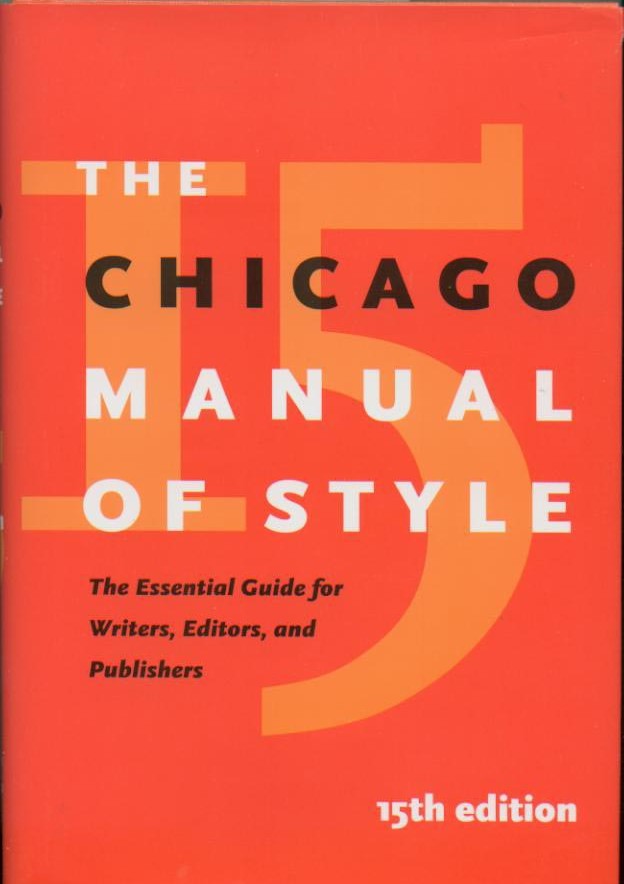
Editing considerations (as I revised my short story, The Dangerous Kind)Chicago-Manual-of-Style

1. One component I took care to delete were instances where the narrator says things like “I was surprised,” or when he made blatant judgements about his brother. This is overwriting and it’s easy to fall into. You want to give the readers enough to paint a picture but not so much that they can’t draw their own conclusions.

2. Try to avoid clichéd caricature. Don’t tell. Show character’s traits through their actions and dialogue.

3. Give your villains depth, so though the narrator of this story is the protagonist, he’s capable of evil and his mean big brother isn’t all bad, either.

4. This is a long short story at 8,500 words. The details are what’s going to draw readers into the slow build as the narrator discovers the evil of which he is capable. Show special knowledge along the way the reader might not know or detail that deepens the experience.  (For instance, on the hunting trip, the reader learns or experiences details about the feel of moss underfoot, the sound of a rifle bolt slamming home, buck fever and what it feels like to be carried in your mother’s arms.)

 5. Dialogue should advance plot, deepen character and, preferably, do so memorably. If the dialogue is neither of these things, it can often be summarized in narrative without quotes around it.

 6. Revising means “seeing anew.” Evaluate what the story is really about. At first I kept present tense because I wanted to maintain mystery as to whether the narrator would survive the story (See yesterday’s post below.) As I unearthed the story, the plot took a turn away from that storyline. Instead, the stakes are not whether the narrator will survive, but will he allow his brother to die, get the inheritance and escape rural Maine for the bright lights of New York? Once the core of the story changed, past tense opened up to me so I could achieve a more subtle and nuanced story than I had originally intended. That’s okay for a short story. For a longer piece of fiction I’d do more planning, plotting and outlining ahead of time so as not to lose too much time backing and filling.

7. Vary sentence length and sentence construction.

 8. Cut where you can without becoming terse or overwriting.

 9. The most common failure of overwriting is to describe character features in detail. Don’t tell me in detail what anybody’s wearing and definitely avoid the trope of getting a character to describe him or herself in a mirror.

 10. Dialogue should sound real, but without the ums and ahs of a transcript. Avoid dialect where possible as accents slow(and annoy readers.) Read your dialogue aloud to determine if you can believe someone saying your dialogue believably.

 Below is the first-person present-tense excerpt from The Dangerous Kind and then the revision.

Compare these excerpts…and please ignore the formatting. That’s a text to screen issue 🙂

 …I ask Jason if he cleaned the barrel. He shrugs and says he can still smell the gun oil so it is probably okay. He slings the rifle into the crook of his elbow and walks off toward the woods. I carry the pack, heavy with Jason’s beer. He does not have a hunting license. “Shouldn’t need one when you can get to the woods from your own back step.”

Halloween was the warmest I have ever known in Poeticule Bay, but this morning’s November chill cuts at my lungs. The forest goes quiet as we step into the tree line, as if the birds hear Jason coming and know they should be afraid. A squirrel rattles an alarm and skitters away as we push through a weave of dogwood.

 The glass bottles give muffled clinks as I walk. We hike to the old logging road where trees bow and touch overhead. Grass fills the middle so high, the trail looks like two narrow paths, as if parallel by coincidence.

Jason puts a finger to his lips. Staying quiet is all Jason knows about hunting. I try to tread carefully so the bottles don’t knock against each other. When I start to fall behind, my brother curses me for falling behind.

The sun burns off the gray cloud cover. The trees cast another forest of shadows, adding another thickness and plane to the landscape. The pack’s straps pull at my shoulders. Despite the sun and the cold air’s green taste, my footsteps become heavier as we push on. The sweat trapped under the backpack sucks my shirt to my skin.

We walk another half hour and salt sweat burns my eyes before I ramp up the courage to complain. My breathing is heavy. “We’re going too far, Jason.”

Revision:

…I asked Jason if he cleaned the barrel. He shrugged and said he could still smell the gun oil so it’s  probably okay. He slung the rifle into the crook of his elbow and stalked off toward the woods. I carried the pack, heavy with Jason’s beer. He doesn’t have a hunting license. “Shouldn’t need one when you can get to the woods from your own back step.”

            That Halloween had been the warmest I have ever known in Poeticule Bay, but this morning’s November chill cut at my lungs. The forest went  quiet as we stepped into the tree line, as if the birds heard  Jason coming and knew they should be afraid. A squirrel rattled an alarm and skittered away as we pushed through a weave of dogwood.

 The glass bottles gave  muffled clinks as I walked. We hiked to the old logging road where trees bowed to touch overhead. Grass filled the middle so high, the trail looked  like two narrow paths, as if parallel by coincidence.

 Jason put  a finger to his lips. Staying quiet is all Jason knew  about hunting. I tried  to tread carefully so the bottles wouldn’t knock against each other. When I started  to fall behind, my brother cursed  me for falling behind.

The sun burned  off the gray cloud cover. The trees cast another forest of shadows, adding another thickness and plane to the landscape. The pack’s straps pulled  at my shoulders. Despite the sun and the cold air’s green taste, my footsteps became  heavier. The sweat trapped under the backpack sucked  my shirt to my skin.

 We walk another half hour and salt sweat burns my eyes before I ramp up the courage to complain. My breathing heavy, I said,“We’re going too far, Jason.”

There are a lot of small changes here. Aside from changing the tense, there are a few other tactical changes worth noting. There’s a lot of walking through the woods in this story, so where appropriate I looked for more engaging verbs than “walking.” Instead I used “hiking” and “stalked.” Don’t touch your thesaurus , though. That’s a sign you’ve reached too far.

Careful use of uncommon verbs (like “skitters”) can be used to light the reader’s imagination as long as you don’t go over the top. If you overuse uncommon verbs, it’s usually for comedic effect. In the larger document I found other economies which I condensed into today’s Top 10 list.


 Related Articles

Filed under: Editing, manuscript evaluation, My fiction, short stories, writing tips, , , , ,

Writers: Choose Your tense

Cover of "Bright Lights, Big City (Blooms...

Cover via Amazon


In yesterday’s post I lamented some choices I made in an earlier draft of a story called The Dangerous Kind. In my latest revision I chose to change the tense. Let’s explore that. 

First off, let’s be clear: some people despise short stories and novels written in the present tense. They would prefer no writer ever did so again. Those people  are demagogues espousing that there’s only one way which just happens to be theirs. If present tense and a little risk aren’t your taste that’s fine, but to declare no one should dare to write in first-person, present-tense or second tense is a declaration against art. Art takes risk and if it plays it plays. 

I loved the novel Bright Lights, Big City. Before it was published I bet there were a lot of people who said, “A whole novel that’s second-person? You do this. You do that for a couple hundred pages? No way.” 

Answer: Way. 

 Jay McInerney wrote Bright Lights, Big City in second-person and made it  great. Don’t turn down a nontraditional way of telling a story because it’s unconventional. Cut it when it doesn’t work. Recently an entire novel which I scanned but can’t say I read was written in first-person plural. It was a brave choice that worked for a lot of critics. (I didn’t read it because of the subject matter, not because it was “We, we, we” for a couple of  hundred pages.) 

So back to my editing problem: In earlier versions of my story, I wrote the whole thing in first person, present tense. The advantage of present tense is that things are unfolding moment to moment before the reader’s eyes. Present tense makes the action immediate. The Dangerous Kind is about two brothers who do not get along. Soon after losing their father to an industrial accident, they go hunting for deer in the woods of Maine. Dire complication ensue. I chose past tense first because of the action involved in the deer hunt and also because the piece lent itself to an uncertain ending. Would the protagonist survive? 

Necessary side note: You can tell a story in first person and still kill off your first-person narrator. I won’t say don’t do it, of course. The only solid rule should be, if it plays, it plays. However, a caution: It has been done a lot so, for it to succeed, it must be done very well. That’s a trick that’s harder to pull off with longer fiction because it’s a downer to read a couple hundred pages and have your hero killed off. It worked in the movie Sunset Boulevard spectacularly well because you’re already disappointed in the narrator’s choices and end up entranced by Gloria Swanson

Back to editing The Dangerous Kind: After getting a rejection on the story from a magazine, I reread the piece with fresh eyes and realized I could shift it into the past tense. The story is ultimately about the choices we make and how even when things work out terribly, maybe that could work out for the best. (I realized recently that’s a theme in much of my fiction, but that’s another post for another day.) Once I decided that the climax of the story wasn’t a murder but an escape, it was okay for the reader to assume the protagonist survived. After that, I opened up to dumping present tense for the more traditional past tense. (I kept the first-person perspective.) 

However, in the final scene, there’s a subtle twist that I think works well. The bulk of the story basically unfolds over the course of a single November day. At the end, I gently switch to present tense so the reader realizes the protagonist is recounting this story, deciding where things went awry and what he’ll do next at the end of that day. He’s sorting out what the day’s events and choices mean to the rest of this life by retelling the story to himself. The conclusion is one-third bitterness, two-thirds hopeful. Because of the shift in tense back to the present, it makes the story more immediate as it closes. 

Tomorrow I’ll show you an excerpt from an earlier draft and how I edited it to make the plot’s engine work. 

Filed under: Books, Editing, manuscript evaluation, movies, My fiction, rules of writing, , , , , ,

Writing Contest

Glimmer Train is accepting contest submissions.

It’s September, so it’s Fiction Open over at Glimmer Train. The reading fee is $18 US. First prize is $2,000. They’ll take short stories up to 20,000 words. Submitted for your consideration.

I just submitted a short story. It makes me feel good, the same way buying a lottery ticket gives you a tiny secret potential.

Filed under: writing contests, , , , ,

Bestseller with over 1,000 reviews!
Winner of the North Street Book Prize, Reader's Favorite, the
Literary Titan Award, the Hollywood Book Festival, and the
New York Book Festival.

http://mybook.to/OurZombieHours
A NEW ZOMBIE ANTHOLOGY

Winner of Writer's Digest's 2014 Honorable Mention in Self-published Ebook Awards in Genre

The first 81 lessons to get your Buffy on

More lessons to help you survive Armageddon

"You will laugh your ass off!" ~ Maxwell Cynn, author of Cybergrrl

Available now!

Fast-paced terror, new threats, more twists.

An autistic boy versus our world in free fall

Suspense to melt your face and play with your brain.

Action like a Guy Ritchie film. Funny like Woody Allen when he was funny.

Jesus: Sexier and even more addicted to love.

You can pick this ebook up for free today at this link: http://bit.ly/TheNightMan

Join my inner circle at AllThatChazz.com

See my books, blogs, links and podcasts.

Enter your email address to follow this blog and receive notifications of new posts by email.

Join 2,063 other subscribers