C h a z z W r i t e s . c o m

See all my books at AllThatChazz.com.

Writers: The Edge of 2011 Happy New Year Top 10

big bang theory new season

Image by Heavybm via Flickr

Hey Cool People of the Planet! I woke in a sweat very early this morning tormented with thoughts about the annual holiday VISA bill slopped over an undercurrent of vague worries about what would happen if I forgot all my passwords at once. Let’s be honest. Worldwide, this past decade sucked. However, things are looking up in some ways. Time to focus on the positive.

My mind tends to go to the dark side, but let’s focus on today, here, now.

Top 10 reasons today is a great day: 

1. After the arid desert that is Christmas music, suddenly the radio doesn’t suck here at the oasis. For the next two days I’m listening to a marathon of hits from the last decade and rocking out hard.

2. I’m riding high from a marathon of Big Bang Theory (Season One). Despite that neurotic touch of insomnia, I then slept until 1 PM. I win!

3. I’m a columnist for Massage & Bodywork Magazine and I love working with them. My relationship with my editor can best be described as a mutual admiration society of two and this morning a Fed Ex package arrived with all sorts of goodies (corn bread, chili, soup mixes.) It was from the magazine, just to say thanks. That’s rare and wonderful.

4. I just confirmed I have a new editing gig. I’m editing an e-book for a client. I’ve edited books I’m not so interested in but I’m really looking forward to reading this book. Plus, the author is super nice.

5. My own manuscript is awaiting revision. Someone asked me how my book was. “Coming,” I said. “Does that mean you’re still writing it?” “Nope. It’s written. Now I’m editing.” It feels great to say that. I’m focussed.

6. I’ve lost 40 pounds so far and in the next few months will achieve my goal. The holidays were tough, but I’m energized about getting to sexy. At my college reunion, I expect to be the guy no one knows.

7. Just now I found out my article on what I learned from Joe Rogan about book marketing was picked up b Literary Agents & Publishers News. Nice. I’m feeling appreciated today!

8. Tomorrow I’m hanging out with friends and relaxing. The blog’s already prepared and I’m feeling loose in the shoulders. There’s so much to look forward to this year. I’m planning to attend two publishing conferences and I’ll take my manuscript to market.

9.  This is a pregnant moment. There is potential energy coiling in our resolutions as we set out to correct our courses and get our lives on the track we want. It can be done. We know that because it has been done. (Ten Lessons Received from an Evening with Kevin Smith.)

10. I’m happy to be here. I’m happy you’re here. Got any doubts we’ll make it big? Just watch me. Follow me or run beside me. We’re going to make it huge, sweetheart. Bet on it.

Filed under: getting it done, My fiction, publishing, Rant, Top Ten, What about Chazz?, Writers, , , , , , , , ,

Writers: Does the term “wannabe” irk you?

Kevin Smith

Image by wvs via Flickr

Just read an editor using the term “wannabe.” I’ve probably used it in the past, too, but no more. (I am a writer and I’m an editor who works with writers, so why wouldn’t I show them as much respect as I can and avoid an irksome term?)

Whether the editor in question meant it that way or not, it came off as dismissive. Anyone who read my blog regularly knows I have a man crush on writer-director indie legend Kevin Smith. He wrote something a while ago that really got my attention and it applies here.

He wanted to be a director. He was in Jersey and no money and no plan.

When he told his sister of his ambition, she replied,

“Then BE a director!”

Don’t want it. Be it.

If you write, you’re a writer. If you aren’t published yet, approach the work professionally and act as if you already are. (That means improve your craft, take criticism, educate yourself about the industry and comport yourself with grace and ease.)

I’m a published writer and I can tell you, after a time, seeing your name in print is not that big a deal. It’s the work that matters, and when it’s at its best, it will feel like play.

What matters is the writing:

Do it.

Enjoy it.

Get it down,

Get it done.

Write more.

Write again.

Writers write.

Don’t get caught up in status, hierarchy and aspirations. Do the work because writers write, whether they’re going to be published or not.

Filed under: authors, Books, DIY, Editing, Editors, getting it done, publishing, Writers, writing tips, , , , , , , , ,

Writer Links: Stephen King, evil editors and plugging plot holes

Stephen King, American author best known for h...

Image via Wikipedia

You’ve already worked hard today, right? Take a break.

Here are some useful links for your Friday afternoon:

Stephen King’s Top 7 Tips for Becoming a Better Writer

Editors are evil, and other fairy stories‏

AOS: How to avoid inconsistencies and plot holes

The Must-Have Writing Routine‏


Filed under: authors, Editing, Editors, Friday Publishing Advice Links, Useful writing links, Writers, writing tips, , , , , , , , , ,

#Editors: Experience is what you get through mistakes

The Associated Press Stylebook

Image via Wikipedia

Last week a friend of mine called looking for advice about becoming an editor. She was looking for a way out of the nine to five grind wherein she could control her time, make a little money and still manage to pick her kid up from school by mid-afternoon. She was doing things she didn’t desperately want to do. She didn’t like her options, even though some of those options could be more lucrative than editing. In short, she’s in a spot many of us have been in: passion versus practicality. She has a tough choice ahead. Let’s talk about her choices, and yours.

We can’t start this discussion off without mentioning that a lot of people don’t have any choice about their employment. They’re just happy to have any kind of employment. Either by circumstance or by a lack of education or preparation, many people in a recession take what they can get. Self-fulfillment in employment is actually a pretty new idea. In the Industrial Revolution (or any time before that) the idea that you have to love your work would be considered a silly idea. However, much of the soul-crushing ennui was made acceptable by the common practice of drinking yourself near-unconscious on the job.

This woman lives in this century and has options. Should she be an editor? She already had a useful teaching background. She played it down, but as we dug into her history, she did indeed have some relevant experiences to draw upon. She also took an editing course recently and explored membership in the Editors Association of Canada (EAC.)

I told her about the meat of the work. We discussed grammar and the common mistakes people make. We talked about the various levels of engagement editors bring to text. For instance, there’s a big difference between a proofreader, a copy editor and a developmental editor. We talked about flow, judicious cutting, client consultation and the merits of the AP Stylebook, the Chicago Manual of Style and The Elements of Style.

And I learned something. In coaching someone else, it forced me to evaluate how I’ve been going at the editing business. I’ve had various projects on the go, but I’ve been awfully passive about it. I haven’t stepped outside my comfort zone to go after new book and website projects. For instance, much of my editing work has come about because of my writing. There’s nothing wrong with that, but it’s been pretty much exclusive to that.

My speech writing arose from my magazine writing. My web page editing came about through my magazine writing. The memoir I’m editing came as an assignment from a friend in need. The e-books I’ve ghostwritten and edited? Same deal. The marketing materials I’ve worked up for another client came to be because I’d interviewed the president of the company for another magazine story.

There isn’t anything intrinsically wrong with these sources of work. Work is work, no matter how it finds me. But it’s a clue that I’ve been lackadaisical. I need to solicit work more actively instead of waiting for it to come to me.

I’m busy now, but independent editing is piece work. It can come fast, all at once or not at all, at least for a time. Sometimes, work falls through or gets put on hold for a long time.

And sometimes, only greater self-awareness comes through helping someone discover their own path. I’m pleased she’d thinking of joining the ranks of editors. She loves language and believes the proper use of words matter. I warned her it can be a hard journey if she’s not prepared to be a go-getter.

And now I know I need to take my own advice.

Filed under: Editing, Editors, getting it done, manuscript evaluation, rules of writing, Useful writing links, , , , , , , , ,

Neil Gaiman and another helpful editing link

Hey everyone. I’m still in rehab for a bum shoulder but things are improving and it appears it won’t kill me through the magic of ultrasound, chiropractic, exercise and scapular manipulation. I am taking it a little easier this week since the keyboard has made the pain worse in the last week. That said, I’m still blogging through the magic of curation.

I can still read and I’ve been reading a lot, mostly with an ice pack crammed under my shoulder blade.  I finally got around to reading Neil Gaiman‘s American Gods. The work impressed me. I’ve been a Gaiman fan since the Sandman comics. What’s more, the author impressed me. His artistic vision was broad (as usual) and his plot choices were bold. (Though it did leave me wondering where the Presbyterian God and Allah were on the battlefield.) I’m getting to Anansi Boys next. It’s been waiting for me, sitting on the shelf for a long time.

Finally, when I blog about editing, the topic is a sure bet to pump up the number of visitors. Yesterday’s post (immediately below) was no different. Here’s a more positive take:

Wordplay: Helping Writers Become Authors: 7 Tips for Editing Your Way to the Best Story on the Planet

Filed under: blogs & blogging, book reviews, Books, Editing, Editors, Useful writing links, web reviews, Writers, , , , , ,

How to be a Bad Editor

The phrase that pays.

Image by pirateyjoe via Flickr

Most editors are pretty good to great. Then there are the others. Here’s how to be one of those bad editors:

1. Edit without being asked. A copy editor I knew came up with a detailed critique of small advertisement I had for one of my businesses. I hadn’t asked and his manner was that he had caught me out at something. He hadn’t, actually. He didn’t like the paragraph’s wording but everyone else was okay with it. At best, his editorial suggestion was a lateral move. Worse, when I gently brushed him off, he didn’t have the grace to shut up. Then I had to brush him off with force.

2. Treat catches like a moral victory. A newspaper editor descended on me because, on my first day, I wrote Sidney instead of Sydney, Nova Scotia. I thanked her for catching my error. “This is not a minor error!” she said. “I said thanks,” I replied. “Were you looking for? Blood? I’m fresh out.” Mistakes happen. It was her job to catch my errors. I owed her my gratitude, not an apology.

3. Be very sure, and pissy about it, even when you’re wrong. A teacher, who was presumably responsible for helping generations of students, circled a word in a business document. She used her red pen as if I were one of her unfortunate, young charges (though I was about 30 at the time.) “You got this wrong!” she said with delight. (See #2) By that time I’d already edited and/or proofread hundreds of books. I knew what I was talking about and here’s the rule: You affect the effect. This is a common mistake. She stayed sure I was wrong. It was just too delightful to think she was right, I guess. That’s another common mistake.

4. Treat your writers like crap. (And refer to them as “your” writers, as if we’re owned.) Working in a big daily’s newsroom was an intense environment, sometimes unnecessarily so. For some reason, the air was also very dry. You’d think all those tears would be humidifying. Anyway, I had a nosebleed and some assignment editor (who was all of a year or two my senior) walked up and dropped an assignment on the keyboard upon which I was trying not to bleed. He didn’t say a word about my hemorrhage and went on about his work. A year later I was working in publishing with someone who had worked at the Toronto Star and she told me she’d experienced the exact same story with a person who was just as uncaring about her welfare. Weird.

5. Be a strict grammarian. Insist on obsolete rules. Insist the legendary “to boldly go where no one has gone before” was a mistake in two Star Trek series, a crime worthy of beheading. And never allow anyone to start a sentence with “And.” Also, grow visibly nauseous when anyone dares to end a sentence with a preposition. That’s something up with which you will not put.

6. Insist that new word usage is the cause of all our economic, political and moral woes. Insist we should freeze the language at some arbitrary point that makes you comfortable. Verbing nouns particularly irks you. Exclaim your objections and try not to faint with the vapours when someone says, “I’ll google that.” Civilization began to end when we started using “impact” as a verb and texting abbreviations are not analogous to a new language. Texting is a sign of End Times.

7. Be a tyrant. Change your mind. A lot. This is particularly fun for assignment editors. Expect writers to read your mind about how you want the story to go. Don’t tell them what you want. That would ruin your fun. Instead, get angry when they guess wrong. For extra bonus douche points, decree that you loathe simultaneous submissions and take forever to answer queries (or don’t answer them at all.) Pay a pittance on publication. Better, pay in bird-cage liners and tell seasoned writers they should be grateful you’re allowing them to “pay their dues.”

8. Be cruel in your rejections. When work you’ve turned down succeeds elsewhere, never doubt your judgment. Sniff at the plebian tastes of the masses instead. Better, put up examples of queries you find execrable and hilarious on your website. Mock it mercilessly. Sure, you’re a ball breaker and a soul crusher, but if you call what you do helping, it’s okay.

9. When you edit, don’t focus on making the text better. Focus on making yourself feel better. It’s that kind of prioritizing that can make you a famous infamous editor. Be sure to crow to everyone how x,y, and z author owes everything to you because you gave them their big break. Act as if you did them a favour (instead of the business decision it really was.) When your fledgling authors come to their senses and flee to work with someone sane, declare them a bunch of ingrates and try to have them banned from ever making a living or even having lunch in your town again. (Yes, these legends aren’t just in New York. I’ve met a couple of these demons in Toronto’s publishing houses,too. They’re people who never figured out that it’s not how you treat your superiors and your supposed equals that defines you. How people see you is determined by how you treat your assistant and those lowly writers.)

10. Be a frustrated writer. I once knew an editor who worked in educational publishing. She was a nice person, or at least I thought so until I saw an example of her work. While it’s true, particularly of educational publishing, that there is a style to follow, her changes to copy were gratuitous. She wanted to write, not edit. It showed. 

Follow these ten examples and you will soon be recognized as an editor to fear, loathe and avoid. Congratulations!

Filed under: Editing, Editors, grammar, Horror, publishing, Rant, Top Ten, , , , , , ,

Introductions: Sending your manuscript the right way. Meeting editors and agents.

Fragment of M. Lomonosov's manuscript "Ph...

Image via Wikipedia

Do you have a manuscript you want to submit? Here’s your check list. Do not try to stand out by breaking these industry conventions.

Now suppose you’ve sent off your manuscripts but you haven’t had any luck yet (and yes, luck is part of the process.)

You decide to head off to a writers’ conference and actually meet agents and editors personally. If you can meet them in person, you reason, you can turn them on to your work. Slow down on that plan. The Kill Zone gives you tips so you’re ready to meet those industry professional as equals.

The power differential in the agent/editor/author relationship drives writers crazy. There’s much more drama around meeting editors and agents than there needs to be.

You are an equal. You’re a human being, neither above nor below. Don’t go hat in hand.

It’s a friendly business meeting. Think of it that way.

Filed under: agents, Editing, manuscript evaluation, publishing, queries, Writing Conferences, writing tips, , , , , , , ,

#Editing, Copyediting & the Writer

Writers often ask me questions about editing and what’s entailed. Here are two useful links for writers who want to explore:

Copy Editing – Why It Works‏ and a Harlequin editor explains the ins and outs of the editor-author relationship.


Filed under: Editing, Editors, , , , ,

#Editors, Readers and Critics

Painting The Writing Master by Thomas Eakins

Image via Wikipedia

Earlier this week in this space I contributed to the Internet shredding of a thieving editor (see below) so it’s time to balance things out with a happy story. 

About My EditorLast night someone asked me what my relationship with my magazine editor is like. 

The short answer is, “Terrific.” The long answer is that we joke around. A lot. We have a lot of fun and have rarely disagreed. We are reasonable people. We’ve never met in person though we plan to some day (and almost made that work this summer.) We talk about projects on the phone on occasion, but mostly we email back and forth. We’re both incredibly busy people, so emails allow me to say something funny without intruding too much on her crazy schedule.

Of course, we have disagreed. Most of the time (98 percent of the time, not 51 percent) I figure out immediately or soon after that she was right. She’s held me back from saying a few things that, on sober second thought, were kind of out there. When I’ve stuck to my guns and presented a cogent argument, she has capitulated. A good editor is always trying to make the writing better (and occasionally has to protect the writer from himself.) As with dealing with any great person, when we’re finished talking or writing back and forth, I feel valued.

About My Readers:

I have two beta readers. The first is my wife. She has graded so many students during her time in academia, she’s the one with a sharp eye for my typos (many) and my obfuscations (less of those, I hope. Maybe. I dunno…) She’ll notice a construction that seems awkward, but she’s gentle about it.

The second reader is my oldest friend. He used to work in publishing and has edited a literary journal. Best of all, he’s a writer at heart. He is invaluable for broader editorial suggestions when my idea is almost there but not quite at the destination at which it will finally arrive in the last draft. He can be my biggest fan and, depending on his mood and my subject, my harshest critic.

When I wrote a short story that included a gay protagonist in a military environment, he disagreed with my take vehemently. I ignored him on that one and I thought the story fell apart for other reasons so I never tried to publish it and it’s tucked away on a thumb drive. 

On another occasion I wrote a humour piece for a magazine. He’s funny. I’m funny. What could go wrong? He broke it down for me in detail and ended with this bon mot: “For a humour piece, it’s not all that funny.”

Thud!

I picked myself up off the floor and took another run at it, made the humour more relevant and hit the piece out of the park. I took his criticism to heart and the next draft was so very much better for it. He’s got a great perspective on publishing and I usually end up considering about 60 to 70 percent of his suggestions.

I do not send everything I write through my readers first. Most of my magazine writing is of a kind that I don’t feel I need the extra feedback and it’s all between my editor and me. (She also has a light touch on my copy and I like that she works with me and consults on every change.)

If it’s fiction—especially long fiction—it goes through my beta readers.

When I develop marketing materials or write speeches, only the principles are involved. With short pieces, it’s easier to keep a handle on what’s to be achieved, anyway. Occasionally, with proprietary information, it wouldn’t be appropriate to bring in an outside reader. Also, if you work in a variety of niches as I do, it’s not fair to your beta readers to expect them to have an opinion on something outside their interests.

About Critics:

There are the kind of critiques you ask for. You get those opinions from people you trust, the ones with whom you have a history.

There are the kind of critiques that come at you. Sometimes those criticisms are thoughtful, have substance and bring up a new angle or experience. I love it when I pose a question in a piece and people come forward with interesting ideas and possible solutions. (That’s happening now with a column I wrote. We’re getting a lot of kind letters from people anxious to share their view on a question I posed.)

Occasionally, you get somebody who seems cranky and has an axe to grind. I find this type of critic tends to have their say about what they want to say and if it seems they didn’t really read what was written…well, they didn’t. They just want to be heard and recognized. That’s okay. Everyone gets to have an opinion.

But you don’t have to take everyone’s opinion so seriously. You get to choose who matters to you most and who you’ll go back to the next time you need a fresh set of eyes on your draft.

And you as the author? You get the final say on what appears under your name.

Filed under: Editing, Editors, publishing, Writers, writing tips, , , , , , , ,

The Net is NOT Public Domain

By now you’ve heard about the Cooks Source controversy. Actually, it’s not much of a controversy. The editor of Cooks Source used a writer’s work without payment or attribution. She made things worse by telling the writer she should be grateful for the free edit and generally being ignorant and nasty about it. Then the weight of the world crashed down upon said editor as the internet descended upon her for her arrogant plagiarism. Now it’s been reported other stories were plagiarized from sources with deep pockets and lawyers (like Martha Stewart.) Things are getting worse for the editor, who seems to be socially tone deaf in her responses to the complaints. Through repetition, by every english-speaking writer on the planet, I’m sure it shall be clear to her eventually.

The thing about the web is, it’s dead easy to find out when someone takes your work. (I’ve caught a few people taking my work already. It’s not a compliment. Fortunately, when the offenders were contacted, they were apologetic (and more clueless than malicious so it worked out fine.)

I don’t have much to add to the outcry. (If you didn’t have wi-fi in your cave, there are plenty of links below the video to show you what you missed.) I found Nemspy’s video through the incomparable Neil Gaiman. Enjoy!

Filed under: Rant, Unintentionally hilarious, , , , ,

Bestseller with over 1,000 reviews!
Winner of the North Street Book Prize, Reader's Favorite, the
Literary Titan Award, the Hollywood Book Festival, and the
New York Book Festival.

http://mybook.to/OurZombieHours
A NEW ZOMBIE ANTHOLOGY

Winner of Writer's Digest's 2014 Honorable Mention in Self-published Ebook Awards in Genre

The first 81 lessons to get your Buffy on

More lessons to help you survive Armageddon

"You will laugh your ass off!" ~ Maxwell Cynn, author of Cybergrrl

Available now!

Fast-paced terror, new threats, more twists.

An autistic boy versus our world in free fall

Suspense to melt your face and play with your brain.

Action like a Guy Ritchie film. Funny like Woody Allen when he was funny.

Jesus: Sexier and even more addicted to love.

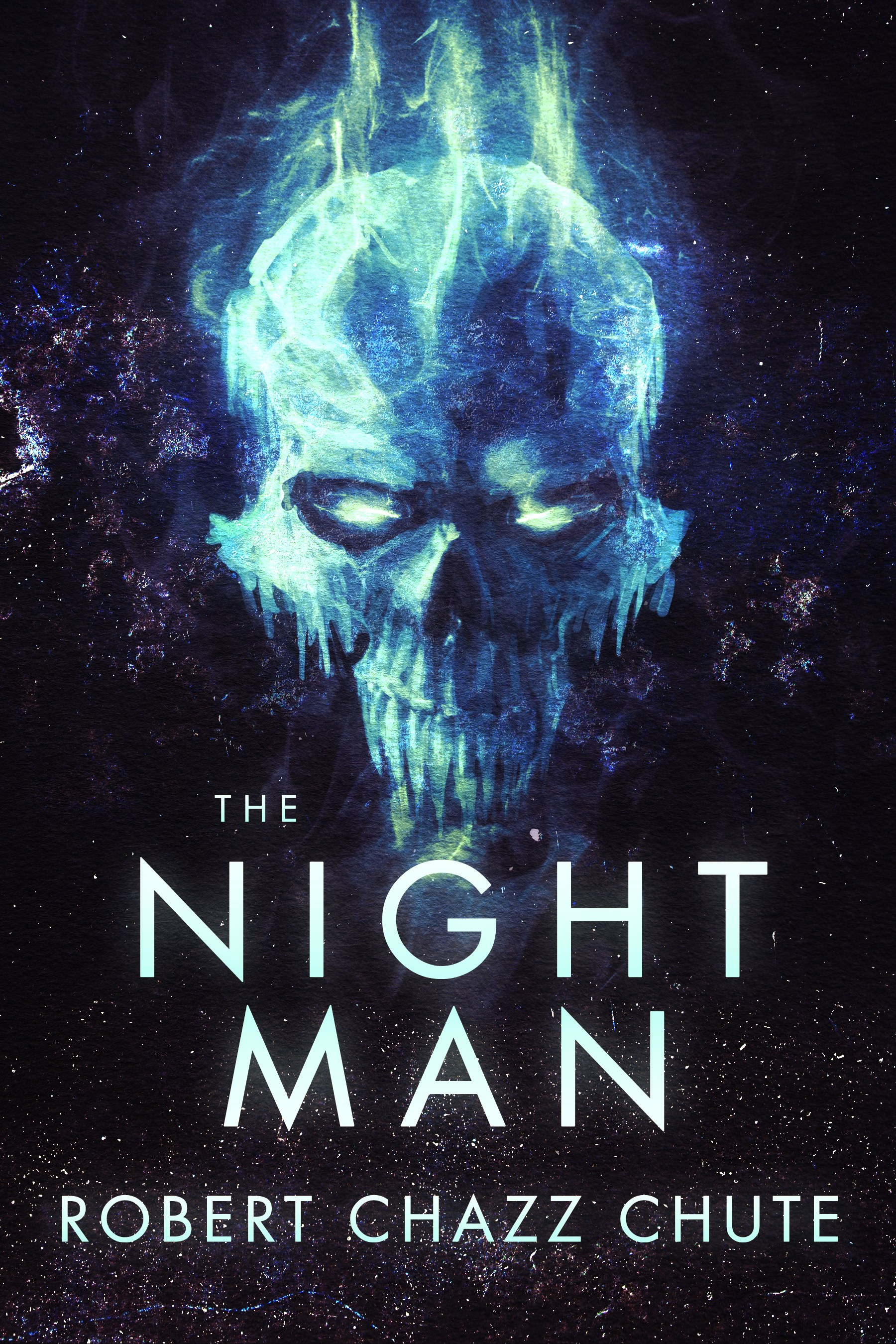
You can pick this ebook up for free today at this link: http://bit.ly/TheNightMan

Join my inner circle at AllThatChazz.com

See my books, blogs, links and podcasts.

Enter your email address to follow this blog and receive notifications of new posts by email.

Join 2,063 other subscribers