C h a z z W r i t e s . c o m

See all my books at AllThatChazz.com.

Author Blog Challenge: In 12 hours, Bigger Than Jesus

A lot can happen in twelve hours. Twelve hours ago I began work on formatting my debut crime novel, Bigger Than Jesus. I used Scrivener and I was feeling pretty optimistic that I could knock it out pretty quickly. I’ve formatted plenty before, but not with Scrivener. I’ve been writing with Scrivener, but today was the test to see if I could get the book over to Amazon in one day. Foolish pressure.

I couldn’t put the front matter in for the longest time. At one point I had two tables of contents and neither of them was quite right. I started with the Scrivener video tutorials — fell into a spiral of anguish and frustration — and then got hopelessly lost in the Scrivener manual. I found my way back to sanity by searching for people who had the same frustrations I did. Google. It’s the thing you need when you’re stuck.

That didn’t get me quite all the way to done. Some alchemy and experimentation was involved but, just a few minutes ago I yelled, “It’s alive! IT’S ALIIIIVE!” Twelve hours ago I began formatting. Twelve hours from now, it’ll be up on Amazon (fingers crossed!) I won’t believe it until I see it up there with my other precious babies.

What a day. What a night. I’ll have much more to say about Bigger Than Jesus, of course. I want to tell you about how I worked with my amazing graphic designer, Kit Foster, to come up with the cover. I want to talk about the book and the factors that brought it to fruition. I want to hint at what’s next for the series and all my other books. The important thing for me was to give it a rigorous editorial scrubbing and then send it out in the world. I’ll play catch up with all the other things I have to do to make this baby grow, but sunlight took priority over having everything in place.

And there’s so much yet to do! I have to ask people to review the book, buy the book, get blurbs. It’s going to be an audiobook and a paperback (and soon!). I have big plans for my funny, clever, hit man Jesus Salvador Diaz. People will like and pity him despite themselves because Murphy’s Law will take him down long before the NYPD, if the lovely Lily doesn’t break his heart irreparably first. His stories are a Coen brothers’ movie: bad things happen on the wide and easy road out of town.

For tonight, though, I’m going to toast my milestone, sit back and watch Real Time with Bill Maher and maybe Bridesmaids and know that I’ve put in my full day at Ex Parte Press and I don’t have to feel guilty for sitting back and watching TV tonight.

If you don’t know this feeling yet, I hope you experience it soon.

Filed under: publishing, , , , , , , , , ,

Author Blog Challenge 14: Eleven ways writers get surprised

Gremlins will push you 'round^ Look where you'...

Gremlins will push you ’round^ Look where you’re going^ Back up our battleskies^ – NARA – 535380 (Photo credit: Wikipedia)

Some surprises you’re in for when you publish your book

Please note: This list of surprises for writers is not meant to be comprehensive. The worst surprises, like dying by flaming harpoon attack to the forehead (before you finish your novel) or a hard drive exploding and taking out two floors of your house are not included. Those circumstances just aren’t lighthearted enough for my intent here. Oops. Well, I guess you’re worried about that stuff now, too.

1. You thought your manuscript was clean and it was, it was! Gremlins went in and put those ugly typos in there! That’s the only reasonable explanation.

2. Publishing your book is a huge event in your life. Remember when you had a baby and you expected the world to pause to acknowledge your contribution to, and sacrifice for, the human race? Wars should stop and the earth’s rotation should cease for a moment, if only so we can all bow. Sadly, it’s not a huge event in everyone’s else’s life. Many people are indifferent and it’s just not efficient to go out and kill all of them with a rusty axe.

3. The people you thought would love your book? They don’t. My dad still hasn’t read anything I’ve written. He’s waiting for me to write about him. (What he doesn’t know is that he really doesn’t want that!)

4. Lots of people are readers but they do not write reviews. You’ll expect reviews. Eventually you probably beg for reviews. Worse? You still won’t get them, even from friends and family! I thought about it, but there is no joke I can tag on this item that will soothe the sting. It’s more tragic than a flaming harpoon to the crotch.

5. Someone will object to something you wrote. What will surprise you is what they object to. For example, some people get riled up about which font you chose for your cover. You’ll assume that joke your main character made about religion was, at most, funny. At worst? Somewhat innocuous. Some blogger, somewhere, will call you the Anti-Christ and call on Jesus to smite you because, apparently, Jesus loved capital punishment. Oh, wait… (At least outrage and threats of censorship increase sales, so there’s that.)

6. Some people will treat you better, briefly, because you’re an author. Then they’ll treat you worse when they find out you’re a self-published author. For some reason, you have to answer for every grammatical mistake and every (so-called) undeserved success of your breed. Corollary: If you become a very successful traditionally published author, some people will hate you because lots of people read your books. Or the haters will hate because they aren’t you. Suggestion: A dog is reliably faithful. Definitely buy a dog. They can’t read so they’re blameless.

7. Formatting will be tough the first time. The first time, you’re a dim-witted chimpanzee with a keyboard. The second time you do it, you’ll be surprised how easy it is. You will have evolved to a very intelligent Rhesus monkey.

8. By the time you’re through revisions and formatting, you and your editorial team will have gone through the manuscript so many times you’ll be sick of it. This is the story you loved so much. Now your cute baby has grown into an angry, gangly, acne-scarred teenager and you just want them out of the house they can go make money and so you can make room for a sweet new baby who loves to cuddle.

9. Actual publication won’t be quite as momentous as you anticipated. How could it equal all those dreams you’ve had since childhood? You pictured a limo and an elegant cocktail party. Instead, it’s you in sweats, late at night and a little drunk on weighty potential and rum and Coke, debating if you’ve done everything you can before pushing a button. It will feel more like pulling a trigger. You may be filled with more dread of bloody failure than anticipation of success. I’m about to push that button and I’ve had stress headaches all week. I just want to sleep instead of poking around Scrivener‘s bowels to prep the manuscript for Amazon and CreateSpace. You’re not alone in the struggle, but that’s of little solace because you are alone in the room.

10. Getting someone to read your book is harder than writing your book. You’ll spend more time marketing than you ever dreamed necessary, even if you figured it would take a lot of time. Triple your marketing expectations and get a treadmill desk so your ass won’t get as big and wide as your hopes and dreams for your writing career.

11. But here’s the biggest surprise: Though you will get luckier the harder you work, it’s still a lot about luck and timing and some happenstance. Nobody admits this variable. When you win, it’s all attributable your meteoric wisdom. When you succeed, you’ll figure it’s because you made all the right moves and you knew what you were doing with every step. Revising history and shining up the truth is natural. Everybody does that. It keeps us from running away screaming from that “Click to Publish” button.

Filed under: publishing, , , , , , , , , , , , , ,

Author Blog Challenge (plus a sneak peek podcast*): Outlining, pantsing, spilling & sprinting

If you just popped in for the suspenseful sneak peek podcast, click here to hear The First Fiction Friday Edition of my podcast.

The Author Blog Challenge prompt asked how I stay organized as I write. My methods have changed over time. I used to come up with plots on the fly early on. Then I got scared off from that strategy when I got deep into a dreadfully long novel and found I had to backtrack fifty pages. Hitting a dead end is, well, death. It’s a waste of time and energy and I hate it.

I started outlining because I was writing big books and I didn’t want to lose whole sections of my book in which I was already invested. When you write 80 – 100,000 words or (ye gods!) more, an outline helps. I didn’t write an outline with Roman numerals and all that formal, high school nonsense. Instead, I planned the book one cogent sentence at a time. I described the actions in each chapter to plot the arcs of A and B stories. I looked for where those paths would logically cross, discover the beats and suss out the high and low points. Index cards got to be too much to keep track of, so in the end my outline was just three pages with a numbered list. I read and reread the outline and then I didn’t look at it again. That got me through the big books pretty well.

Recently I read Run by Blake Crouch, and as Blair Warner used to say on The Facts of Life,

“I just had another one of my brilliant ideas!”

It’s about speed. I resolved to write a crime novel with the same furious pace as Run — a book I couldn’t put down. Yeah. I know it’s a cliché, but this cliché is both apt and true in the case of Run. (Great book. Buy it.)

I resolved to do the thing I love with stories. The chapters would be relatively short. They would skip along. There would be lots of twists and turns to my racetrack. I wrote Bigger Than Jesus in about a month, one chapter a day, roughly 2,000 words each. There was no outline. Instead, I wrote with the expectation that I’d get my hero into a troubling cliffhanger at the end of each chapter. If I wrote myself into a corner in the process, too bad. I’d be clever and write my way out of it and keep moving forward. Writing like this is as fresh and as exciting as walking a tightrope naked in a high wind over a crowd of angry TSA agents with a new shipment of polar mint rubber gloves.

Many nights I went to bed thinking that I had no idea what I would write in the morning, but I trusted that I could figure it out. I believed in lightning strikes. The juice kept flowing and with it came a high level of complexity. It’s a crime novel so people lie a lot. If I’d taken longer to write it, it would have necessarily been less complex because I’d be afraid of losing track of the threads. There’s shocking emotional depth, too. Nobody, including me, foresaw the strange and sad angle on my main character’s childhood. It sneaks up.

Why did this work?

1. I knew the opening chapter and the last line so I had a target at which to aim. I’m also a more confident writer than I was with those early attempts, I suppose.

2. If I didn’t know what was going to happen next, the reader wouldn’t be able to guess, either.

3. Speed. The book is not especially long and I wrote it all in a short space of time so I could keep it all in my head at once without getting lost.

How else do I keep organized? 

In the Point File, I note things like street names I’ll use twice and aspects like eye colour so they don’t change from the beginning of the book to the end. I did mess up in having twin brothers as bad guys with names that were awfully similar. I had to go back to make sure I was talking about the right brother at the correct stage of the book.

I always have a Spill File handy so if I do write something that I end up dumping, I save it for later. I might change my mind about how useless it is or I might use it another time in another story. In Bigger Than Jesus, the writing went so quickly and breezily that I never had anything to pour much into the Spill File. I wrote fast and then went back to the stage of writing where I’m always sure I’m a deluded idiot: revisions. I cut, prune and delve. More of the jokes come clear on the second pass, too. Typically, by the third pass, I begin to feel good about the book again. Bigger Than Jesus was just about as easy as writing a blog post a day, actually. Maybe easier sometimes because what dictated the action was logic and surprise. When in doubt, surprise!

Some writers labor under a notion that I once shared: To be good, you must write slowly, perhaps even at a glacial pace, and the serifs are where your heart and soul get squeezed in and choked for blood. There are books I have tinkered with for years. One short story went through many incarnations over a year before I felt I nailed the landing and deserved 10s from all the judges. However, Self-help for Stoners came together quickly and everything worked out well with that.

Bigger Than Jesus will be released in the next week or so and all the feedback I’m getting from the editorial team tells me I’m glad I didn’t buy into the idea that it had to come slowly to be worthy. I think that’s true sometimes, but not always — not for every book and not for every writer. That’s good news because I’m using the same strategy with the next book in the series. It’s coming fast and well and I do enjoy the danger of not knowing what happens in the next chapter. Those angry TSA agents are actually spurring me to succeed.

*BONUS:

Please take a few minutes to enjoy my latest podcast on the author site. It’s The First Fiction Friday Edition! 

It’s a sneak peek at Chapter 8 from my first novel in the Poeticule Bay Series:

An old woman is lost with her tiny dog in the Maine woods and snow is on the way.

Related articles

Filed under: publishing, , , , , , , , , , , , , , , , , , , ,

Author Blog Challenge: I love the voices in my head

Michael Clarke Duncan at the Warner Brothers L...

Michael Clarke Duncan at the Warner Brothers Lot in Burbank, California. (Photo credit: Wikipedia)

One of the writing prompts for the Author Blog Challenge is to choose a favorite literary character. That’s tough. I mean, I relate to Tyler Durden from Fight Club, but the cognitive dissonance kicks me in the pills when I realize that, beside the insomnia and ennui, I am not even Tyler’s alter-ego. I have a few things in common with Portnoy from Portnoy’s Complaint, though. Ugh.

This isn’t a dodge and I don’t mean to fall into douchey pimping, but the truth is my favorite literary character is whichever one I’m writing at this moment. I have several works on the go, so let me introduce the interesting people I hang out with while strangers assume I’m staring off into space and drooling:

Legs Gabrielle is a very funny comedian whose career has fallen through the floor. She finds herself back in Poeticule Bay, Maine, in the house she ran away from as a teenager. A killer has come to town, the Sheriff disappears, the deputy is cute, her sister has cancer (and might also be crazy.) I love Legs’s sense of humour and she’s a pleasure to write for the jokes that work as  counterpoint to her emotional depth. Hollywood has rejected her, but she’s the star of her own book soon.

Chili Gillie is a Michael Clarke Duncan lookalike, Legs’ bodyguard and has Mike Tyson’s voice. He’s a sweet man who only looks mean when needed. He’s the calm rationality around which the crazy revolves. His presence is extraordinary, but he’s the most normal of my characters. Both Legs and Chili are the stars of the first story in Self-help for Stoners and Chili shows up again in Bigger Than Jesus in a larger role. I’ve got big plans for him.

Dr. Circe Papua turns up a lot in my fiction. She’s a psycho psychotherapist who is magically persuasive and can be deadly if provoked. I love her cunning, unexpected lethality. Circe’s complex relationships with her patients often demand a battle of wills and wit. She shows up in different incarnations in Self-help for Stoners, Vengeance is #1, Corrective Measures and Sex, Death & Mind Control (for fun and profit).

Jesus Diaz is a mob enforcer who doesn’t want to be what his tragic childhood and circumstance has made him. He wants, above all, to fall in love with the right woman (if he can ever find her) and go relatively straight. He’s the main character in my crime novel, Bigger Than Jesus and I like him most for three things: he’s clever and prefers to lie rather than fight; he’s not really all that tough despite his profession; and he’s funny. I like funny people and chapters that whip along, full of pops and surprises. The series reads like a Cohen brother’s movie. Bad things keep happening even though you think you have an easy way out. This book will be out very soon and I’m jonesing for it. Just nailing down the cover and then we’re just about there. Jesus Diaz originally came to me as a story for Self-help for Stoners, but in that incarnation, he’s a much older, wiser and experienced assassin.

Jack (from Corrective Measures and Sex, Death and Mind Control.) Jack is a serial killer who I find interesting because of the way he sees our world. He thinks about vengeance quite a bit, but I’m actually more interested in writing him when he’s not himself. He’s fascinating when he’s trying to fit in and working through his twisted motivations and problems. He’s a dark avenging angel who has to hide his wings (metaphorically, that is) as he punishes people he decides deserve bad ends.

What’s fun is, eventually, I’m going to have all these characters meet in one book, but they have a lot of work to do before they meet. I have a lot of books to write before that happens, too. It’s exhilarating, daunting and pretty cool. Yeah, I said so myself.

Filed under: publishing, , , , , , , , , , , , ,

Now on Kindle: Self-help for Stoners, Stuff to Read When You’re High

SELF-HELP FOR STONERS

NOW AVAILABLE FOR YOUR KINDLE

Please click the cover to find out more on Amazon.

And enjoy!


Filed under: e-reader, ebooks, My fiction, What about Chazz?, , , ,

Write believable characters

I’ve been on Walkabout. After crawling through the seedy underbelly of a big city, I feel dubious about the idea that there are unbelievable characters. There are so many strange people walking around, we shouldn’t be so dubious when they turn up in fiction.

Just this morning I saw:

1. A guy dressed up like a Bollywood character in a flashy musical. Same big goofy smile, too.

2. A handsome man, dressed in a sharp black suit and sporting a $200 haircut, looked like he belonged at the airport picking up cocaine from Columbia.

3. An impossibly sexy woman walked by. It’s Stella, long before she lost her groove! With asthma.

4. A very muscled young athlete strutted by. He’s had a great summer. The pancreatic cancer has already taken root.

5. Homeless people of all ages. They all have that same haunted look around the eyes. Their postures show that boredom is terribly heavy. I did not expect the dirty, skinny Santa to pull out an iPhone 4, however.

The trick, of course, is to provide enough character detail that your fictional actors have a believable context. Strange characters need a lot of reality around them to find the sweet spot on narrative’s balance beam. Let your mob goon have a soft spot for kids. Let the sweet grandmother swear when she doesn’t think anyone can hear. Don’t allow cardboard stand-ups and clichés in lieu of character development. Characters can be weird. Really weird. You can even clump them together since freaks often do gravitate to freaks. I’ve noticed Goth kids with parrot haircuts often do travel together, for instance.

Just avoid making them one-dimensional. For instance, one of my novels has a couple of gay characters. Ever notice how gay characters are often safely relegated to the flamboyant dancer who’s good with make-up or the safe gay neighbour who’s just a stand-in exposition device? In my novel, compared to the protagonist, the gay guys are proactive in how they deal with plot obstacles. By that I mean, they have skull-cracking ability and they are not just sitting around articulating plot details with pie charts. They have their own backstory and you’ll find yourself curious to follow them out the door to see what happens to them after the novel is over. (At least I’m curious.)

I plan a series. In the first book we meet Romeo, a young New Yorker who wants to be a movie star and becomes a murderer’s target. The next in the series will follow Romeo’s estranged mother as she tries to track her son down on his journey to Hollywood. The third book will be Romeo in Hollywood and once again in mortal danger. Things will get strange but will feel real.

Verisimilitude is easy because reality is scary weird. 

Look at the news. 

Filed under: self-publishing, Useful writing links, What about Chazz?, Writers, writing tips, , , , , , , , , , , ,

TOP 10: People (who are not fans)

Old marketing decreed:

Get everybody! Your sales quota must include all sentient species with a credit card in the known universe!

New world marketing responds:

Nope. Establish a base of just a bunch.

But the bunch has to be rabid and slavering for your next masterpiece, book, song, film, poem, service, comic, or sex toy.

In short, you need fans (as in fanatics.)

For self-publishers, everybody in your fan base starts out as a reader, but they won’t all join you on your journey and buy in to your revolution. A lot of people can’t even be bothered to cross the street to spit on you. Something I learned a long time ago was that I am not everyone’s cup of pee. (Note to non-fans: that’s a joke and a point, not a typo.) I learned that to build successful businesses or loving followings, I had to focus on the people who appreciate me and ignore the rest. Oddly, everyone knows the 80-20 Rule, but how many apply it to their lives?

Critics will sap you of time and energy if you pay them too much attention. A fellow writer got one bad review recently. All his reviews were overwhelmingly positive except for that one. That burned like a cigarette in the eye. That’s the key to understanding the dark side of Internet marketing. Yes, you can spread the word faster about a good thing. However, negative reviews can get a lot of attention, too, mostly from the author who serves as the critic’s target. In fact, several authors have observed a bandwagon effect among some reviewers and book bloggers. One bad review can lead to more bad reviews. Ironically, as Reena Jacobs observed recently, it may be worse not to be reviewed at all than to receive negative reviews. If readers love or hate your book, at least you’ve spurred a reaction. If you ignite no fire at all, that may be a bad sign.

Here’s what to keep in mind when you read something negative about your work:

1. People (who are not fans) are nastier on the net than they would ever dare in person. They aren’t talking to you as a person with feelings and aspirations. They’re having a conversation in their heads with the idiot they imagine you are. Cyberspace allows distance, anonymity and depersonalization. Your nice neighbour, that little old lady who gets your mail for you while you’re on vacation and bakes cookies at Christmas? If her favorite author kills off a regular series character, the old dear’s mind can curdle into that of a serial killer when she writes an Amazon review.

2. People (who are not fans) mistake your work for you and judge you along with the work. If one of your books, blog posts, comics etc.,… is not as good as the others (and inevitably that will be so) critics will make assumptions about you and your mental state. Don’t you mistake all of your work for you though. They’ll make it personal, but don’t fall for that trap. Unfortunately, because we wrap up the author’s persona with his or her book to sell it, we foster an absurd inseparability in people’s minds. For instance, when Deepak Chopra was on the road selling a natural health book and had the temerity to drink coffee (OH-MY-STARS-AND-GARTERS!) a reader tried to shame him for it. That little old lady was pissed.

3. People (who are not fans) are more likely to write something negative than positive. Look at all those letters to the editor in the newspaper. Not so many saying, “Good job!” are there? Now think of the five best books you’ve ever read. Go to Amazon. See those negative reviews of the books that changed your life? Are you starting to see the weight you should give negative reviews yet? This is a subjective business. Repeat that until it sinks in. (I’m still repeating it, too.)

4. People (who are not fans) say things for their own reasons that don’t necessarily have anything to do with you. Maybe they made a bad day and want to export it. Maybe junior high was tough and the Internet is where they get even with strangers. Review the beginning of the movie Wanted. Remember the “I’d feel sorry for you if you weren’t such a bitch, Janet” speech? Repeat as necessary. (If you’ve ever worked in a cubicle farm, that scene alone will make you leap off the couch and spill your Cheetos all over the floor.)

5. Maybe you gave the person (who is not a fan) a negative review and it’s payback time. Yes, this happens. Maybe you friended them on Facebook, but you weren’t fast enough about getting that friend confirmation done and they took offence. Who knows? Everyone take everything personally because we are all the stars of our own movies. This has nothing to do with your work, but your work gives an opportunity for nasty people to say something shitty. Some authors don’t read reviews at all because, they argue, “If I believe the good ones, I’d have to believe the bad ones, too.” These are very mature people I can’t relate to. I don’t personally know anyone with that much self-control. I envy their sagacity.

6. Negative reviews are easier to write than positive reviews. Snark is easy. Snark is even funny sometimes, but mean’s no good. And if you’re going to be at all mean, you better be twice as smart as you are mean. For instance, I enjoy listening to Slate’s Culture Gabfest podcast….but sometimes I wonder, “Do these people ever like anything?” People (who are not fans) enjoy being clever at your expense. That does not necessarily equal constructive criticism. Maybe it’s just bitchy. Or stupid or wrong. Or all three. In this part of the equation, it’s not about you or your work. It’s that some people’s only creative outlet is criticism. Some fleas think they are driving the dog.

7. People (who are not fans) hope you’ll fail so they can feel better about their failures…or that they failed to try at all. Doing nothing at all is a great way to avoid criticism. Except for that pesky self-loathing and the long darkness before dawn when the demons come to torture your dreams and stifle your soul’s breath. (Yes, I’m saying that being a loser is like sleep apnea and all the implied dangers of heart disease but without the medical attention and sympathy from friends and family.)

8. People (who are not fans) don’t have enough going on in their lives, but they’ve got lots of time to focus on you. Otherwise, why the hyperbole about how bad your book is? I love books, but it’s just a book review, not the Nuremberg trial. The way some reviewers go on, you’d think trying and failing to entertain or educate or pass the time was a hanging offence. Another friend got a bad review recently. The ebook she gave out was free. The level of criticism did not match the critic’s financial and emotional investment. This author was wise enough to ignore the naysayer because she knew the guy wasn’t in her fan base and never would be. So what? There are plenty of readers out there to be converted to your peculiar brand of evil jocularity.

9. People (who are not fans) may be right. Maybe you do suck. But you can’t think that and succeed. You can only try to do better. Forgive yourself. You are a work in progress. “Books are never finished,” Oscar Wilde said. “they are merely abandoned.” Only listen to the people you trust. There are too many variables in the skulls of strangers who are not your fans. Write to please yourself first and don’t listen to input from writers too much. To write is to do your thing. That’s one reason so many people keep writing despite insufficient recompense, Carpal Tunnel Syndrome and their parents’ bitter disappointment. (On the other hand, if every review is negative except the one from Mom, rethink.)

10. People (who are not fans) can be fickle. Tim Ferris, author of The 4 Hour Body, observed that a fan base has two extremes. At the top are the people who will follow you down the mouth of a cannon. At the bottom are haters who want to fire you out of said cannon. Ferris feels that the people at the extremes can switch places. Do something too different and some former fanatics will resist the new direction and even become haters. Be unexpectedly nice to your enemies and a few may come around to decide you are a worthy human being after all.

Or you could say “Screw ’em!”,

focus on the people who do get you

and move along briskly.

If you read all the way to here and hated the post, why did you read this far? It was too long a post for that nonsense. I will never understand that about haters. Don’t they have shit to do?

If you loved this post and it came at just the right time and you couldn’t have done without it…thank you. I love you for a selfish and stupid reason: You love something I wrote.

Filed under: publishing, Rant, Rejection, reviews, self-publishing, web reviews, Writers, writing tips, , , , , , , , , , , , , , , ,

Bestseller with over 1,000 reviews!
Winner of the North Street Book Prize, Reader's Favorite, the
Literary Titan Award, the Hollywood Book Festival, and the
New York Book Festival.

http://mybook.to/OurZombieHours
A NEW ZOMBIE ANTHOLOGY

Winner of Writer's Digest's 2014 Honorable Mention in Self-published Ebook Awards in Genre

The first 81 lessons to get your Buffy on

More lessons to help you survive Armageddon

"You will laugh your ass off!" ~ Maxwell Cynn, author of Cybergrrl

Available now!

Fast-paced terror, new threats, more twists.

An autistic boy versus our world in free fall

Suspense to melt your face and play with your brain.

Action like a Guy Ritchie film. Funny like Woody Allen when he was funny.

Jesus: Sexier and even more addicted to love.

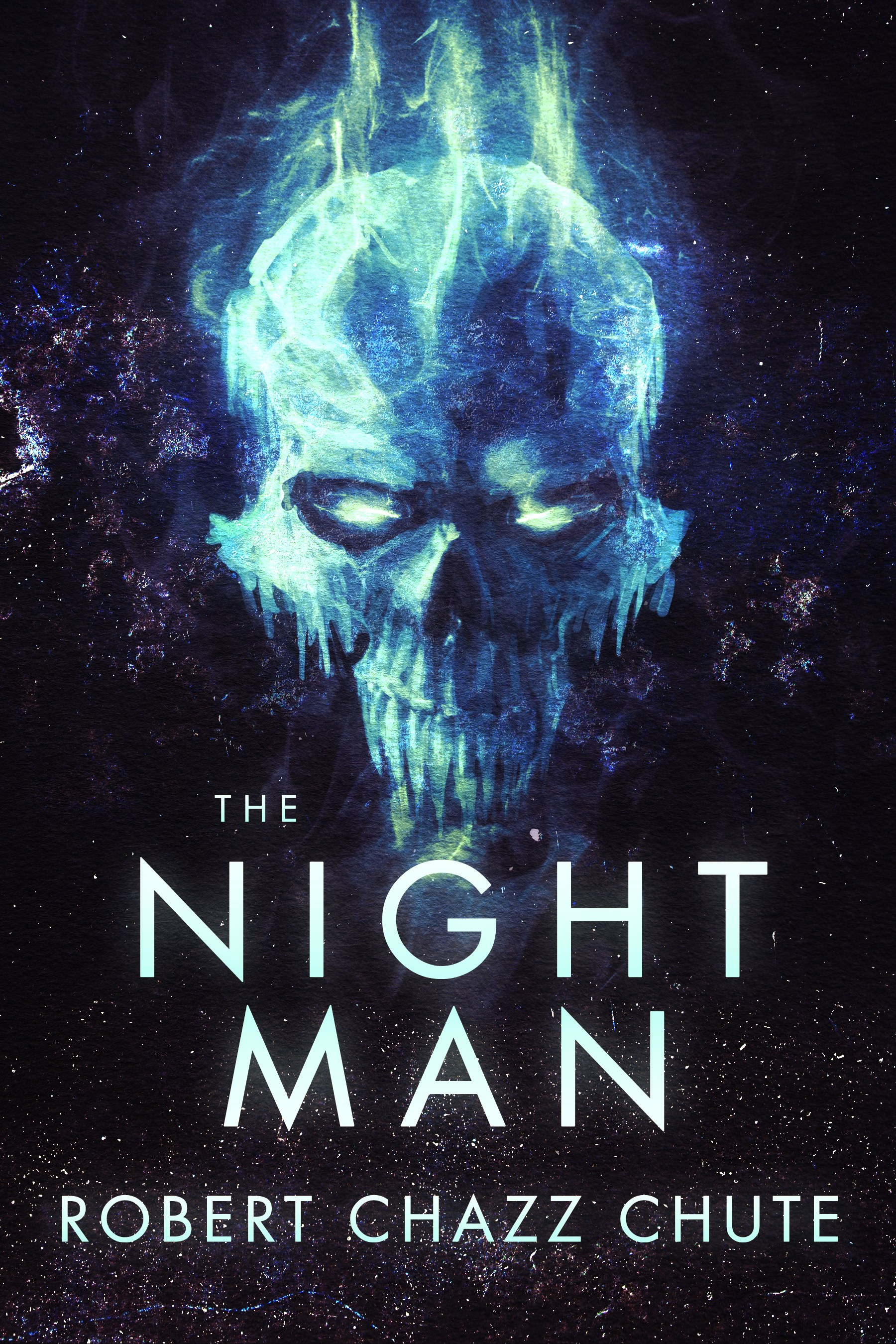
You can pick this ebook up for free today at this link: http://bit.ly/TheNightMan

Join my inner circle at AllThatChazz.com

See my books, blogs, links and podcasts.

Enter your email address to follow this blog and receive notifications of new posts by email.

Join 2,063 other subscribers