C h a z z W r i t e s . c o m

See all my books at AllThatChazz.com.

Writers: “Amount of” versus “number of”

Syrniki. Syrniki, fried quark cheese pancakes,...

Image via Wikipedia

There are a number of cheese pancakes in this picture: six.

The amount of cheese is in the recipe. You wouldn’t say the number of cheese or the amount of pancakes.

A number of mistakes in a book I read recently kind of bugged me. Overall, there weren’t that many mistakes in the book, but one kept coming up. The problem was that, while the author tried to quote statistics and make a compelling argument, she repeatedly undermined herself by misusing the phrase “an  amount of.”

“A  number of” things can be counted.

“An amount of” refers to a measure of volume.

For instance, there are a large number of armies on earth. The amount of their combined firepower is uncertain. There is a certain amount of apple sauce in this recipe. There are a number of apples in that recipe.

Is it a big deal? Not really, but it’s a distraction and your job, as a writer, is to eliminate distractions from your thesis or your story. As a reader, you’ll notice mistakes and that’s often what you’ll remember rather than the writer’s point.

Filed under: Editing, Editors, grammar, publishing, Writers, writing tips, , , ,

Sell your books. For a long time.

Light and shadow on an Irex iLiad ebook reader...

Image via Wikipedia

Movies focus on the opening weekend. Books have a month to hit big or get returned. At least, that’s the way it was for all books. That’s changing in a big way.

Recently I read an agent talking about how digital books extend the life of sales of paper books. Essentially, the message was very much “the status quo is still the status quo” and “E-books are an add-on. Publishing hasn’t substantially changed.”

I don’t agree. First, the extent to which traditional publishing isn’t changing is part of its problem, not its solution. True, many people prefer paper books to e-books, but that’s changing, especially since there are far fewer places to shelve paper books. Bookstores are closing up. It’s not happening overnight. It won’t happen to all bookstores. But e-books are where to place your bets for the future and the future’s coming faster than any of the experts predicted. (Of course, it’s all so new, I’m not sure if anyone really is an “expert.” Maybe that’s a title for someone to claim years later, not in the middle of a history change.)

The agent asserted that most people by far don’t even own e-readers. Yes, and a lot of people still don’t own telephones. That doesn’t mean utility stocks, like Ma Bell, are a bad bet. A lot of people will never own e-readers, but that won’t matter to the book industry because most of those people aren’t big readers anyway. Power users (power readers) are responsible for buying a lot of books—power users, like me. For instance, I bought The 4 Hour Body electronically. Then I decided I wanted to own it in paper as well because it’s a reference book. Then I kept downloading.

The agent’s point about e-books extending sales really stuck with me. The game has changed with e-books. Distribution is cheap and easy. It’s so easy, authors can sell their books themselves through distributors and their own websites. Authors know that their books are not stale to new readers. Every book is new to anyone who hasn’t yet read it.

This is the “long tail” of sales. And now it’s for everybody. The game has changed. What’s weird is that not everybody sees it yet.

Filed under: publishing, Writers, writing tips, , , , , , , ,

How do you increase blog traffic?

Traffic control in Rome, Italy. This traffic c...

Image via Wikipedia

Today, I’m listening. For a change, I’m going to ask that you tell me something.

There are lots of sites that strategize about increasing blog readership. Beside providing interesting content—because that’s a given and a subjective variable—what’s the most effective thing you’ve done that has increased your blog traffic?

Please tell me, what works for you?

Email me at chazz@chazzwrites.vpweb.ca or share with the class in the comments below.

Thanks!


Filed under: blogs & blogging, ,

Writers don’t get enough credit

Jim Parsons, Kaley Cuoco (The Big Bang Theory)

The kids asked us which celebrities we want to date. At first, in deference to my beautiful wife, I said no one. Then my daughter said, “Mom wants to go out with Johnny Depp.”

“What?” Time to reconsider. There are celebrities I’d like to meet, sit around and talk with over a big plate of nachos. I know Kevin Smith would be cool to hang out with because he’s funny off the cuff. Same with Joe Rogan. But mostly, celebrities would disappoint in that regard.

Just as winners on Survivor rarely credit luck for their win (though that’s an obvious component), actors often want their fans to think they are every bit as clever and witty as they appear on TV.

That’s why I appreciated Jim Parsons from The Big Bang Theory. In his Emmy acceptance speech, he took great pains to thank the writing staff for their work in getting him up on that stage. Jim Parsons makes Dr. Sheldon Cooper live. He’s a talented comedic actor who does a lot with body language and expression to make such a weird character work. But the words coming out are from a script and he knows it.

Thanks, Mr. Parsons, from writers everywhere.

And no, I’m not worried about losing my wife to Johnny Depp. But he doesn’t live next door , either.

Filed under: television, Writers, , , , , , , ,

The NPR Resignation Redux

Finally, somebody says what I’m thinking about the NPR/Tea Party debacle.

Thank you!

Filed under: Intentionally Hilarious, links, , , ,

What writers can learn from House

Chronology of Enderverse stories, showing wher...

Image via Wikipedia

Fans had an interesting response to last week’s episode of House. I’m not going to spoil anything for you. Let’s just say some people loved it and some people hated it. As far as I could tell, celebrants and detractors were pretty evenly split. Many agreed the episode was a heartbreaker but they drew different conclusions about the success of the story: people loved it and hated it for the same reasons.

This is why you don’t arrive at your story by committee.

The episode was, by any measure, a success because people cared. The web was full of passion about House and lots of amateur advice about what should and what should not have happened.

The worst response to your fiction is not a negative reaction. The worst response to your story is, “Who cares?” As you write your story, listen to your instincts. And know that if you try to please everyone, you will fail.

Take risks.

And if it plays, it plays.

Filed under: rules of writing, television, Writers, writing tips, , , , , , , ,

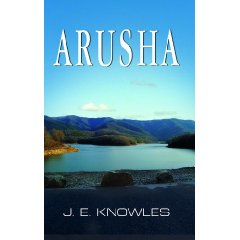
Author Profile: JE Knowles on her book Arusha

Arusha by JE Knowles

Author J. E. Knowles grew up in East Tennessee, began her writing career in Canada and now lives in London, England. Her first novel, Arusha, is the story of a gay marriage—between one man and one woman.

From the book cover: Edith Rignaldi clearly understands that she and husband Joe remain together for the sake of their children. It is why they married in the first place. But she never foresaw the lifeless emotional landscape they both now occupy after eighteen years together.

Teachers in a small, God-fearing Tennessee town, they cannot insulate themselves entirely from the cultural encroachment of the late ’80s: the inexorable march of the feminist and gay rights movements, the spread of the AIDS epidemic. When the faithful, steadfast Joe is finally overwhelmed by his desire for men, the lives of all four Rignaldis explode.

CW: When did you first know you wanted to be an author?

JEK: Probably as soon as I knew what an author was. I remember being nine years old and finding out that there was already an author in the Guinness Book of World Records younger than nine. I was very disappointed!

CW: Tell us about your book. How did you get the idea for your book?

JEK: Arusha is the story of a family—a woman, her husband and their children—and of the parents’ love. First, their love for each other, which brought the family together, and later their love for themselves and others and how that pulls the family apart. I’ve had the characters in mind since I was about fourteen but I didn’t know what their story was. I’d been living with the characters so long that the story just seemed to grow out of them.

CW: What research was involved in your book’s development?

JEK: The climax takes place in Arusha, Tanzania and I visited Tanzania before I knew that I would eventually write this book. It was the trip of a lifetime. East Africa, with its wild animals and incredible landscapes, has such a place in Westerners’ imagination. At the same time, journeying to someplace so far away brought home for me how different are the life experiences of people in various parts of the world. None of this really felt like “research”—the book developed out of where I’d been and what I’d thought about.

CW: What is your writing process? Do you have any formal training in writing?

JEK: I was already publishing articles and a few poems and stories when I went to the Humber School for Writers. That was my only formal training in writing, but what I really learned there was how to self-edit, how to make my work professional enough to be published. I met some wonderful fellow writers with whom I still exchange work. My writing process is the same as it was in elementary school: I get paper and a pencil and scribble down whatever comes to mind.

CW: How long did it take you to write the book and find an agent and publisher?

JEK: It took me about two years to write the manuscript, then another two years to find a publisher—about four years in total.

CW: What’s the most surprising thing you discovered in writing this book?

JEK: That the story wasn’t going to be principally about the daughter, Dana, but about the mother, Edith. I’ve never been a mother or married a man, so writing Edith’s (and even more, her husband’s) story took all of my imagination.

CW: Do you have any stories of rejection or inspiration to share with writers climbing up the mountain?

I have a story of rejection and inspiration, and it is the same: I received more than 100 “No”s to this novel before I got to one “Yes.” Many rejections were from agents or editors, just form letters saying don’t send the manuscript at all. Some requested part of the novel to read, but ultimately said no. A few read the whole novel, then decided it wasn’t for them. But I only needed one yes!

CW: What was the hardest part of the publishing process? What did you most enjoy?

JEK: It took about as long to place Arusha with a publisher as it did to write the novel and that was very discouraging. I found it hard to see so many books that, to me, were published with less time and care, while I was still struggling to sell a book in which I truly believed.

What I most enjoyed was holding the published book in my hands, seeing people buy it and ask for my signature. The book launch was the party of my life at that time—nine years in Toronto came together there.

CW: What advice would you give unpublished writers?

JEK: Write. This isn’t original advice, but it’s more important than ever now, when anyone can e-publish to a certain extent. Publishing is a separate business from writing, and if you start by focusing on getting published, you’ll never give the writing the time and energy it truly needs. Write an excellent, excellent story. Then you’ll have the faith in your writing that you’ll need to persevere through all the rejections and the business side of things.

CW: Have changes in the book industry forced you to change how you published or marketed your work?

JEK: Not really “forced.” More and more people are reading e-books, so I’m glad that my book was simultaneously published in that format, for readers who choose to purchase it that way. Certainly, the Internet has made it easier to find out exactly what publishers want in terms of a query or submission (just visit the publisher’s Web site), and if they’ll accept a letter or submission by e-mail, that saves time and money as well. I don’t think there are any shortcuts, however. The fact that I can instantly post or “blog” about what I’m writing doesn’t mean readers want to read something thrown together slapdash. I try to write minimal marketing copy, because the more time I spend on that, the less time I have to perfect the writing itself.

CW: What’s your next book project and what can you tell us about it?

JEK: I’ve just finished my second novel, with the working title of The Trees in the Field. It’s about a United States Senator from Tennessee, a Republican woman, whose ambition is to be president…until she runs into inconvenient obstacles from her past and future and begins to question what patriotism really means.

CW: How important do you feel contests and awards are in getting published or getting attention for your book? Do contests curate?

JEK: I like this question, although it’s not an easy one. I looked up curate to get its precise meaning, and it seems to have been back-formed from curator, with its origins meaning to take care of. So, do contests guide readers and tell us what we should be reading? I actually don’t think they do. There are so many awards out there now—anyone can put their favorite books in X or Y category on a Web site, or start a poll and suddenly you’re the Grey City Journal Irish-American of the month (a real, albeit tongue-in-cheek, example).

I’m happy to have been a finalist for a Lambda Literary Award because of the Lambdas’ history and the many writers I admire who have won them. But I admired the writers’ work before they won. At their best, awards confirm quality we already know about.

To read more from J. E. Knowles or join her mailing list for information on new work, please visit jeknowles.com.

Related Articles

Filed under: Author profiles, author Q&A, authors, publishing, writing tips, , , , , ,

Publishing: How important is nationality anyway?

I can’t say I’m proud to be Canadian. Proud suggests I’ve achieved something by accident of birth. Pride of nationality is like being proud of being tall. I say instead that I’m lucky to be Canadian. It beats a lot of  other possibilities. (I think George Carlin had a bit about that, I’ll have to look for it. Ah. Obviously I found it.)

Since Americans have more e-readers than Canadians, a Canadian author recently wondered aloud if Canadians had a chance of making any money in e-books.

It has always seemed strange to me how parochial many readers can be. Instead of seeing a story set in the Arctic as exotic and interesting, they tend to see it as too Other. In books, the wisdom has long been that people want “the same thing only different.” Americans want to read about Americans and Canadians are the only ones who will put up with sodbusters set in historic Saskatchewan.

This is true and it’s not. We generalize with confidence to familiar settings. New Yorkers enjoy reading about New Yorkers. But what’s true generally is not true in the particular. When Yann Martel wrote Life of Pi, how many people could relate to lion-taming on a raft in the Pacific? For that matter, how many people can really relate to foreign spy thrillers and the intrigue of the Pentagon and State Department? Instead, they read to escape into the unfamiliar.

Can Lit is somewhat fetishized by many Canadians, especially if they are part of the publishing establishment or Canadian media. It’s not that I’m saying it’s all bad, but I would say it’s not the only game in town. I mostly read American authors and personally, I don’t have much patience for a lot of Can Lit. It’s a matter of taste. You can argue I have none, but the heart wants what it wants and I don’t think Chuck Palahniuk‘s artistic sensibility would have been nurtured as a hoser. In college I steered away from Robertson Davies and opted fro Mailer.

But e-books cross all borders. Publish an e-book and you can have english-speaking fans downloading your work in Sweden. Borders don’t mean much anymore. What’s more, come up with a good story—a really good story—and I don’t think it matters much where it’s set. And it doesn’t have to be high art conquering us all, either. Think of all those plot-oriented books English Majors are programmed to hate:  Angels and Demons, Da Vinci Code, The Girl Who Played with Fire etc.,… A bunch of unfamiliar names isn’t deterring anyone from enjoying the Stieg Larson books.

So write a good story. In my novel, the protagonist has identifiably American goals. He wants to be a movie star. He live in New York but wants to live in Hollywood. He idolizes movie stars you know. He has to be American.

I can’t take that story and artificially transplant it so he’s a kid from Moncton who wants to make it big in Toronto. Canadian stars typically head south anyway, make it big in the States and only then are they recognized as talents. We’re Canadian. It’s what we do. Canadian celebrities are the equivalent of D-list celebrities. We’re really proud of them once they prove themselves elsewhere. In fact, Canadians don’t have “celebrity” per se. We just say they are “known” or “recognizable” or “familiar but…” or “Who’s she?”

There are other issues for Canadian authors. If you write SF, chances are excellent you deal with an American publisher directly or have an agent based in the US. Yes, there are some SF Canadian agents and publishers, but relatively few. That’s unfortunate, especially since three major SF authors are Canadian: William Gibson, Robert J. Sawyer and Spider Robinson. (Of those three, Robinson, the man named heir-apparent to Heinlein, is under-appreciated these days because his work is funny SF.)

The main issue is about the numbers. The USA has a huge population and Canada has a small one. Focusing your work exclusively on the Canadian market while ignoring the potential south of the border takes a special kind of focus. To sell more of anything, you have to go where the people are. Bands and authors hit as many cities across the US as they can. For many, if they come to Canada at all, it’s Toronto and that’s it. That’s just how the math works. Canadian tour dates are an afterthought. Authors in the United States may think of Canada kindly, but they’re not getting rich off us.

Nationality isn’t important. Story and marketing is.


Filed under: Books, publishing, Writers, writing tips, , , , , , , , , ,

Writers: TOP 10 Objections to Self-Publishing

Amazon Kindle e-book reader being held by my g...

Image via Wikipedia

As I read the growing number of success stories about self-published authors, I’ve seen some of the same worries and objections pop up again and again. Let’s deal with some.

Objection 1: As self-publishing grows, who will be the gatekeepers to keep out all the self-published books that are gonna suck?

My answer: Who keeps all the awful books off your bookshelf now? You do. The people you trust help you curate your book collection. This is really a question of taste and quantity. Your taste is still yours. The variable is going to be quantity as we’re crushed under the weight of so much bad prose. Sure, as an indie author, it will be hard to be heard above the promotional din. It’s hard to stand out anyway. However, through social media, word about good books spreads faster. Readers curate. Sounds more democratic than a small faceless editorial and sales cabal determining your destiny from an office you’ll never see, doesn’t it?

Objection 2: Without traditional publishers, authors will have to promote their own books.

My answer: Most of them do that themselves now. In fact, Margaret Atwood recently suggested that, since authors are their own publicity department, they should get a cut. For instance, one solution would be: If you, the author, spends $10,000 on promotion, you don’t have to earn that $10,000 again before you start getting royalties. (Many savvy authors—if they can afford it—plow their advance right back into promotion.)

Objection 3: E-readers are selling much faster in the United States than they are in Canada. Can Canadian authors make any money from e-books?

My answer: When you upload to Amazon, or any other platform, there aren’t any flags on your book that say “This one’s from Canada and this one’s from Tunisia so ignore this shit.” The web makes us citizens of the world so you can sell to the vast US market. The British and Australian markets are pretty big, too. We live in an Age of Wonders. Borders? We don’t need no stinkin’ borders!

There’s a deeper and much more serious answer to Objection 3, but I’ll save that for tomorrow’s post because it will sound unpatriotic.

Objection 4: But self-publishing is expensive.

My answer: It used to be but that’s old data. You can start selling e-books for just about nothing down. And many e-publishers are now looking at the paper version of their product as a nice add-on, not a necessity. Also, beware of companies that call themselves indie, but they’re really working on the vanity press business model and are out to bleed you dry.

Objection 5: Self-publishing sucks because it’s not professionally edited.

My answer: That one’s mostly true (though you could argue a lot of traditionally published books also suffer this malady as agents edit more and big houses edit less.)

I’ll take the middle road: Unedited work gets savaged in the marketplace. Few people will buy, word will get around and even fewer will buy the next book. It’s such a losing strategy that it won’t survive. A lack of editing is really the main complaint I hear about self-publishing. I think people who are serious about it will get it. I’m optimistic that as we hammer away at that complaint, writers will see they need some professional objective input.

(And yes, I’m an editor, too, so take that into consideration as you weigh the validity of my uncharacteristic optimism on this point.)

Objection 6: You can only be a financial success with the Big  Six behind you.

My answer: Anyone, even if they have a steady-paying job, dreams of winning the lottery. (Me, too!) But getting recognized by an editor or agent and getting the full JK Rowling billion-dollar deal is like winning the lottery, but with lousier odds.

If you’re good at math, you see through this objection quickly. Most books—indie or trad—don’t sell. Most authors don’t live off their writing income. There are people who are making good passive income from selling books, short stories and novellas. They aren’t in the billionaire’s club though Amanda Hocking’s now a millionaire.

As a self-published author, you’re selling your books for prices which are the equivalent of couch cushion change, but you do get a much larger percentage of each sale. JA Konrath has done the math and proved you can hold on to your rights, work for yourself and make much more money than a traditionally published author. With time, the fallacy of this objection will sink into the consciousness.

Just like my daddy said, “You don’t get rich working for somebody else.” Just like my ma said, “The Man is out to get you. The only way to control your life is to seize the means of production.” Good old Black Panther Marxist Ma.

Objection 7: Self-publishing is for losers who wouldn’t get published traditionally.

My answer: Has been true. Less true as time passes. As more traditionally published authors jump to e-books (already happening) this impression will fade. (This ties into the curation worry in #1.) It also has to do with ego. As someone with a huge ego, I’ve struggled with this, too.

Objection 8: If I self-publish and wear all the hats, when will I have time to write?

My answer: When you find or make time, I guess. My rule is, I don’t indulge in social media when it interferes with writing time. Twitter is for winding down, breaks and commercials and when I feel like it. It’s not an obligation that cuts into otherwise productive time. I’m not unsympathetic to the problem, but it’s not a new one. As I said, most traditionally published authors are hustling their books on their own anyway, without assistance or input from their publishing house.

At least we have more leisure time than we’ve ever had in all of human history. You probably don’t have to chop wood, skin your own cow and make your own clothes and rope in addition to feeding yourself.

Maybe you need to stop making excuses and sit down to write. If you missed Tuesday’s kick-ass,  light-your-hair-on-fire, no-excuses, take-no-prisoners, no-apologies self-evaluation rant, you better read it here. You don’t like me now? Ha! You are going to hate me when you read that!

Objection 9: If  I go out into the world without an agent, who will plan my career?

My answer: Okay, I’ve phrased that objection facetiously and unfairly. A lot of agents do talk about planning their authors’ careers, though. Aside from encouraging you to write more books faster and write the best books you can, I’m dubious about advice that comes after those no-surprise generalities. (For more on that lunacy, read Dean Wesley Smith’s take on agents here.)

So what will you do when you’re looking for support? You’ll talk with your friends. You’ll reach out to your network of mentors and followers. You’ll get feedback from your beta readers. You’ll learn many of the things you need to know from fellow travelers, Google and YouTube.

Objection 10: But I hate reading on an e-reader!

My answer: You aren’t alone. Not everything is for everyone. But young consumers will take it for granted. That’s one of the reasons Young Adult e-reading is exploding. YA is also extremely popular because it’s the one genre where traditional publishing is open to cross-genre books; lots of adults read YA, too. Older people were the surprise e-reader buyers early on. As the price drops, more kids getting e-readers and the age ratio is shifting.

There is resistance to change. It’s not all bad and it’s not all good. Consider that, if you’re older, you remember someone who hated mandatory seat belts. Not an objection you hear much anymore. The New Normal is a dangerous concept, though I don’t think all the paranoia applies in this case.

Also, let’s get real: Many people who hate e-readers haven’t actually tried them yet. As I was reading mine, my 11-year-old stopped and touched the screen. “Oh!” she said. “I thought that was paper at first. I thought you had a piece of paper on top of your e-reader screen! Wow, that looks so real!”

Yup. I smiled.

These are my answers to objections to self-publishing.

Do you have some, too?

Filed under: authors, Books, DIY, Editing, publishing, Top Ten, Useful writing links, Writers, writing tips, , ,

Writers and Readers: Heads up! Exciting changes ahead!

I have some really cool changes coming in the near future. I really don’t want to lose anybody as the changes take effect so, against my nature and all that’s holy, brace yourself for a brief commercial:

I’m putting it out there.

Please subscribe to my blog

and please ask your friends and followers to do the same.

What changed? I’ve been making lots of moves in the last year or so, but there’s a lot more to do.

(Here’s what gave me the big push this week. If you need a push, you’ll get one. Hard.)

Since last May, I’ve been posting to Chazz Writes five times a week.

That will soon change to three rocking posts each week:

Monday, Wednesday and Friday.

When is “soon” with the new schedule? Probably after next week.

Nothing but the schedule will change immediately.

  • I’m still putting great information and links out there.
  • I’m still looking for authors to profile.
  • I’m still available for guest blogging opportunities and giving guest blogging opportunities.
  • I’m still editing just as much as ever.
  • Also still looking for (affordable) web developers to help me migrate to a new hosted platform that will become more interactive.

What exactly is coming, Chazz?

Aside from my regular editing duties, I’m editing my novel and its companion e-book.The details are top secret until I’m ready to launch. Subscribers will be in on the ground floor for extras when the books drop like valkyries from the sky attacking to a Wagner soundtrack.

Stay tuned. And seriously, please subscribe so you’ll be in the know.


Filed under: publishing, What about Chazz?, , , , , , , , , , , ,

Bestseller with over 1,000 reviews!
Winner of the North Street Book Prize, Reader's Favorite, the
Literary Titan Award, the Hollywood Book Festival, and the
New York Book Festival.

http://mybook.to/OurZombieHours
A NEW ZOMBIE ANTHOLOGY

Winner of Writer's Digest's 2014 Honorable Mention in Self-published Ebook Awards in Genre

The first 81 lessons to get your Buffy on

More lessons to help you survive Armageddon

"You will laugh your ass off!" ~ Maxwell Cynn, author of Cybergrrl

Available now!

Fast-paced terror, new threats, more twists.

An autistic boy versus our world in free fall

Suspense to melt your face and play with your brain.

Action like a Guy Ritchie film. Funny like Woody Allen when he was funny.

Jesus: Sexier and even more addicted to love.

You can pick this ebook up for free today at this link: http://bit.ly/TheNightMan

Join my inner circle at AllThatChazz.com

See my books, blogs, links and podcasts.

Enter your email address to follow this blog and receive notifications of new posts by email.

Join 2,063 other subscribers