C h a z z W r i t e s . c o m

See all my books at AllThatChazz.com.

Top 13: My Favorite Writing Things (via Conjuring My Muse)

photo shot by me at request; see: http://www.f...

Image via Wikipedia

I love my AlphaSmart Neo! Here are a few other things for writers to love, thanks to Conjuring My Muse. Enjoy her list. I did.

Top 13: My Favorite Writing Things If you think ballplayers and crazed sports fans, with their amulets and gestures and habits all meant to bring about a win, are the only superstitious people in the world, think again. Writers can be just as quirky when engaging in their sport. And so I present a baker’s dozen of my favorite writing things, in no particular order.  1. Men’s cashmere sweater This is my go-to, get-in-the-mood wear when it’s time to write and the season is autumn, w … Read More

via Conjuring My Muse

Filed under: book reviews, Books, links, publishing, Writers, writing tips, , , ,

Writers: What I learned from Kevin Smith about AUDIENCE (they don’t own you)

Follow me on Twitter logo

@RChazzChute

The other day I was feeling feisty and I said something about DIY on Twitter (full of bravado):

Burned bridges with a blog I wrote tonight. Fuck the bridge. I’ll swim. Go indie. Live free or die hard.

Someone shot back with a sarcastic:

Proudly alienate those who are not your fans. Awesome.

Well…yeah. People who don’t get me are not my fans. Why should I chase people who don’t like me for me? I have a particular voice and point of view, in my fiction and non-fiction and my blog, that will appeal to you or it won’t. If it doesn’t, no hard feelings and I hope you find something you do enjoy. However, when I dilute my voice, I lose the little tribe I have and any hope of real fans in the future. I’ve heard the quote attributed to a couple of celebrities, but basically it goes like this:

I don’t know what the secret to success is,

but to guarantee failure, try to please everyone.

Which brings us to my personal icon for all things indie, director Kevin Smith. For years, he argued with people who didn’t love him. If you look at his old tweets, he had a serious anger (and sometimes still does) for media, critics and haters. He would do battle with them and, despite all his success and wealth, would still end up arguing with some loser living in his parents’ basement. People who complained about what he did in his career—sometimes about everything he attempted—really bothered him. (Think on that a second: Some people wouldn’t even give him credit for getting something right once in a while even by accident!) Mr. Smith engaged in flame wars while his lovely wife looked on perplexed saying, “You have a wonderful life and live in a mansion! Why do you care?”

Mr. Smith is more relaxed now. Part of his new attitude is the prodigious amount of weed he smokes, but it’s not just that. He’s been successful for so long that he recognizes the pattern: People who are haters don’t do much else. People who don’t write will tell you how to write. People who can’t do, don’t teach. They snipe and snark.

You don’t find your audience so much as your audience finds you. As you try to build your platform and reach out to express your art, you’re going to dredge up some people who are pissed you aren’t what they’re looking for. We don’t do this with things other than art. You don’t go to the pharmacy and get pissed off because they don’t have coconuts in stock. You go to the grocery store for coconuts instead.

Do what you do. Write what you write. Define your voice through your expression and remember that it is your voice. I think harsh critics think they own your art (even if they haven’t paid a dime for it) because, unlike those coconuts, they take what you write into themselves. That doesn’t mean they own it, though. And they certainly don’t own you. They can react to it. They can criticize it. They can argue with it. They can move on (which makes the most sense.)

People who do nothing but hate think hate is art.

They’re wrong.

Art is a creative force, not a destructive one.

What does matter is your core audience. Now if you write and write and produce and put your stuff out there and very few people are feeling any love for it, that’s a different problem. However, if your core audience can be built big enough, that’s all you need. You don’t have to go chasing after the people who are running away from you. No one gets universal acceptance. Don’t even try for it. Expect obstacles and naysayers and pay little or no attention to them if you can. For everything you love, for everything you think is the best, there are millions of people who sneer and call it shit.

Check the comments on any book you love on Amazon.com. See all those nasty reviews? Now, do you really love that book any less because some guy  you don’t know thinks it’s the worst thing on earth since the rise of Hitler and Pottery Barn?

Great people make you feel like you can be great, too.

Haters don’t do that. They don’t even know how to do that.

Now is the time for all good indies to stand up. You now have the technology in your hands to let your unique voice be heard. You can be read when, just a short time ago, gatekeepers could hold you back. There are no gatekeepers anymore. You don’t have to approach publishing or film or any other art as if you’re going to The Man for a job! You can employ yourself and deploy yourself. You can Crowd Source your financing or  convince a fan of your blogged fiction to spend a few bucks for an e-book that costs nothing to distribute. You can grow your fan base without old media’s distribution system and middle man percentages. You can be the boss if you want to be. Your art doesn’t have to wait and you don’t have to ask permission. Make your art and see who shows up. Whoever shows up and stays is your audience.

Remember Chili Palmer in Get Shorty? Some guy tells him how easy it is to write a screenplay. “We can do this…we can do that…” Chili lights a smoke and says, “It’s really that easy? Then I got one question. What do I need you for?”

Here’s today’s message for you if you’re my core audience:

Not sure how to proceed? Resolve to ask questions, learn and try.

When you mess up, resolve to begin again.

If you’re new here and like it, welcome. I’m Chazz.

If you don’t like it, via con dios, friend. I hope you find what you’re looking for.

If you don’t like it and you choose to stay, well, that’s your own damn fault

because you’re looking for coconuts at the drugstore, you idiot!

Oh, and the person who felt alienated by my Twitter post? I saved her some trouble. I agreed with her.

Then, in honor of Kevin Smith’s fine example, I didn’t just block that bitch. I KA-blocked her.

Filed under: publishing, self-publishing, Twitter, Writers, writing tips, , , , , , , , , , , , , , , ,

Edit Point: One another versus each other

Book cover (Dust jacket) for the 15th edition ...

Image via Wikipedia

“The pair looked at one another.”

No, they didn’t.

Editing is often intuitive. I could tell you, for instance, which usage is correct, but I couldn’t tell you why. It came up with a project and I got curious. Then I went to the Chicago Manual of Style. Here’s why for this one:

When two people are involved, the best way to write it is, “They looked at each other.” When it’s more than two people (or things, for that matter) use “one another.”

The distinction becomes clearer with things: “His eyesight was so poor that when he looked to the bowling pins standing at the end of the lane, they were just a soft white mass. Dave  couldn’t distinguish one  from another.” (That’s right.)

“Each other” in a group hits the reader’s eyes and ears wrong and they may not know why. (This is one reason reading aloud as you edit can be such a powerful trick of the trade.)

It’s not a big deal unless you’re a word nerd or getting paid to edit something. However, usually, if you write a passage that hits the reader wrong or makes them go back, there’s something quirky there that needs another look.

Filed under: Books, Editing, Editors, manuscript evaluation, publishing, rules of writing, Writers, writing tips, , , , , , ,

Writers: Four simple mistakes that ruin your reader’s trust (by Guest blogger Roz Morris)

nail_your_novel

Whether you write fiction or non-fiction, a mistake-free manuscript looks professional. It gives the reader confidence that they are in good hands. This is so important that publishers employ people specifically to worm out embarrassing errors so that the reader trusts what is on the page. I used to be one of them. But as we increasingly do it all ourselves, some howlers are getting through.

And not just typos. In self-published books, on blog posts, newsletters – and indeed query letters – there are four mistakes I see often that can seriously undermine the writer’s credibility:

Names are misspelt

The other day I came across a post on a blog I respect that referred to the heroine of the Tomb Raider game as ‘Lora Croft’. In editing circles, it’s a golden rule that if you use a name, you check it is spelled correctly. Then you check that when you typed it your fingers did what your brain wanted. ‘Lora Croft’ may have been an innocent typo but it makes the writer look like a twit.

Its and it’s are confused

Its means ‘belonging to it’.

It’s is short for ‘it is’.

If you’re still confused, ask yourself if you mean ‘it is’. If you don’t, it’s probably the other one. See how easy it’s?

There and their

If what you mean is ‘where’, the word you want is ‘there’. You may also use it without any meaning of its own in a sentence such as ‘if I see this mistake again there will be blood’. If you mean ‘belonging to them’, you need ‘their’. So there.

Reigns and reins

A horse has reins. A monarch reigns. You can have a reign of terror, but daily I see: ‘so-and-so took over the reigns of power’. This is wrong. They are speaking figuratively of leather straps that steer – and so the correct word is ‘reins’. I also see ‘we had to reign in our spending’. That refers to an act of braking – which is done with a rein. Nay, nay, nay.

These mistakes aren’t just irritating, like typos; they undermine your authority. Don’t lose readers by making them distrust what you write.

Roz_Morris

Roz Morris


Roz Morris is an editor, book doctor, bestselling ghostwriter. Now she’s coming out from under the sheet with novels of her own. She blogs, slightly less bossily, at http://www.nailyournovel.com, tweets as @dirtywhitecandy and is the author of Nail Your Novel – Why Writers Abandon Books and How You Can Draft, Fix and Finish With Confidence.

Find her book on Amazon.com http://ht.ly/3MWBC, outside the US from Lulu http://www.lulu.com/product/paperback/nail-your-novel/5301103 and on the Kindle http://www.amazon.com/Nail-Your-Novel-Confidence-ebook/dp/B004LROOEQ/ref=sr_1_2?ie=UTF8&m=A7B2F8DUJ88VZ&s=books&qid=1296691437&sr=1-2

Filed under: authors, Editing, Editors, getting it done, Writers, writing tips, , , , , ,

Writers: Self-publishing links

Patricia Benesh writes in the Huffington Post about the five questions you should ask yourself before going the self-publishing route.

At Self-publishing Central there’s a blog post about the journey to publication and finding peer support along the way.

Eoin Purcell‘s blog writes about the state of the traditional publishing industry and how it’s not all bad news. In fact, libraries are trending up.

And Jeff Bennington over at The Writing Bomb writes a compelling post evaluating Lightning Source versus Create Space. Do check that out!

Related Articles

Filed under: authors, blogs & blogging, Books, DIY, ebooks, self-publishing, Useful writing links, web reviews, Writers, writing tips, , , , , , , , , , , , ,

Writers: How to Publish on Smashwords (by Guest blogger Rebecca Senese)

Image representing Smashwords as depicted in C...

Image via CrunchBase

Firstly, thanks to Robert for allowing me to do a guest post on his blog. This is my very first guest post and I’m thrilled to “be” here!

This is an exciting time to be a writer, full of opportunity and scary possibilities. It’s easy to become paralyzed. I know I felt like that for some time over the past year as I watched the e-book market explode. I knew I wanted to start putting up my back list of pre-published short stories but I wasn’t sure how to go about doing it. I decided to jump right in.

One of the sites I decided to post my work on was Smashwords. According to their website, they claim over one billion words published. That’s a lot of typing!

Of course, the very first step is to create a free account at Smashwords. Make sure to print out and read their publishing agreement. This is true for any site you wish to publish on. When you load up your work, you are effectively acting as your own publisher and need to know what kind of agreement you are making with the site that is acting as a distributor. Take the time to print and read the contract before putting anything up. Remember to take responsibility for your own writing career.

Next I downloaded their free style guide. This guide, written by Smashwords founder Mark Coker, provides a step-by-step manual for formatting your book to meet Smashwords’s requirements.

Once you’ve completed the proper formatting, Smashwords takes your single format file, processes it through their Meatgrinder software and outputs it into approximately 10 separate ebook formats, including ePub, PDF, Mobi (Kindle) and RTF among others. There’s no trying to figure out how to do it yourself. Smashwords’ Meatgrinder does it for you!

I created my cover page and formatted my first short story according to the style guide and I was ready. From the top menu, I choose Publish. This took me to the upload area.

Section 1 “Title & Synopsis” included Title, Short Description (400 characters allowed), Long Description (4,000 characters allowed) and Language of Book with a part for adult content.

Section 2 is Price and Sampling. Unlike Amazon, Smashwords allows for free content, readers set the price (with a note that Barnes & Noble no longer accepts books with this option), or with a price set from a minimum of 0.99 cents or up.

Sampling allowed me to choose the amount of my work available for a reader to download to review before buying. I chose 40% as an option, to give readers a good chance to read my work. I have downloaded e-book samples that don’t even go past the table of contents page before the sample is done. I never got a chance to even taste the author’s writing. That’s not a book I would buy. Sampling is the equivalent of being able to pick up a book and crack it open to take a look at the writing. It’s a good idea to give readers a real opportunity to see if they like your work and also to get hooked on your story. Give them enough to really get into it and they’ll want to buy to find out what happened at the end.

Section 3 is Categories which open up to the right, from general categories to more specific subjects.

Section 4 is Tags that I used to tag my e-books.

Section 5 is eBook Formats and the default is set for all of them. I left all the defaults in place. My thinking is that the more formats, the better for a reader to find one that works for her.

Finally, Section 6 Covers and Section 7 Select File of Book to Publish are where I was able to upload my cover and my e-book file. Section 8 is the Publish button. Once I pressed this, my file was uploaded for processing.

My first e-book took about twenty minutes to upload. Others have taken as long as four to five hours. It seems to depend on how many other books are being uploaded at the same time as yours.

After uploading my first ebook, I created my Smashwords author page under My Smashwords tab. Here I uploaded a photo, a small bio and was able to link to my website, blog, Twitter account, Facebook and LinkedIn. On this page, all of my uploaded e-books are listed with a tag cloud at the bottom of the page.

Smashwords includes a Dashboard tab where you can obsessively track your sales or sample downloads. As one writer suggested online, the best thing to do with e-books is to publish and forget it. It’s very tempting to check on the Dashboard every day or every few hours and become disappointed when you aren’t rivaling Amanda Hocking’s sales. The best cure is to keep writing and keep publishing. The more e-books you have available, the more chance you give the readers to find you and like your work. When that happens, they’ll look for more.

That’s my plan as I continue to move forward into this new world of publishing. And I’m sticking to it!

Rebecca M. Senese is a writer of Horror, Science Fiction & Mystery. Now that you’ve read about how she uploaded to Smashwords, complete your research and go by her stuff!
rebecca_senese

Website: http://www.RebeccaSenese.com
Twitter: http://twitter.com/RebeccaSenese
LinkedIn: http://ca.linkedin.com/in/RebeccaSenese
Blog: http://RebeccaSenese.wordpress.com

Filed under: authors, DIY, ebooks, publishing, self-publishing, Useful writing links, Writers, writing tips, , , , , , ,

Writers: Your Thursday afternoon reward

Photo of Greg Proops.

Image via Wikipedia

This week is so busy, it already feels like Friday. Tomorrow guest blogger Rebecca Senese will show you how to use Smashwords to publish your e-books. I can’t top that, so this afternoon, it’s time for an early reward post.

People ask what I listen to for fun and illumination and to escape the aching hell that is the mundane. (I can’t do laundry or go to the grocery store if I’m not armed with my iPod.)

I’m a podcast junkie. Hop over to iTunes and check out my top ten podcasts:

1. Hollywood Babble-on with Ralph Garmin and Kevin Smith: Filthy, funny pop culture.

2. Best of the Left Podcast: A political theme-based podcast that’s a survey course on what’s wrong with Republicans. It’s stimulating, irksome and often funny.

3. I Should Be Writing with Mur Lafferty: Solid writing advice.

4. The Joe Rogan Experience: Explicit, funny and philosophy on weed. If you only know Joe as “The Fear Factor Guy”, you don’t know Joe. He often hosts excellent guests who are either hugely funny stand-ups and or the uber-intelligent. Or both.

5. Slate Spoiler Specials: This is movie reviewing after the fact. The reviewers assume you’ve already seen it so they aren’t coy about spoilers and discussing everything about the move in-depth.

6. Writing Excuses: Each 15-minute episode tackles a theme about writing to help you improve your craft.

7. Irreverent Muse: I just discovered Mike Plested’s podcast this week and now I have 49 more episodes to catch up on. Oodles of publishing advice.

8. The Smartest Man in the World: Greg Proops freestyles his unique brand of comedy. You’ll feel a giddy, hallucinogenic effect listening to him bounce effortlessly from topic to topic.

9.  Smodcast: This is the Kevin Smith/Scott Mosier podcast that started the Smodcast network of podcasts. Funny stuff that’s just bent. Lots of personal stuff and then strange digressions that involve Hitler and the judicious use of time machine technology. If you’re looking for a funny Kevin Smith podcast that’s a bit more grounded, try Plus One, the podcast Kevin does with his wife Jennifer. When they talk about their kid growing up I think of my own kids and get misty right along with them.

10. Slate Political Gabfest: It goes up each Friday afternoon. I find the gabfesters are often a snooty bunch but the topics are often interesting. (I find American politics riveting, unlike just about any aspect of Canadian politics.)

Related Articles

Filed under: Intentionally Hilarious, Media, podcasts, Top Ten, web reviews, writing tips, , , , , , , , , , , , , , ,

Writers: Action Items and Mega-links!

Laptops were made for stickers

Image by ifindkarma via Flickr

Most to-do lists are torture devices that never stop. You make your list too long. You never get to the end of the list and, to assuage your guilt, you start adding things to said list that you were going to do anyway — and possibly couldn’t even have avoided—just so you can cross it off. Put on hat. Took off hat. Sit down. Cogitate. Sit on toilet. Cogitate more.

But, after my recent Writer’s Union of Canada symposium on the state of publishing (the movie poster tag line would read: Brace Yourselves! It’s the End of the Beginning!) it’s time to commit to a plan.

Out of the blue, I have been approached by an agent. Agents are useful for lots of things (more on that in another post) but since that’s all theoretical so far and may come to naught or be complementary…

I’m going ahead with these action items:

1. Switch my browser to Opera. (Already had Chrome and that’s recommended, too. Migrate away from Internet Explorer. IE is inferior. I also like the way Opera remembers my tabs for quicker zipping around.

2. Get Dropbox. Dropbox is a free tool that keeps your data safe across multiple servers (AKA The Cloud.) It uses the same security tech your bank and the military use and the system’s more stable than say, one server in California. I’m replacing my fee-for-service backup software with Dropbox and I’ll be able to access my files across multiple computers. I don’t plan to use it for file sharing with others, though that may prove useful in the future.

3. Learn more about HTML (Hypertext Markup Language) and CSS (Cascading Style Sheets, a formatting language.) Boo, scary.

4. Find a web developer capable of putting up an interactive, standards compliant website for me that looks good, works and can sell stuff. Also get said website hosted through one of these top three services: Rackspace, Dreamhost or Slicehost.

5. Most important: finish the polish on my WIP. By April 15th goddammit. I’ve been dawdling through perfectionistic tendencies. I have other books already written and more ideas for more books. As writers, we have all sorts of ideas but time is trouble. This is a time management, make short-term money working on other people’s long-term plans. I’m grateful for the work, but Ive got to find the balance and get it all done!

6. On completion of #5, simultaneously get new work (short stories, fiction, non-fiction) on website to sell using Smashwords. (I’ve heard one bad review of Smashwords and several good ones. Guest blogger, the fab Rebecca Senese, will be telling us about her Smashwords experience soon.)

7. Research blogging a book, using Create Space and podcasting a book. Blogging a book through a service like Blurb is a cool idea. I’ve heard about it but haven’t explored in detail. Basically, it’s a cheap and fast way to make a book out of the blog content you already have. I joined the Create Space community to hang out and see how it’s working for them. I will do the same with Kindle’s Writer’s Cafe (a good tip I picked up from Mike Plested’s podcast over at Irreverent Muse. Plus, Mike has asked me to join him on a podcast. Can’t wait to do that after I get the majority of this list done.) For podcasting — radio across the Internet for those of you who aren’t on board yet — I have a book and people I can consult about that.

8. Start using Posterous for blog posting. It’s described to me by writer and self-publishing guru Ross Laird as a “pre-built content management application” that posts everywhere you want in a single, elegant click.

9. Explore alternatives to word processors (like VIM). I posted about this a few days ago. What? You missed the bit about dumping your word processor?! (Don’t get annoyed. The link is just below this post.)

10. Live free and love hard, keep rockin’  the mic and the black fedora, keep connected and reach out to give to get, fight The Man, love what’s to love and transcend what’s to hate, make fun of the hopelessly powerful, pity the stupid as long as they aren’t in power, do: do not wish, bring comfort to the afflicted, chocolate every day (non-negotiable), help the poor by not being one of them, embrace the human zoo experience and stop to smell the coffee!

Well, I’ve got most of it covered…

And, yes, I have fancy plans and pants to match—

nod to Mr. James James, the man so nice they named him twice.

And if you get that reference, I love you, you big freaky nerd you!

Ahem. This is a good start.

Related Articles

Filed under: ebooks, getting it done, publishing, Rant, self-publishing, This Week's Missions, Writers, Writing Conferences, writing tips, , , , , , , , , ,

Writers: How I edit

Visualization of the various routes through a ...

Image via Wikipedia

When I get a manuscript, I go through it carefully, of course, but there are many practicalities to keep in mind.


Most important commandment:

Make the author look good.

You want it to be correct and you want to preserve the writer’s voice and enhance the readability of the text. The author (if self-published) may wish to keep some idiosyncratic format (which is fine as long as it’s easily understood by the reader and consistent.) A publisher may have some requirements peculiar to that house. Some have preferred style guides, like the AP Style Guide or the Chicago Manual of Style or may prefer Canadian spelling to American spelling.

In the manuscript window I use the Track Changes feature in Word so the author sees every change I make, including my comments. The author then accepts or rejects each edit during the revision process.

I have some preferences, too. I avoid passive voice and too many adverbs where it’s reasonable to do so since those often indicate a weak verb choice. I strip out excess use of the comma. Commas used to be used more in text but now it’s generally accepted commas slow the reader. Semi-colons are used too much and are often used incorrectly (and almost always slow the reader.)  Gratuitous exclamation points indicate drama where there is none. Excess dialogue tags (i.e. said, replied, said, replied) can also be stripped out. Run-on sentences must be broken up. Sentence length, paragraph length and order are more evaluations to make and may conflict with formatting considerations.

(There are numerous other considerations: factual issues, narrative arc, missed opportunities, missing scenes, orphaned characters etc.,… which I’m not going to delve into in this post.)

I also have a bunch of other pages ready in the background. They are typically these:

Google, Wikipedia, Canadian and American spelling dictionaries, Chicago Manual of Style (I have the hard copy, too), Ask.com, and my email window so I can quickly jump to query the author or publisher as necessary. I’ve also used a legal dictionary and a Spanish-English dictionary. Looks like I’ve attained my childhood dream of working on the bridge of the Enterprise.

I keep a legal pad beside me to make notes (and track my time so I know I’m staying on schedule for the day.)

Editing has changed a lot. Before the Internet, there was a lot more getting up and down to run to check a reference source. Now it’s all on my pixellated desktop. I take a break every hour to do air squats (it’s a 4 Hour Body exercise I like) and the rest of the exercise comes from running back and forth from the coffee maker to the bathroom. Ah, the glamor of being a book editor.

The take away is:

Your word processing program’s spell check isn’t enough.


NEXT POST:

MY REACTIONS TO AND REVIEWS OF THE WRITER’S UNION SYMPOSIUM ON THE STATE OF PUBLISHING.

Related Articles

Filed under: Books, Editing, Editors, publishing, self-publishing, Writers, writing tips, , , , , , , , , , ,

Writers: Use a spill file as you edit

Puzzle Krypt

Image via Wikipedia

As you revise your writing, it can be difficult to let some passages go. Maybe a scene or chapter is just too long. Maybe one part of the narrative jigsaw puzzle sounds good but just isn’t working with everything else that works.

Editing yourself (before you hire an editor or send it on to beta readers) is difficult. You don’t want to lose gems, even when they aren’t working.

A spill file makes editing decisions easier. Open a blank document. As you go through your work, cut and paste passages that aren’t working into your spill file. It’s not just deleted and gone. It’s still there if you decide you want it back. Chances are that when you’re done, you won’t want it back.

The spill file is the writer’s wedding album: you make a big deal out of it and then hardly, if ever, look at it again.

But you’ll feel better, be more efficient and, if there is something to treasure in the spill file, you can easily bring it back into your story or start a new story from that nugget.

Filed under: authors, Books, Editing, Editors, getting it done, manuscript evaluation, publishing, writing tips, , , ,

Bestseller with over 1,000 reviews!
Winner of the North Street Book Prize, Reader's Favorite, the
Literary Titan Award, the Hollywood Book Festival, and the
New York Book Festival.

http://mybook.to/OurZombieHours
A NEW ZOMBIE ANTHOLOGY

Winner of Writer's Digest's 2014 Honorable Mention in Self-published Ebook Awards in Genre

The first 81 lessons to get your Buffy on

More lessons to help you survive Armageddon

"You will laugh your ass off!" ~ Maxwell Cynn, author of Cybergrrl

Available now!

Fast-paced terror, new threats, more twists.

An autistic boy versus our world in free fall

Suspense to melt your face and play with your brain.

Action like a Guy Ritchie film. Funny like Woody Allen when he was funny.

Jesus: Sexier and even more addicted to love.

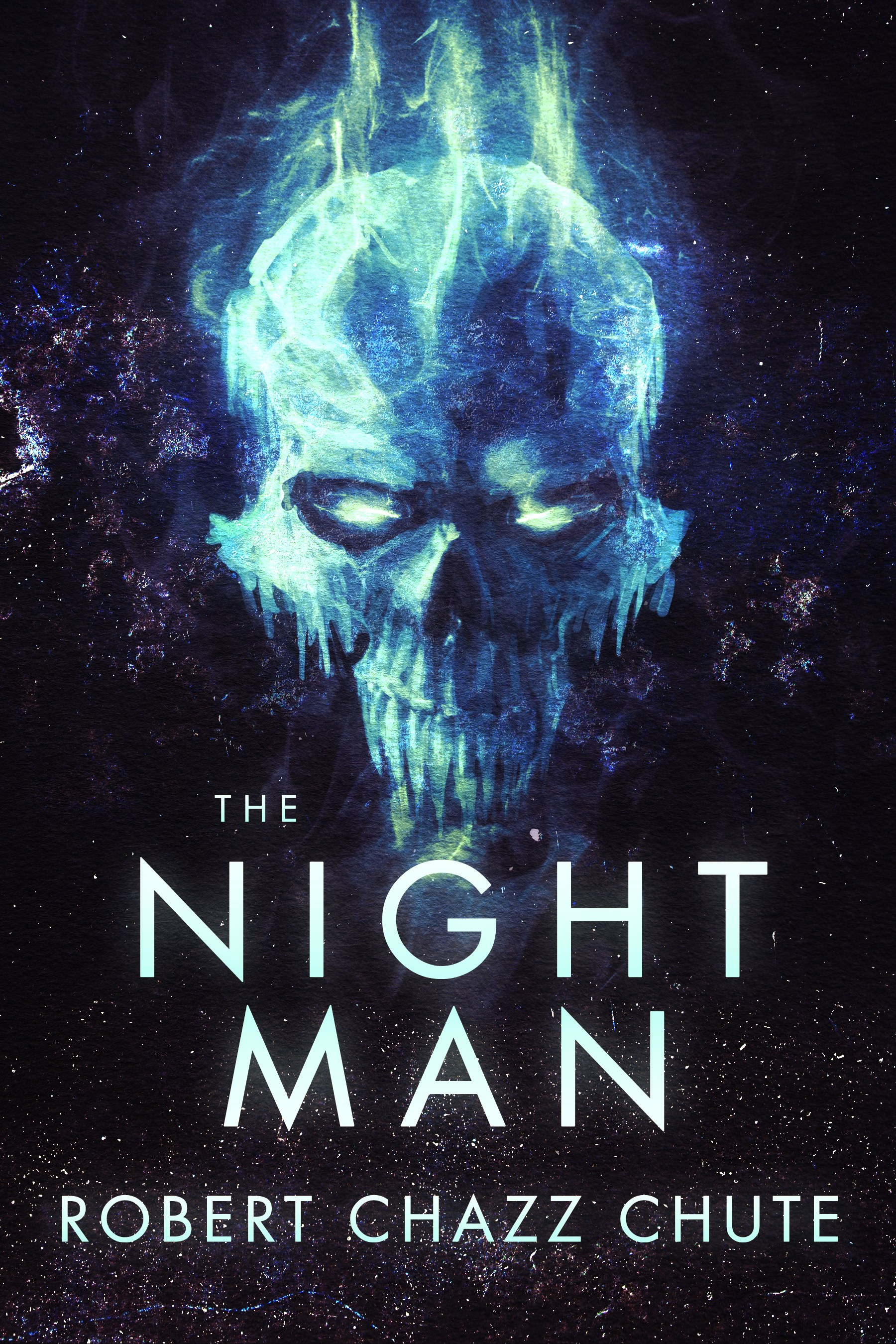
You can pick this ebook up for free today at this link: http://bit.ly/TheNightMan

Join my inner circle at AllThatChazz.com

See my books, blogs, links and podcasts.

Enter your email address to follow this blog and receive notifications of new posts by email.

Join 2,063 other subscribers