C h a z z W r i t e s . c o m

See all my books at AllThatChazz.com.

Writers: Dump your preconceptions (and your word processor)

Image representing Dropbox as depicted in Crun...

Image via CrunchBase

Just a quick note to say I’m back from The Writers’ Union of Canada Toronto symposium on the state of publishing. I’ll be going through my notes and giving out reviews and information a bit at a time in coming days as I unpack my notes and cogitate. The conference was packed with information to act upon. Sorry for the tease, but I’m busy setting up a new browser (Opera) and a new file management system (Dropbox) tonight. (Both are free and come highly recommended by a guy you should bookmark,  get to know, subscribe to and read assiduously: Ross Laird. More on that in a moment.)

I met  some nice potential clients and made a couple of new friends. Since last year’s experience  at two writers’ conferences I realize I’ve been impatient for people to catch up with my worldview. At one conference a publisher displayed a pathological resistance to e-book reality. At the next conference I met my first e-reader power user who pledged never to buy a p-book again. I’ve been harping on the change from vanity publishing to self-publishing and all that entails ever since. So it was that I became cynical about this weekend’s symposium. I was so used to the sound of my own voice saying “the future is now” — voice in the wilderness that I am — that I didn’t think anyone was catching up. In most ways, the Writers’ Union certainly has caught up and is forging ahead with the new publishing reality. (I’ll address how they haven’t changed in another post soon.)

The Nugget You Need Tonight

Tech guru Ross Laird opened his first lecture with this:

SELF-PUBLISHING IS MAINSTREAM.

Note that he didn’t say it will be some day.

His message was strong: stop looking backward because the future of reading is on devices. Choosing self-publishing is to embrace a startling degree of freedom, fun, adventure, work and independence. Scary cool, huh? It was relief to hear someone articulate what I’ve been saying (although he’s more tech-oriented, glib and has slides.)

There is much to chew over from the symposium, but for tonight I’ll start you off with this link:

Read Ross Laird’s article on why you shouldn’t write on a word processor.


Tomorrow morning’s post:

How I Edit

I promise you’ll find this useful.

I’m deep into a heavy edit for a client this week but I’ll throw out some more gems I picked up at the symposium in coming days.

There is a lot of stuff happening all at once for me, this blog, my writing and my editing. It will take some time to get to it all.

Happy days.

It’s all scary cool.


Filed under: blogs & blogging, Books, DIY, ebooks, Editing, getting it done, publishing, Rant, self-publishing, Useful writing links, , , , , , , , ,

Writers: Is writing therapy for you?

Reverend Billy from The Church of Life After S...

Image via Wikipedia


Writing can be therapeutic. You can get some etheric vengeance, exorcise your demons and find peaceful transcendence.

But I don’t think your therapy should show. If you stray into telling the reader how to feel, your writing experience intrudes into their reading experience.

Don’t do that, please.

What writing teachers don’t say is, “Not getting preachy is really hard.” For instance, in my WIP, I touch on issues around censorship. In fact, I’ve noticed my penchant for not just touching on the issue, but hammering on it.

How do you know you’re hammering your personal issue too hard? Overexplaining irritates readers. Making two characters argue and leaving the opposing side too weak is another sign. Look for when the action stops and restart it. For instance, when your protagonist slips into a monologue that goes on uninterrupted, he’s at the pulpit and you’re losing readers.

You can still have a point of view, of course. Just lay out facts. Let your readers decide. Slip the facts amongst the action of the story. Don’t lay it all out at once. Instead of pontificating, let arguments percolate through the story.

Orwell’s 1984, for instance, shows the horror of the all-controlling state. Orwell doesn’t tell you it’s awful and list why. He shows cages full of rats. Chuck Palahniuk‘s style is another good example. He doesn’t tell the reader how to feel. Non-judgmental writing yields effective results.

Don’t write from your therapist’s couch. The benefits you get from writing may be every bit as personal and profound as a therapy session from In Treatment, but if you’re writing for an audience, please let your readers find their own therapy.  In Finding Forrester, Sean Connery says, “You write the first draft with your heart and the next with your head.” 

Filed under: Books, manuscript evaluation, publishing, Rant, Rejection, Useful writing links, Writers, writing tips, , , , , , , , , , , ,

Writers: Time for some controversy

Book-shelf complete

Image by Medusa's Lover via Flickr

Since I’m still recovering from a Toronto weekend conference, Green Hornet and Black Swan, here are a couple of recent links you may have missed:

Dean Wesley Smith blows agents’ future aspirations out of the water (make sure you read through the pithy comment section, too!) and Anis Shivani tells you to forget everything you thought you knew about writing and publishing.

Much of it appeals to me because neither believes in sucking up and allowing yourself to be put down or kept down by The Man.

What do you think? 

Is Shivani’s rant satire or for real?

Will you dare to take this advice?

Filed under: agents, authors, DIY, ebooks, Editing, getting it done, Rant, self-publishing, Useful writing links, writing tips, , , , , , ,

Writers and Readers: Just wanted to let you know…

Television icons
Image via Wikipedia

Happy New Year!

 May 2011 be the year you

make your dreams come true,

publish your work

and vanquish your enemies!

I went to a party tonight. People asked me what I was doing. I asked what they were doing. Many in the family are an artsy crowd so we talked about the movies we’d seen and the TV we loved. (Yay The OG Buffy! Boo revamped coming-soon-Joss-Wheedonless Buffy!)

And I felt grateful to travel in circles concerned about arts of all kinds. Although I only started up this project in May, I’ve made new friends through attending writing conferences and blogging about writing and publishing. I’ve picked up more editorial work I love. I’ve edited website copy and helped people on their way to publication. I’ve provided (gentle) writing critiques and writers have been really receptive to my efforts.

The research I do here serves my writing and I’ve had the opportunity to promote books and publicize authors to my growing readership. (In part, the love bump I got from one of my heroes, director Kevin Smith, helped me grow and aspire for more.)

And you keep coming back for more. Most of all, I’m thankful for you. When I see my stats climb, I know I’m reaching, teaching and helping more people create art or make their art better.

For me, Chazz Writes is not just about getting gigs. It’s about building something good.

I write.

I edit.

I publish.

More to come.

Much more.

Thanks for reading!

Filed under: My fiction, publishing, self-publishing, Useful writing links, What about Chazz?, Writers, , , , , , , ,

Chazz Writes: The Top Post of 2010 was…

An Evening with Kevin Smith 2: Evening Harder

Image via Wikipedia


The most popular post of 2010, and my favorite, was about the evening I spent with Kevin Smith in Kitchener, Ontario. If you missed it, here’s that link one more time: 

https://chazzwrites.wordpress.com/2010/11/04/thatkevinsmith-10-lessons-received-from-an-evening-with-kevin-smith/

I attended two publishing conferences in 2010 (loved them!) but An Evening with Kevin Smith kicked up my energy and changed how I felt about me, art and writing. (Are you sick of my man crush on Kevin Smith? Too bad. Suck up the goodness.)

Do you need some New Year’s resolution energy and inspiration to overcome that stale 2010 inertia? Here are some more Kevin Smith posts to put some heavy horsepower into your creative life:

My Top Three (Living) Writing Heroes. Who are Yours?

Writers: DIY vs traditional publishing

Are You a Consumer or a Creator?

Kevin Smith on Writing

We tell our stories. It’s not supposed to be about fame. Or is it?

Kevin Smith loved the blog post! The aftermath…

https://chazzwrites.wordpress.com/2010/11/15/thatkevinsmith-feelgood-story-of-the-day-week-year/

Now go make 2011 your year. I’m going to make it mine!

HAPPY NEW YEAR!

Filed under: authors, DIY, getting it done, Media, My fiction, publishing, Rant, Useful writing links, What about Chazz?, writing tips, , , , , , , , , , , , , ,

Writers: Top 10 of the 2010 Top 10 Chazz Writes posts

Top10

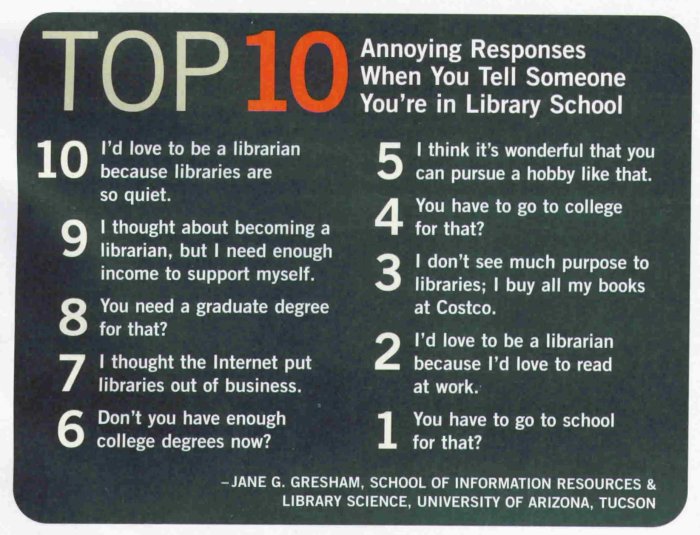
Early last year I considered going back to school to become a librarian. (I dumped that idea before I saw this graphic, but it does make me feel better about my choice.)

After some career counselling, I decided to refocus my efforts on my writing and editing. I needed (and need!) to bring art to the front burner. I began this blog as part of reorganizing my life to that end. Since last May I’ve posted 402 times and gained lots of readers, friends and even some clients (hurrah!) Things progress.

 For lucky #403, this is a look back through the Top 10 lists of 2010:

1. Authors! Part II: Top Ten Lessons from the Networking Master

2. Top 10 Ways Writers Waste Time

3. Writers & Editors: Top 10 Editorial Considerations

4. (Top 10 Things +1) Writers Love

5. Top 10 Reasons We Write Sci-fi

6. Top 10 (plus one) Publishing Conference Lessons

7. Top 10 Things Writers Fear

8. Top 10 Reasons We Write Horror

9. Top 10 Reasons We Write Romance

10. Writers Top Ten: Why blogging about publishing is important

Filed under: authors, Books, ebooks, Editing, Editors, getting it done, Horror, Publicity & Promotion, publishing, Rant, Top Ten, Useful writing links, Writers, writing tips, , , , , , , , , , , , ,

Writers: The mire of conflicting advice & unfair criticism

The hierarchical structure of the autobiograph...

Image via Wikipedia

When I got into the business, there was a criticism meant to shut writers down.

“Too autobiographical” was the kiss of death.

That’s ironic for several reasons:

Biographies and autobiographies are moneymaking books. Sarah Palin‘s ghosts have already published more books than you and possibly more books than she’s read. Okay, that was a cheap shot, but somewhat funny and it has the added bonus of being an Irish fact—that is, something that is a lie, but should be true.

I digress.

Back to the issue of unfair criticisms and misguided advice:

 The mind boggles at Augusten Burroughs work. How much childhood trauma can one man recycle into his fiction and non-fiction? He has enough monsters, addictions and insanity in his past that he’s set for several more books at least.

“Too autobiographical” is now a stale criticism when you consider the movement of the market toward tell-alls, whistleblowing and confessionals. There’s a lot of popular fiction that’s thinly veiled life story, too. In fact, if you’ve been a lion tamer-stripper-celebrity-prostitute, you’re a much easier sale than if you’re just another writer working away at your desk making stuff up.

Diablo Cody is a talented writer, but she had a lot more heat going into the fray because of her tattooed image and history as a stripper. I’m not saying she wouldn’t have sold the brilliant Juno script anyway, but really, how many celebrity screenwriters can you name besides her, McKee and William Goldman? If you came up with a few names, it’s probably because they are famous writer-directors, not just writers.

(And notice that irksome phrase “just writers.” I use it advisedly, as a synonym for “merely,” since that’s the stature writers generally have in film, television and publishing.)

“Too autobiographical” was once a stinging barb. It marked a talent that was undeveloped. It suggested teenage angst worthy of a diary, not of publishable quality.

The worm has turned. Now your tortured history as a brawler helps; Chuck Palahniuk brawled a bit and escorted sick people to support groups long before Fight Club. Your time in seedy bars lends authenticity to your writing and manuscript evaluators may well take you more seriously because of the stuff you don’t want your mom to know. A work can still be too autobiographical, but that criticism doesn’t carry the weight it once did.

Evaluators can be off the mark in what they think qualifies as authentic, anyway. One writer, for instance, was told that her dialogue didn’t ring true for how contemporary teenagers speak. She was advised to hang out with some kids to catch the flavor of the real thing. What the manuscript reader didn’t know was the writer was 17 at the time.

We’re a culture that worships celebrity, so “too autobiographical” isn’t a criticism that comes up as much (unless your life story is deadly dull.)

The true irony is that the same editors who would say “too autobiographical” would also routinely tell aspiring writers to “Write what you know.”

That’s bad, even egregious advice. Don’t write what you know. If you only write what you knew, there wouldn’t be much fantasy, science fiction…or much literature at all, come to think of it.

Instead, write what you care about.

 Your research and the knowledge

flows from caring, anyway.

Filed under: authors, book reviews, Books, Editors, links, manuscript evaluation, Rant, scriptwriting, Useful writing links, writing tips, , , , , , , , , , , , ,

Old ideas about publishing, Twitter and your worldview

The M2 tidal constituent. Amplitude is indicat...

Image via Wikipedia

Sometimes it feels like we’re fighting the tide.

The world as it was is the tide.

1. There’s the tide of institution, wherein the established people put down those who aren’t established because they aren’t established…or just because they’re different. I wear a black fedora and a long black coat with a red scarf. I look like a bad immortal from Highlander. Some people look at me funny. And what fearful mortals must they be.

2. There’s generational inertia, where old ideas get enshrined and people don’t want to change.  I made the mistake of trying to have a conversation about theoretical physics with someone who thought the field of physics had stopped developing in 1964 (coincidentally the year of his graduation from university.)

3. There’s the know-it-alls who can give you lots of reasons why you’re wrong and shouldn’t attempt anything new. Just. Like. Them. Doing something creative and new and different takes are certain amount of unreasonableness. We’re nice. But we have crazy ideas that just might work. “Put away your market analysis and focus groups and look what I made!”

4. There are envious people who feel safe in their rut if you get down in that rut with them.

5. There are people who are afraid and don’t know the way out is to act brave, especially when you don’t feel brave.

6. There are people who have their opinions and those opinions were true a short time ago. Those outdated opinions were dead on, but things changed and now they are dead. I’m hearing people worry about the death of newspapers who haven’t ever given a single thought to the end of home milk delivery.

7.  Some opinions were snarky and funny for a short time, like Twitter being all about what you had for lunch. This is usually from people who haven’t tried Twitter…yet. Are these people still going around saying, “You are the weakest link!” How about, “Where’s the beef?” Move on, please. And spring for dial-up, will you? You’re Internet connection is nearly unusable.

8. There are know-it-alls, but many more know-nothings. Don’t cast your pearls before swine.

9. Then there are people who have a vested interest in keeping things as they’ve been. (Publishers holding back on e-books to squeeze a little more out of trees and authors comes to mind. Outmoded contracts are bad. Trying to retrofit old contracts to new markets is criminal conspiracy.)

10. And sometimes we’re wrong to fight. Sometimes we’re on even ground and don’t know it.

Story time: When I graduated from the Banff Publishing Workshop, one of the faculty said, “Welcome to publishing. Come to create, not to destroy us.” It hit a rather defensive note. They had put us through the wringer, so maybe they had some reason to expect us to be a little pissed.

I stood up and said, “We aren’t coming to destroy…but we value our opinions just as much as you value your own and this is a subjective business. Nobody has to feel bad about that. No one knows what’s going to be a bestseller, so let’s not pretend we know. There is no secret to selecting the right book to publish. That’s the secret.”

And yet, we were expected to feel bad, even in areas we had experience if not expertise. I often felt too young to have an opinion, year after year. With every one of my birthdays, the establishment got a year older, too. Screw that. I’m old enough to see the pattern now. Or am I too old to have these opinions?

Below is a link to an interesting article about how Twitter is changing.

It starts a bit slow and the lead is buried, but once you get to the charts, you get the real chocolate flavour.

As Dennis Miller used to say—way back when he was good and relevant “Of course, that’s just my opinion. I could be wrong.”

How Twitter is Changing: A new study reveals Twitter’s new direction


Filed under: publishing, Rant, Rejection, Unintentionally hilarious, Useful writing links, What about Chazz?, Writers, writing tips, , , , , , , , ,

Writers: What really happens in book marketing meetings (Plus: What sells books)

Books in the Douglasville, Georgia Borders store.

Image via Wikipedia

It’s interesting to see the profession of book sales rep disappear. I was a journalist first and that’s evaporated. Later I was a book rep and that’s on the way out, too.  Book sales was somewhat romanticized. From the inside of the industry, book marketing isn’t romantic at all. Occasionally I hung out with authors and going to book fairs and sales meeting in nice places was fun. Yes, there were a few cocktail parties. Most of the year, however, you’re hauling so many samples around in your car, the shocks go. You spend a lot of time trying to get to the next appointment on time and worry about finding a good place to park.

I met some really nice booksellers. I also met many awful book retailers. The crux of that problem was that the young booksellers were doing it as a joe job and the older booksellers got into the job for idealistic reasons. No one tells aspiring bookstore owners that, not only are the big chains going to force them out of business, they won’t spend near as much time reading as they planned. Instead, they’ll spend an inordinate amount of time calculating the GST, paying the GST and trying to assist book buyers who aren’t informed book readers. (e.g. “I want to buy a book for my daughter I heard about on the CBC last month. You know. That one…? It’s by that guy? With the thing…? Surely you know that one!”)

So I dealt with the bored and disillusioned. Not exclusively! It’s just that those negative people are the sales experiences I remember best. That miserable bookseller in Owen Sound was an impatient sort who, when I dared to use the word comedy, corrected me and told me the book was “humour.” I’m surprised she was familiar with either facet of the concept. Then there was the condescending one north of Toronto who thought I was stupid since I was still enthusiastic. She beat that out of me quick. “Okay,” I said. “For the remainder of this meeting, I’ll power through the list and act just as pissed off as you appear to be. Happy? Am I smarter now?”

It wasn’t all bad. The owner of the now-defunct Frog Hollow Books in Halifax has a special place in my heart. She was a sweetie, had a great store and she bought a lot of merchandise from me gladly, even in the press of the Christmas rush. I wish that bookstore was still around.

What I find interesting in other people’s reports of marketing meetings is they say sales rep opinions  are valued. I hear of book reps getting input into the list, commenting on the marketing challenges and the dubious appeal of certain covers and so forth. Book reps on some planet get to turn something down and require changes in order to make a book sell. I repped sixteen publishers of various sizes and I can tell you, my input didn’t carry any weight. It wasn’t asked for, either. I was their traveling salesman. If the book didn’t sell, they figured it was my fault.

At a sales conference, the editorial team is selling their enthusiasm for the list they built. In my experience, if we dared to mutter about a lousy cover, we did so among ourselves. Voicing any reservations would be met with derision. We weren’t graphic artists, so maybe the cover proved to be lousy and many booksellers would tell us so as we made our rounds. However, in the context of the sales conference,we were getting flown out to someplace nice for one reason. We were supposed to sit there, take notes, and listen. The graphic artist and the editor got to have opinions on anything creative. Our job was to sell their old ugly dogs with the same conviction as the cute puppies. If we didn’t believe the dogs with mange and pushed-in snouts would sell, obviously we were idiots or traitors to the cause.

It sure didn’t feel like the powerful position some portray. Lots of articles on the publishing process mention the input of the sales team on titles. Not so in my experience. I watched editors and their minions show covers, talk about the books and maybe pass out review copies. True, we’d worry over price points. We’d look at the page count and comment that the heft of the book was light for the expense. (“People buy books by weight,” was a common bit of wisdom. “Green covers don’t sell it’s a golf book,” was the other bit. That was true, I think.) However, the publisher and their editors had already committed their resources to the books by the time we came into the picture. By then, they would understandably be reluctant to make major changes in their plans for two reasons: expense and ego. We weren’t going to change a done deal.

In the hierarchy of the book industry, the editors and publicists put themselves above the salespeople, especially if anyone referred to books as “product.” (Only a few did that.) Sales reps weren’t creative. We just did the grotty part with the filthy lucre that allowed the creativity to continue.

Many editors idolized some authors. Privately though, many put the authors at the bottom of the hierarchy. Yes, writers are the engine of the industry who provide the art to sell and a reason for editor’s existence. Perhaps it’s envy or resentment. Maybe it’s because acquisition editors see themselves as gatekeepers so they feel they made the authors.

In a less complex analysis, everyone’s the star of his or her own movie and authors come and go like background extras.

And some, being arty and human, are a pain in the ass. For instance, I sold Matt Cohen‘s books. For some he was an icon as well as a somewhat famous Canadian author. However, there was a bookseller nearby who didn’t care for his books and refused to stock them. When the publisher took the author out for lunch, naturally they stopped in to see how his books were selling. I soon got a angry memo. “What’s going on?!”

What was going on was not every bookseller is obliged to carry every book and the publisher’s embarrassment wasn’t a factor in the decision. The bookstore owner simply didn’t like Matt Cohen’s books. The proximity of our house to the store didn’t convince the owner. I despised that bookstore owner (a notorious and cadaverous blowhard.) I agreed with his right to stock whatever he pleased, however. Personally, I found Cohen’s books neurotic, but not in a good way.

At first my territory was Toronto (and in the summer, Cottage Country, too.) Later on, I worked for a book distributor so I sold books wholesale across the country as well as in downtown Toronto, Ottawa and all points north and east. I can’t say I ever felt like more than a minion. It wasn’t that the editorial staff was particularly unkind. It was simply that we had no creative input. That’s why I wonder about these reports I’ve read about the publishing process. When in-house editors tell authors, “Marketing didn’t like this or that,” are they really hiding behind the closed doors of those marketing meetings? Is it just a ploy to bring down the author’s expectations from the sky-high hopes, dreams and promises that originated in the editorial department?

Blah, blah, blah. You’re an author. You want to know what sells books. I’ll tell you.

I sold hundreds of books at a time. Some I read, but there wasn’t enough time to read them all. Instead I recited the catalogue copy and gave my impressions for each book’s appeal. If there was any kind of marketing campaign, I’d talk about that. It’s a gift to a book’s potential (and the haggard sales rep reciting the same spiel for the 100th time) to be able to say, “We think this one has a shot at the Giller,” or, “We’re putting a lot of work into getting this one on that particular CBC show you like etc.,…”

What sells books is word of mouth for a book with good writing that tells a compelling story. It takes a lot of incompetence on the publishing team’s part to overcome that. The other thing that sells books is the human connection between the book sold and the person who wrote it. What helped me sell the most books was meeting the author. Booksellers are on the frontlines of retail, far from the cocktail party action. They want to hear a sales rep’s funny story about meeting That Author.

One of the better people on the planet? One the sweetest people you could ever meet? Amy Tan. I sold her books. I sold a ton of her books. Utterly charming and genuine. When I met with booksellers, I didn’t talk much about her book. I sold her to them instead. We push the people we like harder.

When you get invited to a sales conference (if you ever do) or go on a book signing (arrange your own if your publisher won’t), remember to treat the minions well. Be nice. Be fun and memorable. The sales reps will remember you. The booksellers will hand sell you book.

Extra tip:

That’s why it doesn’t matter so much if a lot of people don’t come to your bookstore signing.

The customers may come or not, but the bookstore staff are always there.

Make a good impression and they’ll hand sell your book.

And the next.

And the next.

What really sells your books?

You do, through the force of your creativity, the shimmer of your personality and audience you cultivate.

Filed under: Books, Editors, getting it done, links, Publicity & Promotion, publishing, Rant, Useful writing links, writing tips, , , , , , , , ,

Writers Top Ten: Why blogging about publishing is important

Publishing

Image via Wikipedia


My father does not understand me.

This was a given when I was a teenager.

Time passed.

Nothing changed.

When the subject of my online work came up, my father said, in a tone that could only be termed condescending, “Why would you bother with that?” He means well, which is never soothing though for some reason it’s supposed to ease the pain of casual negation. Think of that. Have you ever not taken offense when anyone starts out with, “No offence, but…”

But to the question, why do I bother with Chazz Writes? Well, lots of reasons (beyond the simple enjoyment of bagging on my 84-year-old father.)

1. I write because I can do naught else. He really should get that by now.

2. I write to learn what I think about things.  Don’t you find your thoughts are better articulated and organized when they go through your keyboard first?

3. I write to educate and, in so doing, I become better educated about writing and the publishing industry. I research a hippo’links before I shoot them your way. Curation is a large part of what I do on the blog.

4. I write for recognition. As detailed in my previous post (immediately below), I’ve decided it’s important to become a fame whore and not just the regular sort we all are (i.e. for money.)

5. I write so clients can find me. That happy pic up there? It takes you to my business site where there’s a free trial for editing manuscripts. I also edit websites for a flat rate. I write and I edit and this, all of this, is an ad. And yet, I am unashamed.

6. I write to build a following. When I kick my fiction out into the world, I want an audience to be ready. Eager even!

7. I write for myself. It’s not just for business. Without the business side, I’d do it anyway. (I wrote a couple of blogs before this one.) In short, it’s fun.

8. I write as a distraction from my “real” writing. When one of my book chapters fails to get written or edited as quickly as I’d like, my blog post can succeed where other ambitions may (temporarily) fall short.

9. I write the blog for the energy and feedback my readers give me through their comments, their attention and the chakra vortex I have hooked up which funnels your etheric power through your tilde key, through the interwebs and into my root chakra. So, thanks readers!

10. I write for the pure enjoyment of gentle vengeance upon family members who don’t get what I do. That’s right. I said it. Vengeance. Chazz does not take condescension well! Condescension makes Chazz write of himself in the third person! It’s that serious.

Here’s a spot-on and more serious link about why you should familiarize yourself

with what’s going on in the publishing industry:

Ten Reasons to Get to Know and Get Involved in the Publishing Industry

from Pens with Cojones.

(I love that name, don’t you? Just don’t think through to the disturbing visual… D’oh!)

Filed under: links, My fiction, publishing, Rant, Top Ten, Useful writing links, What about Chazz?, Writers, , , , , , , , , , , , , ,

Bestseller with over 1,000 reviews!
Winner of the North Street Book Prize, Reader's Favorite, the
Literary Titan Award, the Hollywood Book Festival, and the
New York Book Festival.

http://mybook.to/OurZombieHours
A NEW ZOMBIE ANTHOLOGY

Winner of Writer's Digest's 2014 Honorable Mention in Self-published Ebook Awards in Genre

The first 81 lessons to get your Buffy on

More lessons to help you survive Armageddon

"You will laugh your ass off!" ~ Maxwell Cynn, author of Cybergrrl

Available now!

Fast-paced terror, new threats, more twists.

An autistic boy versus our world in free fall

Suspense to melt your face and play with your brain.

Action like a Guy Ritchie film. Funny like Woody Allen when he was funny.

Jesus: Sexier and even more addicted to love.

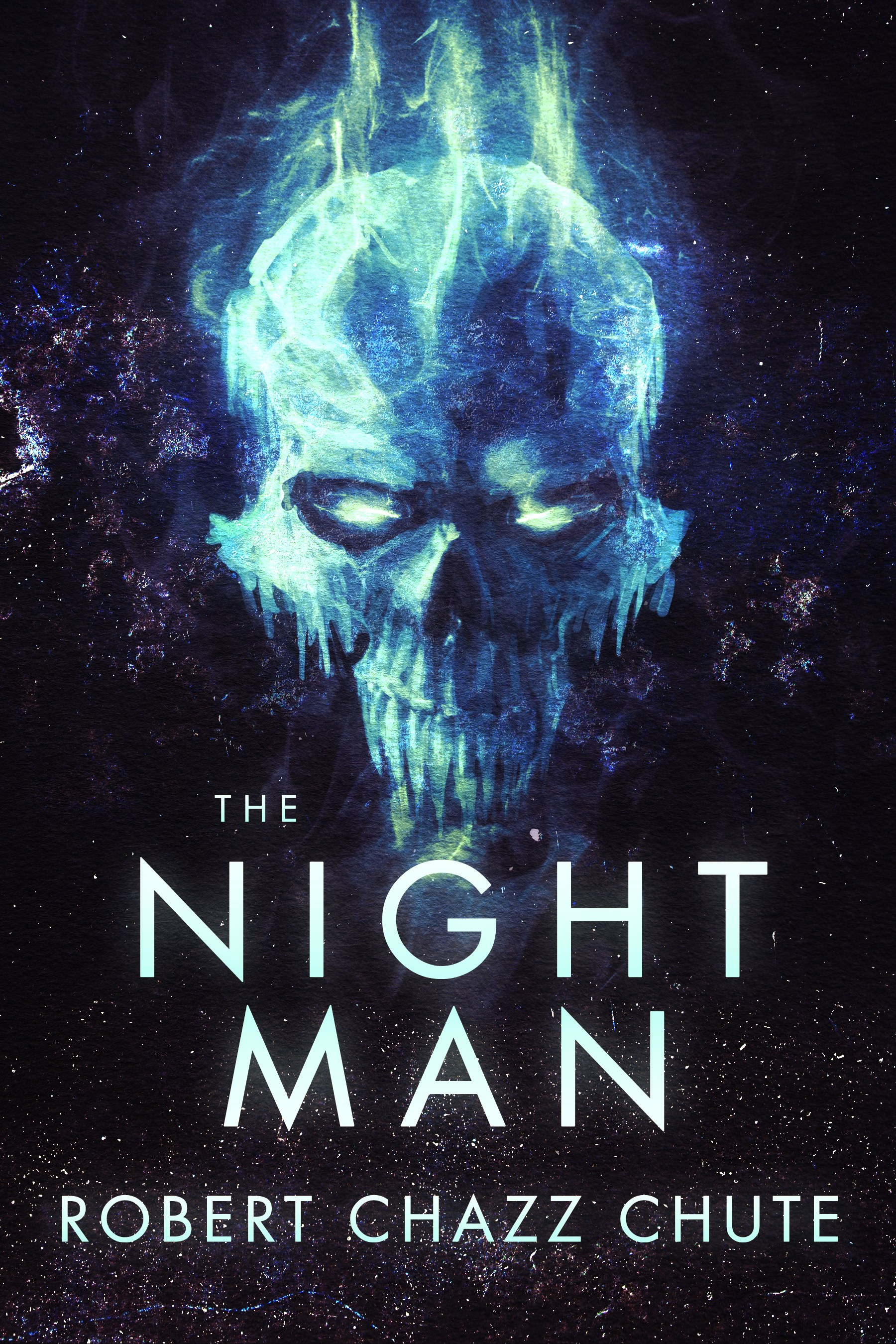
You can pick this ebook up for free today at this link: http://bit.ly/TheNightMan

Join my inner circle at AllThatChazz.com

See my books, blogs, links and podcasts.

Enter your email address to follow this blog and receive notifications of new posts by email.

Join 2,063 other subscribers